
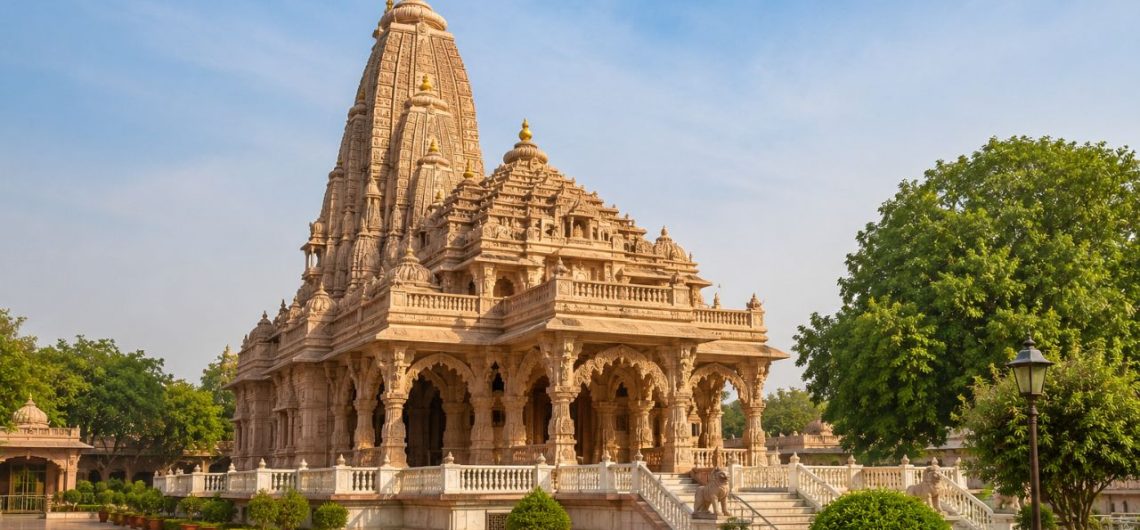
Delhi is home to temples, gurdwaras, and spiritual landmarks spread across different parts of the city. Visiting them may look simple on a map, but the way you travel can change the entire experience.
A Delhi Temple Tour by Car offers direct transfers and greater flexibility, while the Delhi Metro can be faster and more affordable for certain routes. The real difference becomes clear when you consider walking, Metro interchanges, last-mile transport, road traffic, weather, and the location of each spiritual site.
So, which option is actually better?
The answer depends on the temples you want to visit, who you are travelling with, and how much of Delhi you want to cover in one day. This guide compares both options using practical routes and real travel situations, helping you choose the transport that best fits your temple tour.
Quick Answer: Is a Car or Metro Better for a Delhi Temple Tour?
The Metro is usually the better choice for solo travellers, budget visitors, and anyone planning to visit one or two spiritual sites close to convenient stations. It avoids road congestion and provides predictable station-to-station travel.
A private car generally works better for families, senior travellers, and visitors planning a multi-stop temple itinerary across different parts of Delhi. It reduces transport changes and provides direct travel between stops.
However, neither option is always better.
A Metro route can be easier for visiting a well-connected South Delhi cluster, while a Delhi Temple Tour by Car may be more practical when the itinerary crosses Central, South, and East Delhi.
The number of temples matters less than where those temples are located.
Why Transport Choice Matters on a Delhi Temple Tour
Delhi’s famous spiritual places are not concentrated in one neighbourhood. Gurudwara Bangla Sahib and Birla Mandir are in Central Delhi, while the Lotus Temple, ISKCON Temple, and Chhatarpur Temple are in or around South Delhi. Akshardham lies in another direction.
This geography creates the real transport challenge.
When travelling by Metro, journey time includes more than the minutes spent on a train. You also need to consider reaching the station, security checks, waiting, line changes, finding the right exit, and travelling from the station to the temple entrance.
A car has different challenges. Road congestion, peak-hour traffic, and parking or drop-off arrangements can slow the journey.
That is why station-to-station time and temple-to-temple time are not the same thing. A good Delhi temple itinerary must consider the complete journey rather than only the distance shown on a map.
Delhi Temple Tour by Car: What Is the Real Experience?
The biggest advantage of a Delhi Temple Tour by Car is the ability to travel directly between spiritual sites without returning to a Metro station after every visit.
For a multi-stop itinerary, this can make the day feel less fragmented.
Direct Travel Between Different Spiritual Sites
With a private car, you can leave your hotel and travel towards the first temple before continuing directly to the next stop.
This becomes useful when the itinerary includes spiritual places in different areas. Instead of walking back to a station, passing through security, changing lines, and arranging last-mile transport, you continue towards the next destination.
For travellers who want to see spiritual landmarks as part of a broader exploration of the capital, a Full Day New and Old Delhi City Tour can also provide a wider view of Delhi’s religious, historical, and cultural character.
More Flexibility During the Day
A private vehicle also makes it easier to adjust the itinerary.
You may want to spend longer at a peaceful spiritual site, take a meal break, skip a crowded stop, or change the route because of traffic. A flexible itinerary can be particularly useful when travelling with children or older family members.
There are disadvantages too.
Delhi traffic can be unpredictable, especially during busy hours. Some religious sites may have restricted vehicle access or require a short walk from the drop-off point. A private car also costs more than using public transport.
The car is therefore not automatically faster. Its main advantage is convenience between multiple stops.
Visiting Delhi Temples by Metro: What Is the Real Experience?
The Delhi Metro is one of the most practical ways to move around the capital, particularly for independent travellers.
It is affordable, avoids much of the road congestion, and works especially well when a spiritual site is close to a convenient station. Delhi Tourism’s official Metro itinerary connects stations with several religious attractions, including Bangla Sahib, Laxmi Narayan Mandir, Chhatarpur Temple, ISKCON Temple, Kalkaji Temple, and the Lotus Temple.
Where the Delhi Metro Works Well
The Metro is a strong choice when you are travelling alone, watching your budget, or visiting only a few places.
It can also work well when the temples are located within the same general area. South Delhi is a good example because several important spiritual places can be grouped into one route.
For travellers comfortable with public transport, walking, and navigating interchanges, the Metro can provide considerable independence.
The Problem with Multiple Metro Changes
The experience becomes less simple when a temple itinerary spreads across Delhi.
A typical journey may involve walking to the station, passing through security, waiting for a train, changing lines, finding the correct exit, and then walking or taking an auto-rickshaw to the final destination.
None of these steps is necessarily difficult on its own. Repeating them several times in one day, however, can take more time and energy than expected.
The Hidden Difference: Last-Mile Travel
One of the biggest mistakes in planning a temple tour is assuming that “near a Metro station” means “at the Metro station.”
The last mile matters.
After leaving a station, a visitor may still need to find the correct exit, walk to the entrance, cross a busy road, or take a short auto-rickshaw ride. The same process begins again after the temple visit when it is time to reach the next stop.
This can be easy in pleasant winter weather. It may feel very different during the intense heat of May or June, heavy monsoon rain, or a day spent travelling with young children.
A Metro journey may look like this:
Hotel → station → security → train → interchange → station exit → walk or auto → temple
A car journey is generally more direct:
Hotel → temple drop-off area
Still, the Metro can win when the connection is straightforward and road congestion is severe. The real question is not whether a station exists nearby, but how much effort the complete door-to-door journey requires.
Car vs Metro for a Delhi Temple Tour: Key Differences
Choosing between a car and the Metro becomes easier when you focus on the type of journey you are planning.
Best for the lowest travel cost: Metro
Public transport is generally the more economical option, especially for solo travellers.
Best for comfort: Car
A private vehicle reduces repeated walking and transport changes between spiritual sites.
Best for solo travellers: Metro
Independent visitors can explore at their own pace without paying for a full-day vehicle.
Best for families: Car
Direct transfers are often easier when travelling with children or senior family members.
Best for avoiding road congestion: Metro
Metro travel is not affected by surface traffic in the same way as road transport.
Best for distant temple stops: Car
A Delhi Temple Tour by Car becomes more useful when the route crosses several parts of the city.
Best for flexibility: Car
Changing the order of stops or adding a break is generally easier with private transport.
Temple-by-Temple Comparison: Car or Metro?
The best transport option changes from one spiritual site to another. Instead of choosing one mode for the entire city, it is more useful to look at how each temple fits into the day.
Akshardham: Car or Metro?
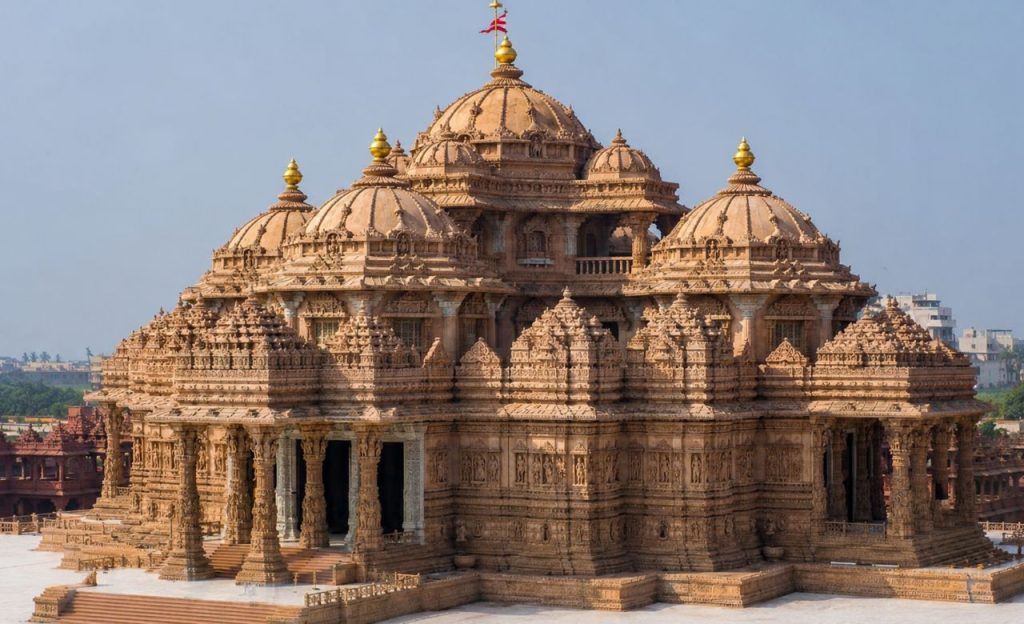
Akshardham is one of the easier major spiritual landmarks to approach by Metro because it has a station serving the area. For travellers visiting Akshardham as a single destination, public transport can be a sensible option.
The situation changes when Akshardham is combined with Central or South Delhi.
A visitor travelling from one distant spiritual cluster to another must consider the complete transfer, including line changes, walking, and the journey after leaving the next station.
A car may therefore be more practical when Akshardham is one stop in a wider multi-area itinerary.
Best option for: Metro for a focused visit; car for a broader cross-Delhi route.
Lotus Temple and ISKCON Temple: Car or Metro?
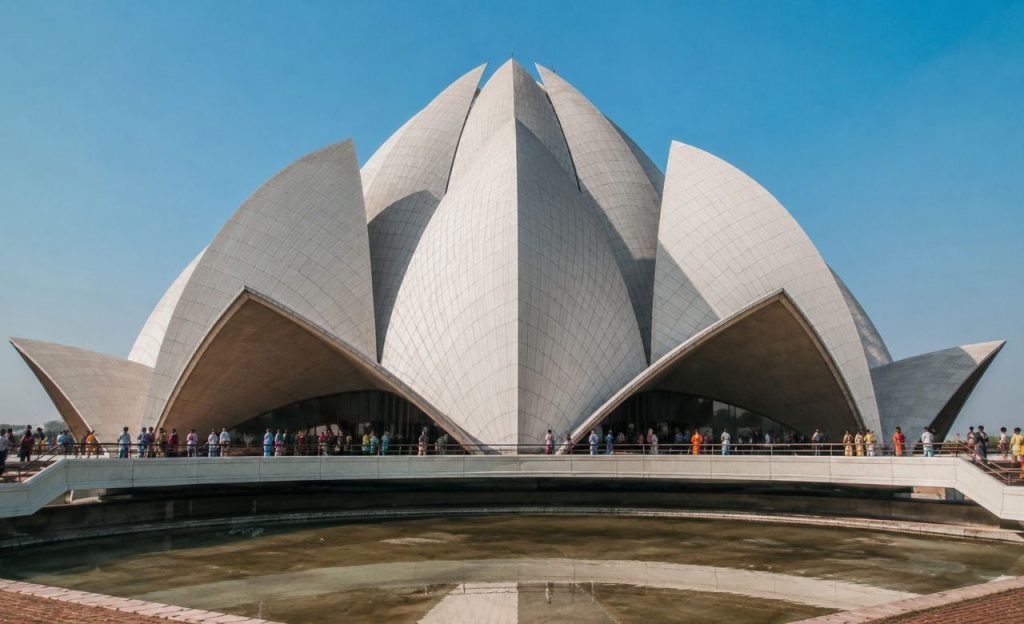
The Lotus Temple and ISKCON Temple are among the strongest candidates for a Metro-based spiritual route.
The Kalkaji Mandir and Nehru Place areas provide access to several nearby spiritual attractions, making this part of South Delhi easier to explore as a cluster.
This is an important example of why route geography matters.
If you only want to explore the Lotus Temple, ISKCON Temple, and nearby spiritual places, the Metro can work well. If your day continues towards Central Delhi or Akshardham, direct road transport may become more convenient.
Weather also matters. A manageable walk in January can feel very different in peak summer.
Best option for: Metro for a South Delhi cluster; car for a longer multi-area itinerary.
Chhatarpur Temple: Car or Metro?
Chhatarpur Temple is another spiritual site with Metro accessibility. It can work well for independent travellers who are comfortable using public transport.
However, the temple complex itself and the wider route should be considered when planning the day. If Chhatarpur is combined with other South Delhi stops, both Metro and car can be practical depending on the exact itinerary.
A car becomes more useful when the route continues across distant parts of Delhi or when reducing walking is a priority.
Best option for: Either option for a focused South Delhi route.
Gurudwara Bangla Sahib and Birla Mandir: Car or Metro?
These two important spiritual places fit naturally into a Central Delhi itinerary.
Delhi Tourism’s official Metro itinerary lists both Bangla Sahib and Laxmi Narayan Mandir among attractions accessible from the central Metro network. This makes public transport a realistic choice for independent visitors.
A car, however, can be easier when these sites form the beginning of a longer route towards South or East Delhi.
Best option for: Metro for Central Delhi only; car for a wider multi-stop route.
Which Delhi Temples Can Be Combined in One Route?
A smart temple itinerary should be built around geography rather than a random list of famous places.
South Delhi Spiritual Route
A practical South Delhi cluster can include:
- Lotus Temple
- ISKCON Temple
- Kalkaji Temple
These sites are located in the same broader part of the city and can be easier to combine than temples scattered across Delhi.
For a visitor comfortable with walking and public transport, this can be one of the better Metro-based temple routes.
Central Delhi Spiritual Route
A Central Delhi spiritual route can include:
- Gurudwara Bangla Sahib
- Birla Mandir
- Other nearby religious or cultural landmarks
Because the route stays within the central part of the city, both Metro and car can work.
Travellers who want to combine spiritual stops with heritage landmarks, markets, and historic neighbourhoods may also find a Full Day New and Old Delhi City Tour more suitable than a temple-only itinerary.
Cross-Delhi Spiritual Route
A more ambitious itinerary may move from:
Central Delhi → South Delhi → East Delhi
This is where transport choice becomes more important.
The Metro remains possible, but the number of transfers, walks, and last-mile connections increases. A private car may provide a more continuous experience, although road traffic must still be considered.
Where Does Your Time Actually Go?
Travel apps often show only the main journey time. A temple tour includes much more.
For Metro travel, the complete transfer may include:
- Walking to the station
- Station security
- Waiting for the train
- Changing Metro lines
- Finding the correct exit
- Walking or taking an auto-rickshaw
- Returning to public transport after the visit
For car travel, time may be spent on:
- Road congestion
- Traffic signals
- Reaching the appropriate drop-off point
- Short walks where direct vehicle access is limited
This is why a 25-minute train journey does not necessarily mean a 25-minute temple transfer.
The most useful comparison is door to door, not train time against driving time. A well-planned Delhi Temple Tour by Car should also account for peak traffic rather than assuming every road transfer will be quick.
The Same Delhi Temple Itinerary by Car vs Metro
Consider a sample route:
Gurudwara Bangla Sahib → Birla Mandir → Lotus Temple → ISKCON Temple
This route begins in Central Delhi and then moves south.
How the Route Works by Metro
The Metro can handle much of the longer-distance travel, but the day also includes reaching stations, passing through security, navigating the network, and walking between transport points and spiritual sites.
The South Delhi part becomes easier because the Lotus Temple and ISKCON Temple are within the same broader cluster.
This option suits travellers who want to keep costs low and do not mind a more active day.
How the Same Route Works by Car
A car provides direct movement from one stop towards the next. There is no need to return to a Metro station after every visit, and breaks can be added more easily.
The disadvantage is traffic. A badly timed road transfer during busy hours can reduce the time saved by avoiding Metro changes.
For travellers who prefer direct transfers, the Delhi Temples and Spiritual Tour by Car is the most relevant option for exploring this type of multi-stop route without planning every individual transport connection.
Which Option Wins for This Route?
For a solo budget traveller, the Metro can be the better choice.
For a family, a senior traveller, or someone visiting Delhi for the first time, a car may offer a simpler experience.
The route itself does not change. The better transport choice changes with the traveller.
Is Metro Plus Auto a Better Third Option?
The choice is not always limited to Metro or private car.
A combination of Metro and auto-rickshaw can work well for many independent visitors. The Metro handles longer journeys, while an auto can help with the last mile between a station and a temple entrance.
This approach is particularly useful for solo travellers who want to control costs without walking every part of the route.
However, it still requires more planning than a private vehicle. You may need to arrange several short rides, explain destinations, wait for transport, and repeat the process throughout the day.
For two or three well-connected spiritual sites, Metro plus auto can be an excellent middle option. For a full-day itinerary across several parts of Delhi, repeated transfers may become tiring.
Which Option (Delhi Temple Tour by Car vs Metro) Is Better for Your Type of Trip?
Different travellers experience the same route differently.
Solo Travellers
The Metro is usually the strongest choice for independent budget travellers. It keeps transport costs low and provides freedom to spend as much time as desired at each stop.
Couples
For two people visiting a small spiritual cluster, the Metro can work well. A car becomes more attractive when comfort, weather, or a longer list of distant temples is important.
Families with Children
Families may find direct transfers easier. Repeated station changes, walking, and last-mile journeys can become tiring over a full day.
Senior Travellers
The amount of walking should be considered carefully. A private vehicle can reduce transport changes, although some walking may still be necessary at large religious complexes.
First-Time Foreign Visitors
The best choice depends on confidence with local public transport and the number of stops planned.
Many first-time international travellers visit Delhi as part of India Golden Triangle Tour Packages, often with limited sightseeing time before continuing to Agra and Jaipur. For them, route efficiency may matter more than choosing the cheapest transport.
Does the Best Option Change by Season?
Yes. Delhi’s weather can significantly change the experience of using public transport or travelling by road.
October to March
Cooler weather makes walking and last-mile travel more comfortable. The Metro can be a particularly practical option during these months.
April to June
High temperatures can make repeated walks between stations and temple entrances tiring. An air-conditioned car may be more comfortable for a full-day itinerary.
July to September
Rain can complicate walking and short outdoor transfers. Direct vehicle travel can be useful, although monsoon conditions may also slow road traffic.
Season alone should not decide the transport. It should be considered together with route length, traveller age, and the number of stops.
When Is the Metro Actually the Better Choice?
Choose the Metro when:
- You are travelling alone
- Budget is your main priority
- You plan to visit only one or two temples
- Your chosen spiritual sites form a convenient cluster
- You are comfortable walking
- You prefer independent sightseeing
- Heavy road congestion is expected
For a simple route, using a private vehicle may add cost without adding much convenience.
The Metro is particularly strong when the entire itinerary stays within one well-connected part of Delhi.
When Does a Car Make More Sense?
A Delhi Temple Tour by Car generally makes more sense when the day includes spiritual places spread across several areas.
It may also suit:
- Families with young children
- Senior travellers
- Visitors who want hotel pickup
- Travellers carrying personal belongings
- People visiting during very hot or rainy weather
- Anyone who wants to adjust the itinerary during the day
The strongest reason to choose a car is not luxury. It is continuity.
Instead of planning every station, interchange, exit, walk, and last-mile connection, you move directly towards the next stop. Travellers who prefer this approach can consider a private Delhi temple tour by car when planning a multi-stop spiritual day.
Practical Tips for Delhi Temple Tour by Car vs Metro
Whichever transport you choose, good planning will improve the experience.
Start early when possible. Morning travel can help you avoid some of the busiest road conditions and gives you more flexibility later in the day.
Check current opening days and visiting hours before departure. Religious sites may have different schedules, special prayer periods, weekly closures, or temporary access changes.
Dress respectfully and follow the rules at each place of worship. Footwear may need to be removed, and photography restrictions can vary.
Allow extra time for security checks. Major spiritual attractions can have screening procedures, especially during busy periods or festivals.
Do not try to visit too many places. Four meaningful stops often create a better experience than rushing through seven or eight.
Check the weather before deciding how much walking is realistic, and avoid planning long road transfers during the busiest traffic periods where possible.
Most importantly, build the route around location. Nearby spiritual sites should be grouped together before adding a distant temple simply because it is famous.
Final Verdict: Delhi Temple Tour by Car vs Metro?
There is no single winner for every traveller.
The Metro is usually better for solo visitors, budget-conscious travellers, and simple routes built around one or two well-connected spiritual sites. It is affordable and can avoid delays caused by road congestion.
A car is generally more practical for families, senior travellers, and itineraries that move across several parts of Delhi. It reduces repeated transport changes and makes the day easier to adjust.
Metro plus auto-rickshaw offers a useful middle option for independent travellers.
In the end, the best way to choose is to map the exact temples first. If they form one compact cluster, use the Metro. If the route crosses Central, South, and East Delhi, a Delhi Temple Tour by Car can provide a more convenient and continuous way to experience the city’s spiritual side.
FAQa -Delhi Temple Tour by Car vs Metro
1. Is a Delhi Temple Tour by Car better than using the Metro?
A Delhi Temple Tour by Car is generally more convenient for families, senior travellers, and visitors covering spiritual sites across different parts of the city. The Metro may be better for solo or budget travellers visiting one or two well-connected temples. The right choice depends mainly on the route, weather, and number of stops.
2. Can I visit the major temples in Delhi in one day?
Yes, you can visit several major temples in one day, but trying to cover every famous spiritual site is unrealistic. A well-planned route usually focuses on three to five places in the same area or along a practical travel direction. Starting early and checking current opening hours can help you use the day more efficiently.
3. Which Delhi temples are easiest to visit by Metro?
The Lotus Temple, ISKCON Temple, Kalkaji Temple, Chhatarpur Temple, and Akshardham are among the spiritual sites with useful Metro access. However, the nearest station may not always be directly at the entrance, so visitors should also consider walking distance, station exits, and possible last-mile transport.
4. Is the Delhi Metro suitable for senior travellers visiting temples?
The Delhi Metro can work for senior travellers who are comfortable walking and changing lines. However, a multi-stop temple itinerary may involve station transfers, security checks, stairs or long corridors, and walking between stations and entrances. For several widely separated sites, direct car travel may be easier.
5. How many temples can I realistically visit in Delhi in one day?
Most travellers can comfortably visit around three to five spiritual sites in one day, depending on their locations and the time spent at each place. Temples in the same geographic cluster are easier to combine. Traffic, Metro interchanges, security checks, prayer times, and meal breaks should also be included in the schedule.
6. Is Metro plus auto-rickshaw a good option for a Delhi temple tour?
Yes. Combining the Metro with auto-rickshaws can be a practical middle option, especially for solo and budget travellers. The Metro handles longer distances, while an auto can help with the last mile. However, arranging several short rides throughout the day may become less convenient on a large multi-stop route.
7. What is the best time of year for a Delhi temple tour?
October to March generally offers more comfortable weather for walking and outdoor transfers. During the hotter months from April to June, a private car may be more comfortable for a full-day route. Monsoon rain can also affect walking and last-mile travel, so transport choice should reflect seasonal conditions.
8. Should I book a private car for a first-time Delhi temple tour?
A private car can be useful for first-time visitors who want to see temples in different areas without planning multiple Metro journeys and last-mile connections. It is particularly practical for families and time-limited travellers. However, independent visitors following a simple, well-connected route may find the Metro sufficient.

Comments