
Agra Beyond the Taj Mahal: 7 Hidden Experiences Every Traveller Should Discover
For millions of travellers, Agra begins and ends with one unforgettable monument: the Taj Mahal.
And there is no denying its importance. The white-marble mausoleum commissioned by Mughal emperor Shah Jahan in memory of Mumtaz Mahal is one of the world’s most celebrated heritage monuments. UNESCO records that construction of the main mausoleum began in 1632 and was completed in 1648, with additional parts of the complex finished later.
But Agra is much more than a single monument.
Beyond the Taj Mahal are peaceful Mughal gardens, riverside tombs, traditional markets, centuries-old craftsmanship, local sweets and historic neighbourhoods that reveal a different side of the city.
If you are planning an Agra sightseeing trip, spending a little extra time exploring these experiences can turn a standard Taj Mahal visit into a much richer journey.
Here are seven experiences in Agra that deserve a place on your itinerary.
Why Agra Is More Than the Taj Mahal ?
Agra was one of the great centres of the Mughal Empire, and its heritage can still be seen throughout the city.
The destination is home to three UNESCO World Heritage Sites: the Taj Mahal, Agra Fort and Fatehpur Sikri. It also has several protected monuments, Mughal gardens, historic tombs and traditional craft traditions.
What makes Agra especially interesting is the contrast.
You can admire grand imperial architecture in the morning, walk through a quiet garden in the afternoon, watch the Taj Mahal from across the Yamuna at sunset, and finish the day tasting a traditional Agra sweet.
That variety is what makes Agra beyond the Taj Mahal worth discovering.
7 Hidden Experiences in Agra Every Traveller Should Discover
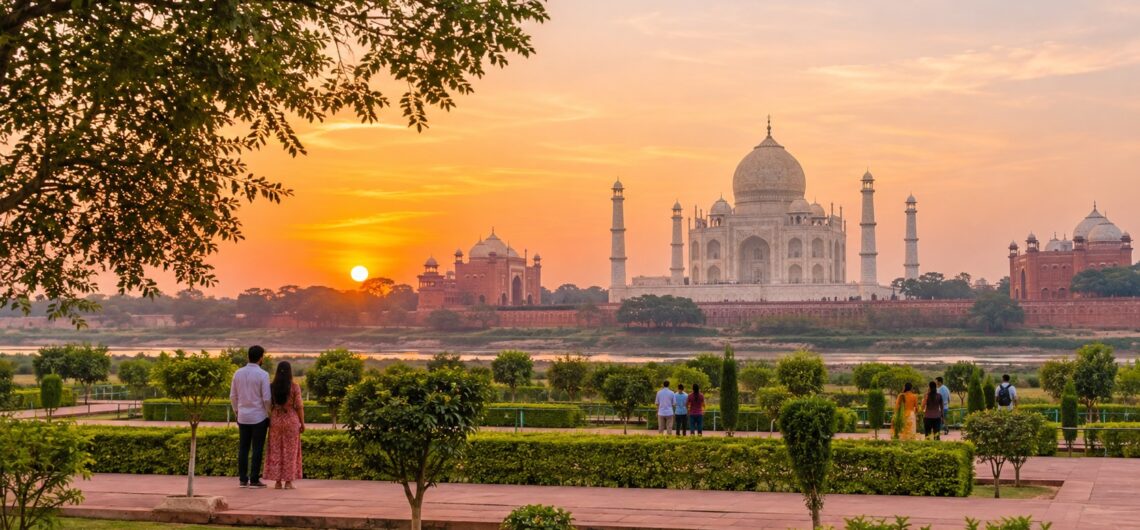
1. Watch the Taj Mahal From Mehtab Bagh at Sunset
If you have already seen the Taj Mahal from its main entrance, experience it from a completely different perspective.
Located across the Yamuna River, Mehtab Bagh is a historic Mughal garden aligned with the Taj Mahal. The garden provides a peaceful setting and a beautiful view of the monument from the opposite riverbank. The District Agra website describes it as an important Taj viewpoint, particularly around sunset.
The experience is less about ticking another attraction off your list and more about slowing down.
Walk through the garden, find a comfortable viewpoint and watch the changing light fall across the Taj Mahal.
For photographers, this is particularly rewarding because the monument appears smaller and more distant, creating a wider composition with the Yamuna and surrounding landscape.
Best for: photographers, couples, families and travellers who enjoy quiet scenic locations.
Travel tip: Check the latest opening information before visiting because timings and visitor rules can change.
2. Explore the Delicate Beauty of Itimad-ud-Daulah
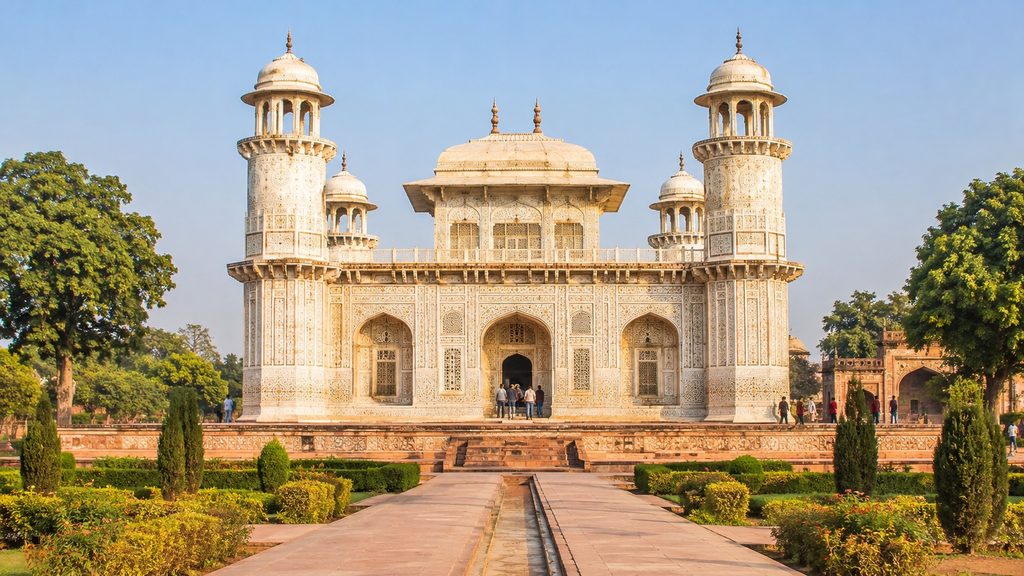
Often called the “Baby Taj,” Itimad-ud-Daulah’s Tomb is one of Agra’s most beautiful smaller monuments.
Built between 1622 and 1628 by Empress Nur Jahan for her father, Mirza Ghiyas Beg, the riverside mausoleum is notable for its white marble, intricate lattice screens and extensive pietra dura inlay. The District Agra administration identifies it as an ASI-protected monument and notes its importance in the development of Mughal marble architecture.
Compared with the Taj Mahal, the atmosphere here can feel much more intimate.
Instead of standing in front of one enormous monument, you can spend time studying small architectural details: geometric patterns, floral inlay, carved marble screens and decorative panels.
This is an excellent stop for travellers interested in Mughal architecture and Indian craftsmanship.
3. Discover the Glazed Tiles of Chini Ka Rauza
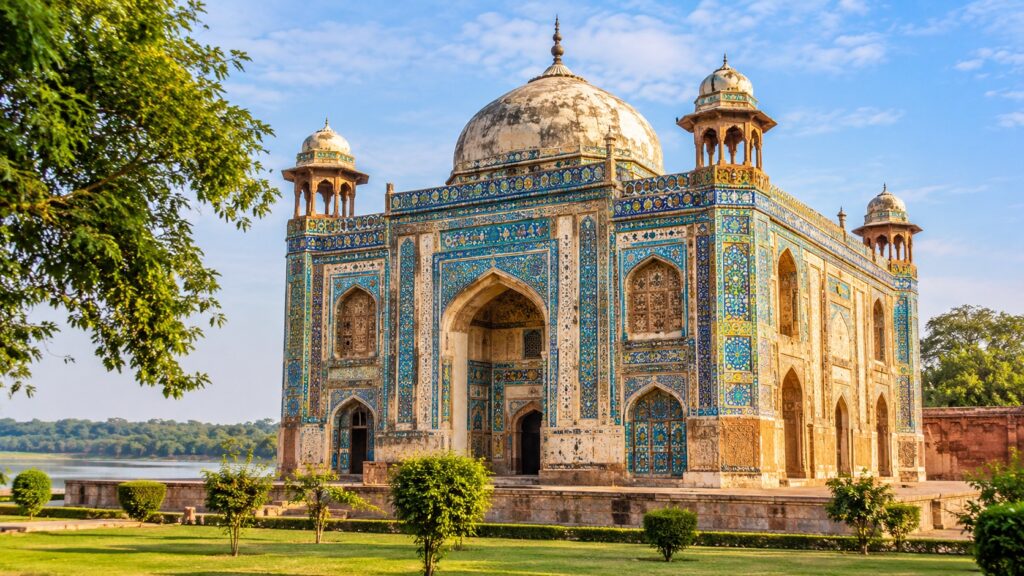
For travellers who want to go further off the usual tourist route, Chini Ka Rauza is worth considering.
The tomb was built around 1635 for Allama Afzal Khan, a poet-scholar and prime minister under Shah Jahan. What makes the monument distinctive is its glazed tile decoration, with blue and turquoise tones still visible on parts of the river-facing façade. The District Agra administration describes it as a hidden gem for visitors interested in Mughal decorative arts.
It is located close to Itimad-ud-Daulah, making the two sites easy to consider as part of the same heritage outing.
The appeal here is different from the Taj Mahal. There is no massive marble dome dominating the landscape. Instead, the attraction lies in the decorative details and the sense of discovering something many first-time visitors miss.
Photography idea: Focus on the glazed tile patterns, architectural details and surrounding gardens rather than simply taking a front-facing photograph.
4. Take a Quiet Walk Through Ram Bagh
Agra’s Mughal heritage is not limited to tombs and forts.
Ram Bagh, also known as Bagh-i-Gul Afshan, is regarded by the District Agra administration as the oldest surviving Mughal garden in India. It was laid out by Emperor Babur around 1528 and features pathways, water channels and pavilions overlooking the Yamuna.
This is a wonderful place to experience a slower side of Agra.
Instead of rushing between monuments, take time to walk through the garden and appreciate the relationship between landscape, water and Mughal architecture.
The garden can also be combined with the nearby Itimad-ud-Daulah and Chini Ka Rauza for a more relaxed riverside heritage circuit.
Best for: travellers who enjoy gardens, history, photography and peaceful sightseeing.
5. Experience Agra’s Living Craft Tradition
Agra’s heritage is not only preserved in monuments. It also survives through local craftsmanship.
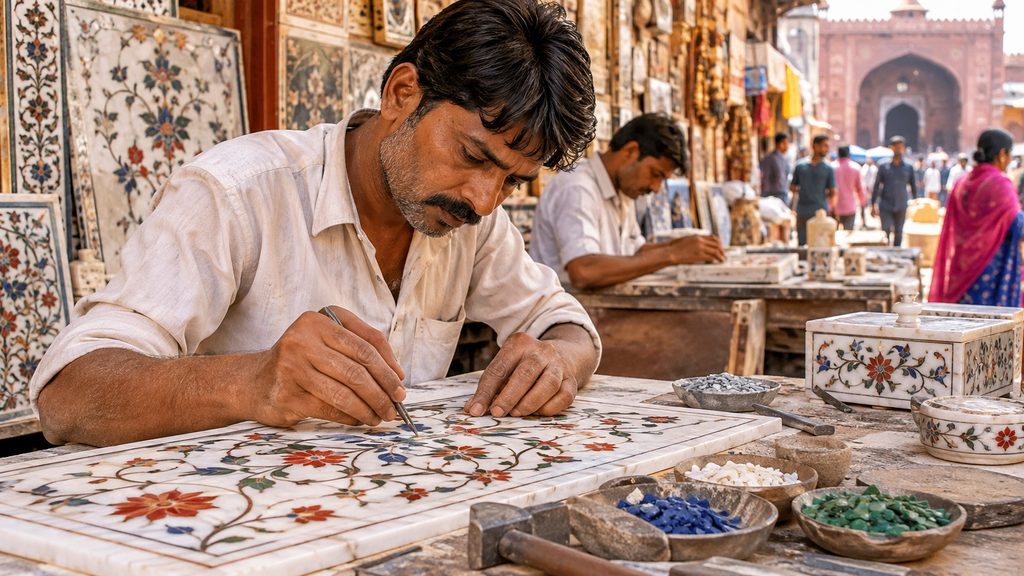
The city is particularly associated with marble inlay or parchin kari, an intricate technique in which small pieces of stone are fitted into marble to create floral and geometric designs. Incredible India notes that this craft became prominent during the Mughal period and has been passed through generations.
Seeing the craft being made can add another layer to your understanding of the Taj Mahal.
Instead of simply photographing the monument’s inlay work, you can learn how artisans create similar decorative patterns by carefully shaping and fitting small pieces of stone.
Agra’s markets also offer marble handicrafts, leather goods, textiles, jewellery and other traditional products. Markets such as Kinari Bazaar, Subhash Bazaar and Raja-ki-Mandi are among the places highlighted by Incredible India for shopping and local crafts.
Travel tip: When buying handicrafts, compare quality and prices, and consider purchasing from reputable shops or government-supported emporia where appropriate.
6. Taste Agra Through Its Local Food
A trip to Agra should not be limited to sightseeing.
Food is one of the easiest ways to experience the city’s cultural identity.
Agra is particularly known for petha, a sweet traditionally prepared from ash gourd. The District Agra administration identifies petha as the district’s One District One Product food item.
But there is more to Agra’s food scene.
Depending on your preferences, explore local favourites such as:
- Bedai with aloo sabzi
- Jalebi
- Agra-style chaat
- Dal moth
- Mughlai dishes
- Petha in different flavours
Incredible India highlights Agra’s Mughlai culinary influence and local foods including bedai, bhalla, dal moth, petha and chaat.
For many visitors, this becomes one of the most memorable parts of the trip because food allows you to experience Agra as a living city rather than simply an open-air museum.
7. Explore Agra’s Historic Markets and Local Streets
The final experience is perhaps the simplest: explore Agra without constantly looking for a monument.
Markets such as Kinari Bazaar and Sadar Bazaar offer an opportunity to see everyday commerce, handicrafts, clothing, jewellery, snacks and local products.
Kinari Bazaar is particularly known for its narrow lanes, traditional shopping and street food, while other markets offer marble work, leather goods, textiles and handicrafts.
The key is to visit with curiosity rather than a shopping checklist.
Look at the architecture, observe the shopfronts, try a local snack and speak respectfully with shopkeepers and artisans.
This is the side of Agra that photographs cannot always capture.
Best Time to Visit Agra
For most travellers, October to March is the most comfortable period for exploring Agra.
The District Agra administration identifies October to March as the best tourist season.
October to March
Generally the most comfortable months for sightseeing, particularly if you plan to spend several hours outdoors.
April to June
Temperatures can become extremely high, so early-morning sightseeing is preferable during the hottest period.
July to September
The monsoon can bring rain and increased humidity, but the gardens and surrounding landscape can look especially fresh.
Regardless of the season, check the latest official opening information before travelling. The Taj Mahal is closed on Fridays, and visitor conditions can change.
Practical Travel Tips for Exploring Agra
A few simple preparations can make your Agra trip considerably easier.
Start early
Morning sightseeing is generally more comfortable, especially during warmer months.
Wear comfortable shoes
Many Agra attractions involve walking across stone, marble and garden pathways.
Carry water and sun protection
Sunglasses, sunscreen and a hat can be useful, particularly outside the cooler months.
Check monument rules
Opening days, ticket rules, security restrictions and entry arrangements can change. Check official information before travelling.
Give yourself enough time
Trying to see everything in a few hours can turn sightseeing into a race. If you want to experience Agra beyond the Taj Mahal, an overnight stay can be more comfortable.
Taj Adventure Holidays’ is designed for travellers who prefer a less rushed visit, with time for Agra’s major monuments and additional sightseeing.
Respect local culture
Dress appropriately at religious sites, ask before photographing people and avoid disturbing worshippers or local communities.
Suggested One-Day Agra Itinerary
If you have only one day, you can still experience more than the Taj Mahal.
Early morning:
Begin with the Taj Mahal, subject to the monument’s current opening schedule.
Late morning:
Continue to Agra Fort and explore its Mughal-era architecture.
Lunch:
Try a local or Mughlai meal.
Early afternoon:
Visit Itimad-ud-Daulah and spend time examining its marble inlay and jali work.
Mid-afternoon:
Continue towards Chini Ka Rauza or Ram Bagh if time and current opening conditions allow.
Late afternoon:
Head to Mehtab Bagh for a different view of the Taj Mahal around sunset.
Evening:
Finish with a local food or market experience, perhaps exploring Kinari Bazaar or another suitable market.
If you want more time for the lesser-known experiences, consider staying overnight rather than trying to fit everything into one day.
Taj Adventure Holidays also offers with same-day and short-trip options, including overnight travel choices.
Frequently Asked Questions About Agra Beyond the Taj Mahal
You can explore Mehtab Bagh, Itimad-ud-Daulah, Chini Ka Rauza, Ram Bagh, Agra’s traditional markets, local food and marble-inlay craftsmanship. Agra also has Agra Fort, Fatehpur Sikri and Akbar’s Tomb at Sikandra.
Yes. A one-day trip is enough for the major highlights, but an overnight stay gives you more time for gardens, smaller monuments, markets, food and photography without rushing.
October through March is generally the most comfortable season for sightseeing. Summer can be very hot, while the monsoon brings rain and humidity.
Mehtab Bagh, Itimad-ud-Daulah and Chini Ka Rauza are particularly worthwhile for travellers interested in architecture and photography. Ram Bagh is another good option for those who enjoy Mughal gardens.
Try local favourites such as petha, bedai with aloo sabzi, jalebi, dal moth and Agra-style chaat. Mughlai cuisine is also an important part of the city’s culinary heritage.
Conclusion: See the Agra That Exists Beyond the Taj
The Taj Mahal may be the reason you arrive in Agra, but it does not have to be the only reason you remember the city.
Look beyond the famous white marble dome and you will find quiet Mughal gardens, delicate riverside tombs, colourful glazed tiles, skilled artisans, traditional foods and lively markets.
These experiences give you a better understanding of Agra as a historic city rather than simply a destination with one famous monument.
Whether you are visiting from Delhi for a day or planning a longer North India journey, allow yourself enough time to slow down and explore.
For travellers who want help arranging transportation, guides and sightseeing, offers Agra and Taj Mahal tour options designed around different travel schedules. You can explore its if you want to continue from Agra to Jaipur and Delhi as part of a wider heritage journey.

Comments