<!-- wp:paragraph -->
<p>Delhi is home to temples, gurdwaras, and spiritual landmarks spread across different parts of the city. Visiting them may look simple on a map, but the way you travel can change the entire experience.</p>
<!-- /wp:paragraph -->
<!-- wp:paragraph -->
<p>A <strong>Delhi Temple Tour by Car</strong> offers direct transfers and greater flexibility, while the Delhi Metro can be faster and more affordable for certain routes. The real difference becomes clear when you consider walking, Metro interchanges, last-mile transport, road traffic, weather, and the location of each spiritual site.</p>
<!-- /wp:paragraph -->
<!-- wp:paragraph -->
<p>So, which option is actually better?</p>
<!-- /wp:paragraph -->
<!-- wp:paragraph -->
<p>The answer depends on the temples you want to visit, who you are travelling with, and how much of <a href="https://www.tajadventureholidays.com/tours/delhi-temples-and-spiritual-tour-by-car/">Delhi you want to cover in one day</a>. This guide compares both options using practical routes and real travel situations, helping you choose the transport that best fits your temple tour.</p>
<!-- /wp:paragraph -->
<!-- wp:heading -->
<h2 class="wp-block-heading">Quick Answer: Is a Car or Metro Better for a Delhi Temple Tour?</h2>
<!-- /wp:heading -->
<!-- wp:paragraph -->
<p>The Metro is usually the better choice for solo travellers, budget visitors, and anyone planning to visit one or two spiritual sites close to convenient stations. It avoids road congestion and provides predictable station-to-station travel.</p>
<!-- /wp:paragraph -->
<!-- wp:paragraph -->
<p>A private car generally works better for families, senior travellers, and visitors <a href="https://www.tajadventureholidays.com/tours/delhi-temples-and-spiritual-tour-by-car/">planning a multi-stop temple itinerary</a> across different parts of Delhi. It reduces transport changes and provides direct travel between stops.</p>
<!-- /wp:paragraph -->
<!-- wp:paragraph -->
<p>However, neither option is always better.</p>
<!-- /wp:paragraph -->
<!-- wp:paragraph -->
<p>A Metro route can be easier for visiting a well-connected South Delhi cluster, while a <strong>Delhi Temple Tour by Car</strong> may be more practical when the itinerary crosses Central, South, and East Delhi.</p>
<!-- /wp:paragraph -->
<!-- wp:paragraph -->
<p>The number of temples matters less than where those temples are located.</p>
<!-- /wp:paragraph -->
<!-- wp:heading -->
<h2 class="wp-block-heading">Why Transport Choice Matters on a Delhi Temple Tour</h2>
<!-- /wp:heading -->
<!-- wp:paragraph -->
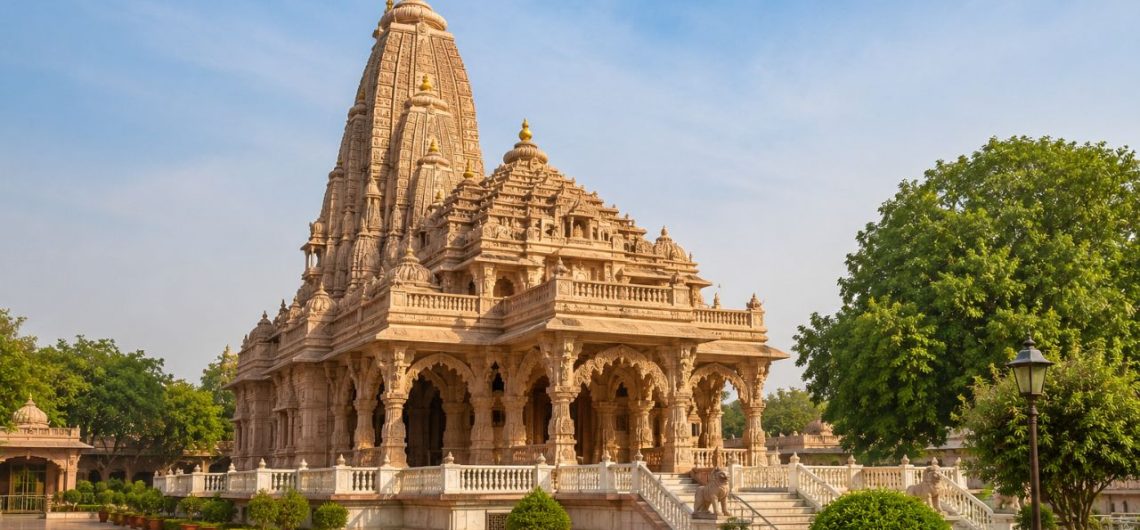
<p>Delhi’s famous spiritual places are not concentrated in one neighbourhood. Gurudwara Bangla Sahib and Birla Mandir are in Central Delhi, while the Lotus Temple, ISKCON Temple, and Chhatarpur Temple are in or around South Delhi. Akshardham lies in another direction.</p>
<!-- /wp:paragraph -->
<!-- wp:paragraph -->
<p>This geography creates the real transport challenge.</p>
<!-- /wp:paragraph -->
<!-- wp:paragraph -->
<p>When travelling by Metro, journey time includes more than the minutes spent on a train. You also need to consider reaching the station, security checks, waiting, line changes, finding the right exit, and travelling from the station to the temple entrance.</p>
<!-- /wp:paragraph -->
<!-- wp:paragraph -->
<p>A car has different challenges. Road congestion, peak-hour traffic, and parking or drop-off arrangements can slow the journey.</p>
<!-- /wp:paragraph -->
<!-- wp:paragraph -->
<p>That is why station-to-station time and temple-to-temple time are not the same thing. A good Delhi temple itinerary must consider the complete journey rather than only the distance shown on a map.</p>
<!-- /wp:paragraph -->
<!-- wp:heading -->
<h2 class="wp-block-heading">Delhi Temple Tour by Car: What Is the Real Experience?</h2>
<!-- /wp:heading -->
<!-- wp:image {"id":2152,"sizeSlug":"large","linkDestination":"none"} -->
<figure class="wp-block-image size-large"><img src="https://www.tajadventureholidays.com/wp-content/uploads/2026/07/Delhi-Temple-Tour-by-Car-vs-Metro-Which-Is-Better-2-1024x624.jpg" alt="Delhi Temple Tour by Car vs Metro: Which Is Better?" class="wp-image-2152"/></figure>
<!-- /wp:image -->
<!-- wp:paragraph -->
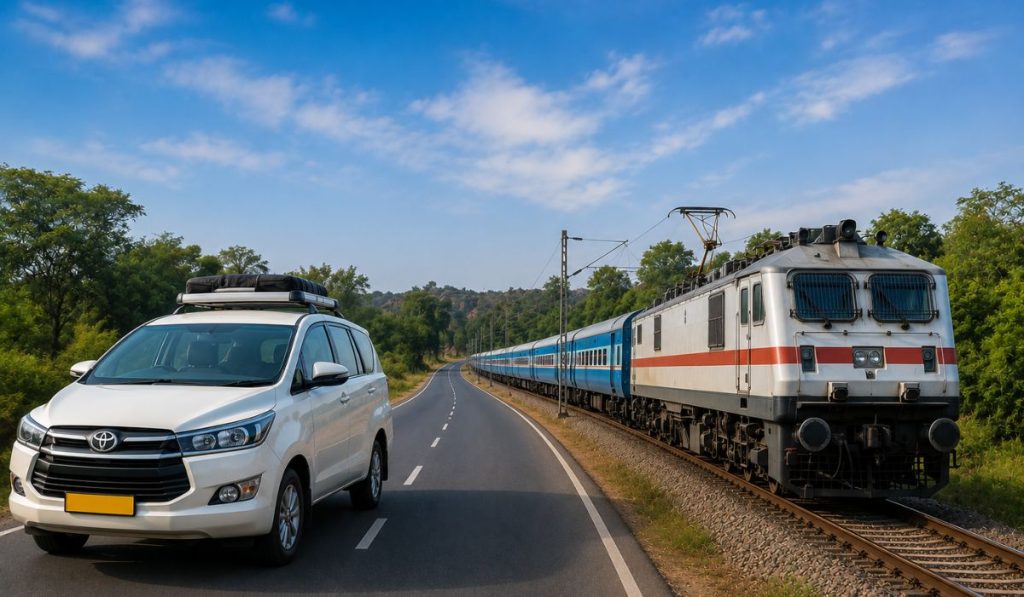
<p>The biggest advantage of a <strong>Delhi Temple Tour by Car</strong> is the ability to travel directly between spiritual sites without returning to a Metro station after every visit.</p>
<!-- /wp:paragraph -->
<!-- wp:paragraph -->
<p>For a multi-stop itinerary, this can make the day feel less fragmented.</p>
<!-- /wp:paragraph -->
<!-- wp:heading {"level":3} -->
<h3 class="wp-block-heading">Direct Travel Between Different Spiritual Sites</h3>
<!-- /wp:heading -->
<!-- wp:paragraph -->
<p>With a private car, you can leave your hotel and travel towards the first temple before continuing directly to the next stop.</p>
<!-- /wp:paragraph -->
<!-- wp:paragraph -->
<p>This becomes useful when the itinerary includes spiritual places in different areas. Instead of walking back to a station, passing through security, changing lines, and arranging last-mile transport, you continue towards the next destination.</p>
<!-- /wp:paragraph -->
<!-- wp:paragraph -->
<p>For travellers who want to see spiritual landmarks as part of a broader exploration of the capital, a <a href="https://www.tajadventureholidays.com/tours/full-day-new-and-old-delhi-city-tour/"><strong>Full Day New and Old Delhi City Tour</strong> </a>can also provide a wider view of Delhi’s religious, historical, and cultural character.</p>
<!-- /wp:paragraph -->
<!-- wp:heading {"level":3} -->
<h3 class="wp-block-heading">More Flexibility During the Day</h3>
<!-- /wp:heading -->
<!-- wp:paragraph -->
<p>A private vehicle also makes it easier to adjust the itinerary.</p>
<!-- /wp:paragraph -->
<!-- wp:paragraph -->
<p>You may want to spend longer at a peaceful spiritual site, take a meal break, skip a crowded stop, or change the route because of traffic. A flexible itinerary can be particularly useful when travelling with children or older family members.</p>
<!-- /wp:paragraph -->
<!-- wp:paragraph -->
<p>There are disadvantages too.</p>
<!-- /wp:paragraph -->
<!-- wp:paragraph -->
<p>Delhi traffic can be unpredictable, especially during busy hours. Some religious sites may have restricted vehicle access or require a short walk from the drop-off point. A private car also costs more than using public transport.</p>
<!-- /wp:paragraph -->
<!-- wp:paragraph -->
<p>The car is therefore not automatically faster. Its main advantage is convenience between multiple stops.</p>
<!-- /wp:paragraph -->
<!-- wp:heading -->
<h2 class="wp-block-heading">Visiting Delhi Temples by Metro: What Is the Real Experience?</h2>
<!-- /wp:heading -->
<!-- wp:paragraph -->
<p>The Delhi Metro is one of the most practical ways to move around the capital, particularly for independent travellers.</p>
<!-- /wp:paragraph -->
<!-- wp:paragraph -->
<p>It is affordable, avoids much of the road congestion, and works especially well when a spiritual site is close to a convenient station. Delhi Tourism’s official Metro itinerary connects stations with several religious attractions, including Bangla Sahib, Laxmi Narayan Mandir, Chhatarpur Temple, ISKCON Temple, Kalkaji Temple, and the Lotus Temple.</p>
<!-- /wp:paragraph -->
<!-- wp:heading {"level":3} -->
<h3 class="wp-block-heading">Where the Delhi Metro Works Well</h3>
<!-- /wp:heading -->
<!-- wp:paragraph -->
<p>The Metro is a strong choice when you are travelling alone, watching your budget, or visiting only a few places.</p>
<!-- /wp:paragraph -->
<!-- wp:paragraph -->
<p>It can also work well when the temples are located within the same general area. South Delhi is a good example because several important spiritual places can be grouped into one route.</p>
<!-- /wp:paragraph -->
<!-- wp:paragraph -->
<p>For travellers comfortable with public transport, walking, and navigating interchanges, the Metro can provide considerable independence.</p>
<!-- /wp:paragraph -->
<!-- wp:heading {"level":3} -->
<h3 class="wp-block-heading">The Problem with Multiple Metro Changes</h3>
<!-- /wp:heading -->
<!-- wp:paragraph -->
<p>The experience becomes less simple when a temple itinerary spreads across Delhi.</p>
<!-- /wp:paragraph -->
<!-- wp:paragraph -->
<p>A typical journey may involve walking to the station, passing through security, waiting for a train, changing lines, finding the correct exit, and then walking or taking an auto-rickshaw to the final destination.</p>
<!-- /wp:paragraph -->
<!-- wp:paragraph -->
<p>None of these steps is necessarily difficult on its own. Repeating them several times in one day, however, can take more time and energy than expected.</p>
<!-- /wp:paragraph -->
<!-- wp:heading -->
<h2 class="wp-block-heading">The Hidden Difference: Last-Mile Travel</h2>
<!-- /wp:heading -->
<!-- wp:paragraph -->
<p>One of the biggest mistakes in planning a temple tour is assuming that “near a Metro station” means “at the Metro station.”</p>
<!-- /wp:paragraph -->
<!-- wp:paragraph -->
<p>The last mile matters.</p>
<!-- /wp:paragraph -->
<!-- wp:paragraph -->
<p>After leaving a station, a visitor may still need to find the correct exit, walk to the entrance, cross a busy road, or take a short auto-rickshaw ride. The same process begins again after the temple visit when it is time to reach the next stop.</p>
<!-- /wp:paragraph -->
<!-- wp:paragraph -->
<p>This can be easy in pleasant winter weather. It may feel very different during the intense heat of May or June, heavy monsoon rain, or a day spent travelling with young children.</p>
<!-- /wp:paragraph -->
<!-- wp:paragraph -->
<p>A Metro journey may look like this:</p>
<!-- /wp:paragraph -->
<!-- wp:paragraph -->
<p>Hotel → station → security → train → interchange → station exit → walk or auto → temple</p>
<!-- /wp:paragraph -->
<!-- wp:paragraph -->
<p>A car journey is generally more direct:</p>
<!-- /wp:paragraph -->
<!-- wp:paragraph -->
<p>Hotel → temple drop-off area</p>
<!-- /wp:paragraph -->
<!-- wp:paragraph -->
<p>Still, the Metro can win when the connection is straightforward and road congestion is severe. The real question is not whether a station exists nearby, but how much effort the complete door-to-door journey requires.</p>
<!-- /wp:paragraph -->
<!-- wp:heading -->
<h2 class="wp-block-heading">Car vs Metro for a Delhi Temple Tour: Key Differences</h2>
<!-- /wp:heading -->
<!-- wp:paragraph -->
<p>Choosing between a car and the Metro becomes easier when you focus on the type of journey you are planning.</p>
<!-- /wp:paragraph -->
<!-- wp:paragraph -->
<p><strong>Best for the lowest travel cost: Metro</strong></p>
<!-- /wp:paragraph -->
<!-- wp:paragraph -->
<p>Public transport is generally the more economical option, especially for solo travellers.</p>
<!-- /wp:paragraph -->
<!-- wp:paragraph -->
<p><strong>Best for comfort: Car</strong></p>
<!-- /wp:paragraph -->
<!-- wp:paragraph -->
<p>A private vehicle reduces repeated walking and transport changes between spiritual sites.</p>
<!-- /wp:paragraph -->
<!-- wp:paragraph -->
<p><strong>Best for solo travellers: Metro</strong></p>
<!-- /wp:paragraph -->
<!-- wp:paragraph -->
<p>Independent visitors can explore at their own pace without paying for a full-day vehicle.</p>
<!-- /wp:paragraph -->
<!-- wp:paragraph -->
<p><strong>Best for families: Car</strong></p>
<!-- /wp:paragraph -->
<!-- wp:paragraph -->
<p>Direct transfers are often easier when travelling with children or senior family members.</p>
<!-- /wp:paragraph -->
<!-- wp:paragraph -->
<p><strong>Best for avoiding road congestion: Metro</strong></p>
<!-- /wp:paragraph -->
<!-- wp:paragraph -->
<p>Metro travel is not affected by surface traffic in the same way as road transport.</p>
<!-- /wp:paragraph -->
<!-- wp:paragraph -->
<p><strong>Best for distant temple stops: Car</strong></p>
<!-- /wp:paragraph -->
<!-- wp:paragraph -->
<p>A <strong>Delhi Temple Tour by Car</strong> becomes more useful when the route crosses several parts of the city.</p>
<!-- /wp:paragraph -->
<!-- wp:paragraph -->
<p><strong>Best for flexibility: Car</strong></p>
<!-- /wp:paragraph -->
<!-- wp:paragraph -->
<p>Changing the order of stops or adding a break is generally easier with private transport.</p>
<!-- /wp:paragraph -->
<!-- wp:heading -->
<h2 class="wp-block-heading">Temple-by-Temple Comparison: Car or Metro?</h2>
<!-- /wp:heading -->
<!-- wp:paragraph -->
<p>The best transport option changes from one spiritual site to another. Instead of choosing one mode for the entire city, it is more useful to look at how each temple fits into the day.</p>
<!-- /wp:paragraph -->
<!-- wp:heading {"level":3} -->
<h3 class="wp-block-heading">Akshardham: Car or Metro?</h3>
<!-- /wp:heading -->
<!-- wp:paragraph -->
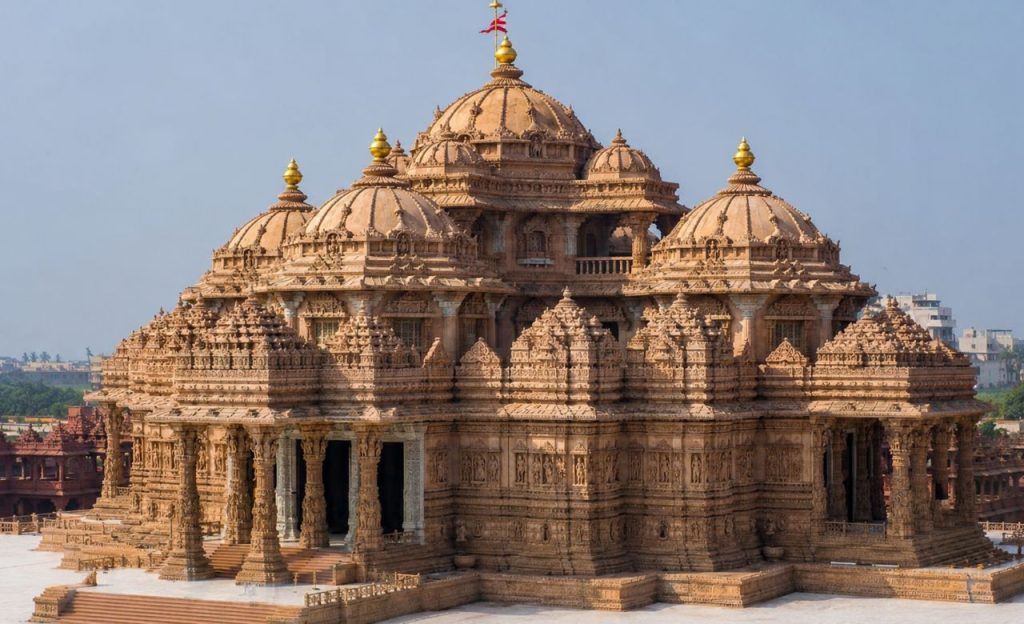
<p>Akshardham is one of the easier major spiritual landmarks to approach by Metro because it has a station serving the area. For travellers visiting Akshardham as a single destination, public transport can be a sensible option.</p>
<!-- /wp:paragraph -->
<!-- wp:paragraph -->
<p>The situation changes when Akshardham is combined with Central or South Delhi.</p>
<!-- /wp:paragraph -->
<!-- wp:paragraph -->
<p>A visitor travelling from one distant spiritual cluster to another must consider the complete transfer, including line changes, walking, and the journey after leaving the next station.</p>
<!-- /wp:paragraph -->
<!-- wp:paragraph -->
<p>A car may therefore be more practical when Akshardham is one stop in a wider multi-area itinerary.</p>
<!-- /wp:paragraph -->
<!-- wp:paragraph -->
<p><strong>Best option for:</strong> Metro for a focused visit; car for a broader cross-Delhi route.</p>
<!-- /wp:paragraph -->
<!-- wp:heading {"level":3} -->
<h3 class="wp-block-heading">Lotus Temple and ISKCON Temple: Car or Metro?</h3>
<!-- /wp:heading -->
<!-- wp:paragraph -->
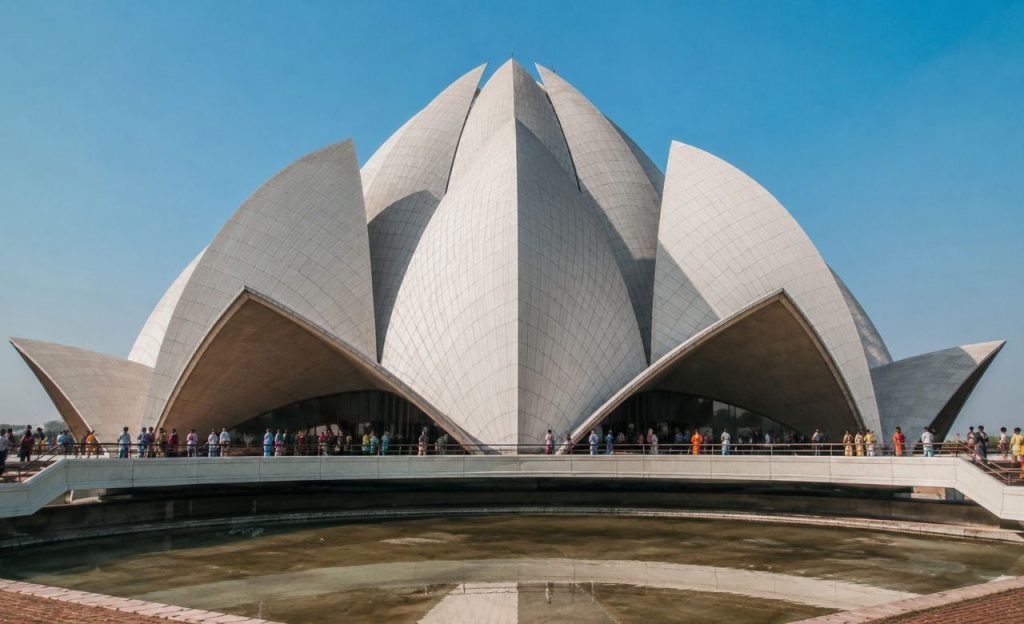
<p>The Lotus Temple and ISKCON Temple are among the strongest candidates for a Metro-based spiritual route.</p>
<!-- /wp:paragraph -->
<!-- wp:paragraph -->
<p>The Kalkaji Mandir and Nehru Place areas provide access to several nearby spiritual attractions, making this part of South Delhi easier to explore as a cluster.</p>
<!-- /wp:paragraph -->
<!-- wp:paragraph -->
<p>This is an important example of why route geography matters.</p>
<!-- /wp:paragraph -->
<!-- wp:paragraph -->
<p>If you only want to explore the Lotus Temple, ISKCON Temple, and nearby spiritual places, the Metro can work well. If your day continues towards Central Delhi or Akshardham, direct road transport may become more convenient.</p>
<!-- /wp:paragraph -->
<!-- wp:paragraph -->
<p>Weather also matters. A manageable walk in January can feel very different in peak summer.</p>
<!-- /wp:paragraph -->
<!-- wp:paragraph -->
<p><strong>Best option for:</strong> Metro for a South Delhi cluster; car for a longer multi-area itinerary.</p>
<!-- /wp:paragraph -->
<!-- wp:heading {"level":3} -->
<h3 class="wp-block-heading">Chhatarpur Temple: Car or Metro?</h3>
<!-- /wp:heading -->
<!-- wp:paragraph -->
<p>Chhatarpur Temple is another spiritual site with Metro accessibility. It can work well for independent travellers who are comfortable using public transport.</p>
<!-- /wp:paragraph -->
<!-- wp:paragraph -->
<p>However, the temple complex itself and the wider route should be considered when planning the day. If Chhatarpur is combined with other South Delhi stops, both Metro and car can be practical depending on the exact itinerary.</p>
<!-- /wp:paragraph -->
<!-- wp:paragraph -->
<p>A car becomes more useful when the route continues across distant parts of Delhi or when reducing walking is a priority.</p>
<!-- /wp:paragraph -->
<!-- wp:paragraph -->
<p><strong>Best option for:</strong> Either option for a focused South Delhi route.</p>
<!-- /wp:paragraph -->
<!-- wp:heading {"level":3} -->
<h3 class="wp-block-heading">Gurudwara Bangla Sahib and Birla Mandir: Car or Metro?</h3>
<!-- /wp:heading -->
<!-- wp:paragraph -->
<p>These two important spiritual places fit naturally into a Central Delhi itinerary.</p>
<!-- /wp:paragraph -->
<!-- wp:paragraph -->
<p>Delhi Tourism’s official Metro itinerary lists both Bangla Sahib and Laxmi Narayan Mandir among attractions accessible from the central Metro network. This makes public transport a realistic choice for independent visitors.</p>
<!-- /wp:paragraph -->
<!-- wp:paragraph -->
<p>A car, however, can be easier when these sites form the beginning of a longer route towards South or East Delhi.</p>
<!-- /wp:paragraph -->
<!-- wp:paragraph -->
<p><strong>Best option for:</strong> Metro for Central Delhi only; car for a wider multi-stop route.</p>
<!-- /wp:paragraph -->
<!-- wp:heading -->
<h2 class="wp-block-heading">Which Delhi Temples Can Be Combined in One Route?</h2>
<!-- /wp:heading -->
<!-- wp:image {"id":2153,"sizeSlug":"large","linkDestination":"none"} -->
<figure class="wp-block-image size-large"><img src="https://www.tajadventureholidays.com/wp-content/uploads/2026/07/Delhi-Temple-Tour-by-Car-vs-Metro-Which-Is-Better-1-1024x624.jpg" alt="Delhi Temple Tour by Car vs Metro: Which Is Better?" class="wp-image-2153"/></figure>
<!-- /wp:image -->
<!-- wp:paragraph -->
<p>A smart temple itinerary should be built around geography rather than a random list of famous places.</p>
<!-- /wp:paragraph -->
<!-- wp:heading {"level":3} -->
<h3 class="wp-block-heading">South Delhi Spiritual Route</h3>
<!-- /wp:heading -->
<!-- wp:paragraph -->
<p>A practical South Delhi cluster can include:</p>
<!-- /wp:paragraph -->
<!-- wp:list -->
<ul class="wp-block-list"><!-- wp:list-item -->
<li>Lotus Temple</li>
<!-- /wp:list-item -->
<!-- wp:list-item -->
<li>ISKCON Temple</li>
<!-- /wp:list-item -->
<!-- wp:list-item -->
<li>Kalkaji Temple</li>
<!-- /wp:list-item --></ul>
<!-- /wp:list -->
<!-- wp:paragraph -->
<p>These sites are located in the same broader part of the city and can be easier to combine than temples scattered across Delhi.</p>
<!-- /wp:paragraph -->
<!-- wp:paragraph -->
<p>For a visitor comfortable with walking and public transport, this can be one of the better Metro-based temple routes.</p>
<!-- /wp:paragraph -->
<!-- wp:heading {"level":3} -->
<h3 class="wp-block-heading">Central Delhi Spiritual Route</h3>
<!-- /wp:heading -->
<!-- wp:paragraph -->
<p>A Central Delhi spiritual route can include:</p>
<!-- /wp:paragraph -->
<!-- wp:list -->
<ul class="wp-block-list"><!-- wp:list-item -->
<li>Gurudwara Bangla Sahib</li>
<!-- /wp:list-item -->
<!-- wp:list-item -->
<li>Birla Mandir</li>
<!-- /wp:list-item -->
<!-- wp:list-item -->
<li>Other nearby religious or cultural landmarks</li>
<!-- /wp:list-item --></ul>
<!-- /wp:list -->
<!-- wp:paragraph -->
<p>Because the route stays within the central part of the city, both Metro and car can work.</p>
<!-- /wp:paragraph -->
<!-- wp:paragraph -->
<p>Travellers who want to combine spiritual stops with heritage landmarks, markets, and historic neighbourhoods may also find a <strong>Full Day New and Old Delhi City Tour</strong> more suitable than a temple-only itinerary.</p>
<!-- /wp:paragraph -->
<!-- wp:heading {"level":3} -->
<h3 class="wp-block-heading">Cross-Delhi Spiritual Route</h3>
<!-- /wp:heading -->
<!-- wp:paragraph -->
<p>A more ambitious itinerary may move from:</p>
<!-- /wp:paragraph -->
<!-- wp:paragraph -->
<p>Central Delhi → South Delhi → East Delhi</p>
<!-- /wp:paragraph -->
<!-- wp:paragraph -->
<p>This is where transport choice becomes more important.</p>
<!-- /wp:paragraph -->
<!-- wp:paragraph -->
<p>The Metro remains possible, but the number of transfers, walks, and last-mile connections increases. A private car may provide a more continuous experience, although road traffic must still be considered.</p>
<!-- /wp:paragraph -->
<!-- wp:heading -->
<h2 class="wp-block-heading">Where Does Your Time Actually Go?</h2>
<!-- /wp:heading -->
<!-- wp:paragraph -->
<p>Travel apps often show only the main journey time. A temple tour includes much more.</p>
<!-- /wp:paragraph -->
<!-- wp:paragraph -->
<p>For Metro travel, the complete transfer may include:</p>
<!-- /wp:paragraph -->
<!-- wp:list -->
<ul class="wp-block-list"><!-- wp:list-item -->
<li>Walking to the station</li>
<!-- /wp:list-item -->
<!-- wp:list-item -->
<li>Station security</li>
<!-- /wp:list-item -->
<!-- wp:list-item -->
<li>Waiting for the train</li>
<!-- /wp:list-item -->
<!-- wp:list-item -->
<li>Changing Metro lines</li>
<!-- /wp:list-item -->
<!-- wp:list-item -->
<li>Finding the correct exit</li>
<!-- /wp:list-item -->
<!-- wp:list-item -->
<li>Walking or taking an auto-rickshaw</li>
<!-- /wp:list-item -->
<!-- wp:list-item -->
<li>Returning to public transport after the visit</li>
<!-- /wp:list-item --></ul>
<!-- /wp:list -->
<!-- wp:paragraph -->
<p>For car travel, time may be spent on:</p>
<!-- /wp:paragraph -->
<!-- wp:list -->
<ul class="wp-block-list"><!-- wp:list-item -->
<li>Road congestion</li>
<!-- /wp:list-item -->
<!-- wp:list-item -->
<li>Traffic signals</li>
<!-- /wp:list-item -->
<!-- wp:list-item -->
<li>Reaching the appropriate drop-off point</li>
<!-- /wp:list-item -->
<!-- wp:list-item -->
<li>Short walks where direct vehicle access is limited</li>
<!-- /wp:list-item --></ul>
<!-- /wp:list -->
<!-- wp:paragraph -->
<p>This is why a 25-minute train journey does not necessarily mean a 25-minute temple transfer.</p>
<!-- /wp:paragraph -->
<!-- wp:paragraph -->
<p>The most useful comparison is door to door, not train time against driving time. A well-planned <strong>Delhi Temple Tour by Car</strong> should also account for peak traffic rather than assuming every road transfer will be quick.</p>
<!-- /wp:paragraph -->
<!-- wp:heading -->
<h2 class="wp-block-heading">The Same Delhi Temple Itinerary by Car vs Metro</h2>
<!-- /wp:heading -->
<!-- wp:paragraph -->
<p>Consider a sample route:</p>
<!-- /wp:paragraph -->
<!-- wp:paragraph -->
<p><strong>Gurudwara Bangla Sahib → Birla Mandir → Lotus Temple → ISKCON Temple</strong></p>
<!-- /wp:paragraph -->
<!-- wp:paragraph -->
<p>This route begins in Central Delhi and then moves south.</p>
<!-- /wp:paragraph -->
<!-- wp:heading {"level":3} -->
<h3 class="wp-block-heading">How the Route Works by Metro</h3>
<!-- /wp:heading -->
<!-- wp:paragraph -->
<p>The Metro can handle much of the longer-distance travel, but the day also includes reaching stations, passing through security, navigating the network, and walking between transport points and spiritual sites.</p>
<!-- /wp:paragraph -->
<!-- wp:paragraph -->
<p>The South Delhi part becomes easier because the Lotus Temple and ISKCON Temple are within the same broader cluster.</p>
<!-- /wp:paragraph -->
<!-- wp:paragraph -->
<p>This option suits travellers who want to keep costs low and do not mind a more active day.</p>
<!-- /wp:paragraph -->
<!-- wp:heading {"level":3} -->
<h3 class="wp-block-heading">How the Same Route Works by Car</h3>
<!-- /wp:heading -->
<!-- wp:paragraph -->
<p>A car provides direct movement from one stop towards the next. There is no need to return to a Metro station after every visit, and breaks can be added more easily.</p>
<!-- /wp:paragraph -->
<!-- wp:paragraph -->
<p>The disadvantage is traffic. A badly timed road transfer during busy hours can reduce the time saved by avoiding Metro changes.</p>
<!-- /wp:paragraph -->
<!-- wp:paragraph -->
<p>For travellers who prefer direct transfers, the <a href="https://www.tajadventureholidays.com/tours/delhi-temples-and-spiritual-tour-by-car/">Delhi Temples and Spiritual Tour by Car</a> is the most relevant option for exploring this type of multi-stop route without planning every individual transport connection.</p>
<!-- /wp:paragraph -->
<!-- wp:heading {"level":3} -->
<h3 class="wp-block-heading">Which Option Wins for This Route?</h3>
<!-- /wp:heading -->
<!-- wp:paragraph -->
<p>For a solo budget traveller, the Metro can be the better choice.</p>
<!-- /wp:paragraph -->
<!-- wp:paragraph -->
<p>For a family, a senior traveller, or someone visiting Delhi for the first time, a car may offer a simpler experience.</p>
<!-- /wp:paragraph -->
<!-- wp:paragraph -->
<p>The route itself does not change. The better transport choice changes with the traveller.</p>
<!-- /wp:paragraph -->
<!-- wp:heading -->
<h2 class="wp-block-heading">Is Metro Plus Auto a Better Third Option?</h2>
<!-- /wp:heading -->
<!-- wp:paragraph -->
<p>The choice is not always limited to Metro or private car.</p>
<!-- /wp:paragraph -->
<!-- wp:paragraph -->
<p>A combination of Metro and auto-rickshaw can work well for many independent visitors. The Metro handles longer journeys, while an auto can help with the last mile between a station and a temple entrance.</p>
<!-- /wp:paragraph -->
<!-- wp:paragraph -->
<p>This approach is particularly useful for solo travellers who want to control costs without walking every part of the route.</p>
<!-- /wp:paragraph -->
<!-- wp:paragraph -->
<p>However, it still requires more planning than a private vehicle. You may need to arrange several short rides, explain destinations, wait for transport, and repeat the process throughout the day.</p>
<!-- /wp:paragraph -->
<!-- wp:paragraph -->
<p>For two or three well-connected spiritual sites, Metro plus auto can be an excellent middle option. For a full-day itinerary across several parts of Delhi, repeated transfers may become tiring.</p>
<!-- /wp:paragraph -->
<!-- wp:heading -->
<h2 class="wp-block-heading">Which Option (Delhi Temple Tour by Car vs Metro) Is Better for Your Type of Trip?</h2>
<!-- /wp:heading -->
<!-- wp:paragraph -->
<p>Different travellers experience the same route differently.</p>
<!-- /wp:paragraph -->
<!-- wp:heading {"level":3} -->
<h3 class="wp-block-heading">Solo Travellers</h3>
<!-- /wp:heading -->
<!-- wp:paragraph -->
<p>The Metro is usually the strongest choice for independent budget travellers. It keeps transport costs low and provides freedom to spend as much time as desired at each stop.</p>
<!-- /wp:paragraph -->
<!-- wp:heading {"level":3} -->
<h3 class="wp-block-heading">Couples</h3>
<!-- /wp:heading -->
<!-- wp:paragraph -->
<p>For two people visiting a small spiritual cluster, the Metro can work well. A car becomes more attractive when comfort, weather, or a longer list of distant temples is important.</p>
<!-- /wp:paragraph -->
<!-- wp:heading {"level":3} -->
<h3 class="wp-block-heading">Families with Children</h3>
<!-- /wp:heading -->
<!-- wp:paragraph -->
<p>Families may find direct transfers easier. Repeated station changes, walking, and last-mile journeys can become tiring over a full day.</p>
<!-- /wp:paragraph -->
<!-- wp:heading {"level":3} -->
<h3 class="wp-block-heading">Senior Travellers</h3>
<!-- /wp:heading -->
<!-- wp:paragraph -->
<p>The amount of walking should be considered carefully. A private vehicle can reduce transport changes, although some walking may still be necessary at large religious complexes.</p>
<!-- /wp:paragraph -->
<!-- wp:heading {"level":3} -->
<h3 class="wp-block-heading">First-Time Foreign Visitors</h3>
<!-- /wp:heading -->
<!-- wp:paragraph -->
<p>The best choice depends on confidence with local public transport and the number of stops planned.</p>
<!-- /wp:paragraph -->
<!-- wp:paragraph -->
<p>Many first-time international travellers visit Delhi as part of <strong>India Golden Triangle Tour Packages</strong>, often with limited sightseeing time before continuing to Agra and Jaipur. For them, route efficiency may matter more than choosing the cheapest transport.</p>
<!-- /wp:paragraph -->
<!-- wp:heading -->
<h2 class="wp-block-heading">Does the Best Option Change by Season?</h2>
<!-- /wp:heading -->
<!-- wp:paragraph -->
<p>Yes. Delhi’s weather can significantly change the experience of using public transport or travelling by road.</p>
<!-- /wp:paragraph -->
<!-- wp:heading {"level":3} -->
<h3 class="wp-block-heading">October to March</h3>
<!-- /wp:heading -->
<!-- wp:paragraph -->
<p>Cooler weather makes walking and last-mile travel more comfortable. The Metro can be a particularly practical option during these months.</p>
<!-- /wp:paragraph -->
<!-- wp:heading {"level":3} -->
<h3 class="wp-block-heading">April to June</h3>
<!-- /wp:heading -->
<!-- wp:paragraph -->
<p>High temperatures can make repeated walks between stations and temple entrances tiring. An air-conditioned car may be more comfortable for a full-day itinerary.</p>
<!-- /wp:paragraph -->
<!-- wp:heading {"level":3} -->
<h3 class="wp-block-heading">July to September</h3>
<!-- /wp:heading -->
<!-- wp:paragraph -->
<p>Rain can complicate walking and short outdoor transfers. Direct vehicle travel can be useful, although monsoon conditions may also slow road traffic.</p>
<!-- /wp:paragraph -->
<!-- wp:paragraph -->
<p>Season alone should not decide the transport. It should be considered together with route length, traveller age, and the number of stops.</p>
<!-- /wp:paragraph -->
<!-- wp:heading -->
<h2 class="wp-block-heading">When Is the Metro Actually the Better Choice?</h2>
<!-- /wp:heading -->
<!-- wp:paragraph -->
<p>Choose the Metro when:</p>
<!-- /wp:paragraph -->
<!-- wp:list -->
<ul class="wp-block-list"><!-- wp:list-item -->
<li>You are travelling alone</li>
<!-- /wp:list-item -->
<!-- wp:list-item -->
<li>Budget is your main priority</li>
<!-- /wp:list-item -->
<!-- wp:list-item -->
<li>You plan to visit only one or two temples</li>
<!-- /wp:list-item -->
<!-- wp:list-item -->
<li>Your chosen spiritual sites form a convenient cluster</li>
<!-- /wp:list-item -->
<!-- wp:list-item -->
<li>You are comfortable walking</li>
<!-- /wp:list-item -->
<!-- wp:list-item -->
<li>You prefer independent sightseeing</li>
<!-- /wp:list-item -->
<!-- wp:list-item -->
<li>Heavy road congestion is expected</li>
<!-- /wp:list-item --></ul>
<!-- /wp:list -->
<!-- wp:paragraph -->
<p>For a simple route, using a private vehicle may add cost without adding much convenience.</p>
<!-- /wp:paragraph -->
<!-- wp:paragraph -->
<p>The Metro is particularly strong when the entire itinerary stays within one well-connected part of Delhi.</p>
<!-- /wp:paragraph -->
<!-- wp:heading -->
<h2 class="wp-block-heading">When Does a Car Make More Sense?</h2>
<!-- /wp:heading -->
<!-- wp:paragraph -->
<p>A <strong>Delhi Temple Tour by Car</strong> generally makes more sense when the day includes spiritual places spread across several areas.</p>
<!-- /wp:paragraph -->
<!-- wp:paragraph -->
<p>It may also suit:</p>
<!-- /wp:paragraph -->
<!-- wp:list -->
<ul class="wp-block-list"><!-- wp:list-item -->
<li>Families with young children</li>
<!-- /wp:list-item -->
<!-- wp:list-item -->
<li>Senior travellers</li>
<!-- /wp:list-item -->
<!-- wp:list-item -->
<li>Visitors who want hotel pickup</li>
<!-- /wp:list-item -->
<!-- wp:list-item -->
<li>Travellers carrying personal belongings</li>
<!-- /wp:list-item -->
<!-- wp:list-item -->
<li>People visiting during very hot or rainy weather</li>
<!-- /wp:list-item -->
<!-- wp:list-item -->
<li>Anyone who wants to adjust the itinerary during the day</li>
<!-- /wp:list-item --></ul>
<!-- /wp:list -->
<!-- wp:paragraph -->
<p>The strongest reason to choose a car is not luxury. It is continuity.</p>
<!-- /wp:paragraph -->
<!-- wp:paragraph -->
<p>Instead of planning every station, interchange, exit, walk, and last-mile connection, you move directly towards the next stop. Travellers who prefer this approach can consider a <strong>private Delhi temple tour by car</strong> when planning a multi-stop spiritual day.</p>
<!-- /wp:paragraph -->
<!-- wp:heading -->
<h2 class="wp-block-heading">Practical Tips for Delhi Temple Tour by Car vs Metro</h2>
<!-- /wp:heading -->
<!-- wp:paragraph -->
<p>Whichever transport you choose, good planning will improve the experience.</p>
<!-- /wp:paragraph -->
<!-- wp:paragraph -->
<p>Start early when possible. Morning travel can help you avoid some of the busiest road conditions and gives you more flexibility later in the day.</p>
<!-- /wp:paragraph -->
<!-- wp:paragraph -->
<p>Check current opening days and visiting hours before departure. Religious sites may have different schedules, special prayer periods, weekly closures, or temporary access changes.</p>
<!-- /wp:paragraph -->
<!-- wp:paragraph -->
<p>Dress respectfully and follow the rules at each place of worship. Footwear may need to be removed, and photography restrictions can vary.</p>
<!-- /wp:paragraph -->
<!-- wp:paragraph -->
<p>Allow extra time for security checks. Major spiritual attractions can have screening procedures, especially during busy periods or festivals.</p>
<!-- /wp:paragraph -->
<!-- wp:paragraph -->
<p>Do not try to visit too many places. Four meaningful stops often create a better experience than rushing through seven or eight.</p>
<!-- /wp:paragraph -->
<!-- wp:paragraph -->
<p>Check the weather before deciding how much walking is realistic, and avoid planning long road transfers during the busiest traffic periods where possible.</p>
<!-- /wp:paragraph -->
<!-- wp:paragraph -->
<p>Most importantly, build the route around location. Nearby spiritual sites should be grouped together before adding a distant temple simply because it is famous.</p>
<!-- /wp:paragraph -->
<!-- wp:heading -->
<h2 class="wp-block-heading">Final Verdict: Delhi Temple Tour by Car vs Metro?</h2>
<!-- /wp:heading -->
<!-- wp:paragraph -->
<p>There is no single winner for every traveller.</p>
<!-- /wp:paragraph -->
<!-- wp:paragraph -->
<p>The Metro is usually better for solo visitors, budget-conscious travellers, and simple routes built around one or two well-connected spiritual sites. It is affordable and can avoid delays caused by road congestion.</p>
<!-- /wp:paragraph -->
<!-- wp:paragraph -->
<p>A car is generally more practical for families, senior travellers, and itineraries that move across several parts of Delhi. It reduces repeated transport changes and makes the day easier to adjust.</p>
<!-- /wp:paragraph -->
<!-- wp:paragraph -->
<p>Metro plus auto-rickshaw offers a useful middle option for independent travellers.</p>
<!-- /wp:paragraph -->
<!-- wp:paragraph -->
<p>In the end, the best way to choose is to map the exact temples first. If they form one compact cluster, use the Metro. If the route crosses Central, South, and East Delhi, a <strong>Delhi Temple Tour by Car</strong> can provide a more convenient and continuous way to experience the city’s spiritual side.</p>
<!-- /wp:paragraph -->
<!-- wp:heading -->
<h2 class="wp-block-heading">FAQa -Delhi Temple Tour by Car vs Metro</h2>
<!-- /wp:heading -->
<!-- wp:heading {"level":3} -->
<h3 class="wp-block-heading">1. Is a Delhi Temple Tour by Car better than using the Metro?</h3>
<!-- /wp:heading -->
<!-- wp:paragraph -->
<p>A Delhi Temple Tour by Car is generally more convenient for families, senior travellers, and visitors covering spiritual sites across different parts of the city. The Metro may be better for solo or budget travellers visiting one or two well-connected temples. The right choice depends mainly on the route, weather, and number of stops.</p>
<!-- /wp:paragraph -->
<!-- wp:heading {"level":3} -->
<h3 class="wp-block-heading">2. Can I visit the major temples in Delhi in one day?</h3>
<!-- /wp:heading -->
<!-- wp:paragraph -->
<p>Yes, you can visit several major temples in one day, but trying to cover every famous spiritual site is unrealistic. A well-planned route usually focuses on three to five places in the same area or along a practical travel direction. Starting early and checking current opening hours can help you use the day more efficiently.</p>
<!-- /wp:paragraph -->
<!-- wp:heading {"level":3} -->
<h3 class="wp-block-heading">3. Which Delhi temples are easiest to visit by Metro?</h3>
<!-- /wp:heading -->
<!-- wp:paragraph -->
<p>The Lotus Temple, ISKCON Temple, Kalkaji Temple, Chhatarpur Temple, and Akshardham are among the spiritual sites with useful Metro access. However, the nearest station may not always be directly at the entrance, so visitors should also consider walking distance, station exits, and possible last-mile transport.</p>
<!-- /wp:paragraph -->
<!-- wp:heading {"level":3} -->
<h3 class="wp-block-heading">4. Is the Delhi Metro suitable for senior travellers visiting temples?</h3>
<!-- /wp:heading -->
<!-- wp:paragraph -->
<p>The Delhi Metro can work for senior travellers who are comfortable walking and changing lines. However, a multi-stop temple itinerary may involve station transfers, security checks, stairs or long corridors, and walking between stations and entrances. For several widely separated sites, direct car travel may be easier.</p>
<!-- /wp:paragraph -->
<!-- wp:heading {"level":3} -->
<h3 class="wp-block-heading">5. How many temples can I realistically visit in Delhi in one day?</h3>
<!-- /wp:heading -->
<!-- wp:paragraph -->
<p>Most travellers can comfortably visit around three to five spiritual sites in one day, depending on their locations and the time spent at each place. Temples in the same geographic cluster are easier to combine. Traffic, Metro interchanges, security checks, prayer times, and meal breaks should also be included in the schedule.</p>
<!-- /wp:paragraph -->
<!-- wp:heading {"level":3} -->
<h3 class="wp-block-heading">6. Is Metro plus auto-rickshaw a good option for a Delhi temple tour?</h3>
<!-- /wp:heading -->
<!-- wp:paragraph -->
<p>Yes. Combining the Metro with auto-rickshaws can be a practical middle option, especially for solo and budget travellers. The Metro handles longer distances, while an auto can help with the last mile. However, arranging several short rides throughout the day may become less convenient on a large multi-stop route.</p>
<!-- /wp:paragraph -->
<!-- wp:heading {"level":3} -->
<h3 class="wp-block-heading">7. What is the best time of year for a Delhi temple tour?</h3>
<!-- /wp:heading -->
<!-- wp:paragraph -->
<p>October to March generally offers more comfortable weather for walking and outdoor transfers. During the hotter months from April to June, a private car may be more comfortable for a full-day route. Monsoon rain can also affect walking and last-mile travel, so transport choice should reflect seasonal conditions.</p>
<!-- /wp:paragraph -->
<!-- wp:heading {"level":3} -->
<h3 class="wp-block-heading">8. Should I book a private car for a first-time Delhi temple tour?</h3>
<!-- /wp:heading -->
<!-- wp:paragraph -->
<p>A private car can be useful for first-time visitors who want to see temples in different areas without planning multiple Metro journeys and last-mile connections. It is particularly practical for families and time-limited travellers. However, independent visitors following a simple, well-connected route may find the Metro sufficient.</p>
<!-- /wp:paragraph -->
<!-- wp:paragraph -->
<p></p>
<!-- /wp:paragraph -->
Delhi is home to temples, gurdwaras, and spiritual landmarks spread across different parts of the city. Visiting them may look simple on a map, but the way you travel can change the entire experience.
A Delhi Temple Tour by Car offers direct transfers and greater flexibility, while the Delhi Metro can be faster and more affordable for certain routes. The real difference becomes clear when you consider walking, Metro interchanges, last-mile transport, road traffic, weather, and the location of each spiritual site.
So, which option is actually better?
The answer depends on the temples you want to visit, who you are travelling with, and how much of Delhi you want to cover in one day. This guide compares both options using practical routes and real travel situations, helping you choose the transport that best fits your temple tour.
Quick Answer: Is a Car or Metro Better for a Delhi Temple Tour?
The Metro is usually the better choice for solo travellers, budget visitors, and anyone planning to visit one or two spiritual sites close to convenient stations. It avoids road congestion and provides predictable station-to-station travel.
A private car generally works better for families, senior travellers, and visitors planning a multi-stop temple itinerary across different parts of Delhi. It reduces transport changes and provides direct travel between stops.
However, neither option is always better.
A Metro route can be easier for visiting a well-connected South Delhi cluster, while a Delhi Temple Tour by Car may be more practical when the itinerary crosses Central, South, and East Delhi.
The number of temples matters less than where those temples are located.
Why Transport Choice Matters on a Delhi Temple Tour
Delhi’s famous spiritual places are not concentrated in one neighbourhood. Gurudwara Bangla Sahib and Birla Mandir are in Central Delhi, while the Lotus Temple, ISKCON Temple, and Chhatarpur Temple are in or around South Delhi. Akshardham lies in another direction.
This geography creates the real transport challenge.
When travelling by Metro, journey time includes more than the minutes spent on a train. You also need to consider reaching the station, security checks, waiting, line changes, finding the right exit, and travelling from the station to the temple entrance.
A car has different challenges. Road congestion, peak-hour traffic, and parking or drop-off arrangements can slow the journey.
That is why station-to-station time and temple-to-temple time are not the same thing. A good Delhi temple itinerary must consider the complete journey rather than only the distance shown on a map.
Delhi Temple Tour by Car: What Is the Real Experience?
The biggest advantage of a Delhi Temple Tour by Car is the ability to travel directly between spiritual sites without returning to a Metro station after every visit.
For a multi-stop itinerary, this can make the day feel less fragmented.
Direct Travel Between Different Spiritual Sites
With a private car, you can leave your hotel and travel towards the first temple before continuing directly to the next stop.
This becomes useful when the itinerary includes spiritual places in different areas. Instead of walking back to a station, passing through security, changing lines, and arranging last-mile transport, you continue towards the next destination.
For travellers who want to see spiritual landmarks as part of a broader exploration of the capital, a Full Day New and Old Delhi City Tourcan also provide a wider view of Delhi’s religious, historical, and cultural character.
More Flexibility During the Day
A private vehicle also makes it easier to adjust the itinerary.
You may want to spend longer at a peaceful spiritual site, take a meal break, skip a crowded stop, or change the route because of traffic. A flexible itinerary can be particularly useful when travelling with children or older family members.
There are disadvantages too.
Delhi traffic can be unpredictable, especially during busy hours. Some religious sites may have restricted vehicle access or require a short walk from the drop-off point. A private car also costs more than using public transport.
The car is therefore not automatically faster. Its main advantage is convenience between multiple stops.
Visiting Delhi Temples by Metro: What Is the Real Experience?
The Delhi Metro is one of the most practical ways to move around the capital, particularly for independent travellers.
It is affordable, avoids much of the road congestion, and works especially well when a spiritual site is close to a convenient station. Delhi Tourism’s official Metro itinerary connects stations with several religious attractions, including Bangla Sahib, Laxmi Narayan Mandir, Chhatarpur Temple, ISKCON Temple, Kalkaji Temple, and the Lotus Temple.
Where the Delhi Metro Works Well
The Metro is a strong choice when you are travelling alone, watching your budget, or visiting only a few places.
It can also work well when the temples are located within the same general area. South Delhi is a good example because several important spiritual places can be grouped into one route.
For travellers comfortable with public transport, walking, and navigating interchanges, the Metro can provide considerable independence.
The Problem with Multiple Metro Changes
The experience becomes less simple when a temple itinerary spreads across Delhi.
A typical journey may involve walking to the station, passing through security, waiting for a train, changing lines, finding the correct exit, and then walking or taking an auto-rickshaw to the final destination.
None of these steps is necessarily difficult on its own. Repeating them several times in one day, however, can take more time and energy than expected.
The Hidden Difference: Last-Mile Travel
One of the biggest mistakes in planning a temple tour is assuming that “near a Metro station” means “at the Metro station.”
The last mile matters.
After leaving a station, a visitor may still need to find the correct exit, walk to the entrance, cross a busy road, or take a short auto-rickshaw ride. The same process begins again after the temple visit when it is time to reach the next stop.
This can be easy in pleasant winter weather. It may feel very different during the intense heat of May or June, heavy monsoon rain, or a day spent travelling with young children.
A Metro journey may look like this:
Hotel → station → security → train → interchange → station exit → walk or auto → temple
A car journey is generally more direct:
Hotel → temple drop-off area
Still, the Metro can win when the connection is straightforward and road congestion is severe. The real question is not whether a station exists nearby, but how much effort the complete door-to-door journey requires.
Car vs Metro for a Delhi Temple Tour: Key Differences
Choosing between a car and the Metro becomes easier when you focus on the type of journey you are planning.
Best for the lowest travel cost: Metro
Public transport is generally the more economical option, especially for solo travellers.
Best for comfort: Car
A private vehicle reduces repeated walking and transport changes between spiritual sites.
Best for solo travellers: Metro
Independent visitors can explore at their own pace without paying for a full-day vehicle.
Best for families: Car
Direct transfers are often easier when travelling with children or senior family members.
Best for avoiding road congestion: Metro
Metro travel is not affected by surface traffic in the same way as road transport.
Best for distant temple stops: Car
A Delhi Temple Tour by Car becomes more useful when the route crosses several parts of the city.
Best for flexibility: Car
Changing the order of stops or adding a break is generally easier with private transport.
Temple-by-Temple Comparison: Car or Metro?
The best transport option changes from one spiritual site to another. Instead of choosing one mode for the entire city, it is more useful to look at how each temple fits into the day.
Akshardham: Car or Metro?
Akshardham is one of the easier major spiritual landmarks to approach by Metro because it has a station serving the area. For travellers visiting Akshardham as a single destination, public transport can be a sensible option.
The situation changes when Akshardham is combined with Central or South Delhi.
A visitor travelling from one distant spiritual cluster to another must consider the complete transfer, including line changes, walking, and the journey after leaving the next station.
A car may therefore be more practical when Akshardham is one stop in a wider multi-area itinerary.
Best option for: Metro for a focused visit; car for a broader cross-Delhi route.
Lotus Temple and ISKCON Temple: Car or Metro?
The Lotus Temple and ISKCON Temple are among the strongest candidates for a Metro-based spiritual route.
The Kalkaji Mandir and Nehru Place areas provide access to several nearby spiritual attractions, making this part of South Delhi easier to explore as a cluster.
This is an important example of why route geography matters.
If you only want to explore the Lotus Temple, ISKCON Temple, and nearby spiritual places, the Metro can work well. If your day continues towards Central Delhi or Akshardham, direct road transport may become more convenient.
Weather also matters. A manageable walk in January can feel very different in peak summer.
Best option for: Metro for a South Delhi cluster; car for a longer multi-area itinerary.
Chhatarpur Temple: Car or Metro?
Chhatarpur Temple is another spiritual site with Metro accessibility. It can work well for independent travellers who are comfortable using public transport.
However, the temple complex itself and the wider route should be considered when planning the day. If Chhatarpur is combined with other South Delhi stops, both Metro and car can be practical depending on the exact itinerary.
A car becomes more useful when the route continues across distant parts of Delhi or when reducing walking is a priority.
Best option for: Either option for a focused South Delhi route.
Gurudwara Bangla Sahib and Birla Mandir: Car or Metro?
These two important spiritual places fit naturally into a Central Delhi itinerary.
Delhi Tourism’s official Metro itinerary lists both Bangla Sahib and Laxmi Narayan Mandir among attractions accessible from the central Metro network. This makes public transport a realistic choice for independent visitors.
A car, however, can be easier when these sites form the beginning of a longer route towards South or East Delhi.
Best option for: Metro for Central Delhi only; car for a wider multi-stop route.
Which Delhi Temples Can Be Combined in One Route?
A smart temple itinerary should be built around geography rather than a random list of famous places.
South Delhi Spiritual Route
A practical South Delhi cluster can include:
Lotus Temple
ISKCON Temple
Kalkaji Temple
These sites are located in the same broader part of the city and can be easier to combine than temples scattered across Delhi.
For a visitor comfortable with walking and public transport, this can be one of the better Metro-based temple routes.
Central Delhi Spiritual Route
A Central Delhi spiritual route can include:
Gurudwara Bangla Sahib
Birla Mandir
Other nearby religious or cultural landmarks
Because the route stays within the central part of the city, both Metro and car can work.
Travellers who want to combine spiritual stops with heritage landmarks, markets, and historic neighbourhoods may also find a Full Day New and Old Delhi City Tour more suitable than a temple-only itinerary.
Cross-Delhi Spiritual Route
A more ambitious itinerary may move from:
Central Delhi → South Delhi → East Delhi
This is where transport choice becomes more important.
The Metro remains possible, but the number of transfers, walks, and last-mile connections increases. A private car may provide a more continuous experience, although road traffic must still be considered.
Where Does Your Time Actually Go?
Travel apps often show only the main journey time. A temple tour includes much more.
For Metro travel, the complete transfer may include:
Walking to the station
Station security
Waiting for the train
Changing Metro lines
Finding the correct exit
Walking or taking an auto-rickshaw
Returning to public transport after the visit
For car travel, time may be spent on:
Road congestion
Traffic signals
Reaching the appropriate drop-off point
Short walks where direct vehicle access is limited
This is why a 25-minute train journey does not necessarily mean a 25-minute temple transfer.
The most useful comparison is door to door, not train time against driving time. A well-planned Delhi Temple Tour by Car should also account for peak traffic rather than assuming every road transfer will be quick.
The Same Delhi Temple Itinerary by Car vs Metro
Consider a sample route:
Gurudwara Bangla Sahib → Birla Mandir → Lotus Temple → ISKCON Temple
This route begins in Central Delhi and then moves south.
How the Route Works by Metro
The Metro can handle much of the longer-distance travel, but the day also includes reaching stations, passing through security, navigating the network, and walking between transport points and spiritual sites.
The South Delhi part becomes easier because the Lotus Temple and ISKCON Temple are within the same broader cluster.
This option suits travellers who want to keep costs low and do not mind a more active day.
How the Same Route Works by Car
A car provides direct movement from one stop towards the next. There is no need to return to a Metro station after every visit, and breaks can be added more easily.
The disadvantage is traffic. A badly timed road transfer during busy hours can reduce the time saved by avoiding Metro changes.
For travellers who prefer direct transfers, the Delhi Temples and Spiritual Tour by Car is the most relevant option for exploring this type of multi-stop route without planning every individual transport connection.
Which Option Wins for This Route?
For a solo budget traveller, the Metro can be the better choice.
For a family, a senior traveller, or someone visiting Delhi for the first time, a car may offer a simpler experience.
The route itself does not change. The better transport choice changes with the traveller.
Is Metro Plus Auto a Better Third Option?
The choice is not always limited to Metro or private car.
A combination of Metro and auto-rickshaw can work well for many independent visitors. The Metro handles longer journeys, while an auto can help with the last mile between a station and a temple entrance.
This approach is particularly useful for solo travellers who want to control costs without walking every part of the route.
However, it still requires more planning than a private vehicle. You may need to arrange several short rides, explain destinations, wait for transport, and repeat the process throughout the day.
For two or three well-connected spiritual sites, Metro plus auto can be an excellent middle option. For a full-day itinerary across several parts of Delhi, repeated transfers may become tiring.
Which Option (Delhi Temple Tour by Car vs Metro) Is Better for Your Type of Trip?
Different travellers experience the same route differently.
Solo Travellers
The Metro is usually the strongest choice for independent budget travellers. It keeps transport costs low and provides freedom to spend as much time as desired at each stop.
Couples
For two people visiting a small spiritual cluster, the Metro can work well. A car becomes more attractive when comfort, weather, or a longer list of distant temples is important.
Families with Children
Families may find direct transfers easier. Repeated station changes, walking, and last-mile journeys can become tiring over a full day.
Senior Travellers
The amount of walking should be considered carefully. A private vehicle can reduce transport changes, although some walking may still be necessary at large religious complexes.
First-Time Foreign Visitors
The best choice depends on confidence with local public transport and the number of stops planned.
Many first-time international travellers visit Delhi as part of India Golden Triangle Tour Packages, often with limited sightseeing time before continuing to Agra and Jaipur. For them, route efficiency may matter more than choosing the cheapest transport.
Does the Best Option Change by Season?
Yes. Delhi’s weather can significantly change the experience of using public transport or travelling by road.
October to March
Cooler weather makes walking and last-mile travel more comfortable. The Metro can be a particularly practical option during these months.
April to June
High temperatures can make repeated walks between stations and temple entrances tiring. An air-conditioned car may be more comfortable for a full-day itinerary.
July to September
Rain can complicate walking and short outdoor transfers. Direct vehicle travel can be useful, although monsoon conditions may also slow road traffic.
Season alone should not decide the transport. It should be considered together with route length, traveller age, and the number of stops.
When Is the Metro Actually the Better Choice?
Choose the Metro when:
You are travelling alone
Budget is your main priority
You plan to visit only one or two temples
Your chosen spiritual sites form a convenient cluster
You are comfortable walking
You prefer independent sightseeing
Heavy road congestion is expected
For a simple route, using a private vehicle may add cost without adding much convenience.
The Metro is particularly strong when the entire itinerary stays within one well-connected part of Delhi.
When Does a Car Make More Sense?
A Delhi Temple Tour by Car generally makes more sense when the day includes spiritual places spread across several areas.
It may also suit:
Families with young children
Senior travellers
Visitors who want hotel pickup
Travellers carrying personal belongings
People visiting during very hot or rainy weather
Anyone who wants to adjust the itinerary during the day
The strongest reason to choose a car is not luxury. It is continuity.
Instead of planning every station, interchange, exit, walk, and last-mile connection, you move directly towards the next stop. Travellers who prefer this approach can consider a private Delhi temple tour by car when planning a multi-stop spiritual day.
Practical Tips for Delhi Temple Tour by Car vs Metro
Whichever transport you choose, good planning will improve the experience.
Start early when possible. Morning travel can help you avoid some of the busiest road conditions and gives you more flexibility later in the day.
Check current opening days and visiting hours before departure. Religious sites may have different schedules, special prayer periods, weekly closures, or temporary access changes.
Dress respectfully and follow the rules at each place of worship. Footwear may need to be removed, and photography restrictions can vary.
Allow extra time for security checks. Major spiritual attractions can have screening procedures, especially during busy periods or festivals.
Do not try to visit too many places. Four meaningful stops often create a better experience than rushing through seven or eight.
Check the weather before deciding how much walking is realistic, and avoid planning long road transfers during the busiest traffic periods where possible.
Most importantly, build the route around location. Nearby spiritual sites should be grouped together before adding a distant temple simply because it is famous.
Final Verdict: Delhi Temple Tour by Car vs Metro?
There is no single winner for every traveller.
The Metro is usually better for solo visitors, budget-conscious travellers, and simple routes built around one or two well-connected spiritual sites. It is affordable and can avoid delays caused by road congestion.
A car is generally more practical for families, senior travellers, and itineraries that move across several parts of Delhi. It reduces repeated transport changes and makes the day easier to adjust.
Metro plus auto-rickshaw offers a useful middle option for independent travellers.
In the end, the best way to choose is to map the exact temples first. If they form one compact cluster, use the Metro. If the route crosses Central, South, and East Delhi, a Delhi Temple Tour by Car can provide a more convenient and continuous way to experience the city’s spiritual side.
FAQa -Delhi Temple Tour by Car vs Metro
1. Is a Delhi Temple Tour by Car better than using the Metro?
A Delhi Temple Tour by Car is generally more convenient for families, senior travellers, and visitors covering spiritual sites across different parts of the city. The Metro may be better for solo or budget travellers visiting one or two well-connected temples. The right choice depends mainly on the route, weather, and number of stops.
2. Can I visit the major temples in Delhi in one day?
Yes, you can visit several major temples in one day, but trying to cover every famous spiritual site is unrealistic. A well-planned route usually focuses on three to five places in the same area or along a practical travel direction. Starting early and checking current opening hours can help you use the day more efficiently.
3. Which Delhi temples are easiest to visit by Metro?
The Lotus Temple, ISKCON Temple, Kalkaji Temple, Chhatarpur Temple, and Akshardham are among the spiritual sites with useful Metro access. However, the nearest station may not always be directly at the entrance, so visitors should also consider walking distance, station exits, and possible last-mile transport.
4. Is the Delhi Metro suitable for senior travellers visiting temples?
The Delhi Metro can work for senior travellers who are comfortable walking and changing lines. However, a multi-stop temple itinerary may involve station transfers, security checks, stairs or long corridors, and walking between stations and entrances. For several widely separated sites, direct car travel may be easier.
5. How many temples can I realistically visit in Delhi in one day?
Most travellers can comfortably visit around three to five spiritual sites in one day, depending on their locations and the time spent at each place. Temples in the same geographic cluster are easier to combine. Traffic, Metro interchanges, security checks, prayer times, and meal breaks should also be included in the schedule.
6. Is Metro plus auto-rickshaw a good option for a Delhi temple tour?
Yes. Combining the Metro with auto-rickshaws can be a practical middle option, especially for solo and budget travellers. The Metro handles longer distances, while an auto can help with the last mile. However, arranging several short rides throughout the day may become less convenient on a large multi-stop route.
7. What is the best time of year for a Delhi temple tour?
October to March generally offers more comfortable weather for walking and outdoor transfers. During the hotter months from April to June, a private car may be more comfortable for a full-day route. Monsoon rain can also affect walking and last-mile travel, so transport choice should reflect seasonal conditions.
8. Should I book a private car for a first-time Delhi temple tour?
A private car can be useful for first-time visitors who want to see temples in different areas without planning multiple Metro journeys and last-mile connections. It is particularly practical for families and time-limited travellers. However, independent visitors following a simple, well-connected route may find the Metro sufficient.
<!-- wp:paragraph -->
<p>Planning a first trip to India can feel exciting and overwhelming at the same time. The country is vast, travel times can be difficult to judge, and choosing where to begin is not always easy. <strong>Golden Triangle India for First-Time Visitors</strong> offers a practical introduction through three of the country’s best-known destinations: <a href="https://www.tajadventureholidays.com/india-golden-triangle-tour-packages/">Delhi, Agra and Jaipur.</a></p>
<!-- /wp:paragraph -->
<!-- wp:paragraph -->
<p>Travellers with limited time often consider a <strong><a href="https://www.tajadventureholidays.com/tours/delhi-agra-and-jaipur-tour-by-car-3n4d/">Delhi, Agra and Jaipur Tour by Car</a></strong> to experience the three cities in a planned four-day journey. But before deciding how to travel, it helps to understand what each destination offers, how many days you really need and what first-time visitors should expect along the way.</p>
<!-- /wp:paragraph -->
<!-- wp:paragraph -->
<p>This guide covers the route, ideal trip length, transport choices, a sample itinerary, practical tips and common mistakes to avoid.</p>
<!-- /wp:paragraph -->
<!-- wp:heading -->
<h2 class="wp-block-heading">What Is the Golden Triangle in India?</h2>
<!-- /wp:heading -->
<!-- wp:paragraph -->
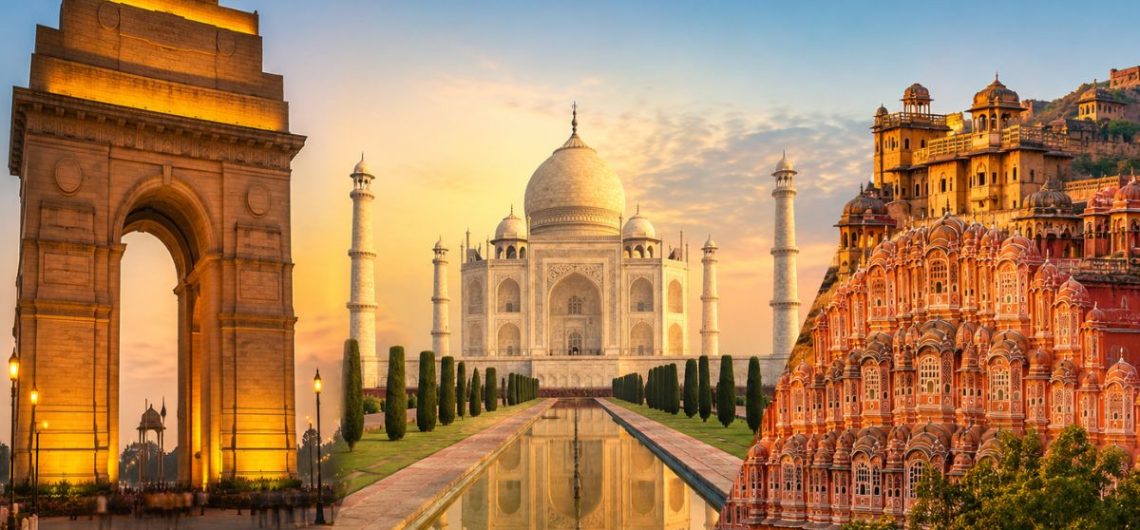
<p>India’s Golden Triangle is a popular travel route connecting Delhi, Agra and Jaipur. Together, these three cities offer a mix of historic neighbourhoods, Mughal monuments, forts, palaces, markets and modern city life.</p>
<!-- /wp:paragraph -->
<!-- wp:paragraph -->
<p>The route is called a “triangle” because the three cities form a roughly triangular shape on the map. Most journeys begin in Delhi, continue south to Agra and then travel west to Jaipur before returning to Delhi or continuing elsewhere in India.</p>
<!-- /wp:paragraph -->
<!-- wp:paragraph -->
<p>For anyone researching <strong>Golden Triangle India for First-Time Visitors</strong>, the appeal is easy to understand. Delhi introduces both the old and modern sides of the country, Agra is home to the Taj Mahal and major Mughal heritage, while Jaipur brings the forts, palaces and traditions of Rajasthan into the journey.</p>
<!-- /wp:paragraph -->
<!-- wp:paragraph -->
<p>The cities are different enough to make each stop feel new, yet close enough to combine in one relatively compact itinerary.</p>
<!-- /wp:paragraph -->
<!-- wp:heading -->
<h2 class="wp-block-heading">Why Is the Golden Triangle Good for First-Time Visitors?</h2>
<!-- /wp:heading -->
<!-- wp:paragraph -->
<p>The Golden Triangle is a good choice for a first trip because it combines some of India’s most recognised landmarks with different cultural experiences in one established travel route.</p>
<!-- /wp:paragraph -->
<!-- wp:paragraph -->
<p>For many people, <strong>Golden Triangle India for First-Time Visitors</strong> works because it removes one of the hardest parts of planning a first journey: deciding which destinations to combine. Instead of trying to cover distant regions, travellers can focus on three cities with well-established road and rail connections.</p>
<!-- /wp:paragraph -->
<!-- wp:paragraph -->
<p>The journey can include UNESCO-listed monuments, historic forts, local bazaars, traditional crafts, different regional foods and contrasting city environments. It also allows visitors to see how quickly the atmosphere changes from one destination to another.</p>
<!-- /wp:paragraph -->
<!-- wp:paragraph -->
<p>However, first-time travellers should also have realistic expectations. Delhi can feel busy, traffic may affect travel times, major monuments can be crowded and a tightly packed itinerary may become tiring.</p>
<!-- /wp:paragraph -->
<!-- wp:paragraph -->
<p>The route is most enjoyable when enough time is allowed for both sightseeing and travel between cities.</p>
<!-- /wp:paragraph -->
<!-- wp:heading -->
<h2 class="wp-block-heading">What to Expect in Delhi, Agra and Jaipur</h2>
<!-- /wp:heading -->
<!-- wp:paragraph -->
<p>Each city plays a different role in the journey. Understanding these differences helps first-time visitors plan their time more realistically.</p>
<!-- /wp:paragraph -->
<!-- wp:heading {"level":3} -->
<h3 class="wp-block-heading">Delhi: Your Introduction to India</h3>
<!-- /wp:heading -->
<!-- wp:paragraph -->
<p>Delhi is often the starting point because many international visitors arrive here by air. It is also the most intense of the three destinations and can provide a memorable introduction to the contrasts of India.</p>
<!-- /wp:paragraph -->
<!-- wp:paragraph -->
<p>Old Delhi is known for historic streets, busy markets, religious sites and a fast-moving atmosphere. New Delhi feels different, with broad avenues, government buildings, gardens and major monuments spread across a much larger area.</p>
<!-- /wp:paragraph -->
<!-- wp:paragraph -->
<p>First-time visitors should avoid trying to see everything in one day. Traffic and distance between attractions can make an overloaded sightseeing plan exhausting.</p>
<!-- /wp:paragraph -->
<!-- wp:paragraph -->
<p>A good Delhi experience is not only about ticking monuments off a list. It is also about noticing the contrast between old neighbourhoods and modern districts, quiet historic sites and busy streets.</p>
<!-- /wp:paragraph -->
<!-- wp:heading {"level":3} -->
<h3 class="wp-block-heading">Agra: The Taj Mahal and Mughal Heritage</h3>
<!-- /wp:heading -->
<!-- wp:paragraph -->
<p>Agra is usually the shortest major stop on the route, but it should not be treated only as a place for a quick Taj Mahal photograph.</p>
<!-- /wp:paragraph -->
<!-- wp:paragraph -->
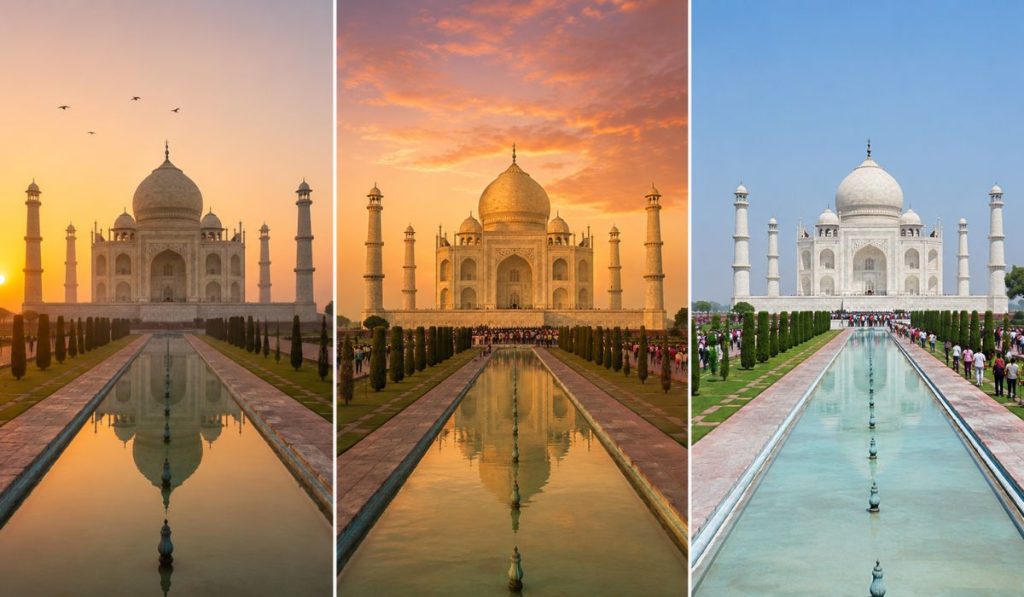
<p>The Taj Mahal is the main reason most visitors come, and an early visit can offer a different experience from the busier hours later in the day. Agra Fort also adds important context to the city’s Mughal history and deserves time in the itinerary.</p>
<!-- /wp:paragraph -->
<!-- wp:paragraph -->
<p>Many rushed trips arrive, visit one or two monuments and leave immediately. Staying overnight can provide more flexibility, particularly for travellers who want to visit the Taj Mahal early in the morning.</p>
<!-- /wp:paragraph -->
<!-- wp:paragraph -->
<p>Agra can also be a useful point to slow down between the larger cities of Delhi and Jaipur.</p>
<!-- /wp:paragraph -->
<!-- wp:heading {"level":3} -->
<h3 class="wp-block-heading">Jaipur: Forts, Palaces and Rajasthan</h3>
<!-- /wp:heading -->
<!-- wp:paragraph -->
<p>Jaipur brings another change of atmosphere. Its forts, palaces, historic gateways and markets introduce visitors to Rajasthan.</p>
<!-- /wp:paragraph -->
<!-- wp:paragraph -->
<p>Amber Fort is one of the major highlights, while the City Palace and Hawa Mahal are central to many sightseeing plans. Markets selling textiles, jewellery and handicrafts add another side to the experience.</p>
<!-- /wp:paragraph -->
<!-- wp:paragraph -->
<p>Jaipur generally needs more time than visitors first expect because some attractions are spread out and major sites can take several hours to explore properly.</p>
<!-- /wp:paragraph -->
<!-- wp:paragraph -->
<p>This variety is one reason <strong>Golden Triangle India for First-Time Visitors</strong> remains such a popular first journey. Delhi introduces the complexity of historic and modern India, Agra centres on Mughal heritage, and Jaipur brings the forts and royal traditions of Rajasthan into the trip.</p>
<!-- /wp:paragraph -->
<!-- wp:heading -->
<h2 class="wp-block-heading">How Many Days Do First-Time Visitors Need?</h2>
<!-- /wp:heading -->
<!-- wp:image {"id":2144,"sizeSlug":"large","linkDestination":"none"} -->
<figure class="wp-block-image size-large"><img src="https://www.tajadventureholidays.com/wp-content/uploads/2026/07/Half-Day-Trip-in-Delhi-How-to-Plan-the-Perfect-4–6-Hour-Trip-2-1024x597.jpg" alt="Golden Triangle India for First-Time Visitors: Complete Travel Guide" class="wp-image-2144"/></figure>
<!-- /wp:image -->
<!-- wp:paragraph -->
<p>For most first-time visitors, four to five days provides a better balance between sightseeing and travel. Three days is possible, but the journey will be fast-paced.</p>
<!-- /wp:paragraph -->
<!-- wp:paragraph -->
<p>When planning <strong>Golden Triangle India for First-Time Visitors</strong>, the right trip length depends on available holiday time, travel style and how comfortable you are with early starts and frequent city changes.</p>
<!-- /wp:paragraph -->
<!-- wp:heading {"level":3} -->
<h3 class="wp-block-heading">3 Days: Fast-Paced but Possible</h3>
<!-- /wp:heading -->
<!-- wp:paragraph -->
<p>A three-day trip usually focuses on the major highlights. There is little time for relaxed exploration, long meals or unplanned stops.</p>
<!-- /wp:paragraph -->
<!-- wp:paragraph -->
<p>This option can work for travellers with a very limited schedule who mainly want to see the most famous attractions in each city. A <strong><a href="https://www.tajadventureholidays.com/tours/delhi-agra-and-jaipur-tour-by-car-2n3d/">3-day Delhi Agra Jaipur tour</a></strong> is best approached with realistic expectations because travel time will take up a significant part of the journey.</p>
<!-- /wp:paragraph -->
<!-- wp:paragraph -->
<p>It is not the best option for everyone, but it can work when time is the main limitation.</p>
<!-- /wp:paragraph -->
<!-- wp:heading {"level":3} -->
<h3 class="wp-block-heading">4 Days: A More Balanced Introduction</h3>
<!-- /wp:heading -->
<!-- wp:paragraph -->
<p>Four days allows slightly more breathing room. Travellers can spend time in Delhi, visit the main sights of Agra and continue to Jaipur without compressing everything into an extremely short schedule.</p>
<!-- /wp:paragraph -->
<!-- wp:paragraph -->
<p>There will still be full sightseeing days, but the overall journey can feel more manageable.</p>
<!-- /wp:paragraph -->
<!-- wp:heading {"level":3} -->
<h3 class="wp-block-heading">5 Days: Better for a Slower First Trip</h3>
<!-- /wp:heading -->
<!-- wp:paragraph -->
<p>Five days is a strong option for travellers who want to see the main attractions without making every day feel like a race.</p>
<!-- /wp:paragraph -->
<!-- wp:paragraph -->
<p>The additional time can be used for a more complete Delhi experience, an overnight stay in Agra or a better-paced visit to Jaipur. It also provides more flexibility if traffic or sightseeing takes longer than expected.</p>
<!-- /wp:paragraph -->
<!-- wp:paragraph -->
<p>For most first-time international visitors, <strong>four to five days offers the best balance between sightseeing and travel time</strong>.</p>
<!-- /wp:paragraph -->
<!-- wp:heading -->
<h2 class="wp-block-heading">What Is the Best Way to Travel the Golden Triangle?</h2>
<!-- /wp:heading -->
<!-- wp:paragraph -->
<p>For most first-time visitors, a private car is the simplest option for the complete route. Trains can also work well for independent travellers who are comfortable arranging station transfers and local transport.</p>
<!-- /wp:paragraph -->
<!-- wp:paragraph -->
<p>Choosing transport is an important part of planning <strong>Golden Triangle India for First-Time Visitors</strong> because the experience changes depending on how the journey is organised.</p>
<!-- /wp:paragraph -->
<!-- wp:heading {"level":3} -->
<h3 class="wp-block-heading">Private Car and Driver</h3>
<!-- /wp:heading -->
<!-- wp:paragraph -->
<p>A private car provides door-to-door travel between hotels and cities. Luggage stays with the traveller, departure times can be more flexible and there is no need to arrange separate transfers to and from railway stations.</p>
<!-- /wp:paragraph -->
<!-- wp:paragraph -->
<p>Road travel also makes it easier to include suitable stops between destinations.</p>
<!-- /wp:paragraph -->
<!-- wp:paragraph -->
<p>The disadvantage is that road journeys can be affected by traffic, so travel times should never be planned too tightly.</p>
<!-- /wp:paragraph -->
<!-- wp:heading {"level":3} -->
<h3 class="wp-block-heading">Train</h3>
<!-- /wp:heading -->
<!-- wp:paragraph -->
<p>Trains can be useful for travellers who enjoy independent travel and are comfortable managing bookings, luggage and local transfers.</p>
<!-- /wp:paragraph -->
<!-- wp:paragraph -->
<p>A train journey may reduce some road travel, but visitors still need transport between hotels, railway stations and sightseeing locations.</p>
<!-- /wp:paragraph -->
<!-- wp:heading {"level":3} -->
<h3 class="wp-block-heading">Group Tour</h3>
<!-- /wp:heading -->
<!-- wp:paragraph -->
<p>Group tours can suit people who prefer a fixed itinerary and enjoy travelling with others. The main limitation is flexibility because departure times and sightseeing schedules are usually shared with the group.</p>
<!-- /wp:paragraph -->
<!-- wp:paragraph -->
<p>There is no single transport option that is best for everyone. The right choice depends on budget, independence, comfort and the amount of planning a traveller wants to handle personally.</p>
<!-- /wp:paragraph -->
<!-- wp:heading -->
<h2 class="wp-block-heading">A Simple 5-Day Golden Triangle Itinerary for First-Time Visitors</h2>
<!-- /wp:heading -->
<!-- wp:paragraph -->
<p>A five-day itinerary gives travellers enough time to understand the route without turning the journey into a long holiday.</p>
<!-- /wp:paragraph -->
<!-- wp:paragraph -->
<p>This sample plan shows how <strong>Golden Triangle India for First-Time Visitors</strong> can be organised at a manageable pace.</p>
<!-- /wp:paragraph -->
<!-- wp:heading {"level":3} -->
<h3 class="wp-block-heading">Day 1: Arrive and Explore Delhi</h3>
<!-- /wp:heading -->
<!-- wp:paragraph -->
<p>Use the first day for arrival and light sightseeing. Travellers arriving after a long international flight should avoid planning a full day of monuments immediately.</p>
<!-- /wp:paragraph -->
<!-- wp:paragraph -->
<p>Depending on arrival time, the day can include a relaxed drive, one or two nearby attractions or simply time to recover.</p>
<!-- /wp:paragraph -->
<!-- wp:heading {"level":3} -->
<h3 class="wp-block-heading">Day 2: Explore Old and New Delhi</h3>
<!-- /wp:heading -->
<!-- wp:paragraph -->
<p>Spend a full day seeing the contrasting sides of the capital. Rather than trying to cover every attraction, select a realistic combination of historic sites, neighbourhoods and major landmarks.</p>
<!-- /wp:paragraph -->
<!-- wp:heading {"level":3} -->
<h3 class="wp-block-heading">Day 3: Travel from Delhi to Agra</h3>
<!-- /wp:heading -->
<!-- wp:paragraph -->
<p>Travel to Agra and visit key Mughal sites. Depending on arrival time and personal preference, the Taj Mahal can be planned for this day or early the following morning.</p>
<!-- /wp:paragraph -->
<!-- wp:heading {"level":3} -->
<h3 class="wp-block-heading">Day 4: Visit the Taj Mahal and Continue to Jaipur</h3>
<!-- /wp:heading -->
<!-- wp:paragraph -->
<p>An early Taj Mahal visit can be followed by breakfast and the journey towards Jaipur. Keep enough time for rest after arrival.</p>
<!-- /wp:paragraph -->
<!-- wp:heading {"level":3} -->
<h3 class="wp-block-heading">Day 5: Explore Jaipur</h3>
<!-- /wp:heading -->
<!-- wp:paragraph -->
<p>Visit the main forts and palaces, but avoid placing too many large attractions into a single day.</p>
<!-- /wp:paragraph -->
<!-- wp:paragraph -->
<p>Travellers who prefer this slower pace can compare it with a <strong><a href="https://www.tajadventureholidays.com/tours/delhi-agra-and-jaipur-tour-by-car-4n5d/">5-day Delhi Agra Jaipur tour</a></strong> before deciding whether the schedule matches their travel style.</p>
<!-- /wp:paragraph -->
<!-- wp:heading -->
<h2 class="wp-block-heading">Best Time to Visit the Golden Triangle for the First Time</h2>
<!-- /wp:heading -->
<!-- wp:paragraph -->
<p>October to March is generally the most comfortable period for sightseeing because temperatures are usually more suitable for spending long hours outdoors than during the hottest summer months.</p>
<!-- /wp:paragraph -->
<!-- wp:paragraph -->
<p>From October onwards, conditions become more comfortable for walking around forts, monuments and markets. December and January can bring cold mornings and reduced visibility on some days, so warm layers may be useful.</p>
<!-- /wp:paragraph -->
<!-- wp:paragraph -->
<p>April to June is much hotter. Sightseeing is still possible, but early starts, breaks and careful planning become more important.</p>
<!-- /wp:paragraph -->
<!-- wp:paragraph -->
<p>July to September is the monsoon period. Rain may affect outdoor plans, although the route can be less crowded than during the main winter travel season.</p>
<!-- /wp:paragraph -->
<!-- wp:paragraph -->
<p>The best time ultimately depends on personal comfort, budget and tolerance for heat, crowds or rain.</p>
<!-- /wp:paragraph -->
<!-- wp:heading -->
<h2 class="wp-block-heading">Essential Tips for Your First Golden Triangle Trip</h2>
<!-- /wp:heading -->
<!-- wp:paragraph -->
<p>Good planning can make <strong>Golden Triangle India for First-Time Visitors</strong> much easier and more enjoyable. The biggest improvement often comes from creating a realistic schedule rather than trying to see as much as possible.</p>
<!-- /wp:paragraph -->
<!-- wp:paragraph -->
<p>Keep these points in mind:</p>
<!-- /wp:paragraph -->
<!-- wp:list -->
<ul class="wp-block-list"><!-- wp:list-item -->
<li>Start major sightseeing early when possible.</li>
<!-- /wp:list-item -->
<!-- wp:list-item -->
<li>Do not plan too many large monuments on the same day.</li>
<!-- /wp:list-item -->
<!-- wp:list-item -->
<li>Allow extra time for traffic and city transfers.</li>
<!-- /wp:list-item -->
<!-- wp:list-item -->
<li>Check monument opening days before finalising the itinerary.</li>
<!-- /wp:list-item -->
<!-- wp:list-item -->
<li>Remember that the Taj Mahal is closed to general visitors on Fridays.</li>
<!-- /wp:list-item -->
<!-- wp:list-item -->
<li>Dress respectfully when visiting religious places.</li>
<!-- /wp:list-item -->
<!-- wp:list-item -->
<li>Carry some cash for smaller expenses, but avoid carrying unnecessary amounts.</li>
<!-- /wp:list-item -->
<!-- wp:list-item -->
<li>Keep passports and important travel documents secure.</li>
<!-- /wp:list-item -->
<!-- wp:list-item -->
<li>Confirm exactly what is included before booking transport or a tour.</li>
<!-- /wp:list-item -->
<!-- wp:list-item -->
<li>Leave some free time for rest, meals and unexpected delays.</li>
<!-- /wp:list-item --></ul>
<!-- /wp:list -->
<!-- wp:paragraph -->
<p>A first trip often becomes tiring because travellers underestimate distances and overestimate how much sightseeing they can comfortably complete in one day.</p>
<!-- /wp:paragraph -->
<!-- wp:heading -->
<h2 class="wp-block-heading">Common Mistakes First-Time Visitors Should Avoid</h2>
<!-- /wp:heading -->
<!-- wp:paragraph -->
<p>The most common mistake is trying to complete the entire route too quickly. A short itinerary may look efficient on paper, but road travel, hotel check-ins, meals and sightseeing all require time.</p>
<!-- /wp:paragraph -->
<!-- wp:paragraph -->
<p>Another mistake is planning attractions without checking weekly closure days. This can lead to disappointment, especially when a major monument is central to the trip.</p>
<!-- /wp:paragraph -->
<!-- wp:paragraph -->
<p>First-time visitors should also avoid:</p>
<!-- /wp:paragraph -->
<!-- wp:list -->
<ul class="wp-block-list"><!-- wp:list-item -->
<li>assuming road journeys will always take the minimum estimated time;</li>
<!-- /wp:list-item -->
<!-- wp:list-item -->
<li>scheduling too many major attractions in one day;</li>
<!-- /wp:list-item -->
<!-- wp:list-item -->
<li>choosing hotels only because they have the lowest price;</li>
<!-- /wp:list-item -->
<!-- wp:list-item -->
<li>leaving no time to rest after long journeys;</li>
<!-- /wp:list-item -->
<!-- wp:list-item -->
<li>carrying an unnecessarily large amount of luggage;</li>
<!-- /wp:list-item -->
<!-- wp:list-item -->
<li>assuming every tour or transport service includes the same things.</li>
<!-- /wp:list-item --></ul>
<!-- /wp:list -->
<!-- wp:paragraph -->
<p>It is also worth checking the location of a hotel before booking. A cheaper property far from planned sightseeing areas may add more travel time each day.</p>
<!-- /wp:paragraph -->
<!-- wp:paragraph -->
<p>A flexible itinerary with fewer rushed stops usually creates a better experience than a longer list of places visited only briefly.</p>
<!-- /wp:paragraph -->
<!-- wp:heading -->
<h2 class="wp-block-heading">Can You Add Ranthambore to Your First Golden Triangle Trip?</h2>
<!-- /wp:heading -->
<!-- wp:image {"id":2145,"sizeSlug":"large","linkDestination":"none"} -->
<figure class="wp-block-image size-large"><img src="https://www.tajadventureholidays.com/wp-content/uploads/2026/07/Half-Day-Trip-in-Delhi-How-to-Plan-the-Perfect-4–6-Hour-Trip-3-1024x597.jpg" alt="Golden Triangle India for First-Time Visitors: Complete Travel Guide" class="wp-image-2145"/></figure>
<!-- /wp:image -->
<!-- wp:paragraph -->
<p>Yes, Ranthambore can be added to the route, but it is better for travellers who specifically want a wildlife experience and are comfortable with additional travel.</p>
<!-- /wp:paragraph -->
<!-- wp:paragraph -->
<p>Adding Ranthambore changes the character of the journey. Instead of focusing entirely on cities, monuments and cultural attractions, visitors also get the chance to experience a different landscape and plan a wildlife safari.</p>
<!-- /wp:paragraph -->
<!-- wp:paragraph -->
<p>For people researching <strong>Golden Triangle India for First-Time Visitors</strong>, the main question is whether there is enough time. Adding another destination to a short itinerary can make the journey much faster-paced.</p>
<!-- /wp:paragraph -->
<!-- wp:paragraph -->
<p>Travellers interested in combining heritage with wildlife can consider a <strong>Golden Triangle tour with Ranthambore</strong>, but should compare the travel time carefully before deciding.</p>
<!-- /wp:paragraph -->
<!-- wp:paragraph -->
<p>Those who want a slower introduction to India may prefer to keep their first journey focused only on Delhi, Agra and Jaipur.</p>
<!-- /wp:paragraph -->
<!-- wp:heading -->
<h2 class="wp-block-heading">Is the Golden Triangle Right for Your First India Trip?</h2>
<!-- /wp:heading -->
<!-- wp:paragraph -->
<p>The Golden Triangle is well suited to travellers who want to experience several different sides of northern India within one journey. It can work particularly well for history lovers, couples, families, photographers and visitors with around four to seven days available.</p>
<!-- /wp:paragraph -->
<!-- wp:paragraph -->
<p>However, it may not suit travellers looking only for beaches, a very slow rural holiday or a trip with minimal city changes.</p>
<!-- /wp:paragraph -->
<!-- wp:paragraph -->
<p>The key to enjoying <strong>Golden Triangle India for First-Time Visitors</strong> is choosing a realistic pace. Once you know how many days you have, how much sightseeing you enjoy and how you prefer to travel, the route becomes much easier to plan.</p>
<!-- /wp:paragraph -->
<!-- wp:paragraph -->
<p>The next step is to compare <strong>India Golden Triangle Tour Packages</strong> and choose an itinerary that matches your available time and preferred travel style rather than simply selecting the shortest option.</p>
<!-- /wp:paragraph -->
<!-- wp:heading -->
<h2 class="wp-block-heading">Frequently Asked Questions</h2>
<!-- /wp:heading -->
<!-- wp:heading {"level":3} -->
<h3 class="wp-block-heading">1. Is the Golden Triangle good for first-time visitors to India?</h3>
<!-- /wp:heading -->
<!-- wp:paragraph -->
<p>Yes. The Golden Triangle is one of the most practical routes for a first trip because it connects three well-known destinations with different experiences. Delhi offers historic and modern city life, Agra is known for Mughal heritage and the Taj Mahal, while Jaipur introduces travellers to the forts and palaces of Rajasthan.</p>
<!-- /wp:paragraph -->
<!-- wp:heading {"level":3} -->
<h3 class="wp-block-heading">2. How many days are enough for the Golden Triangle?</h3>
<!-- /wp:heading -->
<!-- wp:paragraph -->
<p>Four to five days is enough for most first-time visitors to see the major highlights of Delhi, Agra and Jaipur. A three-day trip is possible but fast-paced, while six or seven days provides more time for relaxed sightseeing, local experiences and rest between longer travel days.</p>
<!-- /wp:paragraph -->
<!-- wp:heading {"level":3} -->
<h3 class="wp-block-heading">3. Which city should I start the Golden Triangle from?</h3>
<!-- /wp:heading -->
<!-- wp:paragraph -->
<p>Most travellers start in Delhi because it is a major international arrival point and provides a logical route towards Agra and then Jaipur. However, the journey can also be completed in reverse depending on flight plans, hotel arrangements and any additional destinations included before or after the trip.</p>
<!-- /wp:paragraph -->
<!-- wp:heading {"level":3} -->
<h3 class="wp-block-heading">4. Is it better to travel the Golden Triangle by car or train?</h3>
<!-- /wp:heading -->
<!-- wp:paragraph -->
<p>A private car is often more convenient for first-time visitors because it provides door-to-door travel and greater flexibility. Trains can work well for independent travellers, but separate transfers are still needed between railway stations, hotels and attractions. The best choice depends on comfort, budget and travel style.</p>
<!-- /wp:paragraph -->
<!-- wp:heading {"level":3} -->
<h3 class="wp-block-heading">5. What is the best month for a first Golden Triangle trip?</h3>
<!-- /wp:heading -->
<!-- wp:paragraph -->
<p>The period from October to March is generally preferred for comfortable sightseeing. November and February can be particularly pleasant, although conditions vary from year to year. December and January may have cold mornings, while April to June can be very hot for long days of outdoor sightseeing.</p>
<!-- /wp:paragraph -->
<!-- wp:heading {"level":3} -->
<h3 class="wp-block-heading">6. Can I include Ranthambore in a Golden Triangle itinerary?</h3>
<!-- /wp:heading -->
<!-- wp:paragraph -->
<p>Yes. Ranthambore can be added for travellers who want to combine historic cities with a wildlife experience. However, the extension adds more travel time, so it works best when the itinerary is planned carefully. Visitors who prefer a slower first trip may want to focus only on Delhi, Agra and Jaipur.</p>
<!-- /wp:paragraph -->
<!-- wp:paragraph -->
<p></p>
<!-- /wp:paragraph -->
Planning a first trip to India can feel exciting and overwhelming at the same time. The country is vast, travel times can be difficult to judge, and choosing where to begin is not always easy. Golden Triangle India for First-Time Visitors offers a practical introduction through three of the country’s best-known destinations: Delhi, Agra and Jaipur.
Travellers with limited time often consider a Delhi, Agra and Jaipur Tour by Car to experience the three cities in a planned four-day journey. But before deciding how to travel, it helps to understand what each destination offers, how many days you really need and what first-time visitors should expect along the way.
This guide covers the route, ideal trip length, transport choices, a sample itinerary, practical tips and common mistakes to avoid.
What Is the Golden Triangle in India?
India’s Golden Triangle is a popular travel route connecting Delhi, Agra and Jaipur. Together, these three cities offer a mix of historic neighbourhoods, Mughal monuments, forts, palaces, markets and modern city life.
The route is called a “triangle” because the three cities form a roughly triangular shape on the map. Most journeys begin in Delhi, continue south to Agra and then travel west to Jaipur before returning to Delhi or continuing elsewhere in India.
For anyone researching Golden Triangle India for First-Time Visitors, the appeal is easy to understand. Delhi introduces both the old and modern sides of the country, Agra is home to the Taj Mahal and major Mughal heritage, while Jaipur brings the forts, palaces and traditions of Rajasthan into the journey.
The cities are different enough to make each stop feel new, yet close enough to combine in one relatively compact itinerary.
Why Is the Golden Triangle Good for First-Time Visitors?
The Golden Triangle is a good choice for a first trip because it combines some of India’s most recognised landmarks with different cultural experiences in one established travel route.
For many people, Golden Triangle India for First-Time Visitors works because it removes one of the hardest parts of planning a first journey: deciding which destinations to combine. Instead of trying to cover distant regions, travellers can focus on three cities with well-established road and rail connections.
The journey can include UNESCO-listed monuments, historic forts, local bazaars, traditional crafts, different regional foods and contrasting city environments. It also allows visitors to see how quickly the atmosphere changes from one destination to another.
However, first-time travellers should also have realistic expectations. Delhi can feel busy, traffic may affect travel times, major monuments can be crowded and a tightly packed itinerary may become tiring.
The route is most enjoyable when enough time is allowed for both sightseeing and travel between cities.
What to Expect in Delhi, Agra and Jaipur
Each city plays a different role in the journey. Understanding these differences helps first-time visitors plan their time more realistically.
Delhi: Your Introduction to India
Delhi is often the starting point because many international visitors arrive here by air. It is also the most intense of the three destinations and can provide a memorable introduction to the contrasts of India.
Old Delhi is known for historic streets, busy markets, religious sites and a fast-moving atmosphere. New Delhi feels different, with broad avenues, government buildings, gardens and major monuments spread across a much larger area.
First-time visitors should avoid trying to see everything in one day. Traffic and distance between attractions can make an overloaded sightseeing plan exhausting.
A good Delhi experience is not only about ticking monuments off a list. It is also about noticing the contrast between old neighbourhoods and modern districts, quiet historic sites and busy streets.
Agra: The Taj Mahal and Mughal Heritage
Agra is usually the shortest major stop on the route, but it should not be treated only as a place for a quick Taj Mahal photograph.
The Taj Mahal is the main reason most visitors come, and an early visit can offer a different experience from the busier hours later in the day. Agra Fort also adds important context to the city’s Mughal history and deserves time in the itinerary.
Many rushed trips arrive, visit one or two monuments and leave immediately. Staying overnight can provide more flexibility, particularly for travellers who want to visit the Taj Mahal early in the morning.
Agra can also be a useful point to slow down between the larger cities of Delhi and Jaipur.
Jaipur: Forts, Palaces and Rajasthan
Jaipur brings another change of atmosphere. Its forts, palaces, historic gateways and markets introduce visitors to Rajasthan.
Amber Fort is one of the major highlights, while the City Palace and Hawa Mahal are central to many sightseeing plans. Markets selling textiles, jewellery and handicrafts add another side to the experience.
Jaipur generally needs more time than visitors first expect because some attractions are spread out and major sites can take several hours to explore properly.
This variety is one reason Golden Triangle India for First-Time Visitors remains such a popular first journey. Delhi introduces the complexity of historic and modern India, Agra centres on Mughal heritage, and Jaipur brings the forts and royal traditions of Rajasthan into the trip.
How Many Days Do First-Time Visitors Need?
For most first-time visitors, four to five days provides a better balance between sightseeing and travel. Three days is possible, but the journey will be fast-paced.
When planning Golden Triangle India for First-Time Visitors, the right trip length depends on available holiday time, travel style and how comfortable you are with early starts and frequent city changes.
3 Days: Fast-Paced but Possible
A three-day trip usually focuses on the major highlights. There is little time for relaxed exploration, long meals or unplanned stops.
This option can work for travellers with a very limited schedule who mainly want to see the most famous attractions in each city. A 3-day Delhi Agra Jaipur tour is best approached with realistic expectations because travel time will take up a significant part of the journey.
It is not the best option for everyone, but it can work when time is the main limitation.
4 Days: A More Balanced Introduction
Four days allows slightly more breathing room. Travellers can spend time in Delhi, visit the main sights of Agra and continue to Jaipur without compressing everything into an extremely short schedule.
There will still be full sightseeing days, but the overall journey can feel more manageable.
5 Days: Better for a Slower First Trip
Five days is a strong option for travellers who want to see the main attractions without making every day feel like a race.
The additional time can be used for a more complete Delhi experience, an overnight stay in Agra or a better-paced visit to Jaipur. It also provides more flexibility if traffic or sightseeing takes longer than expected.
For most first-time international visitors, four to five days offers the best balance between sightseeing and travel time.
What Is the Best Way to Travel the Golden Triangle?
For most first-time visitors, a private car is the simplest option for the complete route. Trains can also work well for independent travellers who are comfortable arranging station transfers and local transport.
Choosing transport is an important part of planning Golden Triangle India for First-Time Visitors because the experience changes depending on how the journey is organised.
Private Car and Driver
A private car provides door-to-door travel between hotels and cities. Luggage stays with the traveller, departure times can be more flexible and there is no need to arrange separate transfers to and from railway stations.
Road travel also makes it easier to include suitable stops between destinations.
The disadvantage is that road journeys can be affected by traffic, so travel times should never be planned too tightly.
Train
Trains can be useful for travellers who enjoy independent travel and are comfortable managing bookings, luggage and local transfers.
A train journey may reduce some road travel, but visitors still need transport between hotels, railway stations and sightseeing locations.
Group Tour
Group tours can suit people who prefer a fixed itinerary and enjoy travelling with others. The main limitation is flexibility because departure times and sightseeing schedules are usually shared with the group.
There is no single transport option that is best for everyone. The right choice depends on budget, independence, comfort and the amount of planning a traveller wants to handle personally.
A Simple 5-Day Golden Triangle Itinerary for First-Time Visitors
A five-day itinerary gives travellers enough time to understand the route without turning the journey into a long holiday.
This sample plan shows how Golden Triangle India for First-Time Visitors can be organised at a manageable pace.
Day 1: Arrive and Explore Delhi
Use the first day for arrival and light sightseeing. Travellers arriving after a long international flight should avoid planning a full day of monuments immediately.
Depending on arrival time, the day can include a relaxed drive, one or two nearby attractions or simply time to recover.
Day 2: Explore Old and New Delhi
Spend a full day seeing the contrasting sides of the capital. Rather than trying to cover every attraction, select a realistic combination of historic sites, neighbourhoods and major landmarks.
Day 3: Travel from Delhi to Agra
Travel to Agra and visit key Mughal sites. Depending on arrival time and personal preference, the Taj Mahal can be planned for this day or early the following morning.
Day 4: Visit the Taj Mahal and Continue to Jaipur
An early Taj Mahal visit can be followed by breakfast and the journey towards Jaipur. Keep enough time for rest after arrival.
Day 5: Explore Jaipur
Visit the main forts and palaces, but avoid placing too many large attractions into a single day.
Travellers who prefer this slower pace can compare it with a 5-day Delhi Agra Jaipur tour before deciding whether the schedule matches their travel style.
Best Time to Visit the Golden Triangle for the First Time
October to March is generally the most comfortable period for sightseeing because temperatures are usually more suitable for spending long hours outdoors than during the hottest summer months.
From October onwards, conditions become more comfortable for walking around forts, monuments and markets. December and January can bring cold mornings and reduced visibility on some days, so warm layers may be useful.
April to June is much hotter. Sightseeing is still possible, but early starts, breaks and careful planning become more important.
July to September is the monsoon period. Rain may affect outdoor plans, although the route can be less crowded than during the main winter travel season.
The best time ultimately depends on personal comfort, budget and tolerance for heat, crowds or rain.
Essential Tips for Your First Golden Triangle Trip
Good planning can make Golden Triangle India for First-Time Visitors much easier and more enjoyable. The biggest improvement often comes from creating a realistic schedule rather than trying to see as much as possible.
Keep these points in mind:
Start major sightseeing early when possible.
Do not plan too many large monuments on the same day.
Allow extra time for traffic and city transfers.
Check monument opening days before finalising the itinerary.
Remember that the Taj Mahal is closed to general visitors on Fridays.
Dress respectfully when visiting religious places.
Carry some cash for smaller expenses, but avoid carrying unnecessary amounts.
Keep passports and important travel documents secure.
Confirm exactly what is included before booking transport or a tour.
Leave some free time for rest, meals and unexpected delays.
A first trip often becomes tiring because travellers underestimate distances and overestimate how much sightseeing they can comfortably complete in one day.
Common Mistakes First-Time Visitors Should Avoid
The most common mistake is trying to complete the entire route too quickly. A short itinerary may look efficient on paper, but road travel, hotel check-ins, meals and sightseeing all require time.
Another mistake is planning attractions without checking weekly closure days. This can lead to disappointment, especially when a major monument is central to the trip.
First-time visitors should also avoid:
assuming road journeys will always take the minimum estimated time;
scheduling too many major attractions in one day;
choosing hotels only because they have the lowest price;
leaving no time to rest after long journeys;
carrying an unnecessarily large amount of luggage;
assuming every tour or transport service includes the same things.
It is also worth checking the location of a hotel before booking. A cheaper property far from planned sightseeing areas may add more travel time each day.
A flexible itinerary with fewer rushed stops usually creates a better experience than a longer list of places visited only briefly.
Can You Add Ranthambore to Your First Golden Triangle Trip?
Yes, Ranthambore can be added to the route, but it is better for travellers who specifically want a wildlife experience and are comfortable with additional travel.
Adding Ranthambore changes the character of the journey. Instead of focusing entirely on cities, monuments and cultural attractions, visitors also get the chance to experience a different landscape and plan a wildlife safari.
For people researching Golden Triangle India for First-Time Visitors, the main question is whether there is enough time. Adding another destination to a short itinerary can make the journey much faster-paced.
Travellers interested in combining heritage with wildlife can consider a Golden Triangle tour with Ranthambore, but should compare the travel time carefully before deciding.
Those who want a slower introduction to India may prefer to keep their first journey focused only on Delhi, Agra and Jaipur.
Is the Golden Triangle Right for Your First India Trip?
The Golden Triangle is well suited to travellers who want to experience several different sides of northern India within one journey. It can work particularly well for history lovers, couples, families, photographers and visitors with around four to seven days available.
However, it may not suit travellers looking only for beaches, a very slow rural holiday or a trip with minimal city changes.
The key to enjoying Golden Triangle India for First-Time Visitors is choosing a realistic pace. Once you know how many days you have, how much sightseeing you enjoy and how you prefer to travel, the route becomes much easier to plan.
The next step is to compare India Golden Triangle Tour Packages and choose an itinerary that matches your available time and preferred travel style rather than simply selecting the shortest option.
Frequently Asked Questions
1. Is the Golden Triangle good for first-time visitors to India?
Yes. The Golden Triangle is one of the most practical routes for a first trip because it connects three well-known destinations with different experiences. Delhi offers historic and modern city life, Agra is known for Mughal heritage and the Taj Mahal, while Jaipur introduces travellers to the forts and palaces of Rajasthan.
2. How many days are enough for the Golden Triangle?
Four to five days is enough for most first-time visitors to see the major highlights of Delhi, Agra and Jaipur. A three-day trip is possible but fast-paced, while six or seven days provides more time for relaxed sightseeing, local experiences and rest between longer travel days.
3. Which city should I start the Golden Triangle from?
Most travellers start in Delhi because it is a major international arrival point and provides a logical route towards Agra and then Jaipur. However, the journey can also be completed in reverse depending on flight plans, hotel arrangements and any additional destinations included before or after the trip.
4. Is it better to travel the Golden Triangle by car or train?
A private car is often more convenient for first-time visitors because it provides door-to-door travel and greater flexibility. Trains can work well for independent travellers, but separate transfers are still needed between railway stations, hotels and attractions. The best choice depends on comfort, budget and travel style.
5. What is the best month for a first Golden Triangle trip?
The period from October to March is generally preferred for comfortable sightseeing. November and February can be particularly pleasant, although conditions vary from year to year. December and January may have cold mornings, while April to June can be very hot for long days of outdoor sightseeing.
6. Can I include Ranthambore in a Golden Triangle itinerary?
Yes. Ranthambore can be added for travellers who want to combine historic cities with a wildlife experience. However, the extension adds more travel time, so it works best when the itinerary is planned carefully. Visitors who prefer a slower first trip may want to focus only on Delhi, Agra and Jaipur.
<!-- wp:paragraph -->
<p>Planning a trip to one of the Seven Wonders of the World? Knowing the correct Taj Mahal visiting time can make or break your experience. This guide covers opening hours, Friday closures, the best time to visit, night viewing, entry fees, and practical timing tips — everything a traveller needs in 2026.</p>
<!-- /wp:paragraph -->
<!-- wp:table -->
<figure class="wp-block-table"><table class="has-fixed-layout"><tbody><tr><td><strong> Written by Local Agra Travel Experts</strong><br>Our team has organised hundreds of Taj Mahal tours from Delhi and Agra over the years. Every recommendation in this guide is based on real visitor experiences, seasonal conditions, security queue observations, and first-hand local knowledge — not just online research.<br>⚠ Prices, full moon dates, and free-entry days change regularly. Always verify on the official ASI website (asi.nic.in) before travelling.</td></tr></tbody></table></figure>
<!-- /wp:table -->
<!-- wp:table -->
<figure class="wp-block-table"><table class="has-fixed-layout"><tbody><tr><td colspan="2"><strong> Taj Mahal Visiting Time — Quick Answer 2026</strong></td></tr><tr><td><strong>Opens</strong></td><td>30 min before sunrise (varies monthly)</td></tr><tr><td><strong>Closes</strong></td><td>30 min before sunset | Ticket counter: 45 min before sunset</td></tr><tr><td><strong>Friday</strong></td><td>CLOSED to tourists — mosque prayers only</td></tr><tr><td><strong>Night Viewing</strong></td><td>8:30 PM – 12:30 AM on full moon nights (5 nights/month)</td></tr><tr><td><strong>Entry Fee</strong></td><td>₹50 Indian | ₹1,100 Foreign | Children under 15: Free</td></tr></tbody></table></figure>
<!-- /wp:table -->
<!-- wp:html -->
<div style="
background: #f7f7f7;
border: 1px solid #e5e5e5;
border-radius: 16px;
padding: 36px 25px;
margin: 40px 0;
text-align: center;
">
<h2 style="
font-size: 28px;
line-height: 1.35;
font-weight: 700;
color: #111111;
margin: 0 0 12px;
">
Planning Your Taj Mahal Visit?
</h2>
<p style="
font-size: 17px;
line-height: 1.6;
color: #555555;
max-width: 680px;
margin: 0 auto 25px;
">
Visit the Taj Mahal at the right time and make the most of your Agra
sightseeing experience. If you prefer a comfortable private tour with
convenient transfers from Delhi, explore our same-day Taj Mahal and Agra
Fort tour by car.
</p>
<div style="
display: flex;
justify-content: center;
align-items: center;
flex-wrap: wrap;
gap: 10px;
">
<!-- WhatsApp Enquiry -->
<a href="https://wa.me/919808755329?text=Hi%2C%20I%20would%20like%20to%20know%20more%20about%20the%20Taj%20Mahal%20and%20Agra%20Fort%20tour%20by%20car%20from%20Delhi." target="_blank" rel="noopener noreferrer" style="
display: inline-block;
background: #DD3333;
color: #ffffff;
font-size: 17px;
font-weight: 700;
padding: 15px 28px;
border-radius: 8px;
text-decoration: none;
">
Ask on WhatsApp
</a>
<!-- Tour Page -->
<a href="https://www.tajadventureholidays.com/tours/from-delhi-day-trip-to-taj-mahal-and-agra-fort-by-car/" style="
display: inline-block;
background: #ffffff;
color: #DD3333;
border: 2px solid #DD3333;
font-size: 17px;
font-weight: 700;
padding: 13px 28px;
border-radius: 8px;
text-decoration: none;
">
Explore Taj Mahal Tour
</a>
</div>
</div>
<!-- /wp:html -->
<!-- wp:paragraph -->
<p><strong>Taj Mahal Visiting Time</strong> - <strong>Opening & Closing Time</strong></p>
<!-- /wp:paragraph -->
<!-- wp:heading -->
<h2 class="wp-block-heading"><strong>Taj Mahal Opening Time — When Do the Gates Open?</strong></h2>
<!-- /wp:heading -->
<!-- wp:paragraph -->
<p>The Taj Mahal opening time is not fixed year-round. Gates open exactly 30 minutes before local sunrise in Agra, which means Taj Mahal timing shifts every month. Ticket counters open at the same time as the gates, but close 45 minutes before sunset — so always buy your ticket before that deadline.</p>
<!-- /wp:paragraph -->
<!-- wp:table -->
<figure class="wp-block-table"><table class="has-fixed-layout"><tbody><tr><td><strong>Month</strong></td><td><strong>Opens (approx.)</strong></td><td><strong>Last Entry (approx.)</strong></td></tr><tr><td><strong>January</strong></td><td>6:30 AM</td><td>5:30 PM</td></tr><tr><td><strong>February</strong></td><td>6:15 AM</td><td>5:45 PM</td></tr><tr><td><strong>March</strong></td><td>6:00 AM</td><td>6:00 PM</td></tr><tr><td><strong>April</strong></td><td>5:45 AM</td><td>6:30 PM</td></tr><tr><td><strong>May</strong></td><td>5:30 AM</td><td>6:45 PM</td></tr><tr><td><strong>June</strong></td><td>5:30 AM</td><td>7:00 PM</td></tr><tr><td><strong>July</strong></td><td>5:30 AM</td><td>7:00 PM</td></tr><tr><td><strong>August</strong></td><td>5:30 AM</td><td>6:45 PM</td></tr><tr><td><strong>September</strong></td><td>5:45 AM</td><td>6:30 PM</td></tr><tr><td><strong>October</strong></td><td>6:00 AM</td><td>6:00 PM</td></tr><tr><td><strong>November</strong></td><td>6:15 AM</td><td>5:45 PM</td></tr><tr><td><strong>December</strong></td><td>6:30 AM</td><td>5:30 PM</td></tr></tbody></table></figure>
<!-- /wp:table -->
<!-- wp:paragraph -->
<p>These times are approximate and based on average sunrise/sunset for Agra. Always verify on the ASI website before your visit, especially in December and January when winter fog can affect visibility even after the gates open.</p>
<!-- /wp:paragraph -->
<!-- wp:paragraph -->
<p>Many travellers choose to avoid the uncertainty of local transportation by booking one of our <a href="https://www.tajadventureholidays.com/taj-mahal-tour-packages-from-delhi/">Taj Mahal Tour Packages from Delhi</a>, which include hotel pickup, experienced drivers, and expert guidance on the best arrival times. This is especially useful for sunrise visits, when reaching the Taj Mahal before the gates open can make a significant difference to your overall experience.</p>
<!-- /wp:paragraph -->
<!-- wp:paragraph -->
<p> <strong>Taj Mahal Closing Time & Last Entry Rules</strong></p>
<!-- /wp:paragraph -->
<!-- wp:paragraph -->
<p>The Taj Mahal closes 30 minutes before sunset. The ticket counter closes 45 minutes before sunset — this is the cut-off most travellers miss. If you arrive at the ticket counter after this window, you will be turned away even if the gates are technically still open.</p>
<!-- /wp:paragraph -->
<!-- wp:heading {"level":3} -->
<h3 class="wp-block-heading"><strong>The 3-Hour Slot Rule — What Happens If You Overstay?</strong></h3>
<!-- /wp:heading -->
<!-- wp:paragraph -->
<p>Tickets are issued for 3-hour time slots. If you overstay your allocated slot, security staff may ask you to exit and purchase an additional slot ticket at the exit point. Enforcement is relaxed during off-peak weekday mornings but strictly applied on weekends and during peak tourist season (October–March). Build your visit plan around a 2.5 to 3-hour window to stay comfortable.</p>
<!-- /wp:paragraph -->
<!-- wp:heading -->
<h2 class="wp-block-heading"><strong>Is the Taj Mahal Closed on Friday?</strong></h2>
<!-- /wp:heading -->
<!-- wp:paragraph -->
<p>Yes — the Taj Mahal is completely closed to tourists every Friday. The closure exists because the complex contains an active mosque where Friday Jumu'ah prayers are held. The mosque is open to Muslim worshippers, but the gardens, mausoleum, and all tourist areas remain off-limits for the entire day.</p>
<!-- /wp:paragraph -->
<!-- wp:paragraph -->
<p>If your visit falls on a Friday, here are the best alternatives in Agra:</p>
<!-- /wp:paragraph -->
<!-- wp:paragraph -->
<p>Agra Fort — UNESCO World Heritage Site, open on Fridays, about 2.5 km away</p>
<!-- /wp:paragraph -->
<!-- wp:paragraph -->
<p>Mehtab Bagh — Garden across the Yamuna River with the best panoramic view of the Taj Mahal (see our full Mehtab Bagh guide)</p>
<!-- /wp:paragraph -->
<!-- wp:paragraph -->
<p>Itmad-ud-Daula — Often called the Baby Taj, open Fridays, stunning marble inlay work</p>
<!-- /wp:paragraph -->
<!-- wp:paragraph -->
<p>Fatehpur Sikri — Mughal ghost city 40 km from Agra, a full half-day alternative</p>
<!-- /wp:paragraph -->
<!-- wp:paragraph -->
<p>Many travellers from Delhi use Friday as a travel day — drive down on Friday evening and start with a Taj Mahal sunrise visit on Saturday morning.</p>
<!-- /wp:paragraph -->
<!-- wp:heading -->
<h2 class="wp-block-heading"><strong>Best Time of a day for Taj Mahal Visiting Time</strong></h2>
<!-- /wp:heading -->
<!-- wp:image {"id":2127,"sizeSlug":"large","linkDestination":"none"} -->
<figure class="wp-block-image size-large"><img src="https://www.tajadventureholidays.com/wp-content/uploads/2026/06/Untitled-design-2026-06-24T141836.463-1024x597.jpg" alt="Taj Mahal Visiting Time — Complete 2026 Guide" class="wp-image-2127"/></figure>
<!-- /wp:image -->
<!-- wp:paragraph -->
<p>The time of day you visit determines your crowd experience, photo quality, and overall impression. Here is the definitive ranking:</p>
<!-- /wp:paragraph -->
<!-- wp:heading {"level":3} -->
<h3 class="wp-block-heading"><strong>1. Sunrise Visit — The Best Time (Highly Recommended)</strong></h3>
<!-- /wp:heading -->
<!-- wp:paragraph -->
<p>Sunrise is the best time to visit the Taj Mahal without question. The first 60–90 minutes after gates open give you the monument in near-solitude, cool air, and golden morning light that makes the white marble glow. The reflecting pool photographs perfectly in this light.</p>
<!-- /wp:paragraph -->
<!-- wp:paragraph -->
<p><strong>Hour by hour: </strong>5:30 AM — Gates open, security queue short (10–20 min). 6:00–6:30 AM — Golden hour, soft directional light, best photography. 7:00 AM — Crowds begin to build. 8:00 AM — Tourist buses arrive; the experience changes significantly.</p>
<!-- /wp:paragraph -->
<!-- wp:heading {"level":3} -->
<h3 class="wp-block-heading"><strong>2. Sunset Visit — Romantic but Busier</strong></h3>
<!-- /wp:heading -->
<!-- wp:paragraph -->
<p>Sunset offers warm amber and pink tones on the marble — beautiful and romantic, especially in winter months. Crowds are heavier than sunrise. Arrive by 3:00 PM to comfortably explore before the ticket cut-off. Best suited for travellers who cannot manage an early morning departure.</p>
<!-- /wp:paragraph -->
<!-- wp:heading {"level":3} -->
<h3 class="wp-block-heading"><strong>3. Midday (12 PM – 3:30 PM) — Avoid If Possible</strong></h3>
<!-- /wp:heading -->
<!-- wp:paragraph -->
<p>Harsh overhead light creates flat, shadowless photographs. Summer temperatures reach 42–46°C. Crowds peak as Delhi day-trippers arrive. If a midday visit is unavoidable, prioritise the interior mausoleum chambers first (cooler, shaded) and stay on shaded walkways.</p>
<!-- /wp:paragraph -->
<!-- wp:table -->
<figure class="wp-block-table"><table class="has-fixed-layout"><tbody><tr><td><strong>Factor</strong></td><td><strong>Sunrise Visit </strong></td><td><strong>Sunset Visit </strong></td></tr><tr><td><strong>Crowds</strong></td><td>Very low (first 60 min)</td><td>Moderate to high</td></tr><tr><td><strong>Light</strong></td><td>Golden, soft, magical</td><td>Warm amber — beautiful</td></tr><tr><td><strong>Temperature</strong></td><td>Cool & comfortable</td><td>Hot in summer / pleasant in winter</td></tr><tr><td><strong>Photography</strong></td><td>Best natural light</td><td>Good, but harsher shadows</td></tr><tr><td><strong>Gate Wait</strong></td><td>10–20 min</td><td>30–45 min</td></tr><tr><td><strong>Best For</strong></td><td>First-timers, photographers</td><td>Couples, budget travellers</td></tr></tbody></table></figure>
<!-- /wp:table -->
<!-- wp:table -->
<figure class="wp-block-table"><table class="has-fixed-layout"><tbody><tr><td><strong> Visiting from Delhi? Don't Miss the Sunrise.</strong>A guided <a href="https://www.tajadventureholidays.com/tours/sunrise-taj-mahal-tour-from-delhi-by-car/">Sunrise Taj Mahal Tour from Delhi by Car</a> departs at 2:30–3:00 AM, gets you inside the gate at opening, and returns you to Delhi by afternoon.</td></tr></tbody></table></figure>
<!-- /wp:table -->
<!-- wp:html -->
<div style="
background: #f7f7f7;
border: 1px solid #e5e5e5;
border-radius: 16px;
padding: 36px 25px;
margin: 40px 0;
text-align: center;
">
<h2 style="
font-size: 28px;
line-height: 1.35;
font-weight: 700;
color: #111111;
margin: 0 0 12px;
">
Planning Your Taj Mahal Visit?
</h2>
<p style="
font-size: 17px;
line-height: 1.6;
color: #555555;
max-width: 680px;
margin: 0 auto 25px;
">
Visit the Taj Mahal at the right time and make the most of your Agra
sightseeing experience. If you prefer a comfortable private tour with
convenient transfers from Delhi, explore our same-day Taj Mahal and Agra
Fort tour by car.
</p>
<div style="
display: flex;
justify-content: center;
align-items: center;
flex-wrap: wrap;
gap: 10px;
">
<!-- WhatsApp Enquiry -->
<a href="https://wa.me/919808755329?text=Hi%2C%20I%20would%20like%20to%20know%20more%20about%20the%20Taj%20Mahal%20and%20Agra%20Fort%20tour%20by%20car%20from%20Delhi." target="_blank" rel="noopener noreferrer" style="
display: inline-block;
background: #DD3333;
color: #ffffff;
font-size: 17px;
font-weight: 700;
padding: 15px 28px;
border-radius: 8px;
text-decoration: none;
">
Ask on WhatsApp
</a>
<!-- Tour Page -->
<a href="https://www.tajadventureholidays.com/tours/from-delhi-day-trip-to-taj-mahal-and-agra-fort-by-car/" style="
display: inline-block;
background: #ffffff;
color: #DD3333;
border: 2px solid #DD3333;
font-size: 17px;
font-weight: 700;
padding: 13px 28px;
border-radius: 8px;
text-decoration: none;
">
Explore Taj Mahal Tour
</a>
</div>
</div>
<!-- /wp:html -->
<!-- wp:heading -->
<h2 class="wp-block-heading"><strong>How Early Should You Arrive? — Taj Mahal Visiting Time</strong></h2>
<!-- /wp:heading -->
<!-- wp:paragraph -->
<p>This is the most overlooked piece of advice in most Taj Mahal guides. The gate opening time and your ideal arrival time are very different things.</p>
<!-- /wp:paragraph -->
<!-- wp:paragraph -->
<p>Security screening takes 30–45 minutes at peak hours (weekends, 8 AM–noon). At 5:30 AM for a sunrise visit, it typically takes only 10–20 minutes. There are separate security lines for men and women. Prohibited items — drones, tripods, food, tobacco, large bags — must be deposited at the cloakroom before entry.</p>
<!-- /wp:paragraph -->
<!-- wp:paragraph -->
<p>Sunrise visit: Arrive at the parking area by 4:45–5:00 AM (60–90 min before opening)</p>
<!-- /wp:paragraph -->
<!-- wp:paragraph -->
<p>Post-8 AM morning visit: Arrive 45 minutes before your intended entry time</p>
<!-- /wp:paragraph -->
<!-- wp:paragraph -->
<p>Sunset visit: Arrive by 3:00 PM at the latest</p>
<!-- /wp:paragraph -->
<!-- wp:paragraph -->
<p>Weekends or peak season (Oct–Mar): Add 30 extra minutes to all timings above</p>
<!-- /wp:paragraph -->
<!-- wp:heading {"level":3} -->
<h3 class="wp-block-heading"><strong>What Time to Leave Delhi for a Taj Mahal Sunrise Visit?</strong></h3>
<!-- /wp:heading -->
<!-- wp:paragraph -->
<p>Leave Delhi by 2:30–3:00 AM. The drive via Yamuna Expressway takes approximately 3.5 hours in no-traffic early morning conditions. Factor in a fuel stop and a short parking-to-gate walk. Hire a private car or book a guided tour to reach the site before sunrise, since public buses do not arrive early enough..</p>
<!-- /wp:paragraph -->
<!-- wp:heading -->
<h2 class="wp-block-heading"><strong>Taj Mahal Entry Fee 2026</strong></h2>
<!-- /wp:heading -->
<!-- wp:table -->
<figure class="wp-block-table"><table class="has-fixed-layout"><tbody><tr><td><strong>Visitor Category</strong></td><td><strong>Entry Fee</strong></td><td><strong>Mausoleum Extra</strong></td></tr><tr><td><strong>Indian Citizens</strong></td><td>₹50</td><td>₹200</td></tr><tr><td><strong>Foreign Nationals</strong></td><td>₹1,100</td><td>₹200</td></tr><tr><td><strong>SAARC / BIMSTEC</strong></td><td>₹540</td><td>₹200</td></tr><tr><td><strong>Children under 15</strong></td><td>Free</td><td>Free</td></tr></tbody></table></figure>
<!-- /wp:table -->
<!-- wp:paragraph -->
<p>The mausoleum inner chamber (where the tombs of Shah Jahan and Mumtaz Mahal are located) costs an extra ₹200 for all visitor categories. This is a separate ticket purchased at the mausoleum entrance — and absolutely worth it. Children under 15 enter free.</p>
<!-- /wp:paragraph -->
<!-- wp:paragraph -->
<p>Free entry days in 2026 include World Heritage Day (18 April), Shah Jahan Urs, International Women's Day (8 March), and other ASI-designated dates. Verify exact dates at <a href="https://asi.nic.in/">asi.nic</a>.in before planning a free-entry visit as dates are subject to change.</p>
<!-- /wp:paragraph -->
<!-- wp:heading -->
<h2 class="wp-block-heading"> <strong>Taj Mahal Night Viewing — Moonlight Visit Essentials</strong></h2>
<!-- /wp:heading -->
<!-- wp:paragraph -->
<p>The Taj Mahal at night under a full moon is one of the most extraordinary travel experiences in India. The white marble glows silver in the moonlight — a completely different monument from its daytime appearance.</p>
<!-- /wp:paragraph -->
<!-- wp:paragraph -->
<p>Night viewing is permitted on 5 nights per month: the full moon night plus the two nights on either side. Entry is in batches of 50 visitors per session (8:30 PM – 12:30 AM). Each batch gets 30 minutes inside the grounds. Tickets are sold only at the ASI ticket office on Mall Road, Agra — not online — and must be purchased one day in advance. Carry a government-issued photo ID.</p>
<!-- /wp:paragraph -->
<!-- wp:table -->
<figure class="wp-block-table"><table class="has-fixed-layout"><tbody><tr><td><strong> Planning a Moonlight Taj Mahal Visit?</strong>Our <a href="https://www.tajadventureholidays.com/tours/agra-overnight-tour-from-delhi-by-car/">Agra Overnight Tour from Delhi by Car</a> includes night viewing coordination, hotel stay, and a sunrise visit the following morning — the complete Taj Mahal experience. </td></tr></tbody></table></figure>
<!-- /wp:table -->
<!-- wp:heading -->
<h2 class="wp-block-heading"> </h2>
<!-- /wp:heading -->
<!-- wp:heading -->
<h2 class="wp-block-heading"><strong>Best Season to Visit — Month-by-Month Summary</strong></h2>
<!-- /wp:heading -->
<!-- wp:paragraph -->
<p><strong>October – November (Best): </strong>Clear skies, cool weather, low crowds relative to December. Best overall visibility and photography conditions.</p>
<!-- /wp:paragraph -->
<!-- wp:paragraph -->
<p><strong>December – January (Good but foggy): </strong>Pleasant daytime temperatures but thick morning fog can completely obscure the Taj until 10–11 AM. Arrive after 10 AM in these months rather than at sunrise. The fog clearing to reveal the Taj is dramatic in its own right.</p>
<!-- /wp:paragraph -->
<!-- wp:paragraph -->
<p><strong>February – March (Excellent): </strong>Taj Mahotsav cultural festival runs in February near the East Gate. Warm days, manageable crowds, and clear skies make this an underrated season.</p>
<!-- /wp:paragraph -->
<!-- wp:paragraph -->
<p><strong>April – June (Avoid midday): </strong>Extremely hot (42–46°C). Dawn visits are still worthwhile but deteriorate fast after 8 AM. Carry water and wear light clothing.</p>
<!-- /wp:paragraph -->
<!-- wp:paragraph -->
<p><strong>July – September (Monsoon): </strong>Lush green gardens and dramatic cloudy skies create moody, beautiful photography conditions. Heavy rain is possible; carry waterproof bags for camera equipment.</p>
<!-- /wp:paragraph -->
<!-- wp:heading -->
<h2 class="wp-block-heading"><strong>Taj Mahal Rules — Prohibited Items</strong></h2>
<!-- /wp:heading -->
<!-- wp:image {"id":2126,"sizeSlug":"large","linkDestination":"none"} -->
<figure class="wp-block-image size-large"><img src="https://www.tajadventureholidays.com/wp-content/uploads/2026/06/Untitled-design-2026-06-24T141840.482-1024x597.jpg" alt="Taj Mahal Visiting Time — Complete 2026 Guide" class="wp-image-2126"/></figure>
<!-- /wp:image -->
<!-- wp:paragraph -->
<p>Security is thorough. The following are not permitted inside the complex:</p>
<!-- /wp:paragraph -->
<!-- wp:paragraph -->
<p>Drones and remote-controlled devices (confiscated immediately)</p>
<!-- /wp:paragraph -->
<!-- wp:paragraph -->
<p>Tripods and selfie sticks (special permits required for commercial photography)</p>
<!-- /wp:paragraph -->
<!-- wp:paragraph -->
<p>Food, drinks, and tobacco products</p>
<!-- /wp:paragraph -->
<!-- wp:paragraph -->
<p>Large bags and backpacks (small bags permitted)</p>
<!-- /wp:paragraph -->
<!-- wp:paragraph -->
<p>Lighters, matchsticks, and coloured powders</p>
<!-- /wp:paragraph -->
<!-- wp:paragraph -->
<p>Shoe covers are provided free at the mausoleum entrance. Shoe removal is mandatory inside the main chamber. Lockers and cloakrooms are available near each gate. Mobile phones and compact cameras are allowed without restriction.</p>
<!-- /wp:paragraph -->
<!-- wp:heading -->
<h2 class="wp-block-heading"><strong>Frequently Asked Questions</strong> abouth Taj Mahal Visiting Time</h2>
<!-- /wp:heading -->
<!-- wp:heading {"level":3} -->
<h3 class="wp-block-heading">Q: What are the Taj Mahal Visiting Time?</h3>
<!-- /wp:heading -->
<!-- wp:paragraph -->
<p>The Taj Mahal opens 30 minutes before sunrise and closes 30 minutes before sunset, every day except Friday. Ticket counters close 45 minutes before sunset. Exact times vary by month — see the table above.</p>
<!-- /wp:paragraph -->
<!-- wp:heading {"level":3} -->
<h3 class="wp-block-heading">Q: Is the Taj Mahal open on Sunday?</h3>
<!-- /wp:heading -->
<!-- wp:paragraph -->
<p>Yes. The Taj Mahal is open every day of the week except Friday.</p>
<!-- /wp:paragraph -->
<!-- wp:heading {"level":3} -->
<h3 class="wp-block-heading">Q: What is the least crowded time to visit?</h3>
<!-- /wp:heading -->
<!-- wp:paragraph -->
<p>The first 60 minutes after gate opening on a weekday (Monday to Thursday) is the quietest time. Saturdays are the busiest day of the week. Avoid midday on any day during peak season.</p>
<!-- /wp:paragraph -->
<!-- wp:heading {"level":3} -->
<h3 class="wp-block-heading">Q: Can I visit the Taj Mahal at night?</h3>
<!-- /wp:heading -->
<!-- wp:paragraph -->
<p>Yes, but only on 5 nights per month around the full moon. Sessions run 8:30 PM to 12:30 AM in batches of 50. Tickets must be bought in advance from the ASI Mall Road office — not online.</p>
<!-- /wp:paragraph -->
<!-- wp:heading {"level":3} -->
<h3 class="wp-block-heading">Q: How much time do I need at the Taj Mahal?</h3>
<!-- /wp:heading -->
<!-- wp:paragraph -->
<p>Most visitors spend 2–3 hours. Photographers typically need 3–4 hours. Night viewing batches are strictly 30 minutes. Add 30–45 minutes for security queues at peak times.</p>
<!-- /wp:paragraph -->
<!-- wp:heading {"level":3} -->
<h3 class="wp-block-heading">Q: What time should I leave Delhi for a sunrise visit?</h3>
<!-- /wp:heading -->
<!-- wp:paragraph -->
<p>Leave Delhi by 2:30–3:00 AM. The Yamuna Expressway drive takes approximately 3.5 hours. A private car or guided tour is recommended for sunrise timing reliability.</p>
<!-- /wp:paragraph -->
<!-- wp:heading {"level":3} -->
<h3 class="wp-block-heading">Q: Is there a 3-hour slot rule?</h3>
<!-- /wp:heading -->
<!-- wp:paragraph -->
<p>Yes. Tickets are issued for 3-hour time slots. Overstaying may require purchasing an additional slot at the exit. Enforcement is stricter on weekends and during peak season.</p>
<!-- /wp:paragraph -->
<!-- wp:heading {"level":3} -->
<h3 class="wp-block-heading">Q: What is the Taj Mahal entry fee in 2026?</h3>
<!-- /wp:heading -->
<!-- wp:paragraph -->
<p>Indian citizens pay ₹50 entry plus ₹200 for the mausoleum. Foreign nationals pay ₹1,100 plus ₹200. SAARC/BIMSTEC visitors pay ₹540 plus ₹200. Children under 15 enter free. Verify current prices at asi.nic.in before visiting.</p>
<!-- /wp:paragraph -->
<!-- wp:heading -->
<h2 class="wp-block-heading"><strong>Ready to Visit? Plan It Right.</strong></h2>
<!-- /wp:heading -->
<!-- wp:paragraph -->
<p>The Taj Mahal rewards visitors who plan their timing carefully. Arrive at sunrise on a weekday, budget 60–90 minutes before gate opening for security and parking, and avoid Fridays and midday visits. Whether you are a first-time traveller from Delhi or a returning visitor wanting to experience the moonlight view — the right timing makes all the difference.</p>
<!-- /wp:paragraph -->
<!-- wp:heading -->
<h2 class="wp-block-heading"><strong>Planning Your Taj Mahal Visit? Read These Helpful Guides</strong></h2>
<!-- /wp:heading -->
<!-- wp:heading {"level":3} -->
<h3 class="wp-block-heading"><strong>Where to Eat Near the Taj Mahal</strong></h3>
<!-- /wp:heading -->
<!-- wp:paragraph -->
<p>After exploring the Taj Mahal, most visitors spend several hours in Agra and look for a good place to eat nearby. From luxury restaurants with Taj views to authentic Mughlai cuisine and family-friendly cafes, there are plenty of dining options within a short distance of the monument.</p>
<!-- /wp:paragraph -->
<!-- wp:paragraph -->
<p><strong>Related Guide:</strong> <a href="https://www.tajadventureholidays.com/blog/where-to-eat-near-taj-mahal/"><em>Where to Eat Near the Taj Mahal:</em></a><em> </em></p>
<!-- /wp:paragraph -->
<!-- wp:heading {"level":3} -->
<h3 class="wp-block-heading"><strong>Taj Mahal Dress Code & Visitor Rules</strong></h3>
<!-- /wp:heading -->
<!-- wp:paragraph -->
<p>There is no strict dress code for the Taj Mahal, but comfortable and respectful clothing is recommended. Visitors should also be aware of security restrictions, prohibited items, photography rules, and guidelines for entering the main mausoleum.</p>
<!-- /wp:paragraph -->
<!-- wp:paragraph -->
<p><strong>Related Guide:</strong> <a href="https://www.tajadventureholidays.com/blog/taj-mahal-dress-code-rules/"><em>Taj Mahal Dress Code & Visitor Rules:</em></a><em> </em></p>
<!-- /wp:paragraph -->
<!-- wp:heading {"level":3} -->
<h3 class="wp-block-heading"><strong>Taj Mahal Ticket Price 2026</strong></h3>
<!-- /wp:heading -->
<!-- wp:paragraph -->
<p>Ticket prices vary depending on nationality and whether you plan to enter the main mausoleum. Booking tickets in advance can help reduce waiting time, especially during peak tourist season.</p>
<!-- /wp:paragraph -->
<!-- wp:paragraph -->
<p><strong>Related Guide:</strong> <a href="https://www.tajadventureholidays.com/blog/taj-mahal-entry-fee-timings-booking/"><em>Taj Mahal Ticket Price 2026</em></a><em>: </em></p>
<!-- /wp:paragraph -->
<!-- wp:heading {"level":3} -->
<h3 class="wp-block-heading"><strong>Places to Visit in Agra Beyond the Taj Mahal</strong></h3>
<!-- /wp:heading -->
<!-- wp:paragraph -->
<p>While the Taj Mahal is Agra's most famous attraction, the city offers much more to explore. Historic forts, Mughal gardens, riverside viewpoints, and UNESCO World Heritage Sites can easily turn a day trip into a memorable multi-day experience.</p>
<!-- /wp:paragraph -->
<!-- wp:paragraph -->
<p><strong>Related Guide:</strong> <a href="https://www.tajadventureholidays.com/blog/places-to-visit-in-agra/"><em>Places to Visit in Agra</em></a><em> 10 Attractions Beyond the Taj Mahal</em></p>
<!-- /wp:paragraph -->
Planning a trip to one of the Seven Wonders of the World? Knowing the correct Taj Mahal visiting time can make or break your experience. This guide covers opening hours, Friday closures, the best time to visit, night viewing, entry fees, and practical timing tips — everything a traveller needs in 2026.
Written by Local Agra Travel Experts Our team has organised hundreds of Taj Mahal tours from Delhi and Agra over the years. Every recommendation in this guide is based on real visitor experiences, seasonal conditions, security queue observations, and first-hand local knowledge — not just online research. ⚠ Prices, full moon dates, and free-entry days change regularly. Always verify on the official ASI website (asi.nic.in) before travelling.
Taj Mahal Visiting Time — Quick Answer 2026
Opens
30 min before sunrise (varies monthly)
Closes
30 min before sunset | Ticket counter: 45 min before sunset
Friday
CLOSED to tourists — mosque prayers only
Night Viewing
8:30 PM – 12:30 AM on full moon nights (5 nights/month)
Entry Fee
₹50 Indian | ₹1,100 Foreign | Children under 15: Free
Planning Your Taj Mahal Visit?
Visit the Taj Mahal at the right time and make the most of your Agra
sightseeing experience. If you prefer a comfortable private tour with
convenient transfers from Delhi, explore our same-day Taj Mahal and Agra
Fort tour by car.
The Taj Mahal opening time is not fixed year-round. Gates open exactly 30 minutes before local sunrise in Agra, which means Taj Mahal timing shifts every month. Ticket counters open at the same time as the gates, but close 45 minutes before sunset — so always buy your ticket before that deadline.
Month
Opens (approx.)
Last Entry (approx.)
January
6:30 AM
5:30 PM
February
6:15 AM
5:45 PM
March
6:00 AM
6:00 PM
April
5:45 AM
6:30 PM
May
5:30 AM
6:45 PM
June
5:30 AM
7:00 PM
July
5:30 AM
7:00 PM
August
5:30 AM
6:45 PM
September
5:45 AM
6:30 PM
October
6:00 AM
6:00 PM
November
6:15 AM
5:45 PM
December
6:30 AM
5:30 PM
These times are approximate and based on average sunrise/sunset for Agra. Always verify on the ASI website before your visit, especially in December and January when winter fog can affect visibility even after the gates open.
Many travellers choose to avoid the uncertainty of local transportation by booking one of our Taj Mahal Tour Packages from Delhi, which include hotel pickup, experienced drivers, and expert guidance on the best arrival times. This is especially useful for sunrise visits, when reaching the Taj Mahal before the gates open can make a significant difference to your overall experience.
Taj Mahal Closing Time & Last Entry Rules
The Taj Mahal closes 30 minutes before sunset. The ticket counter closes 45 minutes before sunset — this is the cut-off most travellers miss. If you arrive at the ticket counter after this window, you will be turned away even if the gates are technically still open.
The 3-Hour Slot Rule — What Happens If You Overstay?
Tickets are issued for 3-hour time slots. If you overstay your allocated slot, security staff may ask you to exit and purchase an additional slot ticket at the exit point. Enforcement is relaxed during off-peak weekday mornings but strictly applied on weekends and during peak tourist season (October–March). Build your visit plan around a 2.5 to 3-hour window to stay comfortable.
Is the Taj Mahal Closed on Friday?
Yes — the Taj Mahal is completely closed to tourists every Friday. The closure exists because the complex contains an active mosque where Friday Jumu’ah prayers are held. The mosque is open to Muslim worshippers, but the gardens, mausoleum, and all tourist areas remain off-limits for the entire day.
If your visit falls on a Friday, here are the best alternatives in Agra:
Agra Fort — UNESCO World Heritage Site, open on Fridays, about 2.5 km away
Mehtab Bagh — Garden across the Yamuna River with the best panoramic view of the Taj Mahal (see our full Mehtab Bagh guide)
Itmad-ud-Daula — Often called the Baby Taj, open Fridays, stunning marble inlay work
Fatehpur Sikri — Mughal ghost city 40 km from Agra, a full half-day alternative
Many travellers from Delhi use Friday as a travel day — drive down on Friday evening and start with a Taj Mahal sunrise visit on Saturday morning.
Best Time of a day for Taj Mahal Visiting Time
The time of day you visit determines your crowd experience, photo quality, and overall impression. Here is the definitive ranking:
1. Sunrise Visit — The Best Time (Highly Recommended)
Sunrise is the best time to visit the Taj Mahal without question. The first 60–90 minutes after gates open give you the monument in near-solitude, cool air, and golden morning light that makes the white marble glow. The reflecting pool photographs perfectly in this light.
Hour by hour: 5:30 AM — Gates open, security queue short (10–20 min). 6:00–6:30 AM — Golden hour, soft directional light, best photography. 7:00 AM — Crowds begin to build. 8:00 AM — Tourist buses arrive; the experience changes significantly.
2. Sunset Visit — Romantic but Busier
Sunset offers warm amber and pink tones on the marble — beautiful and romantic, especially in winter months. Crowds are heavier than sunrise. Arrive by 3:00 PM to comfortably explore before the ticket cut-off. Best suited for travellers who cannot manage an early morning departure.
3. Midday (12 PM – 3:30 PM) — Avoid If Possible
Harsh overhead light creates flat, shadowless photographs. Summer temperatures reach 42–46°C. Crowds peak as Delhi day-trippers arrive. If a midday visit is unavoidable, prioritise the interior mausoleum chambers first (cooler, shaded) and stay on shaded walkways.
Factor
Sunrise Visit
Sunset Visit
Crowds
Very low (first 60 min)
Moderate to high
Light
Golden, soft, magical
Warm amber — beautiful
Temperature
Cool & comfortable
Hot in summer / pleasant in winter
Photography
Best natural light
Good, but harsher shadows
Gate Wait
10–20 min
30–45 min
Best For
First-timers, photographers
Couples, budget travellers
Visiting from Delhi? Don’t Miss the Sunrise.A guided Sunrise Taj Mahal Tour from Delhi by Car departs at 2:30–3:00 AM, gets you inside the gate at opening, and returns you to Delhi by afternoon.
Planning Your Taj Mahal Visit?
Visit the Taj Mahal at the right time and make the most of your Agra
sightseeing experience. If you prefer a comfortable private tour with
convenient transfers from Delhi, explore our same-day Taj Mahal and Agra
Fort tour by car.
How Early Should You Arrive? — Taj Mahal Visiting Time
This is the most overlooked piece of advice in most Taj Mahal guides. The gate opening time and your ideal arrival time are very different things.
Security screening takes 30–45 minutes at peak hours (weekends, 8 AM–noon). At 5:30 AM for a sunrise visit, it typically takes only 10–20 minutes. There are separate security lines for men and women. Prohibited items — drones, tripods, food, tobacco, large bags — must be deposited at the cloakroom before entry.
Sunrise visit: Arrive at the parking area by 4:45–5:00 AM (60–90 min before opening)
Post-8 AM morning visit: Arrive 45 minutes before your intended entry time
Sunset visit: Arrive by 3:00 PM at the latest
Weekends or peak season (Oct–Mar): Add 30 extra minutes to all timings above
What Time to Leave Delhi for a Taj Mahal Sunrise Visit?
Leave Delhi by 2:30–3:00 AM. The drive via Yamuna Expressway takes approximately 3.5 hours in no-traffic early morning conditions. Factor in a fuel stop and a short parking-to-gate walk. Hire a private car or book a guided tour to reach the site before sunrise, since public buses do not arrive early enough..
Taj Mahal Entry Fee 2026
Visitor Category
Entry Fee
Mausoleum Extra
Indian Citizens
₹50
₹200
Foreign Nationals
₹1,100
₹200
SAARC / BIMSTEC
₹540
₹200
Children under 15
Free
Free
The mausoleum inner chamber (where the tombs of Shah Jahan and Mumtaz Mahal are located) costs an extra ₹200 for all visitor categories. This is a separate ticket purchased at the mausoleum entrance — and absolutely worth it. Children under 15 enter free.
Free entry days in 2026 include World Heritage Day (18 April), Shah Jahan Urs, International Women’s Day (8 March), and other ASI-designated dates. Verify exact dates at asi.nic.in before planning a free-entry visit as dates are subject to change.
Taj Mahal Night Viewing — Moonlight Visit Essentials
The Taj Mahal at night under a full moon is one of the most extraordinary travel experiences in India. The white marble glows silver in the moonlight — a completely different monument from its daytime appearance.
Night viewing is permitted on 5 nights per month: the full moon night plus the two nights on either side. Entry is in batches of 50 visitors per session (8:30 PM – 12:30 AM). Each batch gets 30 minutes inside the grounds. Tickets are sold only at the ASI ticket office on Mall Road, Agra — not online — and must be purchased one day in advance. Carry a government-issued photo ID.
Planning a Moonlight Taj Mahal Visit?Our Agra Overnight Tour from Delhi by Car includes night viewing coordination, hotel stay, and a sunrise visit the following morning — the complete Taj Mahal experience.
Best Season to Visit — Month-by-Month Summary
October – November (Best): Clear skies, cool weather, low crowds relative to December. Best overall visibility and photography conditions.
December – January (Good but foggy): Pleasant daytime temperatures but thick morning fog can completely obscure the Taj until 10–11 AM. Arrive after 10 AM in these months rather than at sunrise. The fog clearing to reveal the Taj is dramatic in its own right.
February – March (Excellent): Taj Mahotsav cultural festival runs in February near the East Gate. Warm days, manageable crowds, and clear skies make this an underrated season.
April – June (Avoid midday): Extremely hot (42–46°C). Dawn visits are still worthwhile but deteriorate fast after 8 AM. Carry water and wear light clothing.
July – September (Monsoon): Lush green gardens and dramatic cloudy skies create moody, beautiful photography conditions. Heavy rain is possible; carry waterproof bags for camera equipment.
Taj Mahal Rules — Prohibited Items
Security is thorough. The following are not permitted inside the complex:
Drones and remote-controlled devices (confiscated immediately)
Tripods and selfie sticks (special permits required for commercial photography)
Food, drinks, and tobacco products
Large bags and backpacks (small bags permitted)
Lighters, matchsticks, and coloured powders
Shoe covers are provided free at the mausoleum entrance. Shoe removal is mandatory inside the main chamber. Lockers and cloakrooms are available near each gate. Mobile phones and compact cameras are allowed without restriction.
Frequently Asked Questions abouth Taj Mahal Visiting Time
Q: What are the Taj Mahal Visiting Time?
The Taj Mahal opens 30 minutes before sunrise and closes 30 minutes before sunset, every day except Friday. Ticket counters close 45 minutes before sunset. Exact times vary by month — see the table above.
Q: Is the Taj Mahal open on Sunday?
Yes. The Taj Mahal is open every day of the week except Friday.
Q: What is the least crowded time to visit?
The first 60 minutes after gate opening on a weekday (Monday to Thursday) is the quietest time. Saturdays are the busiest day of the week. Avoid midday on any day during peak season.
Q: Can I visit the Taj Mahal at night?
Yes, but only on 5 nights per month around the full moon. Sessions run 8:30 PM to 12:30 AM in batches of 50. Tickets must be bought in advance from the ASI Mall Road office — not online.
Q: How much time do I need at the Taj Mahal?
Most visitors spend 2–3 hours. Photographers typically need 3–4 hours. Night viewing batches are strictly 30 minutes. Add 30–45 minutes for security queues at peak times.
Q: What time should I leave Delhi for a sunrise visit?
Leave Delhi by 2:30–3:00 AM. The Yamuna Expressway drive takes approximately 3.5 hours. A private car or guided tour is recommended for sunrise timing reliability.
Q: Is there a 3-hour slot rule?
Yes. Tickets are issued for 3-hour time slots. Overstaying may require purchasing an additional slot at the exit. Enforcement is stricter on weekends and during peak season.
Q: What is the Taj Mahal entry fee in 2026?
Indian citizens pay ₹50 entry plus ₹200 for the mausoleum. Foreign nationals pay ₹1,100 plus ₹200. SAARC/BIMSTEC visitors pay ₹540 plus ₹200. Children under 15 enter free. Verify current prices at asi.nic.in before visiting.
Ready to Visit? Plan It Right.
The Taj Mahal rewards visitors who plan their timing carefully. Arrive at sunrise on a weekday, budget 60–90 minutes before gate opening for security and parking, and avoid Fridays and midday visits. Whether you are a first-time traveller from Delhi or a returning visitor wanting to experience the moonlight view — the right timing makes all the difference.
Planning Your Taj Mahal Visit? Read These Helpful Guides
Where to Eat Near the Taj Mahal
After exploring the Taj Mahal, most visitors spend several hours in Agra and look for a good place to eat nearby. From luxury restaurants with Taj views to authentic Mughlai cuisine and family-friendly cafes, there are plenty of dining options within a short distance of the monument.
There is no strict dress code for the Taj Mahal, but comfortable and respectful clothing is recommended. Visitors should also be aware of security restrictions, prohibited items, photography rules, and guidelines for entering the main mausoleum.
Ticket prices vary depending on nationality and whether you plan to enter the main mausoleum. Booking tickets in advance can help reduce waiting time, especially during peak tourist season.
While the Taj Mahal is Agra’s most famous attraction, the city offers much more to explore. Historic forts, Mughal gardens, riverside viewpoints, and UNESCO World Heritage Sites can easily turn a day trip into a memorable multi-day experience.