<!-- wp:paragraph {"className":""} -->
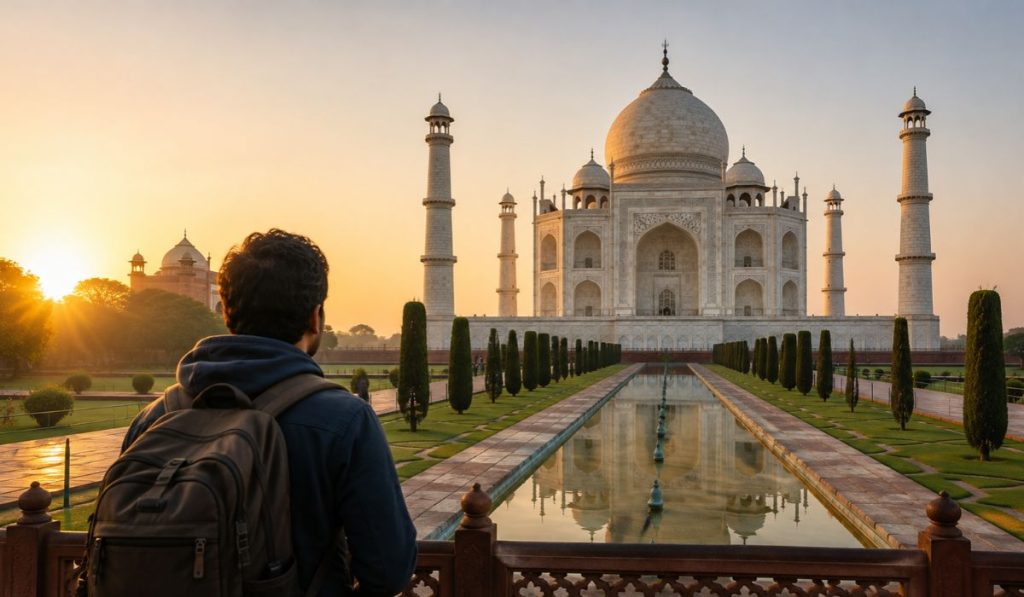
<p>The Taj Mahal is one of the most photographed buildings on Earth — and for good reason. That white marble dome against a wide Agra sky is a scene that stops you in your tracks, every single time.</p>
<!-- /wp:paragraph -->
<!-- wp:paragraph {"className":""} -->
<p>But here's the thing most visitors discover too late: where you stand matters just as much as what you're photographing. The same monument can look completely different depending on your angle, the time of day, and how you frame the shot. Simply standing in the centre and pointing your camera upward rarely produces the photograph you imagined.</p>
<!-- /wp:paragraph -->
<!-- wp:paragraph {"className":""} -->
<p>This guide covers the best photography spots at the Taj Mahal — from the iconic reflecting pool to lesser-known side angles and locations outside the complex. You'll also find practical advice on timing, camera settings, and common mistakes to avoid.</p>
<!-- /wp:paragraph -->
<!-- wp:paragraph {"className":""} -->
<p><strong>The best Taj Mahal photography spots include the Great Gate, reflecting pool, Charbagh gardens, side viewpoints, the Yamuna River side, and Mehtab Bagh, with sunrise generally offering the most beautiful light.</strong></p>
<!-- /wp:paragraph -->
<!-- wp:heading -->
<h2 class="wp-block-heading">1. The Great Gate — Frame the Taj Mahal Through the Arch</h2>
<!-- /wp:heading -->
<!-- wp:image {"id":2204,"sizeSlug":"large","linkDestination":"none"} -->
<figure class="wp-block-image size-large"><img src="https://www.tajadventureholidays.com/wp-content/uploads/2026/08/mehtab-bagh-taj-mahal-sunset-photography.jpg-1024x683.jpg" alt="Best photography spot at the Taj Mahal with reflecting pool at sunrise" class="wp-image-2204"/></figure>
<!-- /wp:image -->
<!-- wp:paragraph {"className":""} -->
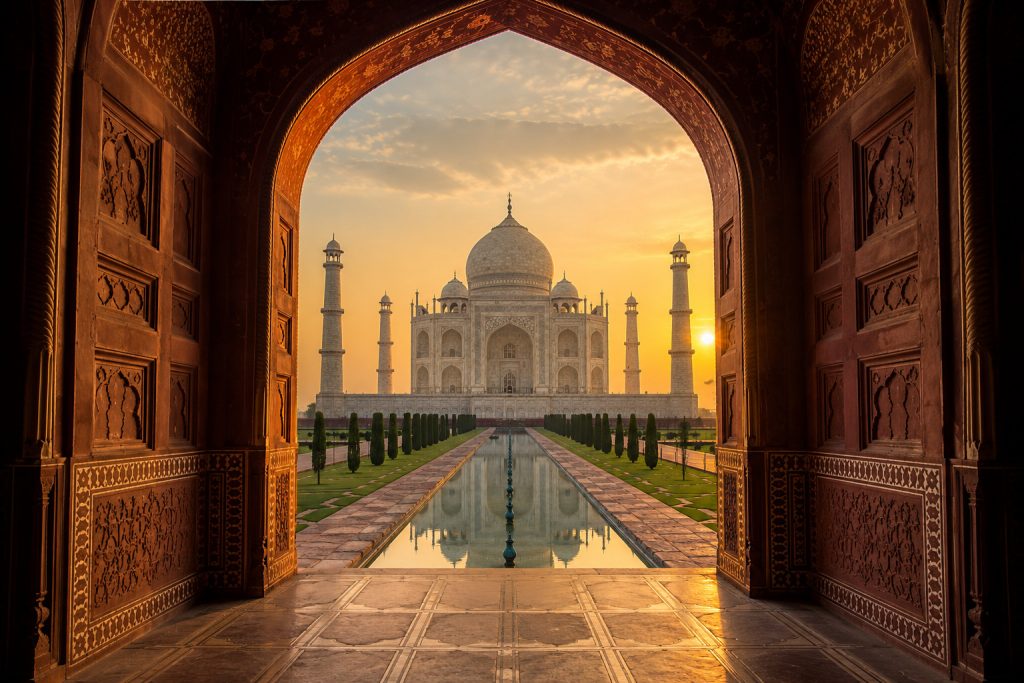
<p>The Great Gate (Darwaza-i-Rauza) is the first place you see the Taj Mahal after entering the complex — and it's one of the strongest compositions available to any photographer.</p>
<!-- /wp:paragraph -->
<!-- wp:paragraph {"className":""} -->
<p>The large central arch creates a natural frame around the monument. The dome sits perfectly inside this opening, and the symmetry is immediate. You don't need to do much to make this shot work — the Mughal architects did the composition for you, centuries ago.</p>
<!-- /wp:paragraph -->
<!-- wp:paragraph {"className":""} -->
<p><strong>Where to stand:</strong> Position yourself centrally, a few steps back from the archway. This lets you capture the full arch frame with the Taj Mahal visible through it.</p>
<!-- /wp:paragraph -->
<!-- wp:paragraph {"className":""} -->
<p><strong>Best time:</strong> Early morning, just after the gates open. The soft light falls on the marble while the arch stays slightly shaded, creating natural contrast.</p>
<!-- /wp:paragraph -->
<!-- wp:paragraph {"className":""} -->
<p><strong>Tip:</strong> Wait briefly for a gap in foot traffic. Even a few seconds of patience can give you a frame without distracting figures cutting across the archway.</p>
<!-- /wp:paragraph -->
<!-- wp:html -->
<div style="
background: #f7f7f7;
border: 1px solid #e5e5e5;
border-radius: 16px;
padding: 36px 25px;
margin: 40px 0;
text-align: center;
">
<h2 style="
font-size: 28px;
line-height: 1.35;
font-weight: 700;
color: #111111;
margin: 0 0 12px;
">
Want More Time for the Perfect Taj Mahal Shot?
</h2>
<p style="
font-size: 17px;
line-height: 1.6;
color: #555555;
max-width: 680px;
margin: 0 auto 25px;
">
Planning an early visit to capture the Taj Mahal in the best light?
Make your Delhi to Agra journey easier with a private sunrise tour by car,
with sightseeing and local transfers arranged for you.
</p>
<div style="
display: flex;
justify-content: center;
align-items: center;
flex-wrap: wrap;
gap: 10px;
">
<!-- WhatsApp Enquiry -->
<a href="https://wa.me/919808755329?text=Hi%2C%20I%20would%20like%20to%20know%20more%20about%20the%20Sunrise%20Taj%20Mahal%20Tour%20from%20Delhi%20by%20Car."
target="_blank"
rel="noopener noreferrer"
style="
display: inline-block;
background: #DD3333;
color: #ffffff;
font-size: 17px;
font-weight: 700;
padding: 15px 28px;
border-radius: 8px;
text-decoration: none;
">
Ask on WhatsApp
</a>
<!-- Sunrise Tour Page -->
<a href="https://www.tajadventureholidays.com/tours/sunrise-taj-mahal-tour-from-delhi-by-car/"
style="
display: inline-block;
background: #ffffff;
color: #DD3333;
border: 2px solid #DD3333;
font-size: 17px;
font-weight: 700;
padding: 13px 28px;
border-radius: 8px;
text-decoration: none;
">
Explore Sunrise Tour
</a>
</div>
</div>
<!-- /wp:html -->
<!-- wp:heading -->
<h2 class="wp-block-heading">2. The Reflecting Pool — The Classic Taj Mahal Photograph</h2>
<!-- /wp:heading -->
<!-- wp:paragraph {"className":""} -->
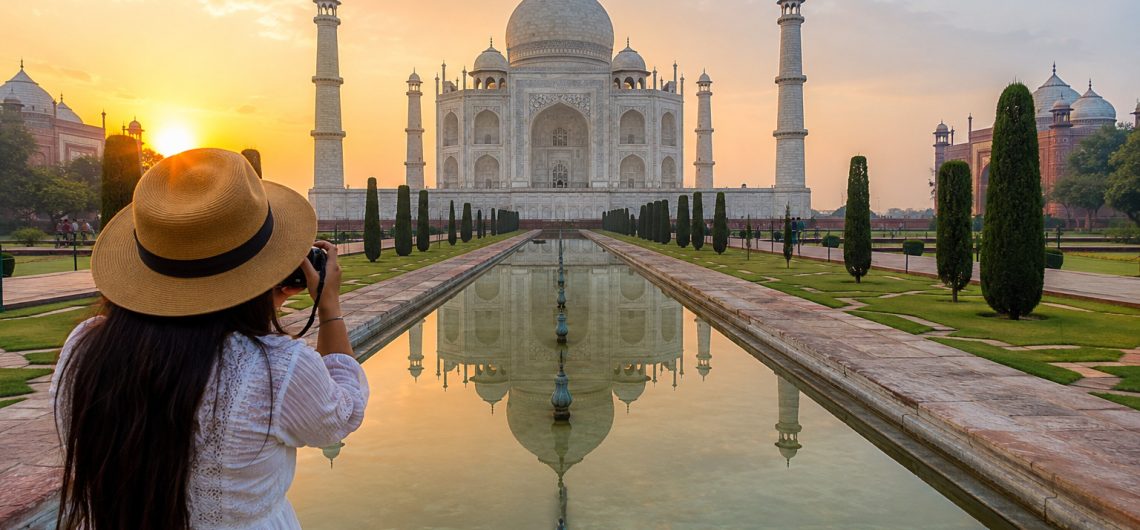
<p>This is the shot most people picture when they think of the Taj Mahal. The long rectangular pool running through the centre of the Charbagh gardens reflects the dome in still water, creating a mirror image that's both symmetrical and deeply satisfying.</p>
<!-- /wp:paragraph -->
<!-- wp:paragraph {"className":""} -->
<p>To capture the reflection clearly, <strong>crouch low</strong> — bring the camera close to the water's surface. The lower your angle, the more prominent the reflection becomes. On calm mornings, the water is usually still enough for a near-perfect mirror effect.</p>
<!-- /wp:paragraph -->
<!-- wp:paragraph {"className":""} -->
<p>The pool also creates strong leading lines that draw the viewer's eye directly toward the monument. Use this to your advantage in both landscape and portrait orientations.</p>
<!-- /wp:paragraph -->
<!-- wp:paragraph {"className":""} -->
<p><strong>Best time for reflections:</strong> Early morning, when the water is undisturbed and the light is soft. By mid-morning, wind and foot traffic near the pool edges can ripple the surface.</p>
<!-- /wp:paragraph -->
<!-- wp:paragraph {"className":""} -->
<p><strong>Smartphone tip:</strong> Use your phone's grid lines to align the Taj Mahal's dome with the top third of the frame, and the reflection with the bottom third. This simple adjustment makes a noticeable difference.</p>
<!-- /wp:paragraph -->
<!-- wp:quote -->
<blockquote class="wp-block-quote"><!-- wp:paragraph {"className":""} -->
<p><strong>Pro Tip:</strong> If you're visiting with a partner, have one person sit on the edge of the pool at a distance while the other photographs. The combination of the reflection, the Taj Mahal, and a human figure adds scale and story to the image.</p>
<!-- /wp:paragraph --></blockquote>
<!-- /wp:quote -->
<!-- wp:heading -->
<h2 class="wp-block-heading">3. The Princess Diana Bench — The Iconic Couple Photo</h2>
<!-- /wp:heading -->
<!-- wp:paragraph {"className":""} -->
<p>This bench, located along the central pathway in front of the reflecting pool, became famous after Princess Diana was photographed sitting here in 1992. It has since become one of the most popular Taj Mahal photo locations for couples and solo travelers alike.</p>
<!-- /wp:paragraph -->
<!-- wp:paragraph {"className":""} -->
<p>The composition works because the bench places the subject in the foreground with the Taj Mahal rising in the background. For couples, sitting together on the bench with the monument behind creates a natural, relaxed portrait.</p>
<!-- /wp:paragraph -->
<!-- wp:paragraph {"className":""} -->
<p><strong>Portrait orientation</strong> works especially well here — it gives vertical space for both the seated subject and the full dome above. In landscape, make sure you don't cut off the top of the minarets.</p>
<!-- /wp:paragraph -->
<!-- wp:paragraph {"className":""} -->
<p><strong>How to avoid a crowded look:</strong> This spot gets busy. Visit early, and be ready to take your photo quickly. A slightly zoomed-in frame can also help isolate your subject from others nearby.</p>
<!-- /wp:paragraph -->
<!-- wp:heading -->
<h2 class="wp-block-heading">4. Charbagh Gardens — Taj Mahal Surrounded by Mughal Gardens</h2>
<!-- /wp:heading -->
<!-- wp:paragraph {"className":""} -->
<p>The Charbagh — the formal Mughal-style garden divided into four quadrants — offers more flexibility than most visitors realize.</p>
<!-- /wp:paragraph -->
<!-- wp:paragraph {"className":""} -->
<p>Walk along any of the garden pathways, and you'll find that the greenery works as a beautiful foreground. Tree-lined paths create leading lines. Flower beds add colour. The Taj Mahal sits at the far end, anchoring every composition.</p>
<!-- /wp:paragraph -->
<!-- wp:paragraph {"className":""} -->
<p>This is an excellent spot for <strong>full-body portraits, family photographs, and couple shots</strong>. The paths give you room to experiment — a few steps to the left or right can completely change what's in the foreground.</p>
<!-- /wp:paragraph -->
<!-- wp:paragraph {"className":""} -->
<p>Try shooting from a lower angle to let the garden dominate the bottom of the frame, with the Taj Mahal visible above the hedges. This perspective adds depth and avoids the flat, head-on look of the standard tourist photo.</p>
<!-- /wp:paragraph -->
<!-- wp:heading -->
<h2 class="wp-block-heading">5. Side Views of the Taj Mahal — A Less Common Perspective</h2>
<!-- /wp:heading -->
<!-- wp:paragraph {"className":""} -->
<p>Most visitors photograph the Taj Mahal from directly in front. But the monument has four nearly identical facades, and the side views offer compositions that feel fresh and uncrowded.</p>
<!-- /wp:paragraph -->
<!-- wp:paragraph {"className":""} -->
<p>From the side, you can emphasize individual <strong>minarets, the curved dome, and the detailed marble arches</strong> in a way that isn't possible from the central axis. The depth between the minarets and the main structure becomes more apparent, and the interplay of light and shadow across the marble surface is often more dramatic.</p>
<!-- /wp:paragraph -->
<!-- wp:paragraph {"className":""} -->
<p><strong>Practical advice:</strong> Walk to either side of the main platform. Use the minarets as framing elements — placing one in the foreground while the dome sits behind creates a sense of layered depth. A slightly wider lens helps capture the full scale.</p>
<!-- /wp:paragraph -->
<!-- wp:paragraph {"className":""} -->
<p>These angles are also useful if you're visiting during busier hours. The side areas tend to be less crowded than the front-facing viewpoint.</p>
<!-- /wp:paragraph -->
<!-- wp:heading -->
<h2 class="wp-block-heading">6. Taj Mahal Marble Details — Close-Up Photography</h2>
<!-- /wp:heading -->
<!-- wp:paragraph {"className":""} -->
<p>The Taj Mahal's beauty isn't only in its silhouette. Up close, the craftsmanship is extraordinary.</p>
<!-- /wp:paragraph -->
<!-- wp:paragraph {"className":""} -->
<p>The <strong>pietra dura</strong> inlay work — semi-precious stones set into white marble in floral patterns — is incredibly detailed. Marble screens are carved so finely they look like lace. The arches feature geometric patterns and calligraphy from the Quran.</p>
<!-- /wp:paragraph -->
<!-- wp:paragraph {"className":""} -->
<p>Close-up photography helps tell the architectural story that wide shots miss entirely. Use your camera's macro mode or simply get close with a smartphone. Look for areas where the light rakes across the surface at an angle — this brings out the texture of the carving.</p>
<!-- /wp:paragraph -->
<!-- wp:paragraph {"className":""} -->
<p><strong>What to photograph:</strong></p>
<!-- /wp:paragraph -->
<!-- wp:list -->
<ul class="wp-block-list"><!-- wp:list-item -->
<li>Floral inlay patterns on the exterior walls</li>
<!-- /wp:list-item -->
<!-- wp:list-item -->
<li>Carved marble screens (jali work)</li>
<!-- /wp:list-item -->
<!-- wp:list-item -->
<li>Calligraphy panels on the entrance arches</li>
<!-- /wp:list-item -->
<!-- wp:list-item -->
<li>Geometric patterns on the base platform</li>
<!-- /wp:list-item -->
<!-- wp:list-item -->
<li>Minaret detailing</li>
<!-- /wp:list-item --></ul>
<!-- /wp:list -->
<!-- wp:html -->
<div style="
background: #f7f7f7;
border: 1px solid #e5e5e5;
border-radius: 16px;
padding: 36px 25px;
margin: 40px 0;
text-align: center;
">
<h2 style="
font-size: 28px;
line-height: 1.35;
font-weight: 700;
color: #111111;
margin: 0 0 12px;
">
Want More Time for the Perfect Taj Mahal Shot?
</h2>
<p style="
font-size: 17px;
line-height: 1.6;
color: #555555;
max-width: 680px;
margin: 0 auto 25px;
">
Planning an early visit to capture the Taj Mahal in the best light?
Make your Delhi to Agra journey easier with a private sunrise tour by car,
with sightseeing and local transfers arranged for you.
</p>
<div style="
display: flex;
justify-content: center;
align-items: center;
flex-wrap: wrap;
gap: 10px;
">
<!-- WhatsApp Enquiry -->
<a href="https://wa.me/919808755329?text=Hi%2C%20I%20would%20like%20to%20know%20more%20about%20the%20Sunrise%20Taj%20Mahal%20Tour%20from%20Delhi%20by%20Car."
target="_blank"
rel="noopener noreferrer"
style="
display: inline-block;
background: #DD3333;
color: #ffffff;
font-size: 17px;
font-weight: 700;
padding: 15px 28px;
border-radius: 8px;
text-decoration: none;
">
Ask on WhatsApp
</a>
<!-- Sunrise Tour Page -->
<a href="https://www.tajadventureholidays.com/tours/sunrise-taj-mahal-tour-from-delhi-by-car/"
style="
display: inline-block;
background: #ffffff;
color: #DD3333;
border: 2px solid #DD3333;
font-size: 17px;
font-weight: 700;
padding: 13px 28px;
border-radius: 8px;
text-decoration: none;
">
Explore Sunrise Tour
</a>
</div>
</div>
<!-- /wp:html -->
<!-- wp:heading -->
<h2 class="wp-block-heading">7. Yamuna River Side — A Different Perspective</h2>
<!-- /wp:heading -->
<!-- wp:paragraph {"className":""} -->
<p>The rear of the Taj Mahal faces the Yamuna River, and this side offers a very different view from what you see inside the complex. The monument appears wider, more grounded, and the river (or its sandy banks, depending on the season) creates a natural foreground.</p>
<!-- /wp:paragraph -->
<!-- wp:paragraph {"className":""} -->
<p>This perspective is useful for <strong>wider landscape compositions</strong> and atmospheric photographs — especially on mornings when mist hangs low over the water.</p>
<!-- /wp:paragraph -->
<!-- wp:paragraph {"className":""} -->
<p><strong>Important:</strong> Access along the riverbank can be limited and may depend on water levels and local conditions. Do not attempt to reach restricted areas. If you'd like this perspective, <a href="https://www.tajadventureholidays.com/blog/places-to-visit-in-agra/">Mehtab Bagh</a> across the river is the established, accessible viewpoint.</p>
<!-- /wp:paragraph -->
<!-- wp:heading -->
<h2 class="wp-block-heading">8. Mehtab Bagh — A Famous Alternative View of the Taj Mahal</h2>
<!-- /wp:heading -->
<!-- wp:image {"id":2205,"sizeSlug":"large","linkDestination":"none"} -->
<figure class="wp-block-image size-large"><img src="https://www.tajadventureholidays.com/wp-content/uploads/2026/08/taj-mahal-great-gate-reflection-photography.jpg-1024x683.jpg" alt="Taj Mahal sunset view from Mehtab Bagh across Yamuna River" class="wp-image-2205"/></figure>
<!-- /wp:image -->
<!-- wp:paragraph {"className":""} -->
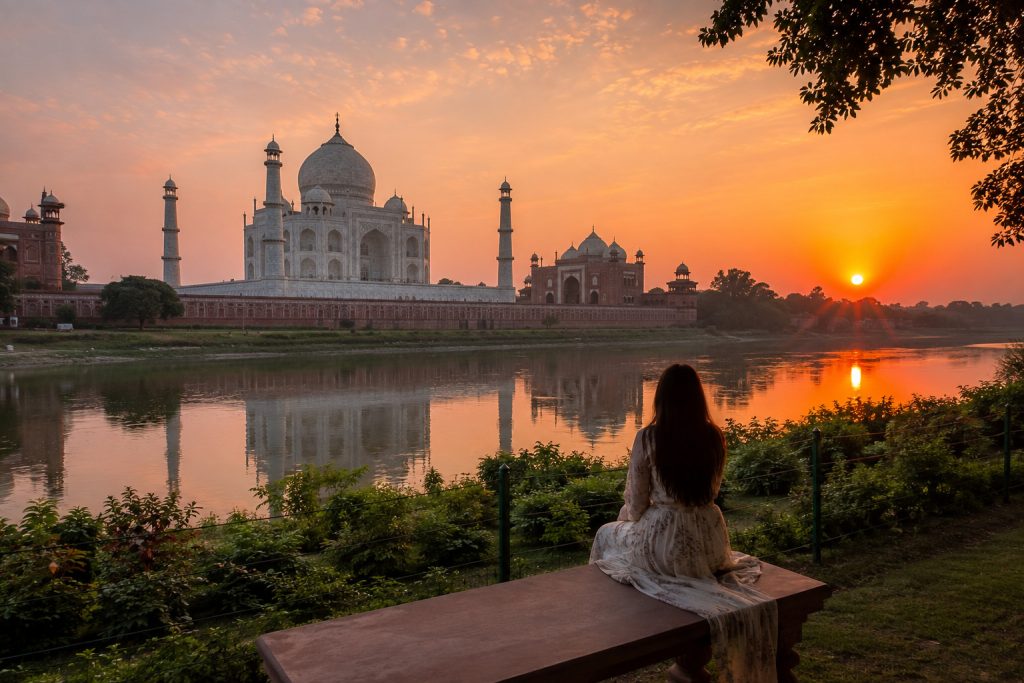
<p>Mehtab Bagh (the "Moonlight Garden") sits directly across the Yamuna River from the Taj Mahal and is one of the most popular photography spots in Agra outside the main complex.</p>
<!-- /wp:paragraph -->
<!-- wp:paragraph {"className":""} -->
<p>The view from here is wide and unobstructed. You see the full monument reflected in the river (when water levels allow), flanked by its minarets, with no buildings interrupting the frame.</p>
<!-- /wp:paragraph -->
<!-- wp:paragraph {"className":""} -->
<p>This is the go-to location for <strong>Taj Mahal sunset photography</strong>. As the sun drops behind you, the monument catches warm golden light, and the sky behind it often turns shades of orange and pink. Silhouette shots also work well from here once the sun is lower.</p>
<!-- /wp:paragraph -->
<!-- wp:paragraph {"className":""} -->
<p>Mehtab Bagh has its own entry fee and is a separate site — plan for this as a second visit, not part of your main Taj Mahal ticket.</p>
<!-- /wp:paragraph -->
<!-- wp:heading -->
<h2 class="wp-block-heading">9. Taj Mahal at Sunrise — Best Light for Photography</h2>
<!-- /wp:heading -->
<!-- wp:paragraph {"className":""} -->
<p>Sunrise is widely considered the best time for Taj Mahal photography, and there's a clear reason: the soft, warm light that spreads across the marble in the first hour after dawn is difficult to replicate at any other time.</p>
<!-- /wp:paragraph -->
<!-- wp:paragraph {"className":""} -->
<p>The white marble takes on gentle pink and gold tones. Shadows are long and directional. The air tends to be clearer, and crowd levels at opening time are generally lower than later in the day.</p>
<!-- /wp:paragraph -->
<!-- wp:paragraph {"className":""} -->
<p><strong>Practical tips:</strong></p>
<!-- /wp:paragraph -->
<!-- wp:list -->
<ul class="wp-block-list"><!-- wp:list-item -->
<li>Arrive at the gate before it opens to be among the first inside</li>
<!-- /wp:list-item -->
<!-- wp:list-item -->
<li>Head straight to the reflecting pool for the classic sunrise reflection</li>
<!-- /wp:list-item -->
<!-- wp:list-item -->
<li>Shoot from multiple positions as the light changes quickly</li>
<!-- /wp:list-item -->
<!-- wp:list-item -->
<li>Use a lower ISO and wider aperture to take advantage of the soft light</li>
<!-- /wp:list-item --></ul>
<!-- /wp:list -->
<!-- wp:paragraph {"className":""} -->
<p>If you're traveling from Delhi and want to photograph the Taj Mahal in early morning light, a <a href="https://www.tajadventureholidays.com/tours/sunrise-taj-mahal-tour-from-delhi-by-car/">sunrise Taj Mahal tour from Delhi by car</a> can help you arrive at the gates on time — the drive from Delhi takes around 3–4 hours, so an early departure is essential.</p>
<!-- /wp:paragraph -->
<!-- wp:heading -->
<h2 class="wp-block-heading">10. Taj Mahal at Sunset — Warm and Dramatic Photos</h2>
<!-- /wp:heading -->
<!-- wp:paragraph {"className":""} -->
<p>Sunset brings a different mood. The light turns golden, then amber, and the marble surface seems to glow. If you're at Mehtab Bagh during golden hour, the Taj Mahal is front-lit with warm tones while the sky behind deepens in colour.</p>
<!-- /wp:paragraph -->
<!-- wp:paragraph {"className":""} -->
<p><strong>Sunset vs. sunrise:</strong> Sunrise gives you softer, cooler tones and generally fewer visitors at the complex itself. Sunset offers warmer, more dramatic light but is best experienced from viewpoints like Mehtab Bagh rather than inside the Taj Mahal complex, where the light falls from behind the monument.</p>
<!-- /wp:paragraph -->
<!-- wp:paragraph {"className":""} -->
<p><strong>Note:</strong> Access hours inside the Taj Mahal complex may not extend to sunset depending on the season. Check <a href="https://www.tajadventureholidays.com/blog/taj-mahal-visiting-time/">current visiting times and rules</a> before planning a late-afternoon visit.</p>
<!-- /wp:paragraph -->
<!-- wp:heading -->
<h2 class="wp-block-heading">Best Taj Mahal Photography Spots for Couples</h2>
<!-- /wp:heading -->
<!-- wp:paragraph {"className":""} -->
<p>Looking for romantic photo locations? These five spots work well for couple photographs:</p>
<!-- /wp:paragraph -->
<!-- wp:list -->
<ul class="wp-block-list"><!-- wp:list-item -->
<li><strong>Princess Diana Bench</strong> — Sit together with the Taj Mahal behind you. Simple, elegant, and flattering in portrait orientation.</li>
<!-- /wp:list-item -->
<!-- wp:list-item -->
<li><strong>Reflecting Pool</strong> — Sit side by side on the pool edge for a photograph that includes both the monument and its reflection.</li>
<!-- /wp:list-item -->
<!-- wp:list-item -->
<li><strong>Great Gate Archway</strong> — Stand together inside the arch frame for a dramatic silhouette or backlit portrait.</li>
<!-- /wp:list-item -->
<!-- wp:list-item -->
<li><strong>Charbagh Garden Pathways</strong> — Walk together along the paths for natural, candid-looking photographs.</li>
<!-- /wp:list-item -->
<!-- wp:list-item -->
<li><strong>Mehtab Bagh at Sunset</strong> — A romantic wide-angle shot with the Taj Mahal glowing in warm light behind you.</li>
<!-- /wp:list-item --></ul>
<!-- /wp:list -->
<!-- wp:paragraph {"className":""} -->
<p><strong>Couple tip:</strong> Coordinate outfit colours. Solid, warm tones (deep red, burgundy, mustard) photograph beautifully against the white marble.</p>
<!-- /wp:paragraph -->
<!-- wp:heading -->
<h2 class="wp-block-heading">Smartphone Photography Tips for the Taj Mahal</h2>
<!-- /wp:heading -->
<!-- wp:paragraph {"className":""} -->
<p>You don't need expensive equipment to take a beautiful Taj Mahal photograph. Modern smartphones handle this subject very well — if you use them thoughtfully.</p>
<!-- /wp:paragraph -->
<!-- wp:list -->
<ul class="wp-block-list"><!-- wp:list-item -->
<li><strong>Turn on grid lines</strong> — Align the dome with the upper third intersection point</li>
<!-- /wp:list-item -->
<!-- wp:list-item -->
<li><strong>Keep the horizon straight</strong> — Even slightly tilted horizons look off with a symmetrical monument</li>
<!-- /wp:list-item -->
<!-- wp:list-item -->
<li><strong>Use 1x and 2x zoom</strong> — Avoid heavy digital zoom, which degrades quality</li>
<!-- /wp:list-item -->
<!-- wp:list-item -->
<li><strong>Try HDR mode</strong> — Useful when the sky is bright and the monument is in shadow</li>
<!-- /wp:list-item -->
<!-- wp:list-item -->
<li><strong>Clean your lens</strong> — A quick wipe removes smudges that cause hazy images</li>
<!-- /wp:list-item -->
<!-- wp:list-item -->
<li><strong>Tap to focus</strong> on the dome, then adjust exposure by sliding your finger up or down</li>
<!-- /wp:list-item -->
<!-- wp:list-item -->
<li><strong>Shoot in both portrait and landscape</strong> — Each orientation suits different spots</li>
<!-- /wp:list-item -->
<!-- wp:list-item -->
<li><strong>Take multiple compositions</strong> — Move a few steps, crouch, shift your angle. Don't just take one photo and walk away</li>
<!-- /wp:list-item --></ul>
<!-- /wp:list -->
<!-- wp:heading -->
<h2 class="wp-block-heading">Camera Settings for Taj Mahal Photography</h2>
<!-- /wp:heading -->
<!-- wp:heading {"level":3} -->
<h3 class="wp-block-heading">Sunrise Photography</h3>
<!-- /wp:heading -->
<!-- wp:list -->
<ul class="wp-block-list"><!-- wp:list-item -->
<li><strong>ISO:</strong> 200–400 (light is low initially)</li>
<!-- /wp:list-item -->
<!-- wp:list-item -->
<li><strong>Aperture:</strong> f/5.6–f/8 for a balance of sharpness and depth</li>
<!-- /wp:list-item -->
<!-- wp:list-item -->
<li><strong>Shutter speed:</strong> Adjust based on light — start around 1/60s and increase as the sun rises</li>
<!-- /wp:list-item -->
<!-- wp:list-item -->
<li><strong>White balance:</strong> Daylight or cloudy to preserve the warm morning tones</li>
<!-- /wp:list-item --></ul>
<!-- /wp:list -->
<!-- wp:heading {"level":3} -->
<h3 class="wp-block-heading">Architectural Photography</h3>
<!-- /wp:heading -->
<!-- wp:list -->
<ul class="wp-block-list"><!-- wp:list-item -->
<li><strong>ISO:</strong> 100–200</li>
<!-- /wp:list-item -->
<!-- wp:list-item -->
<li><strong>Aperture:</strong> f/8–f/11 for maximum sharpness across the frame</li>
<!-- /wp:list-item -->
<!-- wp:list-item -->
<li><strong>Shutter speed:</strong> 1/125s or faster in bright daylight</li>
<!-- /wp:list-item -->
<!-- wp:list-item -->
<li><strong>Format:</strong> Shoot in RAW if your camera supports it — this gives more flexibility in post-processing</li>
<!-- /wp:list-item --></ul>
<!-- /wp:list -->
<!-- wp:heading {"level":3} -->
<h3 class="wp-block-heading">Sunset Photography</h3>
<!-- /wp:heading -->
<!-- wp:list -->
<ul class="wp-block-list"><!-- wp:list-item -->
<li><strong>ISO:</strong> 200–400</li>
<!-- /wp:list-item -->
<!-- wp:list-item -->
<li><strong>Aperture:</strong> f/5.6–f/8</li>
<!-- /wp:list-item -->
<!-- wp:list-item -->
<li><strong>Shutter speed:</strong> Slower speeds may be needed as light drops — brace your camera or use a stable surface</li>
<!-- /wp:list-item -->
<!-- wp:list-item -->
<li><strong>White balance:</strong> Shade or cloudy to enhance the golden tones</li>
<!-- /wp:list-item --></ul>
<!-- /wp:list -->
<!-- wp:paragraph {"className":""} -->
<p>These are starting points. Adjust based on the light you're working with — no single setting works for every situation.</p>
<!-- /wp:paragraph -->
<!-- wp:heading -->
<h2 class="wp-block-heading">Taj Mahal Photography Rules You Should Know</h2>
<!-- /wp:heading -->
<!-- wp:list -->
<ul class="wp-block-list"><!-- wp:list-item -->
<li><strong>Photography is generally permitted</strong> in the outdoor areas of the Taj Mahal complex</li>
<!-- /wp:list-item -->
<!-- wp:list-item -->
<li><strong>Photography inside the main mausoleum (tomb chamber) is not permitted</strong> — this is a place of respect</li>
<!-- /wp:list-item -->
<!-- wp:list-item -->
<li><strong>Tripods</strong> may not be allowed inside the complex — check the latest visitor guidelines before carrying one</li>
<!-- /wp:list-item -->
<!-- wp:list-item -->
<li><strong>Drones are strictly prohibited</strong> at the Taj Mahal and surrounding protected area</li>
<!-- /wp:list-item -->
<!-- wp:list-item -->
<li><strong>Video cameras</strong> may require a separate fee or may face restrictions — verify current rules at the ticket counter</li>
<!-- /wp:list-item -->
<!-- wp:list-item -->
<li>Always follow instructions from security personnel and respect barriers</li>
<!-- /wp:list-item -->
<!-- wp:list-item -->
<li>Do not touch, lean on, or climb any part of the monument for a photograph</li>
<!-- /wp:list-item --></ul>
<!-- /wp:list -->
<!-- wp:paragraph {"className":""} -->
<p>Rules can change. Before your visit, check the <a href="https://www.tajadventureholidays.com/blog/taj-mahal-entry-fee-timings-booking/">latest Taj Mahal entry and visitor information</a> or confirm with your guide.</p>
<!-- /wp:paragraph -->
<!-- wp:heading -->
<h2 class="wp-block-heading">Common Taj Mahal Photography Mistakes to Avoid</h2>
<!-- /wp:heading -->
<!-- wp:list {"ordered":true} -->
<ol class="wp-block-list"><!-- wp:list-item -->
<li><strong>Arriving after mid-morning</strong> — The best light and lowest crowds are at opening time. By 10 a.m., the sun is harsh and queues are long.</li>
<!-- /wp:list-item -->
<!-- wp:list-item -->
<li><strong>Taking only the standard front-facing shot</strong> — Explore side views, close-ups, and creative angles.</li>
<!-- /wp:list-item -->
<!-- wp:list-item -->
<li><strong>Ignoring the reflecting pool</strong> — Many visitors walk past it. Crouch down and capture the reflection.</li>
<!-- /wp:list-item -->
<!-- wp:list-item -->
<li><strong>Cutting off the dome or minarets</strong> — Always check the edges of your frame before pressing the shutter.</li>
<!-- /wp:list-item -->
<!-- wp:list-item -->
<li><strong>Shooting everything from eye level</strong> — Crouch, kneel, or hold the camera higher. Different heights create different photographs.</li>
<!-- /wp:list-item -->
<!-- wp:list-item -->
<li><strong>Ignoring the background</strong> — Watch for cranes, scaffolding, or distracting objects behind your subject.</li>
<!-- /wp:list-item -->
<!-- wp:list-item -->
<li><strong>Overusing filters</strong> — The Taj Mahal's natural colours are stunning. Heavy filters often take away more than they add.</li>
<!-- /wp:list-item -->
<!-- wp:list-item -->
<li><strong>Forgetting portrait orientation</strong> — The vertical shape suits the Taj Mahal's dome and minarets well.</li>
<!-- /wp:list-item -->
<!-- wp:list-item -->
<li><strong>Not watching the light</strong> — Move around the complex as the light shifts. A spot that looked flat at 8 a.m. may be beautifully lit by 9 a.m.</li>
<!-- /wp:list-item -->
<!-- wp:list-item -->
<li><strong>Blocking other visitors</strong> — Be aware of people around you. Take your shots efficiently and share the space.</li>
<!-- /wp:list-item --></ol>
<!-- /wp:list -->
<!-- wp:heading -->
<h2 class="wp-block-heading">Best Time of Day for Taj Mahal Photography</h2>
<!-- /wp:heading -->
<!-- wp:table -->
<figure class="wp-block-table"><table class="has-fixed-layout"><thead><tr><th class="has-text-align-left" data-align="left">Time</th><th class="has-text-align-left" data-align="left">Light</th><th class="has-text-align-left" data-align="left">Crowd Level</th><th class="has-text-align-left" data-align="left">Best For</th></tr></thead><tbody><tr><td>Sunrise</td><td>Soft, warm</td><td>Generally lower</td><td>Architecture, portraits, reflections</td></tr><tr><td>Morning (8–10 a.m.)</td><td>Soft to moderate</td><td>Moderate</td><td>General photography, gardens</td></tr><tr><td>Midday (11 a.m.–2 p.m.)</td><td>Harsh, overhead</td><td>Typically higher</td><td>Close-up details, textures</td></tr><tr><td>Afternoon (3–5 p.m.)</td><td>Improving</td><td>Moderate</td><td>Side-lit architecture</td></tr><tr><td>Sunset</td><td>Warm, golden</td><td>Depends on location</td><td>Dramatic shots, Mehtab Bagh</td></tr></tbody></table></figure>
<!-- /wp:table -->
<!-- wp:paragraph {"className":""} -->
<p><em>Crowd levels can vary by season, day of the week, and holidays. These are general patterns, not guarantees.</em></p>
<!-- /wp:paragraph -->
<!-- wp:heading -->
<h2 class="wp-block-heading">How to Plan a Taj Mahal Photography Visit</h2>
<!-- /wp:heading -->
<!-- wp:list -->
<ul class="wp-block-list"><!-- wp:list-item -->
<li><strong>Check opening hours</strong> — The Taj Mahal opens at sunrise and closes before sunset. <a href="https://www.tajadventureholidays.com/blog/taj-mahal-visiting-time/">Confirm current timings</a> for your travel dates.</li>
<!-- /wp:list-item -->
<!-- wp:list-item -->
<li><strong>Check current visitor rules</strong> — Entry requirements, <a href="https://www.tajadventureholidays.com/blog/taj-mahal-dress-code-rules/">dress codes</a>, and restrictions can change.</li>
<!-- /wp:list-item -->
<!-- wp:list-item -->
<li><strong>Arrive early</strong> — Being at the gate 15–20 minutes before opening can make a real difference. Learn <a href="https://www.tajadventureholidays.com/blog/how-to-avoid-long-queues-at-the-taj-mahal/">how to avoid long queues</a>.</li>
<!-- /wp:list-item -->
<!-- wp:list-item -->
<li><strong>Allow enough time</strong> — Two to three hours is reasonable for photography-focused visitors.</li>
<!-- /wp:list-item -->
<!-- wp:list-item -->
<li><strong>Consider the weather</strong> — Haze, fog, and cloud cover all affect visibility and colour. Winter mornings often have mist that can create atmospheric shots — or obscure the monument entirely.</li>
<!-- /wp:list-item -->
<!-- wp:list-item -->
<li><strong>Plan 3–5 key compositions</strong> — Decide which spots matter most to you and visit those first.</li>
<!-- /wp:list-item -->
<!-- wp:list-item -->
<li><strong>Carry backup battery and storage</strong> — You'll take more photos than you expect.</li>
<!-- /wp:list-item -->
<!-- wp:list-item -->
<li><strong>Respect all photography restrictions</strong> — Protect the monument and follow security guidance.</li>
<!-- /wp:list-item --></ul>
<!-- /wp:list -->
<!-- wp:paragraph {"className":""} -->
<p>A knowledgeable local guide can help you understand the history and architecture while pointing out viewpoints you might otherwise miss. This is especially useful for photographers who want context alongside their compositions.</p>
<!-- /wp:paragraph -->
<!-- wp:heading -->
<h2 class="wp-block-heading">Taj Mahal Tours for Photography Lovers</h2>
<!-- /wp:heading -->
<!-- wp:paragraph {"className":""} -->
<p>If you're visiting from Delhi and want to make the most of your photography time at the Taj Mahal, these tours are designed with flexible scheduling and local knowledge:</p>
<!-- /wp:paragraph -->
<!-- wp:list -->
<ul class="wp-block-list"><!-- wp:list-item -->
<li><strong><a href="https://www.tajadventureholidays.com/tours/sunrise-taj-mahal-tour-from-delhi-by-car/">Sunrise Taj Mahal Tour from Delhi by Car</a></strong> — Depart Delhi before dawn and arrive at the Taj Mahal gates for opening. Ideal for photographers who want the best morning light.</li>
<!-- /wp:list-item -->
<!-- wp:list-item -->
<li><strong><a href="https://www.tajadventureholidays.com/tours/from-delhi-tajmahal-and-agra-tour-by-superfast-train/">Taj Mahal and Agra Tour by Superfast Train</a></strong> — A comfortable same-day option that gives you a full morning at the Taj Mahal with time to explore Agra's other <a href="https://www.tajadventureholidays.com/blog/places-to-visit-in-agra/">photography-worthy sites</a>.</li>
<!-- /wp:list-item -->
<!-- wp:list-item -->
<li><strong><a href="https://www.tajadventureholidays.com/tours/from-delhi-day-trip-to-taj-mahal-and-agra-fort-by-car/">Skip the Line Taj Mahal and Agra Fort Tour by Car</a></strong> — Saves time on entry queues so you can spend more time behind the camera.</li>
<!-- /wp:list-item -->
<!-- wp:list-item -->
<li><strong><a href="https://www.tajadventureholidays.com/tours/agra-overnight-tour-from-delhi-by-car/">Agra Overnight Tour from Delhi</a></strong> — Staying overnight gives you both sunrise and sunset opportunities — perfect if photography is a priority and you want to visit Mehtab Bagh in the evening.</li>
<!-- /wp:list-item --></ul>
<!-- /wp:list -->
<!-- wp:heading -->
<h2 class="wp-block-heading">Frequently Asked Questions</h2>
<!-- /wp:heading -->
<!-- wp:heading {"level":3} -->
<h3 class="wp-block-heading">Where is the best place to photograph the Taj Mahal?</h3>
<!-- /wp:heading -->
<!-- wp:paragraph {"className":""} -->
<p>The reflecting pool along the central garden axis is the most iconic spot — it gives you the classic symmetrical composition with the Taj Mahal's reflection in the water. For a different perspective, Mehtab Bagh across the Yamuna River offers wide, unobstructed views, especially at sunset.</p>
<!-- /wp:paragraph -->
<!-- wp:heading {"level":3} -->
<h3 class="wp-block-heading">What is the best time to photograph the Taj Mahal?</h3>
<!-- /wp:heading -->
<!-- wp:paragraph {"className":""} -->
<p>Sunrise is the best time. The soft morning light gives the white marble warm pink and gold tones, shadows add depth to the architecture, and the complex is generally less crowded at opening time. The first 60–90 minutes after gates open offer the most photogenic conditions.</p>
<!-- /wp:paragraph -->
<!-- wp:heading {"level":3} -->
<h3 class="wp-block-heading">Is sunrise or sunset better for Taj Mahal photography?</h3>
<!-- /wp:heading -->
<!-- wp:paragraph {"className":""} -->
<p>Sunrise is better if you're photographing from inside the complex — the light is soft, the marble glows, and crowds are lower. Sunset is excellent from Mehtab Bagh, where you can capture the monument bathed in golden light with a colourful sky behind it.</p>
<!-- /wp:paragraph -->
<!-- wp:heading {"level":3} -->
<h3 class="wp-block-heading">Where can I take the Taj Mahal reflection photo?</h3>
<!-- /wp:heading -->
<!-- wp:paragraph {"className":""} -->
<p>The long reflecting pool in the centre of the Charbagh gardens is where you capture the classic reflection. Crouch low — bring your camera as close to the water's surface as possible. Visit in the early morning when the water is still and the light is gentle.</p>
<!-- /wp:paragraph -->
<!-- wp:heading {"level":3} -->
<h3 class="wp-block-heading">Is Mehtab Bagh good for Taj Mahal photography?</h3>
<!-- /wp:heading -->
<!-- wp:paragraph {"className":""} -->
<p>Yes. Mehtab Bagh, located across the Yamuna River, offers one of the best wide views of the Taj Mahal. It's especially popular for sunset photography. The distance gives you the full monument in frame, and the river adds a natural foreground element.</p>
<!-- /wp:paragraph -->
<!-- wp:heading {"level":3} -->
<h3 class="wp-block-heading">Can I take professional photos inside the Taj Mahal?</h3>
<!-- /wp:heading -->
<!-- wp:paragraph {"className":""} -->
<p>Photography is generally allowed in the outdoor areas of the complex. However, photography is not permitted inside the main tomb chamber. Professional equipment such as large tripods or lighting setups may face restrictions. Check the latest rules before your visit.</p>
<!-- /wp:paragraph -->
<!-- wp:heading {"level":3} -->
<h3 class="wp-block-heading">Can I use a tripod at the Taj Mahal?</h3>
<!-- /wp:heading -->
<!-- wp:paragraph {"className":""} -->
<p>Tripods may not be permitted inside the Taj Mahal complex. Policies on this can change, so check with officials at the entry gate. If tripods are restricted, use walls, railings, or a compact support to steady your camera for low-light shots.</p>
<!-- /wp:paragraph -->
<!-- wp:heading {"level":3} -->
<h3 class="wp-block-heading">What is the best camera lens for Taj Mahal photography?</h3>
<!-- /wp:heading -->
<!-- wp:paragraph {"className":""} -->
<p>A versatile zoom lens in the 24–70mm range covers most compositions — wide enough for the full monument and tight enough for architectural details. A wider lens (16–35mm) is useful at the Great Gate and in the gardens. A telephoto (70–200mm) works well for close-ups of the marble inlay work.</p>
<!-- /wp:paragraph -->
<!-- wp:heading {"level":3} -->
<h3 class="wp-block-heading">Can I take good Taj Mahal photos with a smartphone?</h3>
<!-- /wp:heading -->
<!-- wp:paragraph {"className":""} -->
<p>Absolutely. Modern smartphones produce excellent results at the Taj Mahal. Use grid lines for alignment, keep the horizon straight, tap to focus on the dome, and shoot in good light. Many stunning Taj Mahal photographs shared online were taken with smartphones.</p>
<!-- /wp:paragraph -->
<!-- wp:separator -->
<hr class="wp-block-separator has-alpha-channel-opacity"/>
<!-- /wp:separator -->
<!-- wp:heading -->
<h2 class="wp-block-heading">Final Thoughts</h2>
<!-- /wp:heading -->
<!-- wp:paragraph {"className":""} -->
<p>The Taj Mahal is not a one-angle monument. From the framed archway of the Great Gate to the mirrored stillness of the reflecting pool, from the intimate marble details up close to the wide sunset panorama at Mehtab Bagh — every viewpoint tells a different story.</p>
<!-- /wp:paragraph -->
<!-- wp:paragraph {"className":""} -->
<p>Sunrise remains the most rewarding time for most photographers. But the quality of your photographs depends far more on where you stand, how you compose, and how you work with the available light than on the camera in your hand.</p>
<!-- /wp:paragraph -->
<!-- wp:paragraph {"className":""} -->
<p>Take your time. Move around. Explore the compositions that most visitors walk past.</p>
<!-- /wp:paragraph -->
<!-- wp:paragraph {"className":""} -->
<p>If you're planning a visit and want to arrive at the right time with local guidance, browse the <a href="https://www.tajadventureholidays.com/taj-mahal-tour-packages-from-delhi/">Taj Mahal tour options from Delhi</a> to find a trip that fits your schedule and photography goals.</p>
<!-- /wp:paragraph -->
The Taj Mahal is one of the most photographed buildings on Earth — and for good reason. That white marble dome against a wide Agra sky is a scene that stops you in your tracks, every single time.
But here’s the thing most visitors discover too late: where you stand matters just as much as what you’re photographing. The same monument can look completely different depending on your angle, the time of day, and how you frame the shot. Simply standing in the centre and pointing your camera upward rarely produces the photograph you imagined.
This guide covers the best photography spots at the Taj Mahal — from the iconic reflecting pool to lesser-known side angles and locations outside the complex. You’ll also find practical advice on timing, camera settings, and common mistakes to avoid.
The best Taj Mahal photography spots include the Great Gate, reflecting pool, Charbagh gardens, side viewpoints, the Yamuna River side, and Mehtab Bagh, with sunrise generally offering the most beautiful light.
1. The Great Gate — Frame the Taj Mahal Through the Arch
The Great Gate (Darwaza-i-Rauza) is the first place you see the Taj Mahal after entering the complex — and it’s one of the strongest compositions available to any photographer.
The large central arch creates a natural frame around the monument. The dome sits perfectly inside this opening, and the symmetry is immediate. You don’t need to do much to make this shot work — the Mughal architects did the composition for you, centuries ago.
Where to stand: Position yourself centrally, a few steps back from the archway. This lets you capture the full arch frame with the Taj Mahal visible through it.
Best time: Early morning, just after the gates open. The soft light falls on the marble while the arch stays slightly shaded, creating natural contrast.
Tip: Wait briefly for a gap in foot traffic. Even a few seconds of patience can give you a frame without distracting figures cutting across the archway.
Want More Time for the Perfect Taj Mahal Shot?
Planning an early visit to capture the Taj Mahal in the best light?
Make your Delhi to Agra journey easier with a private sunrise tour by car,
with sightseeing and local transfers arranged for you.
2. The Reflecting Pool — The Classic Taj Mahal Photograph
This is the shot most people picture when they think of the Taj Mahal. The long rectangular pool running through the centre of the Charbagh gardens reflects the dome in still water, creating a mirror image that’s both symmetrical and deeply satisfying.
To capture the reflection clearly, crouch low — bring the camera close to the water’s surface. The lower your angle, the more prominent the reflection becomes. On calm mornings, the water is usually still enough for a near-perfect mirror effect.
The pool also creates strong leading lines that draw the viewer’s eye directly toward the monument. Use this to your advantage in both landscape and portrait orientations.
Best time for reflections: Early morning, when the water is undisturbed and the light is soft. By mid-morning, wind and foot traffic near the pool edges can ripple the surface.
Smartphone tip: Use your phone’s grid lines to align the Taj Mahal’s dome with the top third of the frame, and the reflection with the bottom third. This simple adjustment makes a noticeable difference.
Pro Tip: If you’re visiting with a partner, have one person sit on the edge of the pool at a distance while the other photographs. The combination of the reflection, the Taj Mahal, and a human figure adds scale and story to the image.
3. The Princess Diana Bench — The Iconic Couple Photo
This bench, located along the central pathway in front of the reflecting pool, became famous after Princess Diana was photographed sitting here in 1992. It has since become one of the most popular Taj Mahal photo locations for couples and solo travelers alike.
The composition works because the bench places the subject in the foreground with the Taj Mahal rising in the background. For couples, sitting together on the bench with the monument behind creates a natural, relaxed portrait.
Portrait orientation works especially well here — it gives vertical space for both the seated subject and the full dome above. In landscape, make sure you don’t cut off the top of the minarets.
How to avoid a crowded look: This spot gets busy. Visit early, and be ready to take your photo quickly. A slightly zoomed-in frame can also help isolate your subject from others nearby.
4. Charbagh Gardens — Taj Mahal Surrounded by Mughal Gardens
The Charbagh — the formal Mughal-style garden divided into four quadrants — offers more flexibility than most visitors realize.
Walk along any of the garden pathways, and you’ll find that the greenery works as a beautiful foreground. Tree-lined paths create leading lines. Flower beds add colour. The Taj Mahal sits at the far end, anchoring every composition.
This is an excellent spot for full-body portraits, family photographs, and couple shots. The paths give you room to experiment — a few steps to the left or right can completely change what’s in the foreground.
Try shooting from a lower angle to let the garden dominate the bottom of the frame, with the Taj Mahal visible above the hedges. This perspective adds depth and avoids the flat, head-on look of the standard tourist photo.
5. Side Views of the Taj Mahal — A Less Common Perspective
Most visitors photograph the Taj Mahal from directly in front. But the monument has four nearly identical facades, and the side views offer compositions that feel fresh and uncrowded.
From the side, you can emphasize individual minarets, the curved dome, and the detailed marble arches in a way that isn’t possible from the central axis. The depth between the minarets and the main structure becomes more apparent, and the interplay of light and shadow across the marble surface is often more dramatic.
Practical advice: Walk to either side of the main platform. Use the minarets as framing elements — placing one in the foreground while the dome sits behind creates a sense of layered depth. A slightly wider lens helps capture the full scale.
These angles are also useful if you’re visiting during busier hours. The side areas tend to be less crowded than the front-facing viewpoint.
6. Taj Mahal Marble Details — Close-Up Photography
The Taj Mahal’s beauty isn’t only in its silhouette. Up close, the craftsmanship is extraordinary.
The pietra dura inlay work — semi-precious stones set into white marble in floral patterns — is incredibly detailed. Marble screens are carved so finely they look like lace. The arches feature geometric patterns and calligraphy from the Quran.
Close-up photography helps tell the architectural story that wide shots miss entirely. Use your camera’s macro mode or simply get close with a smartphone. Look for areas where the light rakes across the surface at an angle — this brings out the texture of the carving.
What to photograph:
Floral inlay patterns on the exterior walls
Carved marble screens (jali work)
Calligraphy panels on the entrance arches
Geometric patterns on the base platform
Minaret detailing
Want More Time for the Perfect Taj Mahal Shot?
Planning an early visit to capture the Taj Mahal in the best light?
Make your Delhi to Agra journey easier with a private sunrise tour by car,
with sightseeing and local transfers arranged for you.
The rear of the Taj Mahal faces the Yamuna River, and this side offers a very different view from what you see inside the complex. The monument appears wider, more grounded, and the river (or its sandy banks, depending on the season) creates a natural foreground.
This perspective is useful for wider landscape compositions and atmospheric photographs — especially on mornings when mist hangs low over the water.
Important: Access along the riverbank can be limited and may depend on water levels and local conditions. Do not attempt to reach restricted areas. If you’d like this perspective, Mehtab Bagh across the river is the established, accessible viewpoint.
8. Mehtab Bagh — A Famous Alternative View of the Taj Mahal
Mehtab Bagh (the “Moonlight Garden”) sits directly across the Yamuna River from the Taj Mahal and is one of the most popular photography spots in Agra outside the main complex.
The view from here is wide and unobstructed. You see the full monument reflected in the river (when water levels allow), flanked by its minarets, with no buildings interrupting the frame.
This is the go-to location for Taj Mahal sunset photography. As the sun drops behind you, the monument catches warm golden light, and the sky behind it often turns shades of orange and pink. Silhouette shots also work well from here once the sun is lower.
Mehtab Bagh has its own entry fee and is a separate site — plan for this as a second visit, not part of your main Taj Mahal ticket.
9. Taj Mahal at Sunrise — Best Light for Photography
Sunrise is widely considered the best time for Taj Mahal photography, and there’s a clear reason: the soft, warm light that spreads across the marble in the first hour after dawn is difficult to replicate at any other time.
The white marble takes on gentle pink and gold tones. Shadows are long and directional. The air tends to be clearer, and crowd levels at opening time are generally lower than later in the day.
Practical tips:
Arrive at the gate before it opens to be among the first inside
Head straight to the reflecting pool for the classic sunrise reflection
Shoot from multiple positions as the light changes quickly
Use a lower ISO and wider aperture to take advantage of the soft light
If you’re traveling from Delhi and want to photograph the Taj Mahal in early morning light, a sunrise Taj Mahal tour from Delhi by car can help you arrive at the gates on time — the drive from Delhi takes around 3–4 hours, so an early departure is essential.
10. Taj Mahal at Sunset — Warm and Dramatic Photos
Sunset brings a different mood. The light turns golden, then amber, and the marble surface seems to glow. If you’re at Mehtab Bagh during golden hour, the Taj Mahal is front-lit with warm tones while the sky behind deepens in colour.
Sunset vs. sunrise: Sunrise gives you softer, cooler tones and generally fewer visitors at the complex itself. Sunset offers warmer, more dramatic light but is best experienced from viewpoints like Mehtab Bagh rather than inside the Taj Mahal complex, where the light falls from behind the monument.
Note: Access hours inside the Taj Mahal complex may not extend to sunset depending on the season. Check current visiting times and rules before planning a late-afternoon visit.
Best Taj Mahal Photography Spots for Couples
Looking for romantic photo locations? These five spots work well for couple photographs:
Princess Diana Bench — Sit together with the Taj Mahal behind you. Simple, elegant, and flattering in portrait orientation.
Reflecting Pool — Sit side by side on the pool edge for a photograph that includes both the monument and its reflection.
Great Gate Archway — Stand together inside the arch frame for a dramatic silhouette or backlit portrait.
Charbagh Garden Pathways — Walk together along the paths for natural, candid-looking photographs.
Mehtab Bagh at Sunset — A romantic wide-angle shot with the Taj Mahal glowing in warm light behind you.
Couple tip: Coordinate outfit colours. Solid, warm tones (deep red, burgundy, mustard) photograph beautifully against the white marble.
Smartphone Photography Tips for the Taj Mahal
You don’t need expensive equipment to take a beautiful Taj Mahal photograph. Modern smartphones handle this subject very well — if you use them thoughtfully.
Turn on grid lines — Align the dome with the upper third intersection point
Keep the horizon straight — Even slightly tilted horizons look off with a symmetrical monument
Use 1x and 2x zoom — Avoid heavy digital zoom, which degrades quality
Try HDR mode — Useful when the sky is bright and the monument is in shadow
Clean your lens — A quick wipe removes smudges that cause hazy images
Tap to focus on the dome, then adjust exposure by sliding your finger up or down
Shoot in both portrait and landscape — Each orientation suits different spots
Take multiple compositions — Move a few steps, crouch, shift your angle. Don’t just take one photo and walk away
Camera Settings for Taj Mahal Photography
Sunrise Photography
ISO: 200–400 (light is low initially)
Aperture: f/5.6–f/8 for a balance of sharpness and depth
Shutter speed: Adjust based on light — start around 1/60s and increase as the sun rises
White balance: Daylight or cloudy to preserve the warm morning tones
Architectural Photography
ISO: 100–200
Aperture: f/8–f/11 for maximum sharpness across the frame
Shutter speed: 1/125s or faster in bright daylight
Format: Shoot in RAW if your camera supports it — this gives more flexibility in post-processing
Sunset Photography
ISO: 200–400
Aperture: f/5.6–f/8
Shutter speed: Slower speeds may be needed as light drops — brace your camera or use a stable surface
White balance: Shade or cloudy to enhance the golden tones
These are starting points. Adjust based on the light you’re working with — no single setting works for every situation.
Taj Mahal Photography Rules You Should Know
Photography is generally permitted in the outdoor areas of the Taj Mahal complex
Photography inside the main mausoleum (tomb chamber) is not permitted — this is a place of respect
Tripods may not be allowed inside the complex — check the latest visitor guidelines before carrying one
Drones are strictly prohibited at the Taj Mahal and surrounding protected area
Video cameras may require a separate fee or may face restrictions — verify current rules at the ticket counter
Always follow instructions from security personnel and respect barriers
Do not touch, lean on, or climb any part of the monument for a photograph
Arriving after mid-morning — The best light and lowest crowds are at opening time. By 10 a.m., the sun is harsh and queues are long.
Taking only the standard front-facing shot — Explore side views, close-ups, and creative angles.
Ignoring the reflecting pool — Many visitors walk past it. Crouch down and capture the reflection.
Cutting off the dome or minarets — Always check the edges of your frame before pressing the shutter.
Shooting everything from eye level — Crouch, kneel, or hold the camera higher. Different heights create different photographs.
Ignoring the background — Watch for cranes, scaffolding, or distracting objects behind your subject.
Overusing filters — The Taj Mahal’s natural colours are stunning. Heavy filters often take away more than they add.
Forgetting portrait orientation — The vertical shape suits the Taj Mahal’s dome and minarets well.
Not watching the light — Move around the complex as the light shifts. A spot that looked flat at 8 a.m. may be beautifully lit by 9 a.m.
Blocking other visitors — Be aware of people around you. Take your shots efficiently and share the space.
Best Time of Day for Taj Mahal Photography
Time
Light
Crowd Level
Best For
Sunrise
Soft, warm
Generally lower
Architecture, portraits, reflections
Morning (8–10 a.m.)
Soft to moderate
Moderate
General photography, gardens
Midday (11 a.m.–2 p.m.)
Harsh, overhead
Typically higher
Close-up details, textures
Afternoon (3–5 p.m.)
Improving
Moderate
Side-lit architecture
Sunset
Warm, golden
Depends on location
Dramatic shots, Mehtab Bagh
Crowd levels can vary by season, day of the week, and holidays. These are general patterns, not guarantees.
How to Plan a Taj Mahal Photography Visit
Check opening hours — The Taj Mahal opens at sunrise and closes before sunset. Confirm current timings for your travel dates.
Check current visitor rules — Entry requirements, dress codes, and restrictions can change.
Arrive early — Being at the gate 15–20 minutes before opening can make a real difference. Learn how to avoid long queues.
Allow enough time — Two to three hours is reasonable for photography-focused visitors.
Consider the weather — Haze, fog, and cloud cover all affect visibility and colour. Winter mornings often have mist that can create atmospheric shots — or obscure the monument entirely.
Plan 3–5 key compositions — Decide which spots matter most to you and visit those first.
Carry backup battery and storage — You’ll take more photos than you expect.
Respect all photography restrictions — Protect the monument and follow security guidance.
A knowledgeable local guide can help you understand the history and architecture while pointing out viewpoints you might otherwise miss. This is especially useful for photographers who want context alongside their compositions.
Taj Mahal Tours for Photography Lovers
If you’re visiting from Delhi and want to make the most of your photography time at the Taj Mahal, these tours are designed with flexible scheduling and local knowledge:
Sunrise Taj Mahal Tour from Delhi by Car — Depart Delhi before dawn and arrive at the Taj Mahal gates for opening. Ideal for photographers who want the best morning light.
Agra Overnight Tour from Delhi — Staying overnight gives you both sunrise and sunset opportunities — perfect if photography is a priority and you want to visit Mehtab Bagh in the evening.
Frequently Asked Questions
Where is the best place to photograph the Taj Mahal?
The reflecting pool along the central garden axis is the most iconic spot — it gives you the classic symmetrical composition with the Taj Mahal’s reflection in the water. For a different perspective, Mehtab Bagh across the Yamuna River offers wide, unobstructed views, especially at sunset.
What is the best time to photograph the Taj Mahal?
Sunrise is the best time. The soft morning light gives the white marble warm pink and gold tones, shadows add depth to the architecture, and the complex is generally less crowded at opening time. The first 60–90 minutes after gates open offer the most photogenic conditions.
Is sunrise or sunset better for Taj Mahal photography?
Sunrise is better if you’re photographing from inside the complex — the light is soft, the marble glows, and crowds are lower. Sunset is excellent from Mehtab Bagh, where you can capture the monument bathed in golden light with a colourful sky behind it.
Where can I take the Taj Mahal reflection photo?
The long reflecting pool in the centre of the Charbagh gardens is where you capture the classic reflection. Crouch low — bring your camera as close to the water’s surface as possible. Visit in the early morning when the water is still and the light is gentle.
Is Mehtab Bagh good for Taj Mahal photography?
Yes. Mehtab Bagh, located across the Yamuna River, offers one of the best wide views of the Taj Mahal. It’s especially popular for sunset photography. The distance gives you the full monument in frame, and the river adds a natural foreground element.
Can I take professional photos inside the Taj Mahal?
Photography is generally allowed in the outdoor areas of the complex. However, photography is not permitted inside the main tomb chamber. Professional equipment such as large tripods or lighting setups may face restrictions. Check the latest rules before your visit.
Can I use a tripod at the Taj Mahal?
Tripods may not be permitted inside the Taj Mahal complex. Policies on this can change, so check with officials at the entry gate. If tripods are restricted, use walls, railings, or a compact support to steady your camera for low-light shots.
What is the best camera lens for Taj Mahal photography?
A versatile zoom lens in the 24–70mm range covers most compositions — wide enough for the full monument and tight enough for architectural details. A wider lens (16–35mm) is useful at the Great Gate and in the gardens. A telephoto (70–200mm) works well for close-ups of the marble inlay work.
Can I take good Taj Mahal photos with a smartphone?
Absolutely. Modern smartphones produce excellent results at the Taj Mahal. Use grid lines for alignment, keep the horizon straight, tap to focus on the dome, and shoot in good light. Many stunning Taj Mahal photographs shared online were taken with smartphones.
Final Thoughts
The Taj Mahal is not a one-angle monument. From the framed archway of the Great Gate to the mirrored stillness of the reflecting pool, from the intimate marble details up close to the wide sunset panorama at Mehtab Bagh — every viewpoint tells a different story.
Sunrise remains the most rewarding time for most photographers. But the quality of your photographs depends far more on where you stand, how you compose, and how you work with the available light than on the camera in your hand.
Take your time. Move around. Explore the compositions that most visitors walk past.
If you’re planning a visit and want to arrive at the right time with local guidance, browse the Taj Mahal tour options from Delhi to find a trip that fits your schedule and photography goals.
<!-- wp:paragraph {"className":""} -->
<p>Taking a <strong>delhi to agra train</strong> is the fastest, most reliable, and most comfortable way to visit the Taj Mahal. Located 200 kilometers south of India's capital, Agra is a top destination for travelers visiting India. While highway driving is an option, morning traffic out of Delhi can add unexpected delays. Express trains run on dedicated tracks, sweeping you from downtown Delhi to Agra in under two hours.</p>
<!-- /wp:paragraph -->
<!-- wp:paragraph {"className":""} -->
<p>When choosing <strong>delhi to agra by train</strong>, two premium semi-high-speed options lead the choice: the <strong>Vande Bharat Express</strong> and the <strong>Gatimaan Express</strong>. Both offer air-conditioned coaches, reserved seating, onboard meals, and top speeds up to 160 km/h. However, they differ in departure schedules, station locations, ticket pricing, and passenger experience.</p>
<!-- /wp:paragraph -->
<!-- wp:paragraph {"className":""} -->
<p>This editorial guide breaks down the real-world differences between Vande Bharat and Gatimaan Express so you can pick the right train for your Taj Mahal trip.</p>
<!-- /wp:paragraph -->
<!-- wp:heading -->
<h2 class="wp-block-heading">Delhi to Agra by Train at a Glance</h2>
<!-- /wp:heading -->
<!-- wp:paragraph {"className":""} -->
<p>Here is a quick snapshot of traveling between Delhi and Agra by rail in 2026:</p>
<!-- /wp:paragraph -->
<!-- wp:list -->
<ul class="wp-block-list"><!-- wp:list-item -->
<li><strong>Distance:</strong> Approximately 195–200 km via North Central Railway route.</li>
<!-- /wp:list-item -->
<!-- wp:list-item -->
<li><strong>Typical Journey Duration:</strong> 1 hour 40 minutes on premium express trains.</li>
<!-- /wp:list-item -->
<!-- wp:list-item -->
<li><strong>Main Delhi Departure Stations:</strong> Hazrat Nizamuddin (NZM) or New Delhi Railway Station (NDLS).</li>
<!-- /wp:list-item -->
<!-- wp:list-item -->
<li><strong>Agra Arrival Station:</strong> Agra Cantt (AGC).</li>
<!-- /wp:list-item -->
<!-- wp:list-item -->
<li><strong>Top Train Options:</strong> Gatimaan Express (12050) and Vande Bharat Express (22470 / 20172).</li>
<!-- /wp:list-item -->
<!-- wp:list-item -->
<li><strong>Best Option for Same-Day Visit:</strong> Morning departures (06:00 AM or 08:10 AM) allow 7–10 hours of sightseeing in Agra before taking an evening return train.</li>
<!-- /wp:list-item -->
<!-- wp:list-item -->
<li><strong>Approximate Fare Range:</strong> ₹950–₹1,150 for AC Chair Car (CC); ₹1,600–₹2,300 for Executive Class (EC).</li>
<!-- /wp:list-item --></ul>
<!-- /wp:list -->
<!-- wp:html -->
<div style="
background: #f7f7f7;
border: 1px solid #e5e5e5;
border-radius: 16px;
padding: 36px 25px;
margin: 40px 0;
text-align: center;
">
<h2 style="
font-size: 28px;
line-height: 1.35;
font-weight: 700;
color: #111111;
margin: 0 0 12px;
">
Looking for an Easier Way to Explore Agra?
</h2>
<p style="
font-size: 17px;
line-height: 1.6;
color: #555555;
max-width: 680px;
margin: 0 auto 25px;
">
If you would rather have your Agra sightseeing and local transfers arranged
for you, you can explore a same-day Agra tour by train from Delhi.
</p>
<div style="
display: flex;
justify-content: center;
align-items: center;
flex-wrap: wrap;
gap: 10px;
">
<!-- WhatsApp Enquiry -->
<a href="https://wa.me/919808755329?text=Hi%2C%20I%20would%20like%20to%20know%20more%20about%20the%20Same%20Day%20Agra%20Tour%20by%20Train." target="_blank" rel="noopener noreferrer" style="
display: inline-block;
background: #DD3333;
color: #ffffff;
font-size: 17px;
font-weight: 700;
padding: 15px 28px;
border-radius: 8px;
text-decoration: none;
">
Ask on WhatsApp
</a>
<!-- Tour Page -->
<a href="https://www.tajadventureholidays.com/tours/from-delhi-tajmahal-and-agra-tour-by-superfast-train/" style="
display: inline-block;
background: #ffffff;
color: #DD3333;
border: 2px solid #DD3333;
font-size: 17px;
font-weight: 700;
padding: 13px 28px;
border-radius: 8px;
text-decoration: none;
">
See Tour Details
</a>
</div>
</div>
<!-- /wp:html -->
<!-- wp:heading {"level":3} -->
<h3 class="wp-block-heading">Comparison Table: Vande Bharat vs. Gatimaan Express</h3>
<!-- /wp:heading -->
<!-- wp:table -->
<figure class="wp-block-table"><table class="has-fixed-layout"><thead><tr><th class="has-text-align-left" data-align="left">Factor</th><th class="has-text-align-left" data-align="left">Vande Bharat Express</th><th class="has-text-align-left" data-align="left">Gatimaan Express</th></tr></thead><tbody><tr><td class="has-text-align-left" data-align="left"><strong>Route</strong></td><td class="has-text-align-left" data-align="left">Delhi (NZM/NDLS) to Agra Cantt (AGC)</td><td class="has-text-align-left" data-align="left">Hazrat Nizamuddin (NZM) to Agra Cantt (AGC)</td></tr><tr><td class="has-text-align-left" data-align="left"><strong>Departure station</strong></td><td class="has-text-align-left" data-align="left">Hazrat Nizamuddin (NZM) / New Delhi (NDLS)</td><td class="has-text-align-left" data-align="left">Hazrat Nizamuddin (NZM)</td></tr><tr><td class="has-text-align-left" data-align="left"><strong>Arrival station</strong></td><td class="has-text-align-left" data-align="left">Agra Cantt (AGC)</td><td class="has-text-align-left" data-align="left">Agra Cantt (AGC)</td></tr><tr><td class="has-text-align-left" data-align="left"><strong>Journey time</strong></td><td class="has-text-align-left" data-align="left">~1 hr 40 min</td><td class="has-text-align-left" data-align="left">~1 hr 40 min</td></tr><tr><td class="has-text-align-left" data-align="left"><strong>Typical fare</strong></td><td class="has-text-align-left" data-align="left">~₹950–₹1,150 (CC) / ~₹1,600–₹2,200 (EC)</td><td class="has-text-align-left" data-align="left">~₹1,140 (CC) / ~₹2,300 (EC)</td></tr><tr><td class="has-text-align-left" data-align="left"><strong>Seating</strong></td><td class="has-text-align-left" data-align="left">3x2 (CC) / 2x2 Rotating (EC)</td><td class="has-text-align-left" data-align="left">3x2 (CC) / 2x2 (EC)</td></tr><tr><td class="has-text-align-left" data-align="left"><strong>Food</strong></td><td class="has-text-align-left" data-align="left">Standard IRCTC breakfast box & tea/coffee</td><td class="has-text-align-left" data-align="left">Dedicated train hostesses, premium breakfast</td></tr><tr><td class="has-text-align-left" data-align="left"><strong>Comfort</strong></td><td class="has-text-align-left" data-align="left">Modern tech, quiet ride, LED lighting</td><td class="has-text-align-left" data-align="left">Traditional executive luxury, wide seats</td></tr><tr><td class="has-text-align-left" data-align="left"><strong>Station convenience</strong></td><td class="has-text-align-left" data-align="left">Connects from NZM or NDLS depending on service</td><td class="has-text-align-left" data-align="left">Departs exclusively from NZM</td></tr><tr><td class="has-text-align-left" data-align="left"><strong>Best for</strong></td><td class="has-text-align-left" data-align="left">Early risers wanting to beat crowds and heat</td><td class="has-text-align-left" data-align="left">Travelers wanting a relaxed 08:10 AM departure</td></tr></tbody></table></figure>
<!-- /wp:table -->
<!-- wp:heading -->
<h2 class="wp-block-heading">Vande Bharat from Delhi to Agra</h2>
<!-- /wp:heading -->
<!-- wp:image {"id":2194,"sizeSlug":"large","linkDestination":"none"} -->
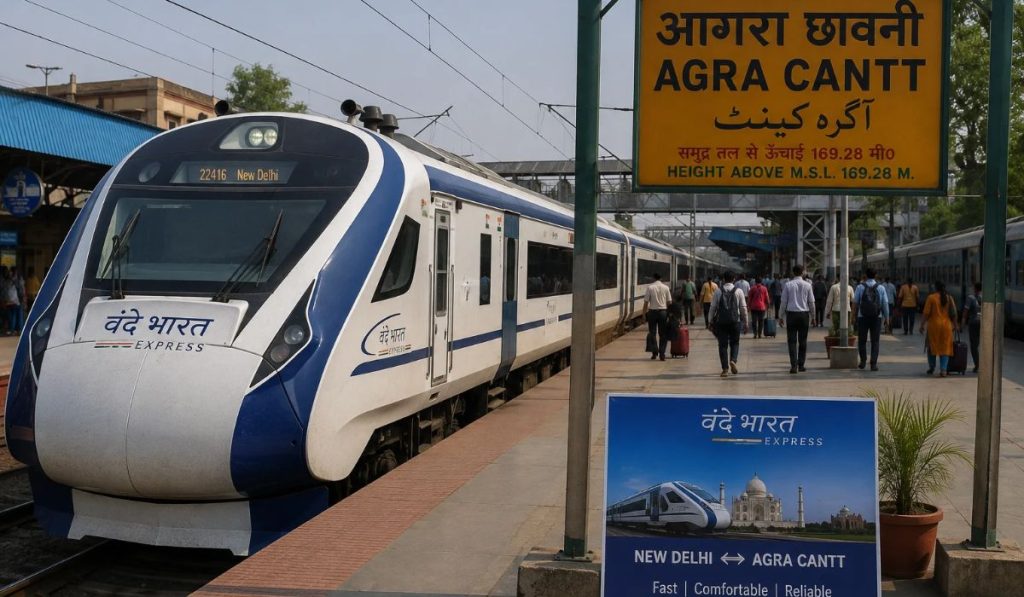
<figure class="wp-block-image size-large"><img src="https://www.tajadventureholidays.com/wp-content/uploads/2026/08/Vande-Bharat-Express-train-arriving-at-Agra-Cantt-station-for-Taj-Mahal-day-trip-1024x597.jpg" alt="Vande Bharat Express train arriving at Agra Cantt station for Taj Mahal day trip" class="wp-image-2194"/></figure>
<!-- /wp:image -->
<!-- wp:paragraph {"className":""} -->
<p>The Vande Bharat Express is India’s flagship self-propelled trainset, built for speed and passenger comfort. Featuring aerodynamic nose cones, automatic plug doors, and continuous gangways, it delivers a modern intercity rail experience.</p>
<!-- /wp:paragraph -->
<!-- wp:heading {"level":3} -->
<h3 class="wp-block-heading">Departure Stations & Route</h3>
<!-- /wp:heading -->
<!-- wp:paragraph {"className":""} -->
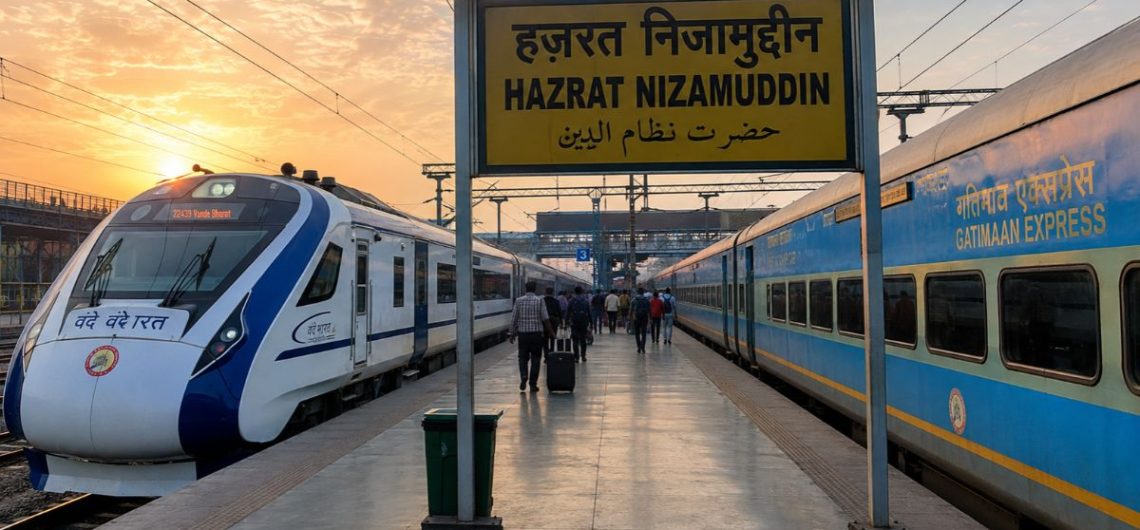
<p>For the Delhi–Agra sector, travelers primarily rely on <strong>Train 22470</strong> (Hazrat Nizamuddin to Khajuraho Vande Bharat), departing <strong>Hazrat Nizamuddin (NZM)</strong> at 06:00 AM and arriving <strong>Agra Cantt (AGC)</strong> at 07:40 AM. Another service is <strong>Train 20172</strong> (Rani Kamalapati Vande Bharat), departing NZM at 14:40 PM. Always check departure station details on your ticket.</p>
<!-- /wp:paragraph -->
<!-- wp:heading {"level":3} -->
<h3 class="wp-block-heading">Seating Options: Chair Car vs. Executive Class</h3>
<!-- /wp:heading -->
<!-- wp:paragraph {"className":""} -->
<p>Vande Bharat features two air-conditioned seating tiers:</p>
<!-- /wp:paragraph -->
<!-- wp:list -->
<ul class="wp-block-list"><!-- wp:list-item -->
<li><strong>AC Chair Car (CC):</strong> 3x2 layout with reclining seats, tray tables, reading lights, and under-seat power outlets.</li>
<!-- /wp:list-item -->
<!-- wp:list-item -->
<li><strong>Executive Class (EC):</strong> 2x2 layout with leatherette seats and <strong>180-degree rotating seats</strong>, allowing passengers to face wide panoramic windows.</li>
<!-- /wp:list-item --></ul>
<!-- /wp:list -->
<!-- wp:heading {"level":3} -->
<h3 class="wp-block-heading">Onboard Experience & Food</h3>
<!-- /wp:heading -->
<!-- wp:paragraph {"className":""} -->
<p>Vande Bharat offers clean interiors, quiet air-suspension riding, and automatic sliding cabin doors. Catering is included in the fare, featuring bottled water, tea/coffee, and breakfast items. Schedules and fares vary by date.</p>
<!-- /wp:paragraph -->
<!-- wp:quote -->
<blockquote class="wp-block-quote"><!-- wp:paragraph {"className":""} -->
<p><strong>Practical Advice for Foreign Tourists:</strong> Arrive at Hazrat Nizamuddin (NZM) or New Delhi (NDLS) 35–45 minutes before departure. Registered railway porters (red shirts with brass armbands) assist with heavy bags for a fixed fee (approx. ₹150–₹250). Keep your digital e-ticket and passport accessible for conductor verification.</p>
<!-- /wp:paragraph --></blockquote>
<!-- /wp:quote -->
<!-- wp:heading -->
<h2 class="wp-block-heading">Gatimaan Express from Delhi to Agra</h2>
<!-- /wp:heading -->
<!-- wp:image {"id":2196,"sizeSlug":"large","linkDestination":"none"} -->
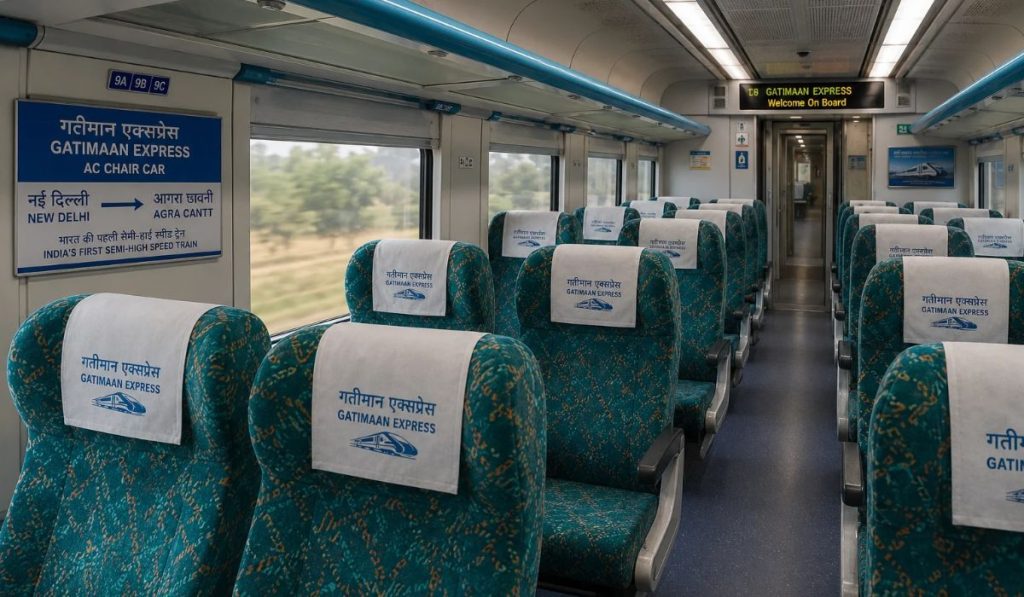
<figure class="wp-block-image size-large"><img src="https://www.tajadventureholidays.com/wp-content/uploads/2026/08/Gatimaan-Express-train-interior-showing-AC-Chair-Car-seating-from-Delhi-to-Agra-1024x597.jpg" alt="Gatimaan Express train interior showing AC Chair Car seating from Delhi to Agra" class="wp-image-2196"/></figure>
<!-- /wp:image -->
<!-- wp:paragraph {"className":""} -->
<p>Introduced as India’s first semi-high-speed train, the <strong>Gatimaan Express (Train 12050)</strong> remains a top choice for a <strong>gatimaan express agra</strong> trip due to its record for punctuality and service.</p>
<!-- /wp:paragraph -->
<!-- wp:heading {"level":3} -->
<h3 class="wp-block-heading">Departure & Arrival Stations</h3>
<!-- /wp:heading -->
<!-- wp:paragraph {"className":""} -->
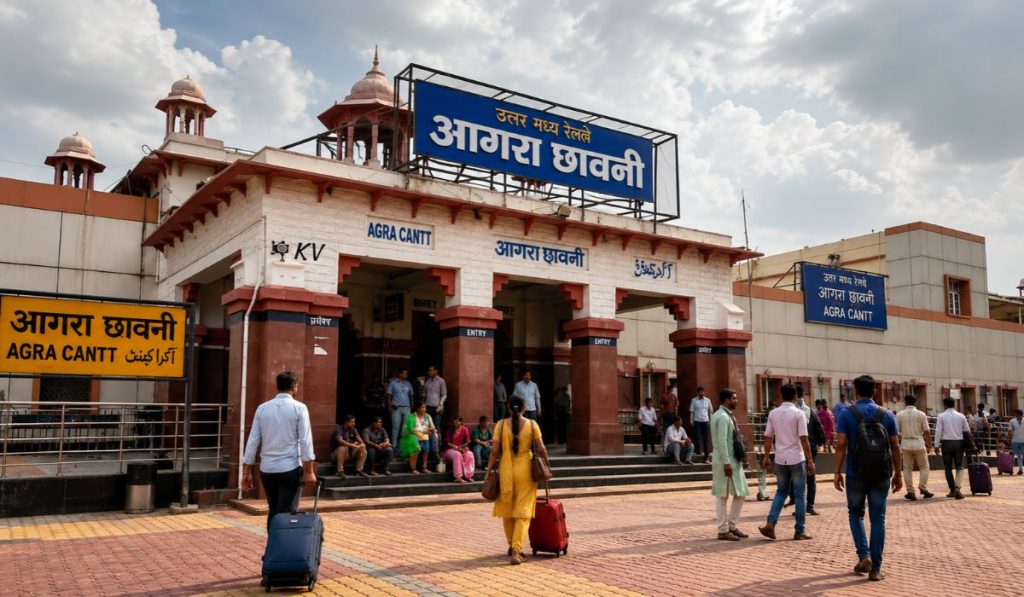
<p>The Gatimaan Express departs exclusively from <strong>Hazrat Nizamuddin Railway Station (NZM)</strong> at <strong>08:10 AM</strong> and arrives at <strong>Agra Cantt (AGC)</strong> at <strong>09:50 AM</strong>, taking 1 hour 40 minutes.</p>
<!-- /wp:paragraph -->
<!-- wp:paragraph {"className":""} -->
<p>For your return, <strong>Train 12049</strong> departs Agra Cantt at 17:30 PM (5:30 PM) and reaches Hazrat Nizamuddin at 19:30 PM (7:30 PM).</p>
<!-- /wp:paragraph -->
<!-- wp:quote -->
<blockquote class="wp-block-quote"><!-- wp:paragraph {"className":""} -->
<p><strong>Important Note:</strong> Gatimaan Express <strong>does not run on Fridays</strong>, matching the Friday public closure of the Taj Mahal.</p>
<!-- /wp:paragraph --></blockquote>
<!-- /wp:quote -->
<!-- wp:heading {"level":3} -->
<h3 class="wp-block-heading">Seating Classes & Comfort</h3>
<!-- /wp:heading -->
<!-- wp:paragraph {"className":""} -->
<p>Gatimaan features high-speed LHB coaches:</p>
<!-- /wp:paragraph -->
<!-- wp:list -->
<ul class="wp-block-list"><!-- wp:list-item -->
<li><strong>AC Chair Car (CC):</strong> Comfortable 3x2 layout with cushioned seating, overhead racks, and wide windows.</li>
<!-- /wp:list-item -->
<!-- wp:list-item -->
<li><strong>Executive Chair Car (EC):</strong> Generous 2x2 seating layout with extra legroom and quiet coach ambience.</li>
<!-- /wp:list-item --></ul>
<!-- /wp:list -->
<!-- wp:heading {"level":3} -->
<h3 class="wp-block-heading">Catering & Hospitality</h3>
<!-- /wp:heading -->
<!-- wp:paragraph {"className":""} -->
<p>Gatimaan Express is celebrated for onboard hospitality. Uniformed train hostesses welcome passengers with wet wipes and drinks upon departure. Breakfast includes fresh fruit, warm dishes, bakery rolls, tea, and coffee.</p>
<!-- /wp:paragraph -->
<!-- wp:heading -->
<h2 class="wp-block-heading">Vande Bharat vs Gatimaan Express — Which Is Better?</h2>
<!-- /wp:heading -->
<!-- wp:paragraph {"className":""} -->
<p>When comparing <strong>vande bharat vs gatimaan express</strong>, deciding <strong>which train is best delhi to agra</strong> depends on your schedule, hotel location, and comfort preferences.</p>
<!-- /wp:paragraph -->
<!-- wp:heading {"level":3} -->
<h3 class="wp-block-heading">Speed</h3>
<!-- /wp:heading -->
<!-- wp:paragraph {"className":""} -->
<p>Which is faster based on current schedules? Both trains cover the route in <strong>1 hour and 40 minutes</strong>, reaching top speeds up to 160 km/h.</p>
<!-- /wp:paragraph -->
<!-- wp:heading {"level":3} -->
<h3 class="wp-block-heading">Comfort</h3>
<!-- /wp:heading -->
<!-- wp:paragraph {"className":""} -->
<p>Vande Bharat wins on modern interior engineering. Its air suspension minimizes track vibration, while 180-degree rotating seats in Executive Class outshine Gatimaan's fixed seating. However, Gatimaan’s Executive Class remains plush and spacious. For travelers who prefer avoiding railway platforms altogether in favor of door-to-door luxury, opting for a private <a href="https://www.tajadventureholidays.com/tours/taj-mahal-and-agra-tour-by-premium-cars-from-delhi/">Taj Mahal and Agra Tour by Premium Car</a> offers supreme privacy and individualized scheduling.</p>
<!-- /wp:paragraph -->
<!-- wp:heading {"level":3} -->
<h3 class="wp-block-heading">Food</h3>
<!-- /wp:heading -->
<!-- wp:paragraph {"className":""} -->
<p>While Vande Bharat offers clean IRCTC meal trays, Gatimaan Express retains an edge with hostess service, welcome drinks, and premium meal presentation.</p>
<!-- /wp:paragraph -->
<!-- wp:heading {"level":3} -->
<h3 class="wp-block-heading">Price</h3>
<!-- /wp:heading -->
<!-- wp:paragraph {"className":""} -->
<p>Vande Bharat AC Chair Car base fares start slightly lower than Gatimaan’s standard ₹1,140 ticket. Both trains utilize IRCTC dynamic pricing, causing fares to rise near travel dates.</p>
<!-- /wp:paragraph -->
<!-- wp:heading {"level":3} -->
<h3 class="wp-block-heading">Station Convenience</h3>
<!-- /wp:heading -->
<!-- wp:paragraph {"className":""} -->
<p>Station location impacts morning commute time in Delhi. Both Gatimaan (12050) and Vande Bharat (22470) depart from <strong>Hazrat Nizamuddin (NZM)</strong>, which is convenient for South/Central Delhi hotels. Certain Vande Bharat runs depart from <strong>New Delhi Railway Station (NDLS)</strong>, ideal for Connaught Place stays.</p>
<!-- /wp:paragraph -->
<!-- wp:heading {"level":3} -->
<h3 class="wp-block-heading">Best for First-Time Visitors</h3>
<!-- /wp:heading -->
<!-- wp:paragraph {"className":""} -->
<p><strong>Gatimaan Express</strong> is ideal for first-time visitors who prefer an 08:10 AM departure, allowing a relaxed hotel breakfast and simpler station navigation in daylight.</p>
<!-- /wp:paragraph -->
<!-- wp:heading {"level":3} -->
<h3 class="wp-block-heading">Best for a Same-Day Taj Mahal Trip</h3>
<!-- /wp:heading -->
<!-- wp:paragraph {"className":""} -->
<p><strong>Vande Bharat (22470)</strong> at 06:00 AM is best for travelers wanting to arrive at Agra Cantt by 07:40 AM to enter the Taj Mahal before peak tour groups arrive. Gatimaan’s 09:50 AM arrival still allows 6 to 7 hours of effective sightseeing.</p>
<!-- /wp:paragraph -->
<!-- wp:heading -->
<h2 class="wp-block-heading">My Recommendation — Which Train Should You Choose?</h2>
<!-- /wp:heading -->
<!-- wp:paragraph {"className":""} -->
<p><strong>Choose Gatimaan Express if:</strong></p>
<!-- /wp:paragraph -->
<!-- wp:list -->
<ul class="wp-block-list"><!-- wp:list-item -->
<li>You prefer departing Delhi at a comfortable 08:10 AM.</li>
<!-- /wp:list-item -->
<!-- wp:list-item -->
<li>You enjoy attentive train hostess service and premium catering.</li>
<!-- /wp:list-item -->
<!-- wp:list-item -->
<li>You are staying near South Delhi or Hazrat Nizamuddin.</li>
<!-- /wp:list-item -->
<!-- wp:list-item -->
<li>You want a proven, stress-free travel routine.</li>
<!-- /wp:list-item --></ul>
<!-- /wp:list -->
<!-- wp:paragraph {"className":""} -->
<p><strong>Choose Vande Bharat Express if:</strong></p>
<!-- /wp:paragraph -->
<!-- wp:list -->
<ul class="wp-block-list"><!-- wp:list-item -->
<li>You want to reach Agra by 07:40 AM to beat midday heat and monument crowds.</li>
<!-- /wp:list-item -->
<!-- wp:list-item -->
<li>You enjoy modern train technology, quiet cabins, and rotating Executive seats.</li>
<!-- /wp:list-item -->
<!-- wp:list-item -->
<li>You want competitive early-booking fare options.</li>
<!-- /wp:list-item --></ul>
<!-- /wp:list -->
<!-- wp:paragraph {"className":""} -->
<p><strong>Overall Recommendation:</strong> For most leisure tourists planning a same-day excursion, <strong>Gatimaan Express (12050)</strong> offers the ideal balance of timing and comfort. If beating morning crowds is your main goal, book <strong>Vande Bharat Express (22470)</strong>.</p>
<!-- /wp:paragraph -->
<!-- wp:html -->
<div style="
background: #f7f7f7;
border: 1px solid #e5e5e5;
border-radius: 16px;
padding: 36px 25px;
margin: 40px 0;
text-align: center;
">
<h2 style="
font-size: 28px;
line-height: 1.35;
font-weight: 700;
color: #111111;
margin: 0 0 12px;
">
Looking for an Easier Way to Explore Agra?
</h2>
<p style="
font-size: 17px;
line-height: 1.6;
color: #555555;
max-width: 680px;
margin: 0 auto 25px;
">
If you would rather have your Agra sightseeing and local transfers arranged
for you, you can explore a same-day Agra tour by train from Delhi.
</p>
<div style="
display: flex;
justify-content: center;
align-items: center;
flex-wrap: wrap;
gap: 10px;
">
<!-- WhatsApp Enquiry -->
<a href="https://wa.me/919808755329?text=Hi%2C%20I%20would%20like%20to%20know%20more%20about%20the%20Same%20Day%20Agra%20Tour%20by%20Train." target="_blank" rel="noopener noreferrer" style="
display: inline-block;
background: #DD3333;
color: #ffffff;
font-size: 17px;
font-weight: 700;
padding: 15px 28px;
border-radius: 8px;
text-decoration: none;
">
Ask on WhatsApp
</a>
<!-- Tour Page -->
<a href="https://www.tajadventureholidays.com/tours/from-delhi-tajmahal-and-agra-tour-by-superfast-train/" style="
display: inline-block;
background: #ffffff;
color: #DD3333;
border: 2px solid #DD3333;
font-size: 17px;
font-weight: 700;
padding: 13px 28px;
border-radius: 8px;
text-decoration: none;
">
See Tour Details
</a>
</div>
</div>
<!-- /wp:html -->
<!-- wp:heading -->
<h2 class="wp-block-heading">Delhi to Agra Train Schedule</h2>
<!-- /wp:heading -->
<!-- wp:paragraph {"className":""} -->
<p>Check current schedules online before booking, as timings may be updated by Indian Railways.</p>
<!-- /wp:paragraph -->
<!-- wp:heading {"level":3} -->
<h3 class="wp-block-heading">Delhi to Agra Train Schedule (2026)</h3>
<!-- /wp:heading -->
<!-- wp:table -->
<figure class="wp-block-table"><table class="has-fixed-layout"><thead><tr><th class="has-text-align-left" data-align="left">Train Name</th><th class="has-text-align-left" data-align="left">Train No.</th><th class="has-text-align-left" data-align="left">Delhi Station</th><th class="has-text-align-left" data-align="left">Departure</th><th class="has-text-align-left" data-align="left">Agra Arrival</th><th class="has-text-align-left" data-align="left">Approx. Duration</th></tr></thead><tbody><tr><td class="has-text-align-left" data-align="left"><strong>Vande Bharat Express</strong></td><td class="has-text-align-left" data-align="left">22470</td><td class="has-text-align-left" data-align="left">Hazrat Nizamuddin (NZM)</td><td class="has-text-align-left" data-align="left">06:00 AM</td><td class="has-text-align-left" data-align="left">07:40 AM</td><td class="has-text-align-left" data-align="left">1 hr 40 min</td></tr><tr><td class="has-text-align-left" data-align="left"><strong>Shatabdi Express</strong></td><td class="has-text-align-left" data-align="left">12002</td><td class="has-text-align-left" data-align="left">New Delhi (NDLS)</td><td class="has-text-align-left" data-align="left">06:00 AM</td><td class="has-text-align-left" data-align="left">07:50 AM</td><td class="has-text-align-left" data-align="left">1 hr 50 min</td></tr><tr><td class="has-text-align-left" data-align="left"><strong>Gatimaan Express</strong></td><td class="has-text-align-left" data-align="left">12050</td><td class="has-text-align-left" data-align="left">Hazrat Nizamuddin (NZM)</td><td class="has-text-align-left" data-align="left">08:10 AM</td><td class="has-text-align-left" data-align="left">09:50 AM</td><td class="has-text-align-left" data-align="left">1 hr 40 min</td></tr></tbody></table></figure>
<!-- /wp:table -->
<!-- wp:heading -->
<h2 class="wp-block-heading">Delhi to Agra Train Ticket Price</h2>
<!-- /wp:heading -->
<!-- wp:paragraph {"className":""} -->
<p>Delhi to Agra train ticket fares vary by class and booking date:</p>
<!-- /wp:paragraph -->
<!-- wp:list -->
<ul class="wp-block-list"><!-- wp:list-item -->
<li><strong>AC Chair Car (CC):</strong> Ranging from <strong>₹950 to ₹1,150</strong>, covering air-conditioned seating and breakfast catering.</li>
<!-- /wp:list-item -->
<!-- wp:list-item -->
<li><strong>Executive Class (EC):</strong> Ranging from <strong>₹1,600 to ₹2,300</strong>, offering wider seats, additional legroom, and enhanced meals.</li>
<!-- /wp:list-item --></ul>
<!-- /wp:list -->
<!-- wp:paragraph {"className":""} -->
<p>Fares vary based on class, date, and dynamic pricing rules enforced by Indian Railways. Book early on IRCTC as tickets sell out quickly during peak travel months.</p>
<!-- /wp:paragraph -->
<!-- wp:heading -->
<h2 class="wp-block-heading">How to Book a Delhi to Agra Train</h2>
<!-- /wp:heading -->
<!-- wp:paragraph {"className":""} -->
<p>Follow this step-by-step guide on <strong>how to book vande bharat delhi agra</strong> or Gatimaan Express:</p>
<!-- /wp:paragraph -->
<!-- wp:list {"ordered":true} -->
<ol class="wp-block-list"><!-- wp:list-item -->
<li>Check the latest train schedule on official portals.</li>
<!-- /wp:list-item -->
<!-- wp:list-item -->
<li>Choose your Delhi departure station carefully (<code>NZM</code> or <code>NDLS</code>).</li>
<!-- /wp:list-item -->
<!-- wp:list-item -->
<li>Select Delhi → Agra (<code>AGC</code>) route.</li>
<!-- /wp:list-item -->
<!-- wp:list-item -->
<li>Choose your travel date (avoid Fridays).</li>
<!-- /wp:list-item -->
<!-- wp:list-item -->
<li>Select Vande Bharat or Gatimaan Express.</li>
<!-- /wp:list-item -->
<!-- wp:list-item -->
<li>Select class (AC Chair Car CC or Executive Class EC).</li>
<!-- /wp:list-item -->
<!-- wp:list-item -->
<li>Enter passenger details and passport numbers.</li>
<!-- /wp:list-item -->
<!-- wp:list-item -->
<li>Complete payment via international cards, net banking, or UPI.</li>
<!-- /wp:list-item -->
<!-- wp:list-item -->
<li>Save/download the digital ERS ticket PDF.</li>
<!-- /wp:list-item -->
<!-- wp:list-item -->
<li>Check final platform/train info before departure.</li>
<!-- /wp:list-item --></ol>
<!-- /wp:list -->
<!-- wp:paragraph {"className":""} -->
<p>IRCTC is the primary official booking system for Indian Railways.</p>
<!-- /wp:paragraph -->
<!-- wp:heading -->
<h2 class="wp-block-heading">What Is Agra Cantt Station Like?</h2>
<!-- /wp:heading -->
<!-- wp:image {"id":2197,"sizeSlug":"large","linkDestination":"none"} -->
<figure class="wp-block-image size-large"><img src="https://www.tajadventureholidays.com/wp-content/uploads/2026/08/Agra-Cantt-railway-station-main-exit-with-prepaid-taxi-stand-for-Taj-Mahal-transfers-1024x597.jpg" alt="Agra Cantt railway station main exit with prepaid taxi stand for Taj Mahal transfers" class="wp-image-2197"/></figure>
<!-- /wp:image -->
<!-- wp:paragraph {"className":""} -->
<p>Agra Cantt (AGC) is the main railway station for Agra, located 5.5 km from the Taj Mahal with prepaid taxi booths and waiting halls.</p>
<!-- /wp:paragraph -->
<!-- wp:paragraph {"className":""} -->
<p>Exiting the station can be busy due to local drivers. To ensure a smooth arrival:</p>
<!-- /wp:paragraph -->
<!-- wp:list -->
<ul class="wp-block-list"><!-- wp:list-item -->
<li><strong>Prepaid Transport Booths:</strong> Use official prepaid taxi/auto counters near the main exit for fixed government rates.</li>
<!-- /wp:list-item -->
<!-- wp:list-item -->
<li><strong>App Cabs:</strong> Uber and Ola provide pickup from designated zones outside Agra Cantt.</li>
<!-- /wp:list-item -->
<!-- wp:list-item -->
<li><strong>Private Tour Pickups:</strong> Drivers from pre-booked tours will hold name signs near the main exit gate.</li>
<!-- /wp:list-item --></ul>
<!-- /wp:list -->
<!-- wp:heading -->
<h2 class="wp-block-heading">How to Get from Agra Cantt Railway Station to the Taj Mahal</h2>
<!-- /wp:heading -->
<!-- wp:paragraph {"className":""} -->
<p>Agra Cantt is located <strong>5.5 to 6 km</strong> from the Taj Mahal West Gate, taking <strong>15 to 20 minutes</strong> by road.</p>
<!-- /wp:paragraph -->
<!-- wp:heading {"level":3} -->
<h3 class="wp-block-heading">Transport Options & Local Tips</h3>
<!-- /wp:heading -->
<!-- wp:list -->
<ul class="wp-block-list"><!-- wp:list-item -->
<li><strong>Prepaid Taxi / Private Car:</strong> Most comfortable option for families with luggage (approx. ₹300–₹500).</li>
<!-- /wp:list-item -->
<!-- wp:list-item -->
<li><strong>Auto-Rickshaw:</strong> Convenient three-wheeled option for solo travelers or couples (approx. ₹150–₹250).</li>
<!-- /wp:list-item -->
<!-- wp:list-item -->
<li><strong>App Cab (Uber/Ola):</strong> Simple smartphone booking with upfront fare estimates.</li>
<!-- /wp:list-item --></ul>
<!-- /wp:list -->
<!-- wp:paragraph {"className":""} -->
<p><strong>Avoiding Station Touts:</strong> Avoid touts offering unsolicited guide services or selling fake monument tickets outside the station. Monument tickets are sold officially online or at government gate booths. Hiring a pre-arranged pickup guarantees transparency and peace of mind.</p>
<!-- /wp:paragraph -->
<!-- wp:heading -->
<h2 class="wp-block-heading">What to Do With Your Luggage in Agra</h2>
<!-- /wp:heading -->
<!-- wp:paragraph {"className":""} -->
<p>If visiting Agra for a single day without a hotel room, use these verified luggage storage options:</p>
<!-- /wp:paragraph -->
<!-- wp:list {"ordered":true} -->
<ol class="wp-block-list"><!-- wp:list-item -->
<li><strong>Agra Cantt Station Cloakroom:</strong> Located on Platform 1. Luggage must be securely locked (padlocked), and you must present a valid train ticket and passport/ID. Nominal fee of ₹30–₹50 per bag.</li>
<!-- /wp:list-item -->
<!-- wp:list-item -->
<li><strong>Private Tour Car Storage:</strong> If you hire a private car for the day, locked bags can be left safely in the trunk while sightseeing.</li>
<!-- /wp:list-item -->
<!-- wp:list-item -->
<li><strong>Hotel Front Desk Storage:</strong> Hotels near the Taj Mahal will store bags prior to check-in or after check-out.</li>
<!-- /wp:list-item --></ol>
<!-- /wp:list -->
<!-- wp:paragraph {"className":""} -->
<p>If you prefer to explore Agra over two days without rushing your return journey, booking an <a href="https://www.tajadventureholidays.com/tours/agra-overnight-tour-from-delhi-by-car/">Agra overnight tour from Delhi</a> provides hotel storage and a far more relaxed pace.</p>
<!-- /wp:paragraph -->
<!-- wp:heading -->
<h2 class="wp-block-heading">Can You Visit the Taj Mahal in One Day by Train?</h2>
<!-- /wp:heading -->
<!-- wp:paragraph {"className":""} -->
<p>Yes. Taking a morning train from Delhi and returning in the evening is the most popular way to visit Agra in one day. Booking an organized <a href="https://www.tajadventureholidays.com/tours/from-delhi-tajmahal-and-agra-tour-by-superfast-train/">Same Day Agra Tour by Train</a> ensures that your train tickets, platform pickups, monument guides, and entry permits are coordinated seamlessly.</p>
<!-- /wp:paragraph -->
<!-- wp:heading {"level":3} -->
<h3 class="wp-block-heading">Realistic Same-Day Itinerary</h3>
<!-- /wp:heading -->
<!-- wp:list -->
<ul class="wp-block-list"><!-- wp:list-item -->
<li><strong>06:00 AM / 08:10 AM:</strong> Depart Delhi on Vande Bharat or Gatimaan Express.</li>
<!-- /wp:list-item -->
<!-- wp:list-item -->
<li><strong>07:40 AM / 09:50 AM:</strong> Arrive at Agra Cantt station; transfer to the Taj Mahal.</li>
<!-- /wp:list-item -->
<!-- wp:list-item -->
<li><strong>10:15 AM – 12:45 PM:</strong> Tour the <strong>Taj Mahal</strong> with a guide.</li>
<!-- /wp:list-item -->
<!-- wp:list-item -->
<li><strong>01:00 PM – 02:15 PM:</strong> Enjoy lunch at a local restaurant.</li>
<!-- /wp:list-item -->
<!-- wp:list-item -->
<li><strong>02:30 PM – 04:00 PM:</strong> Explore <strong>Agra Fort</strong>.</li>
<!-- /wp:list-item -->
<!-- wp:list-item -->
<li><strong>04:15 PM – 05:00 PM:</strong> Visit Mehtab Bagh or return to Agra Cantt station.</li>
<!-- /wp:list-item -->
<!-- wp:list-item -->
<li><strong>05:30 PM:</strong> Board evening return train (Gatimaan Express 12049).</li>
<!-- /wp:list-item -->
<!-- wp:list-item -->
<li><strong>07:30 PM:</strong> Arrive back in Delhi at Hazrat Nizamuddin.</li>
<!-- /wp:list-item --></ul>
<!-- /wp:list -->
<!-- wp:paragraph {"className":""} -->
<p>While train travel offers speed and punctuality, travelers who prefer custom departures or door-to-door hotel transfers may opt for a private <a href="https://www.tajadventureholidays.com/tours/from-delhi-day-trip-to-taj-mahal-and-agra-fort-by-car/">Same Day Agra Tour by Car</a>.</p>
<!-- /wp:paragraph -->
<!-- wp:heading -->
<h2 class="wp-block-heading">Tips for Taking the Delhi to Agra Train</h2>
<!-- /wp:heading -->
<!-- wp:list {"ordered":true} -->
<ol class="wp-block-list"><!-- wp:list-item -->
<li><strong>Book Early:</strong> Reserve seats 2–3 weeks in advance during peak season (October–March).</li>
<!-- /wp:list-item -->
<!-- wp:list-item -->
<li><strong>Double-Check Departure Station:</strong> Confirm whether your ticket lists <code>NZM</code> (Hazrat Nizamuddin) or <code>NDLS</code> (New Delhi).</li>
<!-- /wp:list-item -->
<!-- wp:list-item -->
<li><strong>Reach Station Early:</strong> Arrive at the platform 40 minutes prior to departure.</li>
<!-- /wp:list-item -->
<!-- wp:list-item -->
<li><strong>Keep Passport Accessible:</strong> Foreign travelers must carry their physical passport matching the ticket name.</li>
<!-- /wp:list-item -->
<!-- wp:list-item -->
<li><strong>Keep Digital & Offline Ticket Copies:</strong> Save ERS PDF files offline on your smartphone.</li>
<!-- /wp:list-item -->
<!-- wp:list-item -->
<li><strong>Check Platform Display:</strong> Confirm platform numbers on electronic station boards upon arrival.</li>
<!-- /wp:list-item -->
<!-- wp:list-item -->
<li><strong>Keep Luggage Manageable:</strong> Use compact bags to ease boarding and station transfers.</li>
<!-- /wp:list-item -->
<!-- wp:list-item -->
<li><strong>Carry Water:</strong> Keep bottled water accessible for local transfers.</li>
<!-- /wp:list-item -->
<!-- wp:list-item -->
<li><strong>Leave Buffer Time for Return Train:</strong> Reach Agra Cantt station 45 minutes before evening train departure.</li>
<!-- /wp:list-item -->
<!-- wp:list-item -->
<li><strong>Avoid Unsolicited Offers:</strong> Decline random tour guide or shop offers at station gates.</li>
<!-- /wp:list-item -->
<!-- wp:list-item -->
<li><strong>Confirm Taj Mahal Opening:</strong> Remember that the Taj Mahal is closed every Friday.</li>
<!-- /wp:list-item -->
<!-- wp:list-item -->
<li><strong>Check Train Status on Travel Day:</strong> Monitor live running status via official apps on your travel day.</li>
<!-- /wp:list-item --></ol>
<!-- /wp:list -->
<!-- wp:image {"id":2195,"sizeSlug":"large","linkDestination":"none"} -->
<figure class="wp-block-image size-large"><img src="https://www.tajadventureholidays.com/wp-content/uploads/2026/08/Traveler-viewing-the-Taj-Mahal-after-taking-the-early-morning-Delhi-to-Agra-train-1024x597.jpg" alt="Traveler viewing the Taj Mahal after taking the early morning Delhi to Agra train" class="wp-image-2195"/></figure>
<!-- /wp:image -->
<!-- wp:heading -->
<h2 class="wp-block-heading">Common Mistakes Travelers Make</h2>
<!-- /wp:heading -->
<!-- wp:list {"ordered":true} -->
<ol class="wp-block-list"><!-- wp:list-item -->
<li><strong>Booking the Wrong Delhi Station:</strong> Arriving at NDLS when your train departs from NZM.</li>
<!-- /wp:list-item -->
<!-- wp:list-item -->
<li><strong>Assuming Every Train Leaves from New Delhi:</strong> Failing to realize Gatimaan departs only from Nizamuddin.</li>
<!-- /wp:list-item -->
<!-- wp:list-item -->
<li><strong>Booking the Return Train Too Early:</strong> Scheduling return travel before finishing monument tours.</li>
<!-- /wp:list-item -->
<!-- wp:list-item -->
<li><strong>Forgetting Distance to Taj Mahal:</strong> Not accounting for the 20-minute drive from Agra Cantt to the monument.</li>
<!-- /wp:list-item -->
<!-- wp:list-item -->
<li><strong>Not Planning Luggage Storage:</strong> Carrying heavy suitcases to monument security checkpoints.</li>
<!-- /wp:list-item -->
<!-- wp:list-item -->
<li><strong>Accepting Random Guides at Station:</strong> Hiring unverified touts claiming to be official guides.</li>
<!-- /wp:list-item -->
<!-- wp:list-item -->
<li><strong>Relying on Old Schedules:</strong> Using outdated train timetables from previous years.</li>
<!-- /wp:list-item -->
<!-- wp:list-item -->
<li><strong>Not Checking Taj Mahal Opening Day:</strong> Traveling on Friday when monument gates are closed.</li>
<!-- /wp:list-item -->
<!-- wp:list-item -->
<li><strong>Not Leaving Buffer Before Return Train:</strong> Getting stuck in Agra city traffic and missing the return train.</li>
<!-- /wp:list-item --></ol>
<!-- /wp:list -->
<!-- wp:html -->
<div style="
background: #f7f7f7;
border: 1px solid #e5e5e5;
border-radius: 16px;
padding: 36px 25px;
margin: 40px 0;
text-align: center;
">
<h2 style="
font-size: 28px;
line-height: 1.35;
font-weight: 700;
color: #111111;
margin: 0 0 12px;
">
Looking for an Easier Way to Explore Agra?
</h2>
<p style="
font-size: 17px;
line-height: 1.6;
color: #555555;
max-width: 680px;
margin: 0 auto 25px;
">
If you would rather have your Agra sightseeing and local transfers arranged
for you, you can explore a same-day Agra tour by train from Delhi.
</p>
<div style="
display: flex;
justify-content: center;
align-items: center;
flex-wrap: wrap;
gap: 10px;
">
<!-- WhatsApp Enquiry -->
<a href="https://wa.me/919808755329?text=Hi%2C%20I%20would%20like%20to%20know%20more%20about%20the%20Same%20Day%20Agra%20Tour%20by%20Train." target="_blank" rel="noopener noreferrer" style="
display: inline-block;
background: #DD3333;
color: #ffffff;
font-size: 17px;
font-weight: 700;
padding: 15px 28px;
border-radius: 8px;
text-decoration: none;
">
Ask on WhatsApp
</a>
<!-- Tour Page -->
<a href="https://www.tajadventureholidays.com/tours/from-delhi-tajmahal-and-agra-tour-by-superfast-train/" style="
display: inline-block;
background: #ffffff;
color: #DD3333;
border: 2px solid #DD3333;
font-size: 17px;
font-weight: 700;
padding: 13px 28px;
border-radius: 8px;
text-decoration: none;
">
See Tour Details
</a>
</div>
</div>
<!-- /wp:html -->
<!-- wp:heading -->
<h2 class="wp-block-heading">Frequently Asked Questions</h2>
<!-- /wp:heading -->
<!-- wp:heading {"level":3} -->
<h3 class="wp-block-heading">1. Which is better, Vande Bharat or Gatimaan Express for Agra?</h3>
<!-- /wp:heading -->
<!-- wp:paragraph {"className":""} -->
<p>Gatimaan Express is preferred by most leisure travelers for its comfortable 08:10 AM departure and hostess service. Vande Bharat is better if you want an early 06:00 AM departure to reach Agra by 07:40 AM.</p>
<!-- /wp:paragraph -->
<!-- wp:heading {"level":3} -->
<h3 class="wp-block-heading">2. How long does the Delhi to Agra train take?</h3>
<!-- /wp:heading -->
<!-- wp:paragraph {"className":""} -->
<p>Both Gatimaan Express and Vande Bharat Express take <strong>1 hour and 40 minutes</strong>.</p>
<!-- /wp:paragraph -->
<!-- wp:heading {"level":3} -->
<h3 class="wp-block-heading">3. What is the fastest train from Delhi to Agra?</h3>
<!-- /wp:heading -->
<!-- wp:paragraph {"className":""} -->
<p>Gatimaan Express (12050) and Vande Bharat Express (22470) are tied as the fastest trains at 1 hour 40 minutes.</p>
<!-- /wp:paragraph -->
<!-- wp:heading {"level":3} -->
<h3 class="wp-block-heading">4. How much does the Delhi to Agra train cost?</h3>
<!-- /wp:heading -->
<!-- wp:paragraph {"className":""} -->
<p>AC Chair Car tickets range from <strong>₹950 to ₹1,150</strong>, while Executive Class tickets range from <strong>₹1,600 to ₹2,300</strong>.</p>
<!-- /wp:paragraph -->
<!-- wp:heading {"level":3} -->
<h3 class="wp-block-heading">5. Which Delhi station should I use for Agra?</h3>
<!-- /wp:heading -->
<!-- wp:paragraph {"className":""} -->
<p>Most express trains, including Gatimaan Express, depart from <strong>Hazrat Nizamuddin (NZM)</strong>. Check your ticket for station code <code>NZM</code> or <code>NDLS</code>.</p>
<!-- /wp:paragraph -->
<!-- wp:heading {"level":3} -->
<h3 class="wp-block-heading">6. How far is Agra Cantt from the Taj Mahal?</h3>
<!-- /wp:heading -->
<!-- wp:paragraph {"className":""} -->
<p>Agra Cantt is approximately <strong>5.5 to 6 km</strong> from the Taj Mahal West Gate (15–20 minutes by taxi).</p>
<!-- /wp:paragraph -->
<!-- wp:heading {"level":3} -->
<h3 class="wp-block-heading">7. Can I visit the Taj Mahal on a same-day train trip from Delhi?</h3>
<!-- /wp:heading -->
<!-- wp:paragraph {"className":""} -->
<p>Yes. Taking an morning train to Agra and returning on an evening train gives you 6 to 8 hours for sightseeing.</p>
<!-- /wp:paragraph -->
<!-- wp:heading {"level":3} -->
<h3 class="wp-block-heading">8. Where can I keep luggage in Agra?</h3>
<!-- /wp:heading -->
<!-- wp:paragraph {"className":""} -->
<p>Store locked bags at the <strong>Agra Cantt Station Cloakroom</strong>, inside a hired tour car trunk, or at a local hotel desk.</p>
<!-- /wp:paragraph -->
<!-- wp:heading {"level":3} -->
<h3 class="wp-block-heading">9. Can I book Vande Bharat and Gatimaan Express through IRCTC?</h3>
<!-- /wp:heading -->
<!-- wp:paragraph {"className":""} -->
<p>Yes, official tickets for both trains are booked online via <strong>irctc.co.in</strong> or the IRCTC Rail Connect app.</p>
<!-- /wp:paragraph -->
<!-- wp:heading {"level":3} -->
<h3 class="wp-block-heading">10. How early should I arrive at the railway station?</h3>
<!-- /wp:heading -->
<!-- wp:paragraph {"className":""} -->
<p>Arrive at least <strong>35 to 45 minutes before departure</strong> to navigate platforms and board comfortably.</p>
<!-- /wp:paragraph -->
<!-- wp:heading -->
<h2 class="wp-block-heading">Final Verdict</h2>
<!-- /wp:heading -->
<!-- wp:paragraph {"className":""} -->
<p>Both <strong>Vande Bharat Express</strong> and <strong>Gatimaan Express</strong> provide reliable, high-speed rail travel between Delhi and Agra:</p>
<!-- /wp:paragraph -->
<!-- wp:list -->
<ul class="wp-block-list"><!-- wp:list-item -->
<li>Pick <strong>Vande Bharat Express</strong> if you want an early 06:00 AM start, sparse monument crowds, and modern train engineering.</li>
<!-- /wp:list-item -->
<!-- wp:list-item -->
<li>Pick <strong>Gatimaan Express</strong> if you want a relaxed 08:10 AM departure, traditional train hostess service, and a smooth daily schedule.</li>
<!-- /wp:list-item --></ul>
<!-- /wp:list -->
<!-- wp:heading -->
<h2 class="wp-block-heading">Plan Your Taj Mahal Day Trip Effortlessly</h2>
<!-- /wp:heading -->
<!-- wp:paragraph {"className":""} -->
<p>If you prefer to skip managing train tickets, station transfers, and monument entry lines yourself, book our all-inclusive <strong>Same Day Agra Tour by Train</strong> package.</p>
<!-- /wp:paragraph -->
<!-- wp:paragraph {"className":""} -->
<p>Our tour package handles every detail: reserved round-trip express train tickets, private AC car pickup at Agra Cantt station, a licensed tour guide, skip-the-line monument tickets, and lunch at a top Agra restaurant. Experience a seamless Taj Mahal day trip with complete peace of mind.</p>
<!-- /wp:paragraph -->
Taking a delhi to agra train is the fastest, most reliable, and most comfortable way to visit the Taj Mahal. Located 200 kilometers south of India’s capital, Agra is a top destination for travelers visiting India. While highway driving is an option, morning traffic out of Delhi can add unexpected delays. Express trains run on dedicated tracks, sweeping you from downtown Delhi to Agra in under two hours.
When choosing delhi to agra by train, two premium semi-high-speed options lead the choice: the Vande Bharat Express and the Gatimaan Express. Both offer air-conditioned coaches, reserved seating, onboard meals, and top speeds up to 160 km/h. However, they differ in departure schedules, station locations, ticket pricing, and passenger experience.
This editorial guide breaks down the real-world differences between Vande Bharat and Gatimaan Express so you can pick the right train for your Taj Mahal trip.
Delhi to Agra by Train at a Glance
Here is a quick snapshot of traveling between Delhi and Agra by rail in 2026:
Distance: Approximately 195–200 km via North Central Railway route.
Main Delhi Departure Stations: Hazrat Nizamuddin (NZM) or New Delhi Railway Station (NDLS).
Agra Arrival Station: Agra Cantt (AGC).
Top Train Options: Gatimaan Express (12050) and Vande Bharat Express (22470 / 20172).
Best Option for Same-Day Visit: Morning departures (06:00 AM or 08:10 AM) allow 7–10 hours of sightseeing in Agra before taking an evening return train.
Approximate Fare Range: ₹950–₹1,150 for AC Chair Car (CC); ₹1,600–₹2,300 for Executive Class (EC).
Looking for an Easier Way to Explore Agra?
If you would rather have your Agra sightseeing and local transfers arranged
for you, you can explore a same-day Agra tour by train from Delhi.
Comparison Table: Vande Bharat vs. Gatimaan Express
Factor
Vande Bharat Express
Gatimaan Express
Route
Delhi (NZM/NDLS) to Agra Cantt (AGC)
Hazrat Nizamuddin (NZM) to Agra Cantt (AGC)
Departure station
Hazrat Nizamuddin (NZM) / New Delhi (NDLS)
Hazrat Nizamuddin (NZM)
Arrival station
Agra Cantt (AGC)
Agra Cantt (AGC)
Journey time
~1 hr 40 min
~1 hr 40 min
Typical fare
~₹950–₹1,150 (CC) / ~₹1,600–₹2,200 (EC)
~₹1,140 (CC) / ~₹2,300 (EC)
Seating
3×2 (CC) / 2×2 Rotating (EC)
3×2 (CC) / 2×2 (EC)
Food
Standard IRCTC breakfast box & tea/coffee
Dedicated train hostesses, premium breakfast
Comfort
Modern tech, quiet ride, LED lighting
Traditional executive luxury, wide seats
Station convenience
Connects from NZM or NDLS depending on service
Departs exclusively from NZM
Best for
Early risers wanting to beat crowds and heat
Travelers wanting a relaxed 08:10 AM departure
Vande Bharat from Delhi to Agra
The Vande Bharat Express is India’s flagship self-propelled trainset, built for speed and passenger comfort. Featuring aerodynamic nose cones, automatic plug doors, and continuous gangways, it delivers a modern intercity rail experience.
Departure Stations & Route
For the Delhi–Agra sector, travelers primarily rely on Train 22470 (Hazrat Nizamuddin to Khajuraho Vande Bharat), departing Hazrat Nizamuddin (NZM) at 06:00 AM and arriving Agra Cantt (AGC) at 07:40 AM. Another service is Train 20172 (Rani Kamalapati Vande Bharat), departing NZM at 14:40 PM. Always check departure station details on your ticket.
Seating Options: Chair Car vs. Executive Class
Vande Bharat features two air-conditioned seating tiers:
AC Chair Car (CC): 3×2 layout with reclining seats, tray tables, reading lights, and under-seat power outlets.
Executive Class (EC): 2×2 layout with leatherette seats and 180-degree rotating seats, allowing passengers to face wide panoramic windows.
Onboard Experience & Food
Vande Bharat offers clean interiors, quiet air-suspension riding, and automatic sliding cabin doors. Catering is included in the fare, featuring bottled water, tea/coffee, and breakfast items. Schedules and fares vary by date.
Practical Advice for Foreign Tourists: Arrive at Hazrat Nizamuddin (NZM) or New Delhi (NDLS) 35–45 minutes before departure. Registered railway porters (red shirts with brass armbands) assist with heavy bags for a fixed fee (approx. ₹150–₹250). Keep your digital e-ticket and passport accessible for conductor verification.
Gatimaan Express from Delhi to Agra
Introduced as India’s first semi-high-speed train, the Gatimaan Express (Train 12050) remains a top choice for a gatimaan express agra trip due to its record for punctuality and service.
Departure & Arrival Stations
The Gatimaan Express departs exclusively from Hazrat Nizamuddin Railway Station (NZM) at 08:10 AM and arrives at Agra Cantt (AGC) at 09:50 AM, taking 1 hour 40 minutes.
For your return, Train 12049 departs Agra Cantt at 17:30 PM (5:30 PM) and reaches Hazrat Nizamuddin at 19:30 PM (7:30 PM).
Important Note: Gatimaan Express does not run on Fridays, matching the Friday public closure of the Taj Mahal.
Seating Classes & Comfort
Gatimaan features high-speed LHB coaches:
AC Chair Car (CC): Comfortable 3×2 layout with cushioned seating, overhead racks, and wide windows.
Executive Chair Car (EC): Generous 2×2 seating layout with extra legroom and quiet coach ambience.
Catering & Hospitality
Gatimaan Express is celebrated for onboard hospitality. Uniformed train hostesses welcome passengers with wet wipes and drinks upon departure. Breakfast includes fresh fruit, warm dishes, bakery rolls, tea, and coffee.
Vande Bharat vs Gatimaan Express — Which Is Better?
When comparing vande bharat vs gatimaan express, deciding which train is best delhi to agra depends on your schedule, hotel location, and comfort preferences.
Speed
Which is faster based on current schedules? Both trains cover the route in 1 hour and 40 minutes, reaching top speeds up to 160 km/h.
Comfort
Vande Bharat wins on modern interior engineering. Its air suspension minimizes track vibration, while 180-degree rotating seats in Executive Class outshine Gatimaan’s fixed seating. However, Gatimaan’s Executive Class remains plush and spacious. For travelers who prefer avoiding railway platforms altogether in favor of door-to-door luxury, opting for a private Taj Mahal and Agra Tour by Premium Car offers supreme privacy and individualized scheduling.
Food
While Vande Bharat offers clean IRCTC meal trays, Gatimaan Express retains an edge with hostess service, welcome drinks, and premium meal presentation.
Price
Vande Bharat AC Chair Car base fares start slightly lower than Gatimaan’s standard ₹1,140 ticket. Both trains utilize IRCTC dynamic pricing, causing fares to rise near travel dates.
Station Convenience
Station location impacts morning commute time in Delhi. Both Gatimaan (12050) and Vande Bharat (22470) depart from Hazrat Nizamuddin (NZM), which is convenient for South/Central Delhi hotels. Certain Vande Bharat runs depart from New Delhi Railway Station (NDLS), ideal for Connaught Place stays.
Best for First-Time Visitors
Gatimaan Express is ideal for first-time visitors who prefer an 08:10 AM departure, allowing a relaxed hotel breakfast and simpler station navigation in daylight.
Best for a Same-Day Taj Mahal Trip
Vande Bharat (22470) at 06:00 AM is best for travelers wanting to arrive at Agra Cantt by 07:40 AM to enter the Taj Mahal before peak tour groups arrive. Gatimaan’s 09:50 AM arrival still allows 6 to 7 hours of effective sightseeing.
My Recommendation — Which Train Should You Choose?
Choose Gatimaan Express if:
You prefer departing Delhi at a comfortable 08:10 AM.
You enjoy attentive train hostess service and premium catering.
You are staying near South Delhi or Hazrat Nizamuddin.
You want a proven, stress-free travel routine.
Choose Vande Bharat Express if:
You want to reach Agra by 07:40 AM to beat midday heat and monument crowds.
You enjoy modern train technology, quiet cabins, and rotating Executive seats.
You want competitive early-booking fare options.
Overall Recommendation: For most leisure tourists planning a same-day excursion, Gatimaan Express (12050) offers the ideal balance of timing and comfort. If beating morning crowds is your main goal, book Vande Bharat Express (22470).
Looking for an Easier Way to Explore Agra?
If you would rather have your Agra sightseeing and local transfers arranged
for you, you can explore a same-day Agra tour by train from Delhi.
Check current schedules online before booking, as timings may be updated by Indian Railways.
Delhi to Agra Train Schedule (2026)
Train Name
Train No.
Delhi Station
Departure
Agra Arrival
Approx. Duration
Vande Bharat Express
22470
Hazrat Nizamuddin (NZM)
06:00 AM
07:40 AM
1 hr 40 min
Shatabdi Express
12002
New Delhi (NDLS)
06:00 AM
07:50 AM
1 hr 50 min
Gatimaan Express
12050
Hazrat Nizamuddin (NZM)
08:10 AM
09:50 AM
1 hr 40 min
Delhi to Agra Train Ticket Price
Delhi to Agra train ticket fares vary by class and booking date:
AC Chair Car (CC): Ranging from ₹950 to ₹1,150, covering air-conditioned seating and breakfast catering.
Executive Class (EC): Ranging from ₹1,600 to ₹2,300, offering wider seats, additional legroom, and enhanced meals.
Fares vary based on class, date, and dynamic pricing rules enforced by Indian Railways. Book early on IRCTC as tickets sell out quickly during peak travel months.
How to Book a Delhi to Agra Train
Follow this step-by-step guide on how to book vande bharat delhi agra or Gatimaan Express:
Check the latest train schedule on official portals.
Choose your Delhi departure station carefully (NZM or NDLS).
Select Delhi → Agra (AGC) route.
Choose your travel date (avoid Fridays).
Select Vande Bharat or Gatimaan Express.
Select class (AC Chair Car CC or Executive Class EC).
Enter passenger details and passport numbers.
Complete payment via international cards, net banking, or UPI.
Save/download the digital ERS ticket PDF.
Check final platform/train info before departure.
IRCTC is the primary official booking system for Indian Railways.
What Is Agra Cantt Station Like?
Agra Cantt (AGC) is the main railway station for Agra, located 5.5 km from the Taj Mahal with prepaid taxi booths and waiting halls.
Exiting the station can be busy due to local drivers. To ensure a smooth arrival:
Prepaid Transport Booths: Use official prepaid taxi/auto counters near the main exit for fixed government rates.
App Cabs: Uber and Ola provide pickup from designated zones outside Agra Cantt.
Private Tour Pickups: Drivers from pre-booked tours will hold name signs near the main exit gate.
How to Get from Agra Cantt Railway Station to the Taj Mahal
Agra Cantt is located 5.5 to 6 km from the Taj Mahal West Gate, taking 15 to 20 minutes by road.
Transport Options & Local Tips
Prepaid Taxi / Private Car: Most comfortable option for families with luggage (approx. ₹300–₹500).
Auto-Rickshaw: Convenient three-wheeled option for solo travelers or couples (approx. ₹150–₹250).
App Cab (Uber/Ola): Simple smartphone booking with upfront fare estimates.
Avoiding Station Touts: Avoid touts offering unsolicited guide services or selling fake monument tickets outside the station. Monument tickets are sold officially online or at government gate booths. Hiring a pre-arranged pickup guarantees transparency and peace of mind.
What to Do With Your Luggage in Agra
If visiting Agra for a single day without a hotel room, use these verified luggage storage options:
Agra Cantt Station Cloakroom: Located on Platform 1. Luggage must be securely locked (padlocked), and you must present a valid train ticket and passport/ID. Nominal fee of ₹30–₹50 per bag.
Private Tour Car Storage: If you hire a private car for the day, locked bags can be left safely in the trunk while sightseeing.
Hotel Front Desk Storage: Hotels near the Taj Mahal will store bags prior to check-in or after check-out.
If you prefer to explore Agra over two days without rushing your return journey, booking an Agra overnight tour from Delhi provides hotel storage and a far more relaxed pace.
Can You Visit the Taj Mahal in One Day by Train?
Yes. Taking a morning train from Delhi and returning in the evening is the most popular way to visit Agra in one day. Booking an organized Same Day Agra Tour by Train ensures that your train tickets, platform pickups, monument guides, and entry permits are coordinated seamlessly.
Realistic Same-Day Itinerary
06:00 AM / 08:10 AM: Depart Delhi on Vande Bharat or Gatimaan Express.
07:40 AM / 09:50 AM: Arrive at Agra Cantt station; transfer to the Taj Mahal.
10:15 AM – 12:45 PM: Tour the Taj Mahal with a guide.
01:00 PM – 02:15 PM: Enjoy lunch at a local restaurant.
02:30 PM – 04:00 PM: Explore Agra Fort.
04:15 PM – 05:00 PM: Visit Mehtab Bagh or return to Agra Cantt station.
07:30 PM: Arrive back in Delhi at Hazrat Nizamuddin.
While train travel offers speed and punctuality, travelers who prefer custom departures or door-to-door hotel transfers may opt for a private Same Day Agra Tour by Car.
Tips for Taking the Delhi to Agra Train
Book Early: Reserve seats 2–3 weeks in advance during peak season (October–March).
Double-Check Departure Station: Confirm whether your ticket lists NZM (Hazrat Nizamuddin) or NDLS (New Delhi).
Reach Station Early: Arrive at the platform 40 minutes prior to departure.
Keep Passport Accessible: Foreign travelers must carry their physical passport matching the ticket name.
Keep Digital & Offline Ticket Copies: Save ERS PDF files offline on your smartphone.
Check Platform Display: Confirm platform numbers on electronic station boards upon arrival.
Keep Luggage Manageable: Use compact bags to ease boarding and station transfers.
Carry Water: Keep bottled water accessible for local transfers.
Leave Buffer Time for Return Train: Reach Agra Cantt station 45 minutes before evening train departure.
Avoid Unsolicited Offers: Decline random tour guide or shop offers at station gates.
Confirm Taj Mahal Opening: Remember that the Taj Mahal is closed every Friday.
Check Train Status on Travel Day: Monitor live running status via official apps on your travel day.
Common Mistakes Travelers Make
Booking the Wrong Delhi Station: Arriving at NDLS when your train departs from NZM.
Assuming Every Train Leaves from New Delhi: Failing to realize Gatimaan departs only from Nizamuddin.
Booking the Return Train Too Early: Scheduling return travel before finishing monument tours.
Forgetting Distance to Taj Mahal: Not accounting for the 20-minute drive from Agra Cantt to the monument.
Not Planning Luggage Storage: Carrying heavy suitcases to monument security checkpoints.
Accepting Random Guides at Station: Hiring unverified touts claiming to be official guides.
Relying on Old Schedules: Using outdated train timetables from previous years.
Not Checking Taj Mahal Opening Day: Traveling on Friday when monument gates are closed.
Not Leaving Buffer Before Return Train: Getting stuck in Agra city traffic and missing the return train.
Looking for an Easier Way to Explore Agra?
If you would rather have your Agra sightseeing and local transfers arranged
for you, you can explore a same-day Agra tour by train from Delhi.
1. Which is better, Vande Bharat or Gatimaan Express for Agra?
Gatimaan Express is preferred by most leisure travelers for its comfortable 08:10 AM departure and hostess service. Vande Bharat is better if you want an early 06:00 AM departure to reach Agra by 07:40 AM.
2. How long does the Delhi to Agra train take?
Both Gatimaan Express and Vande Bharat Express take 1 hour and 40 minutes.
3. What is the fastest train from Delhi to Agra?
Gatimaan Express (12050) and Vande Bharat Express (22470) are tied as the fastest trains at 1 hour 40 minutes.
4. How much does the Delhi to Agra train cost?
AC Chair Car tickets range from ₹950 to ₹1,150, while Executive Class tickets range from ₹1,600 to ₹2,300.
5. Which Delhi station should I use for Agra?
Most express trains, including Gatimaan Express, depart from Hazrat Nizamuddin (NZM). Check your ticket for station code NZM or NDLS.
6. How far is Agra Cantt from the Taj Mahal?
Agra Cantt is approximately 5.5 to 6 km from the Taj Mahal West Gate (15–20 minutes by taxi).
7. Can I visit the Taj Mahal on a same-day train trip from Delhi?
Yes. Taking an morning train to Agra and returning on an evening train gives you 6 to 8 hours for sightseeing.
8. Where can I keep luggage in Agra?
Store locked bags at the Agra Cantt Station Cloakroom, inside a hired tour car trunk, or at a local hotel desk.
9. Can I book Vande Bharat and Gatimaan Express through IRCTC?
Yes, official tickets for both trains are booked online via irctc.co.in or the IRCTC Rail Connect app.
10. How early should I arrive at the railway station?
Arrive at least 35 to 45 minutes before departure to navigate platforms and board comfortably.
Final Verdict
Both Vande Bharat Express and Gatimaan Express provide reliable, high-speed rail travel between Delhi and Agra:
Pick Vande Bharat Express if you want an early 06:00 AM start, sparse monument crowds, and modern train engineering.
Pick Gatimaan Express if you want a relaxed 08:10 AM departure, traditional train hostess service, and a smooth daily schedule.
Plan Your Taj Mahal Day Trip Effortlessly
If you prefer to skip managing train tickets, station transfers, and monument entry lines yourself, book our all-inclusive Same Day Agra Tour by Train package.
Our tour package handles every detail: reserved round-trip express train tickets, private AC car pickup at Agra Cantt station, a licensed tour guide, skip-the-line monument tickets, and lunch at a top Agra restaurant. Experience a seamless Taj Mahal day trip with complete peace of mind.