<!-- wp:paragraph -->
<p>The Taj Mahal welcomes thousands of visitors every single day, and without the right plan, you can easily lose an hour or more just waiting to get inside. If you want to avoid long queues at the Taj Mahal, the secret lies in timing your arrival, choosing the right gate, and knowing exactly what to expect at each checkpoint. This guide walks you through everything from ticket booking to the best entry strategy, so your morning in Agra feels smooth instead of stressful. Many travelers prefer booking a <a href="https://www.tajadventureholidays.com/tours/from-delhi-day-trip-to-taj-mahal-and-agra-fort-by-car/">Skip the Line Taj Mahal and Agra Fort by Car and Guide</a> experience, which removes most of the guesswork around timing and entry logistics. Whether you are visiting independently or with a private guide, the strategies below will help you plan a calmer, faster, and more rewarding visit to one of the world's most iconic monuments.</p>
<!-- /wp:paragraph -->
<!-- wp:heading -->
<h2 class="wp-block-heading"><strong>Why Do Long Queues Happen at the Taj Mahal?</strong></h2>
<!-- /wp:heading -->
<!-- wp:paragraph -->
<p>Queues build up at the Taj Mahal because of a mix of fixed ticket counters, security screening, and seasonal tourist volume. During peak winter months, domestic tour groups and international travelers often arrive within the same one or two hour window right after sunrise, which creates a bottleneck at the gates. Security checks are thorough, since every bag is scanned and certain items are restricted, and this naturally slows down the entry process when too many people arrive at once. Understanding these patterns is the first step toward learning how to avoid long queues at the Taj Mahal, because once you know why congestion happens, you can plan around it rather than getting caught in it. Many independent travelers also underestimate the distance between the parking area and the actual entry gates, which adds extra time they had not accounted for. If you book a guided experience such as the <a href="https://www.tajadventureholidays.com/tours/from-delhi-day-trip-to-taj-mahal-and-agra-fort-by-car/">Skip the Line Taj Mahal and Agra Fort Guide & Tickets Tour</a>, your driver and guide typically handle parking, ticket coordination, and gate selection in advance, which removes several of these friction points entirely.</p>
<!-- /wp:paragraph -->
<!-- wp:heading -->
<h2 class="wp-block-heading"><strong>Crowd Patterns and Peak Travel Seasons</strong></h2>
<!-- /wp:heading -->
<!-- wp:paragraph -->
<p>Crowd levels at the Taj Mahal shift noticeably depending on the season and the day of the week. Winter months, especially November through February, bring the heaviest footfall because the weather is pleasant and many domestic school trips and family vacations are scheduled during this period. Summer months see fewer tourists due to the heat, though early morning visits remain comfortable even then. Weekends are consistently busier than weekdays, with Fridays through Sundays drawing significantly larger crowds than a typical Tuesday or Wednesday morning. National holidays and long weekends can multiply visitor numbers further, so if your travel dates are flexible, choosing a weekday outside of major holiday periods is one of the simplest ways to reduce wait times. Monitoring recent <a href="https://www.tajadventureholidays.com/blog/taj-mahal-visiting-time/">Taj Mahal Visiting Time — Complete 2026 Guide</a> updates before your trip can also help you understand any seasonal changes to opening hours or entry procedures that might affect your planning.</p>
<!-- /wp:paragraph -->
<!-- wp:heading -->
<h2 class="wp-block-heading"><strong>Best Time of Day to Visit</strong></h2>
<!-- /wp:heading -->
<!-- wp:paragraph -->
<p>Sunrise entry remains the most reliable way to beat the crowds. Gates typically open shortly before sunrise, and visitors who arrive within the first thirty minutes of opening often walk through with minimal waiting, since the bulk of tour groups have not yet arrived. Mid-morning, between roughly 9 AM and 11:30 AM, tends to be the busiest stretch of the day, as both independent travelers and organized tour buses converge at once. Late afternoon, closer to the final entry slots before sunset, sees a smaller secondary wave, but it is generally calmer than the late morning rush. If sunrise entry is not feasible because of your travel schedule, aiming for the late afternoon window is the next best option to avoid long queues at the Taj Mahal while still enjoying good light for photographs.</p>
<!-- /wp:paragraph -->
<!-- wp:heading -->
<h2 class="wp-block-heading"><strong>Entry Gate Comparison: Which Gate Is Fastest?</strong></h2>
<!-- /wp:heading -->
<!-- wp:paragraph -->
<p>The Taj Mahal has three public entry points: the East Gate, the West Gate, and the South Gate. The West Gate is generally the busiest, since it is closest to many hotels and tour bus parking areas, which means longer queues, particularly during peak hours. The East Gate tends to move a bit faster and is often preferred by guided tours and private vehicles, since drop-off points are more convenient. The South Gate sees the lowest footfall overall, though it offers fewer amenities nearby. Choosing the East Gate, when your itinerary allows it, is a practical way to avoid long queues at the Taj Mahal without sacrificing convenience, especially if you are arriving by private car rather than public transport.</p>
<!-- /wp:paragraph -->
<!-- wp:table -->
<figure class="wp-block-table"><table class="has-fixed-layout"><tbody><tr><td><strong>Gate</strong></td><td><strong>Typical Crowd Level</strong></td><td><strong>Best For</strong></td></tr><tr><td>West Gate</td><td>High</td><td>Hotel proximity</td></tr><tr><td>East Gate</td><td>Moderate</td><td>Private car drop-off</td></tr><tr><td>South Gate</td><td>Low</td><td>Quieter entry, fewer amenities</td></tr></tbody></table></figure>
<!-- /wp:table -->
<!-- wp:heading -->
<h2 class="wp-block-heading"><strong>Are Online Tickets Worth It?</strong></h2>
<!-- /wp:heading -->
<!-- wp:paragraph -->
<p>Booking tickets online in advance is strongly recommended. It removes the need to stand in a separate ticket line at the gate, which can be one of the slowest parts of the entire process during busy hours. Online booking also lets you select your preferred time slot, which helps with planning the rest of your day around Agra Fort or other nearby attractions. For current pricing details, ticket categories, and any updated fees for 2026, it's worth checking a dedicated resource like the <a href="https://www.tajadventureholidays.com/blog/taj-mahal-entry-fee-timings-booking/">Taj Mahal Ticket Price 2026</a> page before you travel, since rates and entry rules are occasionally revised. Travelers who book through a guided package often have tickets arranged on their behalf, which is one more reason private tours have become a popular way to avoid long queues at the Taj Mahal altogether.</p>
<!-- /wp:paragraph -->
<!-- wp:heading -->
<h2 class="wp-block-heading"><strong>Is a Guide Helpful for a Faster Visit?</strong></h2>
<!-- /wp:heading -->
<!-- wp:paragraph -->
<p>A knowledgeable local guide does more than share history. Guides familiar with daily patterns can recommend which gate to use that morning, what time the crowd typically peaks, and how to move efficiently between the mausoleum, the mosque, and the gardens without backtracking. For travelers with limited time in Agra, especially those planning to also visit Agra Fort the same day, a guide can sequence the visit so neither location feels rushed. This kind of local insight is difficult to replicate independently, particularly for first-time visitors unfamiliar with the layout.</p>
<!-- /wp:paragraph -->
<!-- wp:heading -->
<h2 class="wp-block-heading"><strong>Visiting the Taj Mahal and Agra Fort in One Day</strong></h2>
<!-- /wp:heading -->
<!-- wp:paragraph -->
<p>Combining both monuments in a single day is entirely possible with the right schedule. A common approach is to begin at the Taj Mahal for sunrise, spend roughly ninety minutes to two hours exploring the grounds and mausoleum, then head to Agra Fort by mid-morning before the heat and crowds peak there as well. Lunch at a centrally located restaurant between the two sites helps break up the day comfortably. Travelers coming from Delhi often prefer a private car for this itinerary, since it allows flexibility in departure time and avoids the scheduling constraints of group transport.</p>
<!-- /wp:paragraph -->
<!-- wp:heading -->
<h2 class="wp-block-heading"><strong>Inside the Taj Mahal: What to Expect</strong></h2>
<!-- /wp:heading -->
<!-- wp:image {"id":2131,"sizeSlug":"large","linkDestination":"none"} -->
<figure class="wp-block-image size-large"><img src="https://www.tajadventureholidays.com/wp-content/uploads/2026/06/Untitled-design-2026-06-30T174950.381-1024x597.jpg" alt="How to Avoid Long Queues at the Taj Mahal: Complete Visitor Guide (2026)" class="wp-image-2131"/></figure>
<!-- /wp:image -->
<!-- wp:paragraph -->
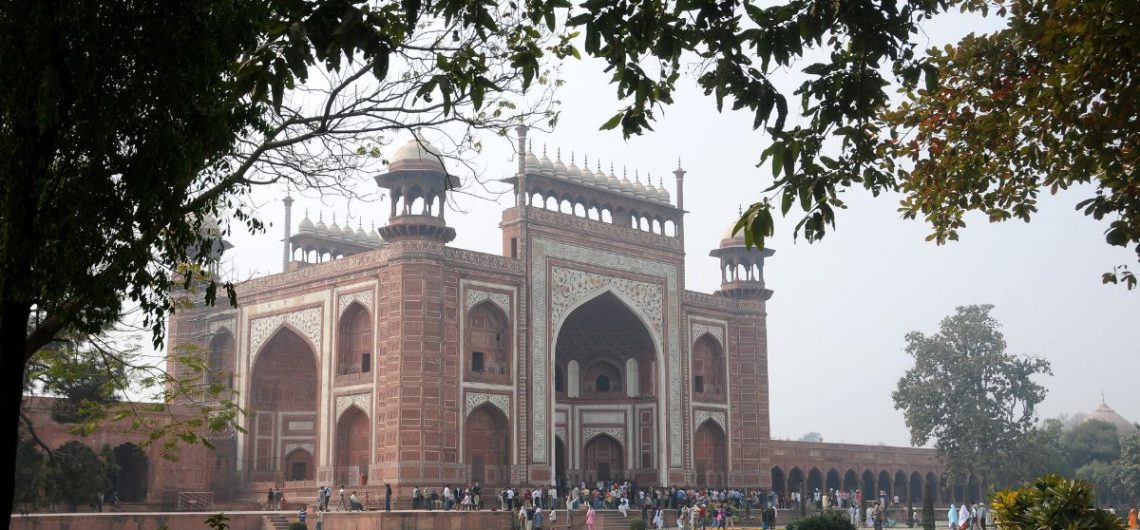
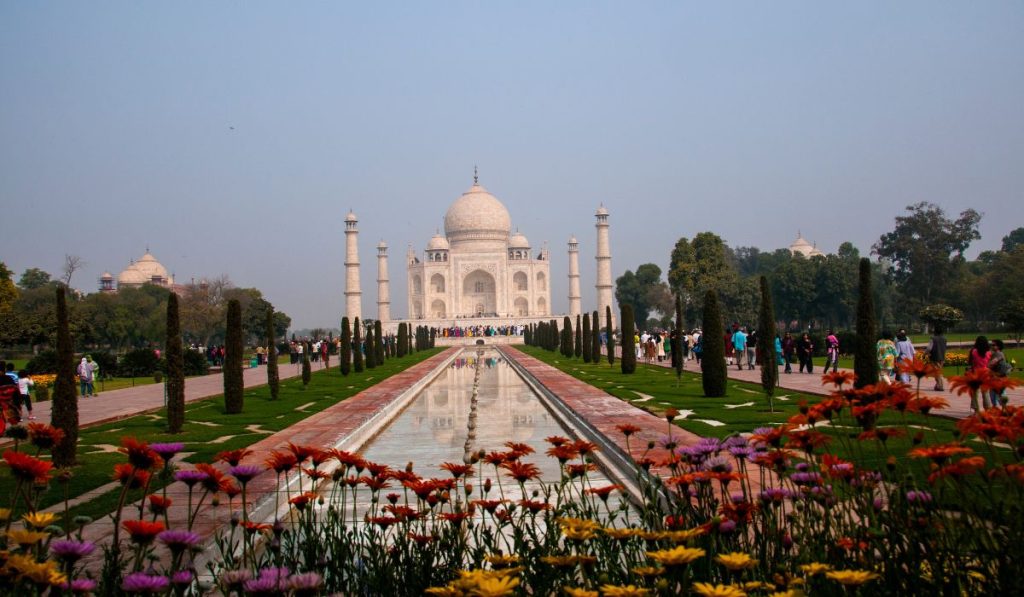
<p>Once through security, most visitors spend between sixty and ninety minutes inside, depending on how much time they dedicate to photography and exploring the surrounding gardens. The main mausoleum has a designated visitor flow to manage foot traffic, and lines for entering the inner chamber can form even after the main gate queue has cleared, particularly mid-morning. Photography is generally best in the earlier and later parts of the day, when the light is softer and the marble takes on warmer tones. Knowing this flow in advance helps visitors avoid long queues at the Taj Mahal both at the entrance and again at the inner chamber, since pacing your visit around quieter windows makes a noticeable difference.</p>
<!-- /wp:paragraph -->
<!-- wp:heading -->
<h2 class="wp-block-heading"><strong>Security Checkpoints and What You Can Carry</strong></h2>
<!-- /wp:heading -->
<!-- wp:paragraph -->
<p>Security screening at the Taj Mahal is strict, and understanding what is allowed helps you move through faster. Bags are scanned individually, and visitors pass through a metal detector before reaching the inner complex. Items such as food, tripods, power banks above a certain capacity, and certain electronics are commonly restricted, so it helps to travel light. Water bottles are generally permitted, but it is worth checking current rules before your trip since restrictions are occasionally updated. Carrying only a small bag with essentials like your ticket confirmation, ID, and phone speeds up the screening process considerably, particularly during the morning rush when multiple lanes are processing visitors at once.</p>
<!-- /wp:paragraph -->
<!-- wp:heading -->
<h2 class="wp-block-heading"><strong>Parking, Walking Distances, and Getting to the Gates</strong></h2>
<!-- /wp:heading -->
<!-- wp:paragraph -->
<p>Vehicles are not permitted right up to the monument entrance, so visitors typically park at a designated area and either walk or take a short electric shuttle to the gate. The distance from parking to the West Gate and East Gate varies, and during peak season the walk can take longer simply due to foot traffic. Travelers arriving by private car often have a smoother experience here, since drivers familiar with the area know where to drop passengers closest to their chosen gate. Planning this stretch of the journey, rather than assuming it will be quick, helps prevent the kind of last-minute rush that leads to longer waits once you reach the ticket and security lines.</p>
<!-- /wp:paragraph -->
<!-- wp:heading -->
<h2 class="wp-block-heading"><strong>Common Mistakes First-Time Visitors Make</strong></h2>
<!-- /wp:heading -->
<!-- wp:paragraph -->
<p>Many first-time travelers underestimate walking distances from parking to the gates, arrive without pre-booked tickets, or choose the West Gate simply because it appears closest on a map without realizing it is also the busiest. Others skip checking the prohibited items list, which can lead to delays at the bag-check counter. Families and senior travelers in particular benefit from arriving a little earlier than planned, since slower walking paces combined with security screening can add unexpected time. Photographers should also be aware that tripods are restricted in most areas, so plan accordingly to avoid being turned away at the checkpoint.</p>
<!-- /wp:paragraph -->
<!-- wp:heading -->
<h2 class="wp-block-heading"><strong>Quick Planning Checklist</strong></h2>
<!-- /wp:heading -->
<!-- wp:list -->
<ul class="wp-block-list"><!-- wp:list-item -->
<li>Book tickets online in advance rather than at the gate.</li>
<!-- /wp:list-item -->
<!-- wp:list-item -->
<li>Choose sunrise or late afternoon entry when possible.</li>
<!-- /wp:list-item -->
<!-- wp:list-item -->
<li>Select the East Gate if arriving by private vehicle.</li>
<!-- /wp:list-item -->
<!-- wp:list-item -->
<li>Avoid weekends and major holidays if your schedule is flexible.</li>
<!-- /wp:list-item -->
<!-- wp:list-item -->
<li>Check current visiting hours before you travel, since timings can shift seasonally.</li>
<!-- /wp:list-item -->
<!-- wp:list-item -->
<li>Carry minimal bags, since security screening is strict and certain items are not permitted inside.</li>
<!-- /wp:list-item --></ul>
<!-- /wp:list -->
<!-- wp:heading -->
<h2 class="wp-block-heading"><strong>Frequently Asked Questions</strong></h2>
<!-- /wp:heading -->
<!-- wp:paragraph -->
<p><strong>What is the best way to avoid long queues at the Taj Mahal?</strong></p>
<!-- /wp:paragraph -->
<!-- wp:paragraph -->
<p>Arriving at sunrise with pre-booked tickets and choosing the East Gate is the most effective combination for a faster entry experience.</p>
<!-- /wp:paragraph -->
<!-- wp:paragraph -->
<p><strong>Which gate is fastest at the Taj Mahal?</strong></p>
<!-- /wp:paragraph -->
<!-- wp:paragraph -->
<p>The East Gate generally moves faster than the West Gate, which sees the heaviest tour bus traffic.</p>
<!-- /wp:paragraph -->
<!-- wp:paragraph -->
<p><strong>How long are the queues at the Taj Mahal?</strong></p>
<!-- /wp:paragraph -->
<!-- wp:paragraph -->
<p>Wait times vary from a few minutes at sunrise to over an hour during the mid-morning peak in winter season.</p>
<!-- /wp:paragraph -->
<!-- wp:paragraph -->
<p><strong>Should I book a guide for my visit?</strong></p>
<!-- /wp:paragraph -->
<!-- wp:paragraph -->
<p>A guide is especially useful for first-time visitors and those combining the Taj Mahal with Agra Fort in a single day.</p>
<!-- /wp:paragraph -->
<!-- wp:paragraph -->
<p><strong>Can I visit the Taj Mahal and Agra Fort in one day?</strong></p>
<!-- /wp:paragraph -->
<!-- wp:paragraph -->
<p>Yes, with an early start, both monuments can comfortably be covered in a single day, particularly with private transport.</p>
<!-- /wp:paragraph -->
<!-- wp:heading -->
<h2 class="wp-block-heading"><strong>Final Thoughts</strong></h2>
<!-- /wp:heading -->
<!-- wp:paragraph -->
<p>Planning ahead is the simplest way to avoid long queues at the Taj Mahal and make the most of your visit to this remarkable monument. From choosing the right gate and time of day to booking tickets in advance, small decisions add up to a noticeably smoother experience. For travelers who would rather leave the logistics to someone else, a private guided option such as the <a href="https://www.tajadventureholidays.com/tours/from-delhi-day-trip-to-taj-mahal-and-agra-fort-by-car/">Skip the Line Taj Mahal and Agra Fort by Car and Guide</a> tour handles ticketing, gate selection, and timing on your behalf, letting you focus on enjoying the experience rather than managing the details.</p>
<!-- /wp:paragraph -->
The Taj Mahal welcomes thousands of visitors every single day, and without the right plan, you can easily lose an hour or more just waiting to get inside. If you want to avoid long queues at the Taj Mahal, the secret lies in timing your arrival, choosing the right gate, and knowing exactly what to expect at each checkpoint. This guide walks you through everything from ticket booking to the best entry strategy, so your morning in Agra feels smooth instead of stressful. Many travelers prefer booking a Skip the Line Taj Mahal and Agra Fort by Car and Guide experience, which removes most of the guesswork around timing and entry logistics. Whether you are visiting independently or with a private guide, the strategies below will help you plan a calmer, faster, and more rewarding visit to one of the world’s most iconic monuments.
Why Do Long Queues Happen at the Taj Mahal?
Queues build up at the Taj Mahal because of a mix of fixed ticket counters, security screening, and seasonal tourist volume. During peak winter months, domestic tour groups and international travelers often arrive within the same one or two hour window right after sunrise, which creates a bottleneck at the gates. Security checks are thorough, since every bag is scanned and certain items are restricted, and this naturally slows down the entry process when too many people arrive at once. Understanding these patterns is the first step toward learning how to avoid long queues at the Taj Mahal, because once you know why congestion happens, you can plan around it rather than getting caught in it. Many independent travelers also underestimate the distance between the parking area and the actual entry gates, which adds extra time they had not accounted for. If you book a guided experience such as the Skip the Line Taj Mahal and Agra Fort Guide & Tickets Tour, your driver and guide typically handle parking, ticket coordination, and gate selection in advance, which removes several of these friction points entirely.
Crowd Patterns and Peak Travel Seasons
Crowd levels at the Taj Mahal shift noticeably depending on the season and the day of the week. Winter months, especially November through February, bring the heaviest footfall because the weather is pleasant and many domestic school trips and family vacations are scheduled during this period. Summer months see fewer tourists due to the heat, though early morning visits remain comfortable even then. Weekends are consistently busier than weekdays, with Fridays through Sundays drawing significantly larger crowds than a typical Tuesday or Wednesday morning. National holidays and long weekends can multiply visitor numbers further, so if your travel dates are flexible, choosing a weekday outside of major holiday periods is one of the simplest ways to reduce wait times. Monitoring recent Taj Mahal Visiting Time — Complete 2026 Guide updates before your trip can also help you understand any seasonal changes to opening hours or entry procedures that might affect your planning.
Best Time of Day to Visit
Sunrise entry remains the most reliable way to beat the crowds. Gates typically open shortly before sunrise, and visitors who arrive within the first thirty minutes of opening often walk through with minimal waiting, since the bulk of tour groups have not yet arrived. Mid-morning, between roughly 9 AM and 11:30 AM, tends to be the busiest stretch of the day, as both independent travelers and organized tour buses converge at once. Late afternoon, closer to the final entry slots before sunset, sees a smaller secondary wave, but it is generally calmer than the late morning rush. If sunrise entry is not feasible because of your travel schedule, aiming for the late afternoon window is the next best option to avoid long queues at the Taj Mahal while still enjoying good light for photographs.
Entry Gate Comparison: Which Gate Is Fastest?
The Taj Mahal has three public entry points: the East Gate, the West Gate, and the South Gate. The West Gate is generally the busiest, since it is closest to many hotels and tour bus parking areas, which means longer queues, particularly during peak hours. The East Gate tends to move a bit faster and is often preferred by guided tours and private vehicles, since drop-off points are more convenient. The South Gate sees the lowest footfall overall, though it offers fewer amenities nearby. Choosing the East Gate, when your itinerary allows it, is a practical way to avoid long queues at the Taj Mahal without sacrificing convenience, especially if you are arriving by private car rather than public transport.
Gate
Typical Crowd Level
Best For
West Gate
High
Hotel proximity
East Gate
Moderate
Private car drop-off
South Gate
Low
Quieter entry, fewer amenities
Are Online Tickets Worth It?
Booking tickets online in advance is strongly recommended. It removes the need to stand in a separate ticket line at the gate, which can be one of the slowest parts of the entire process during busy hours. Online booking also lets you select your preferred time slot, which helps with planning the rest of your day around Agra Fort or other nearby attractions. For current pricing details, ticket categories, and any updated fees for 2026, it’s worth checking a dedicated resource like the Taj Mahal Ticket Price 2026 page before you travel, since rates and entry rules are occasionally revised. Travelers who book through a guided package often have tickets arranged on their behalf, which is one more reason private tours have become a popular way to avoid long queues at the Taj Mahal altogether.
Is a Guide Helpful for a Faster Visit?
A knowledgeable local guide does more than share history. Guides familiar with daily patterns can recommend which gate to use that morning, what time the crowd typically peaks, and how to move efficiently between the mausoleum, the mosque, and the gardens without backtracking. For travelers with limited time in Agra, especially those planning to also visit Agra Fort the same day, a guide can sequence the visit so neither location feels rushed. This kind of local insight is difficult to replicate independently, particularly for first-time visitors unfamiliar with the layout.
Visiting the Taj Mahal and Agra Fort in One Day
Combining both monuments in a single day is entirely possible with the right schedule. A common approach is to begin at the Taj Mahal for sunrise, spend roughly ninety minutes to two hours exploring the grounds and mausoleum, then head to Agra Fort by mid-morning before the heat and crowds peak there as well. Lunch at a centrally located restaurant between the two sites helps break up the day comfortably. Travelers coming from Delhi often prefer a private car for this itinerary, since it allows flexibility in departure time and avoids the scheduling constraints of group transport.
Inside the Taj Mahal: What to Expect
Once through security, most visitors spend between sixty and ninety minutes inside, depending on how much time they dedicate to photography and exploring the surrounding gardens. The main mausoleum has a designated visitor flow to manage foot traffic, and lines for entering the inner chamber can form even after the main gate queue has cleared, particularly mid-morning. Photography is generally best in the earlier and later parts of the day, when the light is softer and the marble takes on warmer tones. Knowing this flow in advance helps visitors avoid long queues at the Taj Mahal both at the entrance and again at the inner chamber, since pacing your visit around quieter windows makes a noticeable difference.
Security Checkpoints and What You Can Carry
Security screening at the Taj Mahal is strict, and understanding what is allowed helps you move through faster. Bags are scanned individually, and visitors pass through a metal detector before reaching the inner complex. Items such as food, tripods, power banks above a certain capacity, and certain electronics are commonly restricted, so it helps to travel light. Water bottles are generally permitted, but it is worth checking current rules before your trip since restrictions are occasionally updated. Carrying only a small bag with essentials like your ticket confirmation, ID, and phone speeds up the screening process considerably, particularly during the morning rush when multiple lanes are processing visitors at once.
Parking, Walking Distances, and Getting to the Gates
Vehicles are not permitted right up to the monument entrance, so visitors typically park at a designated area and either walk or take a short electric shuttle to the gate. The distance from parking to the West Gate and East Gate varies, and during peak season the walk can take longer simply due to foot traffic. Travelers arriving by private car often have a smoother experience here, since drivers familiar with the area know where to drop passengers closest to their chosen gate. Planning this stretch of the journey, rather than assuming it will be quick, helps prevent the kind of last-minute rush that leads to longer waits once you reach the ticket and security lines.
Common Mistakes First-Time Visitors Make
Many first-time travelers underestimate walking distances from parking to the gates, arrive without pre-booked tickets, or choose the West Gate simply because it appears closest on a map without realizing it is also the busiest. Others skip checking the prohibited items list, which can lead to delays at the bag-check counter. Families and senior travelers in particular benefit from arriving a little earlier than planned, since slower walking paces combined with security screening can add unexpected time. Photographers should also be aware that tripods are restricted in most areas, so plan accordingly to avoid being turned away at the checkpoint.
Quick Planning Checklist
Book tickets online in advance rather than at the gate.
Choose sunrise or late afternoon entry when possible.
Select the East Gate if arriving by private vehicle.
Avoid weekends and major holidays if your schedule is flexible.
Check current visiting hours before you travel, since timings can shift seasonally.
Carry minimal bags, since security screening is strict and certain items are not permitted inside.
Frequently Asked Questions
What is the best way to avoid long queues at the Taj Mahal?
Arriving at sunrise with pre-booked tickets and choosing the East Gate is the most effective combination for a faster entry experience.
Which gate is fastest at the Taj Mahal?
The East Gate generally moves faster than the West Gate, which sees the heaviest tour bus traffic.
How long are the queues at the Taj Mahal?
Wait times vary from a few minutes at sunrise to over an hour during the mid-morning peak in winter season.
Should I book a guide for my visit?
A guide is especially useful for first-time visitors and those combining the Taj Mahal with Agra Fort in a single day.
Can I visit the Taj Mahal and Agra Fort in one day?
Yes, with an early start, both monuments can comfortably be covered in a single day, particularly with private transport.
Final Thoughts
Planning ahead is the simplest way to avoid long queues at the Taj Mahal and make the most of your visit to this remarkable monument. From choosing the right gate and time of day to booking tickets in advance, small decisions add up to a noticeably smoother experience. For travelers who would rather leave the logistics to someone else, a private guided option such as the Skip the Line Taj Mahal and Agra Fort by Car and Guide tour handles ticketing, gate selection, and timing on your behalf, letting you focus on enjoying the experience rather than managing the details.
<!-- wp:paragraph -->
<p>Planning a trip to one of the Seven Wonders of the World? Knowing the correct Taj Mahal visiting time can make or break your experience. This guide covers opening hours, Friday closures, the best time to visit, night viewing, entry fees, and practical timing tips — everything a traveller needs in 2026.</p>
<!-- /wp:paragraph -->
<!-- wp:table -->
<figure class="wp-block-table"><table class="has-fixed-layout"><tbody><tr><td><strong> Written by Local Agra Travel Experts</strong><br>Our team has organised hundreds of Taj Mahal tours from Delhi and Agra over the years. Every recommendation in this guide is based on real visitor experiences, seasonal conditions, security queue observations, and first-hand local knowledge — not just online research.<br>⚠ Prices, full moon dates, and free-entry days change regularly. Always verify on the official ASI website (asi.nic.in) before travelling.</td></tr></tbody></table></figure>
<!-- /wp:table -->
<!-- wp:table -->
<figure class="wp-block-table"><table class="has-fixed-layout"><tbody><tr><td colspan="2"><strong> Taj Mahal Visiting Time — Quick Answer 2026</strong></td></tr><tr><td><strong>Opens</strong></td><td>30 min before sunrise (varies monthly)</td></tr><tr><td><strong>Closes</strong></td><td>30 min before sunset | Ticket counter: 45 min before sunset</td></tr><tr><td><strong>Friday</strong></td><td>CLOSED to tourists — mosque prayers only</td></tr><tr><td><strong>Night Viewing</strong></td><td>8:30 PM – 12:30 AM on full moon nights (5 nights/month)</td></tr><tr><td><strong>Entry Fee</strong></td><td>₹50 Indian | ₹1,100 Foreign | Children under 15: Free</td></tr></tbody></table></figure>
<!-- /wp:table -->
<!-- wp:html -->
<div style="
background: #f7f7f7;
border: 1px solid #e5e5e5;
border-radius: 16px;
padding: 36px 25px;
margin: 40px 0;
text-align: center;
">
<h2 style="
font-size: 28px;
line-height: 1.35;
font-weight: 700;
color: #111111;
margin: 0 0 12px;
">
Planning Your Taj Mahal Visit?
</h2>
<p style="
font-size: 17px;
line-height: 1.6;
color: #555555;
max-width: 680px;
margin: 0 auto 25px;
">
Visit the Taj Mahal at the right time and make the most of your Agra
sightseeing experience. If you prefer a comfortable private tour with
convenient transfers from Delhi, explore our same-day Taj Mahal and Agra
Fort tour by car.
</p>
<div style="
display: flex;
justify-content: center;
align-items: center;
flex-wrap: wrap;
gap: 10px;
">
<!-- WhatsApp Enquiry -->
<a href="https://wa.me/919808755329?text=Hi%2C%20I%20would%20like%20to%20know%20more%20about%20the%20Taj%20Mahal%20and%20Agra%20Fort%20tour%20by%20car%20from%20Delhi." target="_blank" rel="noopener noreferrer" style="
display: inline-block;
background: #DD3333;
color: #ffffff;
font-size: 17px;
font-weight: 700;
padding: 15px 28px;
border-radius: 8px;
text-decoration: none;
">
Ask on WhatsApp
</a>
<!-- Tour Page -->
<a href="https://www.tajadventureholidays.com/tours/from-delhi-day-trip-to-taj-mahal-and-agra-fort-by-car/" style="
display: inline-block;
background: #ffffff;
color: #DD3333;
border: 2px solid #DD3333;
font-size: 17px;
font-weight: 700;
padding: 13px 28px;
border-radius: 8px;
text-decoration: none;
">
Explore Taj Mahal Tour
</a>
</div>
</div>
<!-- /wp:html -->
<!-- wp:paragraph -->
<p><strong>Taj Mahal Visiting Time</strong> - <strong>Opening & Closing Time</strong></p>
<!-- /wp:paragraph -->
<!-- wp:heading -->
<h2 class="wp-block-heading"><strong>Taj Mahal Opening Time — When Do the Gates Open?</strong></h2>
<!-- /wp:heading -->
<!-- wp:paragraph -->
<p>The Taj Mahal opening time is not fixed year-round. Gates open exactly 30 minutes before local sunrise in Agra, which means Taj Mahal timing shifts every month. Ticket counters open at the same time as the gates, but close 45 minutes before sunset — so always buy your ticket before that deadline.</p>
<!-- /wp:paragraph -->
<!-- wp:table -->
<figure class="wp-block-table"><table class="has-fixed-layout"><tbody><tr><td><strong>Month</strong></td><td><strong>Opens (approx.)</strong></td><td><strong>Last Entry (approx.)</strong></td></tr><tr><td><strong>January</strong></td><td>6:30 AM</td><td>5:30 PM</td></tr><tr><td><strong>February</strong></td><td>6:15 AM</td><td>5:45 PM</td></tr><tr><td><strong>March</strong></td><td>6:00 AM</td><td>6:00 PM</td></tr><tr><td><strong>April</strong></td><td>5:45 AM</td><td>6:30 PM</td></tr><tr><td><strong>May</strong></td><td>5:30 AM</td><td>6:45 PM</td></tr><tr><td><strong>June</strong></td><td>5:30 AM</td><td>7:00 PM</td></tr><tr><td><strong>July</strong></td><td>5:30 AM</td><td>7:00 PM</td></tr><tr><td><strong>August</strong></td><td>5:30 AM</td><td>6:45 PM</td></tr><tr><td><strong>September</strong></td><td>5:45 AM</td><td>6:30 PM</td></tr><tr><td><strong>October</strong></td><td>6:00 AM</td><td>6:00 PM</td></tr><tr><td><strong>November</strong></td><td>6:15 AM</td><td>5:45 PM</td></tr><tr><td><strong>December</strong></td><td>6:30 AM</td><td>5:30 PM</td></tr></tbody></table></figure>
<!-- /wp:table -->
<!-- wp:paragraph -->
<p>These times are approximate and based on average sunrise/sunset for Agra. Always verify on the ASI website before your visit, especially in December and January when winter fog can affect visibility even after the gates open.</p>
<!-- /wp:paragraph -->
<!-- wp:paragraph -->
<p>Many travellers choose to avoid the uncertainty of local transportation by booking one of our <a href="https://www.tajadventureholidays.com/taj-mahal-tour-packages-from-delhi/">Taj Mahal Tour Packages from Delhi</a>, which include hotel pickup, experienced drivers, and expert guidance on the best arrival times. This is especially useful for sunrise visits, when reaching the Taj Mahal before the gates open can make a significant difference to your overall experience.</p>
<!-- /wp:paragraph -->
<!-- wp:paragraph -->
<p> <strong>Taj Mahal Closing Time & Last Entry Rules</strong></p>
<!-- /wp:paragraph -->
<!-- wp:paragraph -->
<p>The Taj Mahal closes 30 minutes before sunset. The ticket counter closes 45 minutes before sunset — this is the cut-off most travellers miss. If you arrive at the ticket counter after this window, you will be turned away even if the gates are technically still open.</p>
<!-- /wp:paragraph -->
<!-- wp:heading {"level":3} -->
<h3 class="wp-block-heading"><strong>The 3-Hour Slot Rule — What Happens If You Overstay?</strong></h3>
<!-- /wp:heading -->
<!-- wp:paragraph -->
<p>Tickets are issued for 3-hour time slots. If you overstay your allocated slot, security staff may ask you to exit and purchase an additional slot ticket at the exit point. Enforcement is relaxed during off-peak weekday mornings but strictly applied on weekends and during peak tourist season (October–March). Build your visit plan around a 2.5 to 3-hour window to stay comfortable.</p>
<!-- /wp:paragraph -->
<!-- wp:heading -->
<h2 class="wp-block-heading"><strong>Is the Taj Mahal Closed on Friday?</strong></h2>
<!-- /wp:heading -->
<!-- wp:paragraph -->
<p>Yes — the Taj Mahal is completely closed to tourists every Friday. The closure exists because the complex contains an active mosque where Friday Jumu'ah prayers are held. The mosque is open to Muslim worshippers, but the gardens, mausoleum, and all tourist areas remain off-limits for the entire day.</p>
<!-- /wp:paragraph -->
<!-- wp:paragraph -->
<p>If your visit falls on a Friday, here are the best alternatives in Agra:</p>
<!-- /wp:paragraph -->
<!-- wp:paragraph -->
<p>Agra Fort — UNESCO World Heritage Site, open on Fridays, about 2.5 km away</p>
<!-- /wp:paragraph -->
<!-- wp:paragraph -->
<p>Mehtab Bagh — Garden across the Yamuna River with the best panoramic view of the Taj Mahal (see our full Mehtab Bagh guide)</p>
<!-- /wp:paragraph -->
<!-- wp:paragraph -->
<p>Itmad-ud-Daula — Often called the Baby Taj, open Fridays, stunning marble inlay work</p>
<!-- /wp:paragraph -->
<!-- wp:paragraph -->
<p>Fatehpur Sikri — Mughal ghost city 40 km from Agra, a full half-day alternative</p>
<!-- /wp:paragraph -->
<!-- wp:paragraph -->
<p>Many travellers from Delhi use Friday as a travel day — drive down on Friday evening and start with a Taj Mahal sunrise visit on Saturday morning.</p>
<!-- /wp:paragraph -->
<!-- wp:heading -->
<h2 class="wp-block-heading"><strong>Best Time of a day for Taj Mahal Visiting Time</strong></h2>
<!-- /wp:heading -->
<!-- wp:image {"id":2127,"sizeSlug":"large","linkDestination":"none"} -->
<figure class="wp-block-image size-large"><img src="https://www.tajadventureholidays.com/wp-content/uploads/2026/06/Untitled-design-2026-06-24T141836.463-1024x597.jpg" alt="Taj Mahal Visiting Time — Complete 2026 Guide" class="wp-image-2127"/></figure>
<!-- /wp:image -->
<!-- wp:paragraph -->
<p>The time of day you visit determines your crowd experience, photo quality, and overall impression. Here is the definitive ranking:</p>
<!-- /wp:paragraph -->
<!-- wp:heading {"level":3} -->
<h3 class="wp-block-heading"><strong>1. Sunrise Visit — The Best Time (Highly Recommended)</strong></h3>
<!-- /wp:heading -->
<!-- wp:paragraph -->
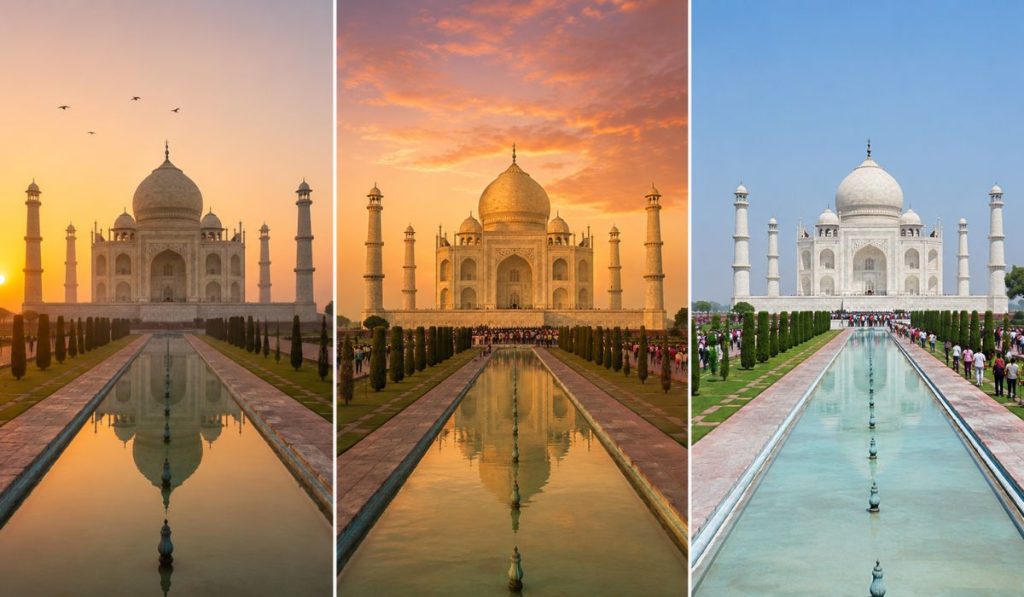
<p>Sunrise is the best time to visit the Taj Mahal without question. The first 60–90 minutes after gates open give you the monument in near-solitude, cool air, and golden morning light that makes the white marble glow. The reflecting pool photographs perfectly in this light.</p>
<!-- /wp:paragraph -->
<!-- wp:paragraph -->
<p><strong>Hour by hour: </strong>5:30 AM — Gates open, security queue short (10–20 min). 6:00–6:30 AM — Golden hour, soft directional light, best photography. 7:00 AM — Crowds begin to build. 8:00 AM — Tourist buses arrive; the experience changes significantly.</p>
<!-- /wp:paragraph -->
<!-- wp:heading {"level":3} -->
<h3 class="wp-block-heading"><strong>2. Sunset Visit — Romantic but Busier</strong></h3>
<!-- /wp:heading -->
<!-- wp:paragraph -->
<p>Sunset offers warm amber and pink tones on the marble — beautiful and romantic, especially in winter months. Crowds are heavier than sunrise. Arrive by 3:00 PM to comfortably explore before the ticket cut-off. Best suited for travellers who cannot manage an early morning departure.</p>
<!-- /wp:paragraph -->
<!-- wp:heading {"level":3} -->
<h3 class="wp-block-heading"><strong>3. Midday (12 PM – 3:30 PM) — Avoid If Possible</strong></h3>
<!-- /wp:heading -->
<!-- wp:paragraph -->
<p>Harsh overhead light creates flat, shadowless photographs. Summer temperatures reach 42–46°C. Crowds peak as Delhi day-trippers arrive. If a midday visit is unavoidable, prioritise the interior mausoleum chambers first (cooler, shaded) and stay on shaded walkways.</p>
<!-- /wp:paragraph -->
<!-- wp:table -->
<figure class="wp-block-table"><table class="has-fixed-layout"><tbody><tr><td><strong>Factor</strong></td><td><strong>Sunrise Visit </strong></td><td><strong>Sunset Visit </strong></td></tr><tr><td><strong>Crowds</strong></td><td>Very low (first 60 min)</td><td>Moderate to high</td></tr><tr><td><strong>Light</strong></td><td>Golden, soft, magical</td><td>Warm amber — beautiful</td></tr><tr><td><strong>Temperature</strong></td><td>Cool & comfortable</td><td>Hot in summer / pleasant in winter</td></tr><tr><td><strong>Photography</strong></td><td>Best natural light</td><td>Good, but harsher shadows</td></tr><tr><td><strong>Gate Wait</strong></td><td>10–20 min</td><td>30–45 min</td></tr><tr><td><strong>Best For</strong></td><td>First-timers, photographers</td><td>Couples, budget travellers</td></tr></tbody></table></figure>
<!-- /wp:table -->
<!-- wp:table -->
<figure class="wp-block-table"><table class="has-fixed-layout"><tbody><tr><td><strong> Visiting from Delhi? Don't Miss the Sunrise.</strong>A guided <a href="https://www.tajadventureholidays.com/tours/sunrise-taj-mahal-tour-from-delhi-by-car/">Sunrise Taj Mahal Tour from Delhi by Car</a> departs at 2:30–3:00 AM, gets you inside the gate at opening, and returns you to Delhi by afternoon.</td></tr></tbody></table></figure>
<!-- /wp:table -->
<!-- wp:html -->
<div style="
background: #f7f7f7;
border: 1px solid #e5e5e5;
border-radius: 16px;
padding: 36px 25px;
margin: 40px 0;
text-align: center;
">
<h2 style="
font-size: 28px;
line-height: 1.35;
font-weight: 700;
color: #111111;
margin: 0 0 12px;
">
Planning Your Taj Mahal Visit?
</h2>
<p style="
font-size: 17px;
line-height: 1.6;
color: #555555;
max-width: 680px;
margin: 0 auto 25px;
">
Visit the Taj Mahal at the right time and make the most of your Agra
sightseeing experience. If you prefer a comfortable private tour with
convenient transfers from Delhi, explore our same-day Taj Mahal and Agra
Fort tour by car.
</p>
<div style="
display: flex;
justify-content: center;
align-items: center;
flex-wrap: wrap;
gap: 10px;
">
<!-- WhatsApp Enquiry -->
<a href="https://wa.me/919808755329?text=Hi%2C%20I%20would%20like%20to%20know%20more%20about%20the%20Taj%20Mahal%20and%20Agra%20Fort%20tour%20by%20car%20from%20Delhi." target="_blank" rel="noopener noreferrer" style="
display: inline-block;
background: #DD3333;
color: #ffffff;
font-size: 17px;
font-weight: 700;
padding: 15px 28px;
border-radius: 8px;
text-decoration: none;
">
Ask on WhatsApp
</a>
<!-- Tour Page -->
<a href="https://www.tajadventureholidays.com/tours/from-delhi-day-trip-to-taj-mahal-and-agra-fort-by-car/" style="
display: inline-block;
background: #ffffff;
color: #DD3333;
border: 2px solid #DD3333;
font-size: 17px;
font-weight: 700;
padding: 13px 28px;
border-radius: 8px;
text-decoration: none;
">
Explore Taj Mahal Tour
</a>
</div>
</div>
<!-- /wp:html -->
<!-- wp:heading -->
<h2 class="wp-block-heading"><strong>How Early Should You Arrive? — Taj Mahal Visiting Time</strong></h2>
<!-- /wp:heading -->
<!-- wp:paragraph -->
<p>This is the most overlooked piece of advice in most Taj Mahal guides. The gate opening time and your ideal arrival time are very different things.</p>
<!-- /wp:paragraph -->
<!-- wp:paragraph -->
<p>Security screening takes 30–45 minutes at peak hours (weekends, 8 AM–noon). At 5:30 AM for a sunrise visit, it typically takes only 10–20 minutes. There are separate security lines for men and women. Prohibited items — drones, tripods, food, tobacco, large bags — must be deposited at the cloakroom before entry.</p>
<!-- /wp:paragraph -->
<!-- wp:paragraph -->
<p>Sunrise visit: Arrive at the parking area by 4:45–5:00 AM (60–90 min before opening)</p>
<!-- /wp:paragraph -->
<!-- wp:paragraph -->
<p>Post-8 AM morning visit: Arrive 45 minutes before your intended entry time</p>
<!-- /wp:paragraph -->
<!-- wp:paragraph -->
<p>Sunset visit: Arrive by 3:00 PM at the latest</p>
<!-- /wp:paragraph -->
<!-- wp:paragraph -->
<p>Weekends or peak season (Oct–Mar): Add 30 extra minutes to all timings above</p>
<!-- /wp:paragraph -->
<!-- wp:heading {"level":3} -->
<h3 class="wp-block-heading"><strong>What Time to Leave Delhi for a Taj Mahal Sunrise Visit?</strong></h3>
<!-- /wp:heading -->
<!-- wp:paragraph -->
<p>Leave Delhi by 2:30–3:00 AM. The drive via Yamuna Expressway takes approximately 3.5 hours in no-traffic early morning conditions. Factor in a fuel stop and a short parking-to-gate walk. Hire a private car or book a guided tour to reach the site before sunrise, since public buses do not arrive early enough..</p>
<!-- /wp:paragraph -->
<!-- wp:heading -->
<h2 class="wp-block-heading"><strong>Taj Mahal Entry Fee 2026</strong></h2>
<!-- /wp:heading -->
<!-- wp:table -->
<figure class="wp-block-table"><table class="has-fixed-layout"><tbody><tr><td><strong>Visitor Category</strong></td><td><strong>Entry Fee</strong></td><td><strong>Mausoleum Extra</strong></td></tr><tr><td><strong>Indian Citizens</strong></td><td>₹50</td><td>₹200</td></tr><tr><td><strong>Foreign Nationals</strong></td><td>₹1,100</td><td>₹200</td></tr><tr><td><strong>SAARC / BIMSTEC</strong></td><td>₹540</td><td>₹200</td></tr><tr><td><strong>Children under 15</strong></td><td>Free</td><td>Free</td></tr></tbody></table></figure>
<!-- /wp:table -->
<!-- wp:paragraph -->
<p>The mausoleum inner chamber (where the tombs of Shah Jahan and Mumtaz Mahal are located) costs an extra ₹200 for all visitor categories. This is a separate ticket purchased at the mausoleum entrance — and absolutely worth it. Children under 15 enter free.</p>
<!-- /wp:paragraph -->
<!-- wp:paragraph -->
<p>Free entry days in 2026 include World Heritage Day (18 April), Shah Jahan Urs, International Women's Day (8 March), and other ASI-designated dates. Verify exact dates at <a href="https://asi.nic.in/">asi.nic</a>.in before planning a free-entry visit as dates are subject to change.</p>
<!-- /wp:paragraph -->
<!-- wp:heading -->
<h2 class="wp-block-heading"> <strong>Taj Mahal Night Viewing — Moonlight Visit Essentials</strong></h2>
<!-- /wp:heading -->
<!-- wp:paragraph -->
<p>The Taj Mahal at night under a full moon is one of the most extraordinary travel experiences in India. The white marble glows silver in the moonlight — a completely different monument from its daytime appearance.</p>
<!-- /wp:paragraph -->
<!-- wp:paragraph -->
<p>Night viewing is permitted on 5 nights per month: the full moon night plus the two nights on either side. Entry is in batches of 50 visitors per session (8:30 PM – 12:30 AM). Each batch gets 30 minutes inside the grounds. Tickets are sold only at the ASI ticket office on Mall Road, Agra — not online — and must be purchased one day in advance. Carry a government-issued photo ID.</p>
<!-- /wp:paragraph -->
<!-- wp:table -->
<figure class="wp-block-table"><table class="has-fixed-layout"><tbody><tr><td><strong> Planning a Moonlight Taj Mahal Visit?</strong>Our <a href="https://www.tajadventureholidays.com/tours/agra-overnight-tour-from-delhi-by-car/">Agra Overnight Tour from Delhi by Car</a> includes night viewing coordination, hotel stay, and a sunrise visit the following morning — the complete Taj Mahal experience. </td></tr></tbody></table></figure>
<!-- /wp:table -->
<!-- wp:heading -->
<h2 class="wp-block-heading"> </h2>
<!-- /wp:heading -->
<!-- wp:heading -->
<h2 class="wp-block-heading"><strong>Best Season to Visit — Month-by-Month Summary</strong></h2>
<!-- /wp:heading -->
<!-- wp:paragraph -->
<p><strong>October – November (Best): </strong>Clear skies, cool weather, low crowds relative to December. Best overall visibility and photography conditions.</p>
<!-- /wp:paragraph -->
<!-- wp:paragraph -->
<p><strong>December – January (Good but foggy): </strong>Pleasant daytime temperatures but thick morning fog can completely obscure the Taj until 10–11 AM. Arrive after 10 AM in these months rather than at sunrise. The fog clearing to reveal the Taj is dramatic in its own right.</p>
<!-- /wp:paragraph -->
<!-- wp:paragraph -->
<p><strong>February – March (Excellent): </strong>Taj Mahotsav cultural festival runs in February near the East Gate. Warm days, manageable crowds, and clear skies make this an underrated season.</p>
<!-- /wp:paragraph -->
<!-- wp:paragraph -->
<p><strong>April – June (Avoid midday): </strong>Extremely hot (42–46°C). Dawn visits are still worthwhile but deteriorate fast after 8 AM. Carry water and wear light clothing.</p>
<!-- /wp:paragraph -->
<!-- wp:paragraph -->
<p><strong>July – September (Monsoon): </strong>Lush green gardens and dramatic cloudy skies create moody, beautiful photography conditions. Heavy rain is possible; carry waterproof bags for camera equipment.</p>
<!-- /wp:paragraph -->
<!-- wp:heading -->
<h2 class="wp-block-heading"><strong>Taj Mahal Rules — Prohibited Items</strong></h2>
<!-- /wp:heading -->
<!-- wp:image {"id":2126,"sizeSlug":"large","linkDestination":"none"} -->
<figure class="wp-block-image size-large"><img src="https://www.tajadventureholidays.com/wp-content/uploads/2026/06/Untitled-design-2026-06-24T141840.482-1024x597.jpg" alt="Taj Mahal Visiting Time — Complete 2026 Guide" class="wp-image-2126"/></figure>
<!-- /wp:image -->
<!-- wp:paragraph -->
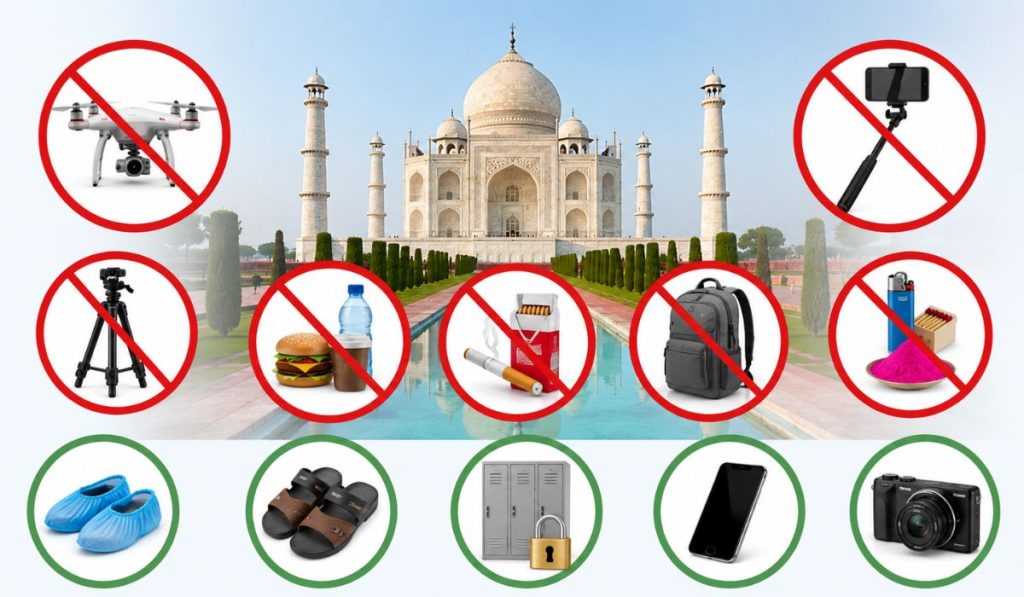
<p>Security is thorough. The following are not permitted inside the complex:</p>
<!-- /wp:paragraph -->
<!-- wp:paragraph -->
<p>Drones and remote-controlled devices (confiscated immediately)</p>
<!-- /wp:paragraph -->
<!-- wp:paragraph -->
<p>Tripods and selfie sticks (special permits required for commercial photography)</p>
<!-- /wp:paragraph -->
<!-- wp:paragraph -->
<p>Food, drinks, and tobacco products</p>
<!-- /wp:paragraph -->
<!-- wp:paragraph -->
<p>Large bags and backpacks (small bags permitted)</p>
<!-- /wp:paragraph -->
<!-- wp:paragraph -->
<p>Lighters, matchsticks, and coloured powders</p>
<!-- /wp:paragraph -->
<!-- wp:paragraph -->
<p>Shoe covers are provided free at the mausoleum entrance. Shoe removal is mandatory inside the main chamber. Lockers and cloakrooms are available near each gate. Mobile phones and compact cameras are allowed without restriction.</p>
<!-- /wp:paragraph -->
<!-- wp:heading -->
<h2 class="wp-block-heading"><strong>Frequently Asked Questions</strong> abouth Taj Mahal Visiting Time</h2>
<!-- /wp:heading -->
<!-- wp:heading {"level":3} -->
<h3 class="wp-block-heading">Q: What are the Taj Mahal Visiting Time?</h3>
<!-- /wp:heading -->
<!-- wp:paragraph -->
<p>The Taj Mahal opens 30 minutes before sunrise and closes 30 minutes before sunset, every day except Friday. Ticket counters close 45 minutes before sunset. Exact times vary by month — see the table above.</p>
<!-- /wp:paragraph -->
<!-- wp:heading {"level":3} -->
<h3 class="wp-block-heading">Q: Is the Taj Mahal open on Sunday?</h3>
<!-- /wp:heading -->
<!-- wp:paragraph -->
<p>Yes. The Taj Mahal is open every day of the week except Friday.</p>
<!-- /wp:paragraph -->
<!-- wp:heading {"level":3} -->
<h3 class="wp-block-heading">Q: What is the least crowded time to visit?</h3>
<!-- /wp:heading -->
<!-- wp:paragraph -->
<p>The first 60 minutes after gate opening on a weekday (Monday to Thursday) is the quietest time. Saturdays are the busiest day of the week. Avoid midday on any day during peak season.</p>
<!-- /wp:paragraph -->
<!-- wp:heading {"level":3} -->
<h3 class="wp-block-heading">Q: Can I visit the Taj Mahal at night?</h3>
<!-- /wp:heading -->
<!-- wp:paragraph -->
<p>Yes, but only on 5 nights per month around the full moon. Sessions run 8:30 PM to 12:30 AM in batches of 50. Tickets must be bought in advance from the ASI Mall Road office — not online.</p>
<!-- /wp:paragraph -->
<!-- wp:heading {"level":3} -->
<h3 class="wp-block-heading">Q: How much time do I need at the Taj Mahal?</h3>
<!-- /wp:heading -->
<!-- wp:paragraph -->
<p>Most visitors spend 2–3 hours. Photographers typically need 3–4 hours. Night viewing batches are strictly 30 minutes. Add 30–45 minutes for security queues at peak times.</p>
<!-- /wp:paragraph -->
<!-- wp:heading {"level":3} -->
<h3 class="wp-block-heading">Q: What time should I leave Delhi for a sunrise visit?</h3>
<!-- /wp:heading -->
<!-- wp:paragraph -->
<p>Leave Delhi by 2:30–3:00 AM. The Yamuna Expressway drive takes approximately 3.5 hours. A private car or guided tour is recommended for sunrise timing reliability.</p>
<!-- /wp:paragraph -->
<!-- wp:heading {"level":3} -->
<h3 class="wp-block-heading">Q: Is there a 3-hour slot rule?</h3>
<!-- /wp:heading -->
<!-- wp:paragraph -->
<p>Yes. Tickets are issued for 3-hour time slots. Overstaying may require purchasing an additional slot at the exit. Enforcement is stricter on weekends and during peak season.</p>
<!-- /wp:paragraph -->
<!-- wp:heading {"level":3} -->
<h3 class="wp-block-heading">Q: What is the Taj Mahal entry fee in 2026?</h3>
<!-- /wp:heading -->
<!-- wp:paragraph -->
<p>Indian citizens pay ₹50 entry plus ₹200 for the mausoleum. Foreign nationals pay ₹1,100 plus ₹200. SAARC/BIMSTEC visitors pay ₹540 plus ₹200. Children under 15 enter free. Verify current prices at asi.nic.in before visiting.</p>
<!-- /wp:paragraph -->
<!-- wp:heading -->
<h2 class="wp-block-heading"><strong>Ready to Visit? Plan It Right.</strong></h2>
<!-- /wp:heading -->
<!-- wp:paragraph -->
<p>The Taj Mahal rewards visitors who plan their timing carefully. Arrive at sunrise on a weekday, budget 60–90 minutes before gate opening for security and parking, and avoid Fridays and midday visits. Whether you are a first-time traveller from Delhi or a returning visitor wanting to experience the moonlight view — the right timing makes all the difference.</p>
<!-- /wp:paragraph -->
<!-- wp:heading -->
<h2 class="wp-block-heading"><strong>Planning Your Taj Mahal Visit? Read These Helpful Guides</strong></h2>
<!-- /wp:heading -->
<!-- wp:heading {"level":3} -->
<h3 class="wp-block-heading"><strong>Where to Eat Near the Taj Mahal</strong></h3>
<!-- /wp:heading -->
<!-- wp:paragraph -->
<p>After exploring the Taj Mahal, most visitors spend several hours in Agra and look for a good place to eat nearby. From luxury restaurants with Taj views to authentic Mughlai cuisine and family-friendly cafes, there are plenty of dining options within a short distance of the monument.</p>
<!-- /wp:paragraph -->
<!-- wp:paragraph -->
<p><strong>Related Guide:</strong> <a href="https://www.tajadventureholidays.com/blog/where-to-eat-near-taj-mahal/"><em>Where to Eat Near the Taj Mahal:</em></a><em> </em></p>
<!-- /wp:paragraph -->
<!-- wp:heading {"level":3} -->
<h3 class="wp-block-heading"><strong>Taj Mahal Dress Code & Visitor Rules</strong></h3>
<!-- /wp:heading -->
<!-- wp:paragraph -->
<p>There is no strict dress code for the Taj Mahal, but comfortable and respectful clothing is recommended. Visitors should also be aware of security restrictions, prohibited items, photography rules, and guidelines for entering the main mausoleum.</p>
<!-- /wp:paragraph -->
<!-- wp:paragraph -->
<p><strong>Related Guide:</strong> <a href="https://www.tajadventureholidays.com/blog/taj-mahal-dress-code-rules/"><em>Taj Mahal Dress Code & Visitor Rules:</em></a><em> </em></p>
<!-- /wp:paragraph -->
<!-- wp:heading {"level":3} -->
<h3 class="wp-block-heading"><strong>Taj Mahal Ticket Price 2026</strong></h3>
<!-- /wp:heading -->
<!-- wp:paragraph -->
<p>Ticket prices vary depending on nationality and whether you plan to enter the main mausoleum. Booking tickets in advance can help reduce waiting time, especially during peak tourist season.</p>
<!-- /wp:paragraph -->
<!-- wp:paragraph -->
<p><strong>Related Guide:</strong> <a href="https://www.tajadventureholidays.com/blog/taj-mahal-entry-fee-timings-booking/"><em>Taj Mahal Ticket Price 2026</em></a><em>: </em></p>
<!-- /wp:paragraph -->
<!-- wp:heading {"level":3} -->
<h3 class="wp-block-heading"><strong>Places to Visit in Agra Beyond the Taj Mahal</strong></h3>
<!-- /wp:heading -->
<!-- wp:paragraph -->
<p>While the Taj Mahal is Agra's most famous attraction, the city offers much more to explore. Historic forts, Mughal gardens, riverside viewpoints, and UNESCO World Heritage Sites can easily turn a day trip into a memorable multi-day experience.</p>
<!-- /wp:paragraph -->
<!-- wp:paragraph -->
<p><strong>Related Guide:</strong> <a href="https://www.tajadventureholidays.com/blog/places-to-visit-in-agra/"><em>Places to Visit in Agra</em></a><em> 10 Attractions Beyond the Taj Mahal</em></p>
<!-- /wp:paragraph -->
Planning a trip to one of the Seven Wonders of the World? Knowing the correct Taj Mahal visiting time can make or break your experience. This guide covers opening hours, Friday closures, the best time to visit, night viewing, entry fees, and practical timing tips — everything a traveller needs in 2026.
Written by Local Agra Travel Experts Our team has organised hundreds of Taj Mahal tours from Delhi and Agra over the years. Every recommendation in this guide is based on real visitor experiences, seasonal conditions, security queue observations, and first-hand local knowledge — not just online research. ⚠ Prices, full moon dates, and free-entry days change regularly. Always verify on the official ASI website (asi.nic.in) before travelling.
Taj Mahal Visiting Time — Quick Answer 2026
Opens
30 min before sunrise (varies monthly)
Closes
30 min before sunset | Ticket counter: 45 min before sunset
Friday
CLOSED to tourists — mosque prayers only
Night Viewing
8:30 PM – 12:30 AM on full moon nights (5 nights/month)
Entry Fee
₹50 Indian | ₹1,100 Foreign | Children under 15: Free
Planning Your Taj Mahal Visit?
Visit the Taj Mahal at the right time and make the most of your Agra
sightseeing experience. If you prefer a comfortable private tour with
convenient transfers from Delhi, explore our same-day Taj Mahal and Agra
Fort tour by car.
The Taj Mahal opening time is not fixed year-round. Gates open exactly 30 minutes before local sunrise in Agra, which means Taj Mahal timing shifts every month. Ticket counters open at the same time as the gates, but close 45 minutes before sunset — so always buy your ticket before that deadline.
Month
Opens (approx.)
Last Entry (approx.)
January
6:30 AM
5:30 PM
February
6:15 AM
5:45 PM
March
6:00 AM
6:00 PM
April
5:45 AM
6:30 PM
May
5:30 AM
6:45 PM
June
5:30 AM
7:00 PM
July
5:30 AM
7:00 PM
August
5:30 AM
6:45 PM
September
5:45 AM
6:30 PM
October
6:00 AM
6:00 PM
November
6:15 AM
5:45 PM
December
6:30 AM
5:30 PM
These times are approximate and based on average sunrise/sunset for Agra. Always verify on the ASI website before your visit, especially in December and January when winter fog can affect visibility even after the gates open.
Many travellers choose to avoid the uncertainty of local transportation by booking one of our Taj Mahal Tour Packages from Delhi, which include hotel pickup, experienced drivers, and expert guidance on the best arrival times. This is especially useful for sunrise visits, when reaching the Taj Mahal before the gates open can make a significant difference to your overall experience.
Taj Mahal Closing Time & Last Entry Rules
The Taj Mahal closes 30 minutes before sunset. The ticket counter closes 45 minutes before sunset — this is the cut-off most travellers miss. If you arrive at the ticket counter after this window, you will be turned away even if the gates are technically still open.
The 3-Hour Slot Rule — What Happens If You Overstay?
Tickets are issued for 3-hour time slots. If you overstay your allocated slot, security staff may ask you to exit and purchase an additional slot ticket at the exit point. Enforcement is relaxed during off-peak weekday mornings but strictly applied on weekends and during peak tourist season (October–March). Build your visit plan around a 2.5 to 3-hour window to stay comfortable.
Is the Taj Mahal Closed on Friday?
Yes — the Taj Mahal is completely closed to tourists every Friday. The closure exists because the complex contains an active mosque where Friday Jumu’ah prayers are held. The mosque is open to Muslim worshippers, but the gardens, mausoleum, and all tourist areas remain off-limits for the entire day.
If your visit falls on a Friday, here are the best alternatives in Agra:
Agra Fort — UNESCO World Heritage Site, open on Fridays, about 2.5 km away
Mehtab Bagh — Garden across the Yamuna River with the best panoramic view of the Taj Mahal (see our full Mehtab Bagh guide)
Itmad-ud-Daula — Often called the Baby Taj, open Fridays, stunning marble inlay work
Fatehpur Sikri — Mughal ghost city 40 km from Agra, a full half-day alternative
Many travellers from Delhi use Friday as a travel day — drive down on Friday evening and start with a Taj Mahal sunrise visit on Saturday morning.
Best Time of a day for Taj Mahal Visiting Time
The time of day you visit determines your crowd experience, photo quality, and overall impression. Here is the definitive ranking:
1. Sunrise Visit — The Best Time (Highly Recommended)
Sunrise is the best time to visit the Taj Mahal without question. The first 60–90 minutes after gates open give you the monument in near-solitude, cool air, and golden morning light that makes the white marble glow. The reflecting pool photographs perfectly in this light.
Hour by hour: 5:30 AM — Gates open, security queue short (10–20 min). 6:00–6:30 AM — Golden hour, soft directional light, best photography. 7:00 AM — Crowds begin to build. 8:00 AM — Tourist buses arrive; the experience changes significantly.
2. Sunset Visit — Romantic but Busier
Sunset offers warm amber and pink tones on the marble — beautiful and romantic, especially in winter months. Crowds are heavier than sunrise. Arrive by 3:00 PM to comfortably explore before the ticket cut-off. Best suited for travellers who cannot manage an early morning departure.
3. Midday (12 PM – 3:30 PM) — Avoid If Possible
Harsh overhead light creates flat, shadowless photographs. Summer temperatures reach 42–46°C. Crowds peak as Delhi day-trippers arrive. If a midday visit is unavoidable, prioritise the interior mausoleum chambers first (cooler, shaded) and stay on shaded walkways.
Factor
Sunrise Visit
Sunset Visit
Crowds
Very low (first 60 min)
Moderate to high
Light
Golden, soft, magical
Warm amber — beautiful
Temperature
Cool & comfortable
Hot in summer / pleasant in winter
Photography
Best natural light
Good, but harsher shadows
Gate Wait
10–20 min
30–45 min
Best For
First-timers, photographers
Couples, budget travellers
Visiting from Delhi? Don’t Miss the Sunrise.A guided Sunrise Taj Mahal Tour from Delhi by Car departs at 2:30–3:00 AM, gets you inside the gate at opening, and returns you to Delhi by afternoon.
Planning Your Taj Mahal Visit?
Visit the Taj Mahal at the right time and make the most of your Agra
sightseeing experience. If you prefer a comfortable private tour with
convenient transfers from Delhi, explore our same-day Taj Mahal and Agra
Fort tour by car.
How Early Should You Arrive? — Taj Mahal Visiting Time
This is the most overlooked piece of advice in most Taj Mahal guides. The gate opening time and your ideal arrival time are very different things.
Security screening takes 30–45 minutes at peak hours (weekends, 8 AM–noon). At 5:30 AM for a sunrise visit, it typically takes only 10–20 minutes. There are separate security lines for men and women. Prohibited items — drones, tripods, food, tobacco, large bags — must be deposited at the cloakroom before entry.
Sunrise visit: Arrive at the parking area by 4:45–5:00 AM (60–90 min before opening)
Post-8 AM morning visit: Arrive 45 minutes before your intended entry time
Sunset visit: Arrive by 3:00 PM at the latest
Weekends or peak season (Oct–Mar): Add 30 extra minutes to all timings above
What Time to Leave Delhi for a Taj Mahal Sunrise Visit?
Leave Delhi by 2:30–3:00 AM. The drive via Yamuna Expressway takes approximately 3.5 hours in no-traffic early morning conditions. Factor in a fuel stop and a short parking-to-gate walk. Hire a private car or book a guided tour to reach the site before sunrise, since public buses do not arrive early enough..
Taj Mahal Entry Fee 2026
Visitor Category
Entry Fee
Mausoleum Extra
Indian Citizens
₹50
₹200
Foreign Nationals
₹1,100
₹200
SAARC / BIMSTEC
₹540
₹200
Children under 15
Free
Free
The mausoleum inner chamber (where the tombs of Shah Jahan and Mumtaz Mahal are located) costs an extra ₹200 for all visitor categories. This is a separate ticket purchased at the mausoleum entrance — and absolutely worth it. Children under 15 enter free.
Free entry days in 2026 include World Heritage Day (18 April), Shah Jahan Urs, International Women’s Day (8 March), and other ASI-designated dates. Verify exact dates at asi.nic.in before planning a free-entry visit as dates are subject to change.
Taj Mahal Night Viewing — Moonlight Visit Essentials
The Taj Mahal at night under a full moon is one of the most extraordinary travel experiences in India. The white marble glows silver in the moonlight — a completely different monument from its daytime appearance.
Night viewing is permitted on 5 nights per month: the full moon night plus the two nights on either side. Entry is in batches of 50 visitors per session (8:30 PM – 12:30 AM). Each batch gets 30 minutes inside the grounds. Tickets are sold only at the ASI ticket office on Mall Road, Agra — not online — and must be purchased one day in advance. Carry a government-issued photo ID.
Planning a Moonlight Taj Mahal Visit?Our Agra Overnight Tour from Delhi by Car includes night viewing coordination, hotel stay, and a sunrise visit the following morning — the complete Taj Mahal experience.
Best Season to Visit — Month-by-Month Summary
October – November (Best): Clear skies, cool weather, low crowds relative to December. Best overall visibility and photography conditions.
December – January (Good but foggy): Pleasant daytime temperatures but thick morning fog can completely obscure the Taj until 10–11 AM. Arrive after 10 AM in these months rather than at sunrise. The fog clearing to reveal the Taj is dramatic in its own right.
February – March (Excellent): Taj Mahotsav cultural festival runs in February near the East Gate. Warm days, manageable crowds, and clear skies make this an underrated season.
April – June (Avoid midday): Extremely hot (42–46°C). Dawn visits are still worthwhile but deteriorate fast after 8 AM. Carry water and wear light clothing.
July – September (Monsoon): Lush green gardens and dramatic cloudy skies create moody, beautiful photography conditions. Heavy rain is possible; carry waterproof bags for camera equipment.
Taj Mahal Rules — Prohibited Items
Security is thorough. The following are not permitted inside the complex:
Drones and remote-controlled devices (confiscated immediately)
Tripods and selfie sticks (special permits required for commercial photography)
Food, drinks, and tobacco products
Large bags and backpacks (small bags permitted)
Lighters, matchsticks, and coloured powders
Shoe covers are provided free at the mausoleum entrance. Shoe removal is mandatory inside the main chamber. Lockers and cloakrooms are available near each gate. Mobile phones and compact cameras are allowed without restriction.
Frequently Asked Questions abouth Taj Mahal Visiting Time
Q: What are the Taj Mahal Visiting Time?
The Taj Mahal opens 30 minutes before sunrise and closes 30 minutes before sunset, every day except Friday. Ticket counters close 45 minutes before sunset. Exact times vary by month — see the table above.
Q: Is the Taj Mahal open on Sunday?
Yes. The Taj Mahal is open every day of the week except Friday.
Q: What is the least crowded time to visit?
The first 60 minutes after gate opening on a weekday (Monday to Thursday) is the quietest time. Saturdays are the busiest day of the week. Avoid midday on any day during peak season.
Q: Can I visit the Taj Mahal at night?
Yes, but only on 5 nights per month around the full moon. Sessions run 8:30 PM to 12:30 AM in batches of 50. Tickets must be bought in advance from the ASI Mall Road office — not online.
Q: How much time do I need at the Taj Mahal?
Most visitors spend 2–3 hours. Photographers typically need 3–4 hours. Night viewing batches are strictly 30 minutes. Add 30–45 minutes for security queues at peak times.
Q: What time should I leave Delhi for a sunrise visit?
Leave Delhi by 2:30–3:00 AM. The Yamuna Expressway drive takes approximately 3.5 hours. A private car or guided tour is recommended for sunrise timing reliability.
Q: Is there a 3-hour slot rule?
Yes. Tickets are issued for 3-hour time slots. Overstaying may require purchasing an additional slot at the exit. Enforcement is stricter on weekends and during peak season.
Q: What is the Taj Mahal entry fee in 2026?
Indian citizens pay ₹50 entry plus ₹200 for the mausoleum. Foreign nationals pay ₹1,100 plus ₹200. SAARC/BIMSTEC visitors pay ₹540 plus ₹200. Children under 15 enter free. Verify current prices at asi.nic.in before visiting.
Ready to Visit? Plan It Right.
The Taj Mahal rewards visitors who plan their timing carefully. Arrive at sunrise on a weekday, budget 60–90 minutes before gate opening for security and parking, and avoid Fridays and midday visits. Whether you are a first-time traveller from Delhi or a returning visitor wanting to experience the moonlight view — the right timing makes all the difference.
Planning Your Taj Mahal Visit? Read These Helpful Guides
Where to Eat Near the Taj Mahal
After exploring the Taj Mahal, most visitors spend several hours in Agra and look for a good place to eat nearby. From luxury restaurants with Taj views to authentic Mughlai cuisine and family-friendly cafes, there are plenty of dining options within a short distance of the monument.
There is no strict dress code for the Taj Mahal, but comfortable and respectful clothing is recommended. Visitors should also be aware of security restrictions, prohibited items, photography rules, and guidelines for entering the main mausoleum.
Ticket prices vary depending on nationality and whether you plan to enter the main mausoleum. Booking tickets in advance can help reduce waiting time, especially during peak tourist season.
While the Taj Mahal is Agra’s most famous attraction, the city offers much more to explore. Historic forts, Mughal gardens, riverside viewpoints, and UNESCO World Heritage Sites can easily turn a day trip into a memorable multi-day experience.