
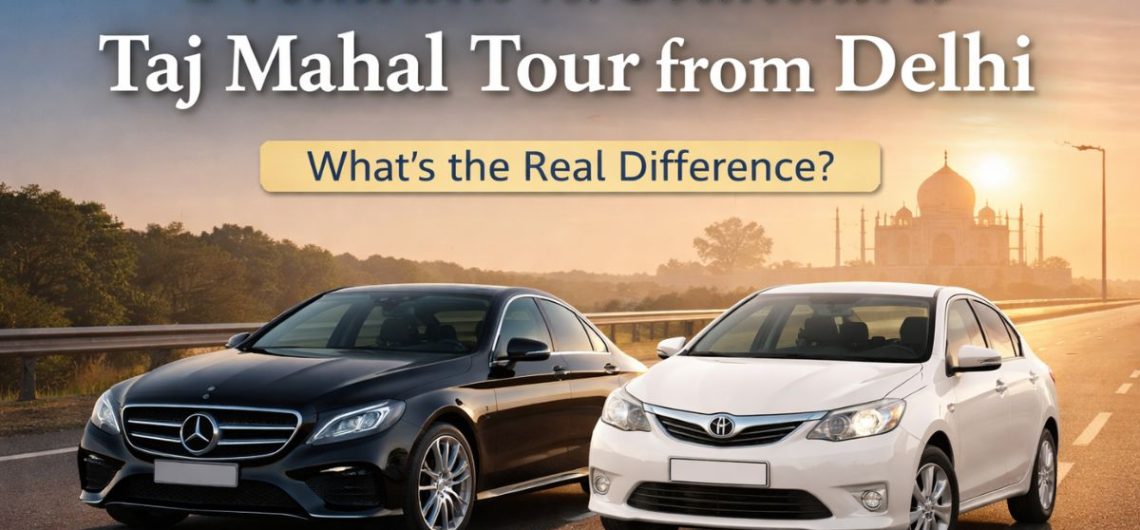
Planning a same-day trip from India’s bustling capital to the serene marble mausoleum is a logistical feat. For most visitors, the journey from Delhi to Agra is not just a commute; it is an integral part of the experience.
The 230-kilometer route via the Yamuna Expressway presents travelers with a fundamental choice: Do you opt for a standard sedan, or do you elevate the journey with a premium vehicle?
For international tourists, NRI families, couples, and business travelers, this decision goes beyond aesthetics. It impacts comfort, fatigue levels, privacy, and ultimately, how fresh you feel when you finally stand before the Taj Mahal.
This guide breaks down the real differences between a standard and a premium Taj Mahal tour from Delhi, helping you choose the option that best suits your travel style without the aggressive sales pitch.
The Vehicle: Standard Sedans vs. Luxury Automobiles
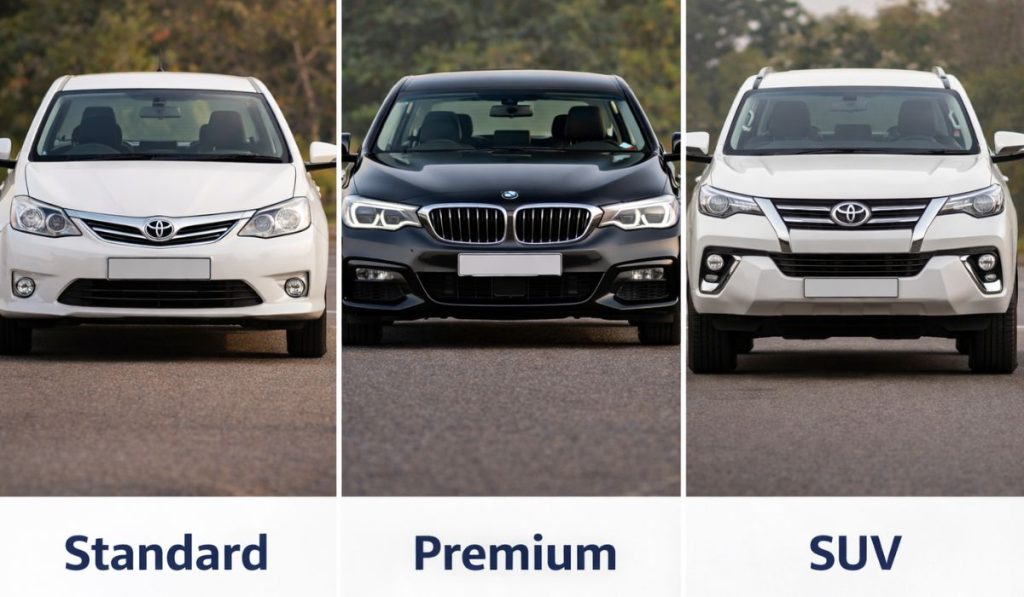
The most obvious distinction lies in the car you sit in for the duration of this 6–8 hour round trip.
What Defines a “Standard” Tour Car?
Standard tours typically utilize reliable, air-conditioned sedans. The most common vehicles you will encounter are the Toyota Etios, Maruti Suzuki Dzire, or similar models .
These are modern, well-maintained cars perfect for point-to-point transport. They offer comfortable seating for up to three passengers and are the workhorses of the Indian tourism industry.
They are practical, fuel-efficient, and get the job done.
What Defines a “Premium” Tour Car?
A premium tour upgrades you to the “Business Class” of Indian highways. These are high-end luxury vehicles designed for superior comfort and status.
Depending on the operator, you can expect Mercedes-Benz (E-Class or similar), BMW (3 Series or 5 Series), Audi A4, or high-end SUVs like the Toyota Fortuner.
These vehicles are not just about getting from A to B; they are about enjoying the space in between. With superior suspension, quieter cabins, plush leather interiors, and more legroom, they transform the car into a mobile lounge.
Yamuna Expressway: The Ultimate Proving Ground
To understand why the choice of car matters, you must understand the road. The Yamuna Expressway is a 165-km, six-lane controlled-access toll road designed for high-speed travel.
While it cuts travel time to roughly three hours, it is also known for its monotonous landscape, which can lead to “road hypnosis.”
The Standard Car Experience
In a standard sedan, the Yamuna Expressway is manageable. The car maintains a steady 100-110 kmph easily. However, wind and road noise are more noticeable at these speeds.
Over the course of three hours, the constant hum and smaller cabin space can begin to feel fatiguing.
The Premium Car Experience
A premium car is engineered specifically for high-speed touring. The German automakers, in particular, design their vehicles to “eat up” highways. At 120 kmph, a Mercedes or BMW feels significantly more planted and quieter than a standard sedan.
The cabin insulation is superior, meaning you arrive in Agra feeling as though you have taken a short drive rather than a three-hour journey .
The advanced suspension systems absorb the minor imperfections of the expressway, isolating you from road vibrations.
Comfort and Fatigue: How You Arrive Matters
The Taj Mahal requires walking. You will walk from the parking lot to the gate, through the grand entrance, and across the red sandstone platform to the mausoleum.
If you are tired, hot, or stiff from the drive, it diminishes the magic.
The “Arrival” Factor
- Standard Tour: You will arrive feeling like you have just finished a long commute. You might be slightly stiff and eager to stretch your legs.
- While you are ready to see the sights, a stop for coffee or a stretch break is often welcome before diving into the monument tour.
- Premium Tour: You arrive relaxed. The ability to recline in premium seats, the quiet environment, and the smooth ride mean you conserve your energy for the sights.
- This is particularly crucial for senior citizens or business travelers who may be jet-lagged and need to preserve their stamina for the afternoon.
Fatigue and Safety Data
The choice of vehicle also has a safety implication tied directly to driver fatigue. Data from the Yamuna Expressway Industrial Development Authority (YEIDA) reveals that between 2012 and 2023, there were 7,625 accidents and 1,321 fatalities on this stretch . A staggering number of these incidents—3,364 accidents—were caused by drivers dozing off .
How Premium Tours Mitigate This Risk:
While fatigue is a risk for any driver, premium tour operators typically employ more experienced chauffeurs who are accustomed to long-haul luxury travel.
Furthermore, the superior comfort of a premium vehicle means the driver is operating a less stressful environment, allowing them to remain more alert.
When you book a premium service, you are often paying for a higher standard of driver training and rest protocols, which is a safety feature you cannot see but absolutely benefits from .
Privacy and Flexibility: The Intangibles
Both standard and premium tours offer a private car, meaning it is just your party in the vehicle. However, the quality of that privacy differs.
- Standard Privacy: You have your own space, away from group tours. You can ask the driver to stop for photos or skip a lunch spot.
- Premium Privacy: This extends to discretion. The tinted windows are darker, the partition (in some high-end sedans) is more effective, and the overall atmosphere is one of seclusion.
- For honeymooners or high-profile business travelers, this cocoon-like environment allows for rest or private conversation without the feeling of being on a tourist conveyor belt. You aren’t just avoiding strangers; you are creating a bubble of personal space.
Who Should Choose a Premium Tour?
Based on the factors above, certain travelers are ideally suited for the upgrade:
- Honeymooners and Couples: The romantic element of the trip is enhanced by the luxury experience. Arriving at the Taj Mahal in a sleek Mercedes sets a different tone than arriving in a standard taxi .
- Senior Citizens or Those with Mobility Issues: The easier ingress/egress of an SUV or the plush suspension of a luxury sedan makes a tangible difference in physical strain.
- Business Travelers/VIPs: For those accustomed to a certain standard of travel, a premium car aligns with their expectations. It allows them to work on the way or decompress quietly after meetings.
- Travelers with Early Morning Starts: If you are leaving Delhi at sunrise (or earlier), being able to rest deeply in a premium seat during the drive is invaluable.
When Standard Tours Are Sufficient
Standard tours are far from inferior; they are simply designed for a different priority: value.
- Budget-Conscious Families: If you are a family of three looking for a safe, clean, and efficient way to see Agra, a standard sedan is perfect. You are saving money for souvenirs, a nicer lunch, or future travel .
- Solo Travelers: For a solo traveler, a standard sedan offers ample space. Upgrading to a limousine might feel excessive.
- First-Time Visitors on a Packed Schedule: If your main goal is to check off the Taj Mahal and Agra Fort efficiently, the standard car provides all the functionality you need without the premium price tag.
Car vs. Train: A Quick Comparison
Often, travelers compare a premium car tour against the high-speed train option (Gatimaan Express). Here is how they stack up:
Verdict: If your primary goal is raw speed and you are comfortable with fixed schedules, the train is excellent. However, if you value privacy, personalized service, door-to-door convenience, and the experience of traveling in a luxury automobile, a premium car tour is the superior choice .
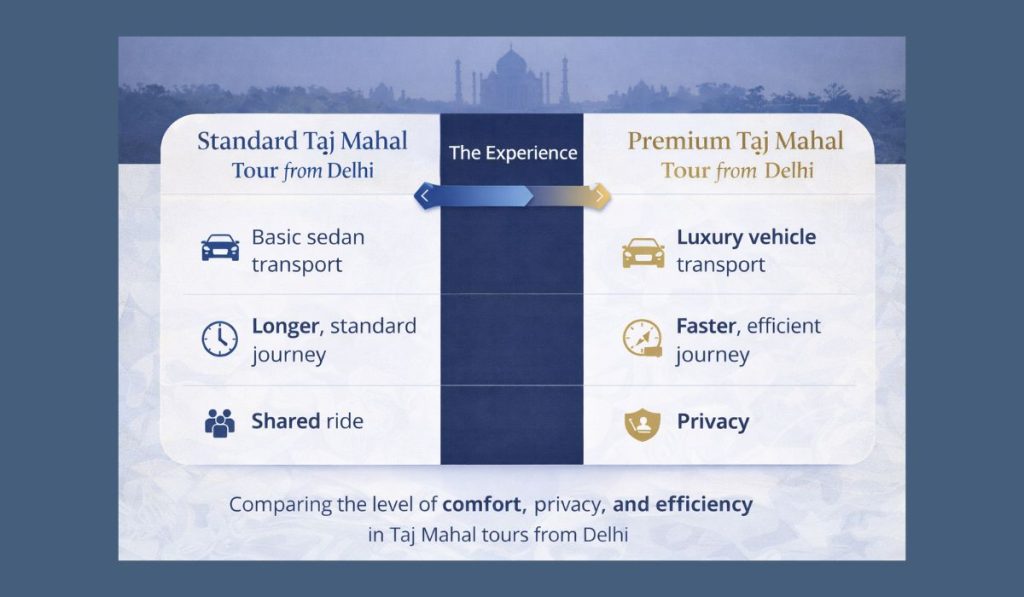
Side-by-Side Comparison: Premium vs. Standard
To visualize the difference, consider this breakdown of a typical Delhi to Agra day trip:
Conclusion
Choosing between a premium and standard Taj Mahal tour from Delhi is ultimately a question of what you value most for your time and money.
If you view the car as merely a utility to reach a destination, a standard sedan is a perfectly rational and comfortable choice.
However, if you view the journey as part of the overall experience—a chance to rest, to travel in style, and to arrive at one of the world’s most romantic monuments feeling your absolute best—then the investment in a premium vehicle like a Mercedes or BMW is justified.
It transforms a long day trip into a seamless, luxurious excursion where the quality of the ride matches the grandeur of the destination.
Frequently Asked Questions (FAQs)
1. Is the drive from Delhi to Agra really that tiring?
The drive is approximately 3 to 3.5 hours each way. While the Yamuna Expressway is smooth, the total of 6-7 hours on the road can lead to fatigue, especially if you are in a smaller car or not used to long drives. This is why comfort and the ability to rest in the car are important factors to consider .
2. Why should I choose a Mercedes or BMW for a Taj Mahal tour?
Choosing a Mercedes, BMW, or Audi elevates the journey from a simple transfer to a luxury experience. These vehicles offer superior comfort, quieter cabins, and smoother rides, significantly reducing travel fatigue. This ensures you arrive at the Taj Mahal feeling fresh and relaxed rather than tired and stiff .
3. Are premium car tours only for large groups?
Not at all. In fact, premium sedans like the Mercedes E-Class are perfect for couples or small families (2-3 people). They offer intimate luxury. For groups of 4 or more, a premium SUV like the Toyota Fortuner is often the better choice, ensuring everyone has ample space .
4. Is the Taj Mahal open every day for visitors?
No. The Taj Mahal is closed to tourists every Friday. This is reserved for prayers at the mosque inside the complex. You must plan your trip accordingly .
5. How does a premium car tour differ from the Gatimaan Express train?
The Gatimaan Express is faster in terms of pure travel time (about 90 minutes) but requires you to get to and from train stations and adhere to a strict schedule . A premium car tour offers door-to-door service, complete privacy, and the flexibility to stop along the way or linger at a site .
6. Do premium tours include a better guide or lunch?
Often, yes. Premium tour packages frequently bundle in additional high-end services. This can include [internal link: expert guides with historical degrees], lunch at 5-star hotels (like the ITC Mughal or Marriott), and skip-the-line access at the monuments, creating a completely hassle-free VIP experience

Comments