
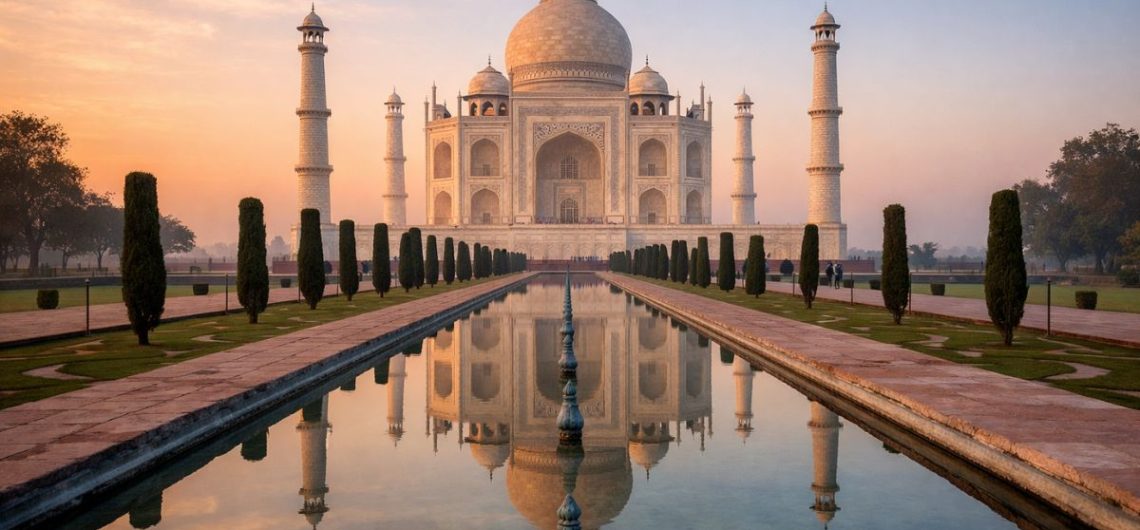
For a first-time visitor, choosing where to start in India is overwhelming. The country is a sensory and cognitive event, not just a destination. It is as exciting as it is exhausting. This article presents a clear, logical case for why beginning your trip with a Taj Mahal tour is the most effective strategy. This isn’t about chasing a cliché. It’s about using a controlled, iconic experience to build the confidence needed to explore India’s deeper complexities.
We will analyze the first-time traveler’s real needs—predictability, clarity, and impact—and demonstrate how a Taj Mahal tour uniquely meets them. We’ll also address honest objections and clarify who this approach is not for.
What a First-Time Traveler to India Actually Needs
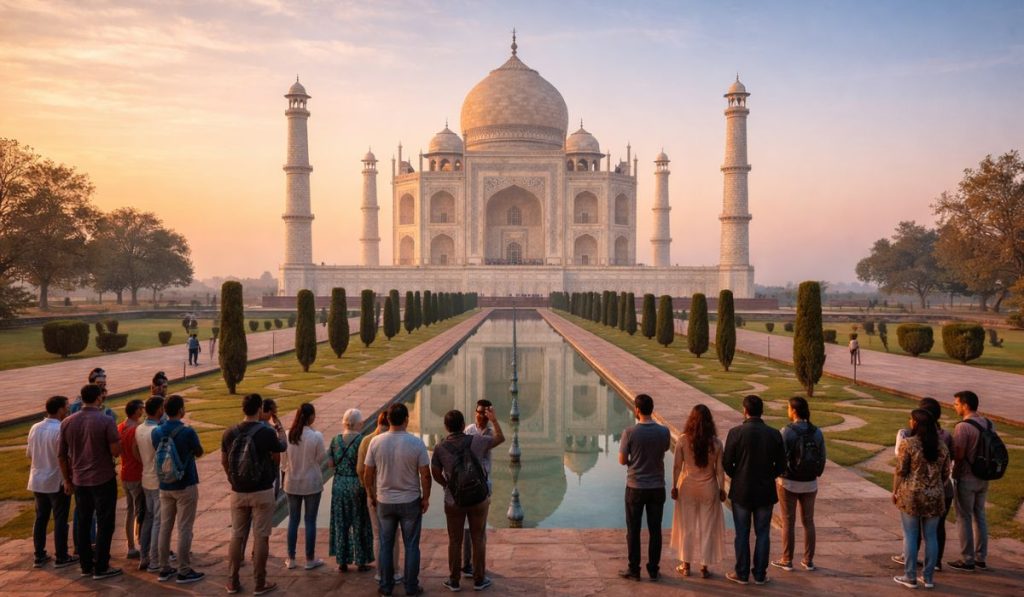
Before comparing destinations, understand the psychology. A novice needs three things that a seasoned traveler might overlook.
- Predictability. The itinerary needs a reliable, fixed point. Something that can be planned around with near certainty. This reduces the anxiety of the unknown.
- Clarity. The experience should be coherent. Its significance should be intuitively grasped, without requiring a university course in Indian history to appreciate.
- Impact. There must be a clear, undeniable return on the investment of time and courage. An early “win” validates the entire trip and builds momentum.
Many of India’s greatest destinations fail as a first stop because they lack one of these. Varanasi is profound but offers zero predictability. Rajasthan’s palaces are stunning but require you to choose between dozens of similar options. Delhi is a fragmented, exhausting urban sprawl.
A Taj Mahal tour succeeds because it provides all three. For many travelers, this tour becomes the anchor of their first India itinerary.
How a Taj Mahal Tour Meets These Core Needs
The logic is straightforward.
It Offers Singular Focus.
There is one Taj Mahal. This eliminates paralyzing choice. You are not deciding “which fort” or “which temple.” Your goal is clear. The town of Agra is secondary. This simplicity is a gift for initial planning.
Its Impact is Immediate and Accessible.
The story is universal: a monument to love and loss. You don’t need expertise in Mughal history to feel its emotional weight. Its symmetry, scale, and beauty communicate directly. The visual payoff is guaranteed, providing an anchor of understanding.
It Logistically Fits.
Located in the classic “Golden Triangle,” Agra is easily reachable from Delhi. This means you can experience a world wonder without a major detour on a 7-10 day trip. It’s an efficient, high-reward starting point.
The Taj Mahal as a Controlled “Test Drive” of India
Think of this tour as a functional introduction, not a symbolic one. It lets you practice navigating India in a manageable context.
- You learn the infrastructure: The queues, security, ticketing, and the presence of both guides and touts. It’s all here, but in a well-organized, English-friendly environment.
- You experience social dynamics: The crowds (domestic and international), the friendly requests for photos, the organized chaos. Witnessing it here, with a fixed focal point, is less disorienting.
- You see the central contrast: The sublime perfection of the monument exists alongside Agra’s bustling reality. This juxtaposition is a core theme of Indian travel. Seeing it early frames the rest of your journey.
A Realistic Walkthrough of the Experience
Let’s discard poetic reverie. Here is what you will likely do.
You wake early for sunrise. Your driver navigates Agra’s waking streets to a chaotic parking area. You walk past shops, through security, and into a red sandstone gateway. The Taj is framed, distant, and quiet.
You walk through the arch—the designed reveal. The full view down the gardens is precisely as photographed, yet undeniably physical. The morning light is soft. For a moment, it’s quiet.
You walk forward. The scale becomes real. The intricate inlay work comes into focus as you climb the platform. You may feel familiar awe. You circle it, see the river behind it.
After an hour or two, the sun climbs, the heat builds, and crowds swell. The experience shifts from contemplative to observational. You leave. You may visit Agra Fort to see the Taj from afar, completing the historical narrative. By afternoon, it’s done. The experience is contained, intense, and complete.
Honest Objections, Addressed
“It’s too touristy.”
True. But for a first-timer, this is a feature. The well-trodden path provides a safety net. You can be a novice without being entirely lost.
“It doesn’t represent the ‘real’ India.”
Correct, and this is critical. The Taj Mahal is a 17th-century Mughal mausoleum. It is not a living temple or a village. That’s why it works as a start. It’s a discrete, digestible masterpiece. You’re there to see the Taj Mahal, which happens to be in India. This takes the pressure off it to be “everything.”
“Agra isn’t a pleasant city.”
Often true. This is another useful lesson. India’s treasures exist within its living, sometimes challenging context. Experiencing this in a short, focused visit is manageable.
Who Should NOT Start With a Taj Mahal Tour
This approach isn’t universal. Do not start here if:
- Your sole goal is deep spiritual seeking in places like Varanasi.
- You have a pre-existing, specialized interest (e.g., Dravidian architecture).
- You are deeply, personally averse to any site with a crowd.
This is a strategy for the generalist first-time visitor, not the specialist.
Brief Comparison to Other First Stops
- Delhi: Fascinating, but fragmented and chaotic. A better second act.
- Rajasthan: Requires curating between similar forts and palaces. The payoff is more diffuse.
- Kerala: Beautiful but subdued. It creates a skewed baseline, making North India’s intensity a greater shock later.
- Varanasi: The ultimate deep end. A poor choice for initial orientation.
Final Verdict: The Best Beginning
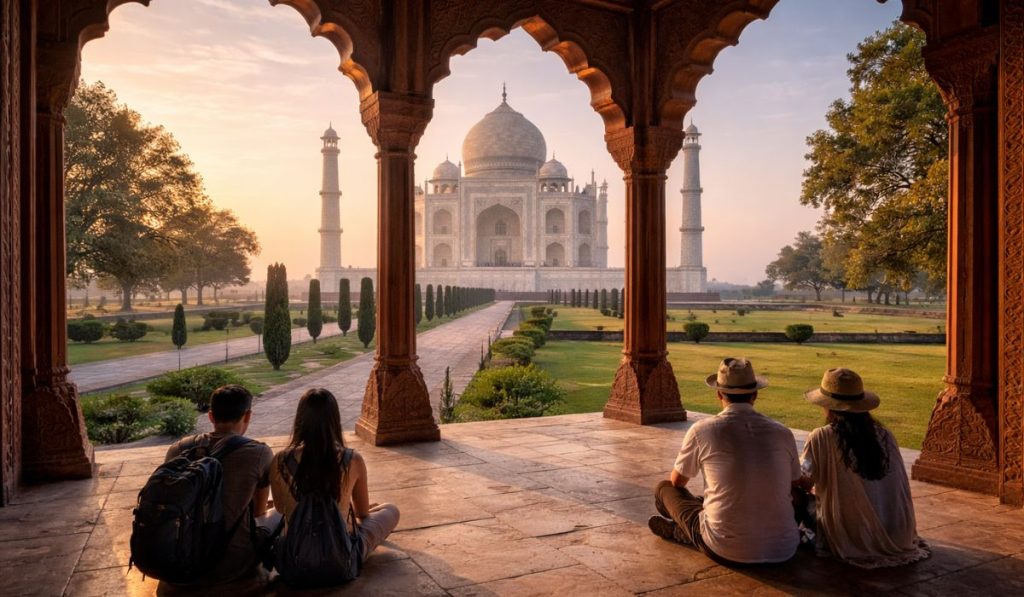
Starting with a Taj Mahal tour is about building a foundation. It provides a clear, successful experience that reduces anxiety. It builds confidence in navigating the country. It delivers an aesthetic and emotional reward that is both immediate and enduring.
You leave not with a comprehensive understanding of India, but with a powerful reference point and practical experience. You are slightly less a first-time visitor and slightly more a traveler. From this point of stability, you are far better equipped to venture into the glorious, chaotic complexities that lie beyond. That is the rational logic of beginning here.

Comments