For many first-time visitors to India, the Taj Mahal is not just a monument; it is the monument. It is the singular image that has drawn them across continents, the embodiment of a dream trip. Yet, India is vast, time is often limited, and the practicalities of travel can be daunting.

The capital, Delhi, is a common entry point, and the Taj Mahal sits in Agra, roughly 200 kilometers away. This geographical reality gives rise to a pressing question for the time-conscious traveler: can you, and should you, see the Taj Mahal in a single day from Delhi?

The concept of a Same Day Taj Mahal Tour from Delhi is a popular offering, promising the fulfillment of a bucket-list dream within the tight confines of a 12 to 16-hour day. It sounds efficient, almost miraculous.

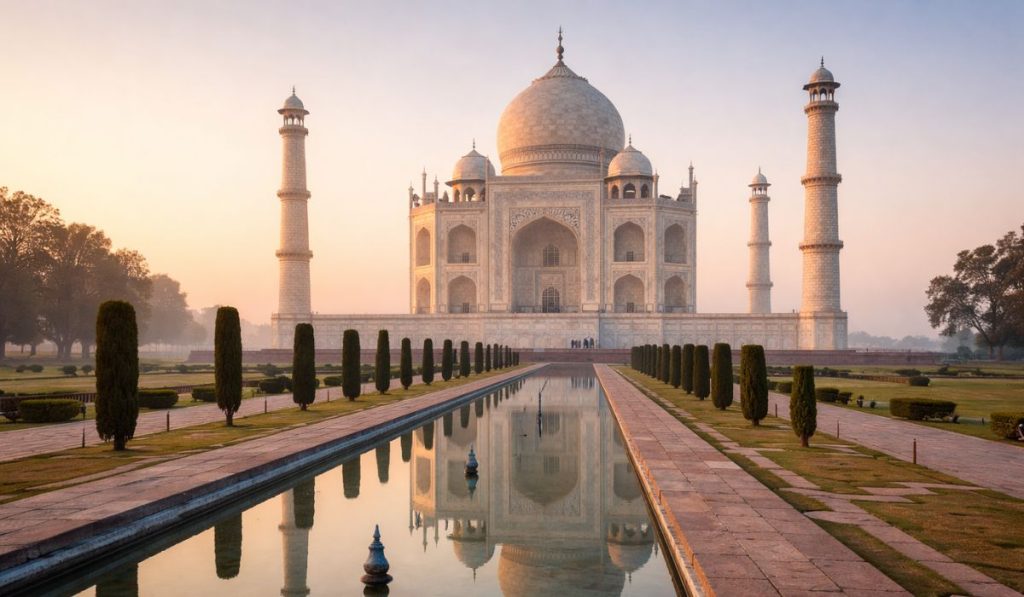
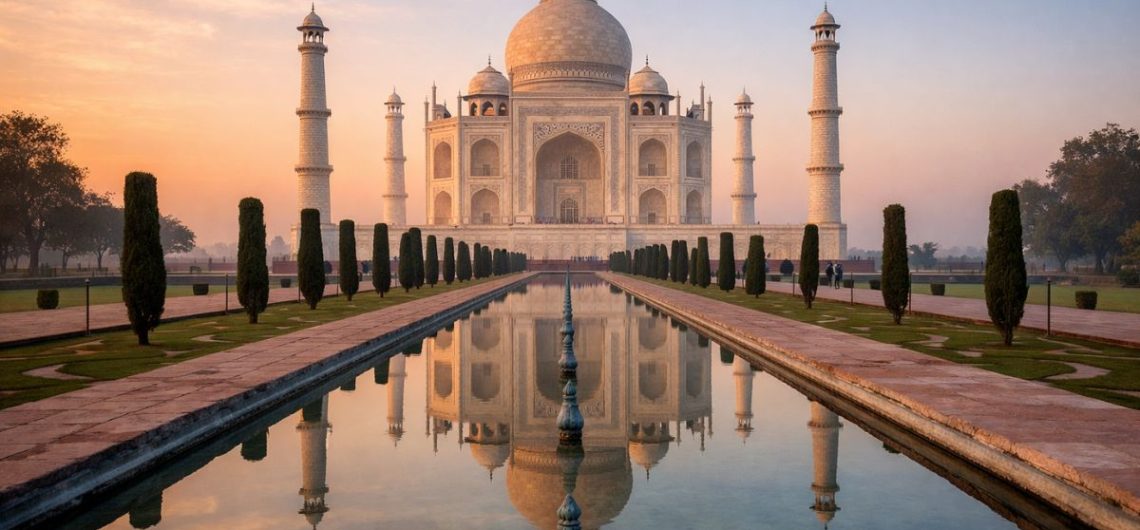
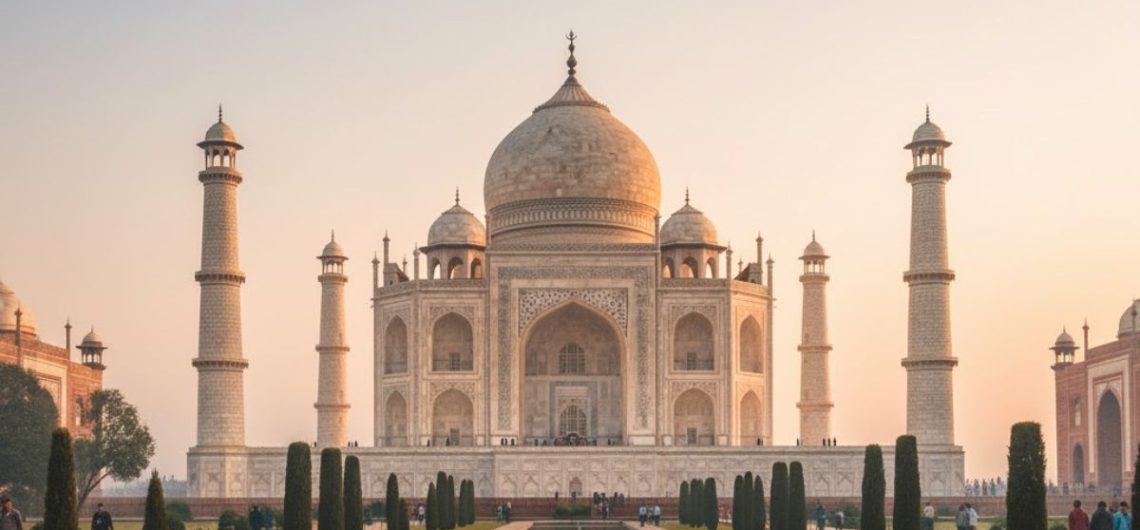
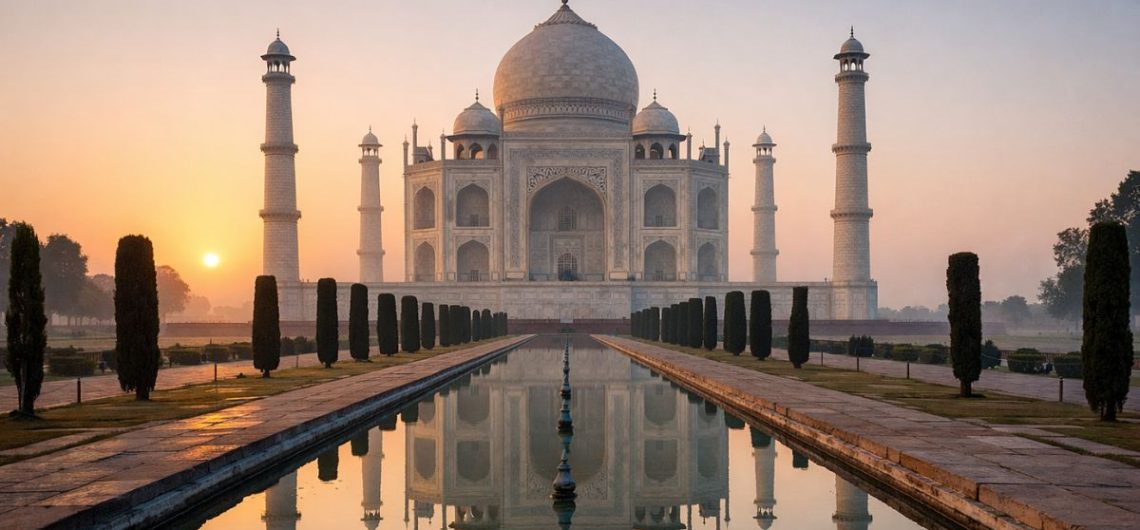
Taj Mahal at sunrise during a same day tour from Delhi
The Taj Mahal photographed at sunrise during a same day visit from Delhi

But for a first-time visitor, navigating the complexities of India for the first time, is this whirlwind experience truly worth it, or does it become a blur of highways and hurried moments, detracting from the majesty it aims to showcase? This article provides a detailed, neutral, and factual analysis to help you make that critical decision.

Why This Question Matters for First-Time Visitors

First-time travel to India is uniquely intense. The sensory overload, the cultural adjustments, and the sheer scale of logistics can be overwhelming. Visitors often grapple with an ambitious desire to see “everything” while constrained by typical vacation timelines of two to three weeks.

In this context, the Taj Mahal becomes a non-negotiable item, yet fitting it in requires strategic planning.

The pressure to optimize time leads many to consider the most time-efficient option. The idea of leaving your Delhi hotel early, visiting the Taj Mahal, and returning by evening appears to be the perfect solution, freeing up days for Rajasthan, Varanasi, or Kerala.

However, this decision is fraught with common doubts. Travelers worry about the actual quality of the experience. Will it feel rushed? Is the journey itself excessively grueling? Could the focus on efficiency ultimately spoil the very moment they’ve waited a lifetime to experience?

This question matters because it strikes at the heart of modern travel: the balance between seeing iconic sites and genuinely experiencing them. For a first-timer, the journey to the Taj Mahal is often their first venture outside a major Indian metropolis into the rhythm of smaller cities and the famed Yamuna Expressway.

The choice between a same-day tour and an overnight stay can fundamentally shape their perception of Indian travel, their energy levels for the rest of the trip, and their lasting memory of one of the world’s most celebrated wonders.

Who Typically Chooses a Same Day Taj Mahal Tour from Delhi?

The same-day tour is a specific tool for a specific set of circumstances. It is not for every traveler, but it perfectly serves particular profiles. Understanding these can help you see if you fit the mold.

Short Trips and Stopover Tourists: Individuals on a brief business or leisure trip to Delhi, often lasting just 2-4 days, frequently opt for this tour. For someone with a 48-hour layover or a short work commitment, it is the only pragmatic way to witness the Taj Mahal without rearranging their entire international flight schedule. Similarly, travelers on a condensed northern India circuit, perhaps combining Delhi with a quick dip into Jaipur, may see the same-day Agra trip as a necessary compromise to check the box.

Business Travelers with a Free Day: International professionals visiting Delhi for meetings often have a single day free between obligations. A Same Day Taj Mahal Tour from Delhi provides a structured, logistically simple way to utilize that day for a major cultural experience without the need to pack, check out, and arrange separate overnight accommodation.

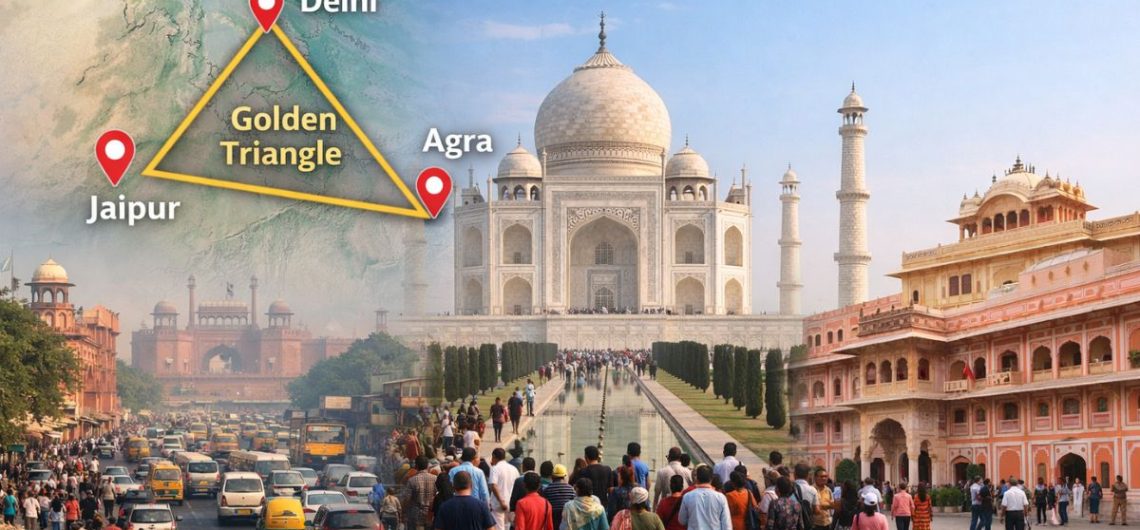
First-Time India Visitors on a Tight Schedule: This is the most common cohort. These are tourists on a classic “Golden Triangle” (Delhi-Agra-Jaipur) tour or a broader India itinerary who have allocated just one full day for Agra. Many Taj Mahal tour packages from Delhi are built around this same-day model, bundling transport, guide, and entry tickets into a seamless, if compact, product. They choose it for perceived simplicity and time efficiency.

The Efficiency-First Traveler: Some travelers simply prioritize coverage over depth. Their satisfaction comes from having seen the landmark, taken the photograph, and understood its history at a high level. They are willing to trade a more relaxed, immersive experience for the ability to move quickly to the next destination.

What a Same Day Taj Mahal Tour from Delhi Really Includes

It is crucial to demystify what “same day tour” actually translates to on the ground. Stripped of promotional language, it is a long, logistics-heavy day focused on a single primary objective.

The day begins before sunrise, typically with a pickup from your Delhi accommodation between 5:00 and 6:30 AM. You are then embarked on a road or rail journey to Agra. Upon arrival, you proceed directly to the Taj Mahal.

Here, you will undergo security checks, meet your guide (if included), and enter the complex. The tour of the mausoleum itself, including the gardens, main platform, and interior (when open), is conducted. This is the core, uninterrupted experience around which the entire day is built.

Following the Taj Mahal visit, most tours include lunch at a registered restaurant. After lunch, the tour usually incorporates a visit to one additional site, most commonly the Agra Fort—a massive red-sandstone fortress offering a profound historical context and a stunning view of the Taj from across the river.

Some packages may include a brief stop at a crafts emporium, showcasing inlay marble work (pietra dura), a legacy of the artisans who built the Taj.

The return journey begins in the mid-to-late afternoon, aiming to beat the worst of the evening traffic exiting Agra and re-entering Delhi. You are dropped back at your hotel or a central location in the evening, concluding a day that has been almost entirely dedicated to transit and the primary visitation. The experience is linear and goal-oriented.

Advantages of Choosing a Same Day Taj Mahal Tour

The popularity of this model is not unfounded. It offers several tangible benefits that align with the needs of specific travelers.

Time Efficiency and Logistics Simplification: This is the paramount advantage. For those with truly limited days in India, it condenses what would be a two-day affair (travel to Agra, overnight, travel back) into one.

It eliminates the need to book separate hotels, manage multiple check-ins/check-outs, and plan local Agra transport. The tour operator handles all moving parts.

Perceived Comfort and Security: For first-time visitors apprehensive about navigating Indian roads, hiring drivers, or buying tickets, a pre-arranged tour provides a cocoon of comfort. The vehicle, driver, and itinerary are predetermined.

The presence of a guide can demystify the site and handle language barriers. It reduces decision fatigue and potential hassles on a day when efficiency is key.

Cost Effectiveness on a Narrow Analysis: If one narrowly considers only the direct costs of a private car, driver, guide, and meals, a same-day tour can sometimes be comparable to, or only marginally more expensive than, arranging these elements independently for an overnight trip where you also pay for a hotel. The bundling can offer value.

Focus on the Primary Attraction: The tour is designed with a laser focus on the Taj Mahal. There is no dilution of attention. For someone whose sole objective is to see this one monument, the structure of the day ensures that it is prioritized above all else.

Disadvantages Most Travelers Don’t Realize Before Booking

The drawbacks of a same-day tour are significant and often underestimated. Acknowledging them is essential for an informed choice.

The Relentless Length and Physical Fatigue: This cannot be overstated. The day spans a minimum of 12, often 14-16 hours door-to-door. Six to eight hours or more are spent in a vehicle on busy highways—a monotonous and taxing journey. Combined with potential jet lag and heat, this fatigue can impact your enjoyment of the monument and your energy for days after.

The Rushed and Superficial Feeling: The experience can feel transactional. Constant clock-watching leaves little time for quiet contemplation or simply absorbing the atmosphere. Visits to secondary sites like Agra Fort become brief, abbreviated stops.

Limited Exploration and Missed Experiences: This format excludes key experiences. You cannot see the Taj Mahal at sunrise (arriving too late) or sunset (departing too early)—the most magical, crowd-thin times. You also miss panoramic views from Mehtab Bagh across the river, and exploring gems like the Baby Taj or local markets becomes impossible.

Vulnerability to Traffic and Delays: The schedule assumes predictable travel. Road accidents, traffic jams, winter fog, or vehicle issues can cause major disruptions, adding stress and further cutting into limited site time.

The “Tour Bubble” Effect: You experience Agra almost exclusively through a car window and a curated tour path. There is minimal organic interaction with the city’s rhythm or people outside the structured tourist circuit.

Same Day Tour vs Overnight Agra Tour

This is the core comparison: depth versus efficiency. It is not merely about adding a hotel stay; it is about a fundamentally different travel philosophy.

Experience Depth and Pacing: An overnight stay transforms the visit. It allows for a sunrise viewing of the Taj Mahal, an experience of profound serenity and beauty that is impossible on a same-day tour. It provides time to visit the Taj a second time, perhaps for a sunset view from Agra Fort or Mehtab Bagh.

You can explore Agra Fort thoroughly, visit the exquisite Itimad-ud-Daulah, and perhaps even Fatehpur Sikri, the magnificent deserted Mughal city an hour away, which is almost never included in same-day itineraries. The pace is human, allowing for rest, reflection, and unexpected discoveries.

Logistical and Comfort Considerations: An overnight trip requires more independent planning or a different package structure. You must handle an additional hotel booking and accept the packing/unpacking process.

However, it breaks the grueling travel into two more manageable legs. You arrive in Agra, check into your hotel, and can freshen up before sightseeing, or vice versa. The fatigue factor is dramatically reduced.

Cost and Time Reality: While an overnight trip incurs the extra cost of accommodation, it spreads the experience over two days, offering far greater value per hour of sightseeing and significantly reducing the intensity of travel on any single day.

For those who value experience quality over mere checklist completion, the overnight model is almost always superior.

Cultural Immersion: Staying overnight lets you experience Agra beyond the monument. An evening walk in the old city, a meal at a local restaurant not on the tour bus circuit, and the simple act of waking up in the city that houses the Taj Mahal contribute to a more rounded and memorable understanding of the place.

Is a Same Day Taj Mahal Tour Worth It for YOU?

The answer is not universal. It depends entirely on your personal travel priorities and constraints. Use this logical framework to decide.

A Same Day Taj Mahal Tour from Delhi MAKES SENSE if:

  • Your total time in India is extremely limited (less than 5 days).
  • You are on a strict business trip with only one full day to spare.
  • You are a stopover traveler with a 24-48 hour window in Delhi.
  • Your primary goal is purely to “see” the Taj Mahal for photographic and basic historical validation.
  • You strongly prefer the convenience of a single, packaged logistical solution over coordinating multiple elements yourself.
  • You are not prone to travel fatigue and can handle long days in a vehicle.

A Same Day Taj Mahal Tour from Delhi DOES NOT MAKE SENSE if:

  • You have more than 5-7 days total for your Indian itinerary.
  • Experiencing the Taj Mahal at sunrise or sunset is a high priority for you.
  • You dislike feeling rushed and prefer to immerse yourself in historical sites.
  • You want to explore more of Agra’s UNESCO sites, like Fatehpur Sikri.
  • You are traveling with young children or elderly companions for whom a 14+ hour day would be prohibitive.
  • Your travel style values depth, local context, and a relaxed pace over maximum efficiency.

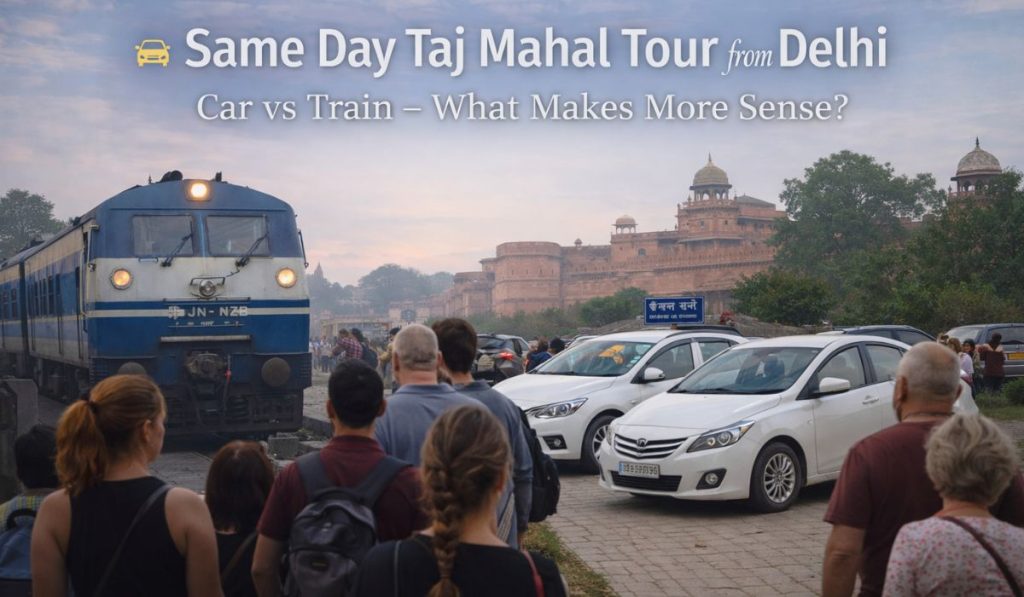
Car vs Train for Same Day Taj Mahal Tour from Delhi

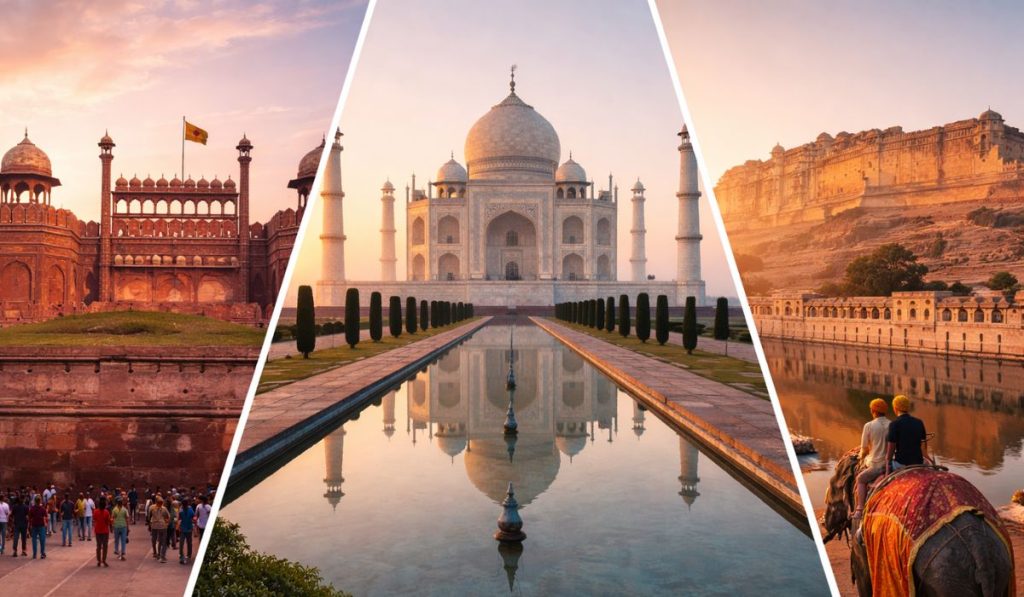
Car vs train option for same day Taj Mahal tour from Delhi
Comparing car and train travel for a same day Taj Mahal tour from Delhi

The mode of transport is a critical sub-decision that impacts comfort and flexibility.

By Private Car: This is the most common and flexible option. A private car with a driver offers door-to-door convenience from your Delhi hotel. You can leave at your preferred early hour, carry luggage easily, and have the vehicle at your disposal in Agra to move between sites.

The primary downside is the complete dependence on road conditions. Travel time is variable (3-5 hours each way), and you are subject to traffic delays. The comfort level hinges entirely on the quality of the vehicle booked.

By Train (Gatimaan Express or Shatabdi): This involves a pre-dawn transfer to Delhi’s Hazrat Nizamuddin railway station, a high-speed train journey to Agra (approximately 1.5-2 hours), and then the use of a local car and driver in Agra. The train is often faster and more predictable time-wise than the road. It offers a different cultural experience, more legroom, and included meals.

However, it is less flexible. You are bound by fixed train schedules, which can sometimes limit your time in Agra more rigidly than a car. The need to coordinate station transfers at both ends adds another layer of logistics.

Verdict: For maximum flexibility and convenience, a private car is often preferred for same-day tours. For those who prioritize avoiding road traffic and enjoy train travel, the premium train option is excellent, provided the schedule aligns with your goals.

Common Mistakes First-Time Visitors Make on Same Day Taj Mahal Tours

Even after choosing a same-day tour, avoid these pitfalls to improve your experience.

  1. Underestimating the Travel Duration: Mentally prepare for a marathon, not a sprint. Expect a very long day and plan a light schedule for the evening before and the morning after.
  2. Overpacking the Day Bag: Carry only essentials—water, sunscreen, hat, camera, passport copy, and minimal cash. A heavy bag becomes a burden.
  3. Skipping the Guide at the Monument: To save time or money, some forgo a guide. This is a mistake. A knowledgeable guide for 60-90 minutes provides crucial context that transforms a beautiful building into a poignant story of love, loss, and artistry. Without it, the visit can feel hollow.
  4. Not Clarifying Inclusions: Confirm what is included: monument entry fees (foreigner tickets are significantly more expensive), guide services, lunch location, tolls, and driver allowances. Avoid unpleasant surprises.
  5. Ignoring the Friday Closure: The Taj Mahal is closed every Friday for prayers. No tour can access it on this day.
  6. Expecting a Leisurely Lunch: Lunch is often at a crowded tourist-oriented buffet. It is functional, not a culinary exploration. Manage expectations accordingly.
  7. Forgetting Physical Comfort: Wear the most comfortable walking shoes you own. The Taj Mahal complex involves a lot of walking on stone and marble surfaces.

Final Verdict: Who Should Choose This Tour and Who Should Not

The Same Day Taj Mahal Tour from Delhi is a specialized tool. It is a compromise born of necessity, not an ideal way to experience one of the world’s greatest wonders.

Choose this tour if: You are a time-poor traveler—a business visitor, a short-stop tourist, or a first-timer on an impossibly tight schedule where seeing the Taj Mahal would otherwise be impossible. Your success metric is “mission accomplished,” and you are willing to trade depth, relaxation, and magical moments like sunrise for the sheer practicality of having been there.

Do not choose this tour if: You have any flexibility in your itinerary. If you can allocate an overnight stay, you should. The enhanced experience—seeing the Taj at a peaceful hour, exploring Agra fully, avoiding crushing fatigue—is incomparably superior.

For first-time visitors with a week or more in India, the overnight trip to Agra is a vastly more rewarding and authentic introduction to India’s heritage.

Ultimately, the Taj Mahal deserves more than a hurried visit. It is a place that asks for a moment of your time, not just your presence. If your circumstances allow you to give it that moment, you will never regret investing the extra day.

If your circumstances dictate otherwise, a same-day tour is a viable, if demanding, alternative that will still leave you standing before one of humanity’s most sublime achievements.

Why Travelers Ask If the Golden Triangle Tour Is Worth It

People don’t ask this question because they lack curiosity. They ask it because the Golden Triangle Tour is one of the most talked-about routes in India and also one of the most misunderstood.

For first-time international travelers, the route is presented as a neat introduction to India. Three famous cities. Short distances. Big monuments. Easy decision. On paper, it sounds logical and safe.

Reality is more complicated.

India is not a country where experiences average out. They amplify. Noise feels louder. Distances feel longer. Crowds feel denser. When travelers finish the Golden Triangle and feel conflicted—impressed but exhausted, enriched but overwhelmed—they start questioning whether the route itself was the problem.

Most online answers are shallow. They either glorify the route or dismiss it entirely. Neither helps you decide.

The better question is not “Is the Golden Triangle good or bad?”
It’s “Is the Golden Triangle the right first experience for the kind of traveler I am?”

That’s what this article answers.

What the Golden Triangle Tour Actually Covers (Reality Check)

The Golden Triangle connects Delhi, Agra, and Jaipur. The triangle shape is geographical, not experiential. Each city operates on a different rhythm, and travelers often underestimate how sharp those shifts feel.

Delhi is not a gentle starting point. It’s a capital city layered with centuries of history and modern pressure. You’ll move between ancient neighborhoods, government districts, traffic-heavy commercial areas, and everyday residential life within the same day. The contrast is educational, but it’s not calming. Many travelers mistake intensity for chaos. In reality, Delhi is functioning exactly as intended—it’s just not designed for visitors’ comfort.

Agra is where expectations collapse for some travelers. Outside of the Taj Mahal, the city is not curated. It’s industrial, crowded, and practical. This shocks visitors who expect a romantic heritage town. Agra delivers depth through one extraordinary monument, not through ambience.

Jaipur feels more navigable. Its layout, color palette, and historical continuity make it easier to process visually. Still, it’s not quiet. Tourism, local commerce, and daily life overlap constantly. Jaipur feels structured compared to Delhi, not relaxed.

The biggest misunderstanding is this:
The Golden Triangle is not about comfort or ease. It’s about exposure.

What “Worth It” Actually Means (Most Travelers Never Define This)

Before judging the Golden Triangle, you need to define what “worth it” means to you. Most travelers don’t, which is why opinions online contradict each other.

For some, “worth it” means:

  • Seeing iconic landmarks efficiently
  • Understanding history quickly
  • Getting a broad sense of India before deciding where to go next

For others, “worth it” means:

  • Feeling rested
  • Moving slowly
  • Absorbing local life without pressure

The Golden Triangle serves the first definition far better than the second.

Many negative reviews come from travelers who wanted rest and depth but chose a route designed for overview and orientation. That’s not a failure of the route—it’s a mismatch of intent.

If you expect emotional ease, this route will feel heavy.
If you expect intellectual and cultural stimulation, it usually delivers.

Real Pros of the Golden Triangle Tour

Logical Geographic Flow

This is one of the few Indian circuits where movement makes sense. Distances are reasonable, transport options are frequent, and transitions between cities don’t require internal flights. For first-time visitors, this reduces planning risk.

The structure matters. In a country as large as India, bad routing can waste days. The Golden Triangle minimizes that.

High Cultural Density in Limited Time

Few routes expose you to this range of history so quickly. Mughal architecture, Rajput forts, colonial planning, and modern Indian urban life all appear without long detours.

You’re not learning everything—but you’re learning enough to contextualize future travel.

Better Tourism Infrastructure

Compared to many regions, this route has:

  • More consistent road conditions
  • Better rail connectivity
  • Wider availability of English-speaking services

This doesn’t eliminate friction, but it lowers the chance of logistical failure for first-timers.

Educational Value for First-Time Visitors

The Golden Triangle functions well as a primer. After completing it, travelers usually understand:

  • How Indian cities operate
  • How travel time behaves in reality
  • What level of structure they prefer for future trips

That learning alone is valuable.

Honest Cons Most Travel Sites Don’t Mention

Long Travel Days Are Mentally Draining

Even when distances look short, movement in North India consumes energy. Early starts, traffic unpredictability, and constant sensory input compound fatigue. Travelers often underestimate this because schedules look reasonable on paper.

Crowds Are Structural, Not Seasonal

These cities are busy year-round. Major sites attract both international and domestic visitors. If crowd tolerance is low, frustration builds quickly.

Crowds don’t mean poor management—they reflect population density and cultural habits. Accepting that distinction matters.

City Fatigue Is Common

Three urban environments back-to-back is demanding. There’s little visual or emotional rest between stops. Travelers who thrive on variation between city and nature often feel depleted by the end.

Pacing Determines Everything

The same route can feel insightful or unbearable depending on pacing. Poor pacing compresses learning and magnifies exhaustion. This is where most negative experiences originate.

Who the Golden Triangle Tour Is Best For

First-time visitors to India who want orientation rather than immersion.
Time-limited travelers who prefer breadth over depth.
Structured planners who feel comfortable with defined routes.
Culturally curious travelers who value learning over relaxation.

If you fit these profiles, the route usually feels purposeful.

Who Should Skip the Golden Triangle Tour

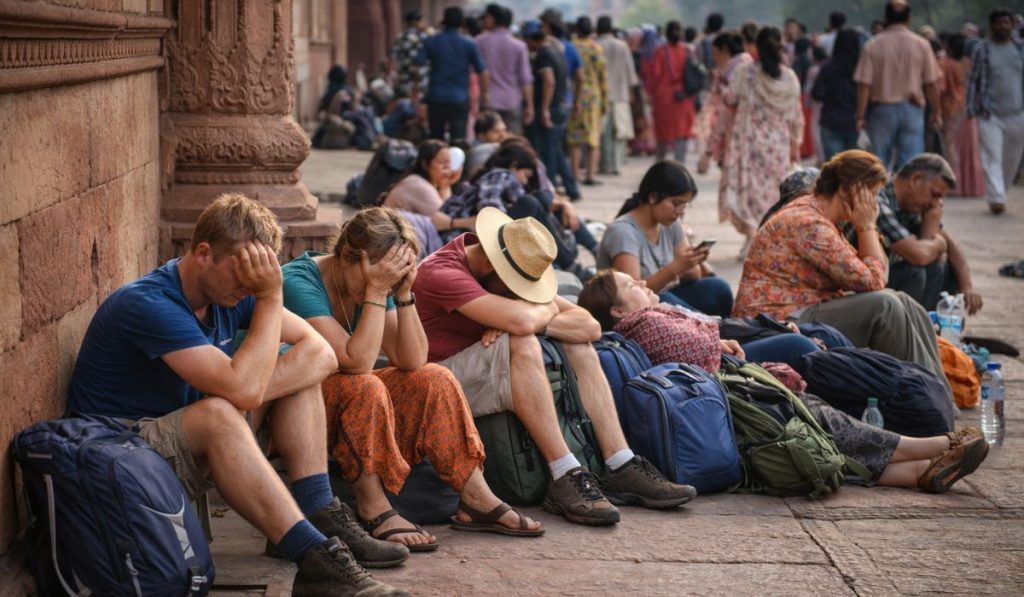
Travelers resting due to fatigue during crowded sightseeing in India
Travel fatigue during busy sightseeing days in India

Slow travelers who prefer staying longer in one place.
Nature-focused travelers looking for landscapes and wildlife.
Relaxation-driven trips where rest is central.
Repeat visitors who already understand Indian urban environments.

For these travelers, the Golden Triangle often feels repetitive and draining.

Common Planning Mistakes That Make the Tour Feel “Not Worth It”

Rushing the route is the most common failure. Trying to maximize coverage leads to constant movement and shallow engagement.

Choosing rigid group formats removes flexibility. Fixed schedules don’t account for fatigue, crowds, or personal interests, making days feel longer than they are.

Ignoring real travel time creates unrealistic expectations. India doesn’t move at brochure speed.

Assuming all options are equivalent is another issue. Travelers often select routes without understanding how planning decisions affect experience quality. Those who research the structure behind Golden Triangle tour packages in India tend to avoid these mistakes because they align expectations with logistics rather than marketing narratives.

Most dissatisfaction is not caused by the destinations themselves but by how the route is executed.

The Psychological Side of the Golden Triangle Experience

This route tests how travelers handle loss of control. Schedules shift. Crowds interrupt plans. Environments change rapidly. Travelers who resist this feel stress; those who accept it adapt.

The Golden Triangle rewards flexibility more than perfectionism.

It’s also emotionally dense. You process history, poverty, beauty, congestion, and contrast in quick succession. Some travelers interpret this as chaos. Others see it as honesty.

Neither reaction is wrong—but they lead to different conclusions about whether the trip was “worth it.”

So, Is the Golden Triangle Tour Worth It in 2026?

Yes—for the right traveler, with the right expectations.

The Golden Triangle is not outdated. What’s outdated is how it’s often described. It remains one of the most efficient ways to understand North India’s historical and cultural framework. It works best as a starting point, not a complete understanding of the country.

If you approach it expecting ease, you’ll struggle.
If you approach it expecting learning, contrast, and intensity, it usually delivers value.

The route itself isn’t the problem. Misaligned expectations are.

For travelers willing to engage with India as it is—busy, layered, demanding—the Golden Triangle still earns its place as a meaningful first experience.

Frequently Asked Questions About the Golden Triangle Tour

1.Will the Golden Triangle really help me understand India, or is it just famous sights back-to-back?

It helps you understand India’s contrasts quickly, not deeply. You’ll get historical and cultural context, but not everyday local life in detail.

2.Does the Golden Triangle feel rushed even if I’m not trying to see everything?

Yes, it can. You’re covering three major cities, and travel time plus crowds can make days feel fuller than expected.

3.Is the Golden Triangle a good choice for first-time visitors, or are there better options?

It’s good for orientation and variety. If you prefer slow travel or fewer cities, staying in one region often feels more satisfying.

4.How does the Golden Triangle compare to South India for a first trip?

The Golden Triangle is busier and more intense. South India is calmer and more relaxed. Crowd tolerance is the key difference.

5.Are crowds something I can realistically avoid on this route?

Not completely. Planning helps reduce stress, but major sites and cities are busy by nature.

6.Do travelers often feel tired or overwhelmed by the end of the trip?

Yes. Even people who enjoy the experience often feel mentally and physically drained afterward.

7.Does how the tour is planned really change whether it feels “worth it”?

Absolutely. Poor pacing and rigid schedules are the main reasons people feel disappointed—not the destinations themselves.

8.Is the Golden Triangle worth choosing if I have limited time in India?

If your goal is exposure and learning, yes. If your goal is rest or nature, it’s usually not the best fit.

9.Who usually enjoys the Golden Triangle the most?

First-time travelers who like structure, history, and variety—and don’t mind busy urban environments.

10.Who should seriously consider skipping the Golden Triangle?

Slow travelers, relaxation-focused trips, and people sensitive to crowds often find it frustrating rather than rewarding.

I’ve watched hundreds of travelers arrive in Agra before dawn, cameras ready, itineraries tight. They come for sunrise at the Taj Mahal, stay for three hours, maybe four, and leave before lunch. The monument gets photographed from every possible angle. The marble gets touched. The reflection pool gets its mandatory shot.

Then they’re gone.

Agra becomes a checkbox. A necessary stop between Delhi and Jaipur. A place to confirm what they already knew from photographs and documentaries. The Taj Mahal exists, it’s beautiful, and now they can say they’ve seen it—often through tightly planned Taj Mahal tour packages that leave little room for anything else.

I understand the impulse. The monument is overwhelming. It demands attention in a way few structures on earth can. But treating Agra as a transit stop, as nothing more than the platform for one building, means missing almost everything that makes the city worth understanding.

Most travelers never walk the narrow lanes behind Jama Masjid. They don’t sit long enough in Mehtab Bagh to watch how the light shifts across the river. Don’t meet the marble inlay artisans whose families have been carving the same patterns for generations. They don’t eat at the small roadside stalls where locals actually gather, because those places aren’t in guidebooks and don’t look like the India they expected.

Agra doesn’t reveal itself quickly. It doesn’t perform for visitors the way some cities do. It requires patience, stillness, and a willingness to let go of the checklist mentality that brings most people here in the first place.

This isn’t a criticism. The Taj Mahal deserves the pilgrimage. But the monument alone is an incomplete story. And Agra, when rushed, feels hollow. The city rewards attention in ways that have nothing to do with marble or symmetry or Mughal grandeur.

What follows isn’t a guide. It’s what happens when you stay long enough to notice.

The Taj Mahal Is Not a Single Moment

I’ve been to the Taj Mahal at different times of day, in different seasons, and in different states of mind. It’s never the same experience twice.

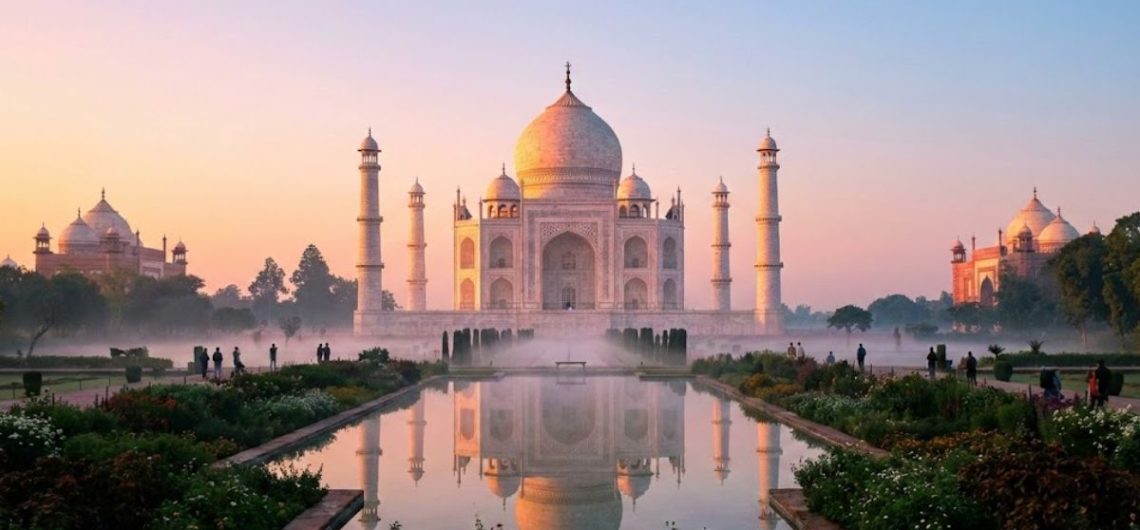
Early morning is when photographers arrive. The air is cool, sometimes misty. Crowds are present but controlled. Voices stay low. As the light changes, the marble shifts from pale white to soft pink and gold. For a brief window, the monument feels quiet and personal.

By mid-morning, that atmosphere disappears. Tour groups flood in. Guides repeat the same facts in multiple languages. Pathways clog. People compete for the same photograph at the reflection pool. The Taj becomes a backdrop rather than something to engage with.

Late afternoon feels different again. The light softens. Crowds thin. Indian families arrive, not international groups. They sit on the grass, take selfies, laugh. The monument blends into everyday life instead of standing apart from it.

I’ve also seen the Taj on overcast days, when the white marble looks heavy and dull. The symmetry remains, but the glow is gone. It’s still impressive—but no longer transcendent. Just stone, massive and unmoved.

What changes isn’t the building. It’s everything around it: light, heat, crowd density, mood. Whether you’re tired or alert. Whether it’s your first visit or your fifth.

Most travelers see the Taj once and assume that moment defines it. But the monument exists in time. Those who arrive at dawn and leave by nine miss how the marble absorbs heat by midday. Those who only visit in winter never see monsoon skies behind the dome.

You can’t capture all of this in one visit. You only ever see a fragment. And mistaking that fragment for the whole is how most people leave thinking they’ve understood something they’ve only briefly encountered.

The Back of the Taj and the Yamuna River

Most people never walk to the back of the Taj Mahal. The main entrance pulls everyone forward, toward the gardens and the reflection pool. That’s the image people recognize. That’s the photograph they come for.

But the back is where the monument feels different.

From the rear, the Taj faces the Yamuna River—or what remains of it. The water is shallow, sometimes barely flowing, weighed down by silt and pollution. The banks are uneven and unpolished. This is not the romantic setting often imagined.

Still, standing behind the monument changes the experience. The crowd noise drops away. The structure stops performing. It feels heavier, quieter, more permanent. Without the framing gardens and forced symmetry, the Taj reads as architecture rather than spectacle. The dome rises into open sky, unconcerned with angles or photographs.

Across the river, Mehtab Bagh offers distance. The garden is rougher and less controlled than the Taj’s front lawns. From here, the monument sits complete across the water. Most visitors come at sunset for photographs, but even without a camera, the value is perspective.

Inside the main complex, the Taj overwhelms. You’re always too close, always looking up, always aware of the crowd. From Mehtab Bagh, you can sit. You can see the whole structure at once. You notice how small people look beside it.

The Yamuna, diminished as it is, still matters here. It reminds you that the Taj wasn’t built in isolation. It belonged to a riverfront city, to trade routes, movement, and geography. Standing on its banks, you glimpse what the space once meant—not a frozen monument, but a structure rooted in place.

Agra as a Living City, Not a Transit Stop

Agra doesn’t cater to tourists the way Jaipur or Udaipur do. The city doesn’t soften itself. It doesn’t curate its streets or hide its contradictions. It simply continues, indifferent to whether visitors stay or leave.

Most travelers never see this side of Agra. They stay near the Taj Mahal, eat in tourist-facing restaurants, and leave before they have to navigate the city as it actually functions. But the real Agra exists beyond those controlled zones.

The old markets—places like Kinari Bazaar and the lanes around Jama Masjid—are narrow, crowded, and loud. Motorbikes cut through foot traffic. Shopkeepers sit in doorways, waiting. The air carries the smell of frying oil, incense, diesel, and dust. It’s chaotic and uncomfortable by design, because it wasn’t designed for visitors at all.

This is where Agra functions when it isn’t performing. Families buy fabric. Men stand at chai stalls. Women bargain over vegetables. Schoolchildren thread through traffic. Life moves without pause or presentation.

The contrast is sharp. Near the monument, everything is managed—English-speaking guides, packaged souvenirs, familiar food. A buffer built to make foreigners comfortable. Step a few streets away and that buffer vanishes. Signs switch to Hindi. Prices drop. The rhythm changes.

This isn’t exotic or charming. It’s dense, working urban life. But it’s also the most honest version of Agra. And understanding the city—why it feels heavy, complex, unfinished—requires leaving the tourist corridors and walking where there’s no script to follow.

The Hands Behind the Marble

The marble inlay work inside the Taj Mahal—the delicate floral patterns and semi-precious stones set into white marble—is one of the monument’s defining features. Most visitors notice it, admire it briefly, and move on.

Few stop to consider who made it. Or who still does.

Agra is still home to marble inlay artisans whose families have practiced the same craft for generations. Their workshops are small, hidden in alleys near the old city. Inside, craftsmen sit on the floor, bent over slabs of marble, carving fine grooves and fitting tiny pieces of lapis, malachite, and carnelian into patterns that take weeks, sometimes months, to complete.

The work is slow by necessity. Each stone must fit perfectly. Each cut must be precise. There is no shortcut, no way to rush the process without ruining it. A single tabletop or decorative panel can take months of repetitive, focused labor.

These artisans aren’t producing souvenirs, though some pieces end up in tourist shops. The serious work is commissioned—by collectors, museums, or clients who understand what they’re paying for. The cost reflects the time, skill, and patience involved.

But the craft is fading. Younger generations are reluctant to spend long hours carving marble for uncertain returns. Machines can now replicate simpler patterns faster and cheaper. The market shrinks each year.

What’s disappearing isn’t just a trade. It’s a living connection to the techniques that built the Taj itself. The same tools. The same methods & same stone.

Seeing this work changes how the monument feels. The Taj stops being just beautiful. It becomes human—shaped by patience, repetition, and hands doing the same meticulous task over decades.

Food, Streets, and Everyday Agra

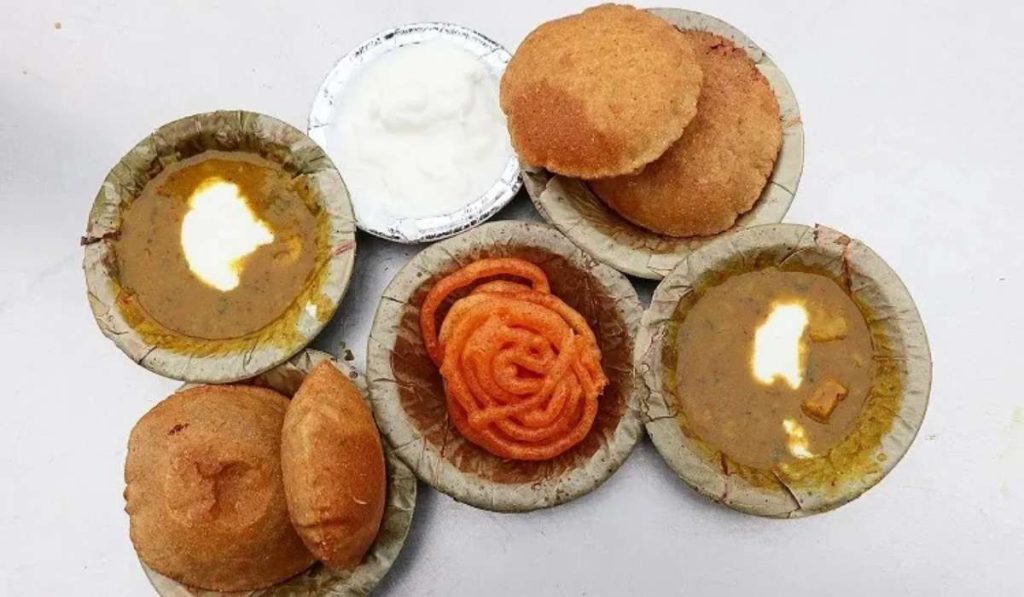
Street food served on leaf plates at a local stall in Agra
Everyday street food in Agra is eaten casually and quickly, more out of habit than for the experience.

Agra’s food culture doesn’t cater to foreigners. The restaurants near the Taj Mahal serve sanitized versions of Indian cuisine, designed to be safe and familiar. But the real eating happens on the streets, in the small dhabas and stalls where locals gather.

Petha is Agra’s most famous food product—a translucent candy made from ash gourd, soaked in sugar syrup. Every tourist shop sells it. Most of it is mediocre. But there are a few shops in the old city, family-run places, where the petha is still made the traditional way. It’s softer, less cloying, with subtle flavors like saffron or rose.

Street food in Agra is straightforward. Chaat vendors line the roads near Sadar Bazaar. You’ll find samosas, kachoris, jalebis, all the standard north Indian staples. The hygiene standards are questionable. The oil is reused. The water might not be safe.

But this is where people actually eat. Not tourists. People.

There’s a difference between eating as tourism and eating as habit. Tourists seek out recommended restaurants, order carefully, photograph their food. Locals grab a plate of chaat on the way home, eat standing up, move on.

The food itself isn’t extraordinary. Agra isn’t a culinary destination. But the rhythm of eating here—the casualness, the street-side chaos, the way food is just fuel and social habit, not an attraction—tells you something about the city.

Agra doesn’t present itself. It doesn’t curate. You either engage with it on its terms or you stay in the tourist zones where everything is managed for you.

Why Rushing Agra Fails

The same-day Agra trip is a well-worn pattern. Leave Delhi early, arrive by breakfast, see the Taj Mahal, maybe visit Agra Fort, eat lunch, leave by late afternoon. You’re back in Delhi by evening.

It’s efficient. It’s popular. And it flattens Agra into nothing.

When you rush a place, you reduce it to its most visible features. You see the monument, take the photos, collect the experience. But you don’t absorb anything. You don’t notice the details. You don’t have time for the unplanned moments that actually create memory.

Agra doesn’t work at speed. The city is too layered, too contradictory, too resistant to quick understanding. The monument alone requires time. Not just to see, but to sit with. To return to. To experience under different conditions.

And everything else—the markets, the artisans, the food, the river, the streets—requires even more time. You can’t rush conversation. You can’t speed through observation. Can’t compress a city into a three-hour window and expect it to make sense.

Speed also creates a false sense of completion. You saw the Taj Mahal. Checked the box. You can move on. But what you actually saw was a fragment—one angle, one lighting condition, one crowd situation, one mood.

Slow travel doesn’t mean staying for weeks. It just means staying long enough to notice. Long enough to return to the same place twice. Long enough to eat where locals eat, walk without a map, sit without an agenda.

Agra rewards patience. It doesn’t reward efficiency.

Who Agra Is Actually For

Not everyone will love Agra. That’s fine. Not every place is for every traveler.

Agra is for people who can tolerate chaos and contradiction. It’s for people who want to see the monument but also want to understand the city around it. People who are comfortable being uncomfortable, who don’t need everything explained or sanitized.

It’s not for people who want a postcard version of India. Not for people who expect cleanliness, order, or ease. It’s not for people who only want the highlight reel.

If you need your travel experiences to be smooth and photogenic and shareable, Agra will frustrate you. The city is grimy. The air is bad. The traffic is relentless. The poverty is visible. It’s not Jaipur’s curated charm or Kerala’s tropical ease.

But if you’re willing to sit with complexity, if you’re curious about how a historical monument exists inside a living, struggling city, if you want to see India without the gloss, Agra offers that.

The travelers who love Agra are the ones who stay longer than planned. Who walk the back streets without a guide. Talk to the marble artisans. Who eat the street food despite the risk. Who visit the Taj Mahal more than once and notice how it changes.

The travelers who hate Agra are the ones who expected magic and got dust. Who wanted transcendence and got traffic. Who came for the monument and found a city instead.

Both responses are valid. But one requires preparation. And honesty about what you’re actually looking for.

Conclusion

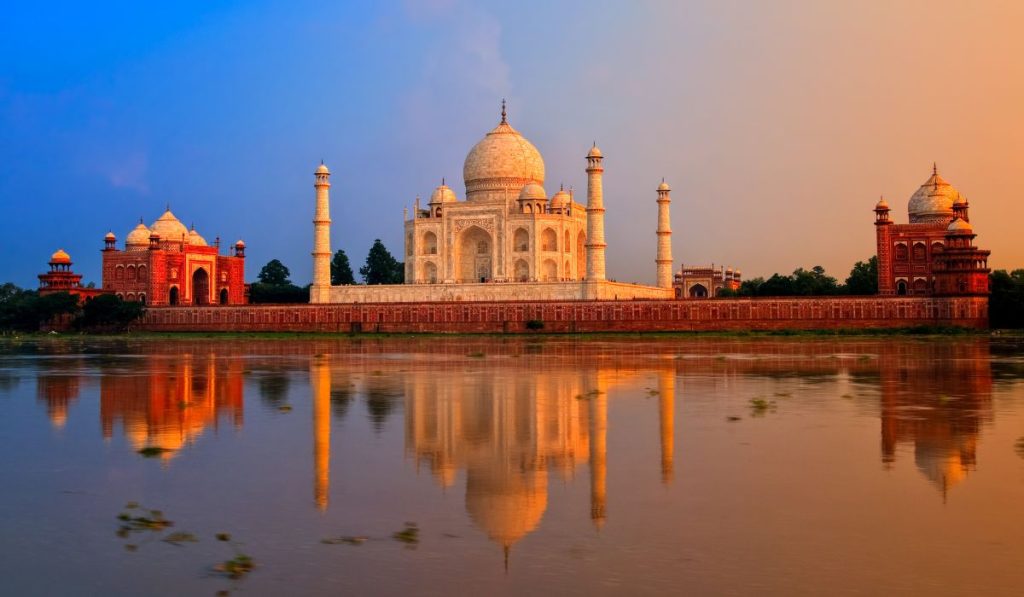
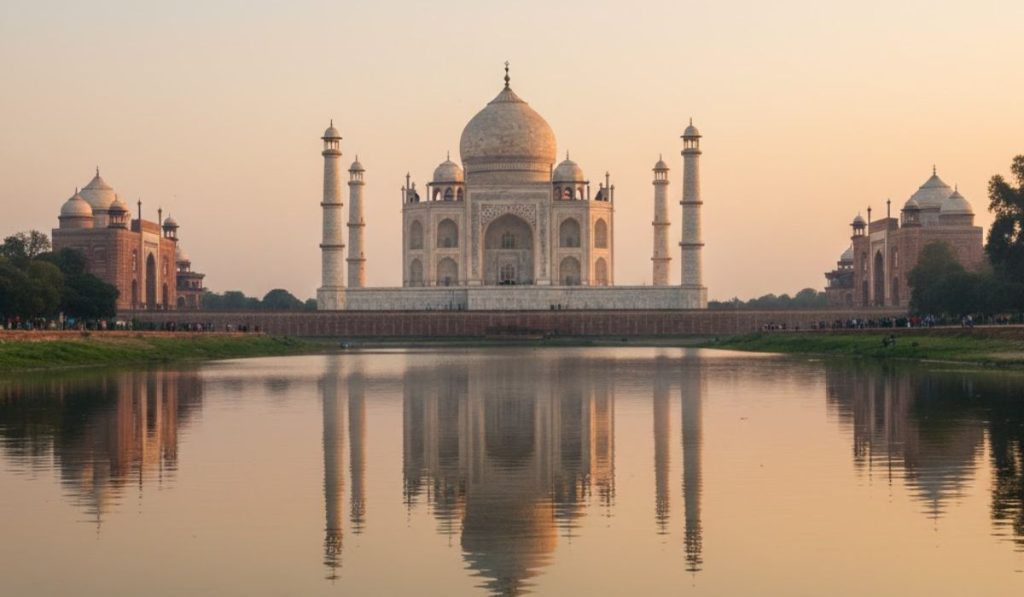
Taj Mahal viewed across the Yamuna River with its reflection in calm water
Viewed from across the Yamuna River, the Taj Mahal feels quieter and more distant—less spectacle, more structure.

The Taj Mahal is the beginning of Agra, not the conclusion. It’s the reason most people come. But it’s not the reason to stay.

What keeps people in Agra—what makes them remember the city instead of just the monument—is everything that happens around the edges. The quiet moments in Mehtab Bagh. The conversation with an artisan. The walk through Kinari Bazaar. The second visit to the Taj when the light is different and the crowd has thinned.

Agra doesn’t ask for your approval. It doesn’t perform. It just exists, layered and complicated and difficult and real.

The city rewards attention. It rewards patience. It rewards the willingness to sit still long enough to notice what most people rush past.

The Taj Mahal will always be there, white and symmetrical and overwhelming. But the rest of Agra—the markets, the river, the hands carving marble, the streets where life happens without pause—requires you to slow down.

Most travelers won’t. And that’s fine. The monument is enough for most people.

But for those who stay, who walk, who watch, who return—Agra becomes something other than a transit stop. It becomes a city worth understanding. Not for what it was. For what it still is.

About the Author

Editorial Team, Taj Adventure Holidays

The Editorial Team at Taj Adventure Holidays is based in Agra and focuses on documenting travel experiences around the Taj Mahal and its surrounding neighborhoods through repeated visits and local observation.

Their writing reflects time spent exploring the monument at different hours, walking lesser-known areas near the Yamuna River, visiting Mehtab Bagh across seasons, and engaging with Agra’s markets and traditional marble inlay artisans.

The goal of the team’s work is not to promote fixed itineraries, but to offer context and perspective for travelers who want to understand Agra beyond a single visit.