
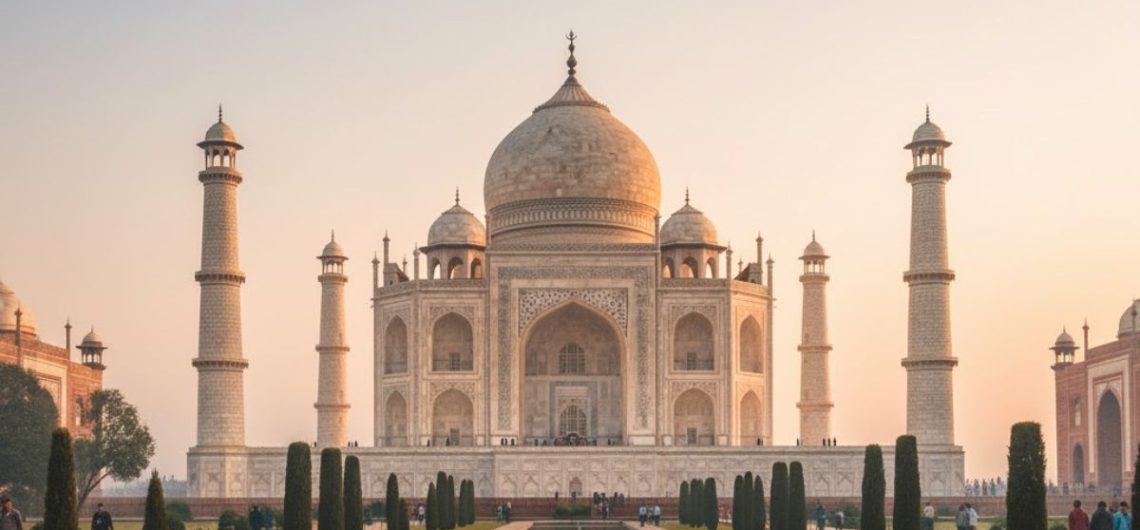
I’ve watched hundreds of travelers arrive in Agra before dawn, cameras ready, itineraries tight. They come for sunrise at the Taj Mahal, stay for three hours, maybe four, and leave before lunch. The monument gets photographed from every possible angle. The marble gets touched. The reflection pool gets its mandatory shot.
Then they’re gone.
Agra becomes a checkbox. A necessary stop between Delhi and Jaipur. A place to confirm what they already knew from photographs and documentaries. The Taj Mahal exists, it’s beautiful, and now they can say they’ve seen it—often through tightly planned Taj Mahal tour packages that leave little room for anything else.
I understand the impulse. The monument is overwhelming. It demands attention in a way few structures on earth can. But treating Agra as a transit stop, as nothing more than the platform for one building, means missing almost everything that makes the city worth understanding.
Most travelers never walk the narrow lanes behind Jama Masjid. They don’t sit long enough in Mehtab Bagh to watch how the light shifts across the river. Don’t meet the marble inlay artisans whose families have been carving the same patterns for generations. They don’t eat at the small roadside stalls where locals actually gather, because those places aren’t in guidebooks and don’t look like the India they expected.
Agra doesn’t reveal itself quickly. It doesn’t perform for visitors the way some cities do. It requires patience, stillness, and a willingness to let go of the checklist mentality that brings most people here in the first place.
This isn’t a criticism. The Taj Mahal deserves the pilgrimage. But the monument alone is an incomplete story. And Agra, when rushed, feels hollow. The city rewards attention in ways that have nothing to do with marble or symmetry or Mughal grandeur.
What follows isn’t a guide. It’s what happens when you stay long enough to notice.
The Taj Mahal Is Not a Single Moment
I’ve been to the Taj Mahal at different times of day, in different seasons, and in different states of mind. It’s never the same experience twice.
Early morning is when photographers arrive. The air is cool, sometimes misty. Crowds are present but controlled. Voices stay low. As the light changes, the marble shifts from pale white to soft pink and gold. For a brief window, the monument feels quiet and personal.
By mid-morning, that atmosphere disappears. Tour groups flood in. Guides repeat the same facts in multiple languages. Pathways clog. People compete for the same photograph at the reflection pool. The Taj becomes a backdrop rather than something to engage with.
Late afternoon feels different again. The light softens. Crowds thin. Indian families arrive, not international groups. They sit on the grass, take selfies, laugh. The monument blends into everyday life instead of standing apart from it.
I’ve also seen the Taj on overcast days, when the white marble looks heavy and dull. The symmetry remains, but the glow is gone. It’s still impressive—but no longer transcendent. Just stone, massive and unmoved.
What changes isn’t the building. It’s everything around it: light, heat, crowd density, mood. Whether you’re tired or alert. Whether it’s your first visit or your fifth.
Most travelers see the Taj once and assume that moment defines it. But the monument exists in time. Those who arrive at dawn and leave by nine miss how the marble absorbs heat by midday. Those who only visit in winter never see monsoon skies behind the dome.
You can’t capture all of this in one visit. You only ever see a fragment. And mistaking that fragment for the whole is how most people leave thinking they’ve understood something they’ve only briefly encountered.
The Back of the Taj and the Yamuna River
Most people never walk to the back of the Taj Mahal. The main entrance pulls everyone forward, toward the gardens and the reflection pool. That’s the image people recognize. That’s the photograph they come for.
But the back is where the monument feels different.
From the rear, the Taj faces the Yamuna River—or what remains of it. The water is shallow, sometimes barely flowing, weighed down by silt and pollution. The banks are uneven and unpolished. This is not the romantic setting often imagined.
Still, standing behind the monument changes the experience. The crowd noise drops away. The structure stops performing. It feels heavier, quieter, more permanent. Without the framing gardens and forced symmetry, the Taj reads as architecture rather than spectacle. The dome rises into open sky, unconcerned with angles or photographs.
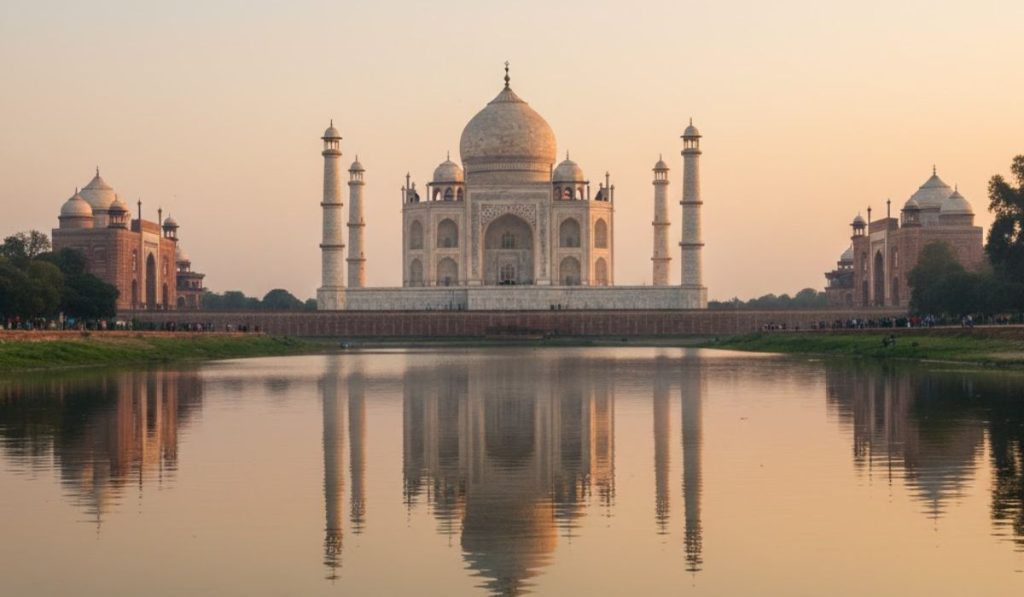
Across the river, Mehtab Bagh offers distance. The garden is rougher and less controlled than the Taj’s front lawns. From here, the monument sits complete across the water. Most visitors come at sunset for photographs, but even without a camera, the value is perspective.
Inside the main complex, the Taj overwhelms. You’re always too close, always looking up, always aware of the crowd. From Mehtab Bagh, you can sit. You can see the whole structure at once. You notice how small people look beside it.
The Yamuna, diminished as it is, still matters here. It reminds you that the Taj wasn’t built in isolation. It belonged to a riverfront city, to trade routes, movement, and geography. Standing on its banks, you glimpse what the space once meant—not a frozen monument, but a structure rooted in place.
Agra as a Living City, Not a Transit Stop
Agra doesn’t cater to tourists the way Jaipur or Udaipur do. The city doesn’t soften itself. It doesn’t curate its streets or hide its contradictions. It simply continues, indifferent to whether visitors stay or leave.
Most travelers never see this side of Agra. They stay near the Taj Mahal, eat in tourist-facing restaurants, and leave before they have to navigate the city as it actually functions. But the real Agra exists beyond those controlled zones.
The old markets—places like Kinari Bazaar and the lanes around Jama Masjid—are narrow, crowded, and loud. Motorbikes cut through foot traffic. Shopkeepers sit in doorways, waiting. The air carries the smell of frying oil, incense, diesel, and dust. It’s chaotic and uncomfortable by design, because it wasn’t designed for visitors at all.
This is where Agra functions when it isn’t performing. Families buy fabric. Men stand at chai stalls. Women bargain over vegetables. Schoolchildren thread through traffic. Life moves without pause or presentation.
The contrast is sharp. Near the monument, everything is managed—English-speaking guides, packaged souvenirs, familiar food. A buffer built to make foreigners comfortable. Step a few streets away and that buffer vanishes. Signs switch to Hindi. Prices drop. The rhythm changes.
This isn’t exotic or charming. It’s dense, working urban life. But it’s also the most honest version of Agra. And understanding the city—why it feels heavy, complex, unfinished—requires leaving the tourist corridors and walking where there’s no script to follow.
The Hands Behind the Marble
The marble inlay work inside the Taj Mahal—the delicate floral patterns and semi-precious stones set into white marble—is one of the monument’s defining features. Most visitors notice it, admire it briefly, and move on.
Few stop to consider who made it. Or who still does.
Agra is still home to marble inlay artisans whose families have practiced the same craft for generations. Their workshops are small, hidden in alleys near the old city. Inside, craftsmen sit on the floor, bent over slabs of marble, carving fine grooves and fitting tiny pieces of lapis, malachite, and carnelian into patterns that take weeks, sometimes months, to complete.
The work is slow by necessity. Each stone must fit perfectly. Each cut must be precise. There is no shortcut, no way to rush the process without ruining it. A single tabletop or decorative panel can take months of repetitive, focused labor.
These artisans aren’t producing souvenirs, though some pieces end up in tourist shops. The serious work is commissioned—by collectors, museums, or clients who understand what they’re paying for. The cost reflects the time, skill, and patience involved.
But the craft is fading. Younger generations are reluctant to spend long hours carving marble for uncertain returns. Machines can now replicate simpler patterns faster and cheaper. The market shrinks each year.
What’s disappearing isn’t just a trade. It’s a living connection to the techniques that built the Taj itself. The same tools. The same methods & same stone.
Seeing this work changes how the monument feels. The Taj stops being just beautiful. It becomes human—shaped by patience, repetition, and hands doing the same meticulous task over decades.
Food, Streets, and Everyday Agra
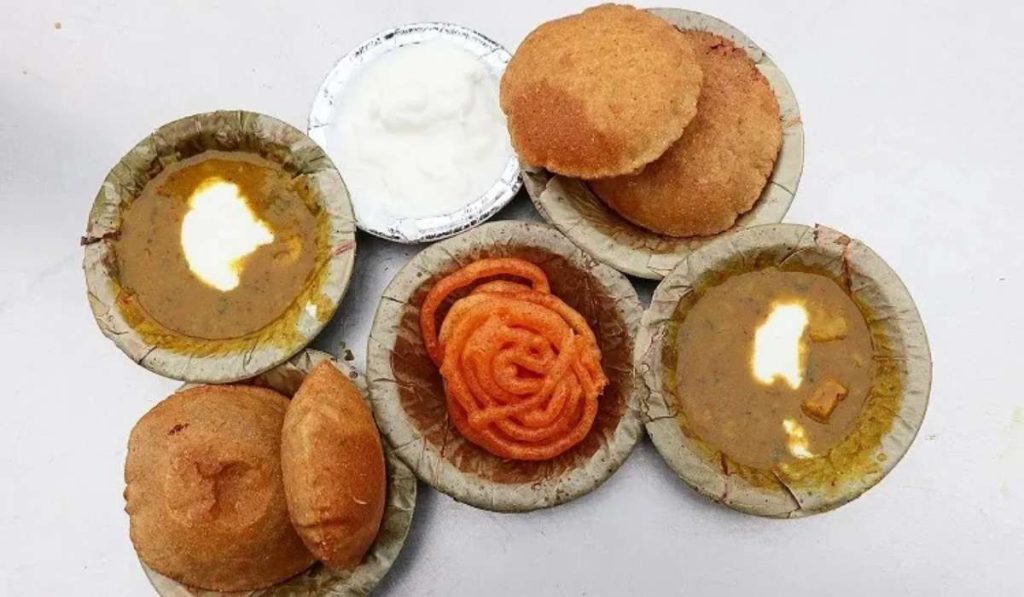
Agra’s food culture doesn’t cater to foreigners. The restaurants near the Taj Mahal serve sanitized versions of Indian cuisine, designed to be safe and familiar. But the real eating happens on the streets, in the small dhabas and stalls where locals gather.
Petha is Agra’s most famous food product—a translucent candy made from ash gourd, soaked in sugar syrup. Every tourist shop sells it. Most of it is mediocre. But there are a few shops in the old city, family-run places, where the petha is still made the traditional way. It’s softer, less cloying, with subtle flavors like saffron or rose.
Street food in Agra is straightforward. Chaat vendors line the roads near Sadar Bazaar. You’ll find samosas, kachoris, jalebis, all the standard north Indian staples. The hygiene standards are questionable. The oil is reused. The water might not be safe.
But this is where people actually eat. Not tourists. People.
There’s a difference between eating as tourism and eating as habit. Tourists seek out recommended restaurants, order carefully, photograph their food. Locals grab a plate of chaat on the way home, eat standing up, move on.
The food itself isn’t extraordinary. Agra isn’t a culinary destination. But the rhythm of eating here—the casualness, the street-side chaos, the way food is just fuel and social habit, not an attraction—tells you something about the city.
Agra doesn’t present itself. It doesn’t curate. You either engage with it on its terms or you stay in the tourist zones where everything is managed for you.
Why Rushing Agra Fails
The same-day Agra trip is a well-worn pattern. Leave Delhi early, arrive by breakfast, see the Taj Mahal, maybe visit Agra Fort, eat lunch, leave by late afternoon. You’re back in Delhi by evening.
It’s efficient. It’s popular. And it flattens Agra into nothing.
When you rush a place, you reduce it to its most visible features. You see the monument, take the photos, collect the experience. But you don’t absorb anything. You don’t notice the details. You don’t have time for the unplanned moments that actually create memory.
Agra doesn’t work at speed. The city is too layered, too contradictory, too resistant to quick understanding. The monument alone requires time. Not just to see, but to sit with. To return to. To experience under different conditions.
And everything else—the markets, the artisans, the food, the river, the streets—requires even more time. You can’t rush conversation. You can’t speed through observation. Can’t compress a city into a three-hour window and expect it to make sense.
Speed also creates a false sense of completion. You saw the Taj Mahal. Checked the box. You can move on. But what you actually saw was a fragment—one angle, one lighting condition, one crowd situation, one mood.
Slow travel doesn’t mean staying for weeks. It just means staying long enough to notice. Long enough to return to the same place twice. Long enough to eat where locals eat, walk without a map, sit without an agenda.
Agra rewards patience. It doesn’t reward efficiency.
Who Agra Is Actually For
Not everyone will love Agra. That’s fine. Not every place is for every traveler.
Agra is for people who can tolerate chaos and contradiction. It’s for people who want to see the monument but also want to understand the city around it. People who are comfortable being uncomfortable, who don’t need everything explained or sanitized.
It’s not for people who want a postcard version of India. Not for people who expect cleanliness, order, or ease. It’s not for people who only want the highlight reel.
If you need your travel experiences to be smooth and photogenic and shareable, Agra will frustrate you. The city is grimy. The air is bad. The traffic is relentless. The poverty is visible. It’s not Jaipur’s curated charm or Kerala’s tropical ease.
But if you’re willing to sit with complexity, if you’re curious about how a historical monument exists inside a living, struggling city, if you want to see India without the gloss, Agra offers that.
The travelers who love Agra are the ones who stay longer than planned. Who walk the back streets without a guide. Talk to the marble artisans. Who eat the street food despite the risk. Who visit the Taj Mahal more than once and notice how it changes.
The travelers who hate Agra are the ones who expected magic and got dust. Who wanted transcendence and got traffic. Who came for the monument and found a city instead.
Both responses are valid. But one requires preparation. And honesty about what you’re actually looking for.
Conclusion
The Taj Mahal is the beginning of Agra, not the conclusion. It’s the reason most people come. But it’s not the reason to stay.
What keeps people in Agra—what makes them remember the city instead of just the monument—is everything that happens around the edges. The quiet moments in Mehtab Bagh. The conversation with an artisan. The walk through Kinari Bazaar. The second visit to the Taj when the light is different and the crowd has thinned.
Agra doesn’t ask for your approval. It doesn’t perform. It just exists, layered and complicated and difficult and real.
The city rewards attention. It rewards patience. It rewards the willingness to sit still long enough to notice what most people rush past.
The Taj Mahal will always be there, white and symmetrical and overwhelming. But the rest of Agra—the markets, the river, the hands carving marble, the streets where life happens without pause—requires you to slow down.
Most travelers won’t. And that’s fine. The monument is enough for most people.
But for those who stay, who walk, who watch, who return—Agra becomes something other than a transit stop. It becomes a city worth understanding. Not for what it was. For what it still is.
About the Author
Editorial Team, Taj Adventure Holidays
The Editorial Team at Taj Adventure Holidays is based in Agra and focuses on documenting travel experiences around the Taj Mahal and its surrounding neighborhoods through repeated visits and local observation.
Their writing reflects time spent exploring the monument at different hours, walking lesser-known areas near the Yamuna River, visiting Mehtab Bagh across seasons, and engaging with Agra’s markets and traditional marble inlay artisans.
The goal of the team’s work is not to promote fixed itineraries, but to offer context and perspective for travelers who want to understand Agra beyond a single visit.

Comments