<!-- wp:paragraph -->
<p>Jaipur is called the Pink City for a reason. Pink sandstone gateways, hilltop forts, royal palaces and crowded bazaars make it one of the most photogenic cities in India. It is also a compact one. Most of the big sights sit within a few kilometres of each other, so with a smart plan you can see the best of Jaipur in a single day.</p>
<!-- /wp:paragraph -->
<!-- wp:paragraph -->
<p>This guide gives you a realistic, hour-by-hour Jaipur one day itinerary that covers Amber Fort, City Palace, Jantar Mantar and Hawa Mahal, along with photo stops, lunch breaks, timing advice and practical tips from our local team at Taj Adventure Holidays.</p>
<!-- /wp:paragraph -->
<!-- wp:heading {"level":3} -->
<h3 class="wp-block-heading">Quick Answer: What to See in Jaipur in One Day</h3>
<!-- /wp:heading -->
<!-- wp:paragraph -->
<p>If you are short on time, this is the route we recommend:</p>
<!-- /wp:paragraph -->
<!-- wp:list {"ordered":true} -->
<ol class="wp-block-list"><!-- wp:list-item -->
<li>Hawa Mahal (photo stop in soft morning light)</li>
<!-- /wp:list-item -->
<!-- wp:list-item -->
<li>Amber Fort (arrive at opening time)</li>
<!-- /wp:list-item -->
<!-- wp:list-item -->
<li>Jal Mahal (quick photo stop)</li>
<!-- /wp:list-item -->
<!-- wp:list-item -->
<li>Lunch in the old city</li>
<!-- /wp:list-item -->
<!-- wp:list-item -->
<li>City Palace</li>
<!-- /wp:list-item -->
<!-- wp:list-item -->
<li>Jantar Mantar</li>
<!-- /wp:list-item -->
<!-- wp:list-item -->
<li>Johari Bazaar and Bapu Bazaar for shopping and street food</li>
<!-- /wp:list-item --></ol>
<!-- /wp:list -->
<!-- wp:paragraph -->
<p>Start by 7:30 or 8:00 AM and you will finish comfortably by early evening.</p>
<!-- /wp:paragraph -->
<!-- wp:heading {"level":3} -->
<h3 class="wp-block-heading">Is One Day Enough for Jaipur?</h3>
<!-- /wp:heading -->
<!-- wp:paragraph -->
<p>For first-time visitors, one day is enough to see the main highlights, especially if you travel by private car with a driver and skip long waiting times. It will feel full, though. If you love photography, museums or shopping, or you want to add Nahargarh Fort, Jaigarh Fort or a cooking class, two days is more relaxed.</p>
<!-- /wp:paragraph -->
<!-- wp:paragraph -->
<p>If you are coming from Delhi, a Jaipur day trip is possible, but the drive is roughly five to six hours each way, so an overnight stay works better. Many of our guests combine Jaipur with Agra and Delhi on the <a href="https://www.tajadventureholidays.com/india-golden-triangle-tour-packages/">India Golden Triangle tour</a>.</p>
<!-- /wp:paragraph -->
<!-- wp:heading {"level":3} -->
<h3 class="wp-block-heading">Before You Start: Practical Tips</h3>
<!-- /wp:heading -->
<!-- wp:paragraph -->
<p><strong>Best time to visit:</strong> October to March has the most comfortable weather. Summers get very hot, so in April to June do the outdoor forts early and keep the afternoon for indoor sights.</p>
<!-- /wp:paragraph -->
<!-- wp:paragraph -->
<p><strong>How to get around:</strong> Auto-rickshaws and app cabs work, but a private car with a driver saves a lot of time on a tight schedule. You can leave your bags in the car, cool down in the AC between stops, and skip the haggling.</p>
<!-- /wp:paragraph -->
<!-- wp:paragraph -->
<p><strong>What to wear:</strong> Comfortable walking shoes matter most. Amber Fort has slopes and cobbled paths, and the palaces involve a lot of walking. Carry a hat, sunscreen and water.</p>
<!-- /wp:paragraph -->
<!-- wp:paragraph -->
<p><strong>Tickets:</strong> Most monuments charge separate entry fees, with higher rates for foreign visitors. A composite ticket is available for several Jaipur monuments and can be good value if you visit many of them. Fees and timings change from time to time, so check the current rates before you go.</p>
<!-- /wp:paragraph -->
<!-- wp:heading {"level":3} -->
<h3 class="wp-block-heading">Hour-by-Hour Jaipur One Day Itinerary</h3>
<!-- /wp:heading -->
<!-- wp:heading {"level":4} -->
<h4 class="wp-block-heading">7:45 AM: Hawa Mahal (Photo Stop)</h4>
<!-- /wp:heading -->
<!-- wp:paragraph -->
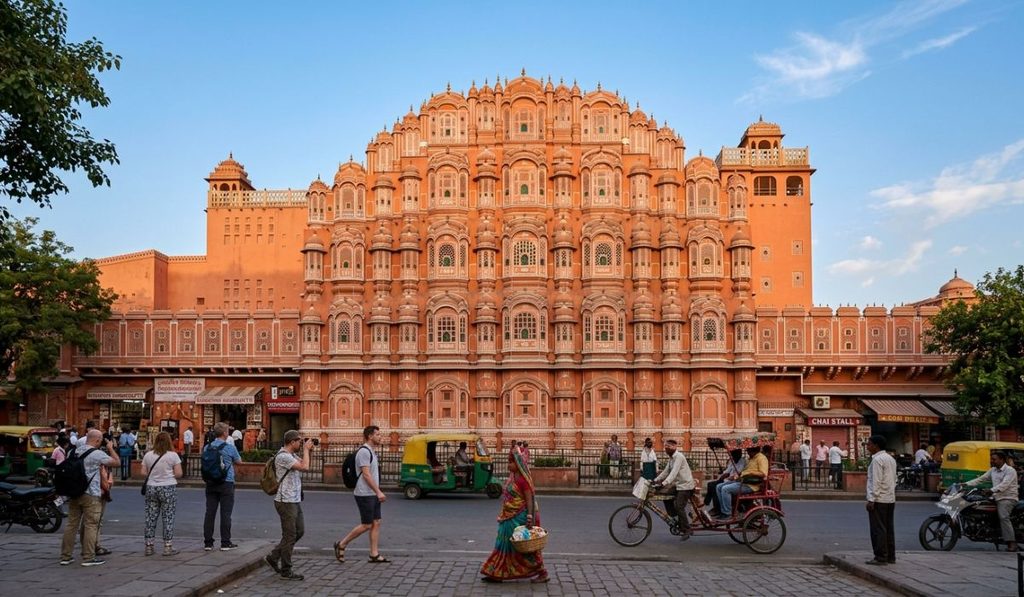
<p>Start at the "Palace of Winds", which is on the way to Amber Fort. The five-storey pink facade with its 953 small windows faces east, so it looks its best in the soft morning light and the street is still quiet.</p>
<!-- /wp:paragraph -->
<!-- wp:paragraph -->
<p>Built in 1799 by Maharaja Sawai Pratap Singh, it was designed so that royal women could watch street festivals without being seen. Spend 15 to 20 minutes on photographs from the road or from one of the rooftop cafes opposite. You can come back in the afternoon if you want to go inside.</p>
<!-- /wp:paragraph -->
<!-- wp:heading {"level":4} -->
<h4 class="wp-block-heading">8:30 AM: Amber Fort</h4>
<!-- /wp:heading -->
<!-- wp:paragraph -->
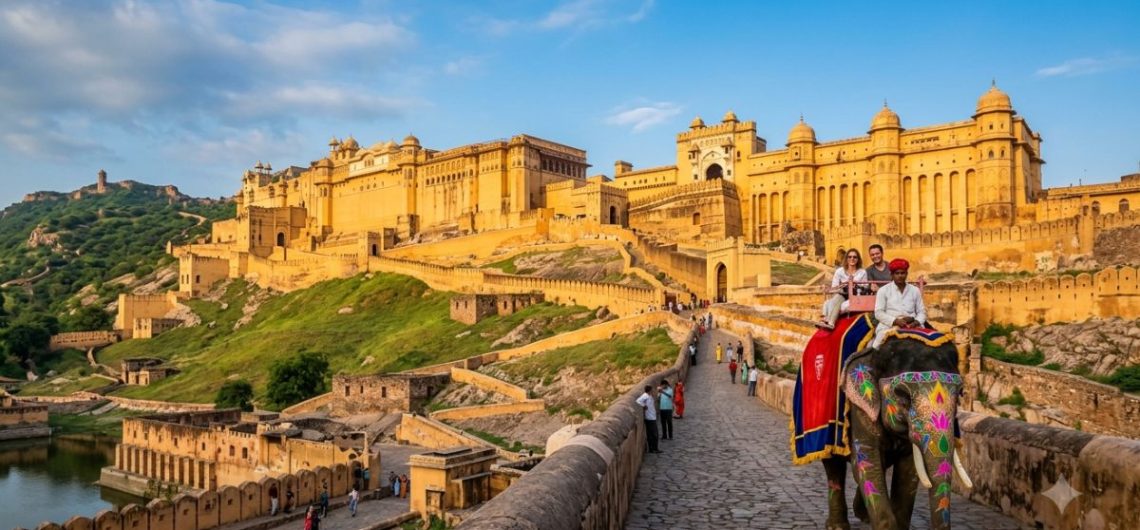
<p>Amber Fort (also spelled Amer) is the highlight of any Jaipur trip, so give it the freshest part of your day. It sits on a hill about 11 kilometres from the city centre, and arriving early lets you beat both the heat and the tour buses.</p>
<!-- /wp:paragraph -->
<!-- wp:paragraph -->
<p>Inside, do not miss:</p>
<!-- /wp:paragraph -->
<!-- wp:list -->
<ul class="wp-block-list"><!-- wp:list-item -->
<li><strong>Sheesh Mahal (Mirror Palace):</strong> Thousands of tiny mirrors turn a single candle into a starry ceiling.</li>
<!-- /wp:list-item -->
<!-- wp:list-item -->
<li><strong>Diwan-i-Aam:</strong> The public hall with its elegant pillars.</li>
<!-- /wp:list-item -->
<!-- wp:list-item -->
<li><strong>Ganesh Pol:</strong> The painted gateway that is one of the most photographed spots in the fort.</li>
<!-- /wp:list-item -->
<!-- wp:list-item -->
<li><strong>Sukh Niwas and the gardens:</strong> Cool, peaceful corners of the palace.</li>
<!-- /wp:list-item --></ul>
<!-- /wp:list -->
<!-- wp:paragraph -->
<p>You can reach the fort by walking up the ramp, by jeep, or by the traditional elephant ride. Elephant rides raise animal welfare concerns, so many travellers now choose a jeep or a walk. Plan about two to two and a half hours here, and hire a licensed guide if you want the stories behind the architecture.</p>
<!-- /wp:paragraph -->
<!-- wp:image {"id":2242,"sizeSlug":"large","linkDestination":"none"} -->
<figure class="wp-block-image size-large"><img src="https://www.tajadventureholidays.com/wp-content/uploads/2026/09/Untitled-design-14-1024x597.jpg" alt="" class="wp-image-2242"/></figure>
<!-- /wp:image -->
<!-- wp:heading {"level":4} -->
<h4 class="wp-block-heading">11:30 AM: Jal Mahal (Photo Stop)</h4>
<!-- /wp:heading -->
<!-- wp:paragraph -->
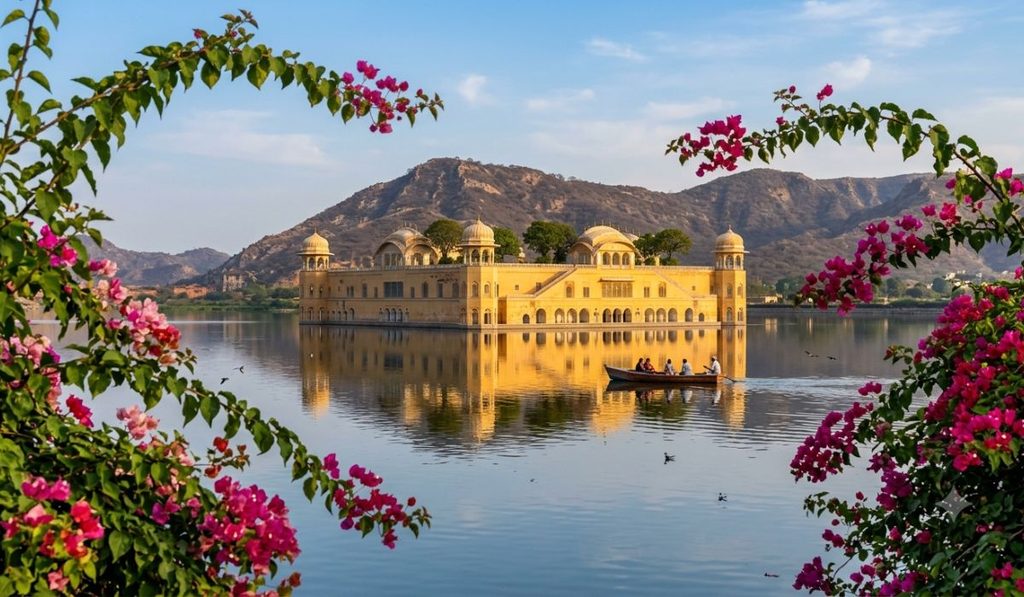
<p>On the way back to the city, pause at Jal Mahal, the "Water Palace" that seems to float in the middle of Man Sagar Lake. You cannot go inside, but the view from the promenade is lovely and a 15-minute stop is plenty. There are also small stalls selling snacks, tea and handicrafts nearby.</p>
<!-- /wp:paragraph -->
<!-- wp:heading {"level":4} -->
<h4 class="wp-block-heading">12:15 PM: Lunch in the Old City</h4>
<!-- /wp:heading -->
<!-- wp:paragraph -->
<p>Time for a proper Rajasthani meal. Try dal baati churma, laal maas (if you eat meat), gatte ki sabzi or ker sangri. For a quick sweet stop, ghewar is a Jaipur speciality, especially during the monsoon and festival season. Choose a well-reviewed restaurant near the City Palace so you do not lose time in traffic.</p>
<!-- /wp:paragraph -->
<!-- wp:heading {"level":4} -->
<h4 class="wp-block-heading">1:30 PM: City Palace</h4>
<!-- /wp:heading -->
<!-- wp:paragraph -->
<p>The City Palace is the royal heart of Jaipur and still partly the residence of the Jaipur royal family. Founded by Maharaja Sawai Jai Singh II in the early 18th century, it blends Rajput, Mughal and European styles.</p>
<!-- /wp:paragraph -->
<!-- wp:paragraph -->
<p>Highlights include:</p>
<!-- /wp:paragraph -->
<!-- wp:list -->
<ul class="wp-block-list"><!-- wp:list-item -->
<li><strong>Mubarak Mahal:</strong> A museum of royal textiles and costumes.</li>
<!-- /wp:list-item -->
<!-- wp:list-item -->
<li><strong>Chandra Mahal:</strong> The seven-storey palace still used by the family (only parts are open to visitors).</li>
<!-- /wp:list-item -->
<!-- wp:list-item -->
<li><strong>Pritam Niwas Chowk:</strong> Famous for its four beautifully painted gates representing the seasons.</li>
<!-- /wp:list-item -->
<!-- wp:list-item -->
<li><strong>The silver urns:</strong> Two huge silver vessels that hold the record as the largest silver objects in the world.</li>
<!-- /wp:list-item --></ul>
<!-- /wp:list -->
<!-- wp:paragraph -->
<p>Plan around 1.5 hours here. If you want a deeper tour, guided experiences are available inside.</p>
<!-- /wp:paragraph -->
<!-- wp:heading {"level":4} -->
<h4 class="wp-block-heading">3:15 PM: Jantar Mantar</h4>
<!-- /wp:heading -->
<!-- wp:paragraph -->
<p>Right next to the City Palace, Jantar Mantar is an astronomical observatory built by Jai Singh II in the 1720s and now a UNESCO World Heritage Site. It has the world's largest stone sundial, the Samrat Yantra, which can tell the time to within a couple of seconds.</p>
<!-- /wp:paragraph -->
<!-- wp:paragraph -->
<p>It may look like a park of strange sculptures, but each instrument had a scientific purpose, from tracking the stars to predicting the monsoon. It is best visited with a guide or an audio guide, and 45 minutes to an hour is enough.</p>
<!-- /wp:paragraph -->
<!-- wp:heading {"level":4} -->
<h4 class="wp-block-heading">4:15 PM: Hawa Mahal (Inside)</h4>
<!-- /wp:heading -->
<!-- wp:paragraph -->
<p>If you want to see Hawa Mahal from the inside, this is the time. Entering lets you walk through the honeycomb of windows and enjoy views of the city and Jantar Mantar. It is a short visit of around 30 minutes.</p>
<!-- /wp:paragraph -->
<!-- wp:heading {"level":4} -->
<h4 class="wp-block-heading">5:00 PM: Johari Bazaar and Bapu Bazaar</h4>
<!-- /wp:heading -->
<!-- wp:paragraph -->
<p>End the day the way Jaipur locals do, in the old bazaars. Johari Bazaar is known for jewellery, gemstones and Kundan work. Bapu Bazaar is better for textiles, block-printed fabrics, mojari shoes and souvenirs. Pick up lassi from a local shop, a plate of pyaaz kachori, or fresh jalebi. Bargaining is normal, so start at around half the asking price and settle somewhere fair.</p>
<!-- /wp:paragraph -->
<!-- wp:heading {"level":4} -->
<h4 class="wp-block-heading">Optional: Sunset at Nahargarh Fort</h4>
<!-- /wp:heading -->
<!-- wp:paragraph -->
<p>If you still have energy, Nahargarh Fort offers one of the best sunset views over the Pink City. It is a short drive from the old city, but it does add time, so include it only if you started early and the day has gone smoothly.</p>
<!-- /wp:paragraph -->
<!-- wp:heading {"level":3} -->
<h3 class="wp-block-heading">Sample One-Day Schedule at a Glance</h3>
<!-- /wp:heading -->
<!-- wp:table -->
<figure class="wp-block-table"><table class="has-fixed-layout"><thead><tr><th>Time</th><th>Stop</th></tr></thead><tbody><tr><td>7:45 AM</td><td>Hawa Mahal (photo stop)</td></tr><tr><td>8:30 AM</td><td>Amber Fort</td></tr><tr><td>11:30 AM</td><td>Jal Mahal</td></tr><tr><td>12:15 PM</td><td>Lunch</td></tr><tr><td>1:30 PM</td><td>City Palace</td></tr><tr><td>3:15 PM</td><td>Jantar Mantar</td></tr><tr><td>4:15 PM</td><td>Hawa Mahal (inside)</td></tr><tr><td>5:00 PM</td><td>Bazaars and street food</td></tr></tbody></table></figure>
<!-- /wp:table -->
<!-- wp:heading {"level":3} -->
<h3 class="wp-block-heading">Tips to Make Your Jaipur Day Smoother</h3>
<!-- /wp:heading -->
<!-- wp:list -->
<ul class="wp-block-list"><!-- wp:list-item -->
<li><strong>Start early.</strong> Amber Fort is best before 10 AM.</li>
<!-- /wp:list-item -->
<!-- wp:list-item -->
<li><strong>Carry small cash.</strong> It is useful for tips, snacks and small purchases.</li>
<!-- /wp:list-item -->
<!-- wp:list-item -->
<li><strong>Book a guide only at the big monuments.</strong> Amber Fort and Jantar Mantar benefit most.</li>
<!-- /wp:list-item -->
<!-- wp:list-item -->
<li><strong>Keep a light bag.</strong> Some monuments have security checks.</li>
<!-- /wp:list-item -->
<!-- wp:list-item -->
<li><strong>Watch for shopping "commissions."</strong> Some drivers or guides steer tourists to shops that pay them. A trusted operator avoids this.</li>
<!-- /wp:list-item -->
<!-- wp:list-item -->
<li><strong>Stay hydrated.</strong> Jaipur gets hot even outside summer.</li>
<!-- /wp:list-item --></ul>
<!-- /wp:list -->
<!-- wp:image {"id":2243,"sizeSlug":"large","linkDestination":"none"} -->
<figure class="wp-block-image size-large"><img src="https://www.tajadventureholidays.com/wp-content/uploads/2026/09/Untitled-design-13-1024x597.jpg" alt="" class="wp-image-2243"/></figure>
<!-- /wp:image -->
<!-- wp:heading {"level":3} -->
<h3 class="wp-block-heading">Why a Private Car Tour Works Best in Jaipur</h3>
<!-- /wp:heading -->
<!-- wp:paragraph -->
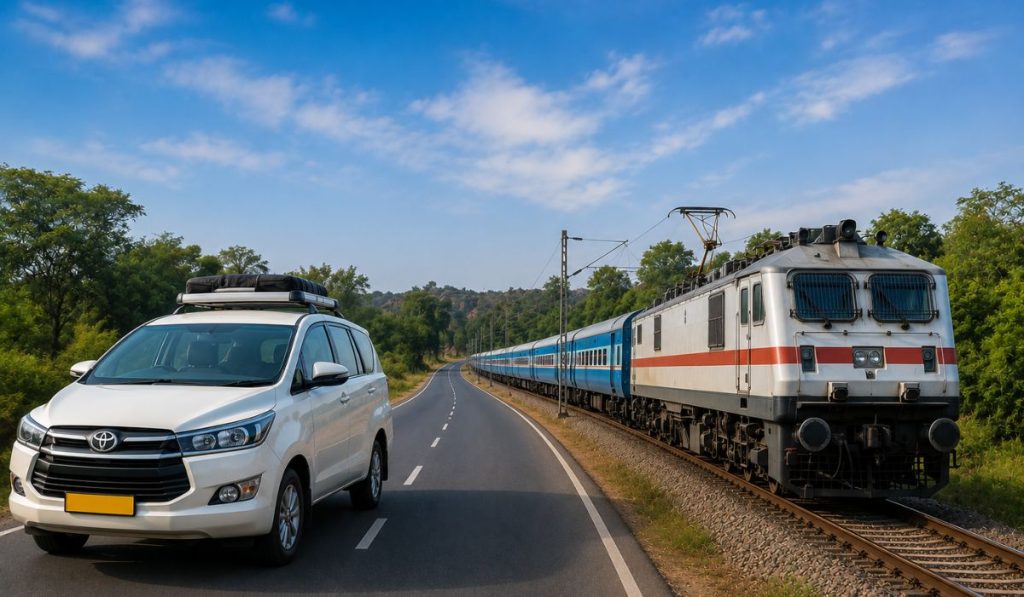
<p>With so many stops and very different distances between them, transport can make or break your day. A private, air-conditioned car with a professional driver means no waiting for autos, flexible timing at each monument, and someone who knows the best time to reach each place before the crowds.</p>
<!-- /wp:paragraph -->
<!-- wp:paragraph -->
<p>At Taj Adventure Holidays, our <a href="https://www.tajadventureholidays.com/jaipur-tour-packages/">Jaipur tour packages</a> are designed around exactly this kind of smooth, well-paced experience, with transparent pricing and support throughout your trip.</p>
<!-- /wp:paragraph -->
<!-- wp:heading {"level":3} -->
<h3 class="wp-block-heading">Frequently Asked Questions</h3>
<!-- /wp:heading -->
<!-- wp:paragraph -->
<p><strong>How many days do you need in Jaipur?</strong><br>One full day covers the main highlights. Two days let you add Nahargarh, Jaigarh, Albert Hall Museum and more shopping.</p>
<!-- /wp:paragraph -->
<!-- wp:paragraph -->
<p><strong>What is the best order to visit Jaipur's attractions?</strong><br>Start with Amber Fort in the morning, then move to the City Palace, Jantar Mantar and Hawa Mahal in the afternoon, and finish with the bazaars.</p>
<!-- /wp:paragraph -->
<!-- wp:paragraph -->
<p><strong>Can I visit Jaipur as a day trip from Delhi?</strong><br>It is possible but tiring because of the long drive. An overnight stay makes the trip far more enjoyable.</p>
<!-- /wp:paragraph -->
<!-- wp:paragraph -->
<p><strong>Is it better to hire a guide in Jaipur?</strong><br>A guide is worth it at Amber Fort and Jantar Mantar, where the history and science are hard to understand without explanation.</p>
<!-- /wp:paragraph -->
<!-- wp:paragraph -->
<p><strong>What should I wear when visiting Jaipur's forts and palaces?</strong><br>Light, comfortable clothes and good walking shoes. Cover your shoulders and knees if you plan to visit temples.</p>
<!-- /wp:paragraph -->
<!-- wp:heading {"level":3} -->
<h3 class="wp-block-heading">Plan Your Jaipur Trip with Us</h3>
<!-- /wp:heading -->
<!-- wp:paragraph -->
<p>Jaipur rewards travellers who plan well and start early. Whether you want a private Jaipur day tour, a Delhi to Jaipur trip, or a full Golden Triangle journey, our team will handle the details so you can focus on the experience. If the Taj Mahal is also on your list, take a look at our <a href="https://www.tajadventureholidays.com/taj-mahal-tour-packages-from-delhi/">Taj Mahal tour packages from Delhi</a>.</p>
<!-- /wp:paragraph -->
<!-- wp:paragraph -->
<p><strong>Ready to explore the Pink City? Contact Taj Adventure Holidays today and let us build your perfect Jaipur itinerary.</strong></p>
<!-- /wp:paragraph -->
Jaipur is called the Pink City for a reason. Pink sandstone gateways, hilltop forts, royal palaces and crowded bazaars make it one of the most photogenic cities in India. It is also a compact one. Most of the big sights sit within a few kilometres of each other, so with a smart plan you can see the best of Jaipur in a single day.
This guide gives you a realistic, hour-by-hour Jaipur one day itinerary that covers Amber Fort, City Palace, Jantar Mantar and Hawa Mahal, along with photo stops, lunch breaks, timing advice and practical tips from our local team at Taj Adventure Holidays.
Quick Answer: What to See in Jaipur in One Day
If you are short on time, this is the route we recommend:
Hawa Mahal (photo stop in soft morning light)
Amber Fort (arrive at opening time)
Jal Mahal (quick photo stop)
Lunch in the old city
City Palace
Jantar Mantar
Johari Bazaar and Bapu Bazaar for shopping and street food
Start by 7:30 or 8:00 AM and you will finish comfortably by early evening.
Is One Day Enough for Jaipur?
For first-time visitors, one day is enough to see the main highlights, especially if you travel by private car with a driver and skip long waiting times. It will feel full, though. If you love photography, museums or shopping, or you want to add Nahargarh Fort, Jaigarh Fort or a cooking class, two days is more relaxed.
If you are coming from Delhi, a Jaipur day trip is possible, but the drive is roughly five to six hours each way, so an overnight stay works better. Many of our guests combine Jaipur with Agra and Delhi on the India Golden Triangle tour.
Before You Start: Practical Tips
Best time to visit: October to March has the most comfortable weather. Summers get very hot, so in April to June do the outdoor forts early and keep the afternoon for indoor sights.
How to get around: Auto-rickshaws and app cabs work, but a private car with a driver saves a lot of time on a tight schedule. You can leave your bags in the car, cool down in the AC between stops, and skip the haggling.
What to wear: Comfortable walking shoes matter most. Amber Fort has slopes and cobbled paths, and the palaces involve a lot of walking. Carry a hat, sunscreen and water.
Tickets: Most monuments charge separate entry fees, with higher rates for foreign visitors. A composite ticket is available for several Jaipur monuments and can be good value if you visit many of them. Fees and timings change from time to time, so check the current rates before you go.
Hour-by-Hour Jaipur One Day Itinerary
7:45 AM: Hawa Mahal (Photo Stop)
Start at the “Palace of Winds”, which is on the way to Amber Fort. The five-storey pink facade with its 953 small windows faces east, so it looks its best in the soft morning light and the street is still quiet.
Built in 1799 by Maharaja Sawai Pratap Singh, it was designed so that royal women could watch street festivals without being seen. Spend 15 to 20 minutes on photographs from the road or from one of the rooftop cafes opposite. You can come back in the afternoon if you want to go inside.
8:30 AM: Amber Fort
Amber Fort (also spelled Amer) is the highlight of any Jaipur trip, so give it the freshest part of your day. It sits on a hill about 11 kilometres from the city centre, and arriving early lets you beat both the heat and the tour buses.
Inside, do not miss:
Sheesh Mahal (Mirror Palace): Thousands of tiny mirrors turn a single candle into a starry ceiling.
Diwan-i-Aam: The public hall with its elegant pillars.
Ganesh Pol: The painted gateway that is one of the most photographed spots in the fort.
Sukh Niwas and the gardens: Cool, peaceful corners of the palace.
You can reach the fort by walking up the ramp, by jeep, or by the traditional elephant ride. Elephant rides raise animal welfare concerns, so many travellers now choose a jeep or a walk. Plan about two to two and a half hours here, and hire a licensed guide if you want the stories behind the architecture.
11:30 AM: Jal Mahal (Photo Stop)
On the way back to the city, pause at Jal Mahal, the “Water Palace” that seems to float in the middle of Man Sagar Lake. You cannot go inside, but the view from the promenade is lovely and a 15-minute stop is plenty. There are also small stalls selling snacks, tea and handicrafts nearby.
12:15 PM: Lunch in the Old City
Time for a proper Rajasthani meal. Try dal baati churma, laal maas (if you eat meat), gatte ki sabzi or ker sangri. For a quick sweet stop, ghewar is a Jaipur speciality, especially during the monsoon and festival season. Choose a well-reviewed restaurant near the City Palace so you do not lose time in traffic.
1:30 PM: City Palace
The City Palace is the royal heart of Jaipur and still partly the residence of the Jaipur royal family. Founded by Maharaja Sawai Jai Singh II in the early 18th century, it blends Rajput, Mughal and European styles.
Highlights include:
Mubarak Mahal: A museum of royal textiles and costumes.
Chandra Mahal: The seven-storey palace still used by the family (only parts are open to visitors).
Pritam Niwas Chowk: Famous for its four beautifully painted gates representing the seasons.
The silver urns: Two huge silver vessels that hold the record as the largest silver objects in the world.
Plan around 1.5 hours here. If you want a deeper tour, guided experiences are available inside.
3:15 PM: Jantar Mantar
Right next to the City Palace, Jantar Mantar is an astronomical observatory built by Jai Singh II in the 1720s and now a UNESCO World Heritage Site. It has the world’s largest stone sundial, the Samrat Yantra, which can tell the time to within a couple of seconds.
It may look like a park of strange sculptures, but each instrument had a scientific purpose, from tracking the stars to predicting the monsoon. It is best visited with a guide or an audio guide, and 45 minutes to an hour is enough.
4:15 PM: Hawa Mahal (Inside)
If you want to see Hawa Mahal from the inside, this is the time. Entering lets you walk through the honeycomb of windows and enjoy views of the city and Jantar Mantar. It is a short visit of around 30 minutes.
5:00 PM: Johari Bazaar and Bapu Bazaar
End the day the way Jaipur locals do, in the old bazaars. Johari Bazaar is known for jewellery, gemstones and Kundan work. Bapu Bazaar is better for textiles, block-printed fabrics, mojari shoes and souvenirs. Pick up lassi from a local shop, a plate of pyaaz kachori, or fresh jalebi. Bargaining is normal, so start at around half the asking price and settle somewhere fair.
Optional: Sunset at Nahargarh Fort
If you still have energy, Nahargarh Fort offers one of the best sunset views over the Pink City. It is a short drive from the old city, but it does add time, so include it only if you started early and the day has gone smoothly.
Sample One-Day Schedule at a Glance
Time
Stop
7:45 AM
Hawa Mahal (photo stop)
8:30 AM
Amber Fort
11:30 AM
Jal Mahal
12:15 PM
Lunch
1:30 PM
City Palace
3:15 PM
Jantar Mantar
4:15 PM
Hawa Mahal (inside)
5:00 PM
Bazaars and street food
Tips to Make Your Jaipur Day Smoother
Start early. Amber Fort is best before 10 AM.
Carry small cash. It is useful for tips, snacks and small purchases.
Book a guide only at the big monuments. Amber Fort and Jantar Mantar benefit most.
Keep a light bag. Some monuments have security checks.
Watch for shopping “commissions.” Some drivers or guides steer tourists to shops that pay them. A trusted operator avoids this.
Stay hydrated. Jaipur gets hot even outside summer.
Why a Private Car Tour Works Best in Jaipur
With so many stops and very different distances between them, transport can make or break your day. A private, air-conditioned car with a professional driver means no waiting for autos, flexible timing at each monument, and someone who knows the best time to reach each place before the crowds.
At Taj Adventure Holidays, our Jaipur tour packages are designed around exactly this kind of smooth, well-paced experience, with transparent pricing and support throughout your trip.
Frequently Asked Questions
How many days do you need in Jaipur? One full day covers the main highlights. Two days let you add Nahargarh, Jaigarh, Albert Hall Museum and more shopping.
What is the best order to visit Jaipur’s attractions? Start with Amber Fort in the morning, then move to the City Palace, Jantar Mantar and Hawa Mahal in the afternoon, and finish with the bazaars.
Can I visit Jaipur as a day trip from Delhi? It is possible but tiring because of the long drive. An overnight stay makes the trip far more enjoyable.
Is it better to hire a guide in Jaipur? A guide is worth it at Amber Fort and Jantar Mantar, where the history and science are hard to understand without explanation.
What should I wear when visiting Jaipur’s forts and palaces? Light, comfortable clothes and good walking shoes. Cover your shoulders and knees if you plan to visit temples.
Plan Your Jaipur Trip with Us
Jaipur rewards travellers who plan well and start early. Whether you want a private Jaipur day tour, a Delhi to Jaipur trip, or a full Golden Triangle journey, our team will handle the details so you can focus on the experience. If the Taj Mahal is also on your list, take a look at our Taj Mahal tour packages from Delhi.
Ready to explore the Pink City? Contact Taj Adventure Holidays today and let us build your perfect Jaipur itinerary.
<!-- wp:paragraph {"className":""} -->
<p>The single decision that shapes your entire Taj Mahal experience more than any other is what time of day you walk through those gates. Early morning — roughly one to two hours after the complex opens — gives most first-time visitors the strongest combination of pleasant light, manageable temperatures and unhurried exploration time. But that recommendation shifts depending on who you are. A photographer wants different light than a family with young children. A winter traveler faces different conditions than someone visiting in May. And a day-tripper arriving from Delhi at noon has a completely different set of options than someone staying overnight in Agra. This article breaks down the Taj Mahal experience hour by hour, from opening through late afternoon, so you can match the right time slot to your travel style.</p>
<!-- /wp:paragraph -->
<!-- wp:separator -->
<hr class="wp-block-separator has-alpha-channel-opacity"/>
<!-- /wp:separator -->
<!-- wp:heading -->
<h2 class="wp-block-heading">Quick Answer: What Is the Best Time of Day to Visit the Taj Mahal?</h2>
<!-- /wp:heading -->
<!-- wp:paragraph {"className":""} -->
<p><strong>For most visitors, early morning is the best time of day to visit the Taj Mahal.</strong> Arriving roughly one hour after the gates open gives you pleasant directional light for photography, cooler temperatures during warm months, and a calmer atmosphere compared to later in the day. That said, the ideal hour depends on your priorities — photographers often prefer the very first minutes after opening or the final hours before closing, while families and winter visitors may be better off arriving mid-morning.</p>
<!-- /wp:paragraph -->
<!-- wp:table -->
<figure class="wp-block-table"><table class="has-fixed-layout"><thead><tr><th class="has-text-align-left" data-align="left">Time of Day</th><th class="has-text-align-left" data-align="left">Light Quality</th><th class="has-text-align-left" data-align="left">Atmosphere</th><th class="has-text-align-left" data-align="left">Temperature</th><th class="has-text-align-left" data-align="left">Ideal For</th><th class="has-text-align-left" data-align="left">Key Drawback</th></tr></thead><tbody><tr><td><strong>Opening / Sunrise</strong></td><td>Low, golden, rapidly changing</td><td>Quiet, atmospheric</td><td>Cool to cold</td><td>Photographers, sunrise seekers</td><td>Requires a very early start; fog risk in winter</td></tr><tr><td><strong>Early Morning</strong></td><td>Soft, directional, warm</td><td>Calm, comfortable pace</td><td>Pleasant across seasons</td><td>First-time visitors, couples</td><td>Still an early alarm</td></tr><tr><td><strong>Mid-Morning</strong></td><td>Bright, even illumination</td><td>Active but manageable</td><td>Warm in summer, pleasant otherwise</td><td>Families, relaxed travelers</td><td>Less dramatic for photography</td></tr><tr><td><strong>Late Morning</strong></td><td>Strong, increasingly overhead</td><td>Fully busy</td><td>Heating up in summer</td><td>Flexible itineraries</td><td>Approaching midday heat</td></tr><tr><td><strong>Midday</strong></td><td>Direct overhead, harsh</td><td>Peak activity</td><td>Hot in summer, mild in winter</td><td>Winter travelers, schedule-bound visitors</td><td>Flat photography light, summer heat</td></tr><tr><td><strong>Afternoon</strong></td><td>Gradually softening</td><td>Moderate, steady</td><td>Still warm, beginning to ease</td><td>Visitors arriving from Delhi after noon</td><td>Less remaining time before closing</td></tr><tr><td><strong>Late Afternoon</strong></td><td>Warm, golden, lower angle</td><td>Can feel time-pressured</td><td>Cooling down</td><td>Warm-light photographers, experienced visitors</td><td>Closing time constraint</td></tr></tbody></table></figure>
<!-- /wp:table -->
<!-- wp:separator -->
<hr class="wp-block-separator has-alpha-channel-opacity"/>
<!-- /wp:separator -->
<!-- wp:heading -->
<h2 class="wp-block-heading">Why Does the Time of Day Matter at the Taj Mahal?</h2>
<!-- /wp:heading -->
<!-- wp:paragraph {"className":""} -->
<p>The Taj Mahal is built from white Makrana marble — and this marble responds dramatically to sunlight. It is not one color throughout the day. In early morning, the stone can take on cream, pale amber or soft pink tones depending on the sky. At midday, it appears brilliant white. In late afternoon, warmer tones return.</p>
<!-- /wp:paragraph -->
<!-- wp:paragraph {"className":""} -->
<p>Beyond the marble's appearance, several practical realities shift as the hours pass:</p>
<!-- /wp:paragraph -->
<!-- wp:list -->
<ul class="wp-block-list"><!-- wp:list-item -->
<li><strong>Sunlight angle.</strong> Low-angle light (morning and late afternoon) creates depth and shadow on the carved surfaces. Overhead sun flattens those details.</li>
<!-- /wp:list-item -->
<!-- wp:list-item -->
<li><strong>Heat.</strong> Agra summers regularly push past 40°C (104°F) by midday. An early or late visit avoids the worst of it.</li>
<!-- /wp:list-item -->
<!-- wp:list-item -->
<li><strong>Visitor flow.</strong> The complex tends to be calmer right after opening. Activity increases through mid-morning and remains steady into the afternoon.</li>
<!-- /wp:list-item -->
<!-- wp:list-item -->
<li><strong>Remaining sightseeing time.</strong> Starting early at the Taj Mahal leaves the rest of your day free for Agra Fort, Mehtab Bagh or local markets. A late visit means limited daylight afterward.</li>
<!-- /wp:list-item --></ul>
<!-- /wp:list -->
<!-- wp:separator -->
<hr class="wp-block-separator has-alpha-channel-opacity"/>
<!-- /wp:separator -->
<!-- wp:heading -->
<h2 class="wp-block-heading">What Is the Taj Mahal Like Right After Opening?</h2>
<!-- /wp:heading -->
<!-- wp:paragraph {"className":""} -->
<p>The Taj Mahal opens 30 minutes before sunrise — this is not a fixed clock time. During summer months, the gates may open as early as around 5:00 AM; in the depths of winter, closer to 6:30 or 7:00 AM. The complex is closed to general visitors every Friday.</p>
<!-- /wp:paragraph -->
<!-- wp:paragraph {"className":""} -->
<p>Arriving at or just before the gates open puts you inside during the most atmospheric conditions of the day. The light is low, shifting and often golden. The marble takes on subtle color variations that disappear within an hour or two. For anyone focused on photography, these first 30 to 60 minutes are hard to replicate at any other time.</p>
<!-- /wp:paragraph -->
<!-- wp:paragraph {"className":""} -->
<p>If you are specifically planning a sunrise visit, you will find a detailed breakdown in our <a href="https://www.tajadventureholidays.com/blog/taj-mahal-sunrise-tour-best-time-to-visit/">Taj Mahal sunrise tour guide</a>.</p>
<!-- /wp:paragraph -->
<!-- wp:paragraph {"className":""} -->
<p><strong>Winter caution:</strong> December and January mornings in Agra frequently bring dense fog. On some days, visibility at the Taj Mahal may be severely limited until mid-morning.</p>
<!-- /wp:paragraph -->
<!-- wp:separator -->
<hr class="wp-block-separator has-alpha-channel-opacity"/>
<!-- /wp:separator -->
<!-- wp:heading -->
<h2 class="wp-block-heading">Is Early Morning the Best Overall Time to Visit?</h2>
<!-- /wp:heading -->
<!-- wp:paragraph {"className":""} -->
<p>For the majority of travelers — yes. The window roughly 60 to 120 minutes after opening delivers the best practical compromise. The initial entrance rush has eased, the sunlight is still directional and warm-toned, and temperatures have not yet climbed.</p>
<!-- /wp:paragraph -->
<!-- wp:paragraph {"className":""} -->
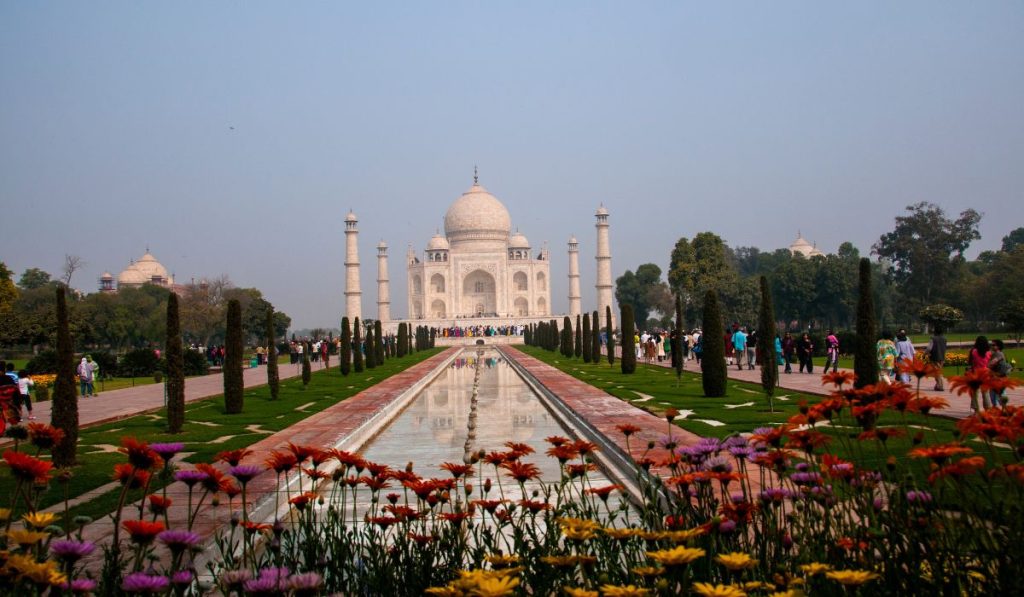
<p>This is the period where first-time visitors tend to have the most enjoyable experience. There is enough time to walk the Charbagh gardens, take photos at the reflecting pool, explore the main mausoleum interior and study the pietra dura inlay work — all without feeling hurried.</p>
<!-- /wp:paragraph -->
<!-- wp:paragraph {"className":""} -->
<p>An early morning visit also gives you a logical day structure. After spending two to three hours at the Taj Mahal, you can move on to Agra Fort, grab lunch near the old city, or head to other sites.</p>
<!-- /wp:paragraph -->
<!-- wp:separator -->
<hr class="wp-block-separator has-alpha-channel-opacity"/>
<!-- /wp:separator -->
<!-- wp:heading -->
<h2 class="wp-block-heading">What Is a Mid-Morning Visit Like?</h2>
<!-- /wp:heading -->
<!-- wp:paragraph {"className":""} -->
<p>By mid-morning, the sun has climbed higher and the light is brighter, more even and less directional. The marble appears closer to its iconic bright white. This lighting may be less cinematic for photography, but it actually highlights the Taj Mahal's architectural detail — the geometric patterns on the minarets, the calligraphy panels framing the main arch, and the precision of the marble inlay become easier to see and appreciate.</p>
<!-- /wp:paragraph -->
<!-- wp:paragraph {"className":""} -->
<p>The complex is more active by this point, but mid-morning is far from unpleasant. Families, older travelers and anyone who values a later start over golden-hour photos will find mid-morning a sensible choice. During the cooler months (October through February), temperatures at this hour are often ideal for extended outdoor walking.</p>
<!-- /wp:paragraph -->
<!-- wp:separator -->
<hr class="wp-block-separator has-alpha-channel-opacity"/>
<!-- /wp:separator -->
<!-- wp:heading -->
<h2 class="wp-block-heading">Should You Visit the Taj Mahal Around Midday?</h2>
<!-- /wp:heading -->
<!-- wp:paragraph {"className":""} -->
<p>Midday is not the first choice for most visitors — and there are real reasons for that. The sun is directly overhead, creating flat, high-contrast light that washes out architectural details in photographs. During Agra's hot season (March through June), standing on sun-heated marble and stone platforms at noon is genuinely uncomfortable.</p>
<!-- /wp:paragraph -->
<!-- wp:paragraph {"className":""} -->
<p>However, midday has its place. In winter, midday temperatures in Agra are pleasant — often between 18°C and 24°C — and the overhead light, while not dramatic, provides clear, even illumination. If your train from Delhi arrives late in the morning, heading directly to the Taj Mahal around noon may make more sense than waiting for late afternoon. Check our <a href="https://www.tajadventureholidays.com/blog/taj-mahal-visiting-time/">Taj Mahal visiting time guide</a> for current seasonal hours.</p>
<!-- /wp:paragraph -->
<!-- wp:separator -->
<hr class="wp-block-separator has-alpha-channel-opacity"/>
<!-- /wp:separator -->
<!-- wp:heading -->
<h2 class="wp-block-heading">Is Afternoon a Good Time to Visit?</h2>
<!-- /wp:heading -->
<!-- wp:paragraph {"className":""} -->
<p>The early-to-mid afternoon period — roughly 1:00 PM to 3:30 PM — is a transitional window. Temperatures remain elevated in warm months, but the light begins to angle slightly, adding dimension back to the marble surfaces.</p>
<!-- /wp:paragraph -->
<!-- wp:paragraph {"className":""} -->
<p>Afternoon suits travelers on a compressed schedule — particularly those arriving in Agra after a morning train or drive from Delhi and heading straight to the Taj Mahal. You still have enough time for a complete visit, and the experience, while different from sunrise, is still worthwhile. Not every visit needs to be at golden hour to be memorable.</p>
<!-- /wp:paragraph -->
<!-- wp:separator -->
<hr class="wp-block-separator has-alpha-channel-opacity"/>
<!-- /wp:separator -->
<!-- wp:heading -->
<h2 class="wp-block-heading">What About Late Afternoon?</h2>
<!-- /wp:heading -->
<!-- wp:paragraph {"className":""} -->
<p>As the sun drops lower toward the western horizon, the light turns warmer and more golden. Shadows lengthen across the gardens. The marble can appear to glow with a soft amber quality that photographs beautifully.</p>
<!-- /wp:paragraph -->
<!-- wp:paragraph {"className":""} -->
<p>For photographers who prefer warm-toned images and missed the early morning slot, late afternoon offers a genuine alternative.</p>
<!-- /wp:paragraph -->
<!-- wp:paragraph {"className":""} -->
<p><strong>Critical detail:</strong> The Taj Mahal closes 30 minutes before sunset — not at sunset. You will not be allowed to remain inside to watch the sun go down. Since closing time shifts with the season, always verify the current schedule before planning a late visit. If you are not sure about current hours, our <a href="https://www.tajadventureholidays.com/blog/taj-mahal-visiting-time/">complete visiting time guide</a> has up-to-date information.</p>
<!-- /wp:paragraph -->
<!-- wp:paragraph {"className":""} -->
<p>Allow yourself at least two and a half to three hours before closing time to avoid a rushed experience.</p>
<!-- /wp:paragraph -->
<!-- wp:separator -->
<hr class="wp-block-separator has-alpha-channel-opacity"/>
<!-- /wp:separator -->
<!-- wp:heading -->
<h2 class="wp-block-heading">Sunrise vs Late Afternoon: Side-by-Side Comparison</h2>
<!-- /wp:heading -->
<!-- wp:table -->
<figure class="wp-block-table"><table class="has-fixed-layout"><thead><tr><th class="has-text-align-left" data-align="left">Factor</th><th class="has-text-align-left" data-align="left">Sunrise / Early Morning</th><th class="has-text-align-left" data-align="left">Late Afternoon</th></tr></thead><tbody><tr><td><strong>Light character</strong></td><td>Cool, soft, fast-changing</td><td>Warm, golden, gradual</td></tr><tr><td><strong>Temperature</strong></td><td>Cool (cold in winter)</td><td>Warmer, easing toward evening</td></tr><tr><td><strong>Photography style</strong></td><td>Classic front-lit compositions</td><td>Warm side-lit and back-lit options</td></tr><tr><td><strong>Schedule convenience</strong></td><td>Requires very early start</td><td>Fits a later travel schedule</td></tr><tr><td><strong>Visitor density</strong></td><td>Typically calmer at first entry</td><td>Steady; time pressure near closing</td></tr><tr><td><strong>Winter factor</strong></td><td>Fog and haze risk</td><td>Fog usually cleared by afternoon</td></tr><tr><td><strong>Remaining day</strong></td><td>Full day of sightseeing ahead</td><td>Limited daylight after exit</td></tr><tr><td><strong>Best for</strong></td><td>Dedicated photographers, early risers, overnight visitors</td><td>Day-trippers, warm-light seekers, late arrivals</td></tr></tbody></table></figure>
<!-- /wp:table -->
<!-- wp:paragraph {"className":""} -->
<p>There is no universally "better" option. Choose based on what matters most to you.</p>
<!-- /wp:paragraph -->
<!-- wp:separator -->
<hr class="wp-block-separator has-alpha-channel-opacity"/>
<!-- /wp:separator -->
<!-- wp:heading -->
<h2 class="wp-block-heading">Best Time of Day for Taj Mahal Photography</h2>
<!-- /wp:heading -->
<!-- wp:list -->
<ul class="wp-block-list"><!-- wp:list-item -->
<li><strong>Early morning:</strong> Soft directional light produces depth and subtle marble tones. The reflecting pool can create mirror-like images when the air is still. This is the time most serious photographers prioritize.</li>
<!-- /wp:list-item -->
<!-- wp:list-item -->
<li><strong>Midday:</strong> Maximum brightness, but flat and high-contrast. Generally the least favored for artistic photography.</li>
<!-- /wp:list-item -->
<!-- wp:list-item -->
<li><strong>Late afternoon:</strong> Warm golden light with longer shadows. The marble can appear amber-toned. A strong alternative for photographers with afternoon-only access.</li>
<!-- /wp:list-item --></ul>
<!-- /wp:list -->
<!-- wp:paragraph {"className":""} -->
<p>Weather, haze and cloud cover are unpredictable — no specific time guarantees perfect results. For the best photography spots regardless of time, see our <a href="https://www.tajadventureholidays.com/blog/best-photography-spots-taj-mahal/">Taj Mahal photography guide</a>.</p>
<!-- /wp:paragraph -->
<!-- wp:separator -->
<hr class="wp-block-separator has-alpha-channel-opacity"/>
<!-- /wp:separator -->
<!-- wp:heading -->
<h2 class="wp-block-heading">Which Time Suits Your Travel Style?</h2>
<!-- /wp:heading -->
<!-- wp:table -->
<figure class="wp-block-table"><table class="has-fixed-layout"><thead><tr><th class="has-text-align-left" data-align="left">Traveler Type</th><th class="has-text-align-left" data-align="left">Recommended Time</th><th class="has-text-align-left" data-align="left">Reason</th></tr></thead><tbody><tr><td>First-time visitor</td><td>Early morning</td><td>Best all-around experience: light, temperature, time</td></tr><tr><td>Photographer</td><td>Opening time or late afternoon</td><td>Low-angle light for dramatic, layered images</td></tr><tr><td>Couple</td><td>Early morning</td><td>Quieter atmosphere, strong photo opportunities</td></tr><tr><td>Family with children</td><td>Mid-morning</td><td>No extreme early start; comfortable pace</td></tr><tr><td>Senior traveler</td><td>Mid-morning (winter) / early morning (summer)</td><td>Avoids extremes of heat and cold</td></tr><tr><td>Summer visitor (April–June)</td><td>Opening time or early morning</td><td>Escape the worst heat</td></tr><tr><td>Winter visitor (Nov–Feb)</td><td>Mid-morning to early afternoon</td><td>Fog has usually cleared; temperatures are mild</td></tr><tr><td>Same-day visitor from Delhi</td><td>Based on arrival time</td><td>If arriving by mid-morning, enter promptly; if after noon, go in the afternoon</td></tr><tr><td>Staying overnight in Agra</td><td>Early morning</td><td>Full Taj Mahal experience plus Agra Fort afterward</td></tr><tr><td>Prefer not to wake early</td><td>Mid-morning or afternoon</td><td>Still an excellent visit, just different light</td></tr></tbody></table></figure>
<!-- /wp:table -->
<!-- wp:separator -->
<hr class="wp-block-separator has-alpha-channel-opacity"/>
<!-- /wp:separator -->
<!-- wp:heading -->
<h2 class="wp-block-heading">How Season Changes the Best Time of Day</h2>
<!-- /wp:heading -->
<!-- wp:paragraph {"className":""} -->
<p>This is not a seasonal planning guide — only a note on how season shifts the best hour.</p>
<!-- /wp:paragraph -->
<!-- wp:list -->
<ul class="wp-block-list"><!-- wp:list-item -->
<li><strong>Summer (April–June):</strong> Go as early as possible. Heat builds rapidly after 9:00 AM.</li>
<!-- /wp:list-item -->
<!-- wp:list-item -->
<li><strong>Winter (November–February):</strong> Early morning fog can limit visibility. Mid-morning to early afternoon often provides the best combination of clear skies and comfortable temperatures.</li>
<!-- /wp:list-item -->
<!-- wp:list-item -->
<li><strong>Monsoon (July–September):</strong> Overcast skies can produce soft, even light at any hour. Rain is unpredictable.</li>
<!-- /wp:list-item -->
<!-- wp:list-item -->
<li><strong>Pleasant months (October, March):</strong> Maximum flexibility. Almost any time of day works well.</li>
<!-- /wp:list-item --></ul>
<!-- /wp:list -->
<!-- wp:separator -->
<hr class="wp-block-separator has-alpha-channel-opacity"/>
<!-- /wp:separator -->
<!-- wp:heading -->
<h2 class="wp-block-heading">How Early Should You Arrive at the Gate?</h2>
<!-- /wp:heading -->
<!-- wp:list -->
<ul class="wp-block-list"><!-- wp:list-item -->
<li><strong>Look up the current opening time.</strong> The Taj Mahal opens 30 minutes before sunrise, which changes daily. Check an Agra sunrise calendar for your specific date.</li>
<!-- /wp:list-item -->
<!-- wp:list-item -->
<li><strong>Budget time for security.</strong> Every visitor passes through security screening. Travel light — large bags, tripods and food items are generally not permitted inside.</li>
<!-- /wp:list-item -->
<!-- wp:list-item -->
<li><strong>Buy tickets in advance.</strong> Pre-purchasing tickets online saves time at the gate. For fee details, see our <a href="https://www.tajadventureholidays.com/blog/taj-mahal-entry-fee-timings-booking/">Taj Mahal ticket price and booking guide</a>.</li>
<!-- /wp:list-item -->
<!-- wp:list-item -->
<li><strong>Account for transportation.</strong> If your hotel or drop-off point is not within walking distance of the East Gate or West Gate, add travel and walking time to your plan.</li>
<!-- /wp:list-item --></ul>
<!-- /wp:list -->
<!-- wp:separator -->
<hr class="wp-block-separator has-alpha-channel-opacity"/>
<!-- /wp:separator -->
<!-- wp:heading -->
<h2 class="wp-block-heading">3 Sample Timing Plans</h2>
<!-- /wp:heading -->
<!-- wp:heading {"level":3} -->
<h3 class="wp-block-heading">Plan 1: Early-Morning Photographer</h3>
<!-- /wp:heading -->
<!-- wp:list {"ordered":true} -->
<ol class="wp-block-list"><!-- wp:list-item -->
<li>Reach the entry gate area before the official opening time.</li>
<!-- /wp:list-item -->
<!-- wp:list-item -->
<li>Enter as soon as gates open. Walk directly to the central water channel for the classic reflected view.</li>
<!-- /wp:list-item -->
<!-- wp:list-item -->
<li>Spend the first 60–90 minutes at key viewpoints while the light is low and shifting.</li>
<!-- /wp:list-item -->
<!-- wp:list-item -->
<li>Explore the mausoleum interior and flanking mosque.</li>
<!-- /wp:list-item -->
<!-- wp:list-item -->
<li>Exit and continue to Agra Fort by mid-morning.</li>
<!-- /wp:list-item --></ol>
<!-- /wp:list -->
<!-- wp:heading {"level":3} -->
<h3 class="wp-block-heading">Plan 2: Relaxed First-Time Visitor</h3>
<!-- /wp:heading -->
<!-- wp:list {"ordered":true} -->
<ol class="wp-block-list"><!-- wp:list-item -->
<li>Arrive approximately one to two hours after opening.</li>
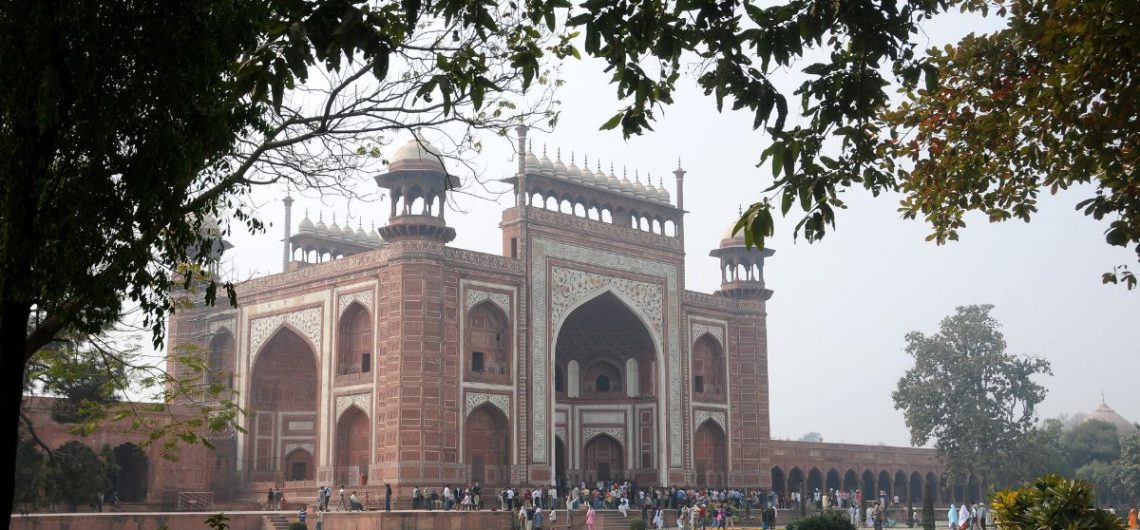
<!-- /wp:list-item -->
<!-- wp:list-item -->
<li>Take your time at the main Darwaza-i-Rauza gateway — the first full view of the Taj Mahal through the arch is worth pausing for.</li>
<!-- /wp:list-item -->
<!-- wp:list-item -->
<li>Spend two to three hours in the gardens, mausoleum and surrounding buildings.</li>
<!-- /wp:list-item -->
<!-- wp:list-item -->
<li>Exit, have lunch, then visit Agra Fort or Itimad-ud-Daulah in the afternoon.</li>
<!-- /wp:list-item --></ol>
<!-- /wp:list -->
<!-- wp:heading {"level":3} -->
<h3 class="wp-block-heading">Plan 3: Afternoon Visitor Arriving from Delhi</h3>
<!-- /wp:heading -->
<!-- wp:list {"ordered":true} -->
<ol class="wp-block-list"><!-- wp:list-item -->
<li>Enter the complex at least 2.5–3 hours before closing time.</li>
<!-- /wp:list-item -->
<!-- wp:list-item -->
<li>Explore the gardens, photograph the Taj Mahal in softening afternoon light, visit the mausoleum.</li>
<!-- /wp:list-item -->
<!-- wp:list-item -->
<li>Exit before closing.</li>
<!-- /wp:list-item -->
<!-- wp:list-item -->
<li>If time permits, visit Mehtab Bagh separately for a view of the Taj Mahal's rear facade from across the Yamuna River. (Mehtab Bagh is a separate site outside the Taj Mahal complex.)</li>
<!-- /wp:list-item --></ol>
<!-- /wp:list -->
<!-- wp:separator -->
<hr class="wp-block-separator has-alpha-channel-opacity"/>
<!-- /wp:separator -->
<!-- wp:heading -->
<h2 class="wp-block-heading">Quick Decision Guide: What Time Should I Visit?</h2>
<!-- /wp:heading -->
<!-- wp:list -->
<ul class="wp-block-list"><!-- wp:list-item -->
<li><strong>Choose opening time</strong> if you want the quietest setting and are comfortable with a very early start.</li>
<!-- /wp:list-item -->
<!-- wp:list-item -->
<li><strong>Choose early morning</strong> if you want the best blend of good light, moderate temperatures and a full day ahead.</li>
<!-- /wp:list-item -->
<!-- wp:list-item -->
<li><strong>Choose mid-morning</strong> if you prefer sleeping in and are visiting during cooler months.</li>
<!-- /wp:list-item -->
<!-- wp:list-item -->
<li><strong>Choose midday</strong> if you are visiting in winter and want the warmest, clearest conditions.</li>
<!-- /wp:list-item -->
<!-- wp:list-item -->
<li><strong>Choose afternoon</strong> if you are arriving in Agra later and want to see the Taj Mahal the same day.</li>
<!-- /wp:list-item -->
<!-- wp:list-item -->
<li><strong>Choose late afternoon</strong> if you want warm, golden light and can plan carefully around the closing time.</li>
<!-- /wp:list-item --></ul>
<!-- /wp:list -->
<!-- wp:separator -->
<hr class="wp-block-separator has-alpha-channel-opacity"/>
<!-- /wp:separator -->
<!-- wp:heading -->
<h2 class="wp-block-heading">Frequently Asked Questions</h2>
<!-- /wp:heading -->
<!-- wp:heading {"level":3} -->
<h3 class="wp-block-heading">What is the best time of day to visit the Taj Mahal?</h3>
<!-- /wp:heading -->
<!-- wp:paragraph {"className":""} -->
<p>Early morning — about one to two hours after gates open — delivers the best experience for most visitors. The light is directional and flattering, temperatures are comfortable, and you retain the rest of the day for Agra sightseeing. Photographers may prefer the first minutes after opening or late afternoon for warmer, more dramatic light.</p>
<!-- /wp:paragraph -->
<!-- wp:heading {"level":3} -->
<h3 class="wp-block-heading">Is the Taj Mahal better at sunrise or sunset?</h3>
<!-- /wp:heading -->
<!-- wp:paragraph {"className":""} -->
<p>Both offer low-angle, warm-toned light. Sunrise brings calmer conditions and a full day ahead. Late afternoon provides golden tones but limits your time inside, since the complex closes 30 minutes before sunset. In winter, afternoon visits avoid the morning fog that is common in Agra.</p>
<!-- /wp:paragraph -->
<!-- wp:heading {"level":3} -->
<h3 class="wp-block-heading">What time should I reach the Taj Mahal in the morning?</h3>
<!-- /wp:heading -->
<!-- wp:paragraph {"className":""} -->
<p>Check the sunrise time for your travel date — the Taj Mahal opens 30 minutes before sunrise. In summer, this can be as early as 5:00 AM; in winter, around 6:30–7:00 AM. Arriving at or shortly before the opening time ensures you enter with the first group.</p>
<!-- /wp:paragraph -->
<!-- wp:heading {"level":3} -->
<h3 class="wp-block-heading">Is early morning less crowded at the Taj Mahal?</h3>
<!-- /wp:heading -->
<!-- wp:paragraph {"className":""} -->
<p>Visitor numbers are generally lower in the first hour after opening and increase through the morning. However, the very first rush at the gates can be busy with sunrise visitors, and conditions vary by day and season.</p>
<!-- /wp:paragraph -->
<!-- wp:heading {"level":3} -->
<h3 class="wp-block-heading">Is midday a good time to visit the Taj Mahal?</h3>
<!-- /wp:heading -->
<!-- wp:paragraph {"className":""} -->
<p>In winter, yes — midday temperatures are mild and the sky is usually clear of fog. In summer, midday heat makes extended outdoor walking difficult. Photography is also more challenging under direct overhead sun.</p>
<!-- /wp:paragraph -->
<!-- wp:heading {"level":3} -->
<h3 class="wp-block-heading">Can you visit the Taj Mahal around sunset?</h3>
<!-- /wp:heading -->
<!-- wp:paragraph {"className":""} -->
<p>You can visit in late afternoon, but the complex closes 30 minutes before sunset. Visitors cannot remain inside to watch the sun set. Always verify current closing times before planning a late arrival.</p>
<!-- /wp:paragraph -->
<!-- wp:heading {"level":3} -->
<h3 class="wp-block-heading">What is the best time for Taj Mahal photography?</h3>
<!-- /wp:heading -->
<!-- wp:paragraph {"className":""} -->
<p>Early morning and late afternoon both deliver low-angle light that brings depth, shadow and warmth to the marble. Most photographers favor early morning for front-lit compositions from the gardens. Late afternoon is preferred for warmer golden tones.</p>
<!-- /wp:paragraph -->
<!-- wp:heading {"level":3} -->
<h3 class="wp-block-heading">What is the best time for families to visit?</h3>
<!-- /wp:heading -->
<!-- wp:paragraph {"className":""} -->
<p>Mid-morning works well for families with children — it avoids a very early alarm and allows a relaxed pace. In summer, shifting to early morning helps avoid the heat.</p>
<!-- /wp:paragraph -->
<!-- wp:heading {"level":3} -->
<h3 class="wp-block-heading">Is the Taj Mahal open on Friday?</h3>
<!-- /wp:heading -->
<!-- wp:paragraph {"className":""} -->
<p>No. The Taj Mahal is closed to general visitors every Friday. Plan your visit for any other day of the week.</p>
<!-- /wp:paragraph -->
<!-- wp:separator -->
<hr class="wp-block-separator has-alpha-channel-opacity"/>
<!-- /wp:separator -->
<!-- wp:heading -->
<h2 class="wp-block-heading">Conclusion</h2>
<!-- /wp:heading -->
<!-- wp:paragraph {"className":""} -->
<p>For most travelers, <strong>early morning</strong> remains the smartest choice — it balances good light, comfortable conditions and practical flexibility for the rest of the day.</p>
<!-- /wp:paragraph -->
<!-- wp:paragraph {"className":""} -->
<p><strong>Photographers</strong> benefit most from arriving at opening time (for sunrise tones) or late afternoon (for warm golden light). <strong>Travelers who prefer a relaxed start</strong> can visit mid-morning or afternoon and still have an excellent experience — just factor in seasonal heat if you are visiting between March and June.</p>
<!-- /wp:paragraph -->
<!-- wp:paragraph {"className":""} -->
<p>The right time is the one that matches your priorities, not a universal rule.</p>
<!-- /wp:paragraph -->
<!-- wp:paragraph {"className":""} -->
<p><strong>Planning your Taj Mahal timing?</strong> Taj Adventure Holidays organizes private tours from Delhi timed to match your preferred visit window — whether that means a pre-dawn departure for sunrise or a comfortable morning start. Browse our <a href="https://www.tajadventureholidays.com/taj-mahal-tour-packages-from-delhi/">Taj Mahal tour packages from Delhi</a> and choose a schedule that fits your trip.</p>
<!-- /wp:paragraph -->
The single decision that shapes your entire Taj Mahal experience more than any other is what time of day you walk through those gates. Early morning — roughly one to two hours after the complex opens — gives most first-time visitors the strongest combination of pleasant light, manageable temperatures and unhurried exploration time. But that recommendation shifts depending on who you are. A photographer wants different light than a family with young children. A winter traveler faces different conditions than someone visiting in May. And a day-tripper arriving from Delhi at noon has a completely different set of options than someone staying overnight in Agra. This article breaks down the Taj Mahal experience hour by hour, from opening through late afternoon, so you can match the right time slot to your travel style.
Quick Answer: What Is the Best Time of Day to Visit the Taj Mahal?
For most visitors, early morning is the best time of day to visit the Taj Mahal. Arriving roughly one hour after the gates open gives you pleasant directional light for photography, cooler temperatures during warm months, and a calmer atmosphere compared to later in the day. That said, the ideal hour depends on your priorities — photographers often prefer the very first minutes after opening or the final hours before closing, while families and winter visitors may be better off arriving mid-morning.
Time of Day
Light Quality
Atmosphere
Temperature
Ideal For
Key Drawback
Opening / Sunrise
Low, golden, rapidly changing
Quiet, atmospheric
Cool to cold
Photographers, sunrise seekers
Requires a very early start; fog risk in winter
Early Morning
Soft, directional, warm
Calm, comfortable pace
Pleasant across seasons
First-time visitors, couples
Still an early alarm
Mid-Morning
Bright, even illumination
Active but manageable
Warm in summer, pleasant otherwise
Families, relaxed travelers
Less dramatic for photography
Late Morning
Strong, increasingly overhead
Fully busy
Heating up in summer
Flexible itineraries
Approaching midday heat
Midday
Direct overhead, harsh
Peak activity
Hot in summer, mild in winter
Winter travelers, schedule-bound visitors
Flat photography light, summer heat
Afternoon
Gradually softening
Moderate, steady
Still warm, beginning to ease
Visitors arriving from Delhi after noon
Less remaining time before closing
Late Afternoon
Warm, golden, lower angle
Can feel time-pressured
Cooling down
Warm-light photographers, experienced visitors
Closing time constraint
Why Does the Time of Day Matter at the Taj Mahal?
The Taj Mahal is built from white Makrana marble — and this marble responds dramatically to sunlight. It is not one color throughout the day. In early morning, the stone can take on cream, pale amber or soft pink tones depending on the sky. At midday, it appears brilliant white. In late afternoon, warmer tones return.
Beyond the marble’s appearance, several practical realities shift as the hours pass:
Sunlight angle. Low-angle light (morning and late afternoon) creates depth and shadow on the carved surfaces. Overhead sun flattens those details.
Heat. Agra summers regularly push past 40°C (104°F) by midday. An early or late visit avoids the worst of it.
Visitor flow. The complex tends to be calmer right after opening. Activity increases through mid-morning and remains steady into the afternoon.
Remaining sightseeing time. Starting early at the Taj Mahal leaves the rest of your day free for Agra Fort, Mehtab Bagh or local markets. A late visit means limited daylight afterward.
What Is the Taj Mahal Like Right After Opening?
The Taj Mahal opens 30 minutes before sunrise — this is not a fixed clock time. During summer months, the gates may open as early as around 5:00 AM; in the depths of winter, closer to 6:30 or 7:00 AM. The complex is closed to general visitors every Friday.
Arriving at or just before the gates open puts you inside during the most atmospheric conditions of the day. The light is low, shifting and often golden. The marble takes on subtle color variations that disappear within an hour or two. For anyone focused on photography, these first 30 to 60 minutes are hard to replicate at any other time.
If you are specifically planning a sunrise visit, you will find a detailed breakdown in our Taj Mahal sunrise tour guide.
Winter caution: December and January mornings in Agra frequently bring dense fog. On some days, visibility at the Taj Mahal may be severely limited until mid-morning.
Is Early Morning the Best Overall Time to Visit?
For the majority of travelers — yes. The window roughly 60 to 120 minutes after opening delivers the best practical compromise. The initial entrance rush has eased, the sunlight is still directional and warm-toned, and temperatures have not yet climbed.
This is the period where first-time visitors tend to have the most enjoyable experience. There is enough time to walk the Charbagh gardens, take photos at the reflecting pool, explore the main mausoleum interior and study the pietra dura inlay work — all without feeling hurried.
An early morning visit also gives you a logical day structure. After spending two to three hours at the Taj Mahal, you can move on to Agra Fort, grab lunch near the old city, or head to other sites.
What Is a Mid-Morning Visit Like?
By mid-morning, the sun has climbed higher and the light is brighter, more even and less directional. The marble appears closer to its iconic bright white. This lighting may be less cinematic for photography, but it actually highlights the Taj Mahal’s architectural detail — the geometric patterns on the minarets, the calligraphy panels framing the main arch, and the precision of the marble inlay become easier to see and appreciate.
The complex is more active by this point, but mid-morning is far from unpleasant. Families, older travelers and anyone who values a later start over golden-hour photos will find mid-morning a sensible choice. During the cooler months (October through February), temperatures at this hour are often ideal for extended outdoor walking.
Should You Visit the Taj Mahal Around Midday?
Midday is not the first choice for most visitors — and there are real reasons for that. The sun is directly overhead, creating flat, high-contrast light that washes out architectural details in photographs. During Agra’s hot season (March through June), standing on sun-heated marble and stone platforms at noon is genuinely uncomfortable.
However, midday has its place. In winter, midday temperatures in Agra are pleasant — often between 18°C and 24°C — and the overhead light, while not dramatic, provides clear, even illumination. If your train from Delhi arrives late in the morning, heading directly to the Taj Mahal around noon may make more sense than waiting for late afternoon. Check our Taj Mahal visiting time guide for current seasonal hours.
Is Afternoon a Good Time to Visit?
The early-to-mid afternoon period — roughly 1:00 PM to 3:30 PM — is a transitional window. Temperatures remain elevated in warm months, but the light begins to angle slightly, adding dimension back to the marble surfaces.
Afternoon suits travelers on a compressed schedule — particularly those arriving in Agra after a morning train or drive from Delhi and heading straight to the Taj Mahal. You still have enough time for a complete visit, and the experience, while different from sunrise, is still worthwhile. Not every visit needs to be at golden hour to be memorable.
What About Late Afternoon?
As the sun drops lower toward the western horizon, the light turns warmer and more golden. Shadows lengthen across the gardens. The marble can appear to glow with a soft amber quality that photographs beautifully.
For photographers who prefer warm-toned images and missed the early morning slot, late afternoon offers a genuine alternative.
Critical detail: The Taj Mahal closes 30 minutes before sunset — not at sunset. You will not be allowed to remain inside to watch the sun go down. Since closing time shifts with the season, always verify the current schedule before planning a late visit. If you are not sure about current hours, our complete visiting time guide has up-to-date information.
Allow yourself at least two and a half to three hours before closing time to avoid a rushed experience.
Sunrise vs Late Afternoon: Side-by-Side Comparison
Factor
Sunrise / Early Morning
Late Afternoon
Light character
Cool, soft, fast-changing
Warm, golden, gradual
Temperature
Cool (cold in winter)
Warmer, easing toward evening
Photography style
Classic front-lit compositions
Warm side-lit and back-lit options
Schedule convenience
Requires very early start
Fits a later travel schedule
Visitor density
Typically calmer at first entry
Steady; time pressure near closing
Winter factor
Fog and haze risk
Fog usually cleared by afternoon
Remaining day
Full day of sightseeing ahead
Limited daylight after exit
Best for
Dedicated photographers, early risers, overnight visitors
Day-trippers, warm-light seekers, late arrivals
There is no universally “better” option. Choose based on what matters most to you.
Best Time of Day for Taj Mahal Photography
Early morning: Soft directional light produces depth and subtle marble tones. The reflecting pool can create mirror-like images when the air is still. This is the time most serious photographers prioritize.
Midday: Maximum brightness, but flat and high-contrast. Generally the least favored for artistic photography.
Late afternoon: Warm golden light with longer shadows. The marble can appear amber-toned. A strong alternative for photographers with afternoon-only access.
Weather, haze and cloud cover are unpredictable — no specific time guarantees perfect results. For the best photography spots regardless of time, see our Taj Mahal photography guide.
Which Time Suits Your Travel Style?
Traveler Type
Recommended Time
Reason
First-time visitor
Early morning
Best all-around experience: light, temperature, time
Photographer
Opening time or late afternoon
Low-angle light for dramatic, layered images
Couple
Early morning
Quieter atmosphere, strong photo opportunities
Family with children
Mid-morning
No extreme early start; comfortable pace
Senior traveler
Mid-morning (winter) / early morning (summer)
Avoids extremes of heat and cold
Summer visitor (April–June)
Opening time or early morning
Escape the worst heat
Winter visitor (Nov–Feb)
Mid-morning to early afternoon
Fog has usually cleared; temperatures are mild
Same-day visitor from Delhi
Based on arrival time
If arriving by mid-morning, enter promptly; if after noon, go in the afternoon
Staying overnight in Agra
Early morning
Full Taj Mahal experience plus Agra Fort afterward
Prefer not to wake early
Mid-morning or afternoon
Still an excellent visit, just different light
How Season Changes the Best Time of Day
This is not a seasonal planning guide — only a note on how season shifts the best hour.
Summer (April–June): Go as early as possible. Heat builds rapidly after 9:00 AM.
Winter (November–February): Early morning fog can limit visibility. Mid-morning to early afternoon often provides the best combination of clear skies and comfortable temperatures.
Monsoon (July–September): Overcast skies can produce soft, even light at any hour. Rain is unpredictable.
Pleasant months (October, March): Maximum flexibility. Almost any time of day works well.
How Early Should You Arrive at the Gate?
Look up the current opening time. The Taj Mahal opens 30 minutes before sunrise, which changes daily. Check an Agra sunrise calendar for your specific date.
Budget time for security. Every visitor passes through security screening. Travel light — large bags, tripods and food items are generally not permitted inside.
Account for transportation. If your hotel or drop-off point is not within walking distance of the East Gate or West Gate, add travel and walking time to your plan.
3 Sample Timing Plans
Plan 1: Early-Morning Photographer
Reach the entry gate area before the official opening time.
Enter as soon as gates open. Walk directly to the central water channel for the classic reflected view.
Spend the first 60–90 minutes at key viewpoints while the light is low and shifting.
Explore the mausoleum interior and flanking mosque.
Exit and continue to Agra Fort by mid-morning.
Plan 2: Relaxed First-Time Visitor
Arrive approximately one to two hours after opening.
Take your time at the main Darwaza-i-Rauza gateway — the first full view of the Taj Mahal through the arch is worth pausing for.
Spend two to three hours in the gardens, mausoleum and surrounding buildings.
Exit, have lunch, then visit Agra Fort or Itimad-ud-Daulah in the afternoon.
Plan 3: Afternoon Visitor Arriving from Delhi
Enter the complex at least 2.5–3 hours before closing time.
Explore the gardens, photograph the Taj Mahal in softening afternoon light, visit the mausoleum.
Exit before closing.
If time permits, visit Mehtab Bagh separately for a view of the Taj Mahal’s rear facade from across the Yamuna River. (Mehtab Bagh is a separate site outside the Taj Mahal complex.)
Quick Decision Guide: What Time Should I Visit?
Choose opening time if you want the quietest setting and are comfortable with a very early start.
Choose early morning if you want the best blend of good light, moderate temperatures and a full day ahead.
Choose mid-morning if you prefer sleeping in and are visiting during cooler months.
Choose midday if you are visiting in winter and want the warmest, clearest conditions.
Choose afternoon if you are arriving in Agra later and want to see the Taj Mahal the same day.
Choose late afternoon if you want warm, golden light and can plan carefully around the closing time.
Frequently Asked Questions
What is the best time of day to visit the Taj Mahal?
Early morning — about one to two hours after gates open — delivers the best experience for most visitors. The light is directional and flattering, temperatures are comfortable, and you retain the rest of the day for Agra sightseeing. Photographers may prefer the first minutes after opening or late afternoon for warmer, more dramatic light.
Is the Taj Mahal better at sunrise or sunset?
Both offer low-angle, warm-toned light. Sunrise brings calmer conditions and a full day ahead. Late afternoon provides golden tones but limits your time inside, since the complex closes 30 minutes before sunset. In winter, afternoon visits avoid the morning fog that is common in Agra.
What time should I reach the Taj Mahal in the morning?
Check the sunrise time for your travel date — the Taj Mahal opens 30 minutes before sunrise. In summer, this can be as early as 5:00 AM; in winter, around 6:30–7:00 AM. Arriving at or shortly before the opening time ensures you enter with the first group.
Is early morning less crowded at the Taj Mahal?
Visitor numbers are generally lower in the first hour after opening and increase through the morning. However, the very first rush at the gates can be busy with sunrise visitors, and conditions vary by day and season.
Is midday a good time to visit the Taj Mahal?
In winter, yes — midday temperatures are mild and the sky is usually clear of fog. In summer, midday heat makes extended outdoor walking difficult. Photography is also more challenging under direct overhead sun.
Can you visit the Taj Mahal around sunset?
You can visit in late afternoon, but the complex closes 30 minutes before sunset. Visitors cannot remain inside to watch the sun set. Always verify current closing times before planning a late arrival.
What is the best time for Taj Mahal photography?
Early morning and late afternoon both deliver low-angle light that brings depth, shadow and warmth to the marble. Most photographers favor early morning for front-lit compositions from the gardens. Late afternoon is preferred for warmer golden tones.
What is the best time for families to visit?
Mid-morning works well for families with children — it avoids a very early alarm and allows a relaxed pace. In summer, shifting to early morning helps avoid the heat.
Is the Taj Mahal open on Friday?
No. The Taj Mahal is closed to general visitors every Friday. Plan your visit for any other day of the week.
Conclusion
For most travelers, early morning remains the smartest choice — it balances good light, comfortable conditions and practical flexibility for the rest of the day.
Photographers benefit most from arriving at opening time (for sunrise tones) or late afternoon (for warm golden light). Travelers who prefer a relaxed start can visit mid-morning or afternoon and still have an excellent experience — just factor in seasonal heat if you are visiting between March and June.
The right time is the one that matches your priorities, not a universal rule.
Planning your Taj Mahal timing? Taj Adventure Holidays organizes private tours from Delhi timed to match your preferred visit window — whether that means a pre-dawn departure for sunrise or a comfortable morning start. Browse our Taj Mahal tour packages from Delhi and choose a schedule that fits your trip.
<!-- wp:paragraph -->
<p><strong>Quick Answer:</strong> Commissioned in 1631 by Mughal Emperor Shah Jahan to enshrine his empress Mumtaz Mahal, the Taj Mahal in Agra is a global benchmark of classical Mughal architecture. Built between 1631 and 1653 with Makrana marble under chief architect Ustad Ahmad Lahori, this <a href="https://whc.unesco.org/en/list/252/">UNESCO World Heritage Centre</a> site embodies strict bilateral symmetry, theological allegories of Paradise, and revolutionary double-dome engineering.</p>
<!-- /wp:paragraph -->
<!-- wp:heading -->
<h2 class="wp-block-heading"><strong>1. The Jewel of Indo-Islamic Architecture</strong></h2>
<!-- /wp:heading -->
<!-- wp:paragraph -->
<p>Few monuments in human history rival the enduring fascination of the Taj Mahal. Located on the southern bend of the Yamuna River in Agra, Uttar Pradesh, this seventeenth-century mausoleum represents the apex of the Mughal architectural renaissance. Designated a UNESCO World Heritage Site in 1983, it is celebrated as an unrivaled masterpiece of architectural proportion, structural poise, and decorative refinement.</p>
<!-- /wp:paragraph -->
<!-- wp:paragraph -->
<p>While commonly romanticized as a solitary monument of devotion, historical records maintained by the <a href="https://asi.nic.in/pages/WorldHeritageAgra">Archaeological Survey of India</a> and contemporary chronicles demonstrate that the complex was conceived as a vast imperial sanctuary. It combined sacred funerary architecture, hydraulic engineering, commercial bazaars, and theological symbolism into a unified aesthetic statement.</p>
<!-- /wp:paragraph -->
<!-- wp:heading -->
<h2 class="wp-block-heading"><strong>2. The Human Drama: Mumtaz Mahal, Shah Jahan, and Imperial Grief</strong></h2>
<!-- /wp:heading -->
<!-- wp:paragraph -->
<p>The origins of the Taj Mahal lie in the royal romance and political partnership of Prince Khurram (who assumed the throne in 1628 as Emperor Shah Jahan) and Arjumand Banu Begum (bestowed the title Mumtaz Mahal). Married in 1612, Mumtaz Mahal was not merely an imperial consort; she was a trusted political advisor, custodian of the royal seal (<em>Muhr-i Uzk</em>), and companion during prolonged imperial campaigns.</p>
<!-- /wp:paragraph -->
<!-- wp:paragraph -->
<p>In June 1631, while accompanying the Emperor on a southern military expedition to the Deccan, Mumtaz Mahal died at age 38 in the city of Burhanpur due to severe complications during the birth of their fourteenth child, Gauhar Ara Begum. Contemporary Mughal historians, such as Abdul Hamid Lahori in the <em>Padshahnama</em>, describe the Emperor's profound sorrow: he renounced courtly luxuries, donned simple white mourning garments, and ordered the conception of a tomb without equal.</p>
<!-- /wp:paragraph -->
<!-- wp:paragraph -->
<p>Her body was temporarily interred in Burhanpur's Zainabad garden before being transported to Agra in December 1631. There, Shah Jahan secured a prime riverside estate from Raja Jai Singh of Amber, setting the stage for construction to begin.</p>
<!-- /wp:paragraph -->
<!-- wp:heading -->
<h2 class="wp-block-heading"><strong>3. Construction Timeline: From River Foundations to Completion (1631–1653)</strong></h2>
<!-- /wp:heading -->
<!-- wp:paragraph -->
<p>Erecting a monumental stone structure on a dynamic riverbank presented immense engineering hurdles. The construction unfolded over two decades in carefully managed logistical stages:</p>
<!-- /wp:paragraph -->
<!-- wp:table -->
<figure class="wp-block-table"><table class="has-fixed-layout"><thead><tr><th><strong>Milestone Period</strong></th><th><strong>Structural Objective</strong></th><th><strong>Historical & Engineering Execution</strong> </th></tr></thead><tbody><tr><td><strong>1631–1632</strong></td><td>Hydraulic & Well Foundation</td><td>Deep wells were excavated down to hard clay, cased in timber, and filled with rubble masonry to create an earthquake-resistant foundation.</td></tr><tr><td><strong>1632–1638</strong></td><td>Plinth & Core Superstructure</td><td>Construction of the red sandstone riverfront terrace and primary brick masonry core, followed by initial marble cladding.</td></tr><tr><td><strong>1638–1643</strong></td><td>Dome, Minarets & Mausoleum</td><td>Erection of the bulbous double dome, four minarets, and interior cenotaph chamber; commemorated during the twelfth Urs ceremony in 1643.</td></tr><tr><td><strong>1643–1648</strong></td><td>Great Gate & Subsidiary Buildings</td><td>Completion of the sandstone Mosque, the matching Jawab, and the Darwaza-i Rauza (inscribed with completion year 1648 / 1057 AH).</td></tr><tr><td><strong>1648–1653</strong></td><td>Forecourt, Gardens & Bazaars</td><td>Final grading of the Charbagh garden, completion of the Jilaukhana courtyard, caravanserai, and bazaar arcades generating endowment revenues.</td></tr></tbody></table></figure>
<!-- /wp:table -->
<!-- wp:paragraph -->
<p>According to royal expenditure registers, the core mausoleum consumed over 5 million contemporary silver rupees, while the entire complex was valued between 32 and 41 million rupees upon completion.</p>
<!-- /wp:paragraph -->
<!-- wp:heading -->
<h2 class="wp-block-heading"><strong>4. The Masterminds: Ustad Ahmad Lahori and the Guild of Artisans</strong></h2>
<!-- /wp:heading -->
<!-- wp:paragraph -->
<p>Rather than crediting a solitary architect, Mughal history reveals that the monument was designed by an imperial collaborative council of specialists, overseen directly by Shah Jahan:</p>
<!-- /wp:paragraph -->
<!-- wp:list -->
<ul class="wp-block-list"><!-- wp:list-item -->
<li><strong>Ustad Ahmad Lahori (Ahmad al-Mi'mar Lahori):</strong> Cited in the contemporary work <em>Diwan-i-Muhandis</em> by his mathematician son Lutfullah, Lahori was the chief architect and geometrician of both the Taj Mahal and the Red Fort in Delhi. His profound grasp of Euclidean geometry and Persianate masonry established the monument's dimensional harmony.</li>
<!-- /wp:list-item -->
<!-- wp:list-item -->
<li><strong>Amanat Khan Shirazi (Abd ul-Haq):</strong> The master calligrapher from Shiraz who personally curated the Quranic inscriptions and supervised their marble inlay. He was granted the rare privilege of signing his name upon the monument's portals.</li>
<!-- /wp:list-item -->
<!-- wp:list-item -->
<li><strong>Mir Abd-ul-Karim and Makramat Khan:</strong> Senior imperial administrators who directed logistical operations, material transport corridors, and fiscal accounts.</li>
<!-- /wp:list-item -->
<!-- wp:list-item -->
<li><strong>Ismail Khan (Ismail Afandi):</strong> An Ottoman engineering specialist who directed the assembly of the soaring double dome.</li>
<!-- /wp:list-item -->
<!-- wp:list-item -->
<li><strong>Chiranji Lal:</strong> A master lapidary from Delhi who directed the complex stone-inlay workshops.</li>
<!-- /wp:list-item --></ul>
<!-- /wp:list -->
<!-- wp:paragraph -->
<p>Scholarly research, such as that by <a href="https://books.google.com/books/about/The_Complete_Taj_Mahal.html?id=XdRwQgAACAAJ">Ebba Koch in The Complete Taj Mahal</a>, has established that seventeenth-century rumors attributing the monument to Italian jeweler Geronimo Veroneo lack any grounding in architectural style or contemporary Mughal records.</p>
<!-- /wp:paragraph -->
<!-- wp:heading -->
<h2 class="wp-block-heading"><strong>5. Sacred Geometry & Spatial Harmony: The Riverfront Master Plan</strong></h2>
<!-- /wp:heading -->
<!-- wp:paragraph -->
<p>The architectural genius of the Taj Mahal is grounded in strict bilateral symmetry and modular geometric proportioning. The plan is organized along a north-south axis, where every architectural element finds its exact spatial twin.</p>
<!-- /wp:paragraph -->
<!-- wp:table -->
<figure class="wp-block-table"><table class="has-fixed-layout"><thead><tr><th colspan="3"><strong>North: Yamuna River Terrace</strong> </th></tr></thead><tbody><tr><td><strong>Sandstone Mosque (West)</strong></td><td><strong>White Marble Mausoleum</strong></td><td><strong>Sandstone Jawab (East)</strong></td></tr><tr><td colspan="3"><strong>Four-Part Charbagh Garden</strong>Four Quadrants • Paved Walkways • Central Marble Reflecting Pool</td></tr><tr><td colspan="3"><strong>Darwaza-i Rauza (Great Entrance Gateway)</strong></td></tr><tr><td colspan="3"><strong>Jilaukhana Forecourt & Outer Bazaars (South)</strong></td></tr></tbody></table></figure>
<!-- /wp:table -->
<!-- wp:heading {"level":3} -->
<h3 class="wp-block-heading"><strong>The Riverfront Terrace Variant</strong></h3>
<!-- /wp:heading -->
<!-- wp:paragraph -->
<p>Traditional Mughal mausoleums (like Humayun’s Tomb in Delhi) placed the tomb in the geometric center of a square garden. At Agra, Shah Jahan broke with convention by setting the mausoleum on a raised river terrace at the garden's northern edge. This riverfront orientation transformed the monument into a dynamic focal point that captured natural water breezes and cast brilliant reflections across both the garden pool and the Yamuna River.</p>
<!-- /wp:paragraph -->
<!-- wp:heading {"level":3} -->
<h3 class="wp-block-heading"><strong>The Hasht Bihisht (Eight Paradises) Floor Plan</strong></h3>
<!-- /wp:heading -->
<!-- wp:paragraph -->
<p>The interior follows the ancient Persian <em>Hasht Bihisht</em> scheme: an octagonal central hall holding the royal cenotaphs is encircled by eight interconnected secondary rooms spread across two levels. This nine-fold plan creates smooth acoustic resonance and enables the solemn ritual of circumambulation (<em>tawaf</em>).</p>
<!-- /wp:paragraph -->
<!-- wp:heading -->
<h2 class="wp-block-heading"><strong>6. Geological Sourcing: Marbles, Sandstones, and Gemstones of Asia</strong></h2>
<!-- /wp:heading -->
<!-- wp:paragraph -->
<p>The materials incorporated into the Taj Mahal were secured across thousands of kilometers through imperial supply chains:</p>
<!-- /wp:paragraph -->
<!-- wp:table -->
<figure class="wp-block-table"><table class="has-fixed-layout"><thead><tr><th><strong>Material</strong></th><th><strong>Geographic Origin</strong></th><th><strong>Structural & Aesthetic Role</strong> </th></tr></thead><tbody><tr><td><strong>White Makrana Marble</strong></td><td>Makrana, Rajasthan</td><td>Pristine outer facade, minarets, central dome, and inner ornamental screens.</td></tr><tr><td><strong>Red Sandstone</strong></td><td>Fatehpur Sikri & Tantpur</td><td>Supporting terrace plinth, Mosque, Jawab, Great Gate, and perimeter walls.</td></tr><tr><td><strong>Lapis Lazuli</strong></td><td>Badakhshan, Afghanistan</td><td>Deep azure petals and floral highlights in stone inlays.</td></tr><tr><td><strong>Jade & Nephrite</strong></td><td>Kashgar, Central Asia / China</td><td>Foliage, leaves, and intricate botanical stems.</td></tr><tr><td><strong>Carnelian & Agate</strong></td><td>Yemen & Khambhat, Gujarat</td><td>Luminescent orange and crimson floral centers.</td></tr><tr><td><strong>Turquoise & Malachite</strong></td><td>Tibet & Russia / Central Asia</td><td>Cyan accents and dark banded foliage.</td></tr></tbody></table></figure>
<!-- /wp:table -->
<!-- wp:paragraph -->
<p>Dense, translucent Makrana marble was quarried over 300 kilometers away and hauled to Agra by vast teams of bullock carts and specially built flat-bottomed river barges.</p>
<!-- /wp:paragraph -->
<!-- wp:heading -->
<h2 class="wp-block-heading"><strong>7. Lapidary Mastery: The Secret Art of Parchin Kari</strong></h2>
<!-- /wp:heading -->
<!-- wp:image {"id":2219,"width":"1999px","height":"auto","aspectRatio":"1.3326666666666667","sizeSlug":"large","linkDestination":"none"} -->
<figure class="wp-block-image size-large is-resized"><img src="https://www.tajadventureholidays.com/wp-content/uploads/2026/09/image-1-1024x768.jpeg" alt="Carved white marble dado panel with intricate pietra dura floral inlay inside the Taj Mahal" class="wp-image-2219" style="aspect-ratio:1.3326666666666667;width:1999px;height:auto"/></figure>
<!-- /wp:image -->
<!-- wp:paragraph -->
<p><em>Figure 2: Intricate bas-relief marble carving and semi-precious stone inlay on the lower dado panels.</em></p>
<!-- /wp:paragraph -->
<!-- wp:paragraph -->
<p>The hallmark of Taj Mahal ornamentation is <em>Parchin Kari</em> (stone inlay). In this technique, shallow beds were carved with micron-level precision into white marble slabs. Semi-precious stones were cut into delicate petal and leaf shapes using wire bow-drills and abrasive emery powders, glued into place with organic resin cements, and buffed flush with the marble surface.</p>
<!-- /wp:paragraph -->
<!-- wp:paragraph -->
<p>Surrounding the royal cenotaphs is an octagonal <em>jali</em> screen, carved out of single blocks of solid white marble into delicate lace-like geometric openwork. This screen diffuses natural sunlight and ensures sacred privacy for the cenotaphs while allowing airflow throughout the burial hall.</p>
<!-- /wp:paragraph -->
<!-- wp:heading -->
<h2 class="wp-block-heading"><strong>8. Engineering Feats: Double Dome, Cantilevered Struts, and Tilted Minarets</strong></h2>
<!-- /wp:heading -->
<!-- wp:image {"id":2221,"sizeSlug":"large","linkDestination":"none"} -->
<figure class="wp-block-image size-large"><img src="https://www.tajadventureholidays.com/wp-content/uploads/2026/09/Eastern_wall_and_minaret_of_the_Tomb_at_the_Taj_Mahal_India_2013-03_11551663925-683x1024.jpg" alt="Detail of the eastern wall and towering minaret of the Taj Mahal" class="wp-image-2221"/></figure>
<!-- /wp:image -->
<!-- wp:paragraph -->
<p><em>Figure 3: Detail of the eastern marble wall and three-storeyed minaret, engineered with a deliberate outward cant.</em></p>
<!-- /wp:paragraph -->
<!-- wp:paragraph -->
<p>The structural longevity of the Taj Mahal relies on sophisticated engineering solutions:</p>
<!-- /wp:paragraph -->
<!-- wp:list {"ordered":true} -->
<ol class="wp-block-list"><!-- wp:list-item -->
<li><strong>The Double-Dome Design:</strong> The soaring exterior bulbous dome (*amrud*) rises 35 meters, while an inner hemispherical dome sits lower inside the chamber. The 25-meter hollow void between them is braced by hidden radial masonry struts, allowing the exterior to command the city skyline while preventing the interior burial space from feeling hollow or cavernous.</li>
<!-- /wp:list-item -->
<!-- wp:list-item -->
<li><strong>Outward-Tilted Minarets:</strong> The four 40-meter-tall corner minarets were deliberately erected with a subtle outward inclination of a fraction of a degree. This design choice fulfilled two crucial purposes:</li>
<!-- /wp:list-item --></ol>
<!-- /wp:list -->
<!-- wp:list -->
<ul class="wp-block-list"><!-- wp:list-item -->
<li><strong>Visual Correction:</strong> It neutralizes the optical illusion that makes tall, parallel vertical towers appear to pinch inward toward a central dome when observed from the base.</li>
<!-- /wp:list-item -->
<!-- wp:list-item -->
<li><strong>Earthquake Defense:</strong> In the event of catastrophic seismic shock, the minarets are calculated to collapse outward into the gardens rather than crashing inward upon the central tomb.</li>
<!-- /wp:list-item --></ul>
<!-- /wp:list -->
<!-- wp:heading -->
<h2 class="wp-block-heading"><strong>9. Sacred Epigraphy: Quranic Narrative and Visual Perspective</strong></h2>
<!-- /wp:heading -->
<!-- wp:paragraph -->
<p>The calligraphic inscriptions on the Taj Mahal are a structured theological narrative designed by Amanat Khan Shirazi. Inscribed in black marble inlaid into white marble frames, the chosen surahs focus upon the Day of Judgment, Divine Mercy, and Paradise:</p>
<!-- /wp:paragraph -->
<!-- wp:list -->
<ul class="wp-block-list"><!-- wp:list-item -->
<li><strong>Great Entrance Gateway:</strong> Features Surah 89 (<em>Al-Fajr</em>), inviting the righteous soul into celestial gardens.</li>
<!-- /wp:list-item -->
<!-- wp:list-item -->
<li><strong>Mausoleum Portals:</strong> Inscribed with Surah 36 (<em>Ya-Sin</em>), Surah 67 (<em>Al-Mulk</em>), Surah 48 (<em>Al-Fath</em>), and Surah 98 (<em>Al-Bayyina</em>).</li>
<!-- /wp:list-item -->
<!-- wp:list-item -->
<li><strong>Interior Cenotaphs:</strong> Adorned with the Ninety-Nine Beautiful Names of God (<em>Asma al-Husna</em>).</li>
<!-- /wp:list-item --></ul>
<!-- /wp:list -->
<!-- wp:paragraph -->
<p><strong>Optical Perspective Correction:</strong> Amanat Khan calculated the visual foreshortening effect on tall portals. The lettering at the upper apex (25 meters above the ground) is carved significantly larger than the lettering at eye level, ensuring that the script appears perfectly uniform to a viewer standing on the terrace.</p>
<!-- /wp:paragraph -->
<!-- wp:heading -->
<h2 class="wp-block-heading"><strong>10. The Paradise Garden: Hydraulics, Canals, and the Reflecting Pool</strong></h2>
<!-- /wp:heading -->
<!-- wp:paragraph -->
<p>The 300-meter-square Charbagh represents the Islamic paradise (*Bihisht*), divided into four equal quadrants by intersecting water canals that represent the four rivers of Paradise. Water was drawn from the Yamuna River using an elaborate system of animal-powered waterwheels (*rahats*), stored in elevated aqueducts, and pressurized through terracotta conduits to feed copper fountain heads simultaneously.</p>
<!-- /wp:paragraph -->
<!-- wp:paragraph -->
<p>At the center of the garden sits the raised marble lotus tank (*Al-Hawd al-Kawthar* / Pool of Abundance), positioned to capture the pristine reflection of the white marble dome across its calm surface.</p>
<!-- /wp:paragraph -->
<!-- wp:heading -->
<h2 class="wp-block-heading"><strong>11. The Complete Sanctuary: Mosque, Jawab, and Outer Forecourts</strong></h2>
<!-- /wp:heading -->
<!-- wp:image {"id":2222,"sizeSlug":"full","linkDestination":"none"} -->
<figure class="wp-block-image size-full"><img src="https://www.tajadventureholidays.com/wp-content/uploads/2026/09/1920s_detail_Agra_-_Mosque_near_Taj_Mahal_LCCN2014714082_cropped.tif.jpg" alt="Historic view of the red sandstone Mosque on the western terrace of the Taj Mahal" class="wp-image-2222"/></figure>
<!-- /wp:image -->
<!-- wp:paragraph -->
<p><em>Figure 4: The three-domed red sandstone Mosque on the western flank of the terrace, oriented toward Mecca.</em></p>
<!-- /wp:paragraph -->
<!-- wp:paragraph -->
<p>The Taj Mahal is not a standalone tomb, but the central element of an integrated architectural ensemble:</p>
<!-- /wp:paragraph -->
<!-- wp:list -->
<ul class="wp-block-list"><!-- wp:list-item -->
<li><strong>The Mosque (Masjid):</strong> Positioned on the western side of the riverfront terrace facing Mecca, built of red sandstone with three white marble domes.</li>
<!-- /wp:list-item -->
<!-- wp:list-item -->
<li><strong>The Jawab (Assembly Hall):</strong> Built on the eastern side to mirror the mosque's exterior facade identically, preserving bilateral balance while historically functioning as a guesthouse.</li>
<!-- /wp:list-item -->
<!-- wp:list-item -->
<li><strong>Darwaza-i Rauza (The Great Gate):</strong> The monumental southern entrance made of red sandstone with white marble trim, topped by 22 domed kiosks (*chhatris*).</li>
<!-- /wp:list-item -->
<!-- wp:list-item -->
<li><strong>Jilaukhana (Forecourt):</strong> An outer transitional courtyard where dignitaries dismounted, flanked by subsidiary royal tombs (*Saheli Burj*) and bazaar quarters whose market taxes supported the monument's upkeep (*waqf*).</li>
<!-- /wp:list-item --></ul>
<!-- /wp:list -->
<!-- wp:heading -->
<h2 class="wp-block-heading"><strong>12. The Architectural Lineage: From Humayun’s Tomb to the Taj Mahal</strong></h2>
<!-- /wp:heading -->
<!-- wp:paragraph -->
<p>The Taj Mahal represents the culmination of a century of Mughal architectural development:</p>
<!-- /wp:paragraph -->
<!-- wp:list {"ordered":true} -->
<ol class="wp-block-list"><!-- wp:list-item -->
<li><strong>Humayun’s Tomb, Delhi (1570):</strong> Introduced the Persian double dome, monumental *iwan*, and four-fold *charbagh* to the subcontinent.</li>
<!-- /wp:list-item -->
<!-- wp:list-item -->
<li><strong>Fatehpur Sikri (1571–1585):</strong> Synthesized indigenous Indian trabeate stone carving and Gujarati brackets with Islamic arched architecture under Akbar.</li>
<!-- /wp:list-item -->
<!-- wp:list-item -->
<li><strong>Tomb of Itimad-ud-Daulah, Agra (1628):</strong> Commissioned by Empress Nur Jahan, pioneering the shift from red sandstone to white marble and introducing intricate stone inlay (*parchin kari*).</li>
<!-- /wp:list-item -->
<!-- wp:list-item -->
<li><strong>The Taj Mahal (1631–1653):</strong> Reached the apex of classical refinement, harmonizing monumental scale, pure white Makrana marble, and rigorous mathematical proportion.</li>
<!-- /wp:list-item --></ol>
<!-- /wp:list -->
<!-- wp:heading -->
<h2 class="wp-block-heading"><strong>13. Historical Transitions: Plunder, Neglect, and Colonial Restorations</strong></h2>
<!-- /wp:heading -->
<!-- wp:image {"id":2218,"width":"1999px","height":"auto","aspectRatio":"1.776888888888889","sizeSlug":"large","linkDestination":"none"} -->
<figure class="wp-block-image size-large is-resized"><img src="https://www.tajadventureholidays.com/wp-content/uploads/2026/09/image-1024x576.jpeg" alt="The quiet lower burial crypt of Shah Jahan and Mumtaz Mahal" class="wp-image-2218" style="aspect-ratio:1.776888888888889;width:1999px;height:auto"/></figure>
<!-- /wp:image -->
<!-- wp:paragraph -->
<p><em>Figure 5: The historic burial grounds and memorial structures within the Taj Mahal complex.</em></p>
<!-- /wp:paragraph -->
<!-- wp:paragraph -->
<p>Following Shah Jahan’s death in 1666—having spent his final eight years confined by his son Aurangzeb inside the Muasamman Burj of Agra Fort overlooking his creation—the Mughal capital moved, and royal revenues for maintenance dwindled.</p>
<!-- /wp:paragraph -->
<!-- wp:paragraph -->
<p>During the eighteenth-century conflicts, the complex was looted. In 1761, Jat forces from Bharatpur took the solid silver inner gates and ornamental chandeliers. Under early nineteenth-century British rule, the gardens were used for colonial military parades and dances.</p>
<!-- /wp:paragraph -->
<!-- wp:paragraph -->
<p>A major restoration turning point occurred between 1899 and 1905 under British Viceroy Lord Curzon. He initiated extensive structural stabilization, cleared military garrisons, ordered the replanting of the gardens into formal European-style open lawns, and gifted the large bronze hanging lamp designed by Cairo artists that hangs inside the central chamber today.</p>
<!-- /wp:paragraph -->
<!-- wp:heading -->
<h2 class="wp-block-heading"><strong>14. Debunking Persistent Legends: Hard Facts vs. Popular Fiction</strong></h2>
<!-- /wp:heading -->
<!-- wp:table -->
<figure class="wp-block-table"><table class="has-fixed-layout"><thead><tr><th><strong>Popular Myth</strong></th><th><strong>Historical & Archival Reality</strong></th><th><strong>Historical Verdict</strong> </th></tr></thead><tbody><tr><td><strong>Workers' hands chopped off</strong></td><td>No contemporary chronicle or traveler journal mentions this. Master builders, including Ustad Ahmad Lahori, moved on to construct Old Delhi’s Red Fort and Jama Masjid.</td><td>Debunked Urban Legend</td></tr><tr><td><strong>A Black Taj Mahal was planned</strong></td><td>ASI excavations in the 1990s at Mehtab Bagh found only red sandstone garden elements and an octagonal pool designed to view the white Taj Mahal.</td><td>Disproven Myth</td></tr><tr><td><strong>Designed by an Italian architect</strong></td><td>Attribution to Geronimo Veroneo by traveler Father Manrique is unsupported. Official records document an imperial board led by Ustad Ahmad Lahori.</td><td>Disproven Rumor</td></tr><tr><td><strong>British planned to auction the marble</strong></td><td>Lord Bentinck considered auctioning scrap stone from damaged bathhouses inside Agra Fort, never the Taj Mahal itself.</td><td>Distorted Record</td></tr></tbody></table></figure>
<!-- /wp:table -->
<!-- wp:heading -->
<h2 class="wp-block-heading"><strong>15. The Ecological Battle: Preserving White Marble in the Modern Era</strong></h2>
<!-- /wp:heading -->
<!-- wp:paragraph -->
<p>Modern industrialization, traffic emissions, and foundry pollution in the Agra region caused sulfur dioxide and nitrogen oxide emissions to react with atmospheric moisture, causing marble yellowing known as "marble cancer."</p>
<!-- /wp:paragraph -->
<!-- wp:list -->
<ul class="wp-block-list"><!-- wp:list-item -->
<li><strong>Taj Trapezium Zone (TTZ):</strong> Established in 1996 by the Supreme Court of India, this 10,400-square-kilometer zone enforces strict emissions guidelines, mandates natural gas for local factories, and restricts fossil-fuel vehicles within 500 meters of the gates.</li>
<!-- /wp:list-item -->
<!-- wp:list-item -->
<li><strong>Clay Pack Treatments (Multani Mitti):</strong> The Archaeological Survey of India periodically treats the marble with Fuller's Earth mudpacks. This non-invasive paste draws trapped impurities out of the stone pores before being washed clean with distilled water.</li>
<!-- /wp:list-item -->
<!-- wp:list-item -->
<li><strong>Yamuna Water Table:</strong> The monument's foundation rests upon deep timber well caissons (*sal* wood) that require constant groundwater moisture to prevent desiccation. Maintaining river flow remains vital to long-term structural integrity.</li>
<!-- /wp:list-item --></ul>
<!-- /wp:list -->
<!-- wp:heading -->
<h2 class="wp-block-heading"><strong>16. Visiting the Monument: Essential Travel & Heritage Context</strong></h2>
<!-- /wp:heading -->
<!-- wp:paragraph -->
<p>Welcoming millions of visitors annually, the Taj Mahal is an active cultural monument managed by the Archaeological Survey of India:</p>
<!-- /wp:paragraph -->
<!-- wp:list -->
<ul class="wp-block-list"><!-- wp:list-item -->
<li><strong>Visiting Hours:</strong> Open from sunrise to sunset daily, except on <strong>Fridays</strong> (reserved exclusively for local Muslim worshippers attending congregational prayers).</li>
<!-- /wp:list-item -->
<!-- wp:list-item -->
<li><strong>Full Moon Night Viewing:</strong> Permitted for five nights per month (the full moon night plus two nights before and after, excluding Fridays and Ramadan).</li>
<!-- /wp:list-item -->
<!-- wp:list-item -->
<li><strong>Access & Sustainability:</strong> Located in Tajganj, Agra, accessible via high-speed train and expressway from Delhi, with battery-operated shuttles transporting guests from parking terminals.</li>
<!-- /wp:list-item --></ul>
<!-- /wp:list -->
<!-- wp:heading -->
<h2 class="wp-block-heading"><strong>Frequently Asked Questions</strong></h2>
<!-- /wp:heading -->
<!-- wp:heading {"level":4} -->
<h4 class="wp-block-heading"><strong>What is the primary architectural style of the Taj Mahal?</strong></h4>
<!-- /wp:heading -->
<!-- wp:paragraph -->
<p>The Taj Mahal represents the pinnacle of Mughal architecture, an Indo-Islamic synthesis that weaves together Persian geometric layouts, Central Asian Timurid double domes, and indigenous Indian stone-carving traditions.</p>
<!-- /wp:paragraph -->
<!-- wp:heading {"level":4} -->
<h4 class="wp-block-heading"><strong>Why was white Makrana marble chosen over red sandstone?</strong></h4>
<!-- /wp:heading -->
<!-- wp:paragraph -->
<p>Makrana marble from Rajasthan has exceptional crystalline density and low porosity, allowing it to reflect changing daylight from pink at sunrise to brilliant white at noon and golden under moonlight.</p>
<!-- /wp:paragraph -->
<!-- wp:heading {"level":4} -->
<h4 class="wp-block-heading"><strong>Who was the real architect of the Taj Mahal?</strong></h4>
<!-- /wp:heading -->
<!-- wp:paragraph -->
<p>Contemporary historical sources, notably the <em>Diwan-i-Muhandis</em>, identify Persianate master architect and mathematician Ustad Ahmad Lahori as the chief designer working under Emperor Shah Jahan’s direct patronage.</p>
<!-- /wp:paragraph -->
<!-- wp:heading {"level":4} -->
<h4 class="wp-block-heading"><strong>Where are Shah Jahan and Mumtaz Mahal actually buried?</strong></h4>
<!-- /wp:heading -->
<!-- wp:paragraph -->
<p>The ornate marble tombs visible in the central chamber are decorative cenotaphs. Their actual bodies rest in modest, unadorned stone graves directly beneath in a lower underground crypt at garden level, in accordance with Islamic tradition.</p>
<!-- /wp:paragraph -->
<!-- wp:heading {"level":4} -->
<h4 class="wp-block-heading"><strong>What causes the Taj Mahal's marble to discolor and how is it cleaned?</strong></h4>
<!-- /wp:heading -->
<!-- wp:paragraph -->
<p>Airborne sulfur dioxide and particulate matter react with humidity to cause surface discoloration. The Archaeological Survey of India cleans the marble using non-abrasive Fuller's Earth (<em>Multani Mitti</em>) clay packs that absorb surface grime without etching the stone.</p>
<!-- /wp:paragraph -->
Quick Answer: Commissioned in 1631 by Mughal Emperor Shah Jahan to enshrine his empress Mumtaz Mahal, the Taj Mahal in Agra is a global benchmark of classical Mughal architecture. Built between 1631 and 1653 with Makrana marble under chief architect Ustad Ahmad Lahori, this UNESCO World Heritage Centre site embodies strict bilateral symmetry, theological allegories of Paradise, and revolutionary double-dome engineering.
1. The Jewel of Indo-Islamic Architecture
Few monuments in human history rival the enduring fascination of the Taj Mahal. Located on the southern bend of the Yamuna River in Agra, Uttar Pradesh, this seventeenth-century mausoleum represents the apex of the Mughal architectural renaissance. Designated a UNESCO World Heritage Site in 1983, it is celebrated as an unrivaled masterpiece of architectural proportion, structural poise, and decorative refinement.
While commonly romanticized as a solitary monument of devotion, historical records maintained by the Archaeological Survey of India and contemporary chronicles demonstrate that the complex was conceived as a vast imperial sanctuary. It combined sacred funerary architecture, hydraulic engineering, commercial bazaars, and theological symbolism into a unified aesthetic statement.
2. The Human Drama: Mumtaz Mahal, Shah Jahan, and Imperial Grief
The origins of the Taj Mahal lie in the royal romance and political partnership of Prince Khurram (who assumed the throne in 1628 as Emperor Shah Jahan) and Arjumand Banu Begum (bestowed the title Mumtaz Mahal). Married in 1612, Mumtaz Mahal was not merely an imperial consort; she was a trusted political advisor, custodian of the royal seal (Muhr-i Uzk), and companion during prolonged imperial campaigns.
In June 1631, while accompanying the Emperor on a southern military expedition to the Deccan, Mumtaz Mahal died at age 38 in the city of Burhanpur due to severe complications during the birth of their fourteenth child, Gauhar Ara Begum. Contemporary Mughal historians, such as Abdul Hamid Lahori in the Padshahnama, describe the Emperor’s profound sorrow: he renounced courtly luxuries, donned simple white mourning garments, and ordered the conception of a tomb without equal.
Her body was temporarily interred in Burhanpur’s Zainabad garden before being transported to Agra in December 1631. There, Shah Jahan secured a prime riverside estate from Raja Jai Singh of Amber, setting the stage for construction to begin.
3. Construction Timeline: From River Foundations to Completion (1631–1653)
Erecting a monumental stone structure on a dynamic riverbank presented immense engineering hurdles. The construction unfolded over two decades in carefully managed logistical stages:
Milestone Period
Structural Objective
Historical & Engineering Execution
1631–1632
Hydraulic & Well Foundation
Deep wells were excavated down to hard clay, cased in timber, and filled with rubble masonry to create an earthquake-resistant foundation.
1632–1638
Plinth & Core Superstructure
Construction of the red sandstone riverfront terrace and primary brick masonry core, followed by initial marble cladding.
1638–1643
Dome, Minarets & Mausoleum
Erection of the bulbous double dome, four minarets, and interior cenotaph chamber; commemorated during the twelfth Urs ceremony in 1643.
1643–1648
Great Gate & Subsidiary Buildings
Completion of the sandstone Mosque, the matching Jawab, and the Darwaza-i Rauza (inscribed with completion year 1648 / 1057 AH).
1648–1653
Forecourt, Gardens & Bazaars
Final grading of the Charbagh garden, completion of the Jilaukhana courtyard, caravanserai, and bazaar arcades generating endowment revenues.
According to royal expenditure registers, the core mausoleum consumed over 5 million contemporary silver rupees, while the entire complex was valued between 32 and 41 million rupees upon completion.
4. The Masterminds: Ustad Ahmad Lahori and the Guild of Artisans
Rather than crediting a solitary architect, Mughal history reveals that the monument was designed by an imperial collaborative council of specialists, overseen directly by Shah Jahan:
Ustad Ahmad Lahori (Ahmad al-Mi’mar Lahori): Cited in the contemporary work Diwan-i-Muhandis by his mathematician son Lutfullah, Lahori was the chief architect and geometrician of both the Taj Mahal and the Red Fort in Delhi. His profound grasp of Euclidean geometry and Persianate masonry established the monument’s dimensional harmony.
Amanat Khan Shirazi (Abd ul-Haq): The master calligrapher from Shiraz who personally curated the Quranic inscriptions and supervised their marble inlay. He was granted the rare privilege of signing his name upon the monument’s portals.
Mir Abd-ul-Karim and Makramat Khan: Senior imperial administrators who directed logistical operations, material transport corridors, and fiscal accounts.
Ismail Khan (Ismail Afandi): An Ottoman engineering specialist who directed the assembly of the soaring double dome.
Chiranji Lal: A master lapidary from Delhi who directed the complex stone-inlay workshops.
Scholarly research, such as that by Ebba Koch in The Complete Taj Mahal, has established that seventeenth-century rumors attributing the monument to Italian jeweler Geronimo Veroneo lack any grounding in architectural style or contemporary Mughal records.
5. Sacred Geometry & Spatial Harmony: The Riverfront Master Plan
The architectural genius of the Taj Mahal is grounded in strict bilateral symmetry and modular geometric proportioning. The plan is organized along a north-south axis, where every architectural element finds its exact spatial twin.
North: Yamuna River Terrace
Sandstone Mosque (West)
White Marble Mausoleum
Sandstone Jawab (East)
Four-Part Charbagh GardenFour Quadrants • Paved Walkways • Central Marble Reflecting Pool
Darwaza-i Rauza (Great Entrance Gateway)
Jilaukhana Forecourt & Outer Bazaars (South)
The Riverfront Terrace Variant
Traditional Mughal mausoleums (like Humayun’s Tomb in Delhi) placed the tomb in the geometric center of a square garden. At Agra, Shah Jahan broke with convention by setting the mausoleum on a raised river terrace at the garden’s northern edge. This riverfront orientation transformed the monument into a dynamic focal point that captured natural water breezes and cast brilliant reflections across both the garden pool and the Yamuna River.
The Hasht Bihisht (Eight Paradises) Floor Plan
The interior follows the ancient Persian Hasht Bihisht scheme: an octagonal central hall holding the royal cenotaphs is encircled by eight interconnected secondary rooms spread across two levels. This nine-fold plan creates smooth acoustic resonance and enables the solemn ritual of circumambulation (tawaf).
6. Geological Sourcing: Marbles, Sandstones, and Gemstones of Asia
The materials incorporated into the Taj Mahal were secured across thousands of kilometers through imperial supply chains:
Material
Geographic Origin
Structural & Aesthetic Role
White Makrana Marble
Makrana, Rajasthan
Pristine outer facade, minarets, central dome, and inner ornamental screens.
Red Sandstone
Fatehpur Sikri & Tantpur
Supporting terrace plinth, Mosque, Jawab, Great Gate, and perimeter walls.
Lapis Lazuli
Badakhshan, Afghanistan
Deep azure petals and floral highlights in stone inlays.
Jade & Nephrite
Kashgar, Central Asia / China
Foliage, leaves, and intricate botanical stems.
Carnelian & Agate
Yemen & Khambhat, Gujarat
Luminescent orange and crimson floral centers.
Turquoise & Malachite
Tibet & Russia / Central Asia
Cyan accents and dark banded foliage.
Dense, translucent Makrana marble was quarried over 300 kilometers away and hauled to Agra by vast teams of bullock carts and specially built flat-bottomed river barges.
7. Lapidary Mastery: The Secret Art of Parchin Kari
Figure 2: Intricate bas-relief marble carving and semi-precious stone inlay on the lower dado panels.
The hallmark of Taj Mahal ornamentation is Parchin Kari (stone inlay). In this technique, shallow beds were carved with micron-level precision into white marble slabs. Semi-precious stones were cut into delicate petal and leaf shapes using wire bow-drills and abrasive emery powders, glued into place with organic resin cements, and buffed flush with the marble surface.
Surrounding the royal cenotaphs is an octagonal jali screen, carved out of single blocks of solid white marble into delicate lace-like geometric openwork. This screen diffuses natural sunlight and ensures sacred privacy for the cenotaphs while allowing airflow throughout the burial hall.
8. Engineering Feats: Double Dome, Cantilevered Struts, and Tilted Minarets
Figure 3: Detail of the eastern marble wall and three-storeyed minaret, engineered with a deliberate outward cant.
The structural longevity of the Taj Mahal relies on sophisticated engineering solutions:
The Double-Dome Design: The soaring exterior bulbous dome (*amrud*) rises 35 meters, while an inner hemispherical dome sits lower inside the chamber. The 25-meter hollow void between them is braced by hidden radial masonry struts, allowing the exterior to command the city skyline while preventing the interior burial space from feeling hollow or cavernous.
Outward-Tilted Minarets: The four 40-meter-tall corner minarets were deliberately erected with a subtle outward inclination of a fraction of a degree. This design choice fulfilled two crucial purposes:
Visual Correction: It neutralizes the optical illusion that makes tall, parallel vertical towers appear to pinch inward toward a central dome when observed from the base.
Earthquake Defense: In the event of catastrophic seismic shock, the minarets are calculated to collapse outward into the gardens rather than crashing inward upon the central tomb.
9. Sacred Epigraphy: Quranic Narrative and Visual Perspective
The calligraphic inscriptions on the Taj Mahal are a structured theological narrative designed by Amanat Khan Shirazi. Inscribed in black marble inlaid into white marble frames, the chosen surahs focus upon the Day of Judgment, Divine Mercy, and Paradise:
Great Entrance Gateway: Features Surah 89 (Al-Fajr), inviting the righteous soul into celestial gardens.
Mausoleum Portals: Inscribed with Surah 36 (Ya-Sin), Surah 67 (Al-Mulk), Surah 48 (Al-Fath), and Surah 98 (Al-Bayyina).
Interior Cenotaphs: Adorned with the Ninety-Nine Beautiful Names of God (Asma al-Husna).
Optical Perspective Correction: Amanat Khan calculated the visual foreshortening effect on tall portals. The lettering at the upper apex (25 meters above the ground) is carved significantly larger than the lettering at eye level, ensuring that the script appears perfectly uniform to a viewer standing on the terrace.
10. The Paradise Garden: Hydraulics, Canals, and the Reflecting Pool
The 300-meter-square Charbagh represents the Islamic paradise (*Bihisht*), divided into four equal quadrants by intersecting water canals that represent the four rivers of Paradise. Water was drawn from the Yamuna River using an elaborate system of animal-powered waterwheels (*rahats*), stored in elevated aqueducts, and pressurized through terracotta conduits to feed copper fountain heads simultaneously.
At the center of the garden sits the raised marble lotus tank (*Al-Hawd al-Kawthar* / Pool of Abundance), positioned to capture the pristine reflection of the white marble dome across its calm surface.
11. The Complete Sanctuary: Mosque, Jawab, and Outer Forecourts
Figure 4: The three-domed red sandstone Mosque on the western flank of the terrace, oriented toward Mecca.
The Taj Mahal is not a standalone tomb, but the central element of an integrated architectural ensemble:
The Mosque (Masjid): Positioned on the western side of the riverfront terrace facing Mecca, built of red sandstone with three white marble domes.
The Jawab (Assembly Hall): Built on the eastern side to mirror the mosque’s exterior facade identically, preserving bilateral balance while historically functioning as a guesthouse.
Darwaza-i Rauza (The Great Gate): The monumental southern entrance made of red sandstone with white marble trim, topped by 22 domed kiosks (*chhatris*).
Jilaukhana (Forecourt): An outer transitional courtyard where dignitaries dismounted, flanked by subsidiary royal tombs (*Saheli Burj*) and bazaar quarters whose market taxes supported the monument’s upkeep (*waqf*).
12. The Architectural Lineage: From Humayun’s Tomb to the Taj Mahal
The Taj Mahal represents the culmination of a century of Mughal architectural development:
Humayun’s Tomb, Delhi (1570): Introduced the Persian double dome, monumental *iwan*, and four-fold *charbagh* to the subcontinent.
Fatehpur Sikri (1571–1585): Synthesized indigenous Indian trabeate stone carving and Gujarati brackets with Islamic arched architecture under Akbar.
Tomb of Itimad-ud-Daulah, Agra (1628): Commissioned by Empress Nur Jahan, pioneering the shift from red sandstone to white marble and introducing intricate stone inlay (*parchin kari*).
The Taj Mahal (1631–1653): Reached the apex of classical refinement, harmonizing monumental scale, pure white Makrana marble, and rigorous mathematical proportion.
13. Historical Transitions: Plunder, Neglect, and Colonial Restorations
Figure 5: The historic burial grounds and memorial structures within the Taj Mahal complex.
Following Shah Jahan’s death in 1666—having spent his final eight years confined by his son Aurangzeb inside the Muasamman Burj of Agra Fort overlooking his creation—the Mughal capital moved, and royal revenues for maintenance dwindled.
During the eighteenth-century conflicts, the complex was looted. In 1761, Jat forces from Bharatpur took the solid silver inner gates and ornamental chandeliers. Under early nineteenth-century British rule, the gardens were used for colonial military parades and dances.
A major restoration turning point occurred between 1899 and 1905 under British Viceroy Lord Curzon. He initiated extensive structural stabilization, cleared military garrisons, ordered the replanting of the gardens into formal European-style open lawns, and gifted the large bronze hanging lamp designed by Cairo artists that hangs inside the central chamber today.
14. Debunking Persistent Legends: Hard Facts vs. Popular Fiction
Popular Myth
Historical & Archival Reality
Historical Verdict
Workers’ hands chopped off
No contemporary chronicle or traveler journal mentions this. Master builders, including Ustad Ahmad Lahori, moved on to construct Old Delhi’s Red Fort and Jama Masjid.
Debunked Urban Legend
A Black Taj Mahal was planned
ASI excavations in the 1990s at Mehtab Bagh found only red sandstone garden elements and an octagonal pool designed to view the white Taj Mahal.
Disproven Myth
Designed by an Italian architect
Attribution to Geronimo Veroneo by traveler Father Manrique is unsupported. Official records document an imperial board led by Ustad Ahmad Lahori.
Disproven Rumor
British planned to auction the marble
Lord Bentinck considered auctioning scrap stone from damaged bathhouses inside Agra Fort, never the Taj Mahal itself.
Distorted Record
15. The Ecological Battle: Preserving White Marble in the Modern Era
Modern industrialization, traffic emissions, and foundry pollution in the Agra region caused sulfur dioxide and nitrogen oxide emissions to react with atmospheric moisture, causing marble yellowing known as “marble cancer.”
Taj Trapezium Zone (TTZ): Established in 1996 by the Supreme Court of India, this 10,400-square-kilometer zone enforces strict emissions guidelines, mandates natural gas for local factories, and restricts fossil-fuel vehicles within 500 meters of the gates.
Clay Pack Treatments (Multani Mitti): The Archaeological Survey of India periodically treats the marble with Fuller’s Earth mudpacks. This non-invasive paste draws trapped impurities out of the stone pores before being washed clean with distilled water.
Yamuna Water Table: The monument’s foundation rests upon deep timber well caissons (*sal* wood) that require constant groundwater moisture to prevent desiccation. Maintaining river flow remains vital to long-term structural integrity.
16. Visiting the Monument: Essential Travel & Heritage Context
Welcoming millions of visitors annually, the Taj Mahal is an active cultural monument managed by the Archaeological Survey of India:
Visiting Hours: Open from sunrise to sunset daily, except on Fridays (reserved exclusively for local Muslim worshippers attending congregational prayers).
Full Moon Night Viewing: Permitted for five nights per month (the full moon night plus two nights before and after, excluding Fridays and Ramadan).
Access & Sustainability: Located in Tajganj, Agra, accessible via high-speed train and expressway from Delhi, with battery-operated shuttles transporting guests from parking terminals.
Frequently Asked Questions
What is the primary architectural style of the Taj Mahal?
The Taj Mahal represents the pinnacle of Mughal architecture, an Indo-Islamic synthesis that weaves together Persian geometric layouts, Central Asian Timurid double domes, and indigenous Indian stone-carving traditions.
Why was white Makrana marble chosen over red sandstone?
Makrana marble from Rajasthan has exceptional crystalline density and low porosity, allowing it to reflect changing daylight from pink at sunrise to brilliant white at noon and golden under moonlight.
Who was the real architect of the Taj Mahal?
Contemporary historical sources, notably the Diwan-i-Muhandis, identify Persianate master architect and mathematician Ustad Ahmad Lahori as the chief designer working under Emperor Shah Jahan’s direct patronage.
Where are Shah Jahan and Mumtaz Mahal actually buried?
The ornate marble tombs visible in the central chamber are decorative cenotaphs. Their actual bodies rest in modest, unadorned stone graves directly beneath in a lower underground crypt at garden level, in accordance with Islamic tradition.
What causes the Taj Mahal’s marble to discolor and how is it cleaned?
Airborne sulfur dioxide and particulate matter react with humidity to cause surface discoloration. The Archaeological Survey of India cleans the marble using non-abrasive Fuller’s Earth (Multani Mitti) clay packs that absorb surface grime without etching the stone.
<!-- wp:paragraph {"className":""} -->
<p>The Taj Mahal is one of the most photographed buildings on Earth — and for good reason. That white marble dome against a wide Agra sky is a scene that stops you in your tracks, every single time.</p>
<!-- /wp:paragraph -->
<!-- wp:paragraph {"className":""} -->
<p>But here's the thing most visitors discover too late: where you stand matters just as much as what you're photographing. The same monument can look completely different depending on your angle, the time of day, and how you frame the shot. Simply standing in the centre and pointing your camera upward rarely produces the photograph you imagined.</p>
<!-- /wp:paragraph -->
<!-- wp:paragraph {"className":""} -->
<p>This guide covers the best photography spots at the Taj Mahal — from the iconic reflecting pool to lesser-known side angles and locations outside the complex. You'll also find practical advice on timing, camera settings, and common mistakes to avoid.</p>
<!-- /wp:paragraph -->
<!-- wp:paragraph {"className":""} -->
<p><strong>The best Taj Mahal photography spots include the Great Gate, reflecting pool, Charbagh gardens, side viewpoints, the Yamuna River side, and Mehtab Bagh, with sunrise generally offering the most beautiful light.</strong></p>
<!-- /wp:paragraph -->
<!-- wp:heading -->
<h2 class="wp-block-heading">1. The Great Gate — Frame the Taj Mahal Through the Arch</h2>
<!-- /wp:heading -->
<!-- wp:image {"id":2204,"sizeSlug":"large","linkDestination":"none"} -->
<figure class="wp-block-image size-large"><img src="https://www.tajadventureholidays.com/wp-content/uploads/2026/08/mehtab-bagh-taj-mahal-sunset-photography.jpg-1024x683.jpg" alt="Best photography spot at the Taj Mahal with reflecting pool at sunrise" class="wp-image-2204"/></figure>
<!-- /wp:image -->
<!-- wp:paragraph {"className":""} -->
<p>The Great Gate (Darwaza-i-Rauza) is the first place you see the Taj Mahal after entering the complex — and it's one of the strongest compositions available to any photographer.</p>
<!-- /wp:paragraph -->
<!-- wp:paragraph {"className":""} -->
<p>The large central arch creates a natural frame around the monument. The dome sits perfectly inside this opening, and the symmetry is immediate. You don't need to do much to make this shot work — the Mughal architects did the composition for you, centuries ago.</p>
<!-- /wp:paragraph -->
<!-- wp:paragraph {"className":""} -->
<p><strong>Where to stand:</strong> Position yourself centrally, a few steps back from the archway. This lets you capture the full arch frame with the Taj Mahal visible through it.</p>
<!-- /wp:paragraph -->
<!-- wp:paragraph {"className":""} -->
<p><strong>Best time:</strong> Early morning, just after the gates open. The soft light falls on the marble while the arch stays slightly shaded, creating natural contrast.</p>
<!-- /wp:paragraph -->
<!-- wp:paragraph {"className":""} -->
<p><strong>Tip:</strong> Wait briefly for a gap in foot traffic. Even a few seconds of patience can give you a frame without distracting figures cutting across the archway.</p>
<!-- /wp:paragraph -->
<!-- wp:html -->
<div style="
background: #f7f7f7;
border: 1px solid #e5e5e5;
border-radius: 16px;
padding: 36px 25px;
margin: 40px 0;
text-align: center;
">
<h2 style="
font-size: 28px;
line-height: 1.35;
font-weight: 700;
color: #111111;
margin: 0 0 12px;
">
Want More Time for the Perfect Taj Mahal Shot?
</h2>
<p style="
font-size: 17px;
line-height: 1.6;
color: #555555;
max-width: 680px;
margin: 0 auto 25px;
">
Planning an early visit to capture the Taj Mahal in the best light?
Make your Delhi to Agra journey easier with a private sunrise tour by car,
with sightseeing and local transfers arranged for you.
</p>
<div style="
display: flex;
justify-content: center;
align-items: center;
flex-wrap: wrap;
gap: 10px;
">
<!-- WhatsApp Enquiry -->
<a href="https://wa.me/919808755329?text=Hi%2C%20I%20would%20like%20to%20know%20more%20about%20the%20Sunrise%20Taj%20Mahal%20Tour%20from%20Delhi%20by%20Car."
target="_blank"
rel="noopener noreferrer"
style="
display: inline-block;
background: #DD3333;
color: #ffffff;
font-size: 17px;
font-weight: 700;
padding: 15px 28px;
border-radius: 8px;
text-decoration: none;
">
Ask on WhatsApp
</a>
<!-- Sunrise Tour Page -->
<a href="https://www.tajadventureholidays.com/tours/sunrise-taj-mahal-tour-from-delhi-by-car/"
style="
display: inline-block;
background: #ffffff;
color: #DD3333;
border: 2px solid #DD3333;
font-size: 17px;
font-weight: 700;
padding: 13px 28px;
border-radius: 8px;
text-decoration: none;
">
Explore Sunrise Tour
</a>
</div>
</div>
<!-- /wp:html -->
<!-- wp:heading -->
<h2 class="wp-block-heading">2. The Reflecting Pool — The Classic Taj Mahal Photograph</h2>
<!-- /wp:heading -->
<!-- wp:paragraph {"className":""} -->
<p>This is the shot most people picture when they think of the Taj Mahal. The long rectangular pool running through the centre of the Charbagh gardens reflects the dome in still water, creating a mirror image that's both symmetrical and deeply satisfying.</p>
<!-- /wp:paragraph -->
<!-- wp:paragraph {"className":""} -->
<p>To capture the reflection clearly, <strong>crouch low</strong> — bring the camera close to the water's surface. The lower your angle, the more prominent the reflection becomes. On calm mornings, the water is usually still enough for a near-perfect mirror effect.</p>
<!-- /wp:paragraph -->
<!-- wp:paragraph {"className":""} -->
<p>The pool also creates strong leading lines that draw the viewer's eye directly toward the monument. Use this to your advantage in both landscape and portrait orientations.</p>
<!-- /wp:paragraph -->
<!-- wp:paragraph {"className":""} -->
<p><strong>Best time for reflections:</strong> Early morning, when the water is undisturbed and the light is soft. By mid-morning, wind and foot traffic near the pool edges can ripple the surface.</p>
<!-- /wp:paragraph -->
<!-- wp:paragraph {"className":""} -->
<p><strong>Smartphone tip:</strong> Use your phone's grid lines to align the Taj Mahal's dome with the top third of the frame, and the reflection with the bottom third. This simple adjustment makes a noticeable difference.</p>
<!-- /wp:paragraph -->
<!-- wp:quote -->
<blockquote class="wp-block-quote"><!-- wp:paragraph {"className":""} -->
<p><strong>Pro Tip:</strong> If you're visiting with a partner, have one person sit on the edge of the pool at a distance while the other photographs. The combination of the reflection, the Taj Mahal, and a human figure adds scale and story to the image.</p>
<!-- /wp:paragraph --></blockquote>
<!-- /wp:quote -->
<!-- wp:heading -->
<h2 class="wp-block-heading">3. The Princess Diana Bench — The Iconic Couple Photo</h2>
<!-- /wp:heading -->
<!-- wp:paragraph {"className":""} -->
<p>This bench, located along the central pathway in front of the reflecting pool, became famous after Princess Diana was photographed sitting here in 1992. It has since become one of the most popular Taj Mahal photo locations for couples and solo travelers alike.</p>
<!-- /wp:paragraph -->
<!-- wp:paragraph {"className":""} -->
<p>The composition works because the bench places the subject in the foreground with the Taj Mahal rising in the background. For couples, sitting together on the bench with the monument behind creates a natural, relaxed portrait.</p>
<!-- /wp:paragraph -->
<!-- wp:paragraph {"className":""} -->
<p><strong>Portrait orientation</strong> works especially well here — it gives vertical space for both the seated subject and the full dome above. In landscape, make sure you don't cut off the top of the minarets.</p>
<!-- /wp:paragraph -->
<!-- wp:paragraph {"className":""} -->
<p><strong>How to avoid a crowded look:</strong> This spot gets busy. Visit early, and be ready to take your photo quickly. A slightly zoomed-in frame can also help isolate your subject from others nearby.</p>
<!-- /wp:paragraph -->
<!-- wp:heading -->
<h2 class="wp-block-heading">4. Charbagh Gardens — Taj Mahal Surrounded by Mughal Gardens</h2>
<!-- /wp:heading -->
<!-- wp:paragraph {"className":""} -->
<p>The Charbagh — the formal Mughal-style garden divided into four quadrants — offers more flexibility than most visitors realize.</p>
<!-- /wp:paragraph -->
<!-- wp:paragraph {"className":""} -->
<p>Walk along any of the garden pathways, and you'll find that the greenery works as a beautiful foreground. Tree-lined paths create leading lines. Flower beds add colour. The Taj Mahal sits at the far end, anchoring every composition.</p>
<!-- /wp:paragraph -->
<!-- wp:paragraph {"className":""} -->
<p>This is an excellent spot for <strong>full-body portraits, family photographs, and couple shots</strong>. The paths give you room to experiment — a few steps to the left or right can completely change what's in the foreground.</p>
<!-- /wp:paragraph -->
<!-- wp:paragraph {"className":""} -->
<p>Try shooting from a lower angle to let the garden dominate the bottom of the frame, with the Taj Mahal visible above the hedges. This perspective adds depth and avoids the flat, head-on look of the standard tourist photo.</p>
<!-- /wp:paragraph -->
<!-- wp:heading -->
<h2 class="wp-block-heading">5. Side Views of the Taj Mahal — A Less Common Perspective</h2>
<!-- /wp:heading -->
<!-- wp:paragraph {"className":""} -->
<p>Most visitors photograph the Taj Mahal from directly in front. But the monument has four nearly identical facades, and the side views offer compositions that feel fresh and uncrowded.</p>
<!-- /wp:paragraph -->
<!-- wp:paragraph {"className":""} -->
<p>From the side, you can emphasize individual <strong>minarets, the curved dome, and the detailed marble arches</strong> in a way that isn't possible from the central axis. The depth between the minarets and the main structure becomes more apparent, and the interplay of light and shadow across the marble surface is often more dramatic.</p>
<!-- /wp:paragraph -->
<!-- wp:paragraph {"className":""} -->
<p><strong>Practical advice:</strong> Walk to either side of the main platform. Use the minarets as framing elements — placing one in the foreground while the dome sits behind creates a sense of layered depth. A slightly wider lens helps capture the full scale.</p>
<!-- /wp:paragraph -->
<!-- wp:paragraph {"className":""} -->
<p>These angles are also useful if you're visiting during busier hours. The side areas tend to be less crowded than the front-facing viewpoint.</p>
<!-- /wp:paragraph -->
<!-- wp:heading -->
<h2 class="wp-block-heading">6. Taj Mahal Marble Details — Close-Up Photography</h2>
<!-- /wp:heading -->
<!-- wp:paragraph {"className":""} -->
<p>The Taj Mahal's beauty isn't only in its silhouette. Up close, the craftsmanship is extraordinary.</p>
<!-- /wp:paragraph -->
<!-- wp:paragraph {"className":""} -->
<p>The <strong>pietra dura</strong> inlay work — semi-precious stones set into white marble in floral patterns — is incredibly detailed. Marble screens are carved so finely they look like lace. The arches feature geometric patterns and calligraphy from the Quran.</p>
<!-- /wp:paragraph -->
<!-- wp:paragraph {"className":""} -->
<p>Close-up photography helps tell the architectural story that wide shots miss entirely. Use your camera's macro mode or simply get close with a smartphone. Look for areas where the light rakes across the surface at an angle — this brings out the texture of the carving.</p>
<!-- /wp:paragraph -->
<!-- wp:paragraph {"className":""} -->
<p><strong>What to photograph:</strong></p>
<!-- /wp:paragraph -->
<!-- wp:list -->
<ul class="wp-block-list"><!-- wp:list-item -->
<li>Floral inlay patterns on the exterior walls</li>
<!-- /wp:list-item -->
<!-- wp:list-item -->
<li>Carved marble screens (jali work)</li>
<!-- /wp:list-item -->
<!-- wp:list-item -->
<li>Calligraphy panels on the entrance arches</li>
<!-- /wp:list-item -->
<!-- wp:list-item -->
<li>Geometric patterns on the base platform</li>
<!-- /wp:list-item -->
<!-- wp:list-item -->
<li>Minaret detailing</li>
<!-- /wp:list-item --></ul>
<!-- /wp:list -->
<!-- wp:html -->
<div style="
background: #f7f7f7;
border: 1px solid #e5e5e5;
border-radius: 16px;
padding: 36px 25px;
margin: 40px 0;
text-align: center;
">
<h2 style="
font-size: 28px;
line-height: 1.35;
font-weight: 700;
color: #111111;
margin: 0 0 12px;
">
Want More Time for the Perfect Taj Mahal Shot?
</h2>
<p style="
font-size: 17px;
line-height: 1.6;
color: #555555;
max-width: 680px;
margin: 0 auto 25px;
">
Planning an early visit to capture the Taj Mahal in the best light?
Make your Delhi to Agra journey easier with a private sunrise tour by car,
with sightseeing and local transfers arranged for you.
</p>
<div style="
display: flex;
justify-content: center;
align-items: center;
flex-wrap: wrap;
gap: 10px;
">
<!-- WhatsApp Enquiry -->
<a href="https://wa.me/919808755329?text=Hi%2C%20I%20would%20like%20to%20know%20more%20about%20the%20Sunrise%20Taj%20Mahal%20Tour%20from%20Delhi%20by%20Car."
target="_blank"
rel="noopener noreferrer"
style="
display: inline-block;
background: #DD3333;
color: #ffffff;
font-size: 17px;
font-weight: 700;
padding: 15px 28px;
border-radius: 8px;
text-decoration: none;
">
Ask on WhatsApp
</a>
<!-- Sunrise Tour Page -->
<a href="https://www.tajadventureholidays.com/tours/sunrise-taj-mahal-tour-from-delhi-by-car/"
style="
display: inline-block;
background: #ffffff;
color: #DD3333;
border: 2px solid #DD3333;
font-size: 17px;
font-weight: 700;
padding: 13px 28px;
border-radius: 8px;
text-decoration: none;
">
Explore Sunrise Tour
</a>
</div>
</div>
<!-- /wp:html -->
<!-- wp:heading -->
<h2 class="wp-block-heading">7. Yamuna River Side — A Different Perspective</h2>
<!-- /wp:heading -->
<!-- wp:paragraph {"className":""} -->
<p>The rear of the Taj Mahal faces the Yamuna River, and this side offers a very different view from what you see inside the complex. The monument appears wider, more grounded, and the river (or its sandy banks, depending on the season) creates a natural foreground.</p>
<!-- /wp:paragraph -->
<!-- wp:paragraph {"className":""} -->
<p>This perspective is useful for <strong>wider landscape compositions</strong> and atmospheric photographs — especially on mornings when mist hangs low over the water.</p>
<!-- /wp:paragraph -->
<!-- wp:paragraph {"className":""} -->
<p><strong>Important:</strong> Access along the riverbank can be limited and may depend on water levels and local conditions. Do not attempt to reach restricted areas. If you'd like this perspective, <a href="https://www.tajadventureholidays.com/blog/places-to-visit-in-agra/">Mehtab Bagh</a> across the river is the established, accessible viewpoint.</p>
<!-- /wp:paragraph -->
<!-- wp:heading -->
<h2 class="wp-block-heading">8. Mehtab Bagh — A Famous Alternative View of the Taj Mahal</h2>
<!-- /wp:heading -->
<!-- wp:image {"id":2205,"sizeSlug":"large","linkDestination":"none"} -->
<figure class="wp-block-image size-large"><img src="https://www.tajadventureholidays.com/wp-content/uploads/2026/08/taj-mahal-great-gate-reflection-photography.jpg-1024x683.jpg" alt="Taj Mahal sunset view from Mehtab Bagh across Yamuna River" class="wp-image-2205"/></figure>
<!-- /wp:image -->
<!-- wp:paragraph {"className":""} -->
<p>Mehtab Bagh (the "Moonlight Garden") sits directly across the Yamuna River from the Taj Mahal and is one of the most popular photography spots in Agra outside the main complex.</p>
<!-- /wp:paragraph -->
<!-- wp:paragraph {"className":""} -->
<p>The view from here is wide and unobstructed. You see the full monument reflected in the river (when water levels allow), flanked by its minarets, with no buildings interrupting the frame.</p>
<!-- /wp:paragraph -->
<!-- wp:paragraph {"className":""} -->
<p>This is the go-to location for <strong>Taj Mahal sunset photography</strong>. As the sun drops behind you, the monument catches warm golden light, and the sky behind it often turns shades of orange and pink. Silhouette shots also work well from here once the sun is lower.</p>
<!-- /wp:paragraph -->
<!-- wp:paragraph {"className":""} -->
<p>Mehtab Bagh has its own entry fee and is a separate site — plan for this as a second visit, not part of your main Taj Mahal ticket.</p>
<!-- /wp:paragraph -->
<!-- wp:heading -->
<h2 class="wp-block-heading">9. Taj Mahal at Sunrise — Best Light for Photography</h2>
<!-- /wp:heading -->
<!-- wp:paragraph {"className":""} -->
<p>Sunrise is widely considered the best time for Taj Mahal photography, and there's a clear reason: the soft, warm light that spreads across the marble in the first hour after dawn is difficult to replicate at any other time.</p>
<!-- /wp:paragraph -->
<!-- wp:paragraph {"className":""} -->
<p>The white marble takes on gentle pink and gold tones. Shadows are long and directional. The air tends to be clearer, and crowd levels at opening time are generally lower than later in the day.</p>
<!-- /wp:paragraph -->
<!-- wp:paragraph {"className":""} -->
<p><strong>Practical tips:</strong></p>
<!-- /wp:paragraph -->
<!-- wp:list -->
<ul class="wp-block-list"><!-- wp:list-item -->
<li>Arrive at the gate before it opens to be among the first inside</li>
<!-- /wp:list-item -->
<!-- wp:list-item -->
<li>Head straight to the reflecting pool for the classic sunrise reflection</li>
<!-- /wp:list-item -->
<!-- wp:list-item -->
<li>Shoot from multiple positions as the light changes quickly</li>
<!-- /wp:list-item -->
<!-- wp:list-item -->
<li>Use a lower ISO and wider aperture to take advantage of the soft light</li>
<!-- /wp:list-item --></ul>
<!-- /wp:list -->
<!-- wp:paragraph {"className":""} -->
<p>If you're traveling from Delhi and want to photograph the Taj Mahal in early morning light, a <a href="https://www.tajadventureholidays.com/tours/sunrise-taj-mahal-tour-from-delhi-by-car/">sunrise Taj Mahal tour from Delhi by car</a> can help you arrive at the gates on time — the drive from Delhi takes around 3–4 hours, so an early departure is essential.</p>
<!-- /wp:paragraph -->
<!-- wp:heading -->
<h2 class="wp-block-heading">10. Taj Mahal at Sunset — Warm and Dramatic Photos</h2>
<!-- /wp:heading -->
<!-- wp:paragraph {"className":""} -->
<p>Sunset brings a different mood. The light turns golden, then amber, and the marble surface seems to glow. If you're at Mehtab Bagh during golden hour, the Taj Mahal is front-lit with warm tones while the sky behind deepens in colour.</p>
<!-- /wp:paragraph -->
<!-- wp:paragraph {"className":""} -->
<p><strong>Sunset vs. sunrise:</strong> Sunrise gives you softer, cooler tones and generally fewer visitors at the complex itself. Sunset offers warmer, more dramatic light but is best experienced from viewpoints like Mehtab Bagh rather than inside the Taj Mahal complex, where the light falls from behind the monument.</p>
<!-- /wp:paragraph -->
<!-- wp:paragraph {"className":""} -->
<p><strong>Note:</strong> Access hours inside the Taj Mahal complex may not extend to sunset depending on the season. Check <a href="https://www.tajadventureholidays.com/blog/taj-mahal-visiting-time/">current visiting times and rules</a> before planning a late-afternoon visit.</p>
<!-- /wp:paragraph -->
<!-- wp:heading -->
<h2 class="wp-block-heading">Best Taj Mahal Photography Spots for Couples</h2>
<!-- /wp:heading -->
<!-- wp:paragraph {"className":""} -->
<p>Looking for romantic photo locations? These five spots work well for couple photographs:</p>
<!-- /wp:paragraph -->
<!-- wp:list -->
<ul class="wp-block-list"><!-- wp:list-item -->
<li><strong>Princess Diana Bench</strong> — Sit together with the Taj Mahal behind you. Simple, elegant, and flattering in portrait orientation.</li>
<!-- /wp:list-item -->
<!-- wp:list-item -->
<li><strong>Reflecting Pool</strong> — Sit side by side on the pool edge for a photograph that includes both the monument and its reflection.</li>
<!-- /wp:list-item -->
<!-- wp:list-item -->
<li><strong>Great Gate Archway</strong> — Stand together inside the arch frame for a dramatic silhouette or backlit portrait.</li>
<!-- /wp:list-item -->
<!-- wp:list-item -->
<li><strong>Charbagh Garden Pathways</strong> — Walk together along the paths for natural, candid-looking photographs.</li>
<!-- /wp:list-item -->
<!-- wp:list-item -->
<li><strong>Mehtab Bagh at Sunset</strong> — A romantic wide-angle shot with the Taj Mahal glowing in warm light behind you.</li>
<!-- /wp:list-item --></ul>
<!-- /wp:list -->
<!-- wp:paragraph {"className":""} -->
<p><strong>Couple tip:</strong> Coordinate outfit colours. Solid, warm tones (deep red, burgundy, mustard) photograph beautifully against the white marble.</p>
<!-- /wp:paragraph -->
<!-- wp:heading -->
<h2 class="wp-block-heading">Smartphone Photography Tips for the Taj Mahal</h2>
<!-- /wp:heading -->
<!-- wp:paragraph {"className":""} -->
<p>You don't need expensive equipment to take a beautiful Taj Mahal photograph. Modern smartphones handle this subject very well — if you use them thoughtfully.</p>
<!-- /wp:paragraph -->
<!-- wp:list -->
<ul class="wp-block-list"><!-- wp:list-item -->
<li><strong>Turn on grid lines</strong> — Align the dome with the upper third intersection point</li>
<!-- /wp:list-item -->
<!-- wp:list-item -->
<li><strong>Keep the horizon straight</strong> — Even slightly tilted horizons look off with a symmetrical monument</li>
<!-- /wp:list-item -->
<!-- wp:list-item -->
<li><strong>Use 1x and 2x zoom</strong> — Avoid heavy digital zoom, which degrades quality</li>
<!-- /wp:list-item -->
<!-- wp:list-item -->
<li><strong>Try HDR mode</strong> — Useful when the sky is bright and the monument is in shadow</li>
<!-- /wp:list-item -->
<!-- wp:list-item -->
<li><strong>Clean your lens</strong> — A quick wipe removes smudges that cause hazy images</li>
<!-- /wp:list-item -->
<!-- wp:list-item -->
<li><strong>Tap to focus</strong> on the dome, then adjust exposure by sliding your finger up or down</li>
<!-- /wp:list-item -->
<!-- wp:list-item -->
<li><strong>Shoot in both portrait and landscape</strong> — Each orientation suits different spots</li>
<!-- /wp:list-item -->
<!-- wp:list-item -->
<li><strong>Take multiple compositions</strong> — Move a few steps, crouch, shift your angle. Don't just take one photo and walk away</li>
<!-- /wp:list-item --></ul>
<!-- /wp:list -->
<!-- wp:heading -->
<h2 class="wp-block-heading">Camera Settings for Taj Mahal Photography</h2>
<!-- /wp:heading -->
<!-- wp:heading {"level":3} -->
<h3 class="wp-block-heading">Sunrise Photography</h3>
<!-- /wp:heading -->
<!-- wp:list -->
<ul class="wp-block-list"><!-- wp:list-item -->
<li><strong>ISO:</strong> 200–400 (light is low initially)</li>
<!-- /wp:list-item -->
<!-- wp:list-item -->
<li><strong>Aperture:</strong> f/5.6–f/8 for a balance of sharpness and depth</li>
<!-- /wp:list-item -->
<!-- wp:list-item -->
<li><strong>Shutter speed:</strong> Adjust based on light — start around 1/60s and increase as the sun rises</li>
<!-- /wp:list-item -->
<!-- wp:list-item -->
<li><strong>White balance:</strong> Daylight or cloudy to preserve the warm morning tones</li>
<!-- /wp:list-item --></ul>
<!-- /wp:list -->
<!-- wp:heading {"level":3} -->
<h3 class="wp-block-heading">Architectural Photography</h3>
<!-- /wp:heading -->
<!-- wp:list -->
<ul class="wp-block-list"><!-- wp:list-item -->
<li><strong>ISO:</strong> 100–200</li>
<!-- /wp:list-item -->
<!-- wp:list-item -->
<li><strong>Aperture:</strong> f/8–f/11 for maximum sharpness across the frame</li>
<!-- /wp:list-item -->
<!-- wp:list-item -->
<li><strong>Shutter speed:</strong> 1/125s or faster in bright daylight</li>
<!-- /wp:list-item -->
<!-- wp:list-item -->
<li><strong>Format:</strong> Shoot in RAW if your camera supports it — this gives more flexibility in post-processing</li>
<!-- /wp:list-item --></ul>
<!-- /wp:list -->
<!-- wp:heading {"level":3} -->
<h3 class="wp-block-heading">Sunset Photography</h3>
<!-- /wp:heading -->
<!-- wp:list -->
<ul class="wp-block-list"><!-- wp:list-item -->
<li><strong>ISO:</strong> 200–400</li>
<!-- /wp:list-item -->
<!-- wp:list-item -->
<li><strong>Aperture:</strong> f/5.6–f/8</li>
<!-- /wp:list-item -->
<!-- wp:list-item -->
<li><strong>Shutter speed:</strong> Slower speeds may be needed as light drops — brace your camera or use a stable surface</li>
<!-- /wp:list-item -->
<!-- wp:list-item -->
<li><strong>White balance:</strong> Shade or cloudy to enhance the golden tones</li>
<!-- /wp:list-item --></ul>
<!-- /wp:list -->
<!-- wp:paragraph {"className":""} -->
<p>These are starting points. Adjust based on the light you're working with — no single setting works for every situation.</p>
<!-- /wp:paragraph -->
<!-- wp:heading -->
<h2 class="wp-block-heading">Taj Mahal Photography Rules You Should Know</h2>
<!-- /wp:heading -->
<!-- wp:list -->
<ul class="wp-block-list"><!-- wp:list-item -->
<li><strong>Photography is generally permitted</strong> in the outdoor areas of the Taj Mahal complex</li>
<!-- /wp:list-item -->
<!-- wp:list-item -->
<li><strong>Photography inside the main mausoleum (tomb chamber) is not permitted</strong> — this is a place of respect</li>
<!-- /wp:list-item -->
<!-- wp:list-item -->
<li><strong>Tripods</strong> may not be allowed inside the complex — check the latest visitor guidelines before carrying one</li>
<!-- /wp:list-item -->
<!-- wp:list-item -->
<li><strong>Drones are strictly prohibited</strong> at the Taj Mahal and surrounding protected area</li>
<!-- /wp:list-item -->
<!-- wp:list-item -->
<li><strong>Video cameras</strong> may require a separate fee or may face restrictions — verify current rules at the ticket counter</li>
<!-- /wp:list-item -->
<!-- wp:list-item -->
<li>Always follow instructions from security personnel and respect barriers</li>
<!-- /wp:list-item -->
<!-- wp:list-item -->
<li>Do not touch, lean on, or climb any part of the monument for a photograph</li>
<!-- /wp:list-item --></ul>
<!-- /wp:list -->
<!-- wp:paragraph {"className":""} -->
<p>Rules can change. Before your visit, check the <a href="https://www.tajadventureholidays.com/blog/taj-mahal-entry-fee-timings-booking/">latest Taj Mahal entry and visitor information</a> or confirm with your guide.</p>
<!-- /wp:paragraph -->
<!-- wp:heading -->
<h2 class="wp-block-heading">Common Taj Mahal Photography Mistakes to Avoid</h2>
<!-- /wp:heading -->
<!-- wp:list {"ordered":true} -->
<ol class="wp-block-list"><!-- wp:list-item -->
<li><strong>Arriving after mid-morning</strong> — The best light and lowest crowds are at opening time. By 10 a.m., the sun is harsh and queues are long.</li>
<!-- /wp:list-item -->
<!-- wp:list-item -->
<li><strong>Taking only the standard front-facing shot</strong> — Explore side views, close-ups, and creative angles.</li>
<!-- /wp:list-item -->
<!-- wp:list-item -->
<li><strong>Ignoring the reflecting pool</strong> — Many visitors walk past it. Crouch down and capture the reflection.</li>
<!-- /wp:list-item -->
<!-- wp:list-item -->
<li><strong>Cutting off the dome or minarets</strong> — Always check the edges of your frame before pressing the shutter.</li>
<!-- /wp:list-item -->
<!-- wp:list-item -->
<li><strong>Shooting everything from eye level</strong> — Crouch, kneel, or hold the camera higher. Different heights create different photographs.</li>
<!-- /wp:list-item -->
<!-- wp:list-item -->
<li><strong>Ignoring the background</strong> — Watch for cranes, scaffolding, or distracting objects behind your subject.</li>
<!-- /wp:list-item -->
<!-- wp:list-item -->
<li><strong>Overusing filters</strong> — The Taj Mahal's natural colours are stunning. Heavy filters often take away more than they add.</li>
<!-- /wp:list-item -->
<!-- wp:list-item -->
<li><strong>Forgetting portrait orientation</strong> — The vertical shape suits the Taj Mahal's dome and minarets well.</li>
<!-- /wp:list-item -->
<!-- wp:list-item -->
<li><strong>Not watching the light</strong> — Move around the complex as the light shifts. A spot that looked flat at 8 a.m. may be beautifully lit by 9 a.m.</li>
<!-- /wp:list-item -->
<!-- wp:list-item -->
<li><strong>Blocking other visitors</strong> — Be aware of people around you. Take your shots efficiently and share the space.</li>
<!-- /wp:list-item --></ol>
<!-- /wp:list -->
<!-- wp:heading -->
<h2 class="wp-block-heading">Best Time of Day for Taj Mahal Photography</h2>
<!-- /wp:heading -->
<!-- wp:table -->
<figure class="wp-block-table"><table class="has-fixed-layout"><thead><tr><th class="has-text-align-left" data-align="left">Time</th><th class="has-text-align-left" data-align="left">Light</th><th class="has-text-align-left" data-align="left">Crowd Level</th><th class="has-text-align-left" data-align="left">Best For</th></tr></thead><tbody><tr><td>Sunrise</td><td>Soft, warm</td><td>Generally lower</td><td>Architecture, portraits, reflections</td></tr><tr><td>Morning (8–10 a.m.)</td><td>Soft to moderate</td><td>Moderate</td><td>General photography, gardens</td></tr><tr><td>Midday (11 a.m.–2 p.m.)</td><td>Harsh, overhead</td><td>Typically higher</td><td>Close-up details, textures</td></tr><tr><td>Afternoon (3–5 p.m.)</td><td>Improving</td><td>Moderate</td><td>Side-lit architecture</td></tr><tr><td>Sunset</td><td>Warm, golden</td><td>Depends on location</td><td>Dramatic shots, Mehtab Bagh</td></tr></tbody></table></figure>
<!-- /wp:table -->
<!-- wp:paragraph {"className":""} -->
<p><em>Crowd levels can vary by season, day of the week, and holidays. These are general patterns, not guarantees.</em></p>
<!-- /wp:paragraph -->
<!-- wp:heading -->
<h2 class="wp-block-heading">How to Plan a Taj Mahal Photography Visit</h2>
<!-- /wp:heading -->
<!-- wp:list -->
<ul class="wp-block-list"><!-- wp:list-item -->
<li><strong>Check opening hours</strong> — The Taj Mahal opens at sunrise and closes before sunset. <a href="https://www.tajadventureholidays.com/blog/taj-mahal-visiting-time/">Confirm current timings</a> for your travel dates.</li>
<!-- /wp:list-item -->
<!-- wp:list-item -->
<li><strong>Check current visitor rules</strong> — Entry requirements, <a href="https://www.tajadventureholidays.com/blog/taj-mahal-dress-code-rules/">dress codes</a>, and restrictions can change.</li>
<!-- /wp:list-item -->
<!-- wp:list-item -->
<li><strong>Arrive early</strong> — Being at the gate 15–20 minutes before opening can make a real difference. Learn <a href="https://www.tajadventureholidays.com/blog/how-to-avoid-long-queues-at-the-taj-mahal/">how to avoid long queues</a>.</li>
<!-- /wp:list-item -->
<!-- wp:list-item -->
<li><strong>Allow enough time</strong> — Two to three hours is reasonable for photography-focused visitors.</li>
<!-- /wp:list-item -->
<!-- wp:list-item -->
<li><strong>Consider the weather</strong> — Haze, fog, and cloud cover all affect visibility and colour. Winter mornings often have mist that can create atmospheric shots — or obscure the monument entirely.</li>
<!-- /wp:list-item -->
<!-- wp:list-item -->
<li><strong>Plan 3–5 key compositions</strong> — Decide which spots matter most to you and visit those first.</li>
<!-- /wp:list-item -->
<!-- wp:list-item -->
<li><strong>Carry backup battery and storage</strong> — You'll take more photos than you expect.</li>
<!-- /wp:list-item -->
<!-- wp:list-item -->
<li><strong>Respect all photography restrictions</strong> — Protect the monument and follow security guidance.</li>
<!-- /wp:list-item --></ul>
<!-- /wp:list -->
<!-- wp:paragraph {"className":""} -->
<p>A knowledgeable local guide can help you understand the history and architecture while pointing out viewpoints you might otherwise miss. This is especially useful for photographers who want context alongside their compositions.</p>
<!-- /wp:paragraph -->
<!-- wp:heading -->
<h2 class="wp-block-heading">Taj Mahal Tours for Photography Lovers</h2>
<!-- /wp:heading -->
<!-- wp:paragraph {"className":""} -->
<p>If you're visiting from Delhi and want to make the most of your photography time at the Taj Mahal, these tours are designed with flexible scheduling and local knowledge:</p>
<!-- /wp:paragraph -->
<!-- wp:list -->
<ul class="wp-block-list"><!-- wp:list-item -->
<li><strong><a href="https://www.tajadventureholidays.com/tours/sunrise-taj-mahal-tour-from-delhi-by-car/">Sunrise Taj Mahal Tour from Delhi by Car</a></strong> — Depart Delhi before dawn and arrive at the Taj Mahal gates for opening. Ideal for photographers who want the best morning light.</li>
<!-- /wp:list-item -->
<!-- wp:list-item -->
<li><strong><a href="https://www.tajadventureholidays.com/tours/from-delhi-tajmahal-and-agra-tour-by-superfast-train/">Taj Mahal and Agra Tour by Superfast Train</a></strong> — A comfortable same-day option that gives you a full morning at the Taj Mahal with time to explore Agra's other <a href="https://www.tajadventureholidays.com/blog/places-to-visit-in-agra/">photography-worthy sites</a>.</li>
<!-- /wp:list-item -->
<!-- wp:list-item -->
<li><strong><a href="https://www.tajadventureholidays.com/tours/from-delhi-day-trip-to-taj-mahal-and-agra-fort-by-car/">Skip the Line Taj Mahal and Agra Fort Tour by Car</a></strong> — Saves time on entry queues so you can spend more time behind the camera.</li>
<!-- /wp:list-item -->
<!-- wp:list-item -->
<li><strong><a href="https://www.tajadventureholidays.com/tours/agra-overnight-tour-from-delhi-by-car/">Agra Overnight Tour from Delhi</a></strong> — Staying overnight gives you both sunrise and sunset opportunities — perfect if photography is a priority and you want to visit Mehtab Bagh in the evening.</li>
<!-- /wp:list-item --></ul>
<!-- /wp:list -->
<!-- wp:heading -->
<h2 class="wp-block-heading">Frequently Asked Questions</h2>
<!-- /wp:heading -->
<!-- wp:heading {"level":3} -->
<h3 class="wp-block-heading">Where is the best place to photograph the Taj Mahal?</h3>
<!-- /wp:heading -->
<!-- wp:paragraph {"className":""} -->
<p>The reflecting pool along the central garden axis is the most iconic spot — it gives you the classic symmetrical composition with the Taj Mahal's reflection in the water. For a different perspective, Mehtab Bagh across the Yamuna River offers wide, unobstructed views, especially at sunset.</p>
<!-- /wp:paragraph -->
<!-- wp:heading {"level":3} -->
<h3 class="wp-block-heading">What is the best time to photograph the Taj Mahal?</h3>
<!-- /wp:heading -->
<!-- wp:paragraph {"className":""} -->
<p>Sunrise is the best time. The soft morning light gives the white marble warm pink and gold tones, shadows add depth to the architecture, and the complex is generally less crowded at opening time. The first 60–90 minutes after gates open offer the most photogenic conditions.</p>
<!-- /wp:paragraph -->
<!-- wp:heading {"level":3} -->
<h3 class="wp-block-heading">Is sunrise or sunset better for Taj Mahal photography?</h3>
<!-- /wp:heading -->
<!-- wp:paragraph {"className":""} -->
<p>Sunrise is better if you're photographing from inside the complex — the light is soft, the marble glows, and crowds are lower. Sunset is excellent from Mehtab Bagh, where you can capture the monument bathed in golden light with a colourful sky behind it.</p>
<!-- /wp:paragraph -->
<!-- wp:heading {"level":3} -->
<h3 class="wp-block-heading">Where can I take the Taj Mahal reflection photo?</h3>
<!-- /wp:heading -->
<!-- wp:paragraph {"className":""} -->
<p>The long reflecting pool in the centre of the Charbagh gardens is where you capture the classic reflection. Crouch low — bring your camera as close to the water's surface as possible. Visit in the early morning when the water is still and the light is gentle.</p>
<!-- /wp:paragraph -->
<!-- wp:heading {"level":3} -->
<h3 class="wp-block-heading">Is Mehtab Bagh good for Taj Mahal photography?</h3>
<!-- /wp:heading -->
<!-- wp:paragraph {"className":""} -->
<p>Yes. Mehtab Bagh, located across the Yamuna River, offers one of the best wide views of the Taj Mahal. It's especially popular for sunset photography. The distance gives you the full monument in frame, and the river adds a natural foreground element.</p>
<!-- /wp:paragraph -->
<!-- wp:heading {"level":3} -->
<h3 class="wp-block-heading">Can I take professional photos inside the Taj Mahal?</h3>
<!-- /wp:heading -->
<!-- wp:paragraph {"className":""} -->
<p>Photography is generally allowed in the outdoor areas of the complex. However, photography is not permitted inside the main tomb chamber. Professional equipment such as large tripods or lighting setups may face restrictions. Check the latest rules before your visit.</p>
<!-- /wp:paragraph -->
<!-- wp:heading {"level":3} -->
<h3 class="wp-block-heading">Can I use a tripod at the Taj Mahal?</h3>
<!-- /wp:heading -->
<!-- wp:paragraph {"className":""} -->
<p>Tripods may not be permitted inside the Taj Mahal complex. Policies on this can change, so check with officials at the entry gate. If tripods are restricted, use walls, railings, or a compact support to steady your camera for low-light shots.</p>
<!-- /wp:paragraph -->
<!-- wp:heading {"level":3} -->
<h3 class="wp-block-heading">What is the best camera lens for Taj Mahal photography?</h3>
<!-- /wp:heading -->
<!-- wp:paragraph {"className":""} -->
<p>A versatile zoom lens in the 24–70mm range covers most compositions — wide enough for the full monument and tight enough for architectural details. A wider lens (16–35mm) is useful at the Great Gate and in the gardens. A telephoto (70–200mm) works well for close-ups of the marble inlay work.</p>
<!-- /wp:paragraph -->
<!-- wp:heading {"level":3} -->
<h3 class="wp-block-heading">Can I take good Taj Mahal photos with a smartphone?</h3>
<!-- /wp:heading -->
<!-- wp:paragraph {"className":""} -->
<p>Absolutely. Modern smartphones produce excellent results at the Taj Mahal. Use grid lines for alignment, keep the horizon straight, tap to focus on the dome, and shoot in good light. Many stunning Taj Mahal photographs shared online were taken with smartphones.</p>
<!-- /wp:paragraph -->
<!-- wp:separator -->
<hr class="wp-block-separator has-alpha-channel-opacity"/>
<!-- /wp:separator -->
<!-- wp:heading -->
<h2 class="wp-block-heading">Final Thoughts</h2>
<!-- /wp:heading -->
<!-- wp:paragraph {"className":""} -->
<p>The Taj Mahal is not a one-angle monument. From the framed archway of the Great Gate to the mirrored stillness of the reflecting pool, from the intimate marble details up close to the wide sunset panorama at Mehtab Bagh — every viewpoint tells a different story.</p>
<!-- /wp:paragraph -->
<!-- wp:paragraph {"className":""} -->
<p>Sunrise remains the most rewarding time for most photographers. But the quality of your photographs depends far more on where you stand, how you compose, and how you work with the available light than on the camera in your hand.</p>
<!-- /wp:paragraph -->
<!-- wp:paragraph {"className":""} -->
<p>Take your time. Move around. Explore the compositions that most visitors walk past.</p>
<!-- /wp:paragraph -->
<!-- wp:paragraph {"className":""} -->
<p>If you're planning a visit and want to arrive at the right time with local guidance, browse the <a href="https://www.tajadventureholidays.com/taj-mahal-tour-packages-from-delhi/">Taj Mahal tour options from Delhi</a> to find a trip that fits your schedule and photography goals.</p>
<!-- /wp:paragraph -->
The Taj Mahal is one of the most photographed buildings on Earth — and for good reason. That white marble dome against a wide Agra sky is a scene that stops you in your tracks, every single time.
But here’s the thing most visitors discover too late: where you stand matters just as much as what you’re photographing. The same monument can look completely different depending on your angle, the time of day, and how you frame the shot. Simply standing in the centre and pointing your camera upward rarely produces the photograph you imagined.
This guide covers the best photography spots at the Taj Mahal — from the iconic reflecting pool to lesser-known side angles and locations outside the complex. You’ll also find practical advice on timing, camera settings, and common mistakes to avoid.
The best Taj Mahal photography spots include the Great Gate, reflecting pool, Charbagh gardens, side viewpoints, the Yamuna River side, and Mehtab Bagh, with sunrise generally offering the most beautiful light.
1. The Great Gate — Frame the Taj Mahal Through the Arch
The Great Gate (Darwaza-i-Rauza) is the first place you see the Taj Mahal after entering the complex — and it’s one of the strongest compositions available to any photographer.
The large central arch creates a natural frame around the monument. The dome sits perfectly inside this opening, and the symmetry is immediate. You don’t need to do much to make this shot work — the Mughal architects did the composition for you, centuries ago.
Where to stand: Position yourself centrally, a few steps back from the archway. This lets you capture the full arch frame with the Taj Mahal visible through it.
Best time: Early morning, just after the gates open. The soft light falls on the marble while the arch stays slightly shaded, creating natural contrast.
Tip: Wait briefly for a gap in foot traffic. Even a few seconds of patience can give you a frame without distracting figures cutting across the archway.
Want More Time for the Perfect Taj Mahal Shot?
Planning an early visit to capture the Taj Mahal in the best light?
Make your Delhi to Agra journey easier with a private sunrise tour by car,
with sightseeing and local transfers arranged for you.
2. The Reflecting Pool — The Classic Taj Mahal Photograph
This is the shot most people picture when they think of the Taj Mahal. The long rectangular pool running through the centre of the Charbagh gardens reflects the dome in still water, creating a mirror image that’s both symmetrical and deeply satisfying.
To capture the reflection clearly, crouch low — bring the camera close to the water’s surface. The lower your angle, the more prominent the reflection becomes. On calm mornings, the water is usually still enough for a near-perfect mirror effect.
The pool also creates strong leading lines that draw the viewer’s eye directly toward the monument. Use this to your advantage in both landscape and portrait orientations.
Best time for reflections: Early morning, when the water is undisturbed and the light is soft. By mid-morning, wind and foot traffic near the pool edges can ripple the surface.
Smartphone tip: Use your phone’s grid lines to align the Taj Mahal’s dome with the top third of the frame, and the reflection with the bottom third. This simple adjustment makes a noticeable difference.
Pro Tip: If you’re visiting with a partner, have one person sit on the edge of the pool at a distance while the other photographs. The combination of the reflection, the Taj Mahal, and a human figure adds scale and story to the image.
3. The Princess Diana Bench — The Iconic Couple Photo
This bench, located along the central pathway in front of the reflecting pool, became famous after Princess Diana was photographed sitting here in 1992. It has since become one of the most popular Taj Mahal photo locations for couples and solo travelers alike.
The composition works because the bench places the subject in the foreground with the Taj Mahal rising in the background. For couples, sitting together on the bench with the monument behind creates a natural, relaxed portrait.
Portrait orientation works especially well here — it gives vertical space for both the seated subject and the full dome above. In landscape, make sure you don’t cut off the top of the minarets.
How to avoid a crowded look: This spot gets busy. Visit early, and be ready to take your photo quickly. A slightly zoomed-in frame can also help isolate your subject from others nearby.
4. Charbagh Gardens — Taj Mahal Surrounded by Mughal Gardens
The Charbagh — the formal Mughal-style garden divided into four quadrants — offers more flexibility than most visitors realize.
Walk along any of the garden pathways, and you’ll find that the greenery works as a beautiful foreground. Tree-lined paths create leading lines. Flower beds add colour. The Taj Mahal sits at the far end, anchoring every composition.
This is an excellent spot for full-body portraits, family photographs, and couple shots. The paths give you room to experiment — a few steps to the left or right can completely change what’s in the foreground.
Try shooting from a lower angle to let the garden dominate the bottom of the frame, with the Taj Mahal visible above the hedges. This perspective adds depth and avoids the flat, head-on look of the standard tourist photo.
5. Side Views of the Taj Mahal — A Less Common Perspective
Most visitors photograph the Taj Mahal from directly in front. But the monument has four nearly identical facades, and the side views offer compositions that feel fresh and uncrowded.
From the side, you can emphasize individual minarets, the curved dome, and the detailed marble arches in a way that isn’t possible from the central axis. The depth between the minarets and the main structure becomes more apparent, and the interplay of light and shadow across the marble surface is often more dramatic.
Practical advice: Walk to either side of the main platform. Use the minarets as framing elements — placing one in the foreground while the dome sits behind creates a sense of layered depth. A slightly wider lens helps capture the full scale.
These angles are also useful if you’re visiting during busier hours. The side areas tend to be less crowded than the front-facing viewpoint.
6. Taj Mahal Marble Details — Close-Up Photography
The Taj Mahal’s beauty isn’t only in its silhouette. Up close, the craftsmanship is extraordinary.
The pietra dura inlay work — semi-precious stones set into white marble in floral patterns — is incredibly detailed. Marble screens are carved so finely they look like lace. The arches feature geometric patterns and calligraphy from the Quran.
Close-up photography helps tell the architectural story that wide shots miss entirely. Use your camera’s macro mode or simply get close with a smartphone. Look for areas where the light rakes across the surface at an angle — this brings out the texture of the carving.
What to photograph:
Floral inlay patterns on the exterior walls
Carved marble screens (jali work)
Calligraphy panels on the entrance arches
Geometric patterns on the base platform
Minaret detailing
Want More Time for the Perfect Taj Mahal Shot?
Planning an early visit to capture the Taj Mahal in the best light?
Make your Delhi to Agra journey easier with a private sunrise tour by car,
with sightseeing and local transfers arranged for you.
The rear of the Taj Mahal faces the Yamuna River, and this side offers a very different view from what you see inside the complex. The monument appears wider, more grounded, and the river (or its sandy banks, depending on the season) creates a natural foreground.
This perspective is useful for wider landscape compositions and atmospheric photographs — especially on mornings when mist hangs low over the water.
Important: Access along the riverbank can be limited and may depend on water levels and local conditions. Do not attempt to reach restricted areas. If you’d like this perspective, Mehtab Bagh across the river is the established, accessible viewpoint.
8. Mehtab Bagh — A Famous Alternative View of the Taj Mahal
Mehtab Bagh (the “Moonlight Garden”) sits directly across the Yamuna River from the Taj Mahal and is one of the most popular photography spots in Agra outside the main complex.
The view from here is wide and unobstructed. You see the full monument reflected in the river (when water levels allow), flanked by its minarets, with no buildings interrupting the frame.
This is the go-to location for Taj Mahal sunset photography. As the sun drops behind you, the monument catches warm golden light, and the sky behind it often turns shades of orange and pink. Silhouette shots also work well from here once the sun is lower.
Mehtab Bagh has its own entry fee and is a separate site — plan for this as a second visit, not part of your main Taj Mahal ticket.
9. Taj Mahal at Sunrise — Best Light for Photography
Sunrise is widely considered the best time for Taj Mahal photography, and there’s a clear reason: the soft, warm light that spreads across the marble in the first hour after dawn is difficult to replicate at any other time.
The white marble takes on gentle pink and gold tones. Shadows are long and directional. The air tends to be clearer, and crowd levels at opening time are generally lower than later in the day.
Practical tips:
Arrive at the gate before it opens to be among the first inside
Head straight to the reflecting pool for the classic sunrise reflection
Shoot from multiple positions as the light changes quickly
Use a lower ISO and wider aperture to take advantage of the soft light
If you’re traveling from Delhi and want to photograph the Taj Mahal in early morning light, a sunrise Taj Mahal tour from Delhi by car can help you arrive at the gates on time — the drive from Delhi takes around 3–4 hours, so an early departure is essential.
10. Taj Mahal at Sunset — Warm and Dramatic Photos
Sunset brings a different mood. The light turns golden, then amber, and the marble surface seems to glow. If you’re at Mehtab Bagh during golden hour, the Taj Mahal is front-lit with warm tones while the sky behind deepens in colour.
Sunset vs. sunrise: Sunrise gives you softer, cooler tones and generally fewer visitors at the complex itself. Sunset offers warmer, more dramatic light but is best experienced from viewpoints like Mehtab Bagh rather than inside the Taj Mahal complex, where the light falls from behind the monument.
Note: Access hours inside the Taj Mahal complex may not extend to sunset depending on the season. Check current visiting times and rules before planning a late-afternoon visit.
Best Taj Mahal Photography Spots for Couples
Looking for romantic photo locations? These five spots work well for couple photographs:
Princess Diana Bench — Sit together with the Taj Mahal behind you. Simple, elegant, and flattering in portrait orientation.
Reflecting Pool — Sit side by side on the pool edge for a photograph that includes both the monument and its reflection.
Great Gate Archway — Stand together inside the arch frame for a dramatic silhouette or backlit portrait.
Charbagh Garden Pathways — Walk together along the paths for natural, candid-looking photographs.
Mehtab Bagh at Sunset — A romantic wide-angle shot with the Taj Mahal glowing in warm light behind you.
Couple tip: Coordinate outfit colours. Solid, warm tones (deep red, burgundy, mustard) photograph beautifully against the white marble.
Smartphone Photography Tips for the Taj Mahal
You don’t need expensive equipment to take a beautiful Taj Mahal photograph. Modern smartphones handle this subject very well — if you use them thoughtfully.
Turn on grid lines — Align the dome with the upper third intersection point
Keep the horizon straight — Even slightly tilted horizons look off with a symmetrical monument
Use 1x and 2x zoom — Avoid heavy digital zoom, which degrades quality
Try HDR mode — Useful when the sky is bright and the monument is in shadow
Clean your lens — A quick wipe removes smudges that cause hazy images
Tap to focus on the dome, then adjust exposure by sliding your finger up or down
Shoot in both portrait and landscape — Each orientation suits different spots
Take multiple compositions — Move a few steps, crouch, shift your angle. Don’t just take one photo and walk away
Camera Settings for Taj Mahal Photography
Sunrise Photography
ISO: 200–400 (light is low initially)
Aperture: f/5.6–f/8 for a balance of sharpness and depth
Shutter speed: Adjust based on light — start around 1/60s and increase as the sun rises
White balance: Daylight or cloudy to preserve the warm morning tones
Architectural Photography
ISO: 100–200
Aperture: f/8–f/11 for maximum sharpness across the frame
Shutter speed: 1/125s or faster in bright daylight
Format: Shoot in RAW if your camera supports it — this gives more flexibility in post-processing
Sunset Photography
ISO: 200–400
Aperture: f/5.6–f/8
Shutter speed: Slower speeds may be needed as light drops — brace your camera or use a stable surface
White balance: Shade or cloudy to enhance the golden tones
These are starting points. Adjust based on the light you’re working with — no single setting works for every situation.
Taj Mahal Photography Rules You Should Know
Photography is generally permitted in the outdoor areas of the Taj Mahal complex
Photography inside the main mausoleum (tomb chamber) is not permitted — this is a place of respect
Tripods may not be allowed inside the complex — check the latest visitor guidelines before carrying one
Drones are strictly prohibited at the Taj Mahal and surrounding protected area
Video cameras may require a separate fee or may face restrictions — verify current rules at the ticket counter
Always follow instructions from security personnel and respect barriers
Do not touch, lean on, or climb any part of the monument for a photograph
Arriving after mid-morning — The best light and lowest crowds are at opening time. By 10 a.m., the sun is harsh and queues are long.
Taking only the standard front-facing shot — Explore side views, close-ups, and creative angles.
Ignoring the reflecting pool — Many visitors walk past it. Crouch down and capture the reflection.
Cutting off the dome or minarets — Always check the edges of your frame before pressing the shutter.
Shooting everything from eye level — Crouch, kneel, or hold the camera higher. Different heights create different photographs.
Ignoring the background — Watch for cranes, scaffolding, or distracting objects behind your subject.
Overusing filters — The Taj Mahal’s natural colours are stunning. Heavy filters often take away more than they add.
Forgetting portrait orientation — The vertical shape suits the Taj Mahal’s dome and minarets well.
Not watching the light — Move around the complex as the light shifts. A spot that looked flat at 8 a.m. may be beautifully lit by 9 a.m.
Blocking other visitors — Be aware of people around you. Take your shots efficiently and share the space.
Best Time of Day for Taj Mahal Photography
Time
Light
Crowd Level
Best For
Sunrise
Soft, warm
Generally lower
Architecture, portraits, reflections
Morning (8–10 a.m.)
Soft to moderate
Moderate
General photography, gardens
Midday (11 a.m.–2 p.m.)
Harsh, overhead
Typically higher
Close-up details, textures
Afternoon (3–5 p.m.)
Improving
Moderate
Side-lit architecture
Sunset
Warm, golden
Depends on location
Dramatic shots, Mehtab Bagh
Crowd levels can vary by season, day of the week, and holidays. These are general patterns, not guarantees.
How to Plan a Taj Mahal Photography Visit
Check opening hours — The Taj Mahal opens at sunrise and closes before sunset. Confirm current timings for your travel dates.
Check current visitor rules — Entry requirements, dress codes, and restrictions can change.
Arrive early — Being at the gate 15–20 minutes before opening can make a real difference. Learn how to avoid long queues.
Allow enough time — Two to three hours is reasonable for photography-focused visitors.
Consider the weather — Haze, fog, and cloud cover all affect visibility and colour. Winter mornings often have mist that can create atmospheric shots — or obscure the monument entirely.
Plan 3–5 key compositions — Decide which spots matter most to you and visit those first.
Carry backup battery and storage — You’ll take more photos than you expect.
Respect all photography restrictions — Protect the monument and follow security guidance.
A knowledgeable local guide can help you understand the history and architecture while pointing out viewpoints you might otherwise miss. This is especially useful for photographers who want context alongside their compositions.
Taj Mahal Tours for Photography Lovers
If you’re visiting from Delhi and want to make the most of your photography time at the Taj Mahal, these tours are designed with flexible scheduling and local knowledge:
Sunrise Taj Mahal Tour from Delhi by Car — Depart Delhi before dawn and arrive at the Taj Mahal gates for opening. Ideal for photographers who want the best morning light.
Agra Overnight Tour from Delhi — Staying overnight gives you both sunrise and sunset opportunities — perfect if photography is a priority and you want to visit Mehtab Bagh in the evening.
Frequently Asked Questions
Where is the best place to photograph the Taj Mahal?
The reflecting pool along the central garden axis is the most iconic spot — it gives you the classic symmetrical composition with the Taj Mahal’s reflection in the water. For a different perspective, Mehtab Bagh across the Yamuna River offers wide, unobstructed views, especially at sunset.
What is the best time to photograph the Taj Mahal?
Sunrise is the best time. The soft morning light gives the white marble warm pink and gold tones, shadows add depth to the architecture, and the complex is generally less crowded at opening time. The first 60–90 minutes after gates open offer the most photogenic conditions.
Is sunrise or sunset better for Taj Mahal photography?
Sunrise is better if you’re photographing from inside the complex — the light is soft, the marble glows, and crowds are lower. Sunset is excellent from Mehtab Bagh, where you can capture the monument bathed in golden light with a colourful sky behind it.
Where can I take the Taj Mahal reflection photo?
The long reflecting pool in the centre of the Charbagh gardens is where you capture the classic reflection. Crouch low — bring your camera as close to the water’s surface as possible. Visit in the early morning when the water is still and the light is gentle.
Is Mehtab Bagh good for Taj Mahal photography?
Yes. Mehtab Bagh, located across the Yamuna River, offers one of the best wide views of the Taj Mahal. It’s especially popular for sunset photography. The distance gives you the full monument in frame, and the river adds a natural foreground element.
Can I take professional photos inside the Taj Mahal?
Photography is generally allowed in the outdoor areas of the complex. However, photography is not permitted inside the main tomb chamber. Professional equipment such as large tripods or lighting setups may face restrictions. Check the latest rules before your visit.
Can I use a tripod at the Taj Mahal?
Tripods may not be permitted inside the Taj Mahal complex. Policies on this can change, so check with officials at the entry gate. If tripods are restricted, use walls, railings, or a compact support to steady your camera for low-light shots.
What is the best camera lens for Taj Mahal photography?
A versatile zoom lens in the 24–70mm range covers most compositions — wide enough for the full monument and tight enough for architectural details. A wider lens (16–35mm) is useful at the Great Gate and in the gardens. A telephoto (70–200mm) works well for close-ups of the marble inlay work.
Can I take good Taj Mahal photos with a smartphone?
Absolutely. Modern smartphones produce excellent results at the Taj Mahal. Use grid lines for alignment, keep the horizon straight, tap to focus on the dome, and shoot in good light. Many stunning Taj Mahal photographs shared online were taken with smartphones.
Final Thoughts
The Taj Mahal is not a one-angle monument. From the framed archway of the Great Gate to the mirrored stillness of the reflecting pool, from the intimate marble details up close to the wide sunset panorama at Mehtab Bagh — every viewpoint tells a different story.
Sunrise remains the most rewarding time for most photographers. But the quality of your photographs depends far more on where you stand, how you compose, and how you work with the available light than on the camera in your hand.
Take your time. Move around. Explore the compositions that most visitors walk past.
If you’re planning a visit and want to arrive at the right time with local guidance, browse the Taj Mahal tour options from Delhi to find a trip that fits your schedule and photography goals.
<!-- wp:paragraph {"className":""} -->
<p>Taking a <strong>delhi to agra train</strong> is the fastest, most reliable, and most comfortable way to visit the Taj Mahal. Located 200 kilometers south of India's capital, Agra is a top destination for travelers visiting India. While highway driving is an option, morning traffic out of Delhi can add unexpected delays. Express trains run on dedicated tracks, sweeping you from downtown Delhi to Agra in under two hours.</p>
<!-- /wp:paragraph -->
<!-- wp:paragraph {"className":""} -->
<p>When choosing <strong>delhi to agra by train</strong>, two premium semi-high-speed options lead the choice: the <strong>Vande Bharat Express</strong> and the <strong>Gatimaan Express</strong>. Both offer air-conditioned coaches, reserved seating, onboard meals, and top speeds up to 160 km/h. However, they differ in departure schedules, station locations, ticket pricing, and passenger experience.</p>
<!-- /wp:paragraph -->
<!-- wp:paragraph {"className":""} -->
<p>This editorial guide breaks down the real-world differences between Vande Bharat and Gatimaan Express so you can pick the right train for your Taj Mahal trip.</p>
<!-- /wp:paragraph -->
<!-- wp:heading -->
<h2 class="wp-block-heading">Delhi to Agra by Train at a Glance</h2>
<!-- /wp:heading -->
<!-- wp:paragraph {"className":""} -->
<p>Here is a quick snapshot of traveling between Delhi and Agra by rail in 2026:</p>
<!-- /wp:paragraph -->
<!-- wp:list -->
<ul class="wp-block-list"><!-- wp:list-item -->
<li><strong>Distance:</strong> Approximately 195–200 km via North Central Railway route.</li>
<!-- /wp:list-item -->
<!-- wp:list-item -->
<li><strong>Typical Journey Duration:</strong> 1 hour 40 minutes on premium express trains.</li>
<!-- /wp:list-item -->
<!-- wp:list-item -->
<li><strong>Main Delhi Departure Stations:</strong> Hazrat Nizamuddin (NZM) or New Delhi Railway Station (NDLS).</li>
<!-- /wp:list-item -->
<!-- wp:list-item -->
<li><strong>Agra Arrival Station:</strong> Agra Cantt (AGC).</li>
<!-- /wp:list-item -->
<!-- wp:list-item -->
<li><strong>Top Train Options:</strong> Gatimaan Express (12050) and Vande Bharat Express (22470 / 20172).</li>
<!-- /wp:list-item -->
<!-- wp:list-item -->
<li><strong>Best Option for Same-Day Visit:</strong> Morning departures (06:00 AM or 08:10 AM) allow 7–10 hours of sightseeing in Agra before taking an evening return train.</li>
<!-- /wp:list-item -->
<!-- wp:list-item -->
<li><strong>Approximate Fare Range:</strong> ₹950–₹1,150 for AC Chair Car (CC); ₹1,600–₹2,300 for Executive Class (EC).</li>
<!-- /wp:list-item --></ul>
<!-- /wp:list -->
<!-- wp:html -->
<div style="
background: #f7f7f7;
border: 1px solid #e5e5e5;
border-radius: 16px;
padding: 36px 25px;
margin: 40px 0;
text-align: center;
">
<h2 style="
font-size: 28px;
line-height: 1.35;
font-weight: 700;
color: #111111;
margin: 0 0 12px;
">
Looking for an Easier Way to Explore Agra?
</h2>
<p style="
font-size: 17px;
line-height: 1.6;
color: #555555;
max-width: 680px;
margin: 0 auto 25px;
">
If you would rather have your Agra sightseeing and local transfers arranged
for you, you can explore a same-day Agra tour by train from Delhi.
</p>
<div style="
display: flex;
justify-content: center;
align-items: center;
flex-wrap: wrap;
gap: 10px;
">
<!-- WhatsApp Enquiry -->
<a href="https://wa.me/919808755329?text=Hi%2C%20I%20would%20like%20to%20know%20more%20about%20the%20Same%20Day%20Agra%20Tour%20by%20Train." target="_blank" rel="noopener noreferrer" style="
display: inline-block;
background: #DD3333;
color: #ffffff;
font-size: 17px;
font-weight: 700;
padding: 15px 28px;
border-radius: 8px;
text-decoration: none;
">
Ask on WhatsApp
</a>
<!-- Tour Page -->
<a href="https://www.tajadventureholidays.com/tours/from-delhi-tajmahal-and-agra-tour-by-superfast-train/" style="
display: inline-block;
background: #ffffff;
color: #DD3333;
border: 2px solid #DD3333;
font-size: 17px;
font-weight: 700;
padding: 13px 28px;
border-radius: 8px;
text-decoration: none;
">
See Tour Details
</a>
</div>
</div>
<!-- /wp:html -->
<!-- wp:heading {"level":3} -->
<h3 class="wp-block-heading">Comparison Table: Vande Bharat vs. Gatimaan Express</h3>
<!-- /wp:heading -->
<!-- wp:table -->
<figure class="wp-block-table"><table class="has-fixed-layout"><thead><tr><th class="has-text-align-left" data-align="left">Factor</th><th class="has-text-align-left" data-align="left">Vande Bharat Express</th><th class="has-text-align-left" data-align="left">Gatimaan Express</th></tr></thead><tbody><tr><td class="has-text-align-left" data-align="left"><strong>Route</strong></td><td class="has-text-align-left" data-align="left">Delhi (NZM/NDLS) to Agra Cantt (AGC)</td><td class="has-text-align-left" data-align="left">Hazrat Nizamuddin (NZM) to Agra Cantt (AGC)</td></tr><tr><td class="has-text-align-left" data-align="left"><strong>Departure station</strong></td><td class="has-text-align-left" data-align="left">Hazrat Nizamuddin (NZM) / New Delhi (NDLS)</td><td class="has-text-align-left" data-align="left">Hazrat Nizamuddin (NZM)</td></tr><tr><td class="has-text-align-left" data-align="left"><strong>Arrival station</strong></td><td class="has-text-align-left" data-align="left">Agra Cantt (AGC)</td><td class="has-text-align-left" data-align="left">Agra Cantt (AGC)</td></tr><tr><td class="has-text-align-left" data-align="left"><strong>Journey time</strong></td><td class="has-text-align-left" data-align="left">~1 hr 40 min</td><td class="has-text-align-left" data-align="left">~1 hr 40 min</td></tr><tr><td class="has-text-align-left" data-align="left"><strong>Typical fare</strong></td><td class="has-text-align-left" data-align="left">~₹950–₹1,150 (CC) / ~₹1,600–₹2,200 (EC)</td><td class="has-text-align-left" data-align="left">~₹1,140 (CC) / ~₹2,300 (EC)</td></tr><tr><td class="has-text-align-left" data-align="left"><strong>Seating</strong></td><td class="has-text-align-left" data-align="left">3x2 (CC) / 2x2 Rotating (EC)</td><td class="has-text-align-left" data-align="left">3x2 (CC) / 2x2 (EC)</td></tr><tr><td class="has-text-align-left" data-align="left"><strong>Food</strong></td><td class="has-text-align-left" data-align="left">Standard IRCTC breakfast box & tea/coffee</td><td class="has-text-align-left" data-align="left">Dedicated train hostesses, premium breakfast</td></tr><tr><td class="has-text-align-left" data-align="left"><strong>Comfort</strong></td><td class="has-text-align-left" data-align="left">Modern tech, quiet ride, LED lighting</td><td class="has-text-align-left" data-align="left">Traditional executive luxury, wide seats</td></tr><tr><td class="has-text-align-left" data-align="left"><strong>Station convenience</strong></td><td class="has-text-align-left" data-align="left">Connects from NZM or NDLS depending on service</td><td class="has-text-align-left" data-align="left">Departs exclusively from NZM</td></tr><tr><td class="has-text-align-left" data-align="left"><strong>Best for</strong></td><td class="has-text-align-left" data-align="left">Early risers wanting to beat crowds and heat</td><td class="has-text-align-left" data-align="left">Travelers wanting a relaxed 08:10 AM departure</td></tr></tbody></table></figure>
<!-- /wp:table -->
<!-- wp:heading -->
<h2 class="wp-block-heading">Vande Bharat from Delhi to Agra</h2>
<!-- /wp:heading -->
<!-- wp:image {"id":2194,"sizeSlug":"large","linkDestination":"none"} -->
<figure class="wp-block-image size-large"><img src="https://www.tajadventureholidays.com/wp-content/uploads/2026/08/Vande-Bharat-Express-train-arriving-at-Agra-Cantt-station-for-Taj-Mahal-day-trip-1024x597.jpg" alt="Vande Bharat Express train arriving at Agra Cantt station for Taj Mahal day trip" class="wp-image-2194"/></figure>
<!-- /wp:image -->
<!-- wp:paragraph {"className":""} -->
<p>The Vande Bharat Express is India’s flagship self-propelled trainset, built for speed and passenger comfort. Featuring aerodynamic nose cones, automatic plug doors, and continuous gangways, it delivers a modern intercity rail experience.</p>
<!-- /wp:paragraph -->
<!-- wp:heading {"level":3} -->
<h3 class="wp-block-heading">Departure Stations & Route</h3>
<!-- /wp:heading -->
<!-- wp:paragraph {"className":""} -->
<p>For the Delhi–Agra sector, travelers primarily rely on <strong>Train 22470</strong> (Hazrat Nizamuddin to Khajuraho Vande Bharat), departing <strong>Hazrat Nizamuddin (NZM)</strong> at 06:00 AM and arriving <strong>Agra Cantt (AGC)</strong> at 07:40 AM. Another service is <strong>Train 20172</strong> (Rani Kamalapati Vande Bharat), departing NZM at 14:40 PM. Always check departure station details on your ticket.</p>
<!-- /wp:paragraph -->
<!-- wp:heading {"level":3} -->
<h3 class="wp-block-heading">Seating Options: Chair Car vs. Executive Class</h3>
<!-- /wp:heading -->
<!-- wp:paragraph {"className":""} -->
<p>Vande Bharat features two air-conditioned seating tiers:</p>
<!-- /wp:paragraph -->
<!-- wp:list -->
<ul class="wp-block-list"><!-- wp:list-item -->
<li><strong>AC Chair Car (CC):</strong> 3x2 layout with reclining seats, tray tables, reading lights, and under-seat power outlets.</li>
<!-- /wp:list-item -->
<!-- wp:list-item -->
<li><strong>Executive Class (EC):</strong> 2x2 layout with leatherette seats and <strong>180-degree rotating seats</strong>, allowing passengers to face wide panoramic windows.</li>
<!-- /wp:list-item --></ul>
<!-- /wp:list -->
<!-- wp:heading {"level":3} -->
<h3 class="wp-block-heading">Onboard Experience & Food</h3>
<!-- /wp:heading -->
<!-- wp:paragraph {"className":""} -->
<p>Vande Bharat offers clean interiors, quiet air-suspension riding, and automatic sliding cabin doors. Catering is included in the fare, featuring bottled water, tea/coffee, and breakfast items. Schedules and fares vary by date.</p>
<!-- /wp:paragraph -->
<!-- wp:quote -->
<blockquote class="wp-block-quote"><!-- wp:paragraph {"className":""} -->
<p><strong>Practical Advice for Foreign Tourists:</strong> Arrive at Hazrat Nizamuddin (NZM) or New Delhi (NDLS) 35–45 minutes before departure. Registered railway porters (red shirts with brass armbands) assist with heavy bags for a fixed fee (approx. ₹150–₹250). Keep your digital e-ticket and passport accessible for conductor verification.</p>
<!-- /wp:paragraph --></blockquote>
<!-- /wp:quote -->
<!-- wp:heading -->
<h2 class="wp-block-heading">Gatimaan Express from Delhi to Agra</h2>
<!-- /wp:heading -->
<!-- wp:image {"id":2196,"sizeSlug":"large","linkDestination":"none"} -->
<figure class="wp-block-image size-large"><img src="https://www.tajadventureholidays.com/wp-content/uploads/2026/08/Gatimaan-Express-train-interior-showing-AC-Chair-Car-seating-from-Delhi-to-Agra-1024x597.jpg" alt="Gatimaan Express train interior showing AC Chair Car seating from Delhi to Agra" class="wp-image-2196"/></figure>
<!-- /wp:image -->
<!-- wp:paragraph {"className":""} -->
<p>Introduced as India’s first semi-high-speed train, the <strong>Gatimaan Express (Train 12050)</strong> remains a top choice for a <strong>gatimaan express agra</strong> trip due to its record for punctuality and service.</p>
<!-- /wp:paragraph -->
<!-- wp:heading {"level":3} -->
<h3 class="wp-block-heading">Departure & Arrival Stations</h3>
<!-- /wp:heading -->
<!-- wp:paragraph {"className":""} -->
<p>The Gatimaan Express departs exclusively from <strong>Hazrat Nizamuddin Railway Station (NZM)</strong> at <strong>08:10 AM</strong> and arrives at <strong>Agra Cantt (AGC)</strong> at <strong>09:50 AM</strong>, taking 1 hour 40 minutes.</p>
<!-- /wp:paragraph -->
<!-- wp:paragraph {"className":""} -->
<p>For your return, <strong>Train 12049</strong> departs Agra Cantt at 17:30 PM (5:30 PM) and reaches Hazrat Nizamuddin at 19:30 PM (7:30 PM).</p>
<!-- /wp:paragraph -->
<!-- wp:quote -->
<blockquote class="wp-block-quote"><!-- wp:paragraph {"className":""} -->
<p><strong>Important Note:</strong> Gatimaan Express <strong>does not run on Fridays</strong>, matching the Friday public closure of the Taj Mahal.</p>
<!-- /wp:paragraph --></blockquote>
<!-- /wp:quote -->
<!-- wp:heading {"level":3} -->
<h3 class="wp-block-heading">Seating Classes & Comfort</h3>
<!-- /wp:heading -->
<!-- wp:paragraph {"className":""} -->
<p>Gatimaan features high-speed LHB coaches:</p>
<!-- /wp:paragraph -->
<!-- wp:list -->
<ul class="wp-block-list"><!-- wp:list-item -->
<li><strong>AC Chair Car (CC):</strong> Comfortable 3x2 layout with cushioned seating, overhead racks, and wide windows.</li>
<!-- /wp:list-item -->
<!-- wp:list-item -->
<li><strong>Executive Chair Car (EC):</strong> Generous 2x2 seating layout with extra legroom and quiet coach ambience.</li>
<!-- /wp:list-item --></ul>
<!-- /wp:list -->
<!-- wp:heading {"level":3} -->
<h3 class="wp-block-heading">Catering & Hospitality</h3>
<!-- /wp:heading -->
<!-- wp:paragraph {"className":""} -->
<p>Gatimaan Express is celebrated for onboard hospitality. Uniformed train hostesses welcome passengers with wet wipes and drinks upon departure. Breakfast includes fresh fruit, warm dishes, bakery rolls, tea, and coffee.</p>
<!-- /wp:paragraph -->
<!-- wp:heading -->
<h2 class="wp-block-heading">Vande Bharat vs Gatimaan Express — Which Is Better?</h2>
<!-- /wp:heading -->
<!-- wp:paragraph {"className":""} -->
<p>When comparing <strong>vande bharat vs gatimaan express</strong>, deciding <strong>which train is best delhi to agra</strong> depends on your schedule, hotel location, and comfort preferences.</p>
<!-- /wp:paragraph -->
<!-- wp:heading {"level":3} -->
<h3 class="wp-block-heading">Speed</h3>
<!-- /wp:heading -->
<!-- wp:paragraph {"className":""} -->
<p>Which is faster based on current schedules? Both trains cover the route in <strong>1 hour and 40 minutes</strong>, reaching top speeds up to 160 km/h.</p>
<!-- /wp:paragraph -->
<!-- wp:heading {"level":3} -->
<h3 class="wp-block-heading">Comfort</h3>
<!-- /wp:heading -->
<!-- wp:paragraph {"className":""} -->
<p>Vande Bharat wins on modern interior engineering. Its air suspension minimizes track vibration, while 180-degree rotating seats in Executive Class outshine Gatimaan's fixed seating. However, Gatimaan’s Executive Class remains plush and spacious. For travelers who prefer avoiding railway platforms altogether in favor of door-to-door luxury, opting for a private <a href="https://www.tajadventureholidays.com/tours/taj-mahal-and-agra-tour-by-premium-cars-from-delhi/">Taj Mahal and Agra Tour by Premium Car</a> offers supreme privacy and individualized scheduling.</p>
<!-- /wp:paragraph -->
<!-- wp:heading {"level":3} -->
<h3 class="wp-block-heading">Food</h3>
<!-- /wp:heading -->
<!-- wp:paragraph {"className":""} -->
<p>While Vande Bharat offers clean IRCTC meal trays, Gatimaan Express retains an edge with hostess service, welcome drinks, and premium meal presentation.</p>
<!-- /wp:paragraph -->
<!-- wp:heading {"level":3} -->
<h3 class="wp-block-heading">Price</h3>
<!-- /wp:heading -->
<!-- wp:paragraph {"className":""} -->
<p>Vande Bharat AC Chair Car base fares start slightly lower than Gatimaan’s standard ₹1,140 ticket. Both trains utilize IRCTC dynamic pricing, causing fares to rise near travel dates.</p>
<!-- /wp:paragraph -->
<!-- wp:heading {"level":3} -->
<h3 class="wp-block-heading">Station Convenience</h3>
<!-- /wp:heading -->
<!-- wp:paragraph {"className":""} -->
<p>Station location impacts morning commute time in Delhi. Both Gatimaan (12050) and Vande Bharat (22470) depart from <strong>Hazrat Nizamuddin (NZM)</strong>, which is convenient for South/Central Delhi hotels. Certain Vande Bharat runs depart from <strong>New Delhi Railway Station (NDLS)</strong>, ideal for Connaught Place stays.</p>
<!-- /wp:paragraph -->
<!-- wp:heading {"level":3} -->
<h3 class="wp-block-heading">Best for First-Time Visitors</h3>
<!-- /wp:heading -->
<!-- wp:paragraph {"className":""} -->
<p><strong>Gatimaan Express</strong> is ideal for first-time visitors who prefer an 08:10 AM departure, allowing a relaxed hotel breakfast and simpler station navigation in daylight.</p>
<!-- /wp:paragraph -->
<!-- wp:heading {"level":3} -->
<h3 class="wp-block-heading">Best for a Same-Day Taj Mahal Trip</h3>
<!-- /wp:heading -->
<!-- wp:paragraph {"className":""} -->
<p><strong>Vande Bharat (22470)</strong> at 06:00 AM is best for travelers wanting to arrive at Agra Cantt by 07:40 AM to enter the Taj Mahal before peak tour groups arrive. Gatimaan’s 09:50 AM arrival still allows 6 to 7 hours of effective sightseeing.</p>
<!-- /wp:paragraph -->
<!-- wp:heading -->
<h2 class="wp-block-heading">My Recommendation — Which Train Should You Choose?</h2>
<!-- /wp:heading -->
<!-- wp:paragraph {"className":""} -->
<p><strong>Choose Gatimaan Express if:</strong></p>
<!-- /wp:paragraph -->
<!-- wp:list -->
<ul class="wp-block-list"><!-- wp:list-item -->
<li>You prefer departing Delhi at a comfortable 08:10 AM.</li>
<!-- /wp:list-item -->
<!-- wp:list-item -->
<li>You enjoy attentive train hostess service and premium catering.</li>
<!-- /wp:list-item -->
<!-- wp:list-item -->
<li>You are staying near South Delhi or Hazrat Nizamuddin.</li>
<!-- /wp:list-item -->
<!-- wp:list-item -->
<li>You want a proven, stress-free travel routine.</li>
<!-- /wp:list-item --></ul>
<!-- /wp:list -->
<!-- wp:paragraph {"className":""} -->
<p><strong>Choose Vande Bharat Express if:</strong></p>
<!-- /wp:paragraph -->
<!-- wp:list -->
<ul class="wp-block-list"><!-- wp:list-item -->
<li>You want to reach Agra by 07:40 AM to beat midday heat and monument crowds.</li>
<!-- /wp:list-item -->
<!-- wp:list-item -->
<li>You enjoy modern train technology, quiet cabins, and rotating Executive seats.</li>
<!-- /wp:list-item -->
<!-- wp:list-item -->
<li>You want competitive early-booking fare options.</li>
<!-- /wp:list-item --></ul>
<!-- /wp:list -->
<!-- wp:paragraph {"className":""} -->
<p><strong>Overall Recommendation:</strong> For most leisure tourists planning a same-day excursion, <strong>Gatimaan Express (12050)</strong> offers the ideal balance of timing and comfort. If beating morning crowds is your main goal, book <strong>Vande Bharat Express (22470)</strong>.</p>
<!-- /wp:paragraph -->
<!-- wp:html -->
<div style="
background: #f7f7f7;
border: 1px solid #e5e5e5;
border-radius: 16px;
padding: 36px 25px;
margin: 40px 0;
text-align: center;
">
<h2 style="
font-size: 28px;
line-height: 1.35;
font-weight: 700;
color: #111111;
margin: 0 0 12px;
">
Looking for an Easier Way to Explore Agra?
</h2>
<p style="
font-size: 17px;
line-height: 1.6;
color: #555555;
max-width: 680px;
margin: 0 auto 25px;
">
If you would rather have your Agra sightseeing and local transfers arranged
for you, you can explore a same-day Agra tour by train from Delhi.
</p>
<div style="
display: flex;
justify-content: center;
align-items: center;
flex-wrap: wrap;
gap: 10px;
">
<!-- WhatsApp Enquiry -->
<a href="https://wa.me/919808755329?text=Hi%2C%20I%20would%20like%20to%20know%20more%20about%20the%20Same%20Day%20Agra%20Tour%20by%20Train." target="_blank" rel="noopener noreferrer" style="
display: inline-block;
background: #DD3333;
color: #ffffff;
font-size: 17px;
font-weight: 700;
padding: 15px 28px;
border-radius: 8px;
text-decoration: none;
">
Ask on WhatsApp
</a>
<!-- Tour Page -->
<a href="https://www.tajadventureholidays.com/tours/from-delhi-tajmahal-and-agra-tour-by-superfast-train/" style="
display: inline-block;
background: #ffffff;
color: #DD3333;
border: 2px solid #DD3333;
font-size: 17px;
font-weight: 700;
padding: 13px 28px;
border-radius: 8px;
text-decoration: none;
">
See Tour Details
</a>
</div>
</div>
<!-- /wp:html -->
<!-- wp:heading -->
<h2 class="wp-block-heading">Delhi to Agra Train Schedule</h2>
<!-- /wp:heading -->
<!-- wp:paragraph {"className":""} -->
<p>Check current schedules online before booking, as timings may be updated by Indian Railways.</p>
<!-- /wp:paragraph -->
<!-- wp:heading {"level":3} -->
<h3 class="wp-block-heading">Delhi to Agra Train Schedule (2026)</h3>
<!-- /wp:heading -->
<!-- wp:table -->
<figure class="wp-block-table"><table class="has-fixed-layout"><thead><tr><th class="has-text-align-left" data-align="left">Train Name</th><th class="has-text-align-left" data-align="left">Train No.</th><th class="has-text-align-left" data-align="left">Delhi Station</th><th class="has-text-align-left" data-align="left">Departure</th><th class="has-text-align-left" data-align="left">Agra Arrival</th><th class="has-text-align-left" data-align="left">Approx. Duration</th></tr></thead><tbody><tr><td class="has-text-align-left" data-align="left"><strong>Vande Bharat Express</strong></td><td class="has-text-align-left" data-align="left">22470</td><td class="has-text-align-left" data-align="left">Hazrat Nizamuddin (NZM)</td><td class="has-text-align-left" data-align="left">06:00 AM</td><td class="has-text-align-left" data-align="left">07:40 AM</td><td class="has-text-align-left" data-align="left">1 hr 40 min</td></tr><tr><td class="has-text-align-left" data-align="left"><strong>Shatabdi Express</strong></td><td class="has-text-align-left" data-align="left">12002</td><td class="has-text-align-left" data-align="left">New Delhi (NDLS)</td><td class="has-text-align-left" data-align="left">06:00 AM</td><td class="has-text-align-left" data-align="left">07:50 AM</td><td class="has-text-align-left" data-align="left">1 hr 50 min</td></tr><tr><td class="has-text-align-left" data-align="left"><strong>Gatimaan Express</strong></td><td class="has-text-align-left" data-align="left">12050</td><td class="has-text-align-left" data-align="left">Hazrat Nizamuddin (NZM)</td><td class="has-text-align-left" data-align="left">08:10 AM</td><td class="has-text-align-left" data-align="left">09:50 AM</td><td class="has-text-align-left" data-align="left">1 hr 40 min</td></tr></tbody></table></figure>
<!-- /wp:table -->
<!-- wp:heading -->
<h2 class="wp-block-heading">Delhi to Agra Train Ticket Price</h2>
<!-- /wp:heading -->
<!-- wp:paragraph {"className":""} -->
<p>Delhi to Agra train ticket fares vary by class and booking date:</p>
<!-- /wp:paragraph -->
<!-- wp:list -->
<ul class="wp-block-list"><!-- wp:list-item -->
<li><strong>AC Chair Car (CC):</strong> Ranging from <strong>₹950 to ₹1,150</strong>, covering air-conditioned seating and breakfast catering.</li>
<!-- /wp:list-item -->
<!-- wp:list-item -->
<li><strong>Executive Class (EC):</strong> Ranging from <strong>₹1,600 to ₹2,300</strong>, offering wider seats, additional legroom, and enhanced meals.</li>
<!-- /wp:list-item --></ul>
<!-- /wp:list -->
<!-- wp:paragraph {"className":""} -->
<p>Fares vary based on class, date, and dynamic pricing rules enforced by Indian Railways. Book early on IRCTC as tickets sell out quickly during peak travel months.</p>
<!-- /wp:paragraph -->
<!-- wp:heading -->
<h2 class="wp-block-heading">How to Book a Delhi to Agra Train</h2>
<!-- /wp:heading -->
<!-- wp:paragraph {"className":""} -->
<p>Follow this step-by-step guide on <strong>how to book vande bharat delhi agra</strong> or Gatimaan Express:</p>
<!-- /wp:paragraph -->
<!-- wp:list {"ordered":true} -->
<ol class="wp-block-list"><!-- wp:list-item -->
<li>Check the latest train schedule on official portals.</li>
<!-- /wp:list-item -->
<!-- wp:list-item -->
<li>Choose your Delhi departure station carefully (<code>NZM</code> or <code>NDLS</code>).</li>
<!-- /wp:list-item -->
<!-- wp:list-item -->
<li>Select Delhi → Agra (<code>AGC</code>) route.</li>
<!-- /wp:list-item -->
<!-- wp:list-item -->
<li>Choose your travel date (avoid Fridays).</li>
<!-- /wp:list-item -->
<!-- wp:list-item -->
<li>Select Vande Bharat or Gatimaan Express.</li>
<!-- /wp:list-item -->
<!-- wp:list-item -->
<li>Select class (AC Chair Car CC or Executive Class EC).</li>
<!-- /wp:list-item -->
<!-- wp:list-item -->
<li>Enter passenger details and passport numbers.</li>
<!-- /wp:list-item -->
<!-- wp:list-item -->
<li>Complete payment via international cards, net banking, or UPI.</li>
<!-- /wp:list-item -->
<!-- wp:list-item -->
<li>Save/download the digital ERS ticket PDF.</li>
<!-- /wp:list-item -->
<!-- wp:list-item -->
<li>Check final platform/train info before departure.</li>
<!-- /wp:list-item --></ol>
<!-- /wp:list -->
<!-- wp:paragraph {"className":""} -->
<p>IRCTC is the primary official booking system for Indian Railways.</p>
<!-- /wp:paragraph -->
<!-- wp:heading -->
<h2 class="wp-block-heading">What Is Agra Cantt Station Like?</h2>
<!-- /wp:heading -->
<!-- wp:image {"id":2197,"sizeSlug":"large","linkDestination":"none"} -->
<figure class="wp-block-image size-large"><img src="https://www.tajadventureholidays.com/wp-content/uploads/2026/08/Agra-Cantt-railway-station-main-exit-with-prepaid-taxi-stand-for-Taj-Mahal-transfers-1024x597.jpg" alt="Agra Cantt railway station main exit with prepaid taxi stand for Taj Mahal transfers" class="wp-image-2197"/></figure>
<!-- /wp:image -->
<!-- wp:paragraph {"className":""} -->
<p>Agra Cantt (AGC) is the main railway station for Agra, located 5.5 km from the Taj Mahal with prepaid taxi booths and waiting halls.</p>
<!-- /wp:paragraph -->
<!-- wp:paragraph {"className":""} -->
<p>Exiting the station can be busy due to local drivers. To ensure a smooth arrival:</p>
<!-- /wp:paragraph -->
<!-- wp:list -->
<ul class="wp-block-list"><!-- wp:list-item -->
<li><strong>Prepaid Transport Booths:</strong> Use official prepaid taxi/auto counters near the main exit for fixed government rates.</li>
<!-- /wp:list-item -->
<!-- wp:list-item -->
<li><strong>App Cabs:</strong> Uber and Ola provide pickup from designated zones outside Agra Cantt.</li>
<!-- /wp:list-item -->
<!-- wp:list-item -->
<li><strong>Private Tour Pickups:</strong> Drivers from pre-booked tours will hold name signs near the main exit gate.</li>
<!-- /wp:list-item --></ul>
<!-- /wp:list -->
<!-- wp:heading -->
<h2 class="wp-block-heading">How to Get from Agra Cantt Railway Station to the Taj Mahal</h2>
<!-- /wp:heading -->
<!-- wp:paragraph {"className":""} -->
<p>Agra Cantt is located <strong>5.5 to 6 km</strong> from the Taj Mahal West Gate, taking <strong>15 to 20 minutes</strong> by road.</p>
<!-- /wp:paragraph -->
<!-- wp:heading {"level":3} -->
<h3 class="wp-block-heading">Transport Options & Local Tips</h3>
<!-- /wp:heading -->
<!-- wp:list -->
<ul class="wp-block-list"><!-- wp:list-item -->
<li><strong>Prepaid Taxi / Private Car:</strong> Most comfortable option for families with luggage (approx. ₹300–₹500).</li>
<!-- /wp:list-item -->
<!-- wp:list-item -->
<li><strong>Auto-Rickshaw:</strong> Convenient three-wheeled option for solo travelers or couples (approx. ₹150–₹250).</li>
<!-- /wp:list-item -->
<!-- wp:list-item -->
<li><strong>App Cab (Uber/Ola):</strong> Simple smartphone booking with upfront fare estimates.</li>
<!-- /wp:list-item --></ul>
<!-- /wp:list -->
<!-- wp:paragraph {"className":""} -->
<p><strong>Avoiding Station Touts:</strong> Avoid touts offering unsolicited guide services or selling fake monument tickets outside the station. Monument tickets are sold officially online or at government gate booths. Hiring a pre-arranged pickup guarantees transparency and peace of mind.</p>
<!-- /wp:paragraph -->
<!-- wp:heading -->
<h2 class="wp-block-heading">What to Do With Your Luggage in Agra</h2>
<!-- /wp:heading -->
<!-- wp:paragraph {"className":""} -->
<p>If visiting Agra for a single day without a hotel room, use these verified luggage storage options:</p>
<!-- /wp:paragraph -->
<!-- wp:list {"ordered":true} -->
<ol class="wp-block-list"><!-- wp:list-item -->
<li><strong>Agra Cantt Station Cloakroom:</strong> Located on Platform 1. Luggage must be securely locked (padlocked), and you must present a valid train ticket and passport/ID. Nominal fee of ₹30–₹50 per bag.</li>
<!-- /wp:list-item -->
<!-- wp:list-item -->
<li><strong>Private Tour Car Storage:</strong> If you hire a private car for the day, locked bags can be left safely in the trunk while sightseeing.</li>
<!-- /wp:list-item -->
<!-- wp:list-item -->
<li><strong>Hotel Front Desk Storage:</strong> Hotels near the Taj Mahal will store bags prior to check-in or after check-out.</li>
<!-- /wp:list-item --></ol>
<!-- /wp:list -->
<!-- wp:paragraph {"className":""} -->
<p>If you prefer to explore Agra over two days without rushing your return journey, booking an <a href="https://www.tajadventureholidays.com/tours/agra-overnight-tour-from-delhi-by-car/">Agra overnight tour from Delhi</a> provides hotel storage and a far more relaxed pace.</p>
<!-- /wp:paragraph -->
<!-- wp:heading -->
<h2 class="wp-block-heading">Can You Visit the Taj Mahal in One Day by Train?</h2>
<!-- /wp:heading -->
<!-- wp:paragraph {"className":""} -->
<p>Yes. Taking a morning train from Delhi and returning in the evening is the most popular way to visit Agra in one day. Booking an organized <a href="https://www.tajadventureholidays.com/tours/from-delhi-tajmahal-and-agra-tour-by-superfast-train/">Same Day Agra Tour by Train</a> ensures that your train tickets, platform pickups, monument guides, and entry permits are coordinated seamlessly.</p>
<!-- /wp:paragraph -->
<!-- wp:heading {"level":3} -->
<h3 class="wp-block-heading">Realistic Same-Day Itinerary</h3>
<!-- /wp:heading -->
<!-- wp:list -->
<ul class="wp-block-list"><!-- wp:list-item -->
<li><strong>06:00 AM / 08:10 AM:</strong> Depart Delhi on Vande Bharat or Gatimaan Express.</li>
<!-- /wp:list-item -->
<!-- wp:list-item -->
<li><strong>07:40 AM / 09:50 AM:</strong> Arrive at Agra Cantt station; transfer to the Taj Mahal.</li>
<!-- /wp:list-item -->
<!-- wp:list-item -->
<li><strong>10:15 AM – 12:45 PM:</strong> Tour the <strong>Taj Mahal</strong> with a guide.</li>
<!-- /wp:list-item -->
<!-- wp:list-item -->
<li><strong>01:00 PM – 02:15 PM:</strong> Enjoy lunch at a local restaurant.</li>
<!-- /wp:list-item -->
<!-- wp:list-item -->
<li><strong>02:30 PM – 04:00 PM:</strong> Explore <strong>Agra Fort</strong>.</li>
<!-- /wp:list-item -->
<!-- wp:list-item -->
<li><strong>04:15 PM – 05:00 PM:</strong> Visit Mehtab Bagh or return to Agra Cantt station.</li>
<!-- /wp:list-item -->
<!-- wp:list-item -->
<li><strong>05:30 PM:</strong> Board evening return train (Gatimaan Express 12049).</li>
<!-- /wp:list-item -->
<!-- wp:list-item -->
<li><strong>07:30 PM:</strong> Arrive back in Delhi at Hazrat Nizamuddin.</li>
<!-- /wp:list-item --></ul>
<!-- /wp:list -->
<!-- wp:paragraph {"className":""} -->
<p>While train travel offers speed and punctuality, travelers who prefer custom departures or door-to-door hotel transfers may opt for a private <a href="https://www.tajadventureholidays.com/tours/from-delhi-day-trip-to-taj-mahal-and-agra-fort-by-car/">Same Day Agra Tour by Car</a>.</p>
<!-- /wp:paragraph -->
<!-- wp:heading -->
<h2 class="wp-block-heading">Tips for Taking the Delhi to Agra Train</h2>
<!-- /wp:heading -->
<!-- wp:list {"ordered":true} -->
<ol class="wp-block-list"><!-- wp:list-item -->
<li><strong>Book Early:</strong> Reserve seats 2–3 weeks in advance during peak season (October–March).</li>
<!-- /wp:list-item -->
<!-- wp:list-item -->
<li><strong>Double-Check Departure Station:</strong> Confirm whether your ticket lists <code>NZM</code> (Hazrat Nizamuddin) or <code>NDLS</code> (New Delhi).</li>
<!-- /wp:list-item -->
<!-- wp:list-item -->
<li><strong>Reach Station Early:</strong> Arrive at the platform 40 minutes prior to departure.</li>
<!-- /wp:list-item -->
<!-- wp:list-item -->
<li><strong>Keep Passport Accessible:</strong> Foreign travelers must carry their physical passport matching the ticket name.</li>
<!-- /wp:list-item -->
<!-- wp:list-item -->
<li><strong>Keep Digital & Offline Ticket Copies:</strong> Save ERS PDF files offline on your smartphone.</li>
<!-- /wp:list-item -->
<!-- wp:list-item -->
<li><strong>Check Platform Display:</strong> Confirm platform numbers on electronic station boards upon arrival.</li>
<!-- /wp:list-item -->
<!-- wp:list-item -->
<li><strong>Keep Luggage Manageable:</strong> Use compact bags to ease boarding and station transfers.</li>
<!-- /wp:list-item -->
<!-- wp:list-item -->
<li><strong>Carry Water:</strong> Keep bottled water accessible for local transfers.</li>
<!-- /wp:list-item -->
<!-- wp:list-item -->
<li><strong>Leave Buffer Time for Return Train:</strong> Reach Agra Cantt station 45 minutes before evening train departure.</li>
<!-- /wp:list-item -->
<!-- wp:list-item -->
<li><strong>Avoid Unsolicited Offers:</strong> Decline random tour guide or shop offers at station gates.</li>
<!-- /wp:list-item -->
<!-- wp:list-item -->
<li><strong>Confirm Taj Mahal Opening:</strong> Remember that the Taj Mahal is closed every Friday.</li>
<!-- /wp:list-item -->
<!-- wp:list-item -->
<li><strong>Check Train Status on Travel Day:</strong> Monitor live running status via official apps on your travel day.</li>
<!-- /wp:list-item --></ol>
<!-- /wp:list -->
<!-- wp:image {"id":2195,"sizeSlug":"large","linkDestination":"none"} -->
<figure class="wp-block-image size-large"><img src="https://www.tajadventureholidays.com/wp-content/uploads/2026/08/Traveler-viewing-the-Taj-Mahal-after-taking-the-early-morning-Delhi-to-Agra-train-1024x597.jpg" alt="Traveler viewing the Taj Mahal after taking the early morning Delhi to Agra train" class="wp-image-2195"/></figure>
<!-- /wp:image -->
<!-- wp:heading -->
<h2 class="wp-block-heading">Common Mistakes Travelers Make</h2>
<!-- /wp:heading -->
<!-- wp:list {"ordered":true} -->
<ol class="wp-block-list"><!-- wp:list-item -->
<li><strong>Booking the Wrong Delhi Station:</strong> Arriving at NDLS when your train departs from NZM.</li>
<!-- /wp:list-item -->
<!-- wp:list-item -->
<li><strong>Assuming Every Train Leaves from New Delhi:</strong> Failing to realize Gatimaan departs only from Nizamuddin.</li>
<!-- /wp:list-item -->
<!-- wp:list-item -->
<li><strong>Booking the Return Train Too Early:</strong> Scheduling return travel before finishing monument tours.</li>
<!-- /wp:list-item -->
<!-- wp:list-item -->
<li><strong>Forgetting Distance to Taj Mahal:</strong> Not accounting for the 20-minute drive from Agra Cantt to the monument.</li>
<!-- /wp:list-item -->
<!-- wp:list-item -->
<li><strong>Not Planning Luggage Storage:</strong> Carrying heavy suitcases to monument security checkpoints.</li>
<!-- /wp:list-item -->
<!-- wp:list-item -->
<li><strong>Accepting Random Guides at Station:</strong> Hiring unverified touts claiming to be official guides.</li>
<!-- /wp:list-item -->
<!-- wp:list-item -->
<li><strong>Relying on Old Schedules:</strong> Using outdated train timetables from previous years.</li>
<!-- /wp:list-item -->
<!-- wp:list-item -->
<li><strong>Not Checking Taj Mahal Opening Day:</strong> Traveling on Friday when monument gates are closed.</li>
<!-- /wp:list-item -->
<!-- wp:list-item -->
<li><strong>Not Leaving Buffer Before Return Train:</strong> Getting stuck in Agra city traffic and missing the return train.</li>
<!-- /wp:list-item --></ol>
<!-- /wp:list -->
<!-- wp:html -->
<div style="
background: #f7f7f7;
border: 1px solid #e5e5e5;
border-radius: 16px;
padding: 36px 25px;
margin: 40px 0;
text-align: center;
">
<h2 style="
font-size: 28px;
line-height: 1.35;
font-weight: 700;
color: #111111;
margin: 0 0 12px;
">
Looking for an Easier Way to Explore Agra?
</h2>
<p style="
font-size: 17px;
line-height: 1.6;
color: #555555;
max-width: 680px;
margin: 0 auto 25px;
">
If you would rather have your Agra sightseeing and local transfers arranged
for you, you can explore a same-day Agra tour by train from Delhi.
</p>
<div style="
display: flex;
justify-content: center;
align-items: center;
flex-wrap: wrap;
gap: 10px;
">
<!-- WhatsApp Enquiry -->
<a href="https://wa.me/919808755329?text=Hi%2C%20I%20would%20like%20to%20know%20more%20about%20the%20Same%20Day%20Agra%20Tour%20by%20Train." target="_blank" rel="noopener noreferrer" style="
display: inline-block;
background: #DD3333;
color: #ffffff;
font-size: 17px;
font-weight: 700;
padding: 15px 28px;
border-radius: 8px;
text-decoration: none;
">
Ask on WhatsApp
</a>
<!-- Tour Page -->
<a href="https://www.tajadventureholidays.com/tours/from-delhi-tajmahal-and-agra-tour-by-superfast-train/" style="
display: inline-block;
background: #ffffff;
color: #DD3333;
border: 2px solid #DD3333;
font-size: 17px;
font-weight: 700;
padding: 13px 28px;
border-radius: 8px;
text-decoration: none;
">
See Tour Details
</a>
</div>
</div>
<!-- /wp:html -->
<!-- wp:heading -->
<h2 class="wp-block-heading">Frequently Asked Questions</h2>
<!-- /wp:heading -->
<!-- wp:heading {"level":3} -->
<h3 class="wp-block-heading">1. Which is better, Vande Bharat or Gatimaan Express for Agra?</h3>
<!-- /wp:heading -->
<!-- wp:paragraph {"className":""} -->
<p>Gatimaan Express is preferred by most leisure travelers for its comfortable 08:10 AM departure and hostess service. Vande Bharat is better if you want an early 06:00 AM departure to reach Agra by 07:40 AM.</p>
<!-- /wp:paragraph -->
<!-- wp:heading {"level":3} -->
<h3 class="wp-block-heading">2. How long does the Delhi to Agra train take?</h3>
<!-- /wp:heading -->
<!-- wp:paragraph {"className":""} -->
<p>Both Gatimaan Express and Vande Bharat Express take <strong>1 hour and 40 minutes</strong>.</p>
<!-- /wp:paragraph -->
<!-- wp:heading {"level":3} -->
<h3 class="wp-block-heading">3. What is the fastest train from Delhi to Agra?</h3>
<!-- /wp:heading -->
<!-- wp:paragraph {"className":""} -->
<p>Gatimaan Express (12050) and Vande Bharat Express (22470) are tied as the fastest trains at 1 hour 40 minutes.</p>
<!-- /wp:paragraph -->
<!-- wp:heading {"level":3} -->
<h3 class="wp-block-heading">4. How much does the Delhi to Agra train cost?</h3>
<!-- /wp:heading -->
<!-- wp:paragraph {"className":""} -->
<p>AC Chair Car tickets range from <strong>₹950 to ₹1,150</strong>, while Executive Class tickets range from <strong>₹1,600 to ₹2,300</strong>.</p>
<!-- /wp:paragraph -->
<!-- wp:heading {"level":3} -->
<h3 class="wp-block-heading">5. Which Delhi station should I use for Agra?</h3>
<!-- /wp:heading -->
<!-- wp:paragraph {"className":""} -->
<p>Most express trains, including Gatimaan Express, depart from <strong>Hazrat Nizamuddin (NZM)</strong>. Check your ticket for station code <code>NZM</code> or <code>NDLS</code>.</p>
<!-- /wp:paragraph -->
<!-- wp:heading {"level":3} -->
<h3 class="wp-block-heading">6. How far is Agra Cantt from the Taj Mahal?</h3>
<!-- /wp:heading -->
<!-- wp:paragraph {"className":""} -->
<p>Agra Cantt is approximately <strong>5.5 to 6 km</strong> from the Taj Mahal West Gate (15–20 minutes by taxi).</p>
<!-- /wp:paragraph -->
<!-- wp:heading {"level":3} -->
<h3 class="wp-block-heading">7. Can I visit the Taj Mahal on a same-day train trip from Delhi?</h3>
<!-- /wp:heading -->
<!-- wp:paragraph {"className":""} -->
<p>Yes. Taking an morning train to Agra and returning on an evening train gives you 6 to 8 hours for sightseeing.</p>
<!-- /wp:paragraph -->
<!-- wp:heading {"level":3} -->
<h3 class="wp-block-heading">8. Where can I keep luggage in Agra?</h3>
<!-- /wp:heading -->
<!-- wp:paragraph {"className":""} -->
<p>Store locked bags at the <strong>Agra Cantt Station Cloakroom</strong>, inside a hired tour car trunk, or at a local hotel desk.</p>
<!-- /wp:paragraph -->
<!-- wp:heading {"level":3} -->
<h3 class="wp-block-heading">9. Can I book Vande Bharat and Gatimaan Express through IRCTC?</h3>
<!-- /wp:heading -->
<!-- wp:paragraph {"className":""} -->
<p>Yes, official tickets for both trains are booked online via <strong>irctc.co.in</strong> or the IRCTC Rail Connect app.</p>
<!-- /wp:paragraph -->
<!-- wp:heading {"level":3} -->
<h3 class="wp-block-heading">10. How early should I arrive at the railway station?</h3>
<!-- /wp:heading -->
<!-- wp:paragraph {"className":""} -->
<p>Arrive at least <strong>35 to 45 minutes before departure</strong> to navigate platforms and board comfortably.</p>
<!-- /wp:paragraph -->
<!-- wp:heading -->
<h2 class="wp-block-heading">Final Verdict</h2>
<!-- /wp:heading -->
<!-- wp:paragraph {"className":""} -->
<p>Both <strong>Vande Bharat Express</strong> and <strong>Gatimaan Express</strong> provide reliable, high-speed rail travel between Delhi and Agra:</p>
<!-- /wp:paragraph -->
<!-- wp:list -->
<ul class="wp-block-list"><!-- wp:list-item -->
<li>Pick <strong>Vande Bharat Express</strong> if you want an early 06:00 AM start, sparse monument crowds, and modern train engineering.</li>
<!-- /wp:list-item -->
<!-- wp:list-item -->
<li>Pick <strong>Gatimaan Express</strong> if you want a relaxed 08:10 AM departure, traditional train hostess service, and a smooth daily schedule.</li>
<!-- /wp:list-item --></ul>
<!-- /wp:list -->
<!-- wp:heading -->
<h2 class="wp-block-heading">Plan Your Taj Mahal Day Trip Effortlessly</h2>
<!-- /wp:heading -->
<!-- wp:paragraph {"className":""} -->
<p>If you prefer to skip managing train tickets, station transfers, and monument entry lines yourself, book our all-inclusive <strong>Same Day Agra Tour by Train</strong> package.</p>
<!-- /wp:paragraph -->
<!-- wp:paragraph {"className":""} -->
<p>Our tour package handles every detail: reserved round-trip express train tickets, private AC car pickup at Agra Cantt station, a licensed tour guide, skip-the-line monument tickets, and lunch at a top Agra restaurant. Experience a seamless Taj Mahal day trip with complete peace of mind.</p>
<!-- /wp:paragraph -->
Taking a delhi to agra train is the fastest, most reliable, and most comfortable way to visit the Taj Mahal. Located 200 kilometers south of India’s capital, Agra is a top destination for travelers visiting India. While highway driving is an option, morning traffic out of Delhi can add unexpected delays. Express trains run on dedicated tracks, sweeping you from downtown Delhi to Agra in under two hours.
When choosing delhi to agra by train, two premium semi-high-speed options lead the choice: the Vande Bharat Express and the Gatimaan Express. Both offer air-conditioned coaches, reserved seating, onboard meals, and top speeds up to 160 km/h. However, they differ in departure schedules, station locations, ticket pricing, and passenger experience.
This editorial guide breaks down the real-world differences between Vande Bharat and Gatimaan Express so you can pick the right train for your Taj Mahal trip.
Delhi to Agra by Train at a Glance
Here is a quick snapshot of traveling between Delhi and Agra by rail in 2026:
Distance: Approximately 195–200 km via North Central Railway route.
Main Delhi Departure Stations: Hazrat Nizamuddin (NZM) or New Delhi Railway Station (NDLS).
Agra Arrival Station: Agra Cantt (AGC).
Top Train Options: Gatimaan Express (12050) and Vande Bharat Express (22470 / 20172).
Best Option for Same-Day Visit: Morning departures (06:00 AM or 08:10 AM) allow 7–10 hours of sightseeing in Agra before taking an evening return train.
Approximate Fare Range: ₹950–₹1,150 for AC Chair Car (CC); ₹1,600–₹2,300 for Executive Class (EC).
Looking for an Easier Way to Explore Agra?
If you would rather have your Agra sightseeing and local transfers arranged
for you, you can explore a same-day Agra tour by train from Delhi.
Comparison Table: Vande Bharat vs. Gatimaan Express
Factor
Vande Bharat Express
Gatimaan Express
Route
Delhi (NZM/NDLS) to Agra Cantt (AGC)
Hazrat Nizamuddin (NZM) to Agra Cantt (AGC)
Departure station
Hazrat Nizamuddin (NZM) / New Delhi (NDLS)
Hazrat Nizamuddin (NZM)
Arrival station
Agra Cantt (AGC)
Agra Cantt (AGC)
Journey time
~1 hr 40 min
~1 hr 40 min
Typical fare
~₹950–₹1,150 (CC) / ~₹1,600–₹2,200 (EC)
~₹1,140 (CC) / ~₹2,300 (EC)
Seating
3×2 (CC) / 2×2 Rotating (EC)
3×2 (CC) / 2×2 (EC)
Food
Standard IRCTC breakfast box & tea/coffee
Dedicated train hostesses, premium breakfast
Comfort
Modern tech, quiet ride, LED lighting
Traditional executive luxury, wide seats
Station convenience
Connects from NZM or NDLS depending on service
Departs exclusively from NZM
Best for
Early risers wanting to beat crowds and heat
Travelers wanting a relaxed 08:10 AM departure
Vande Bharat from Delhi to Agra
The Vande Bharat Express is India’s flagship self-propelled trainset, built for speed and passenger comfort. Featuring aerodynamic nose cones, automatic plug doors, and continuous gangways, it delivers a modern intercity rail experience.
Departure Stations & Route
For the Delhi–Agra sector, travelers primarily rely on Train 22470 (Hazrat Nizamuddin to Khajuraho Vande Bharat), departing Hazrat Nizamuddin (NZM) at 06:00 AM and arriving Agra Cantt (AGC) at 07:40 AM. Another service is Train 20172 (Rani Kamalapati Vande Bharat), departing NZM at 14:40 PM. Always check departure station details on your ticket.
Seating Options: Chair Car vs. Executive Class
Vande Bharat features two air-conditioned seating tiers:
AC Chair Car (CC): 3×2 layout with reclining seats, tray tables, reading lights, and under-seat power outlets.
Executive Class (EC): 2×2 layout with leatherette seats and 180-degree rotating seats, allowing passengers to face wide panoramic windows.
Onboard Experience & Food
Vande Bharat offers clean interiors, quiet air-suspension riding, and automatic sliding cabin doors. Catering is included in the fare, featuring bottled water, tea/coffee, and breakfast items. Schedules and fares vary by date.
Practical Advice for Foreign Tourists: Arrive at Hazrat Nizamuddin (NZM) or New Delhi (NDLS) 35–45 minutes before departure. Registered railway porters (red shirts with brass armbands) assist with heavy bags for a fixed fee (approx. ₹150–₹250). Keep your digital e-ticket and passport accessible for conductor verification.
Gatimaan Express from Delhi to Agra
Introduced as India’s first semi-high-speed train, the Gatimaan Express (Train 12050) remains a top choice for a gatimaan express agra trip due to its record for punctuality and service.
Departure & Arrival Stations
The Gatimaan Express departs exclusively from Hazrat Nizamuddin Railway Station (NZM) at 08:10 AM and arrives at Agra Cantt (AGC) at 09:50 AM, taking 1 hour 40 minutes.
For your return, Train 12049 departs Agra Cantt at 17:30 PM (5:30 PM) and reaches Hazrat Nizamuddin at 19:30 PM (7:30 PM).
Important Note: Gatimaan Express does not run on Fridays, matching the Friday public closure of the Taj Mahal.
Seating Classes & Comfort
Gatimaan features high-speed LHB coaches:
AC Chair Car (CC): Comfortable 3×2 layout with cushioned seating, overhead racks, and wide windows.
Executive Chair Car (EC): Generous 2×2 seating layout with extra legroom and quiet coach ambience.
Catering & Hospitality
Gatimaan Express is celebrated for onboard hospitality. Uniformed train hostesses welcome passengers with wet wipes and drinks upon departure. Breakfast includes fresh fruit, warm dishes, bakery rolls, tea, and coffee.
Vande Bharat vs Gatimaan Express — Which Is Better?
When comparing vande bharat vs gatimaan express, deciding which train is best delhi to agra depends on your schedule, hotel location, and comfort preferences.
Speed
Which is faster based on current schedules? Both trains cover the route in 1 hour and 40 minutes, reaching top speeds up to 160 km/h.
Comfort
Vande Bharat wins on modern interior engineering. Its air suspension minimizes track vibration, while 180-degree rotating seats in Executive Class outshine Gatimaan’s fixed seating. However, Gatimaan’s Executive Class remains plush and spacious. For travelers who prefer avoiding railway platforms altogether in favor of door-to-door luxury, opting for a private Taj Mahal and Agra Tour by Premium Car offers supreme privacy and individualized scheduling.
Food
While Vande Bharat offers clean IRCTC meal trays, Gatimaan Express retains an edge with hostess service, welcome drinks, and premium meal presentation.
Price
Vande Bharat AC Chair Car base fares start slightly lower than Gatimaan’s standard ₹1,140 ticket. Both trains utilize IRCTC dynamic pricing, causing fares to rise near travel dates.
Station Convenience
Station location impacts morning commute time in Delhi. Both Gatimaan (12050) and Vande Bharat (22470) depart from Hazrat Nizamuddin (NZM), which is convenient for South/Central Delhi hotels. Certain Vande Bharat runs depart from New Delhi Railway Station (NDLS), ideal for Connaught Place stays.
Best for First-Time Visitors
Gatimaan Express is ideal for first-time visitors who prefer an 08:10 AM departure, allowing a relaxed hotel breakfast and simpler station navigation in daylight.
Best for a Same-Day Taj Mahal Trip
Vande Bharat (22470) at 06:00 AM is best for travelers wanting to arrive at Agra Cantt by 07:40 AM to enter the Taj Mahal before peak tour groups arrive. Gatimaan’s 09:50 AM arrival still allows 6 to 7 hours of effective sightseeing.
My Recommendation — Which Train Should You Choose?
Choose Gatimaan Express if:
You prefer departing Delhi at a comfortable 08:10 AM.
You enjoy attentive train hostess service and premium catering.
You are staying near South Delhi or Hazrat Nizamuddin.
You want a proven, stress-free travel routine.
Choose Vande Bharat Express if:
You want to reach Agra by 07:40 AM to beat midday heat and monument crowds.
You enjoy modern train technology, quiet cabins, and rotating Executive seats.
You want competitive early-booking fare options.
Overall Recommendation: For most leisure tourists planning a same-day excursion, Gatimaan Express (12050) offers the ideal balance of timing and comfort. If beating morning crowds is your main goal, book Vande Bharat Express (22470).
Looking for an Easier Way to Explore Agra?
If you would rather have your Agra sightseeing and local transfers arranged
for you, you can explore a same-day Agra tour by train from Delhi.
Check current schedules online before booking, as timings may be updated by Indian Railways.
Delhi to Agra Train Schedule (2026)
Train Name
Train No.
Delhi Station
Departure
Agra Arrival
Approx. Duration
Vande Bharat Express
22470
Hazrat Nizamuddin (NZM)
06:00 AM
07:40 AM
1 hr 40 min
Shatabdi Express
12002
New Delhi (NDLS)
06:00 AM
07:50 AM
1 hr 50 min
Gatimaan Express
12050
Hazrat Nizamuddin (NZM)
08:10 AM
09:50 AM
1 hr 40 min
Delhi to Agra Train Ticket Price
Delhi to Agra train ticket fares vary by class and booking date:
AC Chair Car (CC): Ranging from ₹950 to ₹1,150, covering air-conditioned seating and breakfast catering.
Executive Class (EC): Ranging from ₹1,600 to ₹2,300, offering wider seats, additional legroom, and enhanced meals.
Fares vary based on class, date, and dynamic pricing rules enforced by Indian Railways. Book early on IRCTC as tickets sell out quickly during peak travel months.
How to Book a Delhi to Agra Train
Follow this step-by-step guide on how to book vande bharat delhi agra or Gatimaan Express:
Check the latest train schedule on official portals.
Choose your Delhi departure station carefully (NZM or NDLS).
Select Delhi → Agra (AGC) route.
Choose your travel date (avoid Fridays).
Select Vande Bharat or Gatimaan Express.
Select class (AC Chair Car CC or Executive Class EC).
Enter passenger details and passport numbers.
Complete payment via international cards, net banking, or UPI.
Save/download the digital ERS ticket PDF.
Check final platform/train info before departure.
IRCTC is the primary official booking system for Indian Railways.
What Is Agra Cantt Station Like?
Agra Cantt (AGC) is the main railway station for Agra, located 5.5 km from the Taj Mahal with prepaid taxi booths and waiting halls.
Exiting the station can be busy due to local drivers. To ensure a smooth arrival:
Prepaid Transport Booths: Use official prepaid taxi/auto counters near the main exit for fixed government rates.
App Cabs: Uber and Ola provide pickup from designated zones outside Agra Cantt.
Private Tour Pickups: Drivers from pre-booked tours will hold name signs near the main exit gate.
How to Get from Agra Cantt Railway Station to the Taj Mahal
Agra Cantt is located 5.5 to 6 km from the Taj Mahal West Gate, taking 15 to 20 minutes by road.
Transport Options & Local Tips
Prepaid Taxi / Private Car: Most comfortable option for families with luggage (approx. ₹300–₹500).
Auto-Rickshaw: Convenient three-wheeled option for solo travelers or couples (approx. ₹150–₹250).
App Cab (Uber/Ola): Simple smartphone booking with upfront fare estimates.
Avoiding Station Touts: Avoid touts offering unsolicited guide services or selling fake monument tickets outside the station. Monument tickets are sold officially online or at government gate booths. Hiring a pre-arranged pickup guarantees transparency and peace of mind.
What to Do With Your Luggage in Agra
If visiting Agra for a single day without a hotel room, use these verified luggage storage options:
Agra Cantt Station Cloakroom: Located on Platform 1. Luggage must be securely locked (padlocked), and you must present a valid train ticket and passport/ID. Nominal fee of ₹30–₹50 per bag.
Private Tour Car Storage: If you hire a private car for the day, locked bags can be left safely in the trunk while sightseeing.
Hotel Front Desk Storage: Hotels near the Taj Mahal will store bags prior to check-in or after check-out.
If you prefer to explore Agra over two days without rushing your return journey, booking an Agra overnight tour from Delhi provides hotel storage and a far more relaxed pace.
Can You Visit the Taj Mahal in One Day by Train?
Yes. Taking a morning train from Delhi and returning in the evening is the most popular way to visit Agra in one day. Booking an organized Same Day Agra Tour by Train ensures that your train tickets, platform pickups, monument guides, and entry permits are coordinated seamlessly.
Realistic Same-Day Itinerary
06:00 AM / 08:10 AM: Depart Delhi on Vande Bharat or Gatimaan Express.
07:40 AM / 09:50 AM: Arrive at Agra Cantt station; transfer to the Taj Mahal.
10:15 AM – 12:45 PM: Tour the Taj Mahal with a guide.
01:00 PM – 02:15 PM: Enjoy lunch at a local restaurant.
02:30 PM – 04:00 PM: Explore Agra Fort.
04:15 PM – 05:00 PM: Visit Mehtab Bagh or return to Agra Cantt station.
07:30 PM: Arrive back in Delhi at Hazrat Nizamuddin.
While train travel offers speed and punctuality, travelers who prefer custom departures or door-to-door hotel transfers may opt for a private Same Day Agra Tour by Car.
Tips for Taking the Delhi to Agra Train
Book Early: Reserve seats 2–3 weeks in advance during peak season (October–March).
Double-Check Departure Station: Confirm whether your ticket lists NZM (Hazrat Nizamuddin) or NDLS (New Delhi).
Reach Station Early: Arrive at the platform 40 minutes prior to departure.
Keep Passport Accessible: Foreign travelers must carry their physical passport matching the ticket name.
Keep Digital & Offline Ticket Copies: Save ERS PDF files offline on your smartphone.
Check Platform Display: Confirm platform numbers on electronic station boards upon arrival.
Keep Luggage Manageable: Use compact bags to ease boarding and station transfers.
Carry Water: Keep bottled water accessible for local transfers.
Leave Buffer Time for Return Train: Reach Agra Cantt station 45 minutes before evening train departure.
Avoid Unsolicited Offers: Decline random tour guide or shop offers at station gates.
Confirm Taj Mahal Opening: Remember that the Taj Mahal is closed every Friday.
Check Train Status on Travel Day: Monitor live running status via official apps on your travel day.
Common Mistakes Travelers Make
Booking the Wrong Delhi Station: Arriving at NDLS when your train departs from NZM.
Assuming Every Train Leaves from New Delhi: Failing to realize Gatimaan departs only from Nizamuddin.
Booking the Return Train Too Early: Scheduling return travel before finishing monument tours.
Forgetting Distance to Taj Mahal: Not accounting for the 20-minute drive from Agra Cantt to the monument.
Not Planning Luggage Storage: Carrying heavy suitcases to monument security checkpoints.
Accepting Random Guides at Station: Hiring unverified touts claiming to be official guides.
Relying on Old Schedules: Using outdated train timetables from previous years.
Not Checking Taj Mahal Opening Day: Traveling on Friday when monument gates are closed.
Not Leaving Buffer Before Return Train: Getting stuck in Agra city traffic and missing the return train.
Looking for an Easier Way to Explore Agra?
If you would rather have your Agra sightseeing and local transfers arranged
for you, you can explore a same-day Agra tour by train from Delhi.
1. Which is better, Vande Bharat or Gatimaan Express for Agra?
Gatimaan Express is preferred by most leisure travelers for its comfortable 08:10 AM departure and hostess service. Vande Bharat is better if you want an early 06:00 AM departure to reach Agra by 07:40 AM.
2. How long does the Delhi to Agra train take?
Both Gatimaan Express and Vande Bharat Express take 1 hour and 40 minutes.
3. What is the fastest train from Delhi to Agra?
Gatimaan Express (12050) and Vande Bharat Express (22470) are tied as the fastest trains at 1 hour 40 minutes.
4. How much does the Delhi to Agra train cost?
AC Chair Car tickets range from ₹950 to ₹1,150, while Executive Class tickets range from ₹1,600 to ₹2,300.
5. Which Delhi station should I use for Agra?
Most express trains, including Gatimaan Express, depart from Hazrat Nizamuddin (NZM). Check your ticket for station code NZM or NDLS.
6. How far is Agra Cantt from the Taj Mahal?
Agra Cantt is approximately 5.5 to 6 km from the Taj Mahal West Gate (15–20 minutes by taxi).
7. Can I visit the Taj Mahal on a same-day train trip from Delhi?
Yes. Taking an morning train to Agra and returning on an evening train gives you 6 to 8 hours for sightseeing.
8. Where can I keep luggage in Agra?
Store locked bags at the Agra Cantt Station Cloakroom, inside a hired tour car trunk, or at a local hotel desk.
9. Can I book Vande Bharat and Gatimaan Express through IRCTC?
Yes, official tickets for both trains are booked online via irctc.co.in or the IRCTC Rail Connect app.
10. How early should I arrive at the railway station?
Arrive at least 35 to 45 minutes before departure to navigate platforms and board comfortably.
Final Verdict
Both Vande Bharat Express and Gatimaan Express provide reliable, high-speed rail travel between Delhi and Agra:
Pick Vande Bharat Express if you want an early 06:00 AM start, sparse monument crowds, and modern train engineering.
Pick Gatimaan Express if you want a relaxed 08:10 AM departure, traditional train hostess service, and a smooth daily schedule.
Plan Your Taj Mahal Day Trip Effortlessly
If you prefer to skip managing train tickets, station transfers, and monument entry lines yourself, book our all-inclusive Same Day Agra Tour by Train package.
Our tour package handles every detail: reserved round-trip express train tickets, private AC car pickup at Agra Cantt station, a licensed tour guide, skip-the-line monument tickets, and lunch at a top Agra restaurant. Experience a seamless Taj Mahal day trip with complete peace of mind.
<!-- wp:paragraph -->
<p>Most first-time visitors imagine their Taj Mahal trip as effortless. The reality, for many, looks different. A shared taxi that runs late. A driver who does not speak much English. A ticket line that eats away the morning light. By the time travelers reach the marble dome, they are tired, hurried, and short on the one thing they came for: a calm, memorable moment in front of one of the world's most photographed monuments.</p>
<!-- /wp:paragraph -->
<!-- wp:paragraph -->
<p>This is exactly why more travelers are choosing a premium car tour for their Delhi to Agra journey.</p>
<!-- /wp:paragraph -->
<!-- wp:paragraph -->
<p>A well-organized <a href="https://www.tajadventureholidays.com/tours/taj-mahal-and-agra-tour-by-premium-cars-from-delhi/">Premium Taj Mahal Tour</a> is not about luxury for its own sake. It is about control. Control over departure time, over pace, over which sites get more attention, and over how the day actually feels. After organizing hundreds of Delhi-Agra trips, one pattern is consistent: the travelers who leave happiest are the ones who never had to think about logistics at all. For readers planning a wider India trip, the Ministry of Tourism, Government of India is a useful starting point for official national travel guidance.</p>
<!-- /wp:paragraph -->
<!-- wp:paragraph -->
<p>Common mistakes on a standard Agra day trip include starting too late to catch sunrise, relying on a driver unfamiliar with skip-the-line counters, and underestimating how much a bumpy, shared vehicle can drain energy before the sightseeing even begins. Luxury transportation solves each of these problems directly, and it does so at a price point that is far more accessible than most people expect.</p>
<!-- /wp:paragraph -->
<!-- wp:paragraph -->
<p>This guide walks through exactly why a premium car tour outperforms every other way to see the Taj Mahal from Delhi, what to expect on the road, which attractions deserve a place on the itinerary, and how to plan the day like someone who has done it before.</p>
<!-- /wp:paragraph -->
<!-- wp:heading -->
<h2 class="wp-block-heading">Why Premium Travel Creates a Better Taj Mahal Experience</h2>
<!-- /wp:heading -->
<!-- wp:paragraph -->
<p>The Taj Mahal rewards patience and timing. Its marble changes color through the day, from a soft pink at dawn to a warm gold at sunset. Seeing that shift, or even just catching the monument at its best hour, requires a schedule that bends around the traveler rather than the other way around.</p>
<!-- /wp:paragraph -->
<!-- wp:paragraph -->
<p>A Luxury Taj Mahal Tour creates that flexibility in three ways.</p>
<!-- /wp:paragraph -->
<!-- wp:paragraph -->
<p>First, the vehicle departs when the traveler is ready, not when a shared group fills up. Second, the driver and guide are dedicated to one group for the entire day, so there is no rushing between waiting passengers. Third, premium vehicles are maintained for long highway drives, meaning fewer breakdowns, better air conditioning, and a smoother ride on the Yamuna Expressway.</p>
<!-- /wp:paragraph -->
<!-- wp:paragraph -->
<p>None of this is about status. It is about protecting the parts of the day that actually matter: the light at sunrise, the energy to enjoy Agra Fort afterward, and the freedom to linger at Mehtab Bagh for one more photograph.</p>
<!-- /wp:paragraph -->
<!-- wp:heading -->
<h2 class="wp-block-heading">Benefits of Traveling from Delhi to Agra by Luxury Car</h2>
<!-- /wp:heading -->
<!-- wp:paragraph -->
<p>The 233-kilometer stretch between Delhi and Agra takes roughly three to three and a half hours by road, largely along the well-built Yamuna Expressway, whose official authority publishes route and toll information directly. That drive time is the same whether the vehicle is a shared van or a private sedan. What differs entirely is how that time is spent.</p>
<!-- /wp:paragraph -->
<!-- wp:paragraph -->
<p>A Chauffeur-Driven Taj Mahal Tour typically includes a clean, air-conditioned vehicle with reclining seats, bottled water, and a driver trained specifically for tourist routes. Many travelers use the drive itself to rest before a long day of walking, something that is far harder to do in a crowded shared taxi.</p>
<!-- /wp:paragraph -->
<!-- wp:paragraph -->
<p>There is also a safety dimension. Professional operators vet their drivers, maintain their vehicles regularly, and carry proper permits for interstate tourist transport. For international visitors and solo travelers especially, this reduces a real source of anxiety around unfamiliar roads and unregulated local taxis.</p>
<!-- /wp:paragraph -->
<!-- wp:paragraph -->
<p>Finally, private vehicles allow spontaneous stops. A roadside dhaba for breakfast, a quick photo stop, or an early arrival because the group is ready to go, none of this is possible on a fixed shared schedule.</p>
<!-- /wp:paragraph -->
<!-- wp:heading -->
<h2 class="wp-block-heading">Premium Cars vs Standard Taxi Services</h2>
<!-- /wp:heading -->
<!-- wp:paragraph -->
<p>Standard taxi services are not inherently bad. Many are reliable and affordable. But there is a meaningful gap between a standard taxi and a genuinely premium tour, and it shows up in several places.</p>
<!-- /wp:paragraph -->
<!-- wp:paragraph -->
<p>Standard taxis are often booked through local stands with limited vetting, meaning vehicle quality and driver experience can vary widely from one booking to the next. A Premium Agra Tour uses pre-inspected vehicles and drivers who specialize in the Delhi-Agra tourist corridor, often with years of experience guiding first-time visitors.</p>
<!-- /wp:paragraph -->
<!-- wp:paragraph -->
<p>Communication is another gap. A standard taxi driver may have limited English, which becomes a real obstacle when navigating ticket counters, security checks, or last-minute itinerary changes. Premium tour drivers and accompanying guides are typically fluent in English and trained in hospitality, not just driving.</p>
<!-- /wp:paragraph -->
<!-- wp:paragraph -->
<p>Then there is accountability. A premium tour operator manages the entire day as a single service, including tickets, timing, and any issues that arise. With an independent taxi, the traveler is often the one solving problems that come up mid-trip.</p>
<!-- /wp:paragraph -->
<!-- wp:paragraph -->
<p>The price difference between the two options is usually smaller than people assume, especially when split across a couple or family, which makes the upgrade an easy decision once the comparison is laid out clearly.</p>
<!-- /wp:paragraph -->
<!-- wp:heading -->
<h2 class="wp-block-heading">Why Private Tours Offer Better Value</h2>
<!-- /wp:heading -->
<!-- wp:paragraph -->
<p>Value is not the same as the lowest price. A private tour removes hidden costs that group tours or budget taxis often carry.</p>
<!-- /wp:paragraph -->
<!-- wp:paragraph -->
<p>Group tours frequently include unnecessary stops at commission-paying shops, extending the day without adding value. Budget taxis may not include entry tickets, monument guide fees, or waiting charges, all of which add up by the end of the trip.</p>
<!-- /wp:paragraph -->
<!-- wp:paragraph -->
<p>A well-structured <a href="https://www.tajadventureholidays.com/tours/from-delhi-day-trip-to-taj-mahal-and-agra-fort-by-car/">Skip the Line Taj Mahal Tour</a> bundles transport, guide, and entry logistics into one transparent package. Travelers know the full cost upfront, with no surprise stops or pressure to shop.</p>
<!-- /wp:paragraph -->
<!-- wp:paragraph -->
<p>There is also the value of time itself. A family that saves ninety minutes by skipping ticket lines gains an entire extra stop at Mehtab Bagh or Itmad-ud-Daulah, sites that are just as memorable but far less crowded than the Taj Mahal itself.</p>
<!-- /wp:paragraph -->
<!-- wp:image {"id":2184,"sizeSlug":"large","linkDestination":"none"} -->
<figure class="wp-block-image size-large"><img src="https://www.tajadventureholidays.com/wp-content/uploads/2026/07/caption-16-1024x759.jpg" alt="Premium Taj Mahal Tour from Delhi | Luxury Car Trip" class="wp-image-2184"/></figure>
<!-- /wp:image -->
<!-- wp:heading -->
<h2 class="wp-block-heading">Must Visit Attractions</h2>
<!-- /wp:heading -->
<!-- wp:paragraph -->
<p>A day trip to Agra should never be limited to just the Taj Mahal, even though it is rightly the centerpiece.</p>
<!-- /wp:paragraph -->
<!-- wp:paragraph -->
<p><strong>Taj Mahal</strong> The main event, best experienced at sunrise when the light is soft and the crowds are thinnest. Recognized as a <a href="https://whc.unesco.org/en/list/252/">Taj Mahal UNESCO World Heritage Site</a>, it holds a level of global significance that goes beyond any single description of it. The marble inlay work up close is worth slowing down for, rather than rushing through for photos alone.</p>
<!-- /wp:paragraph -->
<!-- wp:paragraph -->
<p><strong>Agra Fort</strong> A UNESCO World Heritage Site in its own right, this red sandstone fortress is a highlight of any Agra Fort Guided Tour, offering a view of the Taj Mahal from across the river and telling the political history behind the monument's construction.</p>
<!-- /wp:paragraph -->
<!-- wp:paragraph -->
<p><strong>Mehtab Bagh</strong> A quiet garden directly across the Yamuna River from the Taj Mahal. This is the spot for the classic reflection photograph, and it is dramatically less crowded than the main complex.</p>
<!-- /wp:paragraph -->
<!-- wp:paragraph -->
<p><strong>Itmad-ud-Daulah</strong> Often called the "Baby Taj," this smaller marble tomb predates the Taj Mahal and features similarly intricate inlay work, without the crowds. It is a favorite among travelers who appreciate architectural detail over grandeur alone.</p>
<!-- /wp:paragraph -->
<!-- wp:paragraph -->
<p>A premium tour itinerary is built to fit all four into a single day comfortably, which is nearly impossible without efficient transport and skip-the-line access.</p>
<!-- /wp:paragraph -->
<!-- wp:heading -->
<h2 class="wp-block-heading">Why Skip-the-Line Tickets Save Time</h2>
<!-- /wp:heading -->
<!-- wp:paragraph -->
<p>Ticket queues at the Taj Mahal can stretch well past an hour during peak season, particularly for the general entry line. For a day trip with a fixed return time to Delhi, that hour is not a minor inconvenience. It can mean the difference between seeing all four major sites or cutting the day short. Entry rules and monument access at the Taj Mahal are managed by the Archaeological Survey of India, which is the official source for current visitor regulations.</p>
<!-- /wp:paragraph -->
<!-- wp:paragraph -->
<p>A <a href="https://www.tajadventureholidays.com/tours/from-delhi-day-trip-to-taj-mahal-and-agra-fort-by-car/">Skip the Line Taj Mahal Tour</a> uses pre-arranged entry passes and dedicated counters, allowing groups to walk in with minimal wait. This is especially valuable for the sunrise slot, when every extra minute inside the complex before the light shifts matters.</p>
<!-- /wp:paragraph -->
<!-- wp:paragraph -->
<p>Beyond time savings, skip-the-line access reduces physical strain. Standing in an unshaded queue during Agra's warmer months is genuinely exhausting, and starting the visit already tired affects how much travelers enjoy the rest of the day.</p>
<!-- /wp:paragraph -->
<!-- wp:heading -->
<h2 class="wp-block-heading">Best Time to Visit the Taj Mahal</h2>
<!-- /wp:heading -->
<!-- wp:paragraph -->
<p>The Taj Mahal can be visited year-round, but timing changes the experience significantly. Since Agra falls within Uttar Pradesh, the Uttar Pradesh Tourism board is a reliable source for regional seasonal advisories.</p>
<!-- /wp:paragraph -->
<!-- wp:paragraph -->
<p><strong>October to March</strong> offers the most comfortable weather, with cool mornings, clear skies, and excellent visibility for photography. This is peak season, so booking a Luxury Day Trip to Agra with guaranteed skip-the-line access matters even more during these months.</p>
<!-- /wp:paragraph -->
<!-- wp:paragraph -->
<p><strong>April to June</strong> brings intense heat, often exceeding 40°C by midday. A premium tour's air-conditioned vehicle becomes less of a comfort and more of a necessity during this stretch.</p>
<!-- /wp:paragraph -->
<!-- wp:paragraph -->
<p><strong>July to September</strong> is monsoon season. Rain can create dramatic skies and fewer crowds, but travelers should build flexibility into the schedule for weather delays.</p>
<!-- /wp:paragraph -->
<!-- wp:paragraph -->
<p>Within any season, <strong>sunrise entry</strong> consistently offers the best light, the mildest temperatures, and the smallest crowds. A premium tour is one of the few ways to reliably guarantee an early departure from Delhi that makes sunrise arrival realistic.</p>
<!-- /wp:paragraph -->
<!-- wp:heading -->
<h2 class="wp-block-heading">Who Should Choose a Premium Tour</h2>
<!-- /wp:heading -->
<!-- wp:paragraph -->
<p><strong>Couples</strong> Privacy and pacing matter for couples celebrating an anniversary or honeymoon. A premium tour allows unhurried time for photographs and a slower, more romantic pace through the gardens.</p>
<!-- /wp:paragraph -->
<!-- wp:paragraph -->
<p><strong>Families</strong> Traveling with children or elderly parents means unpredictable bathroom breaks, nap schedules, and varying walking speeds. A private vehicle accommodates all of this without disrupting other passengers.</p>
<!-- /wp:paragraph -->
<!-- wp:paragraph -->
<p><strong>Seniors</strong> Long queues and crowded shared transport are genuinely difficult for older travelers. Skip-the-line access and a comfortable, private vehicle make the day far more manageable.</p>
<!-- /wp:paragraph -->
<!-- wp:paragraph -->
<p><strong>Luxury Travelers</strong> For travelers already booking premium hotels and experiences elsewhere in India, a budget taxi day trip can feel like a jarring drop in quality. A Private Taj Mahal Tour keeps the standard consistent.</p>
<!-- /wp:paragraph -->
<!-- wp:paragraph -->
<p><strong>International Tourists</strong> First-time visitors to India often feel more comfortable with a dedicated English-speaking guide and driver who can navigate cultural norms, negotiate on their behalf if needed, and explain the history behind what they are seeing.</p>
<!-- /wp:paragraph -->
<!-- wp:heading -->
<h2 class="wp-block-heading">What Our Travelers Are Saying</h2>
<!-- /wp:heading -->
<!-- wp:paragraph -->
<p>Every trip we run is judged by the people who actually take it. Below is a verified experience shared directly by a traveler who booked with us — unedited, unfiltered, and posted on an independent review platform we don't control.</p>
<!-- /wp:paragraph -->
<!-- wp:image {"id":2183,"sizeSlug":"large","linkDestination":"none"} -->
<figure class="wp-block-image size-large"><img src="https://www.tajadventureholidays.com/wp-content/uploads/2026/07/image-1024x545.png" alt="" class="wp-image-2183"/></figure>
<!-- /wp:image -->
<!-- wp:paragraph -->
<p>★★★★★ <strong>5.0</strong></p>
<!-- /wp:paragraph -->
<!-- wp:paragraph -->
<p><strong>"Great Tour Sunrise" 😃</strong></p>
<!-- /wp:paragraph -->
<!-- wp:quote -->
<blockquote class="wp-block-quote"><!-- wp:paragraph -->
<p>Thankful tour with Vicky he was great person and great guide too. Wonderful experience and lots of story and secrets Vicky told us, we highly recommend Vicky for other tours!</p>
<!-- /wp:paragraph --></blockquote>
<!-- /wp:quote -->
<!-- wp:paragraph -->
<p><strong>— <a href="https://www.tripadvisor.in/Profile/udayveers2024">sentra</a></strong> 📅 April 2024 · ✅ Verified Traveler · 🌐 Reviewed on Tripadvisor</p>
<!-- /wp:paragraph -->
<!-- wp:paragraph -->
<p><strong>Why This Matters:</strong> A guide isn't just someone who drives the route — they're the difference between seeing a monument and understanding it. This review reflects exactly what we train every guide to deliver: genuine local storytelling, not a rehearsed script. </p>
<!-- /wp:paragraph -->
<!-- wp:heading -->
<h2 class="wp-block-heading">Why Travelers Trust Us</h2>
<!-- /wp:heading -->
<!-- wp:paragraph -->
<p>✔ Excellent verified reviews ✔ Professional local guides ✔ Private transportation ✔ Licensed tour guides ✔ Personalized experiences ✔ Transparent pricing ✔ Safe and comfortable travel ✔ Fast customer support</p>
<!-- /wp:paragraph -->
<!-- wp:heading -->
<h2 class="wp-block-heading">Our Commitment to Every Traveler</h2>
<!-- /wp:heading -->
<!-- wp:paragraph -->
<p>Every itinerary we run is shaped by years of hands-on experience guiding travelers through Delhi and Agra, not a template pulled from a brochure. Our guides live in these cities, know their history beyond the standard facts, and take real pride in sharing the stories that make a monument feel personal rather than just photographed. We believe a great tour is built on local expertise, honest pricing, and genuine care for how a guest actually feels at the end of the day. That commitment shows up in the reviews travelers choose to leave long after their trip ends — and it's the same standard we hold ourselves to on every tour we run.</p>
<!-- /wp:paragraph -->
<!-- wp:heading -->
<h2 class="wp-block-heading">Expert Travel Tips</h2>
<!-- /wp:heading -->
<!-- wp:paragraph -->
<p><strong>Departure time</strong> Leave Delhi between 5:00 and 5:30 AM to reach the Taj Mahal for sunrise. This single decision affects the quality of photographs and comfort more than any other choice in the itinerary.</p>
<!-- /wp:paragraph -->
<!-- wp:paragraph -->
<p><strong>Weather</strong> Check the forecast the night before. Winter mornings can be foggy, which occasionally delays sunrise visibility, so build in a small buffer.</p>
<!-- /wp:paragraph -->
<!-- wp:paragraph -->
<p><strong>Clothing</strong> Dress in light, breathable layers. Mornings can be cool even in warmer months, and shoulders should be covered as a sign of respect at the monument.</p>
<!-- /wp:paragraph -->
<!-- wp:paragraph -->
<p><strong>Photography</strong> Tripods are not permitted inside the main complex. The reflection pool in front of the main mausoleum offers the classic shot, but Mehtab Bagh across the river is better for a wider, uncrowded frame.</p>
<!-- /wp:paragraph -->
<!-- wp:paragraph -->
<p><strong>Entry rules</strong> Food, tobacco, and large bags are not allowed inside the Taj Mahal complex. Security screening is thorough, so arrive with only essentials.</p>
<!-- /wp:paragraph -->
<!-- wp:paragraph -->
<p><strong>Local etiquette</strong> Modest dress and quiet, respectful behavior are appreciated, as the Taj Mahal remains an active mausoleum, not just a tourist site.</p>
<!-- /wp:paragraph -->
<!-- wp:paragraph -->
<p><strong>Road conditions</strong> The Yamuna Expressway is well-maintained, but rest stops are limited. A premium tour driver will typically know the reliable stops for restrooms and food along the route.</p>
<!-- /wp:paragraph -->
<!-- wp:paragraph -->
<p><strong>Food recommendations</strong> Agra is known for its petha, a soft sugar-based sweet, and for a version of mughlai cuisine with rich, slow-cooked flavors. A knowledgeable guide can point toward reputable, hygienic spots rather than tourist-trap restaurants.</p>
<!-- /wp:paragraph -->
<!-- wp:heading -->
<h2 class="wp-block-heading">Frequently Asked Questions</h2>
<!-- /wp:heading -->
<!-- wp:yoast/faq-block {"questions":[{"id":"faq-question-1785325391605","question":"\u003cstrong\u003e1. How long does a premium Taj Mahal tour from Delhi take?\u003c/strong\u003e","answer":" Most premium day tours run between 12 and 14 hours round trip, including roughly 6 to 7 hours of driving and 5 to 6 hours for sightseeing in Agra.","jsonQuestion":"\u003cstrong\u003e1. How long does a premium Taj Mahal tour from Delhi take?\u003c/strong\u003e","jsonAnswer":" Most premium day tours run between 12 and 14 hours round trip, including roughly 6 to 7 hours of driving and 5 to 6 hours for sightseeing in Agra.","images":[]},{"id":"faq-question-1785325450819","question":"Is a premium car tour worth the extra cost compared to a regular taxi?","answer":"Yes, for most travelers. The added cost typically covers a better-maintained vehicle, an experienced guide, and a Taj Mahal Tour with Guide \u0026amp; Tickets that removes the entry queue entirely, all of which save time and reduce stress on a tightly scheduled day trip.","jsonQuestion":"Is a premium car tour worth the extra cost compared to a regular taxi?","jsonAnswer":"Yes, for most travelers. The added cost typically covers a better-maintained vehicle, an experienced guide, and a Taj Mahal Tour with Guide \u0026amp; Tickets that removes the entry queue entirely, all of which save time and reduce stress on a tightly scheduled day trip.","images":[]},{"id":"faq-question-1785325515975","question":"\u003cstrong\u003e3. Can a premium tour be customized to skip certain attractions?\u003c/strong\u003e","answer":"Yes. Private tours are flexible by design, and operators can adjust the itinerary to focus more time on the Taj Mahal and Agra Fort while skipping smaller stops if preferred.","jsonQuestion":"\u003cstrong\u003e3. Can a premium tour be customized to skip certain attractions?\u003c/strong\u003e","jsonAnswer":"Yes. Private tours are flexible by design, and operators can adjust the itinerary to focus more time on the Taj Mahal and Agra Fort while skipping smaller stops if preferred.","images":[]},{"id":"faq-question-1785325542013","question":"Is it possible to see the Taj Mahal at sunrise on a day trip from Delhi?","answer":"Yes, with an early departure between 5:00 and 5:30 AM. This is one of the main advantages of a premium tour, since the schedule is not tied to a shared group's timing.","jsonQuestion":"Is it possible to see the Taj Mahal at sunrise on a day trip from Delhi?","jsonAnswer":"Yes, with an early departure between 5:00 and 5:30 AM. This is one of the main advantages of a premium tour, since the schedule is not tied to a shared group's timing.","images":[]},{"id":"faq-question-1785325552027","question":"\u003cstrong\u003e5. Are skip-the-line tickets included in a premium tour package?\u003c/strong\u003e","answer":"Most premium tour packages include or offer skip-the-line ticket arrangements as part of the service, which significantly reduces waiting time at the entrance.\u003cbr\u003e","jsonQuestion":"\u003cstrong\u003e5. Are skip-the-line tickets included in a premium tour package?\u003c/strong\u003e","jsonAnswer":"Most premium tour packages include or offer skip-the-line ticket arrangements as part of the service, which significantly reduces waiting time at the entrance.\u003cbr\u003e","images":[]},{"id":"faq-question-1785325576510","question":"\u003cstrong\u003e6. Is the Yamuna Expressway safe for a day trip to Agra?\u003c/strong\u003e","answer":"Yes, it is a well-maintained, tolled expressway commonly used for tourist travel between Delhi and Agra, with regular service stations along the route.\u003cbr\u003e","jsonQuestion":"\u003cstrong\u003e6. Is the Yamuna Expressway safe for a day trip to Agra?\u003c/strong\u003e","jsonAnswer":"Yes, it is a well-maintained, tolled expressway commonly used for tourist travel between Delhi and Agra, with regular service stations along the route.\u003cbr\u003e","images":[]},{"id":"faq-question-1785325587190","question":"\u003cstrong\u003e7. What should first-time visitors know before visiting the Taj Mahal?\u003c/strong\u003e","answer":"Expect thorough security screening, restrictions on food and large bags, and dress modestly. Arriving early avoids both crowds and the day's heat.\u003cbr\u003e","jsonQuestion":"\u003cstrong\u003e7. What should first-time visitors know before visiting the Taj Mahal?\u003c/strong\u003e","jsonAnswer":"Expect thorough security screening, restrictions on food and large bags, and dress modestly. Arriving early avoids both crowds and the day's heat.\u003cbr\u003e","images":[]},{"id":"faq-question-1785325597468","question":"Can a premium tour accommodate elderly travelers or those with mobility concerns?","answer":"Yes. Private vehicles allow for a slower pace, closer parking access where permitted, and flexible breaks, which is generally more comfortable for elderly travelers than shared transport.\u003cbr\u003e","jsonQuestion":"Can a premium tour accommodate elderly travelers or those with mobility concerns?","jsonAnswer":"Yes. Private vehicles allow for a slower pace, closer parking access where permitted, and flexible breaks, which is generally more comfortable for elderly travelers than shared transport.\u003cbr\u003e","images":[]},{"id":"faq-question-1785325608850","question":"\u003cstrong\u003e9. Is it better to visit Agra Fort before or after the Taj Mahal?\u003c/strong\u003e","answer":"Most experienced guides recommend visiting the Taj Mahal first at sunrise, then Agra Fort mid-morning, since the fort's covered areas offer some relief from rising temperatures.\u003cbr\u003e","jsonQuestion":"\u003cstrong\u003e9. Is it better to visit Agra Fort before or after the Taj Mahal?\u003c/strong\u003e","jsonAnswer":"Most experienced guides recommend visiting the Taj Mahal first at sunrise, then Agra Fort mid-morning, since the fort's covered areas offer some relief from rising temperatures.\u003cbr\u003e","images":[]},{"id":"faq-question-1785325622103","question":"Do premium tours include a licensed guide?","answer":"Reputable premium tour operators include or offer an experienced, English-speaking guide to provide historical context and manage entry logistics, which adds significant value beyond just transportation.","jsonQuestion":"Do premium tours include a licensed guide?","jsonAnswer":"Reputable premium tour operators include or offer an experienced, English-speaking guide to provide historical context and manage entry logistics, which adds significant value beyond just transportation.","images":[]}]} -->
<div class="schema-faq wp-block-yoast-faq-block"><div class="schema-faq-section" id="faq-question-1785325391605"><strong class="schema-faq-question"><strong>1. How long does a premium Taj Mahal tour from Delhi take?</strong></strong> <p class="schema-faq-answer"> Most premium day tours run between 12 and 14 hours round trip, including roughly 6 to 7 hours of driving and 5 to 6 hours for sightseeing in Agra.</p> </div> <div class="schema-faq-section" id="faq-question-1785325450819"><strong class="schema-faq-question">Is a premium car tour worth the extra cost compared to a regular taxi?</strong> <p class="schema-faq-answer">Yes, for most travelers. The added cost typically covers a better-maintained vehicle, an experienced guide, and a Taj Mahal Tour with Guide & Tickets that removes the entry queue entirely, all of which save time and reduce stress on a tightly scheduled day trip.</p> </div> <div class="schema-faq-section" id="faq-question-1785325515975"><strong class="schema-faq-question"><strong>3. Can a premium tour be customized to skip certain attractions?</strong></strong> <p class="schema-faq-answer">Yes. Private tours are flexible by design, and operators can adjust the itinerary to focus more time on the Taj Mahal and Agra Fort while skipping smaller stops if preferred.</p> </div> <div class="schema-faq-section" id="faq-question-1785325542013"><strong class="schema-faq-question">Is it possible to see the Taj Mahal at sunrise on a day trip from Delhi?</strong> <p class="schema-faq-answer">Yes, with an early departure between 5:00 and 5:30 AM. This is one of the main advantages of a premium tour, since the schedule is not tied to a shared group's timing.</p> </div> <div class="schema-faq-section" id="faq-question-1785325552027"><strong class="schema-faq-question"><strong>5. Are skip-the-line tickets included in a premium tour package?</strong></strong> <p class="schema-faq-answer">Most premium tour packages include or offer skip-the-line ticket arrangements as part of the service, which significantly reduces waiting time at the entrance.<br></p> </div> <div class="schema-faq-section" id="faq-question-1785325576510"><strong class="schema-faq-question"><strong>6. Is the Yamuna Expressway safe for a day trip to Agra?</strong></strong> <p class="schema-faq-answer">Yes, it is a well-maintained, tolled expressway commonly used for tourist travel between Delhi and Agra, with regular service stations along the route.<br></p> </div> <div class="schema-faq-section" id="faq-question-1785325587190"><strong class="schema-faq-question"><strong>7. What should first-time visitors know before visiting the Taj Mahal?</strong></strong> <p class="schema-faq-answer">Expect thorough security screening, restrictions on food and large bags, and dress modestly. Arriving early avoids both crowds and the day's heat.<br></p> </div> <div class="schema-faq-section" id="faq-question-1785325597468"><strong class="schema-faq-question">Can a premium tour accommodate elderly travelers or those with mobility concerns?</strong> <p class="schema-faq-answer">Yes. Private vehicles allow for a slower pace, closer parking access where permitted, and flexible breaks, which is generally more comfortable for elderly travelers than shared transport.<br></p> </div> <div class="schema-faq-section" id="faq-question-1785325608850"><strong class="schema-faq-question"><strong>9. Is it better to visit Agra Fort before or after the Taj Mahal?</strong></strong> <p class="schema-faq-answer">Most experienced guides recommend visiting the Taj Mahal first at sunrise, then Agra Fort mid-morning, since the fort's covered areas offer some relief from rising temperatures.<br></p> </div> <div class="schema-faq-section" id="faq-question-1785325622103"><strong class="schema-faq-question">Do premium tours include a licensed guide?</strong> <p class="schema-faq-answer">Reputable premium tour operators include or offer an experienced, English-speaking guide to provide historical context and manage entry logistics, which adds significant value beyond just transportation.</p> </div> </div>
<!-- /wp:yoast/faq-block -->
<!-- wp:heading -->
<h2 class="wp-block-heading">Conclusion</h2>
<!-- /wp:heading -->
<!-- wp:paragraph -->
<p>A trip to the Taj Mahal is, for many travelers, a once-in-a-lifetime moment. The difference between an exhausting scramble and a genuinely memorable day often comes down to a handful of decisions made before departure: what time to leave, what kind of vehicle to book, and whether the entry logistics are handled in advance.</p>
<!-- /wp:paragraph -->
<!-- wp:paragraph -->
<p>A premium car tour addresses all three at once. It protects the sunrise window, removes the physical toll of queues and cramped transport, and leaves enough energy to properly enjoy Agra Fort, Mehtab Bagh, and Itmad-ud-Daulah rather than rushing past them.</p>
<!-- /wp:paragraph -->
<!-- wp:paragraph -->
<p>For travelers who want to experience the Taj Mahal the way it deserves to be seen, unhurried, well-timed, and comfortable, a <a href="https://www.tajadventureholidays.com/tours/taj-mahal-and-agra-tour-by-premium-cars-from-delhi/">Premium Taj Mahal Tour</a> from Delhi remains the smartest way to make that happen. Travelers planning to explore beyond Agra can also find broader trip planning support on the <a href="https://www.incredibleindia.gov.in/">Official India Tourism Portal</a>.</p>
<!-- /wp:paragraph -->
<!-- wp:heading {"level":3} -->
<h3 class="wp-block-heading">Our Editorial Process</h3>
<!-- /wp:heading -->
<!-- wp:paragraph -->
<p>Every article on this site starts with research into the destination, the route, and the practical details travelers actually need. Facts about distances, timing, and site information are checked against reliable sources before publishing. Where relevant, destination details are verified by our local guides and travel team based on firsthand knowledge of the route. Government travel advisories and entry regulations are reviewed periodically, since these can change. Articles are updated whenever we find outdated information or when official guidance shifts, so travelers can rely on what they read here.</p>
<!-- /wp:paragraph -->
<!-- wp:heading -->
<h2 class="wp-block-heading">About the Author</h2>
<!-- /wp:heading -->
<!-- wp:paragraph -->
<p><strong>Team Taj Adventure Holidays</strong> <em>Taj Mahal & Golden Triangle Travel Specialists</em></p>
<!-- /wp:paragraph -->
<!-- wp:paragraph -->
<p>This article was prepared by the travel team at Taj Adventure Holidays, a Delhi-based operator focused on Taj Mahal tours, Agra day trips, Delhi sightseeing, Golden Triangle itineraries, Rajasthan tours, and luxury India travel. Our team plans and runs these routes directly, working with local guides and drivers who know the roads, the monuments, and the small details that make a trip go smoothly.</p>
<!-- /wp:paragraph -->
<!-- wp:paragraph -->
<p>Every article we publish is reviewed by experienced members of our travel team before it goes live, and we revisit our content regularly to keep timing, pricing context, and travel advice accurate as conditions change.</p>
<!-- /wp:paragraph -->
Most first-time visitors imagine their Taj Mahal trip as effortless. The reality, for many, looks different. A shared taxi that runs late. A driver who does not speak much English. A ticket line that eats away the morning light. By the time travelers reach the marble dome, they are tired, hurried, and short on the one thing they came for: a calm, memorable moment in front of one of the world’s most photographed monuments.
This is exactly why more travelers are choosing a premium car tour for their Delhi to Agra journey.
A well-organized Premium Taj Mahal Tour is not about luxury for its own sake. It is about control. Control over departure time, over pace, over which sites get more attention, and over how the day actually feels. After organizing hundreds of Delhi-Agra trips, one pattern is consistent: the travelers who leave happiest are the ones who never had to think about logistics at all. For readers planning a wider India trip, the Ministry of Tourism, Government of India is a useful starting point for official national travel guidance.
Common mistakes on a standard Agra day trip include starting too late to catch sunrise, relying on a driver unfamiliar with skip-the-line counters, and underestimating how much a bumpy, shared vehicle can drain energy before the sightseeing even begins. Luxury transportation solves each of these problems directly, and it does so at a price point that is far more accessible than most people expect.
This guide walks through exactly why a premium car tour outperforms every other way to see the Taj Mahal from Delhi, what to expect on the road, which attractions deserve a place on the itinerary, and how to plan the day like someone who has done it before.
Why Premium Travel Creates a Better Taj Mahal Experience
The Taj Mahal rewards patience and timing. Its marble changes color through the day, from a soft pink at dawn to a warm gold at sunset. Seeing that shift, or even just catching the monument at its best hour, requires a schedule that bends around the traveler rather than the other way around.
A Luxury Taj Mahal Tour creates that flexibility in three ways.
First, the vehicle departs when the traveler is ready, not when a shared group fills up. Second, the driver and guide are dedicated to one group for the entire day, so there is no rushing between waiting passengers. Third, premium vehicles are maintained for long highway drives, meaning fewer breakdowns, better air conditioning, and a smoother ride on the Yamuna Expressway.
None of this is about status. It is about protecting the parts of the day that actually matter: the light at sunrise, the energy to enjoy Agra Fort afterward, and the freedom to linger at Mehtab Bagh for one more photograph.
Benefits of Traveling from Delhi to Agra by Luxury Car
The 233-kilometer stretch between Delhi and Agra takes roughly three to three and a half hours by road, largely along the well-built Yamuna Expressway, whose official authority publishes route and toll information directly. That drive time is the same whether the vehicle is a shared van or a private sedan. What differs entirely is how that time is spent.
A Chauffeur-Driven Taj Mahal Tour typically includes a clean, air-conditioned vehicle with reclining seats, bottled water, and a driver trained specifically for tourist routes. Many travelers use the drive itself to rest before a long day of walking, something that is far harder to do in a crowded shared taxi.
There is also a safety dimension. Professional operators vet their drivers, maintain their vehicles regularly, and carry proper permits for interstate tourist transport. For international visitors and solo travelers especially, this reduces a real source of anxiety around unfamiliar roads and unregulated local taxis.
Finally, private vehicles allow spontaneous stops. A roadside dhaba for breakfast, a quick photo stop, or an early arrival because the group is ready to go, none of this is possible on a fixed shared schedule.
Premium Cars vs Standard Taxi Services
Standard taxi services are not inherently bad. Many are reliable and affordable. But there is a meaningful gap between a standard taxi and a genuinely premium tour, and it shows up in several places.
Standard taxis are often booked through local stands with limited vetting, meaning vehicle quality and driver experience can vary widely from one booking to the next. A Premium Agra Tour uses pre-inspected vehicles and drivers who specialize in the Delhi-Agra tourist corridor, often with years of experience guiding first-time visitors.
Communication is another gap. A standard taxi driver may have limited English, which becomes a real obstacle when navigating ticket counters, security checks, or last-minute itinerary changes. Premium tour drivers and accompanying guides are typically fluent in English and trained in hospitality, not just driving.
Then there is accountability. A premium tour operator manages the entire day as a single service, including tickets, timing, and any issues that arise. With an independent taxi, the traveler is often the one solving problems that come up mid-trip.
The price difference between the two options is usually smaller than people assume, especially when split across a couple or family, which makes the upgrade an easy decision once the comparison is laid out clearly.
Why Private Tours Offer Better Value
Value is not the same as the lowest price. A private tour removes hidden costs that group tours or budget taxis often carry.
Group tours frequently include unnecessary stops at commission-paying shops, extending the day without adding value. Budget taxis may not include entry tickets, monument guide fees, or waiting charges, all of which add up by the end of the trip.
A well-structured Skip the Line Taj Mahal Tour bundles transport, guide, and entry logistics into one transparent package. Travelers know the full cost upfront, with no surprise stops or pressure to shop.
There is also the value of time itself. A family that saves ninety minutes by skipping ticket lines gains an entire extra stop at Mehtab Bagh or Itmad-ud-Daulah, sites that are just as memorable but far less crowded than the Taj Mahal itself.
Must Visit Attractions
A day trip to Agra should never be limited to just the Taj Mahal, even though it is rightly the centerpiece.
Taj Mahal The main event, best experienced at sunrise when the light is soft and the crowds are thinnest. Recognized as a Taj Mahal UNESCO World Heritage Site, it holds a level of global significance that goes beyond any single description of it. The marble inlay work up close is worth slowing down for, rather than rushing through for photos alone.
Agra Fort A UNESCO World Heritage Site in its own right, this red sandstone fortress is a highlight of any Agra Fort Guided Tour, offering a view of the Taj Mahal from across the river and telling the political history behind the monument’s construction.
Mehtab Bagh A quiet garden directly across the Yamuna River from the Taj Mahal. This is the spot for the classic reflection photograph, and it is dramatically less crowded than the main complex.
Itmad-ud-Daulah Often called the “Baby Taj,” this smaller marble tomb predates the Taj Mahal and features similarly intricate inlay work, without the crowds. It is a favorite among travelers who appreciate architectural detail over grandeur alone.
A premium tour itinerary is built to fit all four into a single day comfortably, which is nearly impossible without efficient transport and skip-the-line access.
Why Skip-the-Line Tickets Save Time
Ticket queues at the Taj Mahal can stretch well past an hour during peak season, particularly for the general entry line. For a day trip with a fixed return time to Delhi, that hour is not a minor inconvenience. It can mean the difference between seeing all four major sites or cutting the day short. Entry rules and monument access at the Taj Mahal are managed by the Archaeological Survey of India, which is the official source for current visitor regulations.
A Skip the Line Taj Mahal Tour uses pre-arranged entry passes and dedicated counters, allowing groups to walk in with minimal wait. This is especially valuable for the sunrise slot, when every extra minute inside the complex before the light shifts matters.
Beyond time savings, skip-the-line access reduces physical strain. Standing in an unshaded queue during Agra’s warmer months is genuinely exhausting, and starting the visit already tired affects how much travelers enjoy the rest of the day.
Best Time to Visit the Taj Mahal
The Taj Mahal can be visited year-round, but timing changes the experience significantly. Since Agra falls within Uttar Pradesh, the Uttar Pradesh Tourism board is a reliable source for regional seasonal advisories.
October to March offers the most comfortable weather, with cool mornings, clear skies, and excellent visibility for photography. This is peak season, so booking a Luxury Day Trip to Agra with guaranteed skip-the-line access matters even more during these months.
April to June brings intense heat, often exceeding 40°C by midday. A premium tour’s air-conditioned vehicle becomes less of a comfort and more of a necessity during this stretch.
July to September is monsoon season. Rain can create dramatic skies and fewer crowds, but travelers should build flexibility into the schedule for weather delays.
Within any season, sunrise entry consistently offers the best light, the mildest temperatures, and the smallest crowds. A premium tour is one of the few ways to reliably guarantee an early departure from Delhi that makes sunrise arrival realistic.
Who Should Choose a Premium Tour
Couples Privacy and pacing matter for couples celebrating an anniversary or honeymoon. A premium tour allows unhurried time for photographs and a slower, more romantic pace through the gardens.
Families Traveling with children or elderly parents means unpredictable bathroom breaks, nap schedules, and varying walking speeds. A private vehicle accommodates all of this without disrupting other passengers.
Seniors Long queues and crowded shared transport are genuinely difficult for older travelers. Skip-the-line access and a comfortable, private vehicle make the day far more manageable.
Luxury Travelers For travelers already booking premium hotels and experiences elsewhere in India, a budget taxi day trip can feel like a jarring drop in quality. A Private Taj Mahal Tour keeps the standard consistent.
International Tourists First-time visitors to India often feel more comfortable with a dedicated English-speaking guide and driver who can navigate cultural norms, negotiate on their behalf if needed, and explain the history behind what they are seeing.
What Our Travelers Are Saying
Every trip we run is judged by the people who actually take it. Below is a verified experience shared directly by a traveler who booked with us — unedited, unfiltered, and posted on an independent review platform we don’t control.
★★★★★ 5.0
“Great Tour Sunrise” 😃
Thankful tour with Vicky he was great person and great guide too. Wonderful experience and lots of story and secrets Vicky told us, we highly recommend Vicky for other tours!
— sentra 📅 April 2024 · ✅ Verified Traveler · 🌐 Reviewed on Tripadvisor
Why This Matters: A guide isn’t just someone who drives the route — they’re the difference between seeing a monument and understanding it. This review reflects exactly what we train every guide to deliver: genuine local storytelling, not a rehearsed script.
Why Travelers Trust Us
✔ Excellent verified reviews ✔ Professional local guides ✔ Private transportation ✔ Licensed tour guides ✔ Personalized experiences ✔ Transparent pricing ✔ Safe and comfortable travel ✔ Fast customer support
Our Commitment to Every Traveler
Every itinerary we run is shaped by years of hands-on experience guiding travelers through Delhi and Agra, not a template pulled from a brochure. Our guides live in these cities, know their history beyond the standard facts, and take real pride in sharing the stories that make a monument feel personal rather than just photographed. We believe a great tour is built on local expertise, honest pricing, and genuine care for how a guest actually feels at the end of the day. That commitment shows up in the reviews travelers choose to leave long after their trip ends — and it’s the same standard we hold ourselves to on every tour we run.
Expert Travel Tips
Departure time Leave Delhi between 5:00 and 5:30 AM to reach the Taj Mahal for sunrise. This single decision affects the quality of photographs and comfort more than any other choice in the itinerary.
Weather Check the forecast the night before. Winter mornings can be foggy, which occasionally delays sunrise visibility, so build in a small buffer.
Clothing Dress in light, breathable layers. Mornings can be cool even in warmer months, and shoulders should be covered as a sign of respect at the monument.
Photography Tripods are not permitted inside the main complex. The reflection pool in front of the main mausoleum offers the classic shot, but Mehtab Bagh across the river is better for a wider, uncrowded frame.
Entry rules Food, tobacco, and large bags are not allowed inside the Taj Mahal complex. Security screening is thorough, so arrive with only essentials.
Local etiquette Modest dress and quiet, respectful behavior are appreciated, as the Taj Mahal remains an active mausoleum, not just a tourist site.
Road conditions The Yamuna Expressway is well-maintained, but rest stops are limited. A premium tour driver will typically know the reliable stops for restrooms and food along the route.
Food recommendations Agra is known for its petha, a soft sugar-based sweet, and for a version of mughlai cuisine with rich, slow-cooked flavors. A knowledgeable guide can point toward reputable, hygienic spots rather than tourist-trap restaurants.
Frequently Asked Questions
1. How long does a premium Taj Mahal tour from Delhi take?
Most premium day tours run between 12 and 14 hours round trip, including roughly 6 to 7 hours of driving and 5 to 6 hours for sightseeing in Agra.
Is a premium car tour worth the extra cost compared to a regular taxi?
Yes, for most travelers. The added cost typically covers a better-maintained vehicle, an experienced guide, and a Taj Mahal Tour with Guide & Tickets that removes the entry queue entirely, all of which save time and reduce stress on a tightly scheduled day trip.
3. Can a premium tour be customized to skip certain attractions?
Yes. Private tours are flexible by design, and operators can adjust the itinerary to focus more time on the Taj Mahal and Agra Fort while skipping smaller stops if preferred.
Is it possible to see the Taj Mahal at sunrise on a day trip from Delhi?
Yes, with an early departure between 5:00 and 5:30 AM. This is one of the main advantages of a premium tour, since the schedule is not tied to a shared group’s timing.
5. Are skip-the-line tickets included in a premium tour package?
Most premium tour packages include or offer skip-the-line ticket arrangements as part of the service, which significantly reduces waiting time at the entrance.
6. Is the Yamuna Expressway safe for a day trip to Agra?
Yes, it is a well-maintained, tolled expressway commonly used for tourist travel between Delhi and Agra, with regular service stations along the route.
7. What should first-time visitors know before visiting the Taj Mahal?
Expect thorough security screening, restrictions on food and large bags, and dress modestly. Arriving early avoids both crowds and the day’s heat.
Can a premium tour accommodate elderly travelers or those with mobility concerns?
Yes. Private vehicles allow for a slower pace, closer parking access where permitted, and flexible breaks, which is generally more comfortable for elderly travelers than shared transport.
9. Is it better to visit Agra Fort before or after the Taj Mahal?
Most experienced guides recommend visiting the Taj Mahal first at sunrise, then Agra Fort mid-morning, since the fort’s covered areas offer some relief from rising temperatures.
Do premium tours include a licensed guide?
Reputable premium tour operators include or offer an experienced, English-speaking guide to provide historical context and manage entry logistics, which adds significant value beyond just transportation.
Conclusion
A trip to the Taj Mahal is, for many travelers, a once-in-a-lifetime moment. The difference between an exhausting scramble and a genuinely memorable day often comes down to a handful of decisions made before departure: what time to leave, what kind of vehicle to book, and whether the entry logistics are handled in advance.
A premium car tour addresses all three at once. It protects the sunrise window, removes the physical toll of queues and cramped transport, and leaves enough energy to properly enjoy Agra Fort, Mehtab Bagh, and Itmad-ud-Daulah rather than rushing past them.
For travelers who want to experience the Taj Mahal the way it deserves to be seen, unhurried, well-timed, and comfortable, a Premium Taj Mahal Tour from Delhi remains the smartest way to make that happen. Travelers planning to explore beyond Agra can also find broader trip planning support on the Official India Tourism Portal.
Our Editorial Process
Every article on this site starts with research into the destination, the route, and the practical details travelers actually need. Facts about distances, timing, and site information are checked against reliable sources before publishing. Where relevant, destination details are verified by our local guides and travel team based on firsthand knowledge of the route. Government travel advisories and entry regulations are reviewed periodically, since these can change. Articles are updated whenever we find outdated information or when official guidance shifts, so travelers can rely on what they read here.
About the Author
Team Taj Adventure HolidaysTaj Mahal & Golden Triangle Travel Specialists
This article was prepared by the travel team at Taj Adventure Holidays, a Delhi-based operator focused on Taj Mahal tours, Agra day trips, Delhi sightseeing, Golden Triangle itineraries, Rajasthan tours, and luxury India travel. Our team plans and runs these routes directly, working with local guides and drivers who know the roads, the monuments, and the small details that make a trip go smoothly.
Every article we publish is reviewed by experienced members of our travel team before it goes live, and we revisit our content regularly to keep timing, pricing context, and travel advice accurate as conditions change.
<!-- wp:paragraph -->
<p>Delhi is home to temples, gurdwaras, and spiritual landmarks spread across different parts of the city. Visiting them may look simple on a map, but the way you travel can change the entire experience.</p>
<!-- /wp:paragraph -->
<!-- wp:paragraph -->
<p>A <strong>Delhi Temple Tour by Car</strong> offers direct transfers and greater flexibility, while the Delhi Metro can be faster and more affordable for certain routes. The real difference becomes clear when you consider walking, Metro interchanges, last-mile transport, road traffic, weather, and the location of each spiritual site.</p>
<!-- /wp:paragraph -->
<!-- wp:paragraph -->
<p>So, which option is actually better?</p>
<!-- /wp:paragraph -->
<!-- wp:paragraph -->
<p>The answer depends on the temples you want to visit, who you are travelling with, and how much of <a href="https://www.tajadventureholidays.com/tours/delhi-temples-and-spiritual-tour-by-car/">Delhi you want to cover in one day</a>. This guide compares both options using practical routes and real travel situations, helping you choose the transport that best fits your temple tour.</p>
<!-- /wp:paragraph -->
<!-- wp:heading -->
<h2 class="wp-block-heading">Quick Answer: Is a Car or Metro Better for a Delhi Temple Tour?</h2>
<!-- /wp:heading -->
<!-- wp:paragraph -->
<p>The Metro is usually the better choice for solo travellers, budget visitors, and anyone planning to visit one or two spiritual sites close to convenient stations. It avoids road congestion and provides predictable station-to-station travel.</p>
<!-- /wp:paragraph -->
<!-- wp:paragraph -->
<p>A private car generally works better for families, senior travellers, and visitors <a href="https://www.tajadventureholidays.com/tours/delhi-temples-and-spiritual-tour-by-car/">planning a multi-stop temple itinerary</a> across different parts of Delhi. It reduces transport changes and provides direct travel between stops.</p>
<!-- /wp:paragraph -->
<!-- wp:paragraph -->
<p>However, neither option is always better.</p>
<!-- /wp:paragraph -->
<!-- wp:paragraph -->
<p>A Metro route can be easier for visiting a well-connected South Delhi cluster, while a <strong>Delhi Temple Tour by Car</strong> may be more practical when the itinerary crosses Central, South, and East Delhi.</p>
<!-- /wp:paragraph -->
<!-- wp:paragraph -->
<p>The number of temples matters less than where those temples are located.</p>
<!-- /wp:paragraph -->
<!-- wp:heading -->
<h2 class="wp-block-heading">Why Transport Choice Matters on a Delhi Temple Tour</h2>
<!-- /wp:heading -->
<!-- wp:paragraph -->
<p>Delhi’s famous spiritual places are not concentrated in one neighbourhood. Gurudwara Bangla Sahib and Birla Mandir are in Central Delhi, while the Lotus Temple, ISKCON Temple, and Chhatarpur Temple are in or around South Delhi. Akshardham lies in another direction.</p>
<!-- /wp:paragraph -->
<!-- wp:paragraph -->
<p>This geography creates the real transport challenge.</p>
<!-- /wp:paragraph -->
<!-- wp:paragraph -->
<p>When travelling by Metro, journey time includes more than the minutes spent on a train. You also need to consider reaching the station, security checks, waiting, line changes, finding the right exit, and travelling from the station to the temple entrance.</p>
<!-- /wp:paragraph -->
<!-- wp:paragraph -->
<p>A car has different challenges. Road congestion, peak-hour traffic, and parking or drop-off arrangements can slow the journey.</p>
<!-- /wp:paragraph -->
<!-- wp:paragraph -->
<p>That is why station-to-station time and temple-to-temple time are not the same thing. A good Delhi temple itinerary must consider the complete journey rather than only the distance shown on a map.</p>
<!-- /wp:paragraph -->
<!-- wp:heading -->
<h2 class="wp-block-heading">Delhi Temple Tour by Car: What Is the Real Experience?</h2>
<!-- /wp:heading -->
<!-- wp:image {"id":2152,"sizeSlug":"large","linkDestination":"none"} -->
<figure class="wp-block-image size-large"><img src="https://www.tajadventureholidays.com/wp-content/uploads/2026/07/Delhi-Temple-Tour-by-Car-vs-Metro-Which-Is-Better-2-1024x624.jpg" alt="Delhi Temple Tour by Car vs Metro: Which Is Better?" class="wp-image-2152"/></figure>
<!-- /wp:image -->
<!-- wp:paragraph -->
<p>The biggest advantage of a <strong>Delhi Temple Tour by Car</strong> is the ability to travel directly between spiritual sites without returning to a Metro station after every visit.</p>
<!-- /wp:paragraph -->
<!-- wp:paragraph -->
<p>For a multi-stop itinerary, this can make the day feel less fragmented.</p>
<!-- /wp:paragraph -->
<!-- wp:heading {"level":3} -->
<h3 class="wp-block-heading">Direct Travel Between Different Spiritual Sites</h3>
<!-- /wp:heading -->
<!-- wp:paragraph -->
<p>With a private car, you can leave your hotel and travel towards the first temple before continuing directly to the next stop.</p>
<!-- /wp:paragraph -->
<!-- wp:paragraph -->
<p>This becomes useful when the itinerary includes spiritual places in different areas. Instead of walking back to a station, passing through security, changing lines, and arranging last-mile transport, you continue towards the next destination.</p>
<!-- /wp:paragraph -->
<!-- wp:paragraph -->
<p>For travellers who want to see spiritual landmarks as part of a broader exploration of the capital, a <a href="https://www.tajadventureholidays.com/tours/full-day-new-and-old-delhi-city-tour/"><strong>Full Day New and Old Delhi City Tour</strong> </a>can also provide a wider view of Delhi’s religious, historical, and cultural character.</p>
<!-- /wp:paragraph -->
<!-- wp:heading {"level":3} -->
<h3 class="wp-block-heading">More Flexibility During the Day</h3>
<!-- /wp:heading -->
<!-- wp:paragraph -->
<p>A private vehicle also makes it easier to adjust the itinerary.</p>
<!-- /wp:paragraph -->
<!-- wp:paragraph -->
<p>You may want to spend longer at a peaceful spiritual site, take a meal break, skip a crowded stop, or change the route because of traffic. A flexible itinerary can be particularly useful when travelling with children or older family members.</p>
<!-- /wp:paragraph -->
<!-- wp:paragraph -->
<p>There are disadvantages too.</p>
<!-- /wp:paragraph -->
<!-- wp:paragraph -->
<p>Delhi traffic can be unpredictable, especially during busy hours. Some religious sites may have restricted vehicle access or require a short walk from the drop-off point. A private car also costs more than using public transport.</p>
<!-- /wp:paragraph -->
<!-- wp:paragraph -->
<p>The car is therefore not automatically faster. Its main advantage is convenience between multiple stops.</p>
<!-- /wp:paragraph -->
<!-- wp:heading -->
<h2 class="wp-block-heading">Visiting Delhi Temples by Metro: What Is the Real Experience?</h2>
<!-- /wp:heading -->
<!-- wp:paragraph -->
<p>The Delhi Metro is one of the most practical ways to move around the capital, particularly for independent travellers.</p>
<!-- /wp:paragraph -->
<!-- wp:paragraph -->
<p>It is affordable, avoids much of the road congestion, and works especially well when a spiritual site is close to a convenient station. Delhi Tourism’s official Metro itinerary connects stations with several religious attractions, including Bangla Sahib, Laxmi Narayan Mandir, Chhatarpur Temple, ISKCON Temple, Kalkaji Temple, and the Lotus Temple.</p>
<!-- /wp:paragraph -->
<!-- wp:heading {"level":3} -->
<h3 class="wp-block-heading">Where the Delhi Metro Works Well</h3>
<!-- /wp:heading -->
<!-- wp:paragraph -->
<p>The Metro is a strong choice when you are travelling alone, watching your budget, or visiting only a few places.</p>
<!-- /wp:paragraph -->
<!-- wp:paragraph -->
<p>It can also work well when the temples are located within the same general area. South Delhi is a good example because several important spiritual places can be grouped into one route.</p>
<!-- /wp:paragraph -->
<!-- wp:paragraph -->
<p>For travellers comfortable with public transport, walking, and navigating interchanges, the Metro can provide considerable independence.</p>
<!-- /wp:paragraph -->
<!-- wp:heading {"level":3} -->
<h3 class="wp-block-heading">The Problem with Multiple Metro Changes</h3>
<!-- /wp:heading -->
<!-- wp:paragraph -->
<p>The experience becomes less simple when a temple itinerary spreads across Delhi.</p>
<!-- /wp:paragraph -->
<!-- wp:paragraph -->
<p>A typical journey may involve walking to the station, passing through security, waiting for a train, changing lines, finding the correct exit, and then walking or taking an auto-rickshaw to the final destination.</p>
<!-- /wp:paragraph -->
<!-- wp:paragraph -->
<p>None of these steps is necessarily difficult on its own. Repeating them several times in one day, however, can take more time and energy than expected.</p>
<!-- /wp:paragraph -->
<!-- wp:heading -->
<h2 class="wp-block-heading">The Hidden Difference: Last-Mile Travel</h2>
<!-- /wp:heading -->
<!-- wp:paragraph -->
<p>One of the biggest mistakes in planning a temple tour is assuming that “near a Metro station” means “at the Metro station.”</p>
<!-- /wp:paragraph -->
<!-- wp:paragraph -->
<p>The last mile matters.</p>
<!-- /wp:paragraph -->
<!-- wp:paragraph -->
<p>After leaving a station, a visitor may still need to find the correct exit, walk to the entrance, cross a busy road, or take a short auto-rickshaw ride. The same process begins again after the temple visit when it is time to reach the next stop.</p>
<!-- /wp:paragraph -->
<!-- wp:paragraph -->
<p>This can be easy in pleasant winter weather. It may feel very different during the intense heat of May or June, heavy monsoon rain, or a day spent travelling with young children.</p>
<!-- /wp:paragraph -->
<!-- wp:paragraph -->
<p>A Metro journey may look like this:</p>
<!-- /wp:paragraph -->
<!-- wp:paragraph -->
<p>Hotel → station → security → train → interchange → station exit → walk or auto → temple</p>
<!-- /wp:paragraph -->
<!-- wp:paragraph -->
<p>A car journey is generally more direct:</p>
<!-- /wp:paragraph -->
<!-- wp:paragraph -->
<p>Hotel → temple drop-off area</p>
<!-- /wp:paragraph -->
<!-- wp:paragraph -->
<p>Still, the Metro can win when the connection is straightforward and road congestion is severe. The real question is not whether a station exists nearby, but how much effort the complete door-to-door journey requires.</p>
<!-- /wp:paragraph -->
<!-- wp:heading -->
<h2 class="wp-block-heading">Car vs Metro for a Delhi Temple Tour: Key Differences</h2>
<!-- /wp:heading -->
<!-- wp:paragraph -->
<p>Choosing between a car and the Metro becomes easier when you focus on the type of journey you are planning.</p>
<!-- /wp:paragraph -->
<!-- wp:paragraph -->
<p><strong>Best for the lowest travel cost: Metro</strong></p>
<!-- /wp:paragraph -->
<!-- wp:paragraph -->
<p>Public transport is generally the more economical option, especially for solo travellers.</p>
<!-- /wp:paragraph -->
<!-- wp:paragraph -->
<p><strong>Best for comfort: Car</strong></p>
<!-- /wp:paragraph -->
<!-- wp:paragraph -->
<p>A private vehicle reduces repeated walking and transport changes between spiritual sites.</p>
<!-- /wp:paragraph -->
<!-- wp:paragraph -->
<p><strong>Best for solo travellers: Metro</strong></p>
<!-- /wp:paragraph -->
<!-- wp:paragraph -->
<p>Independent visitors can explore at their own pace without paying for a full-day vehicle.</p>
<!-- /wp:paragraph -->
<!-- wp:paragraph -->
<p><strong>Best for families: Car</strong></p>
<!-- /wp:paragraph -->
<!-- wp:paragraph -->
<p>Direct transfers are often easier when travelling with children or senior family members.</p>
<!-- /wp:paragraph -->
<!-- wp:paragraph -->
<p><strong>Best for avoiding road congestion: Metro</strong></p>
<!-- /wp:paragraph -->
<!-- wp:paragraph -->
<p>Metro travel is not affected by surface traffic in the same way as road transport.</p>
<!-- /wp:paragraph -->
<!-- wp:paragraph -->
<p><strong>Best for distant temple stops: Car</strong></p>
<!-- /wp:paragraph -->
<!-- wp:paragraph -->
<p>A <strong>Delhi Temple Tour by Car</strong> becomes more useful when the route crosses several parts of the city.</p>
<!-- /wp:paragraph -->
<!-- wp:paragraph -->
<p><strong>Best for flexibility: Car</strong></p>
<!-- /wp:paragraph -->
<!-- wp:paragraph -->
<p>Changing the order of stops or adding a break is generally easier with private transport.</p>
<!-- /wp:paragraph -->
<!-- wp:heading -->
<h2 class="wp-block-heading">Temple-by-Temple Comparison: Car or Metro?</h2>
<!-- /wp:heading -->
<!-- wp:paragraph -->
<p>The best transport option changes from one spiritual site to another. Instead of choosing one mode for the entire city, it is more useful to look at how each temple fits into the day.</p>
<!-- /wp:paragraph -->
<!-- wp:heading {"level":3} -->
<h3 class="wp-block-heading">Akshardham: Car or Metro?</h3>
<!-- /wp:heading -->
<!-- wp:paragraph -->
<p>Akshardham is one of the easier major spiritual landmarks to approach by Metro because it has a station serving the area. For travellers visiting Akshardham as a single destination, public transport can be a sensible option.</p>
<!-- /wp:paragraph -->
<!-- wp:paragraph -->
<p>The situation changes when Akshardham is combined with Central or South Delhi.</p>
<!-- /wp:paragraph -->
<!-- wp:paragraph -->
<p>A visitor travelling from one distant spiritual cluster to another must consider the complete transfer, including line changes, walking, and the journey after leaving the next station.</p>
<!-- /wp:paragraph -->
<!-- wp:paragraph -->
<p>A car may therefore be more practical when Akshardham is one stop in a wider multi-area itinerary.</p>
<!-- /wp:paragraph -->
<!-- wp:paragraph -->
<p><strong>Best option for:</strong> Metro for a focused visit; car for a broader cross-Delhi route.</p>
<!-- /wp:paragraph -->
<!-- wp:heading {"level":3} -->
<h3 class="wp-block-heading">Lotus Temple and ISKCON Temple: Car or Metro?</h3>
<!-- /wp:heading -->
<!-- wp:paragraph -->
<p>The Lotus Temple and ISKCON Temple are among the strongest candidates for a Metro-based spiritual route.</p>
<!-- /wp:paragraph -->
<!-- wp:paragraph -->
<p>The Kalkaji Mandir and Nehru Place areas provide access to several nearby spiritual attractions, making this part of South Delhi easier to explore as a cluster.</p>
<!-- /wp:paragraph -->
<!-- wp:paragraph -->
<p>This is an important example of why route geography matters.</p>
<!-- /wp:paragraph -->
<!-- wp:paragraph -->
<p>If you only want to explore the Lotus Temple, ISKCON Temple, and nearby spiritual places, the Metro can work well. If your day continues towards Central Delhi or Akshardham, direct road transport may become more convenient.</p>
<!-- /wp:paragraph -->
<!-- wp:paragraph -->
<p>Weather also matters. A manageable walk in January can feel very different in peak summer.</p>
<!-- /wp:paragraph -->
<!-- wp:paragraph -->
<p><strong>Best option for:</strong> Metro for a South Delhi cluster; car for a longer multi-area itinerary.</p>
<!-- /wp:paragraph -->
<!-- wp:heading {"level":3} -->
<h3 class="wp-block-heading">Chhatarpur Temple: Car or Metro?</h3>
<!-- /wp:heading -->
<!-- wp:paragraph -->
<p>Chhatarpur Temple is another spiritual site with Metro accessibility. It can work well for independent travellers who are comfortable using public transport.</p>
<!-- /wp:paragraph -->
<!-- wp:paragraph -->
<p>However, the temple complex itself and the wider route should be considered when planning the day. If Chhatarpur is combined with other South Delhi stops, both Metro and car can be practical depending on the exact itinerary.</p>
<!-- /wp:paragraph -->
<!-- wp:paragraph -->
<p>A car becomes more useful when the route continues across distant parts of Delhi or when reducing walking is a priority.</p>
<!-- /wp:paragraph -->
<!-- wp:paragraph -->
<p><strong>Best option for:</strong> Either option for a focused South Delhi route.</p>
<!-- /wp:paragraph -->
<!-- wp:heading {"level":3} -->
<h3 class="wp-block-heading">Gurudwara Bangla Sahib and Birla Mandir: Car or Metro?</h3>
<!-- /wp:heading -->
<!-- wp:paragraph -->
<p>These two important spiritual places fit naturally into a Central Delhi itinerary.</p>
<!-- /wp:paragraph -->
<!-- wp:paragraph -->
<p>Delhi Tourism’s official Metro itinerary lists both Bangla Sahib and Laxmi Narayan Mandir among attractions accessible from the central Metro network. This makes public transport a realistic choice for independent visitors.</p>
<!-- /wp:paragraph -->
<!-- wp:paragraph -->
<p>A car, however, can be easier when these sites form the beginning of a longer route towards South or East Delhi.</p>
<!-- /wp:paragraph -->
<!-- wp:paragraph -->
<p><strong>Best option for:</strong> Metro for Central Delhi only; car for a wider multi-stop route.</p>
<!-- /wp:paragraph -->
<!-- wp:heading -->
<h2 class="wp-block-heading">Which Delhi Temples Can Be Combined in One Route?</h2>
<!-- /wp:heading -->
<!-- wp:image {"id":2153,"sizeSlug":"large","linkDestination":"none"} -->
<figure class="wp-block-image size-large"><img src="https://www.tajadventureholidays.com/wp-content/uploads/2026/07/Delhi-Temple-Tour-by-Car-vs-Metro-Which-Is-Better-1-1024x624.jpg" alt="Delhi Temple Tour by Car vs Metro: Which Is Better?" class="wp-image-2153"/></figure>
<!-- /wp:image -->
<!-- wp:paragraph -->
<p>A smart temple itinerary should be built around geography rather than a random list of famous places.</p>
<!-- /wp:paragraph -->
<!-- wp:heading {"level":3} -->
<h3 class="wp-block-heading">South Delhi Spiritual Route</h3>
<!-- /wp:heading -->
<!-- wp:paragraph -->
<p>A practical South Delhi cluster can include:</p>
<!-- /wp:paragraph -->
<!-- wp:list -->
<ul class="wp-block-list"><!-- wp:list-item -->
<li>Lotus Temple</li>
<!-- /wp:list-item -->
<!-- wp:list-item -->
<li>ISKCON Temple</li>
<!-- /wp:list-item -->
<!-- wp:list-item -->
<li>Kalkaji Temple</li>
<!-- /wp:list-item --></ul>
<!-- /wp:list -->
<!-- wp:paragraph -->
<p>These sites are located in the same broader part of the city and can be easier to combine than temples scattered across Delhi.</p>
<!-- /wp:paragraph -->
<!-- wp:paragraph -->
<p>For a visitor comfortable with walking and public transport, this can be one of the better Metro-based temple routes.</p>
<!-- /wp:paragraph -->
<!-- wp:heading {"level":3} -->
<h3 class="wp-block-heading">Central Delhi Spiritual Route</h3>
<!-- /wp:heading -->
<!-- wp:paragraph -->
<p>A Central Delhi spiritual route can include:</p>
<!-- /wp:paragraph -->
<!-- wp:list -->
<ul class="wp-block-list"><!-- wp:list-item -->
<li>Gurudwara Bangla Sahib</li>
<!-- /wp:list-item -->
<!-- wp:list-item -->
<li>Birla Mandir</li>
<!-- /wp:list-item -->
<!-- wp:list-item -->
<li>Other nearby religious or cultural landmarks</li>
<!-- /wp:list-item --></ul>
<!-- /wp:list -->
<!-- wp:paragraph -->
<p>Because the route stays within the central part of the city, both Metro and car can work.</p>
<!-- /wp:paragraph -->
<!-- wp:paragraph -->
<p>Travellers who want to combine spiritual stops with heritage landmarks, markets, and historic neighbourhoods may also find a <strong>Full Day New and Old Delhi City Tour</strong> more suitable than a temple-only itinerary.</p>
<!-- /wp:paragraph -->
<!-- wp:heading {"level":3} -->
<h3 class="wp-block-heading">Cross-Delhi Spiritual Route</h3>
<!-- /wp:heading -->
<!-- wp:paragraph -->
<p>A more ambitious itinerary may move from:</p>
<!-- /wp:paragraph -->
<!-- wp:paragraph -->
<p>Central Delhi → South Delhi → East Delhi</p>
<!-- /wp:paragraph -->
<!-- wp:paragraph -->
<p>This is where transport choice becomes more important.</p>
<!-- /wp:paragraph -->
<!-- wp:paragraph -->
<p>The Metro remains possible, but the number of transfers, walks, and last-mile connections increases. A private car may provide a more continuous experience, although road traffic must still be considered.</p>
<!-- /wp:paragraph -->
<!-- wp:heading -->
<h2 class="wp-block-heading">Where Does Your Time Actually Go?</h2>
<!-- /wp:heading -->
<!-- wp:paragraph -->
<p>Travel apps often show only the main journey time. A temple tour includes much more.</p>
<!-- /wp:paragraph -->
<!-- wp:paragraph -->
<p>For Metro travel, the complete transfer may include:</p>
<!-- /wp:paragraph -->
<!-- wp:list -->
<ul class="wp-block-list"><!-- wp:list-item -->
<li>Walking to the station</li>
<!-- /wp:list-item -->
<!-- wp:list-item -->
<li>Station security</li>
<!-- /wp:list-item -->
<!-- wp:list-item -->
<li>Waiting for the train</li>
<!-- /wp:list-item -->
<!-- wp:list-item -->
<li>Changing Metro lines</li>
<!-- /wp:list-item -->
<!-- wp:list-item -->
<li>Finding the correct exit</li>
<!-- /wp:list-item -->
<!-- wp:list-item -->
<li>Walking or taking an auto-rickshaw</li>
<!-- /wp:list-item -->
<!-- wp:list-item -->
<li>Returning to public transport after the visit</li>
<!-- /wp:list-item --></ul>
<!-- /wp:list -->
<!-- wp:paragraph -->
<p>For car travel, time may be spent on:</p>
<!-- /wp:paragraph -->
<!-- wp:list -->
<ul class="wp-block-list"><!-- wp:list-item -->
<li>Road congestion</li>
<!-- /wp:list-item -->
<!-- wp:list-item -->
<li>Traffic signals</li>
<!-- /wp:list-item -->
<!-- wp:list-item -->
<li>Reaching the appropriate drop-off point</li>
<!-- /wp:list-item -->
<!-- wp:list-item -->
<li>Short walks where direct vehicle access is limited</li>
<!-- /wp:list-item --></ul>
<!-- /wp:list -->
<!-- wp:paragraph -->
<p>This is why a 25-minute train journey does not necessarily mean a 25-minute temple transfer.</p>
<!-- /wp:paragraph -->
<!-- wp:paragraph -->
<p>The most useful comparison is door to door, not train time against driving time. A well-planned <strong>Delhi Temple Tour by Car</strong> should also account for peak traffic rather than assuming every road transfer will be quick.</p>
<!-- /wp:paragraph -->
<!-- wp:heading -->
<h2 class="wp-block-heading">The Same Delhi Temple Itinerary by Car vs Metro</h2>
<!-- /wp:heading -->
<!-- wp:paragraph -->
<p>Consider a sample route:</p>
<!-- /wp:paragraph -->
<!-- wp:paragraph -->
<p><strong>Gurudwara Bangla Sahib → Birla Mandir → Lotus Temple → ISKCON Temple</strong></p>
<!-- /wp:paragraph -->
<!-- wp:paragraph -->
<p>This route begins in Central Delhi and then moves south.</p>
<!-- /wp:paragraph -->
<!-- wp:heading {"level":3} -->
<h3 class="wp-block-heading">How the Route Works by Metro</h3>
<!-- /wp:heading -->
<!-- wp:paragraph -->
<p>The Metro can handle much of the longer-distance travel, but the day also includes reaching stations, passing through security, navigating the network, and walking between transport points and spiritual sites.</p>
<!-- /wp:paragraph -->
<!-- wp:paragraph -->
<p>The South Delhi part becomes easier because the Lotus Temple and ISKCON Temple are within the same broader cluster.</p>
<!-- /wp:paragraph -->
<!-- wp:paragraph -->
<p>This option suits travellers who want to keep costs low and do not mind a more active day.</p>
<!-- /wp:paragraph -->
<!-- wp:heading {"level":3} -->
<h3 class="wp-block-heading">How the Same Route Works by Car</h3>
<!-- /wp:heading -->
<!-- wp:paragraph -->
<p>A car provides direct movement from one stop towards the next. There is no need to return to a Metro station after every visit, and breaks can be added more easily.</p>
<!-- /wp:paragraph -->
<!-- wp:paragraph -->
<p>The disadvantage is traffic. A badly timed road transfer during busy hours can reduce the time saved by avoiding Metro changes.</p>
<!-- /wp:paragraph -->
<!-- wp:paragraph -->
<p>For travellers who prefer direct transfers, the <a href="https://www.tajadventureholidays.com/tours/delhi-temples-and-spiritual-tour-by-car/">Delhi Temples and Spiritual Tour by Car</a> is the most relevant option for exploring this type of multi-stop route without planning every individual transport connection.</p>
<!-- /wp:paragraph -->
<!-- wp:heading {"level":3} -->
<h3 class="wp-block-heading">Which Option Wins for This Route?</h3>
<!-- /wp:heading -->
<!-- wp:paragraph -->
<p>For a solo budget traveller, the Metro can be the better choice.</p>
<!-- /wp:paragraph -->
<!-- wp:paragraph -->
<p>For a family, a senior traveller, or someone visiting Delhi for the first time, a car may offer a simpler experience.</p>
<!-- /wp:paragraph -->
<!-- wp:paragraph -->
<p>The route itself does not change. The better transport choice changes with the traveller.</p>
<!-- /wp:paragraph -->
<!-- wp:heading -->
<h2 class="wp-block-heading">Is Metro Plus Auto a Better Third Option?</h2>
<!-- /wp:heading -->
<!-- wp:paragraph -->
<p>The choice is not always limited to Metro or private car.</p>
<!-- /wp:paragraph -->
<!-- wp:paragraph -->
<p>A combination of Metro and auto-rickshaw can work well for many independent visitors. The Metro handles longer journeys, while an auto can help with the last mile between a station and a temple entrance.</p>
<!-- /wp:paragraph -->
<!-- wp:paragraph -->
<p>This approach is particularly useful for solo travellers who want to control costs without walking every part of the route.</p>
<!-- /wp:paragraph -->
<!-- wp:paragraph -->
<p>However, it still requires more planning than a private vehicle. You may need to arrange several short rides, explain destinations, wait for transport, and repeat the process throughout the day.</p>
<!-- /wp:paragraph -->
<!-- wp:paragraph -->
<p>For two or three well-connected spiritual sites, Metro plus auto can be an excellent middle option. For a full-day itinerary across several parts of Delhi, repeated transfers may become tiring.</p>
<!-- /wp:paragraph -->
<!-- wp:heading -->
<h2 class="wp-block-heading">Which Option (Delhi Temple Tour by Car vs Metro) Is Better for Your Type of Trip?</h2>
<!-- /wp:heading -->
<!-- wp:paragraph -->
<p>Different travellers experience the same route differently.</p>
<!-- /wp:paragraph -->
<!-- wp:heading {"level":3} -->
<h3 class="wp-block-heading">Solo Travellers</h3>
<!-- /wp:heading -->
<!-- wp:paragraph -->
<p>The Metro is usually the strongest choice for independent budget travellers. It keeps transport costs low and provides freedom to spend as much time as desired at each stop.</p>
<!-- /wp:paragraph -->
<!-- wp:heading {"level":3} -->
<h3 class="wp-block-heading">Couples</h3>
<!-- /wp:heading -->
<!-- wp:paragraph -->
<p>For two people visiting a small spiritual cluster, the Metro can work well. A car becomes more attractive when comfort, weather, or a longer list of distant temples is important.</p>
<!-- /wp:paragraph -->
<!-- wp:heading {"level":3} -->
<h3 class="wp-block-heading">Families with Children</h3>
<!-- /wp:heading -->
<!-- wp:paragraph -->
<p>Families may find direct transfers easier. Repeated station changes, walking, and last-mile journeys can become tiring over a full day.</p>
<!-- /wp:paragraph -->
<!-- wp:heading {"level":3} -->
<h3 class="wp-block-heading">Senior Travellers</h3>
<!-- /wp:heading -->
<!-- wp:paragraph -->
<p>The amount of walking should be considered carefully. A private vehicle can reduce transport changes, although some walking may still be necessary at large religious complexes.</p>
<!-- /wp:paragraph -->
<!-- wp:heading {"level":3} -->
<h3 class="wp-block-heading">First-Time Foreign Visitors</h3>
<!-- /wp:heading -->
<!-- wp:paragraph -->
<p>The best choice depends on confidence with local public transport and the number of stops planned.</p>
<!-- /wp:paragraph -->
<!-- wp:paragraph -->
<p>Many first-time international travellers visit Delhi as part of <strong>India Golden Triangle Tour Packages</strong>, often with limited sightseeing time before continuing to Agra and Jaipur. For them, route efficiency may matter more than choosing the cheapest transport.</p>
<!-- /wp:paragraph -->
<!-- wp:heading -->
<h2 class="wp-block-heading">Does the Best Option Change by Season?</h2>
<!-- /wp:heading -->
<!-- wp:paragraph -->
<p>Yes. Delhi’s weather can significantly change the experience of using public transport or travelling by road.</p>
<!-- /wp:paragraph -->
<!-- wp:heading {"level":3} -->
<h3 class="wp-block-heading">October to March</h3>
<!-- /wp:heading -->
<!-- wp:paragraph -->
<p>Cooler weather makes walking and last-mile travel more comfortable. The Metro can be a particularly practical option during these months.</p>
<!-- /wp:paragraph -->
<!-- wp:heading {"level":3} -->
<h3 class="wp-block-heading">April to June</h3>
<!-- /wp:heading -->
<!-- wp:paragraph -->
<p>High temperatures can make repeated walks between stations and temple entrances tiring. An air-conditioned car may be more comfortable for a full-day itinerary.</p>
<!-- /wp:paragraph -->
<!-- wp:heading {"level":3} -->
<h3 class="wp-block-heading">July to September</h3>
<!-- /wp:heading -->
<!-- wp:paragraph -->
<p>Rain can complicate walking and short outdoor transfers. Direct vehicle travel can be useful, although monsoon conditions may also slow road traffic.</p>
<!-- /wp:paragraph -->
<!-- wp:paragraph -->
<p>Season alone should not decide the transport. It should be considered together with route length, traveller age, and the number of stops.</p>
<!-- /wp:paragraph -->
<!-- wp:heading -->
<h2 class="wp-block-heading">When Is the Metro Actually the Better Choice?</h2>
<!-- /wp:heading -->
<!-- wp:paragraph -->
<p>Choose the Metro when:</p>
<!-- /wp:paragraph -->
<!-- wp:list -->
<ul class="wp-block-list"><!-- wp:list-item -->
<li>You are travelling alone</li>
<!-- /wp:list-item -->
<!-- wp:list-item -->
<li>Budget is your main priority</li>
<!-- /wp:list-item -->
<!-- wp:list-item -->
<li>You plan to visit only one or two temples</li>
<!-- /wp:list-item -->
<!-- wp:list-item -->
<li>Your chosen spiritual sites form a convenient cluster</li>
<!-- /wp:list-item -->
<!-- wp:list-item -->
<li>You are comfortable walking</li>
<!-- /wp:list-item -->
<!-- wp:list-item -->
<li>You prefer independent sightseeing</li>
<!-- /wp:list-item -->
<!-- wp:list-item -->
<li>Heavy road congestion is expected</li>
<!-- /wp:list-item --></ul>
<!-- /wp:list -->
<!-- wp:paragraph -->
<p>For a simple route, using a private vehicle may add cost without adding much convenience.</p>
<!-- /wp:paragraph -->
<!-- wp:paragraph -->
<p>The Metro is particularly strong when the entire itinerary stays within one well-connected part of Delhi.</p>
<!-- /wp:paragraph -->
<!-- wp:heading -->
<h2 class="wp-block-heading">When Does a Car Make More Sense?</h2>
<!-- /wp:heading -->
<!-- wp:paragraph -->
<p>A <strong>Delhi Temple Tour by Car</strong> generally makes more sense when the day includes spiritual places spread across several areas.</p>
<!-- /wp:paragraph -->
<!-- wp:paragraph -->
<p>It may also suit:</p>
<!-- /wp:paragraph -->
<!-- wp:list -->
<ul class="wp-block-list"><!-- wp:list-item -->
<li>Families with young children</li>
<!-- /wp:list-item -->
<!-- wp:list-item -->
<li>Senior travellers</li>
<!-- /wp:list-item -->
<!-- wp:list-item -->
<li>Visitors who want hotel pickup</li>
<!-- /wp:list-item -->
<!-- wp:list-item -->
<li>Travellers carrying personal belongings</li>
<!-- /wp:list-item -->
<!-- wp:list-item -->
<li>People visiting during very hot or rainy weather</li>
<!-- /wp:list-item -->
<!-- wp:list-item -->
<li>Anyone who wants to adjust the itinerary during the day</li>
<!-- /wp:list-item --></ul>
<!-- /wp:list -->
<!-- wp:paragraph -->
<p>The strongest reason to choose a car is not luxury. It is continuity.</p>
<!-- /wp:paragraph -->
<!-- wp:paragraph -->
<p>Instead of planning every station, interchange, exit, walk, and last-mile connection, you move directly towards the next stop. Travellers who prefer this approach can consider a <strong>private Delhi temple tour by car</strong> when planning a multi-stop spiritual day.</p>
<!-- /wp:paragraph -->
<!-- wp:heading -->
<h2 class="wp-block-heading">Practical Tips for Delhi Temple Tour by Car vs Metro</h2>
<!-- /wp:heading -->
<!-- wp:paragraph -->
<p>Whichever transport you choose, good planning will improve the experience.</p>
<!-- /wp:paragraph -->
<!-- wp:paragraph -->
<p>Start early when possible. Morning travel can help you avoid some of the busiest road conditions and gives you more flexibility later in the day.</p>
<!-- /wp:paragraph -->
<!-- wp:paragraph -->
<p>Check current opening days and visiting hours before departure. Religious sites may have different schedules, special prayer periods, weekly closures, or temporary access changes.</p>
<!-- /wp:paragraph -->
<!-- wp:paragraph -->
<p>Dress respectfully and follow the rules at each place of worship. Footwear may need to be removed, and photography restrictions can vary.</p>
<!-- /wp:paragraph -->
<!-- wp:paragraph -->
<p>Allow extra time for security checks. Major spiritual attractions can have screening procedures, especially during busy periods or festivals.</p>
<!-- /wp:paragraph -->
<!-- wp:paragraph -->
<p>Do not try to visit too many places. Four meaningful stops often create a better experience than rushing through seven or eight.</p>
<!-- /wp:paragraph -->
<!-- wp:paragraph -->
<p>Check the weather before deciding how much walking is realistic, and avoid planning long road transfers during the busiest traffic periods where possible.</p>
<!-- /wp:paragraph -->
<!-- wp:paragraph -->
<p>Most importantly, build the route around location. Nearby spiritual sites should be grouped together before adding a distant temple simply because it is famous.</p>
<!-- /wp:paragraph -->
<!-- wp:heading -->
<h2 class="wp-block-heading">Final Verdict: Delhi Temple Tour by Car vs Metro?</h2>
<!-- /wp:heading -->
<!-- wp:paragraph -->
<p>There is no single winner for every traveller.</p>
<!-- /wp:paragraph -->
<!-- wp:paragraph -->
<p>The Metro is usually better for solo visitors, budget-conscious travellers, and simple routes built around one or two well-connected spiritual sites. It is affordable and can avoid delays caused by road congestion.</p>
<!-- /wp:paragraph -->
<!-- wp:paragraph -->
<p>A car is generally more practical for families, senior travellers, and itineraries that move across several parts of Delhi. It reduces repeated transport changes and makes the day easier to adjust.</p>
<!-- /wp:paragraph -->
<!-- wp:paragraph -->
<p>Metro plus auto-rickshaw offers a useful middle option for independent travellers.</p>
<!-- /wp:paragraph -->
<!-- wp:paragraph -->
<p>In the end, the best way to choose is to map the exact temples first. If they form one compact cluster, use the Metro. If the route crosses Central, South, and East Delhi, a <strong>Delhi Temple Tour by Car</strong> can provide a more convenient and continuous way to experience the city’s spiritual side.</p>
<!-- /wp:paragraph -->
<!-- wp:heading -->
<h2 class="wp-block-heading">FAQa -Delhi Temple Tour by Car vs Metro</h2>
<!-- /wp:heading -->
<!-- wp:heading {"level":3} -->
<h3 class="wp-block-heading">1. Is a Delhi Temple Tour by Car better than using the Metro?</h3>
<!-- /wp:heading -->
<!-- wp:paragraph -->
<p>A Delhi Temple Tour by Car is generally more convenient for families, senior travellers, and visitors covering spiritual sites across different parts of the city. The Metro may be better for solo or budget travellers visiting one or two well-connected temples. The right choice depends mainly on the route, weather, and number of stops.</p>
<!-- /wp:paragraph -->
<!-- wp:heading {"level":3} -->
<h3 class="wp-block-heading">2. Can I visit the major temples in Delhi in one day?</h3>
<!-- /wp:heading -->
<!-- wp:paragraph -->
<p>Yes, you can visit several major temples in one day, but trying to cover every famous spiritual site is unrealistic. A well-planned route usually focuses on three to five places in the same area or along a practical travel direction. Starting early and checking current opening hours can help you use the day more efficiently.</p>
<!-- /wp:paragraph -->
<!-- wp:heading {"level":3} -->
<h3 class="wp-block-heading">3. Which Delhi temples are easiest to visit by Metro?</h3>
<!-- /wp:heading -->
<!-- wp:paragraph -->
<p>The Lotus Temple, ISKCON Temple, Kalkaji Temple, Chhatarpur Temple, and Akshardham are among the spiritual sites with useful Metro access. However, the nearest station may not always be directly at the entrance, so visitors should also consider walking distance, station exits, and possible last-mile transport.</p>
<!-- /wp:paragraph -->
<!-- wp:heading {"level":3} -->
<h3 class="wp-block-heading">4. Is the Delhi Metro suitable for senior travellers visiting temples?</h3>
<!-- /wp:heading -->
<!-- wp:paragraph -->
<p>The Delhi Metro can work for senior travellers who are comfortable walking and changing lines. However, a multi-stop temple itinerary may involve station transfers, security checks, stairs or long corridors, and walking between stations and entrances. For several widely separated sites, direct car travel may be easier.</p>
<!-- /wp:paragraph -->
<!-- wp:heading {"level":3} -->
<h3 class="wp-block-heading">5. How many temples can I realistically visit in Delhi in one day?</h3>
<!-- /wp:heading -->
<!-- wp:paragraph -->
<p>Most travellers can comfortably visit around three to five spiritual sites in one day, depending on their locations and the time spent at each place. Temples in the same geographic cluster are easier to combine. Traffic, Metro interchanges, security checks, prayer times, and meal breaks should also be included in the schedule.</p>
<!-- /wp:paragraph -->
<!-- wp:heading {"level":3} -->
<h3 class="wp-block-heading">6. Is Metro plus auto-rickshaw a good option for a Delhi temple tour?</h3>
<!-- /wp:heading -->
<!-- wp:paragraph -->
<p>Yes. Combining the Metro with auto-rickshaws can be a practical middle option, especially for solo and budget travellers. The Metro handles longer distances, while an auto can help with the last mile. However, arranging several short rides throughout the day may become less convenient on a large multi-stop route.</p>
<!-- /wp:paragraph -->
<!-- wp:heading {"level":3} -->
<h3 class="wp-block-heading">7. What is the best time of year for a Delhi temple tour?</h3>
<!-- /wp:heading -->
<!-- wp:paragraph -->
<p>October to March generally offers more comfortable weather for walking and outdoor transfers. During the hotter months from April to June, a private car may be more comfortable for a full-day route. Monsoon rain can also affect walking and last-mile travel, so transport choice should reflect seasonal conditions.</p>
<!-- /wp:paragraph -->
<!-- wp:heading {"level":3} -->
<h3 class="wp-block-heading">8. Should I book a private car for a first-time Delhi temple tour?</h3>
<!-- /wp:heading -->
<!-- wp:paragraph -->
<p>A private car can be useful for first-time visitors who want to see temples in different areas without planning multiple Metro journeys and last-mile connections. It is particularly practical for families and time-limited travellers. However, independent visitors following a simple, well-connected route may find the Metro sufficient.</p>
<!-- /wp:paragraph -->
<!-- wp:paragraph -->
<p></p>
<!-- /wp:paragraph -->
Delhi is home to temples, gurdwaras, and spiritual landmarks spread across different parts of the city. Visiting them may look simple on a map, but the way you travel can change the entire experience.
A Delhi Temple Tour by Car offers direct transfers and greater flexibility, while the Delhi Metro can be faster and more affordable for certain routes. The real difference becomes clear when you consider walking, Metro interchanges, last-mile transport, road traffic, weather, and the location of each spiritual site.
So, which option is actually better?
The answer depends on the temples you want to visit, who you are travelling with, and how much of Delhi you want to cover in one day. This guide compares both options using practical routes and real travel situations, helping you choose the transport that best fits your temple tour.
Quick Answer: Is a Car or Metro Better for a Delhi Temple Tour?
The Metro is usually the better choice for solo travellers, budget visitors, and anyone planning to visit one or two spiritual sites close to convenient stations. It avoids road congestion and provides predictable station-to-station travel.
A private car generally works better for families, senior travellers, and visitors planning a multi-stop temple itinerary across different parts of Delhi. It reduces transport changes and provides direct travel between stops.
However, neither option is always better.
A Metro route can be easier for visiting a well-connected South Delhi cluster, while a Delhi Temple Tour by Car may be more practical when the itinerary crosses Central, South, and East Delhi.
The number of temples matters less than where those temples are located.
Why Transport Choice Matters on a Delhi Temple Tour
Delhi’s famous spiritual places are not concentrated in one neighbourhood. Gurudwara Bangla Sahib and Birla Mandir are in Central Delhi, while the Lotus Temple, ISKCON Temple, and Chhatarpur Temple are in or around South Delhi. Akshardham lies in another direction.
This geography creates the real transport challenge.
When travelling by Metro, journey time includes more than the minutes spent on a train. You also need to consider reaching the station, security checks, waiting, line changes, finding the right exit, and travelling from the station to the temple entrance.
A car has different challenges. Road congestion, peak-hour traffic, and parking or drop-off arrangements can slow the journey.
That is why station-to-station time and temple-to-temple time are not the same thing. A good Delhi temple itinerary must consider the complete journey rather than only the distance shown on a map.
Delhi Temple Tour by Car: What Is the Real Experience?
The biggest advantage of a Delhi Temple Tour by Car is the ability to travel directly between spiritual sites without returning to a Metro station after every visit.
For a multi-stop itinerary, this can make the day feel less fragmented.
Direct Travel Between Different Spiritual Sites
With a private car, you can leave your hotel and travel towards the first temple before continuing directly to the next stop.
This becomes useful when the itinerary includes spiritual places in different areas. Instead of walking back to a station, passing through security, changing lines, and arranging last-mile transport, you continue towards the next destination.
For travellers who want to see spiritual landmarks as part of a broader exploration of the capital, a Full Day New and Old Delhi City Tourcan also provide a wider view of Delhi’s religious, historical, and cultural character.
More Flexibility During the Day
A private vehicle also makes it easier to adjust the itinerary.
You may want to spend longer at a peaceful spiritual site, take a meal break, skip a crowded stop, or change the route because of traffic. A flexible itinerary can be particularly useful when travelling with children or older family members.
There are disadvantages too.
Delhi traffic can be unpredictable, especially during busy hours. Some religious sites may have restricted vehicle access or require a short walk from the drop-off point. A private car also costs more than using public transport.
The car is therefore not automatically faster. Its main advantage is convenience between multiple stops.
Visiting Delhi Temples by Metro: What Is the Real Experience?
The Delhi Metro is one of the most practical ways to move around the capital, particularly for independent travellers.
It is affordable, avoids much of the road congestion, and works especially well when a spiritual site is close to a convenient station. Delhi Tourism’s official Metro itinerary connects stations with several religious attractions, including Bangla Sahib, Laxmi Narayan Mandir, Chhatarpur Temple, ISKCON Temple, Kalkaji Temple, and the Lotus Temple.
Where the Delhi Metro Works Well
The Metro is a strong choice when you are travelling alone, watching your budget, or visiting only a few places.
It can also work well when the temples are located within the same general area. South Delhi is a good example because several important spiritual places can be grouped into one route.
For travellers comfortable with public transport, walking, and navigating interchanges, the Metro can provide considerable independence.
The Problem with Multiple Metro Changes
The experience becomes less simple when a temple itinerary spreads across Delhi.
A typical journey may involve walking to the station, passing through security, waiting for a train, changing lines, finding the correct exit, and then walking or taking an auto-rickshaw to the final destination.
None of these steps is necessarily difficult on its own. Repeating them several times in one day, however, can take more time and energy than expected.
The Hidden Difference: Last-Mile Travel
One of the biggest mistakes in planning a temple tour is assuming that “near a Metro station” means “at the Metro station.”
The last mile matters.
After leaving a station, a visitor may still need to find the correct exit, walk to the entrance, cross a busy road, or take a short auto-rickshaw ride. The same process begins again after the temple visit when it is time to reach the next stop.
This can be easy in pleasant winter weather. It may feel very different during the intense heat of May or June, heavy monsoon rain, or a day spent travelling with young children.
A Metro journey may look like this:
Hotel → station → security → train → interchange → station exit → walk or auto → temple
A car journey is generally more direct:
Hotel → temple drop-off area
Still, the Metro can win when the connection is straightforward and road congestion is severe. The real question is not whether a station exists nearby, but how much effort the complete door-to-door journey requires.
Car vs Metro for a Delhi Temple Tour: Key Differences
Choosing between a car and the Metro becomes easier when you focus on the type of journey you are planning.
Best for the lowest travel cost: Metro
Public transport is generally the more economical option, especially for solo travellers.
Best for comfort: Car
A private vehicle reduces repeated walking and transport changes between spiritual sites.
Best for solo travellers: Metro
Independent visitors can explore at their own pace without paying for a full-day vehicle.
Best for families: Car
Direct transfers are often easier when travelling with children or senior family members.
Best for avoiding road congestion: Metro
Metro travel is not affected by surface traffic in the same way as road transport.
Best for distant temple stops: Car
A Delhi Temple Tour by Car becomes more useful when the route crosses several parts of the city.
Best for flexibility: Car
Changing the order of stops or adding a break is generally easier with private transport.
Temple-by-Temple Comparison: Car or Metro?
The best transport option changes from one spiritual site to another. Instead of choosing one mode for the entire city, it is more useful to look at how each temple fits into the day.
Akshardham: Car or Metro?
Akshardham is one of the easier major spiritual landmarks to approach by Metro because it has a station serving the area. For travellers visiting Akshardham as a single destination, public transport can be a sensible option.
The situation changes when Akshardham is combined with Central or South Delhi.
A visitor travelling from one distant spiritual cluster to another must consider the complete transfer, including line changes, walking, and the journey after leaving the next station.
A car may therefore be more practical when Akshardham is one stop in a wider multi-area itinerary.
Best option for: Metro for a focused visit; car for a broader cross-Delhi route.
Lotus Temple and ISKCON Temple: Car or Metro?
The Lotus Temple and ISKCON Temple are among the strongest candidates for a Metro-based spiritual route.
The Kalkaji Mandir and Nehru Place areas provide access to several nearby spiritual attractions, making this part of South Delhi easier to explore as a cluster.
This is an important example of why route geography matters.
If you only want to explore the Lotus Temple, ISKCON Temple, and nearby spiritual places, the Metro can work well. If your day continues towards Central Delhi or Akshardham, direct road transport may become more convenient.
Weather also matters. A manageable walk in January can feel very different in peak summer.
Best option for: Metro for a South Delhi cluster; car for a longer multi-area itinerary.
Chhatarpur Temple: Car or Metro?
Chhatarpur Temple is another spiritual site with Metro accessibility. It can work well for independent travellers who are comfortable using public transport.
However, the temple complex itself and the wider route should be considered when planning the day. If Chhatarpur is combined with other South Delhi stops, both Metro and car can be practical depending on the exact itinerary.
A car becomes more useful when the route continues across distant parts of Delhi or when reducing walking is a priority.
Best option for: Either option for a focused South Delhi route.
Gurudwara Bangla Sahib and Birla Mandir: Car or Metro?
These two important spiritual places fit naturally into a Central Delhi itinerary.
Delhi Tourism’s official Metro itinerary lists both Bangla Sahib and Laxmi Narayan Mandir among attractions accessible from the central Metro network. This makes public transport a realistic choice for independent visitors.
A car, however, can be easier when these sites form the beginning of a longer route towards South or East Delhi.
Best option for: Metro for Central Delhi only; car for a wider multi-stop route.
Which Delhi Temples Can Be Combined in One Route?
A smart temple itinerary should be built around geography rather than a random list of famous places.
South Delhi Spiritual Route
A practical South Delhi cluster can include:
Lotus Temple
ISKCON Temple
Kalkaji Temple
These sites are located in the same broader part of the city and can be easier to combine than temples scattered across Delhi.
For a visitor comfortable with walking and public transport, this can be one of the better Metro-based temple routes.
Central Delhi Spiritual Route
A Central Delhi spiritual route can include:
Gurudwara Bangla Sahib
Birla Mandir
Other nearby religious or cultural landmarks
Because the route stays within the central part of the city, both Metro and car can work.
Travellers who want to combine spiritual stops with heritage landmarks, markets, and historic neighbourhoods may also find a Full Day New and Old Delhi City Tour more suitable than a temple-only itinerary.
Cross-Delhi Spiritual Route
A more ambitious itinerary may move from:
Central Delhi → South Delhi → East Delhi
This is where transport choice becomes more important.
The Metro remains possible, but the number of transfers, walks, and last-mile connections increases. A private car may provide a more continuous experience, although road traffic must still be considered.
Where Does Your Time Actually Go?
Travel apps often show only the main journey time. A temple tour includes much more.
For Metro travel, the complete transfer may include:
Walking to the station
Station security
Waiting for the train
Changing Metro lines
Finding the correct exit
Walking or taking an auto-rickshaw
Returning to public transport after the visit
For car travel, time may be spent on:
Road congestion
Traffic signals
Reaching the appropriate drop-off point
Short walks where direct vehicle access is limited
This is why a 25-minute train journey does not necessarily mean a 25-minute temple transfer.
The most useful comparison is door to door, not train time against driving time. A well-planned Delhi Temple Tour by Car should also account for peak traffic rather than assuming every road transfer will be quick.
The Same Delhi Temple Itinerary by Car vs Metro
Consider a sample route:
Gurudwara Bangla Sahib → Birla Mandir → Lotus Temple → ISKCON Temple
This route begins in Central Delhi and then moves south.
How the Route Works by Metro
The Metro can handle much of the longer-distance travel, but the day also includes reaching stations, passing through security, navigating the network, and walking between transport points and spiritual sites.
The South Delhi part becomes easier because the Lotus Temple and ISKCON Temple are within the same broader cluster.
This option suits travellers who want to keep costs low and do not mind a more active day.
How the Same Route Works by Car
A car provides direct movement from one stop towards the next. There is no need to return to a Metro station after every visit, and breaks can be added more easily.
The disadvantage is traffic. A badly timed road transfer during busy hours can reduce the time saved by avoiding Metro changes.
For travellers who prefer direct transfers, the Delhi Temples and Spiritual Tour by Car is the most relevant option for exploring this type of multi-stop route without planning every individual transport connection.
Which Option Wins for This Route?
For a solo budget traveller, the Metro can be the better choice.
For a family, a senior traveller, or someone visiting Delhi for the first time, a car may offer a simpler experience.
The route itself does not change. The better transport choice changes with the traveller.
Is Metro Plus Auto a Better Third Option?
The choice is not always limited to Metro or private car.
A combination of Metro and auto-rickshaw can work well for many independent visitors. The Metro handles longer journeys, while an auto can help with the last mile between a station and a temple entrance.
This approach is particularly useful for solo travellers who want to control costs without walking every part of the route.
However, it still requires more planning than a private vehicle. You may need to arrange several short rides, explain destinations, wait for transport, and repeat the process throughout the day.
For two or three well-connected spiritual sites, Metro plus auto can be an excellent middle option. For a full-day itinerary across several parts of Delhi, repeated transfers may become tiring.
Which Option (Delhi Temple Tour by Car vs Metro) Is Better for Your Type of Trip?
Different travellers experience the same route differently.
Solo Travellers
The Metro is usually the strongest choice for independent budget travellers. It keeps transport costs low and provides freedom to spend as much time as desired at each stop.
Couples
For two people visiting a small spiritual cluster, the Metro can work well. A car becomes more attractive when comfort, weather, or a longer list of distant temples is important.
Families with Children
Families may find direct transfers easier. Repeated station changes, walking, and last-mile journeys can become tiring over a full day.
Senior Travellers
The amount of walking should be considered carefully. A private vehicle can reduce transport changes, although some walking may still be necessary at large religious complexes.
First-Time Foreign Visitors
The best choice depends on confidence with local public transport and the number of stops planned.
Many first-time international travellers visit Delhi as part of India Golden Triangle Tour Packages, often with limited sightseeing time before continuing to Agra and Jaipur. For them, route efficiency may matter more than choosing the cheapest transport.
Does the Best Option Change by Season?
Yes. Delhi’s weather can significantly change the experience of using public transport or travelling by road.
October to March
Cooler weather makes walking and last-mile travel more comfortable. The Metro can be a particularly practical option during these months.
April to June
High temperatures can make repeated walks between stations and temple entrances tiring. An air-conditioned car may be more comfortable for a full-day itinerary.
July to September
Rain can complicate walking and short outdoor transfers. Direct vehicle travel can be useful, although monsoon conditions may also slow road traffic.
Season alone should not decide the transport. It should be considered together with route length, traveller age, and the number of stops.
When Is the Metro Actually the Better Choice?
Choose the Metro when:
You are travelling alone
Budget is your main priority
You plan to visit only one or two temples
Your chosen spiritual sites form a convenient cluster
You are comfortable walking
You prefer independent sightseeing
Heavy road congestion is expected
For a simple route, using a private vehicle may add cost without adding much convenience.
The Metro is particularly strong when the entire itinerary stays within one well-connected part of Delhi.
When Does a Car Make More Sense?
A Delhi Temple Tour by Car generally makes more sense when the day includes spiritual places spread across several areas.
It may also suit:
Families with young children
Senior travellers
Visitors who want hotel pickup
Travellers carrying personal belongings
People visiting during very hot or rainy weather
Anyone who wants to adjust the itinerary during the day
The strongest reason to choose a car is not luxury. It is continuity.
Instead of planning every station, interchange, exit, walk, and last-mile connection, you move directly towards the next stop. Travellers who prefer this approach can consider a private Delhi temple tour by car when planning a multi-stop spiritual day.
Practical Tips for Delhi Temple Tour by Car vs Metro
Whichever transport you choose, good planning will improve the experience.
Start early when possible. Morning travel can help you avoid some of the busiest road conditions and gives you more flexibility later in the day.
Check current opening days and visiting hours before departure. Religious sites may have different schedules, special prayer periods, weekly closures, or temporary access changes.
Dress respectfully and follow the rules at each place of worship. Footwear may need to be removed, and photography restrictions can vary.
Allow extra time for security checks. Major spiritual attractions can have screening procedures, especially during busy periods or festivals.
Do not try to visit too many places. Four meaningful stops often create a better experience than rushing through seven or eight.
Check the weather before deciding how much walking is realistic, and avoid planning long road transfers during the busiest traffic periods where possible.
Most importantly, build the route around location. Nearby spiritual sites should be grouped together before adding a distant temple simply because it is famous.
Final Verdict: Delhi Temple Tour by Car vs Metro?
There is no single winner for every traveller.
The Metro is usually better for solo visitors, budget-conscious travellers, and simple routes built around one or two well-connected spiritual sites. It is affordable and can avoid delays caused by road congestion.
A car is generally more practical for families, senior travellers, and itineraries that move across several parts of Delhi. It reduces repeated transport changes and makes the day easier to adjust.
Metro plus auto-rickshaw offers a useful middle option for independent travellers.
In the end, the best way to choose is to map the exact temples first. If they form one compact cluster, use the Metro. If the route crosses Central, South, and East Delhi, a Delhi Temple Tour by Car can provide a more convenient and continuous way to experience the city’s spiritual side.
FAQa -Delhi Temple Tour by Car vs Metro
1. Is a Delhi Temple Tour by Car better than using the Metro?
A Delhi Temple Tour by Car is generally more convenient for families, senior travellers, and visitors covering spiritual sites across different parts of the city. The Metro may be better for solo or budget travellers visiting one or two well-connected temples. The right choice depends mainly on the route, weather, and number of stops.
2. Can I visit the major temples in Delhi in one day?
Yes, you can visit several major temples in one day, but trying to cover every famous spiritual site is unrealistic. A well-planned route usually focuses on three to five places in the same area or along a practical travel direction. Starting early and checking current opening hours can help you use the day more efficiently.
3. Which Delhi temples are easiest to visit by Metro?
The Lotus Temple, ISKCON Temple, Kalkaji Temple, Chhatarpur Temple, and Akshardham are among the spiritual sites with useful Metro access. However, the nearest station may not always be directly at the entrance, so visitors should also consider walking distance, station exits, and possible last-mile transport.
4. Is the Delhi Metro suitable for senior travellers visiting temples?
The Delhi Metro can work for senior travellers who are comfortable walking and changing lines. However, a multi-stop temple itinerary may involve station transfers, security checks, stairs or long corridors, and walking between stations and entrances. For several widely separated sites, direct car travel may be easier.
5. How many temples can I realistically visit in Delhi in one day?
Most travellers can comfortably visit around three to five spiritual sites in one day, depending on their locations and the time spent at each place. Temples in the same geographic cluster are easier to combine. Traffic, Metro interchanges, security checks, prayer times, and meal breaks should also be included in the schedule.
6. Is Metro plus auto-rickshaw a good option for a Delhi temple tour?
Yes. Combining the Metro with auto-rickshaws can be a practical middle option, especially for solo and budget travellers. The Metro handles longer distances, while an auto can help with the last mile. However, arranging several short rides throughout the day may become less convenient on a large multi-stop route.
7. What is the best time of year for a Delhi temple tour?
October to March generally offers more comfortable weather for walking and outdoor transfers. During the hotter months from April to June, a private car may be more comfortable for a full-day route. Monsoon rain can also affect walking and last-mile travel, so transport choice should reflect seasonal conditions.
8. Should I book a private car for a first-time Delhi temple tour?
A private car can be useful for first-time visitors who want to see temples in different areas without planning multiple Metro journeys and last-mile connections. It is particularly practical for families and time-limited travellers. However, independent visitors following a simple, well-connected route may find the Metro sufficient.
<!-- wp:paragraph -->
<p>Planning a first trip to India can feel exciting and overwhelming at the same time. The country is vast, travel times can be difficult to judge, and choosing where to begin is not always easy. <strong>Golden Triangle India for First-Time Visitors</strong> offers a practical introduction through three of the country’s best-known destinations: <a href="https://www.tajadventureholidays.com/india-golden-triangle-tour-packages/">Delhi, Agra and Jaipur.</a></p>
<!-- /wp:paragraph -->
<!-- wp:paragraph -->
<p>Travellers with limited time often consider a <strong><a href="https://www.tajadventureholidays.com/tours/delhi-agra-and-jaipur-tour-by-car-3n4d/">Delhi, Agra and Jaipur Tour by Car</a></strong> to experience the three cities in a planned four-day journey. But before deciding how to travel, it helps to understand what each destination offers, how many days you really need and what first-time visitors should expect along the way.</p>
<!-- /wp:paragraph -->
<!-- wp:paragraph -->
<p>This guide covers the route, ideal trip length, transport choices, a sample itinerary, practical tips and common mistakes to avoid.</p>
<!-- /wp:paragraph -->
<!-- wp:heading -->
<h2 class="wp-block-heading">What Is the Golden Triangle in India?</h2>
<!-- /wp:heading -->
<!-- wp:paragraph -->
<p>India’s Golden Triangle is a popular travel route connecting Delhi, Agra and Jaipur. Together, these three cities offer a mix of historic neighbourhoods, Mughal monuments, forts, palaces, markets and modern city life.</p>
<!-- /wp:paragraph -->
<!-- wp:paragraph -->
<p>The route is called a “triangle” because the three cities form a roughly triangular shape on the map. Most journeys begin in Delhi, continue south to Agra and then travel west to Jaipur before returning to Delhi or continuing elsewhere in India.</p>
<!-- /wp:paragraph -->
<!-- wp:paragraph -->
<p>For anyone researching <strong>Golden Triangle India for First-Time Visitors</strong>, the appeal is easy to understand. Delhi introduces both the old and modern sides of the country, Agra is home to the Taj Mahal and major Mughal heritage, while Jaipur brings the forts, palaces and traditions of Rajasthan into the journey.</p>
<!-- /wp:paragraph -->
<!-- wp:paragraph -->
<p>The cities are different enough to make each stop feel new, yet close enough to combine in one relatively compact itinerary.</p>
<!-- /wp:paragraph -->
<!-- wp:heading -->
<h2 class="wp-block-heading">Why Is the Golden Triangle Good for First-Time Visitors?</h2>
<!-- /wp:heading -->
<!-- wp:paragraph -->
<p>The Golden Triangle is a good choice for a first trip because it combines some of India’s most recognised landmarks with different cultural experiences in one established travel route.</p>
<!-- /wp:paragraph -->
<!-- wp:paragraph -->
<p>For many people, <strong>Golden Triangle India for First-Time Visitors</strong> works because it removes one of the hardest parts of planning a first journey: deciding which destinations to combine. Instead of trying to cover distant regions, travellers can focus on three cities with well-established road and rail connections.</p>
<!-- /wp:paragraph -->
<!-- wp:paragraph -->
<p>The journey can include UNESCO-listed monuments, historic forts, local bazaars, traditional crafts, different regional foods and contrasting city environments. It also allows visitors to see how quickly the atmosphere changes from one destination to another.</p>
<!-- /wp:paragraph -->
<!-- wp:paragraph -->
<p>However, first-time travellers should also have realistic expectations. Delhi can feel busy, traffic may affect travel times, major monuments can be crowded and a tightly packed itinerary may become tiring.</p>
<!-- /wp:paragraph -->
<!-- wp:paragraph -->
<p>The route is most enjoyable when enough time is allowed for both sightseeing and travel between cities.</p>
<!-- /wp:paragraph -->
<!-- wp:heading -->
<h2 class="wp-block-heading">What to Expect in Delhi, Agra and Jaipur</h2>
<!-- /wp:heading -->
<!-- wp:paragraph -->
<p>Each city plays a different role in the journey. Understanding these differences helps first-time visitors plan their time more realistically.</p>
<!-- /wp:paragraph -->
<!-- wp:heading {"level":3} -->
<h3 class="wp-block-heading">Delhi: Your Introduction to India</h3>
<!-- /wp:heading -->
<!-- wp:paragraph -->
<p>Delhi is often the starting point because many international visitors arrive here by air. It is also the most intense of the three destinations and can provide a memorable introduction to the contrasts of India.</p>
<!-- /wp:paragraph -->
<!-- wp:paragraph -->
<p>Old Delhi is known for historic streets, busy markets, religious sites and a fast-moving atmosphere. New Delhi feels different, with broad avenues, government buildings, gardens and major monuments spread across a much larger area.</p>
<!-- /wp:paragraph -->
<!-- wp:paragraph -->
<p>First-time visitors should avoid trying to see everything in one day. Traffic and distance between attractions can make an overloaded sightseeing plan exhausting.</p>
<!-- /wp:paragraph -->
<!-- wp:paragraph -->
<p>A good Delhi experience is not only about ticking monuments off a list. It is also about noticing the contrast between old neighbourhoods and modern districts, quiet historic sites and busy streets.</p>
<!-- /wp:paragraph -->
<!-- wp:heading {"level":3} -->
<h3 class="wp-block-heading">Agra: The Taj Mahal and Mughal Heritage</h3>
<!-- /wp:heading -->
<!-- wp:paragraph -->
<p>Agra is usually the shortest major stop on the route, but it should not be treated only as a place for a quick Taj Mahal photograph.</p>
<!-- /wp:paragraph -->
<!-- wp:paragraph -->
<p>The Taj Mahal is the main reason most visitors come, and an early visit can offer a different experience from the busier hours later in the day. Agra Fort also adds important context to the city’s Mughal history and deserves time in the itinerary.</p>
<!-- /wp:paragraph -->
<!-- wp:paragraph -->
<p>Many rushed trips arrive, visit one or two monuments and leave immediately. Staying overnight can provide more flexibility, particularly for travellers who want to visit the Taj Mahal early in the morning.</p>
<!-- /wp:paragraph -->
<!-- wp:paragraph -->
<p>Agra can also be a useful point to slow down between the larger cities of Delhi and Jaipur.</p>
<!-- /wp:paragraph -->
<!-- wp:heading {"level":3} -->
<h3 class="wp-block-heading">Jaipur: Forts, Palaces and Rajasthan</h3>
<!-- /wp:heading -->
<!-- wp:paragraph -->
<p>Jaipur brings another change of atmosphere. Its forts, palaces, historic gateways and markets introduce visitors to Rajasthan.</p>
<!-- /wp:paragraph -->
<!-- wp:paragraph -->
<p>Amber Fort is one of the major highlights, while the City Palace and Hawa Mahal are central to many sightseeing plans. Markets selling textiles, jewellery and handicrafts add another side to the experience.</p>
<!-- /wp:paragraph -->
<!-- wp:paragraph -->
<p>Jaipur generally needs more time than visitors first expect because some attractions are spread out and major sites can take several hours to explore properly.</p>
<!-- /wp:paragraph -->
<!-- wp:paragraph -->
<p>This variety is one reason <strong>Golden Triangle India for First-Time Visitors</strong> remains such a popular first journey. Delhi introduces the complexity of historic and modern India, Agra centres on Mughal heritage, and Jaipur brings the forts and royal traditions of Rajasthan into the trip.</p>
<!-- /wp:paragraph -->
<!-- wp:heading -->
<h2 class="wp-block-heading">How Many Days Do First-Time Visitors Need?</h2>
<!-- /wp:heading -->
<!-- wp:image {"id":2144,"sizeSlug":"large","linkDestination":"none"} -->
<figure class="wp-block-image size-large"><img src="https://www.tajadventureholidays.com/wp-content/uploads/2026/07/Half-Day-Trip-in-Delhi-How-to-Plan-the-Perfect-4–6-Hour-Trip-2-1024x597.jpg" alt="Golden Triangle India for First-Time Visitors: Complete Travel Guide" class="wp-image-2144"/></figure>
<!-- /wp:image -->
<!-- wp:paragraph -->
<p>For most first-time visitors, four to five days provides a better balance between sightseeing and travel. Three days is possible, but the journey will be fast-paced.</p>
<!-- /wp:paragraph -->
<!-- wp:paragraph -->
<p>When planning <strong>Golden Triangle India for First-Time Visitors</strong>, the right trip length depends on available holiday time, travel style and how comfortable you are with early starts and frequent city changes.</p>
<!-- /wp:paragraph -->
<!-- wp:heading {"level":3} -->
<h3 class="wp-block-heading">3 Days: Fast-Paced but Possible</h3>
<!-- /wp:heading -->
<!-- wp:paragraph -->
<p>A three-day trip usually focuses on the major highlights. There is little time for relaxed exploration, long meals or unplanned stops.</p>
<!-- /wp:paragraph -->
<!-- wp:paragraph -->
<p>This option can work for travellers with a very limited schedule who mainly want to see the most famous attractions in each city. A <strong><a href="https://www.tajadventureholidays.com/tours/delhi-agra-and-jaipur-tour-by-car-2n3d/">3-day Delhi Agra Jaipur tour</a></strong> is best approached with realistic expectations because travel time will take up a significant part of the journey.</p>
<!-- /wp:paragraph -->
<!-- wp:paragraph -->
<p>It is not the best option for everyone, but it can work when time is the main limitation.</p>
<!-- /wp:paragraph -->
<!-- wp:heading {"level":3} -->
<h3 class="wp-block-heading">4 Days: A More Balanced Introduction</h3>
<!-- /wp:heading -->
<!-- wp:paragraph -->
<p>Four days allows slightly more breathing room. Travellers can spend time in Delhi, visit the main sights of Agra and continue to Jaipur without compressing everything into an extremely short schedule.</p>
<!-- /wp:paragraph -->
<!-- wp:paragraph -->
<p>There will still be full sightseeing days, but the overall journey can feel more manageable.</p>
<!-- /wp:paragraph -->
<!-- wp:heading {"level":3} -->
<h3 class="wp-block-heading">5 Days: Better for a Slower First Trip</h3>
<!-- /wp:heading -->
<!-- wp:paragraph -->
<p>Five days is a strong option for travellers who want to see the main attractions without making every day feel like a race.</p>
<!-- /wp:paragraph -->
<!-- wp:paragraph -->
<p>The additional time can be used for a more complete Delhi experience, an overnight stay in Agra or a better-paced visit to Jaipur. It also provides more flexibility if traffic or sightseeing takes longer than expected.</p>
<!-- /wp:paragraph -->
<!-- wp:paragraph -->
<p>For most first-time international visitors, <strong>four to five days offers the best balance between sightseeing and travel time</strong>.</p>
<!-- /wp:paragraph -->
<!-- wp:heading -->
<h2 class="wp-block-heading">What Is the Best Way to Travel the Golden Triangle?</h2>
<!-- /wp:heading -->
<!-- wp:paragraph -->
<p>For most first-time visitors, a private car is the simplest option for the complete route. Trains can also work well for independent travellers who are comfortable arranging station transfers and local transport.</p>
<!-- /wp:paragraph -->
<!-- wp:paragraph -->
<p>Choosing transport is an important part of planning <strong>Golden Triangle India for First-Time Visitors</strong> because the experience changes depending on how the journey is organised.</p>
<!-- /wp:paragraph -->
<!-- wp:heading {"level":3} -->
<h3 class="wp-block-heading">Private Car and Driver</h3>
<!-- /wp:heading -->
<!-- wp:paragraph -->
<p>A private car provides door-to-door travel between hotels and cities. Luggage stays with the traveller, departure times can be more flexible and there is no need to arrange separate transfers to and from railway stations.</p>
<!-- /wp:paragraph -->
<!-- wp:paragraph -->
<p>Road travel also makes it easier to include suitable stops between destinations.</p>
<!-- /wp:paragraph -->
<!-- wp:paragraph -->
<p>The disadvantage is that road journeys can be affected by traffic, so travel times should never be planned too tightly.</p>
<!-- /wp:paragraph -->
<!-- wp:heading {"level":3} -->
<h3 class="wp-block-heading">Train</h3>
<!-- /wp:heading -->
<!-- wp:paragraph -->
<p>Trains can be useful for travellers who enjoy independent travel and are comfortable managing bookings, luggage and local transfers.</p>
<!-- /wp:paragraph -->
<!-- wp:paragraph -->
<p>A train journey may reduce some road travel, but visitors still need transport between hotels, railway stations and sightseeing locations.</p>
<!-- /wp:paragraph -->
<!-- wp:heading {"level":3} -->
<h3 class="wp-block-heading">Group Tour</h3>
<!-- /wp:heading -->
<!-- wp:paragraph -->
<p>Group tours can suit people who prefer a fixed itinerary and enjoy travelling with others. The main limitation is flexibility because departure times and sightseeing schedules are usually shared with the group.</p>
<!-- /wp:paragraph -->
<!-- wp:paragraph -->
<p>There is no single transport option that is best for everyone. The right choice depends on budget, independence, comfort and the amount of planning a traveller wants to handle personally.</p>
<!-- /wp:paragraph -->
<!-- wp:heading -->
<h2 class="wp-block-heading">A Simple 5-Day Golden Triangle Itinerary for First-Time Visitors</h2>
<!-- /wp:heading -->
<!-- wp:paragraph -->
<p>A five-day itinerary gives travellers enough time to understand the route without turning the journey into a long holiday.</p>
<!-- /wp:paragraph -->
<!-- wp:paragraph -->
<p>This sample plan shows how <strong>Golden Triangle India for First-Time Visitors</strong> can be organised at a manageable pace.</p>
<!-- /wp:paragraph -->
<!-- wp:heading {"level":3} -->
<h3 class="wp-block-heading">Day 1: Arrive and Explore Delhi</h3>
<!-- /wp:heading -->
<!-- wp:paragraph -->
<p>Use the first day for arrival and light sightseeing. Travellers arriving after a long international flight should avoid planning a full day of monuments immediately.</p>
<!-- /wp:paragraph -->
<!-- wp:paragraph -->
<p>Depending on arrival time, the day can include a relaxed drive, one or two nearby attractions or simply time to recover.</p>
<!-- /wp:paragraph -->
<!-- wp:heading {"level":3} -->
<h3 class="wp-block-heading">Day 2: Explore Old and New Delhi</h3>
<!-- /wp:heading -->
<!-- wp:paragraph -->
<p>Spend a full day seeing the contrasting sides of the capital. Rather than trying to cover every attraction, select a realistic combination of historic sites, neighbourhoods and major landmarks.</p>
<!-- /wp:paragraph -->
<!-- wp:heading {"level":3} -->
<h3 class="wp-block-heading">Day 3: Travel from Delhi to Agra</h3>
<!-- /wp:heading -->
<!-- wp:paragraph -->
<p>Travel to Agra and visit key Mughal sites. Depending on arrival time and personal preference, the Taj Mahal can be planned for this day or early the following morning.</p>
<!-- /wp:paragraph -->
<!-- wp:heading {"level":3} -->
<h3 class="wp-block-heading">Day 4: Visit the Taj Mahal and Continue to Jaipur</h3>
<!-- /wp:heading -->
<!-- wp:paragraph -->
<p>An early Taj Mahal visit can be followed by breakfast and the journey towards Jaipur. Keep enough time for rest after arrival.</p>
<!-- /wp:paragraph -->
<!-- wp:heading {"level":3} -->
<h3 class="wp-block-heading">Day 5: Explore Jaipur</h3>
<!-- /wp:heading -->
<!-- wp:paragraph -->
<p>Visit the main forts and palaces, but avoid placing too many large attractions into a single day.</p>
<!-- /wp:paragraph -->
<!-- wp:paragraph -->
<p>Travellers who prefer this slower pace can compare it with a <strong><a href="https://www.tajadventureholidays.com/tours/delhi-agra-and-jaipur-tour-by-car-4n5d/">5-day Delhi Agra Jaipur tour</a></strong> before deciding whether the schedule matches their travel style.</p>
<!-- /wp:paragraph -->
<!-- wp:heading -->
<h2 class="wp-block-heading">Best Time to Visit the Golden Triangle for the First Time</h2>
<!-- /wp:heading -->
<!-- wp:paragraph -->
<p>October to March is generally the most comfortable period for sightseeing because temperatures are usually more suitable for spending long hours outdoors than during the hottest summer months.</p>
<!-- /wp:paragraph -->
<!-- wp:paragraph -->
<p>From October onwards, conditions become more comfortable for walking around forts, monuments and markets. December and January can bring cold mornings and reduced visibility on some days, so warm layers may be useful.</p>
<!-- /wp:paragraph -->
<!-- wp:paragraph -->
<p>April to June is much hotter. Sightseeing is still possible, but early starts, breaks and careful planning become more important.</p>
<!-- /wp:paragraph -->
<!-- wp:paragraph -->
<p>July to September is the monsoon period. Rain may affect outdoor plans, although the route can be less crowded than during the main winter travel season.</p>
<!-- /wp:paragraph -->
<!-- wp:paragraph -->
<p>The best time ultimately depends on personal comfort, budget and tolerance for heat, crowds or rain.</p>
<!-- /wp:paragraph -->
<!-- wp:heading -->
<h2 class="wp-block-heading">Essential Tips for Your First Golden Triangle Trip</h2>
<!-- /wp:heading -->
<!-- wp:paragraph -->
<p>Good planning can make <strong>Golden Triangle India for First-Time Visitors</strong> much easier and more enjoyable. The biggest improvement often comes from creating a realistic schedule rather than trying to see as much as possible.</p>
<!-- /wp:paragraph -->
<!-- wp:paragraph -->
<p>Keep these points in mind:</p>
<!-- /wp:paragraph -->
<!-- wp:list -->
<ul class="wp-block-list"><!-- wp:list-item -->
<li>Start major sightseeing early when possible.</li>
<!-- /wp:list-item -->
<!-- wp:list-item -->
<li>Do not plan too many large monuments on the same day.</li>
<!-- /wp:list-item -->
<!-- wp:list-item -->
<li>Allow extra time for traffic and city transfers.</li>
<!-- /wp:list-item -->
<!-- wp:list-item -->
<li>Check monument opening days before finalising the itinerary.</li>
<!-- /wp:list-item -->
<!-- wp:list-item -->
<li>Remember that the Taj Mahal is closed to general visitors on Fridays.</li>
<!-- /wp:list-item -->
<!-- wp:list-item -->
<li>Dress respectfully when visiting religious places.</li>
<!-- /wp:list-item -->
<!-- wp:list-item -->
<li>Carry some cash for smaller expenses, but avoid carrying unnecessary amounts.</li>
<!-- /wp:list-item -->
<!-- wp:list-item -->
<li>Keep passports and important travel documents secure.</li>
<!-- /wp:list-item -->
<!-- wp:list-item -->
<li>Confirm exactly what is included before booking transport or a tour.</li>
<!-- /wp:list-item -->
<!-- wp:list-item -->
<li>Leave some free time for rest, meals and unexpected delays.</li>
<!-- /wp:list-item --></ul>
<!-- /wp:list -->
<!-- wp:paragraph -->
<p>A first trip often becomes tiring because travellers underestimate distances and overestimate how much sightseeing they can comfortably complete in one day.</p>
<!-- /wp:paragraph -->
<!-- wp:heading -->
<h2 class="wp-block-heading">Common Mistakes First-Time Visitors Should Avoid</h2>
<!-- /wp:heading -->
<!-- wp:paragraph -->
<p>The most common mistake is trying to complete the entire route too quickly. A short itinerary may look efficient on paper, but road travel, hotel check-ins, meals and sightseeing all require time.</p>
<!-- /wp:paragraph -->
<!-- wp:paragraph -->
<p>Another mistake is planning attractions without checking weekly closure days. This can lead to disappointment, especially when a major monument is central to the trip.</p>
<!-- /wp:paragraph -->
<!-- wp:paragraph -->
<p>First-time visitors should also avoid:</p>
<!-- /wp:paragraph -->
<!-- wp:list -->
<ul class="wp-block-list"><!-- wp:list-item -->
<li>assuming road journeys will always take the minimum estimated time;</li>
<!-- /wp:list-item -->
<!-- wp:list-item -->
<li>scheduling too many major attractions in one day;</li>
<!-- /wp:list-item -->
<!-- wp:list-item -->
<li>choosing hotels only because they have the lowest price;</li>
<!-- /wp:list-item -->
<!-- wp:list-item -->
<li>leaving no time to rest after long journeys;</li>
<!-- /wp:list-item -->
<!-- wp:list-item -->
<li>carrying an unnecessarily large amount of luggage;</li>
<!-- /wp:list-item -->
<!-- wp:list-item -->
<li>assuming every tour or transport service includes the same things.</li>
<!-- /wp:list-item --></ul>
<!-- /wp:list -->
<!-- wp:paragraph -->
<p>It is also worth checking the location of a hotel before booking. A cheaper property far from planned sightseeing areas may add more travel time each day.</p>
<!-- /wp:paragraph -->
<!-- wp:paragraph -->
<p>A flexible itinerary with fewer rushed stops usually creates a better experience than a longer list of places visited only briefly.</p>
<!-- /wp:paragraph -->
<!-- wp:heading -->
<h2 class="wp-block-heading">Can You Add Ranthambore to Your First Golden Triangle Trip?</h2>
<!-- /wp:heading -->
<!-- wp:image {"id":2145,"sizeSlug":"large","linkDestination":"none"} -->
<figure class="wp-block-image size-large"><img src="https://www.tajadventureholidays.com/wp-content/uploads/2026/07/Half-Day-Trip-in-Delhi-How-to-Plan-the-Perfect-4–6-Hour-Trip-3-1024x597.jpg" alt="Golden Triangle India for First-Time Visitors: Complete Travel Guide" class="wp-image-2145"/></figure>
<!-- /wp:image -->
<!-- wp:paragraph -->
<p>Yes, Ranthambore can be added to the route, but it is better for travellers who specifically want a wildlife experience and are comfortable with additional travel.</p>
<!-- /wp:paragraph -->
<!-- wp:paragraph -->
<p>Adding Ranthambore changes the character of the journey. Instead of focusing entirely on cities, monuments and cultural attractions, visitors also get the chance to experience a different landscape and plan a wildlife safari.</p>
<!-- /wp:paragraph -->
<!-- wp:paragraph -->
<p>For people researching <strong>Golden Triangle India for First-Time Visitors</strong>, the main question is whether there is enough time. Adding another destination to a short itinerary can make the journey much faster-paced.</p>
<!-- /wp:paragraph -->
<!-- wp:paragraph -->
<p>Travellers interested in combining heritage with wildlife can consider a <strong>Golden Triangle tour with Ranthambore</strong>, but should compare the travel time carefully before deciding.</p>
<!-- /wp:paragraph -->
<!-- wp:paragraph -->
<p>Those who want a slower introduction to India may prefer to keep their first journey focused only on Delhi, Agra and Jaipur.</p>
<!-- /wp:paragraph -->
<!-- wp:heading -->
<h2 class="wp-block-heading">Is the Golden Triangle Right for Your First India Trip?</h2>
<!-- /wp:heading -->
<!-- wp:paragraph -->
<p>The Golden Triangle is well suited to travellers who want to experience several different sides of northern India within one journey. It can work particularly well for history lovers, couples, families, photographers and visitors with around four to seven days available.</p>
<!-- /wp:paragraph -->
<!-- wp:paragraph -->
<p>However, it may not suit travellers looking only for beaches, a very slow rural holiday or a trip with minimal city changes.</p>
<!-- /wp:paragraph -->
<!-- wp:paragraph -->
<p>The key to enjoying <strong>Golden Triangle India for First-Time Visitors</strong> is choosing a realistic pace. Once you know how many days you have, how much sightseeing you enjoy and how you prefer to travel, the route becomes much easier to plan.</p>
<!-- /wp:paragraph -->
<!-- wp:paragraph -->
<p>The next step is to compare <strong>India Golden Triangle Tour Packages</strong> and choose an itinerary that matches your available time and preferred travel style rather than simply selecting the shortest option.</p>
<!-- /wp:paragraph -->
<!-- wp:heading -->
<h2 class="wp-block-heading">Frequently Asked Questions</h2>
<!-- /wp:heading -->
<!-- wp:heading {"level":3} -->
<h3 class="wp-block-heading">1. Is the Golden Triangle good for first-time visitors to India?</h3>
<!-- /wp:heading -->
<!-- wp:paragraph -->
<p>Yes. The Golden Triangle is one of the most practical routes for a first trip because it connects three well-known destinations with different experiences. Delhi offers historic and modern city life, Agra is known for Mughal heritage and the Taj Mahal, while Jaipur introduces travellers to the forts and palaces of Rajasthan.</p>
<!-- /wp:paragraph -->
<!-- wp:heading {"level":3} -->
<h3 class="wp-block-heading">2. How many days are enough for the Golden Triangle?</h3>
<!-- /wp:heading -->
<!-- wp:paragraph -->
<p>Four to five days is enough for most first-time visitors to see the major highlights of Delhi, Agra and Jaipur. A three-day trip is possible but fast-paced, while six or seven days provides more time for relaxed sightseeing, local experiences and rest between longer travel days.</p>
<!-- /wp:paragraph -->
<!-- wp:heading {"level":3} -->
<h3 class="wp-block-heading">3. Which city should I start the Golden Triangle from?</h3>
<!-- /wp:heading -->
<!-- wp:paragraph -->
<p>Most travellers start in Delhi because it is a major international arrival point and provides a logical route towards Agra and then Jaipur. However, the journey can also be completed in reverse depending on flight plans, hotel arrangements and any additional destinations included before or after the trip.</p>
<!-- /wp:paragraph -->
<!-- wp:heading {"level":3} -->
<h3 class="wp-block-heading">4. Is it better to travel the Golden Triangle by car or train?</h3>
<!-- /wp:heading -->
<!-- wp:paragraph -->
<p>A private car is often more convenient for first-time visitors because it provides door-to-door travel and greater flexibility. Trains can work well for independent travellers, but separate transfers are still needed between railway stations, hotels and attractions. The best choice depends on comfort, budget and travel style.</p>
<!-- /wp:paragraph -->
<!-- wp:heading {"level":3} -->
<h3 class="wp-block-heading">5. What is the best month for a first Golden Triangle trip?</h3>
<!-- /wp:heading -->
<!-- wp:paragraph -->
<p>The period from October to March is generally preferred for comfortable sightseeing. November and February can be particularly pleasant, although conditions vary from year to year. December and January may have cold mornings, while April to June can be very hot for long days of outdoor sightseeing.</p>
<!-- /wp:paragraph -->
<!-- wp:heading {"level":3} -->
<h3 class="wp-block-heading">6. Can I include Ranthambore in a Golden Triangle itinerary?</h3>
<!-- /wp:heading -->
<!-- wp:paragraph -->
<p>Yes. Ranthambore can be added for travellers who want to combine historic cities with a wildlife experience. However, the extension adds more travel time, so it works best when the itinerary is planned carefully. Visitors who prefer a slower first trip may want to focus only on Delhi, Agra and Jaipur.</p>
<!-- /wp:paragraph -->
<!-- wp:paragraph -->
<p></p>
<!-- /wp:paragraph -->
Planning a first trip to India can feel exciting and overwhelming at the same time. The country is vast, travel times can be difficult to judge, and choosing where to begin is not always easy. Golden Triangle India for First-Time Visitors offers a practical introduction through three of the country’s best-known destinations: Delhi, Agra and Jaipur.
Travellers with limited time often consider a Delhi, Agra and Jaipur Tour by Car to experience the three cities in a planned four-day journey. But before deciding how to travel, it helps to understand what each destination offers, how many days you really need and what first-time visitors should expect along the way.
This guide covers the route, ideal trip length, transport choices, a sample itinerary, practical tips and common mistakes to avoid.
What Is the Golden Triangle in India?
India’s Golden Triangle is a popular travel route connecting Delhi, Agra and Jaipur. Together, these three cities offer a mix of historic neighbourhoods, Mughal monuments, forts, palaces, markets and modern city life.
The route is called a “triangle” because the three cities form a roughly triangular shape on the map. Most journeys begin in Delhi, continue south to Agra and then travel west to Jaipur before returning to Delhi or continuing elsewhere in India.
For anyone researching Golden Triangle India for First-Time Visitors, the appeal is easy to understand. Delhi introduces both the old and modern sides of the country, Agra is home to the Taj Mahal and major Mughal heritage, while Jaipur brings the forts, palaces and traditions of Rajasthan into the journey.
The cities are different enough to make each stop feel new, yet close enough to combine in one relatively compact itinerary.
Why Is the Golden Triangle Good for First-Time Visitors?
The Golden Triangle is a good choice for a first trip because it combines some of India’s most recognised landmarks with different cultural experiences in one established travel route.
For many people, Golden Triangle India for First-Time Visitors works because it removes one of the hardest parts of planning a first journey: deciding which destinations to combine. Instead of trying to cover distant regions, travellers can focus on three cities with well-established road and rail connections.
The journey can include UNESCO-listed monuments, historic forts, local bazaars, traditional crafts, different regional foods and contrasting city environments. It also allows visitors to see how quickly the atmosphere changes from one destination to another.
However, first-time travellers should also have realistic expectations. Delhi can feel busy, traffic may affect travel times, major monuments can be crowded and a tightly packed itinerary may become tiring.
The route is most enjoyable when enough time is allowed for both sightseeing and travel between cities.
What to Expect in Delhi, Agra and Jaipur
Each city plays a different role in the journey. Understanding these differences helps first-time visitors plan their time more realistically.
Delhi: Your Introduction to India
Delhi is often the starting point because many international visitors arrive here by air. It is also the most intense of the three destinations and can provide a memorable introduction to the contrasts of India.
Old Delhi is known for historic streets, busy markets, religious sites and a fast-moving atmosphere. New Delhi feels different, with broad avenues, government buildings, gardens and major monuments spread across a much larger area.
First-time visitors should avoid trying to see everything in one day. Traffic and distance between attractions can make an overloaded sightseeing plan exhausting.
A good Delhi experience is not only about ticking monuments off a list. It is also about noticing the contrast between old neighbourhoods and modern districts, quiet historic sites and busy streets.
Agra: The Taj Mahal and Mughal Heritage
Agra is usually the shortest major stop on the route, but it should not be treated only as a place for a quick Taj Mahal photograph.
The Taj Mahal is the main reason most visitors come, and an early visit can offer a different experience from the busier hours later in the day. Agra Fort also adds important context to the city’s Mughal history and deserves time in the itinerary.
Many rushed trips arrive, visit one or two monuments and leave immediately. Staying overnight can provide more flexibility, particularly for travellers who want to visit the Taj Mahal early in the morning.
Agra can also be a useful point to slow down between the larger cities of Delhi and Jaipur.
Jaipur: Forts, Palaces and Rajasthan
Jaipur brings another change of atmosphere. Its forts, palaces, historic gateways and markets introduce visitors to Rajasthan.
Amber Fort is one of the major highlights, while the City Palace and Hawa Mahal are central to many sightseeing plans. Markets selling textiles, jewellery and handicrafts add another side to the experience.
Jaipur generally needs more time than visitors first expect because some attractions are spread out and major sites can take several hours to explore properly.
This variety is one reason Golden Triangle India for First-Time Visitors remains such a popular first journey. Delhi introduces the complexity of historic and modern India, Agra centres on Mughal heritage, and Jaipur brings the forts and royal traditions of Rajasthan into the trip.
How Many Days Do First-Time Visitors Need?
For most first-time visitors, four to five days provides a better balance between sightseeing and travel. Three days is possible, but the journey will be fast-paced.
When planning Golden Triangle India for First-Time Visitors, the right trip length depends on available holiday time, travel style and how comfortable you are with early starts and frequent city changes.
3 Days: Fast-Paced but Possible
A three-day trip usually focuses on the major highlights. There is little time for relaxed exploration, long meals or unplanned stops.
This option can work for travellers with a very limited schedule who mainly want to see the most famous attractions in each city. A 3-day Delhi Agra Jaipur tour is best approached with realistic expectations because travel time will take up a significant part of the journey.
It is not the best option for everyone, but it can work when time is the main limitation.
4 Days: A More Balanced Introduction
Four days allows slightly more breathing room. Travellers can spend time in Delhi, visit the main sights of Agra and continue to Jaipur without compressing everything into an extremely short schedule.
There will still be full sightseeing days, but the overall journey can feel more manageable.
5 Days: Better for a Slower First Trip
Five days is a strong option for travellers who want to see the main attractions without making every day feel like a race.
The additional time can be used for a more complete Delhi experience, an overnight stay in Agra or a better-paced visit to Jaipur. It also provides more flexibility if traffic or sightseeing takes longer than expected.
For most first-time international visitors, four to five days offers the best balance between sightseeing and travel time.
What Is the Best Way to Travel the Golden Triangle?
For most first-time visitors, a private car is the simplest option for the complete route. Trains can also work well for independent travellers who are comfortable arranging station transfers and local transport.
Choosing transport is an important part of planning Golden Triangle India for First-Time Visitors because the experience changes depending on how the journey is organised.
Private Car and Driver
A private car provides door-to-door travel between hotels and cities. Luggage stays with the traveller, departure times can be more flexible and there is no need to arrange separate transfers to and from railway stations.
Road travel also makes it easier to include suitable stops between destinations.
The disadvantage is that road journeys can be affected by traffic, so travel times should never be planned too tightly.
Train
Trains can be useful for travellers who enjoy independent travel and are comfortable managing bookings, luggage and local transfers.
A train journey may reduce some road travel, but visitors still need transport between hotels, railway stations and sightseeing locations.
Group Tour
Group tours can suit people who prefer a fixed itinerary and enjoy travelling with others. The main limitation is flexibility because departure times and sightseeing schedules are usually shared with the group.
There is no single transport option that is best for everyone. The right choice depends on budget, independence, comfort and the amount of planning a traveller wants to handle personally.
A Simple 5-Day Golden Triangle Itinerary for First-Time Visitors
A five-day itinerary gives travellers enough time to understand the route without turning the journey into a long holiday.
This sample plan shows how Golden Triangle India for First-Time Visitors can be organised at a manageable pace.
Day 1: Arrive and Explore Delhi
Use the first day for arrival and light sightseeing. Travellers arriving after a long international flight should avoid planning a full day of monuments immediately.
Depending on arrival time, the day can include a relaxed drive, one or two nearby attractions or simply time to recover.
Day 2: Explore Old and New Delhi
Spend a full day seeing the contrasting sides of the capital. Rather than trying to cover every attraction, select a realistic combination of historic sites, neighbourhoods and major landmarks.
Day 3: Travel from Delhi to Agra
Travel to Agra and visit key Mughal sites. Depending on arrival time and personal preference, the Taj Mahal can be planned for this day or early the following morning.
Day 4: Visit the Taj Mahal and Continue to Jaipur
An early Taj Mahal visit can be followed by breakfast and the journey towards Jaipur. Keep enough time for rest after arrival.
Day 5: Explore Jaipur
Visit the main forts and palaces, but avoid placing too many large attractions into a single day.
Travellers who prefer this slower pace can compare it with a 5-day Delhi Agra Jaipur tour before deciding whether the schedule matches their travel style.
Best Time to Visit the Golden Triangle for the First Time
October to March is generally the most comfortable period for sightseeing because temperatures are usually more suitable for spending long hours outdoors than during the hottest summer months.
From October onwards, conditions become more comfortable for walking around forts, monuments and markets. December and January can bring cold mornings and reduced visibility on some days, so warm layers may be useful.
April to June is much hotter. Sightseeing is still possible, but early starts, breaks and careful planning become more important.
July to September is the monsoon period. Rain may affect outdoor plans, although the route can be less crowded than during the main winter travel season.
The best time ultimately depends on personal comfort, budget and tolerance for heat, crowds or rain.
Essential Tips for Your First Golden Triangle Trip
Good planning can make Golden Triangle India for First-Time Visitors much easier and more enjoyable. The biggest improvement often comes from creating a realistic schedule rather than trying to see as much as possible.
Keep these points in mind:
Start major sightseeing early when possible.
Do not plan too many large monuments on the same day.
Allow extra time for traffic and city transfers.
Check monument opening days before finalising the itinerary.
Remember that the Taj Mahal is closed to general visitors on Fridays.
Dress respectfully when visiting religious places.
Carry some cash for smaller expenses, but avoid carrying unnecessary amounts.
Keep passports and important travel documents secure.
Confirm exactly what is included before booking transport or a tour.
Leave some free time for rest, meals and unexpected delays.
A first trip often becomes tiring because travellers underestimate distances and overestimate how much sightseeing they can comfortably complete in one day.
Common Mistakes First-Time Visitors Should Avoid
The most common mistake is trying to complete the entire route too quickly. A short itinerary may look efficient on paper, but road travel, hotel check-ins, meals and sightseeing all require time.
Another mistake is planning attractions without checking weekly closure days. This can lead to disappointment, especially when a major monument is central to the trip.
First-time visitors should also avoid:
assuming road journeys will always take the minimum estimated time;
scheduling too many major attractions in one day;
choosing hotels only because they have the lowest price;
leaving no time to rest after long journeys;
carrying an unnecessarily large amount of luggage;
assuming every tour or transport service includes the same things.
It is also worth checking the location of a hotel before booking. A cheaper property far from planned sightseeing areas may add more travel time each day.
A flexible itinerary with fewer rushed stops usually creates a better experience than a longer list of places visited only briefly.
Can You Add Ranthambore to Your First Golden Triangle Trip?
Yes, Ranthambore can be added to the route, but it is better for travellers who specifically want a wildlife experience and are comfortable with additional travel.
Adding Ranthambore changes the character of the journey. Instead of focusing entirely on cities, monuments and cultural attractions, visitors also get the chance to experience a different landscape and plan a wildlife safari.
For people researching Golden Triangle India for First-Time Visitors, the main question is whether there is enough time. Adding another destination to a short itinerary can make the journey much faster-paced.
Travellers interested in combining heritage with wildlife can consider a Golden Triangle tour with Ranthambore, but should compare the travel time carefully before deciding.
Those who want a slower introduction to India may prefer to keep their first journey focused only on Delhi, Agra and Jaipur.
Is the Golden Triangle Right for Your First India Trip?
The Golden Triangle is well suited to travellers who want to experience several different sides of northern India within one journey. It can work particularly well for history lovers, couples, families, photographers and visitors with around four to seven days available.
However, it may not suit travellers looking only for beaches, a very slow rural holiday or a trip with minimal city changes.
The key to enjoying Golden Triangle India for First-Time Visitors is choosing a realistic pace. Once you know how many days you have, how much sightseeing you enjoy and how you prefer to travel, the route becomes much easier to plan.
The next step is to compare India Golden Triangle Tour Packages and choose an itinerary that matches your available time and preferred travel style rather than simply selecting the shortest option.
Frequently Asked Questions
1. Is the Golden Triangle good for first-time visitors to India?
Yes. The Golden Triangle is one of the most practical routes for a first trip because it connects three well-known destinations with different experiences. Delhi offers historic and modern city life, Agra is known for Mughal heritage and the Taj Mahal, while Jaipur introduces travellers to the forts and palaces of Rajasthan.
2. How many days are enough for the Golden Triangle?
Four to five days is enough for most first-time visitors to see the major highlights of Delhi, Agra and Jaipur. A three-day trip is possible but fast-paced, while six or seven days provides more time for relaxed sightseeing, local experiences and rest between longer travel days.
3. Which city should I start the Golden Triangle from?
Most travellers start in Delhi because it is a major international arrival point and provides a logical route towards Agra and then Jaipur. However, the journey can also be completed in reverse depending on flight plans, hotel arrangements and any additional destinations included before or after the trip.
4. Is it better to travel the Golden Triangle by car or train?
A private car is often more convenient for first-time visitors because it provides door-to-door travel and greater flexibility. Trains can work well for independent travellers, but separate transfers are still needed between railway stations, hotels and attractions. The best choice depends on comfort, budget and travel style.
5. What is the best month for a first Golden Triangle trip?
The period from October to March is generally preferred for comfortable sightseeing. November and February can be particularly pleasant, although conditions vary from year to year. December and January may have cold mornings, while April to June can be very hot for long days of outdoor sightseeing.
6. Can I include Ranthambore in a Golden Triangle itinerary?
Yes. Ranthambore can be added for travellers who want to combine historic cities with a wildlife experience. However, the extension adds more travel time, so it works best when the itinerary is planned carefully. Visitors who prefer a slower first trip may want to focus only on Delhi, Agra and Jaipur.
<!-- wp:paragraph -->
<p>The Taj Mahal welcomes thousands of visitors every single day, and without the right plan, you can easily lose an hour or more just waiting to get inside. If you want to avoid long queues at the Taj Mahal, the secret lies in timing your arrival, choosing the right gate, and knowing exactly what to expect at each checkpoint. This guide walks you through everything from ticket booking to the best entry strategy, so your morning in Agra feels smooth instead of stressful. Many travelers prefer booking a <a href="https://www.tajadventureholidays.com/tours/from-delhi-day-trip-to-taj-mahal-and-agra-fort-by-car/">Skip the Line Taj Mahal and Agra Fort by Car and Guide</a> experience, which removes most of the guesswork around timing and entry logistics. Whether you are visiting independently or with a private guide, the strategies below will help you plan a calmer, faster, and more rewarding visit to one of the world's most iconic monuments.</p>
<!-- /wp:paragraph -->
<!-- wp:heading -->
<h2 class="wp-block-heading"><strong>Why Do Long Queues Happen at the Taj Mahal?</strong></h2>
<!-- /wp:heading -->
<!-- wp:paragraph -->
<p>Queues build up at the Taj Mahal because of a mix of fixed ticket counters, security screening, and seasonal tourist volume. During peak winter months, domestic tour groups and international travelers often arrive within the same one or two hour window right after sunrise, which creates a bottleneck at the gates. Security checks are thorough, since every bag is scanned and certain items are restricted, and this naturally slows down the entry process when too many people arrive at once. Understanding these patterns is the first step toward learning how to avoid long queues at the Taj Mahal, because once you know why congestion happens, you can plan around it rather than getting caught in it. Many independent travelers also underestimate the distance between the parking area and the actual entry gates, which adds extra time they had not accounted for. If you book a guided experience such as the <a href="https://www.tajadventureholidays.com/tours/from-delhi-day-trip-to-taj-mahal-and-agra-fort-by-car/">Skip the Line Taj Mahal and Agra Fort Guide & Tickets Tour</a>, your driver and guide typically handle parking, ticket coordination, and gate selection in advance, which removes several of these friction points entirely.</p>
<!-- /wp:paragraph -->
<!-- wp:heading -->
<h2 class="wp-block-heading"><strong>Crowd Patterns and Peak Travel Seasons</strong></h2>
<!-- /wp:heading -->
<!-- wp:paragraph -->
<p>Crowd levels at the Taj Mahal shift noticeably depending on the season and the day of the week. Winter months, especially November through February, bring the heaviest footfall because the weather is pleasant and many domestic school trips and family vacations are scheduled during this period. Summer months see fewer tourists due to the heat, though early morning visits remain comfortable even then. Weekends are consistently busier than weekdays, with Fridays through Sundays drawing significantly larger crowds than a typical Tuesday or Wednesday morning. National holidays and long weekends can multiply visitor numbers further, so if your travel dates are flexible, choosing a weekday outside of major holiday periods is one of the simplest ways to reduce wait times. Monitoring recent <a href="https://www.tajadventureholidays.com/blog/taj-mahal-visiting-time/">Taj Mahal Visiting Time — Complete 2026 Guide</a> updates before your trip can also help you understand any seasonal changes to opening hours or entry procedures that might affect your planning.</p>
<!-- /wp:paragraph -->
<!-- wp:heading -->
<h2 class="wp-block-heading"><strong>Best Time of Day to Visit</strong></h2>
<!-- /wp:heading -->
<!-- wp:paragraph -->
<p>Sunrise entry remains the most reliable way to beat the crowds. Gates typically open shortly before sunrise, and visitors who arrive within the first thirty minutes of opening often walk through with minimal waiting, since the bulk of tour groups have not yet arrived. Mid-morning, between roughly 9 AM and 11:30 AM, tends to be the busiest stretch of the day, as both independent travelers and organized tour buses converge at once. Late afternoon, closer to the final entry slots before sunset, sees a smaller secondary wave, but it is generally calmer than the late morning rush. If sunrise entry is not feasible because of your travel schedule, aiming for the late afternoon window is the next best option to avoid long queues at the Taj Mahal while still enjoying good light for photographs.</p>
<!-- /wp:paragraph -->
<!-- wp:heading -->
<h2 class="wp-block-heading"><strong>Entry Gate Comparison: Which Gate Is Fastest?</strong></h2>
<!-- /wp:heading -->
<!-- wp:paragraph -->
<p>The Taj Mahal has three public entry points: the East Gate, the West Gate, and the South Gate. The West Gate is generally the busiest, since it is closest to many hotels and tour bus parking areas, which means longer queues, particularly during peak hours. The East Gate tends to move a bit faster and is often preferred by guided tours and private vehicles, since drop-off points are more convenient. The South Gate sees the lowest footfall overall, though it offers fewer amenities nearby. Choosing the East Gate, when your itinerary allows it, is a practical way to avoid long queues at the Taj Mahal without sacrificing convenience, especially if you are arriving by private car rather than public transport.</p>
<!-- /wp:paragraph -->
<!-- wp:table -->
<figure class="wp-block-table"><table class="has-fixed-layout"><tbody><tr><td><strong>Gate</strong></td><td><strong>Typical Crowd Level</strong></td><td><strong>Best For</strong></td></tr><tr><td>West Gate</td><td>High</td><td>Hotel proximity</td></tr><tr><td>East Gate</td><td>Moderate</td><td>Private car drop-off</td></tr><tr><td>South Gate</td><td>Low</td><td>Quieter entry, fewer amenities</td></tr></tbody></table></figure>
<!-- /wp:table -->
<!-- wp:heading -->
<h2 class="wp-block-heading"><strong>Are Online Tickets Worth It?</strong></h2>
<!-- /wp:heading -->
<!-- wp:paragraph -->
<p>Booking tickets online in advance is strongly recommended. It removes the need to stand in a separate ticket line at the gate, which can be one of the slowest parts of the entire process during busy hours. Online booking also lets you select your preferred time slot, which helps with planning the rest of your day around Agra Fort or other nearby attractions. For current pricing details, ticket categories, and any updated fees for 2026, it's worth checking a dedicated resource like the <a href="https://www.tajadventureholidays.com/blog/taj-mahal-entry-fee-timings-booking/">Taj Mahal Ticket Price 2026</a> page before you travel, since rates and entry rules are occasionally revised. Travelers who book through a guided package often have tickets arranged on their behalf, which is one more reason private tours have become a popular way to avoid long queues at the Taj Mahal altogether.</p>
<!-- /wp:paragraph -->
<!-- wp:heading -->
<h2 class="wp-block-heading"><strong>Is a Guide Helpful for a Faster Visit?</strong></h2>
<!-- /wp:heading -->
<!-- wp:paragraph -->
<p>A knowledgeable local guide does more than share history. Guides familiar with daily patterns can recommend which gate to use that morning, what time the crowd typically peaks, and how to move efficiently between the mausoleum, the mosque, and the gardens without backtracking. For travelers with limited time in Agra, especially those planning to also visit Agra Fort the same day, a guide can sequence the visit so neither location feels rushed. This kind of local insight is difficult to replicate independently, particularly for first-time visitors unfamiliar with the layout.</p>
<!-- /wp:paragraph -->
<!-- wp:heading -->
<h2 class="wp-block-heading"><strong>Visiting the Taj Mahal and Agra Fort in One Day</strong></h2>
<!-- /wp:heading -->
<!-- wp:paragraph -->
<p>Combining both monuments in a single day is entirely possible with the right schedule. A common approach is to begin at the Taj Mahal for sunrise, spend roughly ninety minutes to two hours exploring the grounds and mausoleum, then head to Agra Fort by mid-morning before the heat and crowds peak there as well. Lunch at a centrally located restaurant between the two sites helps break up the day comfortably. Travelers coming from Delhi often prefer a private car for this itinerary, since it allows flexibility in departure time and avoids the scheduling constraints of group transport.</p>
<!-- /wp:paragraph -->
<!-- wp:heading -->
<h2 class="wp-block-heading"><strong>Inside the Taj Mahal: What to Expect</strong></h2>
<!-- /wp:heading -->
<!-- wp:image {"id":2131,"sizeSlug":"large","linkDestination":"none"} -->
<figure class="wp-block-image size-large"><img src="https://www.tajadventureholidays.com/wp-content/uploads/2026/06/Untitled-design-2026-06-30T174950.381-1024x597.jpg" alt="How to Avoid Long Queues at the Taj Mahal: Complete Visitor Guide (2026)" class="wp-image-2131"/></figure>
<!-- /wp:image -->
<!-- wp:paragraph -->
<p>Once through security, most visitors spend between sixty and ninety minutes inside, depending on how much time they dedicate to photography and exploring the surrounding gardens. The main mausoleum has a designated visitor flow to manage foot traffic, and lines for entering the inner chamber can form even after the main gate queue has cleared, particularly mid-morning. Photography is generally best in the earlier and later parts of the day, when the light is softer and the marble takes on warmer tones. Knowing this flow in advance helps visitors avoid long queues at the Taj Mahal both at the entrance and again at the inner chamber, since pacing your visit around quieter windows makes a noticeable difference.</p>
<!-- /wp:paragraph -->
<!-- wp:heading -->
<h2 class="wp-block-heading"><strong>Security Checkpoints and What You Can Carry</strong></h2>
<!-- /wp:heading -->
<!-- wp:paragraph -->
<p>Security screening at the Taj Mahal is strict, and understanding what is allowed helps you move through faster. Bags are scanned individually, and visitors pass through a metal detector before reaching the inner complex. Items such as food, tripods, power banks above a certain capacity, and certain electronics are commonly restricted, so it helps to travel light. Water bottles are generally permitted, but it is worth checking current rules before your trip since restrictions are occasionally updated. Carrying only a small bag with essentials like your ticket confirmation, ID, and phone speeds up the screening process considerably, particularly during the morning rush when multiple lanes are processing visitors at once.</p>
<!-- /wp:paragraph -->
<!-- wp:heading -->
<h2 class="wp-block-heading"><strong>Parking, Walking Distances, and Getting to the Gates</strong></h2>
<!-- /wp:heading -->
<!-- wp:paragraph -->
<p>Vehicles are not permitted right up to the monument entrance, so visitors typically park at a designated area and either walk or take a short electric shuttle to the gate. The distance from parking to the West Gate and East Gate varies, and during peak season the walk can take longer simply due to foot traffic. Travelers arriving by private car often have a smoother experience here, since drivers familiar with the area know where to drop passengers closest to their chosen gate. Planning this stretch of the journey, rather than assuming it will be quick, helps prevent the kind of last-minute rush that leads to longer waits once you reach the ticket and security lines.</p>
<!-- /wp:paragraph -->
<!-- wp:heading -->
<h2 class="wp-block-heading"><strong>Common Mistakes First-Time Visitors Make</strong></h2>
<!-- /wp:heading -->
<!-- wp:paragraph -->
<p>Many first-time travelers underestimate walking distances from parking to the gates, arrive without pre-booked tickets, or choose the West Gate simply because it appears closest on a map without realizing it is also the busiest. Others skip checking the prohibited items list, which can lead to delays at the bag-check counter. Families and senior travelers in particular benefit from arriving a little earlier than planned, since slower walking paces combined with security screening can add unexpected time. Photographers should also be aware that tripods are restricted in most areas, so plan accordingly to avoid being turned away at the checkpoint.</p>
<!-- /wp:paragraph -->
<!-- wp:heading -->
<h2 class="wp-block-heading"><strong>Quick Planning Checklist</strong></h2>
<!-- /wp:heading -->
<!-- wp:list -->
<ul class="wp-block-list"><!-- wp:list-item -->
<li>Book tickets online in advance rather than at the gate.</li>
<!-- /wp:list-item -->
<!-- wp:list-item -->
<li>Choose sunrise or late afternoon entry when possible.</li>
<!-- /wp:list-item -->
<!-- wp:list-item -->
<li>Select the East Gate if arriving by private vehicle.</li>
<!-- /wp:list-item -->
<!-- wp:list-item -->
<li>Avoid weekends and major holidays if your schedule is flexible.</li>
<!-- /wp:list-item -->
<!-- wp:list-item -->
<li>Check current visiting hours before you travel, since timings can shift seasonally.</li>
<!-- /wp:list-item -->
<!-- wp:list-item -->
<li>Carry minimal bags, since security screening is strict and certain items are not permitted inside.</li>
<!-- /wp:list-item --></ul>
<!-- /wp:list -->
<!-- wp:heading -->
<h2 class="wp-block-heading"><strong>Frequently Asked Questions</strong></h2>
<!-- /wp:heading -->
<!-- wp:paragraph -->
<p><strong>What is the best way to avoid long queues at the Taj Mahal?</strong></p>
<!-- /wp:paragraph -->
<!-- wp:paragraph -->
<p>Arriving at sunrise with pre-booked tickets and choosing the East Gate is the most effective combination for a faster entry experience.</p>
<!-- /wp:paragraph -->
<!-- wp:paragraph -->
<p><strong>Which gate is fastest at the Taj Mahal?</strong></p>
<!-- /wp:paragraph -->
<!-- wp:paragraph -->
<p>The East Gate generally moves faster than the West Gate, which sees the heaviest tour bus traffic.</p>
<!-- /wp:paragraph -->
<!-- wp:paragraph -->
<p><strong>How long are the queues at the Taj Mahal?</strong></p>
<!-- /wp:paragraph -->
<!-- wp:paragraph -->
<p>Wait times vary from a few minutes at sunrise to over an hour during the mid-morning peak in winter season.</p>
<!-- /wp:paragraph -->
<!-- wp:paragraph -->
<p><strong>Should I book a guide for my visit?</strong></p>
<!-- /wp:paragraph -->
<!-- wp:paragraph -->
<p>A guide is especially useful for first-time visitors and those combining the Taj Mahal with Agra Fort in a single day.</p>
<!-- /wp:paragraph -->
<!-- wp:paragraph -->
<p><strong>Can I visit the Taj Mahal and Agra Fort in one day?</strong></p>
<!-- /wp:paragraph -->
<!-- wp:paragraph -->
<p>Yes, with an early start, both monuments can comfortably be covered in a single day, particularly with private transport.</p>
<!-- /wp:paragraph -->
<!-- wp:heading -->
<h2 class="wp-block-heading"><strong>Final Thoughts</strong></h2>
<!-- /wp:heading -->
<!-- wp:paragraph -->
<p>Planning ahead is the simplest way to avoid long queues at the Taj Mahal and make the most of your visit to this remarkable monument. From choosing the right gate and time of day to booking tickets in advance, small decisions add up to a noticeably smoother experience. For travelers who would rather leave the logistics to someone else, a private guided option such as the <a href="https://www.tajadventureholidays.com/tours/from-delhi-day-trip-to-taj-mahal-and-agra-fort-by-car/">Skip the Line Taj Mahal and Agra Fort by Car and Guide</a> tour handles ticketing, gate selection, and timing on your behalf, letting you focus on enjoying the experience rather than managing the details.</p>
<!-- /wp:paragraph -->
The Taj Mahal welcomes thousands of visitors every single day, and without the right plan, you can easily lose an hour or more just waiting to get inside. If you want to avoid long queues at the Taj Mahal, the secret lies in timing your arrival, choosing the right gate, and knowing exactly what to expect at each checkpoint. This guide walks you through everything from ticket booking to the best entry strategy, so your morning in Agra feels smooth instead of stressful. Many travelers prefer booking a Skip the Line Taj Mahal and Agra Fort by Car and Guide experience, which removes most of the guesswork around timing and entry logistics. Whether you are visiting independently or with a private guide, the strategies below will help you plan a calmer, faster, and more rewarding visit to one of the world’s most iconic monuments.
Why Do Long Queues Happen at the Taj Mahal?
Queues build up at the Taj Mahal because of a mix of fixed ticket counters, security screening, and seasonal tourist volume. During peak winter months, domestic tour groups and international travelers often arrive within the same one or two hour window right after sunrise, which creates a bottleneck at the gates. Security checks are thorough, since every bag is scanned and certain items are restricted, and this naturally slows down the entry process when too many people arrive at once. Understanding these patterns is the first step toward learning how to avoid long queues at the Taj Mahal, because once you know why congestion happens, you can plan around it rather than getting caught in it. Many independent travelers also underestimate the distance between the parking area and the actual entry gates, which adds extra time they had not accounted for. If you book a guided experience such as the Skip the Line Taj Mahal and Agra Fort Guide & Tickets Tour, your driver and guide typically handle parking, ticket coordination, and gate selection in advance, which removes several of these friction points entirely.
Crowd Patterns and Peak Travel Seasons
Crowd levels at the Taj Mahal shift noticeably depending on the season and the day of the week. Winter months, especially November through February, bring the heaviest footfall because the weather is pleasant and many domestic school trips and family vacations are scheduled during this period. Summer months see fewer tourists due to the heat, though early morning visits remain comfortable even then. Weekends are consistently busier than weekdays, with Fridays through Sundays drawing significantly larger crowds than a typical Tuesday or Wednesday morning. National holidays and long weekends can multiply visitor numbers further, so if your travel dates are flexible, choosing a weekday outside of major holiday periods is one of the simplest ways to reduce wait times. Monitoring recent Taj Mahal Visiting Time — Complete 2026 Guide updates before your trip can also help you understand any seasonal changes to opening hours or entry procedures that might affect your planning.
Best Time of Day to Visit
Sunrise entry remains the most reliable way to beat the crowds. Gates typically open shortly before sunrise, and visitors who arrive within the first thirty minutes of opening often walk through with minimal waiting, since the bulk of tour groups have not yet arrived. Mid-morning, between roughly 9 AM and 11:30 AM, tends to be the busiest stretch of the day, as both independent travelers and organized tour buses converge at once. Late afternoon, closer to the final entry slots before sunset, sees a smaller secondary wave, but it is generally calmer than the late morning rush. If sunrise entry is not feasible because of your travel schedule, aiming for the late afternoon window is the next best option to avoid long queues at the Taj Mahal while still enjoying good light for photographs.
Entry Gate Comparison: Which Gate Is Fastest?
The Taj Mahal has three public entry points: the East Gate, the West Gate, and the South Gate. The West Gate is generally the busiest, since it is closest to many hotels and tour bus parking areas, which means longer queues, particularly during peak hours. The East Gate tends to move a bit faster and is often preferred by guided tours and private vehicles, since drop-off points are more convenient. The South Gate sees the lowest footfall overall, though it offers fewer amenities nearby. Choosing the East Gate, when your itinerary allows it, is a practical way to avoid long queues at the Taj Mahal without sacrificing convenience, especially if you are arriving by private car rather than public transport.
Gate
Typical Crowd Level
Best For
West Gate
High
Hotel proximity
East Gate
Moderate
Private car drop-off
South Gate
Low
Quieter entry, fewer amenities
Are Online Tickets Worth It?
Booking tickets online in advance is strongly recommended. It removes the need to stand in a separate ticket line at the gate, which can be one of the slowest parts of the entire process during busy hours. Online booking also lets you select your preferred time slot, which helps with planning the rest of your day around Agra Fort or other nearby attractions. For current pricing details, ticket categories, and any updated fees for 2026, it’s worth checking a dedicated resource like the Taj Mahal Ticket Price 2026 page before you travel, since rates and entry rules are occasionally revised. Travelers who book through a guided package often have tickets arranged on their behalf, which is one more reason private tours have become a popular way to avoid long queues at the Taj Mahal altogether.
Is a Guide Helpful for a Faster Visit?
A knowledgeable local guide does more than share history. Guides familiar with daily patterns can recommend which gate to use that morning, what time the crowd typically peaks, and how to move efficiently between the mausoleum, the mosque, and the gardens without backtracking. For travelers with limited time in Agra, especially those planning to also visit Agra Fort the same day, a guide can sequence the visit so neither location feels rushed. This kind of local insight is difficult to replicate independently, particularly for first-time visitors unfamiliar with the layout.
Visiting the Taj Mahal and Agra Fort in One Day
Combining both monuments in a single day is entirely possible with the right schedule. A common approach is to begin at the Taj Mahal for sunrise, spend roughly ninety minutes to two hours exploring the grounds and mausoleum, then head to Agra Fort by mid-morning before the heat and crowds peak there as well. Lunch at a centrally located restaurant between the two sites helps break up the day comfortably. Travelers coming from Delhi often prefer a private car for this itinerary, since it allows flexibility in departure time and avoids the scheduling constraints of group transport.
Inside the Taj Mahal: What to Expect
Once through security, most visitors spend between sixty and ninety minutes inside, depending on how much time they dedicate to photography and exploring the surrounding gardens. The main mausoleum has a designated visitor flow to manage foot traffic, and lines for entering the inner chamber can form even after the main gate queue has cleared, particularly mid-morning. Photography is generally best in the earlier and later parts of the day, when the light is softer and the marble takes on warmer tones. Knowing this flow in advance helps visitors avoid long queues at the Taj Mahal both at the entrance and again at the inner chamber, since pacing your visit around quieter windows makes a noticeable difference.
Security Checkpoints and What You Can Carry
Security screening at the Taj Mahal is strict, and understanding what is allowed helps you move through faster. Bags are scanned individually, and visitors pass through a metal detector before reaching the inner complex. Items such as food, tripods, power banks above a certain capacity, and certain electronics are commonly restricted, so it helps to travel light. Water bottles are generally permitted, but it is worth checking current rules before your trip since restrictions are occasionally updated. Carrying only a small bag with essentials like your ticket confirmation, ID, and phone speeds up the screening process considerably, particularly during the morning rush when multiple lanes are processing visitors at once.
Parking, Walking Distances, and Getting to the Gates
Vehicles are not permitted right up to the monument entrance, so visitors typically park at a designated area and either walk or take a short electric shuttle to the gate. The distance from parking to the West Gate and East Gate varies, and during peak season the walk can take longer simply due to foot traffic. Travelers arriving by private car often have a smoother experience here, since drivers familiar with the area know where to drop passengers closest to their chosen gate. Planning this stretch of the journey, rather than assuming it will be quick, helps prevent the kind of last-minute rush that leads to longer waits once you reach the ticket and security lines.
Common Mistakes First-Time Visitors Make
Many first-time travelers underestimate walking distances from parking to the gates, arrive without pre-booked tickets, or choose the West Gate simply because it appears closest on a map without realizing it is also the busiest. Others skip checking the prohibited items list, which can lead to delays at the bag-check counter. Families and senior travelers in particular benefit from arriving a little earlier than planned, since slower walking paces combined with security screening can add unexpected time. Photographers should also be aware that tripods are restricted in most areas, so plan accordingly to avoid being turned away at the checkpoint.
Quick Planning Checklist
Book tickets online in advance rather than at the gate.
Choose sunrise or late afternoon entry when possible.
Select the East Gate if arriving by private vehicle.
Avoid weekends and major holidays if your schedule is flexible.
Check current visiting hours before you travel, since timings can shift seasonally.
Carry minimal bags, since security screening is strict and certain items are not permitted inside.
Frequently Asked Questions
What is the best way to avoid long queues at the Taj Mahal?
Arriving at sunrise with pre-booked tickets and choosing the East Gate is the most effective combination for a faster entry experience.
Which gate is fastest at the Taj Mahal?
The East Gate generally moves faster than the West Gate, which sees the heaviest tour bus traffic.
How long are the queues at the Taj Mahal?
Wait times vary from a few minutes at sunrise to over an hour during the mid-morning peak in winter season.
Should I book a guide for my visit?
A guide is especially useful for first-time visitors and those combining the Taj Mahal with Agra Fort in a single day.
Can I visit the Taj Mahal and Agra Fort in one day?
Yes, with an early start, both monuments can comfortably be covered in a single day, particularly with private transport.
Final Thoughts
Planning ahead is the simplest way to avoid long queues at the Taj Mahal and make the most of your visit to this remarkable monument. From choosing the right gate and time of day to booking tickets in advance, small decisions add up to a noticeably smoother experience. For travelers who would rather leave the logistics to someone else, a private guided option such as the Skip the Line Taj Mahal and Agra Fort by Car and Guide tour handles ticketing, gate selection, and timing on your behalf, letting you focus on enjoying the experience rather than managing the details.
<!-- wp:paragraph -->
<p>Planning a trip to one of the Seven Wonders of the World? Knowing the correct Taj Mahal visiting time can make or break your experience. This guide covers opening hours, Friday closures, the best time to visit, night viewing, entry fees, and practical timing tips — everything a traveller needs in 2026.</p>
<!-- /wp:paragraph -->
<!-- wp:table -->
<figure class="wp-block-table"><table class="has-fixed-layout"><tbody><tr><td><strong> Written by Local Agra Travel Experts</strong><br>Our team has organised hundreds of Taj Mahal tours from Delhi and Agra over the years. Every recommendation in this guide is based on real visitor experiences, seasonal conditions, security queue observations, and first-hand local knowledge — not just online research.<br>⚠ Prices, full moon dates, and free-entry days change regularly. Always verify on the official ASI website (asi.nic.in) before travelling.</td></tr></tbody></table></figure>
<!-- /wp:table -->
<!-- wp:table -->
<figure class="wp-block-table"><table class="has-fixed-layout"><tbody><tr><td colspan="2"><strong> Taj Mahal Visiting Time — Quick Answer 2026</strong></td></tr><tr><td><strong>Opens</strong></td><td>30 min before sunrise (varies monthly)</td></tr><tr><td><strong>Closes</strong></td><td>30 min before sunset | Ticket counter: 45 min before sunset</td></tr><tr><td><strong>Friday</strong></td><td>CLOSED to tourists — mosque prayers only</td></tr><tr><td><strong>Night Viewing</strong></td><td>8:30 PM – 12:30 AM on full moon nights (5 nights/month)</td></tr><tr><td><strong>Entry Fee</strong></td><td>₹50 Indian | ₹1,100 Foreign | Children under 15: Free</td></tr></tbody></table></figure>
<!-- /wp:table -->
<!-- wp:html -->
<div style="
background: #f7f7f7;
border: 1px solid #e5e5e5;
border-radius: 16px;
padding: 36px 25px;
margin: 40px 0;
text-align: center;
">
<h2 style="
font-size: 28px;
line-height: 1.35;
font-weight: 700;
color: #111111;
margin: 0 0 12px;
">
Planning Your Taj Mahal Visit?
</h2>
<p style="
font-size: 17px;
line-height: 1.6;
color: #555555;
max-width: 680px;
margin: 0 auto 25px;
">
Visit the Taj Mahal at the right time and make the most of your Agra
sightseeing experience. If you prefer a comfortable private tour with
convenient transfers from Delhi, explore our same-day Taj Mahal and Agra
Fort tour by car.
</p>
<div style="
display: flex;
justify-content: center;
align-items: center;
flex-wrap: wrap;
gap: 10px;
">
<!-- WhatsApp Enquiry -->
<a href="https://wa.me/919808755329?text=Hi%2C%20I%20would%20like%20to%20know%20more%20about%20the%20Taj%20Mahal%20and%20Agra%20Fort%20tour%20by%20car%20from%20Delhi." target="_blank" rel="noopener noreferrer" style="
display: inline-block;
background: #DD3333;
color: #ffffff;
font-size: 17px;
font-weight: 700;
padding: 15px 28px;
border-radius: 8px;
text-decoration: none;
">
Ask on WhatsApp
</a>
<!-- Tour Page -->
<a href="https://www.tajadventureholidays.com/tours/from-delhi-day-trip-to-taj-mahal-and-agra-fort-by-car/" style="
display: inline-block;
background: #ffffff;
color: #DD3333;
border: 2px solid #DD3333;
font-size: 17px;
font-weight: 700;
padding: 13px 28px;
border-radius: 8px;
text-decoration: none;
">
Explore Taj Mahal Tour
</a>
</div>
</div>
<!-- /wp:html -->
<!-- wp:paragraph -->
<p><strong>Taj Mahal Visiting Time</strong> - <strong>Opening & Closing Time</strong></p>
<!-- /wp:paragraph -->
<!-- wp:heading -->
<h2 class="wp-block-heading"><strong>Taj Mahal Opening Time — When Do the Gates Open?</strong></h2>
<!-- /wp:heading -->
<!-- wp:paragraph -->
<p>The Taj Mahal opening time is not fixed year-round. Gates open exactly 30 minutes before local sunrise in Agra, which means Taj Mahal timing shifts every month. Ticket counters open at the same time as the gates, but close 45 minutes before sunset — so always buy your ticket before that deadline.</p>
<!-- /wp:paragraph -->
<!-- wp:table -->
<figure class="wp-block-table"><table class="has-fixed-layout"><tbody><tr><td><strong>Month</strong></td><td><strong>Opens (approx.)</strong></td><td><strong>Last Entry (approx.)</strong></td></tr><tr><td><strong>January</strong></td><td>6:30 AM</td><td>5:30 PM</td></tr><tr><td><strong>February</strong></td><td>6:15 AM</td><td>5:45 PM</td></tr><tr><td><strong>March</strong></td><td>6:00 AM</td><td>6:00 PM</td></tr><tr><td><strong>April</strong></td><td>5:45 AM</td><td>6:30 PM</td></tr><tr><td><strong>May</strong></td><td>5:30 AM</td><td>6:45 PM</td></tr><tr><td><strong>June</strong></td><td>5:30 AM</td><td>7:00 PM</td></tr><tr><td><strong>July</strong></td><td>5:30 AM</td><td>7:00 PM</td></tr><tr><td><strong>August</strong></td><td>5:30 AM</td><td>6:45 PM</td></tr><tr><td><strong>September</strong></td><td>5:45 AM</td><td>6:30 PM</td></tr><tr><td><strong>October</strong></td><td>6:00 AM</td><td>6:00 PM</td></tr><tr><td><strong>November</strong></td><td>6:15 AM</td><td>5:45 PM</td></tr><tr><td><strong>December</strong></td><td>6:30 AM</td><td>5:30 PM</td></tr></tbody></table></figure>
<!-- /wp:table -->
<!-- wp:paragraph -->
<p>These times are approximate and based on average sunrise/sunset for Agra. Always verify on the ASI website before your visit, especially in December and January when winter fog can affect visibility even after the gates open.</p>
<!-- /wp:paragraph -->
<!-- wp:paragraph -->
<p>Many travellers choose to avoid the uncertainty of local transportation by booking one of our <a href="https://www.tajadventureholidays.com/taj-mahal-tour-packages-from-delhi/">Taj Mahal Tour Packages from Delhi</a>, which include hotel pickup, experienced drivers, and expert guidance on the best arrival times. This is especially useful for sunrise visits, when reaching the Taj Mahal before the gates open can make a significant difference to your overall experience.</p>
<!-- /wp:paragraph -->
<!-- wp:paragraph -->
<p> <strong>Taj Mahal Closing Time & Last Entry Rules</strong></p>
<!-- /wp:paragraph -->
<!-- wp:paragraph -->
<p>The Taj Mahal closes 30 minutes before sunset. The ticket counter closes 45 minutes before sunset — this is the cut-off most travellers miss. If you arrive at the ticket counter after this window, you will be turned away even if the gates are technically still open.</p>
<!-- /wp:paragraph -->
<!-- wp:heading {"level":3} -->
<h3 class="wp-block-heading"><strong>The 3-Hour Slot Rule — What Happens If You Overstay?</strong></h3>
<!-- /wp:heading -->
<!-- wp:paragraph -->
<p>Tickets are issued for 3-hour time slots. If you overstay your allocated slot, security staff may ask you to exit and purchase an additional slot ticket at the exit point. Enforcement is relaxed during off-peak weekday mornings but strictly applied on weekends and during peak tourist season (October–March). Build your visit plan around a 2.5 to 3-hour window to stay comfortable.</p>
<!-- /wp:paragraph -->
<!-- wp:heading -->
<h2 class="wp-block-heading"><strong>Is the Taj Mahal Closed on Friday?</strong></h2>
<!-- /wp:heading -->
<!-- wp:paragraph -->
<p>Yes — the Taj Mahal is completely closed to tourists every Friday. The closure exists because the complex contains an active mosque where Friday Jumu'ah prayers are held. The mosque is open to Muslim worshippers, but the gardens, mausoleum, and all tourist areas remain off-limits for the entire day.</p>
<!-- /wp:paragraph -->
<!-- wp:paragraph -->
<p>If your visit falls on a Friday, here are the best alternatives in Agra:</p>
<!-- /wp:paragraph -->
<!-- wp:paragraph -->
<p>Agra Fort — UNESCO World Heritage Site, open on Fridays, about 2.5 km away</p>
<!-- /wp:paragraph -->
<!-- wp:paragraph -->
<p>Mehtab Bagh — Garden across the Yamuna River with the best panoramic view of the Taj Mahal (see our full Mehtab Bagh guide)</p>
<!-- /wp:paragraph -->
<!-- wp:paragraph -->
<p>Itmad-ud-Daula — Often called the Baby Taj, open Fridays, stunning marble inlay work</p>
<!-- /wp:paragraph -->
<!-- wp:paragraph -->
<p>Fatehpur Sikri — Mughal ghost city 40 km from Agra, a full half-day alternative</p>
<!-- /wp:paragraph -->
<!-- wp:paragraph -->
<p>Many travellers from Delhi use Friday as a travel day — drive down on Friday evening and start with a Taj Mahal sunrise visit on Saturday morning.</p>
<!-- /wp:paragraph -->
<!-- wp:heading -->
<h2 class="wp-block-heading"><strong>Best Time of a day for Taj Mahal Visiting Time</strong></h2>
<!-- /wp:heading -->
<!-- wp:image {"id":2127,"sizeSlug":"large","linkDestination":"none"} -->
<figure class="wp-block-image size-large"><img src="https://www.tajadventureholidays.com/wp-content/uploads/2026/06/Untitled-design-2026-06-24T141836.463-1024x597.jpg" alt="Taj Mahal Visiting Time — Complete 2026 Guide" class="wp-image-2127"/></figure>
<!-- /wp:image -->
<!-- wp:paragraph -->
<p>The time of day you visit determines your crowd experience, photo quality, and overall impression. Here is the definitive ranking:</p>
<!-- /wp:paragraph -->
<!-- wp:heading {"level":3} -->
<h3 class="wp-block-heading"><strong>1. Sunrise Visit — The Best Time (Highly Recommended)</strong></h3>
<!-- /wp:heading -->
<!-- wp:paragraph -->
<p>Sunrise is the best time to visit the Taj Mahal without question. The first 60–90 minutes after gates open give you the monument in near-solitude, cool air, and golden morning light that makes the white marble glow. The reflecting pool photographs perfectly in this light.</p>
<!-- /wp:paragraph -->
<!-- wp:paragraph -->
<p><strong>Hour by hour: </strong>5:30 AM — Gates open, security queue short (10–20 min). 6:00–6:30 AM — Golden hour, soft directional light, best photography. 7:00 AM — Crowds begin to build. 8:00 AM — Tourist buses arrive; the experience changes significantly.</p>
<!-- /wp:paragraph -->
<!-- wp:heading {"level":3} -->
<h3 class="wp-block-heading"><strong>2. Sunset Visit — Romantic but Busier</strong></h3>
<!-- /wp:heading -->
<!-- wp:paragraph -->
<p>Sunset offers warm amber and pink tones on the marble — beautiful and romantic, especially in winter months. Crowds are heavier than sunrise. Arrive by 3:00 PM to comfortably explore before the ticket cut-off. Best suited for travellers who cannot manage an early morning departure.</p>
<!-- /wp:paragraph -->
<!-- wp:heading {"level":3} -->
<h3 class="wp-block-heading"><strong>3. Midday (12 PM – 3:30 PM) — Avoid If Possible</strong></h3>
<!-- /wp:heading -->
<!-- wp:paragraph -->
<p>Harsh overhead light creates flat, shadowless photographs. Summer temperatures reach 42–46°C. Crowds peak as Delhi day-trippers arrive. If a midday visit is unavoidable, prioritise the interior mausoleum chambers first (cooler, shaded) and stay on shaded walkways.</p>
<!-- /wp:paragraph -->
<!-- wp:table -->
<figure class="wp-block-table"><table class="has-fixed-layout"><tbody><tr><td><strong>Factor</strong></td><td><strong>Sunrise Visit </strong></td><td><strong>Sunset Visit </strong></td></tr><tr><td><strong>Crowds</strong></td><td>Very low (first 60 min)</td><td>Moderate to high</td></tr><tr><td><strong>Light</strong></td><td>Golden, soft, magical</td><td>Warm amber — beautiful</td></tr><tr><td><strong>Temperature</strong></td><td>Cool & comfortable</td><td>Hot in summer / pleasant in winter</td></tr><tr><td><strong>Photography</strong></td><td>Best natural light</td><td>Good, but harsher shadows</td></tr><tr><td><strong>Gate Wait</strong></td><td>10–20 min</td><td>30–45 min</td></tr><tr><td><strong>Best For</strong></td><td>First-timers, photographers</td><td>Couples, budget travellers</td></tr></tbody></table></figure>
<!-- /wp:table -->
<!-- wp:table -->
<figure class="wp-block-table"><table class="has-fixed-layout"><tbody><tr><td><strong> Visiting from Delhi? Don't Miss the Sunrise.</strong>A guided <a href="https://www.tajadventureholidays.com/tours/sunrise-taj-mahal-tour-from-delhi-by-car/">Sunrise Taj Mahal Tour from Delhi by Car</a> departs at 2:30–3:00 AM, gets you inside the gate at opening, and returns you to Delhi by afternoon.</td></tr></tbody></table></figure>
<!-- /wp:table -->
<!-- wp:html -->
<div style="
background: #f7f7f7;
border: 1px solid #e5e5e5;
border-radius: 16px;
padding: 36px 25px;
margin: 40px 0;
text-align: center;
">
<h2 style="
font-size: 28px;
line-height: 1.35;
font-weight: 700;
color: #111111;
margin: 0 0 12px;
">
Planning Your Taj Mahal Visit?
</h2>
<p style="
font-size: 17px;
line-height: 1.6;
color: #555555;
max-width: 680px;
margin: 0 auto 25px;
">
Visit the Taj Mahal at the right time and make the most of your Agra
sightseeing experience. If you prefer a comfortable private tour with
convenient transfers from Delhi, explore our same-day Taj Mahal and Agra
Fort tour by car.
</p>
<div style="
display: flex;
justify-content: center;
align-items: center;
flex-wrap: wrap;
gap: 10px;
">
<!-- WhatsApp Enquiry -->
<a href="https://wa.me/919808755329?text=Hi%2C%20I%20would%20like%20to%20know%20more%20about%20the%20Taj%20Mahal%20and%20Agra%20Fort%20tour%20by%20car%20from%20Delhi." target="_blank" rel="noopener noreferrer" style="
display: inline-block;
background: #DD3333;
color: #ffffff;
font-size: 17px;
font-weight: 700;
padding: 15px 28px;
border-radius: 8px;
text-decoration: none;
">
Ask on WhatsApp
</a>
<!-- Tour Page -->
<a href="https://www.tajadventureholidays.com/tours/from-delhi-day-trip-to-taj-mahal-and-agra-fort-by-car/" style="
display: inline-block;
background: #ffffff;
color: #DD3333;
border: 2px solid #DD3333;
font-size: 17px;
font-weight: 700;
padding: 13px 28px;
border-radius: 8px;
text-decoration: none;
">
Explore Taj Mahal Tour
</a>
</div>
</div>
<!-- /wp:html -->
<!-- wp:heading -->
<h2 class="wp-block-heading"><strong>How Early Should You Arrive? — Taj Mahal Visiting Time</strong></h2>
<!-- /wp:heading -->
<!-- wp:paragraph -->
<p>This is the most overlooked piece of advice in most Taj Mahal guides. The gate opening time and your ideal arrival time are very different things.</p>
<!-- /wp:paragraph -->
<!-- wp:paragraph -->
<p>Security screening takes 30–45 minutes at peak hours (weekends, 8 AM–noon). At 5:30 AM for a sunrise visit, it typically takes only 10–20 minutes. There are separate security lines for men and women. Prohibited items — drones, tripods, food, tobacco, large bags — must be deposited at the cloakroom before entry.</p>
<!-- /wp:paragraph -->
<!-- wp:paragraph -->
<p>Sunrise visit: Arrive at the parking area by 4:45–5:00 AM (60–90 min before opening)</p>
<!-- /wp:paragraph -->
<!-- wp:paragraph -->
<p>Post-8 AM morning visit: Arrive 45 minutes before your intended entry time</p>
<!-- /wp:paragraph -->
<!-- wp:paragraph -->
<p>Sunset visit: Arrive by 3:00 PM at the latest</p>
<!-- /wp:paragraph -->
<!-- wp:paragraph -->
<p>Weekends or peak season (Oct–Mar): Add 30 extra minutes to all timings above</p>
<!-- /wp:paragraph -->
<!-- wp:heading {"level":3} -->
<h3 class="wp-block-heading"><strong>What Time to Leave Delhi for a Taj Mahal Sunrise Visit?</strong></h3>
<!-- /wp:heading -->
<!-- wp:paragraph -->
<p>Leave Delhi by 2:30–3:00 AM. The drive via Yamuna Expressway takes approximately 3.5 hours in no-traffic early morning conditions. Factor in a fuel stop and a short parking-to-gate walk. Hire a private car or book a guided tour to reach the site before sunrise, since public buses do not arrive early enough..</p>
<!-- /wp:paragraph -->
<!-- wp:heading -->
<h2 class="wp-block-heading"><strong>Taj Mahal Entry Fee 2026</strong></h2>
<!-- /wp:heading -->
<!-- wp:table -->
<figure class="wp-block-table"><table class="has-fixed-layout"><tbody><tr><td><strong>Visitor Category</strong></td><td><strong>Entry Fee</strong></td><td><strong>Mausoleum Extra</strong></td></tr><tr><td><strong>Indian Citizens</strong></td><td>₹50</td><td>₹200</td></tr><tr><td><strong>Foreign Nationals</strong></td><td>₹1,100</td><td>₹200</td></tr><tr><td><strong>SAARC / BIMSTEC</strong></td><td>₹540</td><td>₹200</td></tr><tr><td><strong>Children under 15</strong></td><td>Free</td><td>Free</td></tr></tbody></table></figure>
<!-- /wp:table -->
<!-- wp:paragraph -->
<p>The mausoleum inner chamber (where the tombs of Shah Jahan and Mumtaz Mahal are located) costs an extra ₹200 for all visitor categories. This is a separate ticket purchased at the mausoleum entrance — and absolutely worth it. Children under 15 enter free.</p>
<!-- /wp:paragraph -->
<!-- wp:paragraph -->
<p>Free entry days in 2026 include World Heritage Day (18 April), Shah Jahan Urs, International Women's Day (8 March), and other ASI-designated dates. Verify exact dates at <a href="https://asi.nic.in/">asi.nic</a>.in before planning a free-entry visit as dates are subject to change.</p>
<!-- /wp:paragraph -->
<!-- wp:heading -->
<h2 class="wp-block-heading"> <strong>Taj Mahal Night Viewing — Moonlight Visit Essentials</strong></h2>
<!-- /wp:heading -->
<!-- wp:paragraph -->
<p>The Taj Mahal at night under a full moon is one of the most extraordinary travel experiences in India. The white marble glows silver in the moonlight — a completely different monument from its daytime appearance.</p>
<!-- /wp:paragraph -->
<!-- wp:paragraph -->
<p>Night viewing is permitted on 5 nights per month: the full moon night plus the two nights on either side. Entry is in batches of 50 visitors per session (8:30 PM – 12:30 AM). Each batch gets 30 minutes inside the grounds. Tickets are sold only at the ASI ticket office on Mall Road, Agra — not online — and must be purchased one day in advance. Carry a government-issued photo ID.</p>
<!-- /wp:paragraph -->
<!-- wp:table -->
<figure class="wp-block-table"><table class="has-fixed-layout"><tbody><tr><td><strong> Planning a Moonlight Taj Mahal Visit?</strong>Our <a href="https://www.tajadventureholidays.com/tours/agra-overnight-tour-from-delhi-by-car/">Agra Overnight Tour from Delhi by Car</a> includes night viewing coordination, hotel stay, and a sunrise visit the following morning — the complete Taj Mahal experience. </td></tr></tbody></table></figure>
<!-- /wp:table -->
<!-- wp:heading -->
<h2 class="wp-block-heading"> </h2>
<!-- /wp:heading -->
<!-- wp:heading -->
<h2 class="wp-block-heading"><strong>Best Season to Visit — Month-by-Month Summary</strong></h2>
<!-- /wp:heading -->
<!-- wp:paragraph -->
<p><strong>October – November (Best): </strong>Clear skies, cool weather, low crowds relative to December. Best overall visibility and photography conditions.</p>
<!-- /wp:paragraph -->
<!-- wp:paragraph -->
<p><strong>December – January (Good but foggy): </strong>Pleasant daytime temperatures but thick morning fog can completely obscure the Taj until 10–11 AM. Arrive after 10 AM in these months rather than at sunrise. The fog clearing to reveal the Taj is dramatic in its own right.</p>
<!-- /wp:paragraph -->
<!-- wp:paragraph -->
<p><strong>February – March (Excellent): </strong>Taj Mahotsav cultural festival runs in February near the East Gate. Warm days, manageable crowds, and clear skies make this an underrated season.</p>
<!-- /wp:paragraph -->
<!-- wp:paragraph -->
<p><strong>April – June (Avoid midday): </strong>Extremely hot (42–46°C). Dawn visits are still worthwhile but deteriorate fast after 8 AM. Carry water and wear light clothing.</p>
<!-- /wp:paragraph -->
<!-- wp:paragraph -->
<p><strong>July – September (Monsoon): </strong>Lush green gardens and dramatic cloudy skies create moody, beautiful photography conditions. Heavy rain is possible; carry waterproof bags for camera equipment.</p>
<!-- /wp:paragraph -->
<!-- wp:heading -->
<h2 class="wp-block-heading"><strong>Taj Mahal Rules — Prohibited Items</strong></h2>
<!-- /wp:heading -->
<!-- wp:image {"id":2126,"sizeSlug":"large","linkDestination":"none"} -->
<figure class="wp-block-image size-large"><img src="https://www.tajadventureholidays.com/wp-content/uploads/2026/06/Untitled-design-2026-06-24T141840.482-1024x597.jpg" alt="Taj Mahal Visiting Time — Complete 2026 Guide" class="wp-image-2126"/></figure>
<!-- /wp:image -->
<!-- wp:paragraph -->
<p>Security is thorough. The following are not permitted inside the complex:</p>
<!-- /wp:paragraph -->
<!-- wp:paragraph -->
<p>Drones and remote-controlled devices (confiscated immediately)</p>
<!-- /wp:paragraph -->
<!-- wp:paragraph -->
<p>Tripods and selfie sticks (special permits required for commercial photography)</p>
<!-- /wp:paragraph -->
<!-- wp:paragraph -->
<p>Food, drinks, and tobacco products</p>
<!-- /wp:paragraph -->
<!-- wp:paragraph -->
<p>Large bags and backpacks (small bags permitted)</p>
<!-- /wp:paragraph -->
<!-- wp:paragraph -->
<p>Lighters, matchsticks, and coloured powders</p>
<!-- /wp:paragraph -->
<!-- wp:paragraph -->
<p>Shoe covers are provided free at the mausoleum entrance. Shoe removal is mandatory inside the main chamber. Lockers and cloakrooms are available near each gate. Mobile phones and compact cameras are allowed without restriction.</p>
<!-- /wp:paragraph -->
<!-- wp:heading -->
<h2 class="wp-block-heading"><strong>Frequently Asked Questions</strong> abouth Taj Mahal Visiting Time</h2>
<!-- /wp:heading -->
<!-- wp:heading {"level":3} -->
<h3 class="wp-block-heading">Q: What are the Taj Mahal Visiting Time?</h3>
<!-- /wp:heading -->
<!-- wp:paragraph -->
<p>The Taj Mahal opens 30 minutes before sunrise and closes 30 minutes before sunset, every day except Friday. Ticket counters close 45 minutes before sunset. Exact times vary by month — see the table above.</p>
<!-- /wp:paragraph -->
<!-- wp:heading {"level":3} -->
<h3 class="wp-block-heading">Q: Is the Taj Mahal open on Sunday?</h3>
<!-- /wp:heading -->
<!-- wp:paragraph -->
<p>Yes. The Taj Mahal is open every day of the week except Friday.</p>
<!-- /wp:paragraph -->
<!-- wp:heading {"level":3} -->
<h3 class="wp-block-heading">Q: What is the least crowded time to visit?</h3>
<!-- /wp:heading -->
<!-- wp:paragraph -->
<p>The first 60 minutes after gate opening on a weekday (Monday to Thursday) is the quietest time. Saturdays are the busiest day of the week. Avoid midday on any day during peak season.</p>
<!-- /wp:paragraph -->
<!-- wp:heading {"level":3} -->
<h3 class="wp-block-heading">Q: Can I visit the Taj Mahal at night?</h3>
<!-- /wp:heading -->
<!-- wp:paragraph -->
<p>Yes, but only on 5 nights per month around the full moon. Sessions run 8:30 PM to 12:30 AM in batches of 50. Tickets must be bought in advance from the ASI Mall Road office — not online.</p>
<!-- /wp:paragraph -->
<!-- wp:heading {"level":3} -->
<h3 class="wp-block-heading">Q: How much time do I need at the Taj Mahal?</h3>
<!-- /wp:heading -->
<!-- wp:paragraph -->
<p>Most visitors spend 2–3 hours. Photographers typically need 3–4 hours. Night viewing batches are strictly 30 minutes. Add 30–45 minutes for security queues at peak times.</p>
<!-- /wp:paragraph -->
<!-- wp:heading {"level":3} -->
<h3 class="wp-block-heading">Q: What time should I leave Delhi for a sunrise visit?</h3>
<!-- /wp:heading -->
<!-- wp:paragraph -->
<p>Leave Delhi by 2:30–3:00 AM. The Yamuna Expressway drive takes approximately 3.5 hours. A private car or guided tour is recommended for sunrise timing reliability.</p>
<!-- /wp:paragraph -->
<!-- wp:heading {"level":3} -->
<h3 class="wp-block-heading">Q: Is there a 3-hour slot rule?</h3>
<!-- /wp:heading -->
<!-- wp:paragraph -->
<p>Yes. Tickets are issued for 3-hour time slots. Overstaying may require purchasing an additional slot at the exit. Enforcement is stricter on weekends and during peak season.</p>
<!-- /wp:paragraph -->
<!-- wp:heading {"level":3} -->
<h3 class="wp-block-heading">Q: What is the Taj Mahal entry fee in 2026?</h3>
<!-- /wp:heading -->
<!-- wp:paragraph -->
<p>Indian citizens pay ₹50 entry plus ₹200 for the mausoleum. Foreign nationals pay ₹1,100 plus ₹200. SAARC/BIMSTEC visitors pay ₹540 plus ₹200. Children under 15 enter free. Verify current prices at asi.nic.in before visiting.</p>
<!-- /wp:paragraph -->
<!-- wp:heading -->
<h2 class="wp-block-heading"><strong>Ready to Visit? Plan It Right.</strong></h2>
<!-- /wp:heading -->
<!-- wp:paragraph -->
<p>The Taj Mahal rewards visitors who plan their timing carefully. Arrive at sunrise on a weekday, budget 60–90 minutes before gate opening for security and parking, and avoid Fridays and midday visits. Whether you are a first-time traveller from Delhi or a returning visitor wanting to experience the moonlight view — the right timing makes all the difference.</p>
<!-- /wp:paragraph -->
<!-- wp:heading -->
<h2 class="wp-block-heading"><strong>Planning Your Taj Mahal Visit? Read These Helpful Guides</strong></h2>
<!-- /wp:heading -->
<!-- wp:heading {"level":3} -->
<h3 class="wp-block-heading"><strong>Where to Eat Near the Taj Mahal</strong></h3>
<!-- /wp:heading -->
<!-- wp:paragraph -->
<p>After exploring the Taj Mahal, most visitors spend several hours in Agra and look for a good place to eat nearby. From luxury restaurants with Taj views to authentic Mughlai cuisine and family-friendly cafes, there are plenty of dining options within a short distance of the monument.</p>
<!-- /wp:paragraph -->
<!-- wp:paragraph -->
<p><strong>Related Guide:</strong> <a href="https://www.tajadventureholidays.com/blog/where-to-eat-near-taj-mahal/"><em>Where to Eat Near the Taj Mahal:</em></a><em> </em></p>
<!-- /wp:paragraph -->
<!-- wp:heading {"level":3} -->
<h3 class="wp-block-heading"><strong>Taj Mahal Dress Code & Visitor Rules</strong></h3>
<!-- /wp:heading -->
<!-- wp:paragraph -->
<p>There is no strict dress code for the Taj Mahal, but comfortable and respectful clothing is recommended. Visitors should also be aware of security restrictions, prohibited items, photography rules, and guidelines for entering the main mausoleum.</p>
<!-- /wp:paragraph -->
<!-- wp:paragraph -->
<p><strong>Related Guide:</strong> <a href="https://www.tajadventureholidays.com/blog/taj-mahal-dress-code-rules/"><em>Taj Mahal Dress Code & Visitor Rules:</em></a><em> </em></p>
<!-- /wp:paragraph -->
<!-- wp:heading {"level":3} -->
<h3 class="wp-block-heading"><strong>Taj Mahal Ticket Price 2026</strong></h3>
<!-- /wp:heading -->
<!-- wp:paragraph -->
<p>Ticket prices vary depending on nationality and whether you plan to enter the main mausoleum. Booking tickets in advance can help reduce waiting time, especially during peak tourist season.</p>
<!-- /wp:paragraph -->
<!-- wp:paragraph -->
<p><strong>Related Guide:</strong> <a href="https://www.tajadventureholidays.com/blog/taj-mahal-entry-fee-timings-booking/"><em>Taj Mahal Ticket Price 2026</em></a><em>: </em></p>
<!-- /wp:paragraph -->
<!-- wp:heading {"level":3} -->
<h3 class="wp-block-heading"><strong>Places to Visit in Agra Beyond the Taj Mahal</strong></h3>
<!-- /wp:heading -->
<!-- wp:paragraph -->
<p>While the Taj Mahal is Agra's most famous attraction, the city offers much more to explore. Historic forts, Mughal gardens, riverside viewpoints, and UNESCO World Heritage Sites can easily turn a day trip into a memorable multi-day experience.</p>
<!-- /wp:paragraph -->
<!-- wp:paragraph -->
<p><strong>Related Guide:</strong> <a href="https://www.tajadventureholidays.com/blog/places-to-visit-in-agra/"><em>Places to Visit in Agra</em></a><em> 10 Attractions Beyond the Taj Mahal</em></p>
<!-- /wp:paragraph -->
Planning a trip to one of the Seven Wonders of the World? Knowing the correct Taj Mahal visiting time can make or break your experience. This guide covers opening hours, Friday closures, the best time to visit, night viewing, entry fees, and practical timing tips — everything a traveller needs in 2026.
Written by Local Agra Travel Experts Our team has organised hundreds of Taj Mahal tours from Delhi and Agra over the years. Every recommendation in this guide is based on real visitor experiences, seasonal conditions, security queue observations, and first-hand local knowledge — not just online research. ⚠ Prices, full moon dates, and free-entry days change regularly. Always verify on the official ASI website (asi.nic.in) before travelling.
Taj Mahal Visiting Time — Quick Answer 2026
Opens
30 min before sunrise (varies monthly)
Closes
30 min before sunset | Ticket counter: 45 min before sunset
Friday
CLOSED to tourists — mosque prayers only
Night Viewing
8:30 PM – 12:30 AM on full moon nights (5 nights/month)
Entry Fee
₹50 Indian | ₹1,100 Foreign | Children under 15: Free
Planning Your Taj Mahal Visit?
Visit the Taj Mahal at the right time and make the most of your Agra
sightseeing experience. If you prefer a comfortable private tour with
convenient transfers from Delhi, explore our same-day Taj Mahal and Agra
Fort tour by car.
The Taj Mahal opening time is not fixed year-round. Gates open exactly 30 minutes before local sunrise in Agra, which means Taj Mahal timing shifts every month. Ticket counters open at the same time as the gates, but close 45 minutes before sunset — so always buy your ticket before that deadline.
Month
Opens (approx.)
Last Entry (approx.)
January
6:30 AM
5:30 PM
February
6:15 AM
5:45 PM
March
6:00 AM
6:00 PM
April
5:45 AM
6:30 PM
May
5:30 AM
6:45 PM
June
5:30 AM
7:00 PM
July
5:30 AM
7:00 PM
August
5:30 AM
6:45 PM
September
5:45 AM
6:30 PM
October
6:00 AM
6:00 PM
November
6:15 AM
5:45 PM
December
6:30 AM
5:30 PM
These times are approximate and based on average sunrise/sunset for Agra. Always verify on the ASI website before your visit, especially in December and January when winter fog can affect visibility even after the gates open.
Many travellers choose to avoid the uncertainty of local transportation by booking one of our Taj Mahal Tour Packages from Delhi, which include hotel pickup, experienced drivers, and expert guidance on the best arrival times. This is especially useful for sunrise visits, when reaching the Taj Mahal before the gates open can make a significant difference to your overall experience.
Taj Mahal Closing Time & Last Entry Rules
The Taj Mahal closes 30 minutes before sunset. The ticket counter closes 45 minutes before sunset — this is the cut-off most travellers miss. If you arrive at the ticket counter after this window, you will be turned away even if the gates are technically still open.
The 3-Hour Slot Rule — What Happens If You Overstay?
Tickets are issued for 3-hour time slots. If you overstay your allocated slot, security staff may ask you to exit and purchase an additional slot ticket at the exit point. Enforcement is relaxed during off-peak weekday mornings but strictly applied on weekends and during peak tourist season (October–March). Build your visit plan around a 2.5 to 3-hour window to stay comfortable.
Is the Taj Mahal Closed on Friday?
Yes — the Taj Mahal is completely closed to tourists every Friday. The closure exists because the complex contains an active mosque where Friday Jumu’ah prayers are held. The mosque is open to Muslim worshippers, but the gardens, mausoleum, and all tourist areas remain off-limits for the entire day.
If your visit falls on a Friday, here are the best alternatives in Agra:
Agra Fort — UNESCO World Heritage Site, open on Fridays, about 2.5 km away
Mehtab Bagh — Garden across the Yamuna River with the best panoramic view of the Taj Mahal (see our full Mehtab Bagh guide)
Itmad-ud-Daula — Often called the Baby Taj, open Fridays, stunning marble inlay work
Fatehpur Sikri — Mughal ghost city 40 km from Agra, a full half-day alternative
Many travellers from Delhi use Friday as a travel day — drive down on Friday evening and start with a Taj Mahal sunrise visit on Saturday morning.
Best Time of a day for Taj Mahal Visiting Time
The time of day you visit determines your crowd experience, photo quality, and overall impression. Here is the definitive ranking:
1. Sunrise Visit — The Best Time (Highly Recommended)
Sunrise is the best time to visit the Taj Mahal without question. The first 60–90 minutes after gates open give you the monument in near-solitude, cool air, and golden morning light that makes the white marble glow. The reflecting pool photographs perfectly in this light.
Hour by hour: 5:30 AM — Gates open, security queue short (10–20 min). 6:00–6:30 AM — Golden hour, soft directional light, best photography. 7:00 AM — Crowds begin to build. 8:00 AM — Tourist buses arrive; the experience changes significantly.
2. Sunset Visit — Romantic but Busier
Sunset offers warm amber and pink tones on the marble — beautiful and romantic, especially in winter months. Crowds are heavier than sunrise. Arrive by 3:00 PM to comfortably explore before the ticket cut-off. Best suited for travellers who cannot manage an early morning departure.
3. Midday (12 PM – 3:30 PM) — Avoid If Possible
Harsh overhead light creates flat, shadowless photographs. Summer temperatures reach 42–46°C. Crowds peak as Delhi day-trippers arrive. If a midday visit is unavoidable, prioritise the interior mausoleum chambers first (cooler, shaded) and stay on shaded walkways.
Factor
Sunrise Visit
Sunset Visit
Crowds
Very low (first 60 min)
Moderate to high
Light
Golden, soft, magical
Warm amber — beautiful
Temperature
Cool & comfortable
Hot in summer / pleasant in winter
Photography
Best natural light
Good, but harsher shadows
Gate Wait
10–20 min
30–45 min
Best For
First-timers, photographers
Couples, budget travellers
Visiting from Delhi? Don’t Miss the Sunrise.A guided Sunrise Taj Mahal Tour from Delhi by Car departs at 2:30–3:00 AM, gets you inside the gate at opening, and returns you to Delhi by afternoon.
Planning Your Taj Mahal Visit?
Visit the Taj Mahal at the right time and make the most of your Agra
sightseeing experience. If you prefer a comfortable private tour with
convenient transfers from Delhi, explore our same-day Taj Mahal and Agra
Fort tour by car.
How Early Should You Arrive? — Taj Mahal Visiting Time
This is the most overlooked piece of advice in most Taj Mahal guides. The gate opening time and your ideal arrival time are very different things.
Security screening takes 30–45 minutes at peak hours (weekends, 8 AM–noon). At 5:30 AM for a sunrise visit, it typically takes only 10–20 minutes. There are separate security lines for men and women. Prohibited items — drones, tripods, food, tobacco, large bags — must be deposited at the cloakroom before entry.
Sunrise visit: Arrive at the parking area by 4:45–5:00 AM (60–90 min before opening)
Post-8 AM morning visit: Arrive 45 minutes before your intended entry time
Sunset visit: Arrive by 3:00 PM at the latest
Weekends or peak season (Oct–Mar): Add 30 extra minutes to all timings above
What Time to Leave Delhi for a Taj Mahal Sunrise Visit?
Leave Delhi by 2:30–3:00 AM. The drive via Yamuna Expressway takes approximately 3.5 hours in no-traffic early morning conditions. Factor in a fuel stop and a short parking-to-gate walk. Hire a private car or book a guided tour to reach the site before sunrise, since public buses do not arrive early enough..
Taj Mahal Entry Fee 2026
Visitor Category
Entry Fee
Mausoleum Extra
Indian Citizens
₹50
₹200
Foreign Nationals
₹1,100
₹200
SAARC / BIMSTEC
₹540
₹200
Children under 15
Free
Free
The mausoleum inner chamber (where the tombs of Shah Jahan and Mumtaz Mahal are located) costs an extra ₹200 for all visitor categories. This is a separate ticket purchased at the mausoleum entrance — and absolutely worth it. Children under 15 enter free.
Free entry days in 2026 include World Heritage Day (18 April), Shah Jahan Urs, International Women’s Day (8 March), and other ASI-designated dates. Verify exact dates at asi.nic.in before planning a free-entry visit as dates are subject to change.
Taj Mahal Night Viewing — Moonlight Visit Essentials
The Taj Mahal at night under a full moon is one of the most extraordinary travel experiences in India. The white marble glows silver in the moonlight — a completely different monument from its daytime appearance.
Night viewing is permitted on 5 nights per month: the full moon night plus the two nights on either side. Entry is in batches of 50 visitors per session (8:30 PM – 12:30 AM). Each batch gets 30 minutes inside the grounds. Tickets are sold only at the ASI ticket office on Mall Road, Agra — not online — and must be purchased one day in advance. Carry a government-issued photo ID.
Planning a Moonlight Taj Mahal Visit?Our Agra Overnight Tour from Delhi by Car includes night viewing coordination, hotel stay, and a sunrise visit the following morning — the complete Taj Mahal experience.
Best Season to Visit — Month-by-Month Summary
October – November (Best): Clear skies, cool weather, low crowds relative to December. Best overall visibility and photography conditions.
December – January (Good but foggy): Pleasant daytime temperatures but thick morning fog can completely obscure the Taj until 10–11 AM. Arrive after 10 AM in these months rather than at sunrise. The fog clearing to reveal the Taj is dramatic in its own right.
February – March (Excellent): Taj Mahotsav cultural festival runs in February near the East Gate. Warm days, manageable crowds, and clear skies make this an underrated season.
April – June (Avoid midday): Extremely hot (42–46°C). Dawn visits are still worthwhile but deteriorate fast after 8 AM. Carry water and wear light clothing.
July – September (Monsoon): Lush green gardens and dramatic cloudy skies create moody, beautiful photography conditions. Heavy rain is possible; carry waterproof bags for camera equipment.
Taj Mahal Rules — Prohibited Items
Security is thorough. The following are not permitted inside the complex:
Drones and remote-controlled devices (confiscated immediately)
Tripods and selfie sticks (special permits required for commercial photography)
Food, drinks, and tobacco products
Large bags and backpacks (small bags permitted)
Lighters, matchsticks, and coloured powders
Shoe covers are provided free at the mausoleum entrance. Shoe removal is mandatory inside the main chamber. Lockers and cloakrooms are available near each gate. Mobile phones and compact cameras are allowed without restriction.
Frequently Asked Questions abouth Taj Mahal Visiting Time
Q: What are the Taj Mahal Visiting Time?
The Taj Mahal opens 30 minutes before sunrise and closes 30 minutes before sunset, every day except Friday. Ticket counters close 45 minutes before sunset. Exact times vary by month — see the table above.
Q: Is the Taj Mahal open on Sunday?
Yes. The Taj Mahal is open every day of the week except Friday.
Q: What is the least crowded time to visit?
The first 60 minutes after gate opening on a weekday (Monday to Thursday) is the quietest time. Saturdays are the busiest day of the week. Avoid midday on any day during peak season.
Q: Can I visit the Taj Mahal at night?
Yes, but only on 5 nights per month around the full moon. Sessions run 8:30 PM to 12:30 AM in batches of 50. Tickets must be bought in advance from the ASI Mall Road office — not online.
Q: How much time do I need at the Taj Mahal?
Most visitors spend 2–3 hours. Photographers typically need 3–4 hours. Night viewing batches are strictly 30 minutes. Add 30–45 minutes for security queues at peak times.
Q: What time should I leave Delhi for a sunrise visit?
Leave Delhi by 2:30–3:00 AM. The Yamuna Expressway drive takes approximately 3.5 hours. A private car or guided tour is recommended for sunrise timing reliability.
Q: Is there a 3-hour slot rule?
Yes. Tickets are issued for 3-hour time slots. Overstaying may require purchasing an additional slot at the exit. Enforcement is stricter on weekends and during peak season.
Q: What is the Taj Mahal entry fee in 2026?
Indian citizens pay ₹50 entry plus ₹200 for the mausoleum. Foreign nationals pay ₹1,100 plus ₹200. SAARC/BIMSTEC visitors pay ₹540 plus ₹200. Children under 15 enter free. Verify current prices at asi.nic.in before visiting.
Ready to Visit? Plan It Right.
The Taj Mahal rewards visitors who plan their timing carefully. Arrive at sunrise on a weekday, budget 60–90 minutes before gate opening for security and parking, and avoid Fridays and midday visits. Whether you are a first-time traveller from Delhi or a returning visitor wanting to experience the moonlight view — the right timing makes all the difference.
Planning Your Taj Mahal Visit? Read These Helpful Guides
Where to Eat Near the Taj Mahal
After exploring the Taj Mahal, most visitors spend several hours in Agra and look for a good place to eat nearby. From luxury restaurants with Taj views to authentic Mughlai cuisine and family-friendly cafes, there are plenty of dining options within a short distance of the monument.
There is no strict dress code for the Taj Mahal, but comfortable and respectful clothing is recommended. Visitors should also be aware of security restrictions, prohibited items, photography rules, and guidelines for entering the main mausoleum.
Ticket prices vary depending on nationality and whether you plan to enter the main mausoleum. Booking tickets in advance can help reduce waiting time, especially during peak tourist season.
While the Taj Mahal is Agra’s most famous attraction, the city offers much more to explore. Historic forts, Mughal gardens, riverside viewpoints, and UNESCO World Heritage Sites can easily turn a day trip into a memorable multi-day experience.