
Why Travelers Ask If the Golden Triangle Tour Is Worth It
People don’t ask this question because they lack curiosity. They ask it because the Golden Triangle Tour is one of the most talked-about routes in India and also one of the most misunderstood.
For first-time international travelers, the route is presented as a neat introduction to India. Three famous cities. Short distances. Big monuments. Easy decision. On paper, it sounds logical and safe.
Reality is more complicated.
India is not a country where experiences average out. They amplify. Noise feels louder. Distances feel longer. Crowds feel denser. When travelers finish the Golden Triangle and feel conflicted—impressed but exhausted, enriched but overwhelmed—they start questioning whether the route itself was the problem.
Most online answers are shallow. They either glorify the route or dismiss it entirely. Neither helps you decide.
The better question is not “Is the Golden Triangle good or bad?”
It’s “Is the Golden Triangle the right first experience for the kind of traveler I am?”
That’s what this article answers.
What the Golden Triangle Tour Actually Covers (Reality Check)
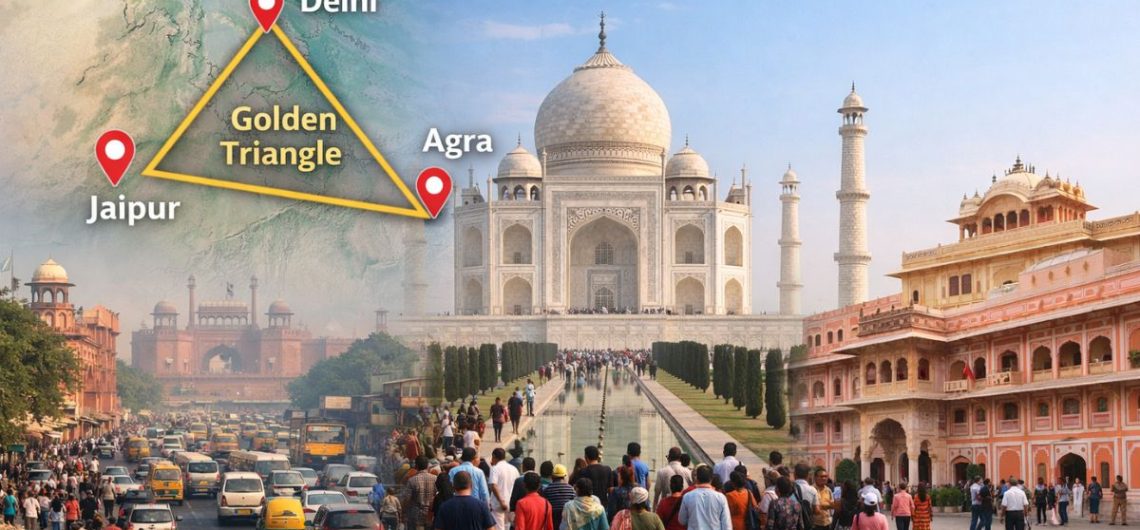
The Golden Triangle connects Delhi, Agra, and Jaipur. The triangle shape is geographical, not experiential. Each city operates on a different rhythm, and travelers often underestimate how sharp those shifts feel.
Delhi is not a gentle starting point. It’s a capital city layered with centuries of history and modern pressure. You’ll move between ancient neighborhoods, government districts, traffic-heavy commercial areas, and everyday residential life within the same day. The contrast is educational, but it’s not calming. Many travelers mistake intensity for chaos. In reality, Delhi is functioning exactly as intended—it’s just not designed for visitors’ comfort.
Agra is where expectations collapse for some travelers. Outside of the Taj Mahal, the city is not curated. It’s industrial, crowded, and practical. This shocks visitors who expect a romantic heritage town. Agra delivers depth through one extraordinary monument, not through ambience.
Jaipur feels more navigable. Its layout, color palette, and historical continuity make it easier to process visually. Still, it’s not quiet. Tourism, local commerce, and daily life overlap constantly. Jaipur feels structured compared to Delhi, not relaxed.
The biggest misunderstanding is this:
The Golden Triangle is not about comfort or ease. It’s about exposure.
What “Worth It” Actually Means (Most Travelers Never Define This)
Before judging the Golden Triangle, you need to define what “worth it” means to you. Most travelers don’t, which is why opinions online contradict each other.
For some, “worth it” means:
- Seeing iconic landmarks efficiently
- Understanding history quickly
- Getting a broad sense of India before deciding where to go next
For others, “worth it” means:
- Feeling rested
- Moving slowly
- Absorbing local life without pressure
The Golden Triangle serves the first definition far better than the second.
Many negative reviews come from travelers who wanted rest and depth but chose a route designed for overview and orientation. That’s not a failure of the route—it’s a mismatch of intent.
If you expect emotional ease, this route will feel heavy.
If you expect intellectual and cultural stimulation, it usually delivers.
Real Pros of the Golden Triangle Tour
Logical Geographic Flow
This is one of the few Indian circuits where movement makes sense. Distances are reasonable, transport options are frequent, and transitions between cities don’t require internal flights. For first-time visitors, this reduces planning risk.
The structure matters. In a country as large as India, bad routing can waste days. The Golden Triangle minimizes that.
High Cultural Density in Limited Time
Few routes expose you to this range of history so quickly. Mughal architecture, Rajput forts, colonial planning, and modern Indian urban life all appear without long detours.
You’re not learning everything—but you’re learning enough to contextualize future travel.
Better Tourism Infrastructure
Compared to many regions, this route has:
- More consistent road conditions
- Better rail connectivity
- Wider availability of English-speaking services
This doesn’t eliminate friction, but it lowers the chance of logistical failure for first-timers.
Educational Value for First-Time Visitors
The Golden Triangle functions well as a primer. After completing it, travelers usually understand:
- How Indian cities operate
- How travel time behaves in reality
- What level of structure they prefer for future trips
That learning alone is valuable.
Honest Cons Most Travel Sites Don’t Mention
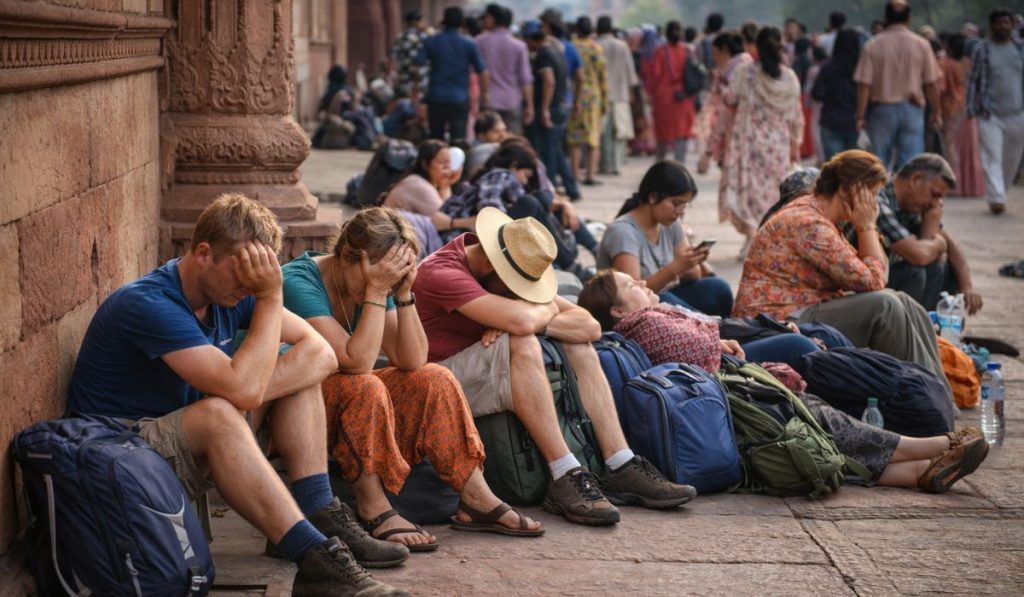
Long Travel Days Are Mentally Draining
Even when distances look short, movement in North India consumes energy. Early starts, traffic unpredictability, and constant sensory input compound fatigue. Travelers often underestimate this because schedules look reasonable on paper.
Crowds Are Structural, Not Seasonal
These cities are busy year-round. Major sites attract both international and domestic visitors. If crowd tolerance is low, frustration builds quickly.
Crowds don’t mean poor management—they reflect population density and cultural habits. Accepting that distinction matters.
City Fatigue Is Common
Three urban environments back-to-back is demanding. There’s little visual or emotional rest between stops. Travelers who thrive on variation between city and nature often feel depleted by the end.
Pacing Determines Everything
The same route can feel insightful or unbearable depending on pacing. Poor pacing compresses learning and magnifies exhaustion. This is where most negative experiences originate.
Who the Golden Triangle Tour Is Best For
First-time visitors to India who want orientation rather than immersion.
Time-limited travelers who prefer breadth over depth.
Structured planners who feel comfortable with defined routes.
Culturally curious travelers who value learning over relaxation.
If you fit these profiles, the route usually feels purposeful.
Who Should Skip the Golden Triangle Tour
Slow travelers who prefer staying longer in one place.
Nature-focused travelers looking for landscapes and wildlife.
Relaxation-driven trips where rest is central.
Repeat visitors who already understand Indian urban environments.
For these travelers, the Golden Triangle often feels repetitive and draining.
Common Planning Mistakes That Make the Tour Feel “Not Worth It”
Rushing the route is the most common failure. Trying to maximize coverage leads to constant movement and shallow engagement.
Choosing rigid group formats removes flexibility. Fixed schedules don’t account for fatigue, crowds, or personal interests, making days feel longer than they are.
Ignoring real travel time creates unrealistic expectations. India doesn’t move at brochure speed.
Assuming all options are equivalent is another issue. Travelers often select routes without understanding how planning decisions affect experience quality. Those who research the structure behind Golden Triangle tour packages in India tend to avoid these mistakes because they align expectations with logistics rather than marketing narratives.
Most dissatisfaction is not caused by the destinations themselves but by how the route is executed.
The Psychological Side of the Golden Triangle Experience
This route tests how travelers handle loss of control. Schedules shift. Crowds interrupt plans. Environments change rapidly. Travelers who resist this feel stress; those who accept it adapt.
The Golden Triangle rewards flexibility more than perfectionism.
It’s also emotionally dense. You process history, poverty, beauty, congestion, and contrast in quick succession. Some travelers interpret this as chaos. Others see it as honesty.
Neither reaction is wrong—but they lead to different conclusions about whether the trip was “worth it.”
So, Is the Golden Triangle Tour Worth It in 2026?
Yes—for the right traveler, with the right expectations.
The Golden Triangle is not outdated. What’s outdated is how it’s often described. It remains one of the most efficient ways to understand North India’s historical and cultural framework. It works best as a starting point, not a complete understanding of the country.
If you approach it expecting ease, you’ll struggle.
If you approach it expecting learning, contrast, and intensity, it usually delivers value.
The route itself isn’t the problem. Misaligned expectations are.
For travelers willing to engage with India as it is—busy, layered, demanding—the Golden Triangle still earns its place as a meaningful first experience.
Frequently Asked Questions About the Golden Triangle Tour
1.Will the Golden Triangle really help me understand India, or is it just famous sights back-to-back?
It helps you understand India’s contrasts quickly, not deeply. You’ll get historical and cultural context, but not everyday local life in detail.
2.Does the Golden Triangle feel rushed even if I’m not trying to see everything?
Yes, it can. You’re covering three major cities, and travel time plus crowds can make days feel fuller than expected.
3.Is the Golden Triangle a good choice for first-time visitors, or are there better options?
It’s good for orientation and variety. If you prefer slow travel or fewer cities, staying in one region often feels more satisfying.
4.How does the Golden Triangle compare to South India for a first trip?
The Golden Triangle is busier and more intense. South India is calmer and more relaxed. Crowd tolerance is the key difference.
5.Are crowds something I can realistically avoid on this route?
Not completely. Planning helps reduce stress, but major sites and cities are busy by nature.
6.Do travelers often feel tired or overwhelmed by the end of the trip?
Yes. Even people who enjoy the experience often feel mentally and physically drained afterward.
7.Does how the tour is planned really change whether it feels “worth it”?
Absolutely. Poor pacing and rigid schedules are the main reasons people feel disappointed—not the destinations themselves.
8.Is the Golden Triangle worth choosing if I have limited time in India?
If your goal is exposure and learning, yes. If your goal is rest or nature, it’s usually not the best fit.
9.Who usually enjoys the Golden Triangle the most?
First-time travelers who like structure, history, and variety—and don’t mind busy urban environments.
10.Who should seriously consider skipping the Golden Triangle?
Slow travelers, relaxation-focused trips, and people sensitive to crowds often find it frustrating rather than rewarding.

Comments