India is one of the most breathtaking, soul-stirring destinations on the planet. Every year, international visitors arrive to experience its ancient temples, colorful festivals, spicy street food, and landscapes that shift from snow-capped Himalayas to sun-soaked beaches. It is a country that overwhelms your senses in the best possible way.
But let’s be honest — knowing how to stay safe while traveling in India requires a little more preparation than, say, a weekend trip to Paris.
The good news? With some practical awareness and the right mindset, safe travel in India is absolutely achievable — whether you are backpacking solo through Rajasthan, working remotely from a Kerala beach café, or exploring the classic Golden Triangle Tour on your very first visit.
This guide covers everything you need: from dodging common travel scams and staying healthy to understanding local customs and knowing which cities are safest for first-time travelers in India.
Quick Answer: How to Stay Safe While Traveling in India
Staying safe in India comes down to six core habits: use app-based transport (Ola or Uber) instead of unmarked taxis; drink only sealed bottled water; book accommodation in advance through verified platforms; stay alert to common tourist scams like fake guides and gem schemes; dress modestly at religious sites; and always carry copies of your passport and travel insurance. India is safe for the vast majority of tourists who prepare properly.
Is India Safe for Tourists?
Direct answer: Yes — India is generally safe for tourists, but it rewards preparation over blind optimism.
India receives millions of international visitors each year [Insert Latest Tourism Statistic Here — source: India Ministry of Tourism or UN Tourism annual report], and the overwhelming majority complete their trips without any serious safety incident. Popular tourist destinations like Jaipur, Agra, Udaipur, Rishikesh, Goa, and Kerala have well-developed tourism infrastructure built around welcoming international visitors.
That said, India is a vast, complex country of 1.4 billion people. Like any major travel destination — from New York to Bangkok to Cairo — petty crime, opportunistic scams, and occasional harassment exist. What separates a stressful experience from a wonderful one is almost always how informed and prepared you are before you arrive.
The key to safe travel in India is not fear — it is preparation.
One thing most experienced India travelers will tell you: the country has a way of throwing minor chaos at you constantly — a train that runs two hours late, a rickshaw driver who confidently takes you the wrong way, a guesthouse that looks nothing like its photos. None of that is dangerous. It is just India being India. Learn to take the chaos in your stride, and you will love every bit of it.
Research Your Destination Before You Arrive
One of the most underrated India travel safety tips is deceptively simple: do your homework before you land.
First-time visitors to India often make the mistake of treating the country as a single, uniform destination. It is not. The cultural norms in Rajasthan are different from those in Goa. The safety considerations in a Himalayan trekking town differ from those in a dense metro like Mumbai. Context matters enormously.
Understand Local Customs and Traditions
India is deeply religious and culturally diverse. Public displays of affection are frowned upon in conservative towns. Removing shoes before entering temples or private homes is expected everywhere. Accepting food or drink with your left hand can cause genuine offence in many communities — the left hand is traditionally considered impure.
Spending even a couple of hours reading about the customs of your specific destination will save you from awkward — and occasionally heated — misunderstandings. Varanasi operates on entirely different cultural rhythms than the beach towns of Goa. Knowing this in advance matters.
Check Weather Conditions
India’s climate varies enormously by region and season. Traveling to Kerala during peak monsoon (June–August) can mean flooded roads and shuttered attractions. The Himalayan passes to Ladakh close entirely in winter. North India’s plains become brutally hot between April and June. Researching weather before you book can be the difference between a dream trip and a logistical mess.
Know Your Transportation Options in Advance
India’s transportation network is vast but can be confusing. Indian Railways connects nearly every corner of the country. Booking train tickets through the official IRCTC website in advance is essential — popular routes sell out weeks ahead, especially during festivals and school holidays. If you are planning a backpacking trip through India, mastering IRCTC early is one of the best investments of your time.
Use Trusted Transportation Services
Getting around safely is a cornerstone of any practical India tourist safety guide.
Airport Transfers — A Critical First Step
The moment you step out of arrivals at any Indian airport, you will likely be approached by people offering “cheap taxi” or “best hotel” deals. This is one of the most consistent experiences reported by first-time visitors — and one of the most common setups for the scams described later in this guide.
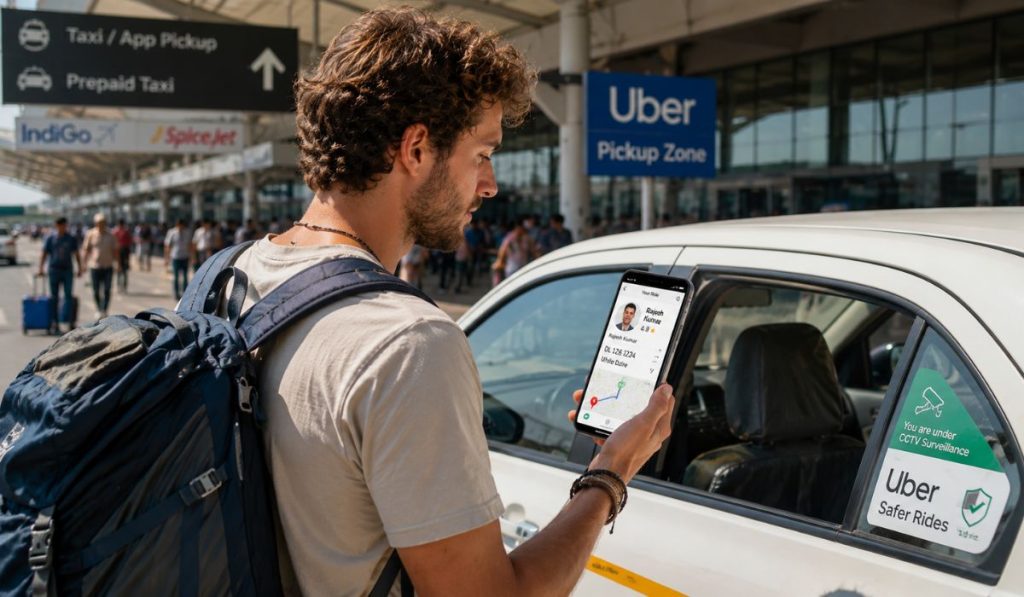
The fix is simple: only use pre-paid taxis from official airport counters or book an Ola/Uber before you exit the terminal. At major airports like Indira Gandhi International (Delhi) and Chhatrapati Shivaji Maharaj (Mumbai), app-based pickups are smooth, clearly signed, and completely eliminate the negotiation game.
Ride-Sharing Apps
Ola and Uber are widely available in every Indian city of any size and are significantly safer than hailing a random auto-rickshaw off the street as a foreigner. The apps provide the driver’s name, vehicle number, live route tracking, and a trip history you can share with someone — a genuine safety upgrade.
A practical tip from the road: always confirm the driver’s name and car number before getting in. Scammers occasionally stand near app pickup points and pretend to be your booked driver.
Train Travel Safety
Indian Railways is generally safe and one of the best ways to experience the country authentically. For overnight and long-distance journeys, opt for AC Tier 2 (2AC) or Tier 3 (3AC) compartments — they offer a good balance of safety, comfort, and cost. Chain your luggage to the seat rack with a small combination padlock (widely sold at Indian railway stations). Never leave bags unattended, even briefly.
Women traveling solo should note: every Indian train includes a dedicated Ladies Compartment — use it. It is not a sign of weakness; it is a smart, practical choice that experienced female travelers consistently recommend.
Bus Travel Safety
For short routes between towns, reputable state-run buses and private operators bookable via RedBus are reliable. However, overnight buses on long routes carry more risk for solo travelers — trains are a significantly safer choice for night journeys, especially for women and first-time visitors.
Safe Transportation Checklist
Book airport pickup via Ola or Uber before landing
Confirm driver name and car plate before entering any vehicle
Agree on fare before entering any auto-rickshaw
Use only metered or app-based taxis in cities
Book train tickets via official IRCTC website in advance
Choose 2AC or 3AC for overnight train journeys
Use women-only carriages (trains and Delhi Metro) when traveling solo
Avoid unmarked overnight buses; prefer trains for night travel
Share live trip location with a trusted contact via WhatsApp
Protect Your Money and Valuables
Anti-Theft Precautions
Use a money belt or hidden travel pouch worn under clothing for your passport, backup cash, and spare cards. In crowded places — markets, railway stations, religious festivals, and temple entrances — keep your daypack in front of you. Pickpocketing exists in India’s dense crowds, though it is far less common than in many European cities.
Avoid wearing flashy jewelry or displaying expensive camera equipment openly in busy street areas. This is not about fear — it is just sensible, and experienced travelers in any country do it instinctively.
Using ATMs Safely
Use ATMs inside bank branches, hotel lobbies, or established shopping malls rather than standalone machines on isolated streets, especially after dark. Cover the keypad when entering your PIN. Inform your bank of your travel dates before departure so your card is not blocked for overseas activity.
Practical note: India has occasional ATM cash shortages in smaller towns and during festival periods. Always carry some backup cash in Indian Rupees when heading to rural areas or smaller destinations.
Digital Payment Safety
India has one of the world’s most advanced digital payment ecosystems, built on UPI (Unified Payments Interface). Apps like Google Pay, PhonePe, and Paytm are used everywhere — from street chai stalls to five-star hotel restaurants. As an international visitor, you may be able to use foreign cards at most urban establishments. Always verify the bill total before approving any payment.
Watch out for QR code fraud: A known scam involves someone swapping a legitimate merchant’s QR code with their own. If you are scanning a QR code to pay, confirm the registered merchant name that appears on your payment app before approving.
Common Travel Scams in India and How to Avoid Them
Understanding the most common India travel scams before you arrive is one of the highest-value things you can do. Awareness alone eliminates most of the risk.
Scam Comparison Table
Scam Type
How It Works
How to Avoid It
Fake Tour Guide
Someone at a monument claims to be an “official” licensed guide; leads you to commission-paying shops
Hire guides only through official ASI or state tourism counters, or pre-book via a verified agency
Taxi Meter Scam
Driver claims meter is “broken” and quotes an inflated flat fare
Confirm fare before entering; default to Ola or Uber
Gem Investment Scam
Friendly stranger convinces you to buy “valuable” gems to resell at profit back home
Never invest in gems or jewelry from strangers — it is always a scam, without exception
Fake Ticket Office
Near monuments, unofficial booths sell overpriced or counterfeit tickets
Buy only from official ASI counters or the official online booking portal
Closed Hotel Scam
Taxi driver insists your booked hotel is “closed,” “flooded,” or “full” and offers to take you to a “better” one
Call your hotel directly; insist on being dropped at your booked address
Friendship Bracelet
Stranger ties a bracelet on your wrist uninvited, then demands payment
Physically step back and firmly say no before anyone touches you
Free Temple Ceremony
Invitation to a “special private ceremony” ends with an aggressive demand for a large cash donation
Politely decline all unsolicited temple invitations from strangers
Wrong Change Scam
Vendor or rickshaw driver “accidentally” gives back too little change, often confusingly fast
Familiarise yourself with Indian Rupee notes before arrival; count change immediately
Photography Fee Scam
After you photograph someone in costume (snake charmer, etc.), they demand an aggressive fee
Agree on any fee before taking photos; be prepared to simply walk away
The golden rule applies everywhere in India: if something feels off, trust that instinct and walk away. Scammers depend on your politeness and your desire to avoid a scene. You owe a stranger nothing.
Food and Water Safety Tips
Staying healthy is inseparable from traveling safely in India. “Delhi Belly” — traveler’s gastrointestinal illness — is a genuine rite of passage for many visitors, but it is largely preventable.
Drinking Water
Never drink tap water in India — this applies to every city, including major metros. Stick to sealed bottled water from trusted brands like Bisleri, Kinley, or Aquafina. Always check that the seal is unbroken. Many mid-range and upscale restaurants use filtered water for cooking, but when in doubt, ask.
For environmentally conscious travelers on longer trips, a SteriPen UV purifier or filtered water bottle (like LifeStraw) is worth every rupee — it reduces plastic waste and gives you safe water wherever you are, including remote trekking routes.
Street Food Precautions
Indian street food is extraordinary — and eating it safely is entirely possible with a few guidelines. Choose stalls that are busy with local customers (high turnover = fresher food). Opt for freshly cooked hot food over items sitting at room temperature. Avoid raw salads, pre-cut fruit from street vendors, and anything that has been in contact with unfiltered water.
Some of the safest street foods for newcomers: freshly made chapati or paratha, dal and rice, samosas served hot, and anything cooked directly in front of you.
Hygiene Practices
Carry hand sanitizer (at least 60% alcohol) and use it consistently, especially before meals. Pack oral rehydration salts (ORS) in your first aid kit — they are one of the most useful items you can bring and widely available at Indian pharmacies (chemists) too.
If you do get sick, rest and rehydration handle most cases. If symptoms are severe or persist beyond 48–72 hours, seek medical advice from a reputable clinic or hospital.
Best Travel Safety Apps for India
Your smartphone is one of your most important safety tools when traveling India. Here are the apps every visitor should have installed and set up before arriving:
Google Maps — Download offline maps for your destinations before you travel. In areas with poor data connectivity (which you will encounter), offline maps are a lifesaver. Use it to verify a taxi or auto-rickshaw driver is actually taking you the right way — a simple, powerful check.
Ola & Uber — The two essential ride-hailing apps for India. Set up your payment method before you land. They work in all major cities and most mid-size towns. Always verify driver details before entering the vehicle.
WhatsApp — The primary communication app across India. Your hotel, tour operator, guide, and local contacts will almost certainly use it. It also lets you share your live location with trusted people back home during journeys — a valuable safety feature.
Google Translate — Download the Hindi language pack for offline use. While English is widely spoken in tourist areas, having basic translation capability in smaller towns, rural areas, and medical situations is genuinely useful. The camera translation feature (point your camera at text) is particularly handy.
IRCTC Rail Connect — The official Indian Railways booking app. Use it to book train tickets, check PNR status, and track train running status in real time. Essential for any train-based itinerary.
MakeMyTrip or Goibibo — For booking verified hotels, buses, and flights within India. Reading recent traveler reviews on these platforms before booking accommodation is one of the easiest safety checks you can do.
Digital Safety Tips for Travelers in India
India’s cities are connected, but digital hygiene matters just as much on the road as physical safety.
Public Wi-Fi Safety
Free Wi-Fi is available at airports, cafés, hotels, and some railway stations across India. However, never use public Wi-Fi for banking, accessing email accounts, or logging into sensitive accounts without a VPN. Download a reputable VPN app (ExpressVPN, NordVPN, or Proton VPN are popular with travelers) and activate it whenever you connect to public networks.
ATM and Card Precautions
Beyond the physical tips mentioned earlier: check your bank statements regularly during your trip. Set up transaction alerts via SMS or app notifications so you know immediately if your card is used unexpectedly. If you notice a fraudulent charge, contact your bank immediately — most have 24-hour international support lines.
SIM Card Security
Buying a local Indian SIM card is a smart move for any visit longer than a few days — it gives you affordable data and a local number that works reliably. Purchase SIM cards only from official Airtel, Jio, or Vi (Vodafone Idea) stores or authorized retailers. Avoid buying SIM cards from unofficial street vendors, as fraudulently registered SIMs can cause legal complications. You will need your passport and a passport photo for registration.
Online Payment Safety
When paying via QR codes (very common in India), always verify the payee name shown in your UPI app matches the business you are paying. Be cautious of anyone who sends you a payment “request” rather than a link — in UPI, a payment request asks you to send money, not receive it. Several tourists have been tricked into approving outgoing payments while thinking they were receiving refunds.
Solo Traveler Safety Tips in India
Is India safe for solo travelers? Yes — with the right habits in place.
Millions of backpackers, independent travelers, and digital nomads explore India solo every year and have genuinely life-changing experiences. The country has a well-worn backpacker infrastructure across its most popular routes, with hostels, guesthouses, and traveler communities that make connecting with fellow travelers easy.
Practical habits for solo travel safety in India:
Book your first night’s accommodation before arriving in any new city — arriving after dark without a confirmed address is stressful and increases your exposure to airport and station touts.
Share your itinerary with at least one trusted person at home. Check in regularly.
Use hostel common areas and traveler meetups to connect with other solo travelers — there is safety in numbers, and the knowledge sharing is invaluable.
Stay in well-reviewed accommodation. Read reviews specifically from solo travelers on platforms like Hostelworld or Booking.com.
For digital nomads, cities like Bangalore, Pune, Goa, and Mumbai have thriving co-working communities and reliable infrastructure with affordable living costs.
Solo backpacking in India is one of the world’s great travel experiences — the key is building routines that keep you oriented and connected, not isolated.
Female Traveler Safety Tips in India
Is India safe for women travelers? This question deserves a direct, honest answer.
India has faced serious scrutiny regarding women’s safety, particularly in densely populated urban areas of North India. Verbal harassment — commonly called “eve-teasing” locally — is a reality many female travelers encounter, particularly in crowded public spaces. However, tens of thousands of women travel India solo every year, including many who return repeatedly and consider it among their most rewarding travel experiences.
The difference, almost universally, comes down to preparation, route selection, and a few consistent habits.
Clothing Considerations
Dressing modestly — covering shoulders and knees — in most parts of India, especially at religious sites, in rural areas, and in conservative North Indian towns, significantly reduces unwanted attention. This is not a restriction; it is contextual awareness, the same way you would adapt your dress in any country with distinct cultural norms. In Goa, Hampi, or beach destinations, Western clothing is entirely the norm.
Carry a lightweight scarf or dupatta. It doubles as a modesty cover at temples, a sun shield, and a conversation starter with local women.
Transportation Choices
Use women-only compartments on Indian trains — every train has one, clearly marked.
On Delhi Metro, use women-only carriages during peak hours.
Default to Ola or Uber over unmarked auto-rickshaws, particularly at night. Both apps record the journey and store driver details.
Avoid traveling alone in unmarked taxis or autos after 10 PM in unfamiliar areas. If you must, share your live location with someone.
Accommodation Safety
Opt for well-reviewed guesthouses or hotels with 24-hour reception. Read recent reviews from female travelers specifically — they are the most relevant signal for your experience. Always lock your room door; carry a portable door wedge or door alarm for extra security in budget accommodation.
For travelers who prefer a curated, supported experience, look into women-focused tour packages offered by reputable Indian operators — these provide guided travel designed specifically around female travelers’ comfort and safety.
Importantly: South India (Kerala, Karnataka, Tamil Nadu) and Rajasthan’s tourist towns are generally considered more comfortable for women travelers than parts of North India’s denser urban areas.
Health and Emergency Preparedness
Travel Insurance — Non-Negotiable
Do not travel to India without comprehensive travel insurance. Medical emergencies, hospitalizations, trip cancellations, and emergency evacuations can be financially devastating without coverage. Policies from providers like World Nomads, SafetyWing, or AXA are widely used by international travelers in India. Check that your policy covers adventure activities if you are planning trekking, river rafting, or motorcycle touring.
Medical Facilities
Major Indian cities — Delhi, Mumbai, Bangalore, Chennai, Hyderabad — have world-class private hospitals (Apollo, Fortis, Max Healthcare) that routinely treat international patients. However, medical facilities in rural and remote areas can be limited. The further off the beaten path you travel, the more important it is to carry a comprehensive first aid kit.
First aid kit essentials for India:
Oral rehydration salts (ORS)
Imodium or equivalent anti-diarrheal
Antiseptic cream and plasters
Insect repellent (DEET-based for dengue and malaria risk areas)
Sunscreen (SPF 50+)
Personal prescription medications (with original packaging)
Basic antihistamine
Get recommended vaccinations at least 4–6 weeks before departure. Common recommendations include Hepatitis A, Typhoid, and Tetanus. Consult a travel health clinic for destination-specific advice on Malaria prophylaxis, Rabies, and Japanese Encephalitis.
Emergency Contacts in India — Save These Now
Emergency Service
Number
Police
100
Ambulance
102
Fire
101
Women’s Helpline
1091
All-Purpose Emergency (like 911)
112
India Tourism Helpline (Toll-Free)
1800-11-1363
Railway Helpline
139
Road Accident Emergency
1073
Save these in your phone before you leave home. Also register with your country’s embassy or consulate in India — most governments offer a free traveler registration service that enables contact in emergencies, natural disasters, or civil unrest.
Cultural Etiquette That Helps Travelers Stay Safe
Understanding local etiquette is not just good manners — it genuinely reduces friction, prevents misunderstandings, and earns you the authentic warmth India is famous for.
Respecting Local Customs
Always ask permission before photographing individuals, especially in rural areas, at temples, or during religious ceremonies.
Accept an invitation for chai graciously — it is usually genuine hospitality, not a prelude to a sales pitch. Use your judgment, but do not reflexively assume bad intent.
Never point your feet at a temple deity or directly at another person — it is considered deeply disrespectful across most of India.
Bargaining is normal in markets — but do it good-humouredly, and if you agree on a price, honour it.
Dress Codes
Cover your shoulders and knees when entering temples, mosques, gurudwaras, and other places of worship. Many sites provide scarves or wraps at the entrance, but carrying your own lightweight scarf is always better.
Photography Etiquette
Some temples, government buildings, and military installations prohibit photography — look for signs. Never photograph people, especially women and children, without asking first. In some rural communities, being photographed is considered invasive or spiritually significant. A quick gesture and smile asking permission goes a long way — and usually results in a far better portrait anyway.
Safest Places to Visit in India for First-Time Travelers
Which cities in India are safest for tourists? Here are the best entry points, particularly for first-time visitors and solo travelers:
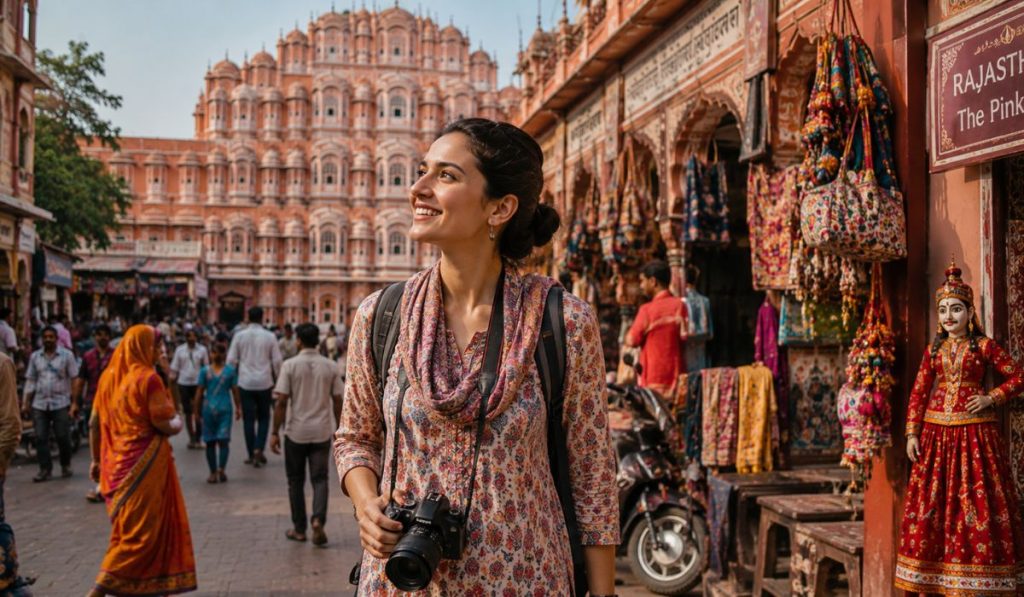
Jaipur, Rajasthan — The “Pink City” is one of India’s most tourist-ready destinations. Strong infrastructure, well-organized guided tours, and a rich heritage scene make it an ideal starting point. It forms one leg of the famous Golden Triangle route alongside Delhi and Agra.
Udaipur, Rajasthan — Romantic, walkable, and widely regarded as one of the safest cities in India for international tourists. The lake city atmosphere is relaxed and the tourism scene is well-developed.
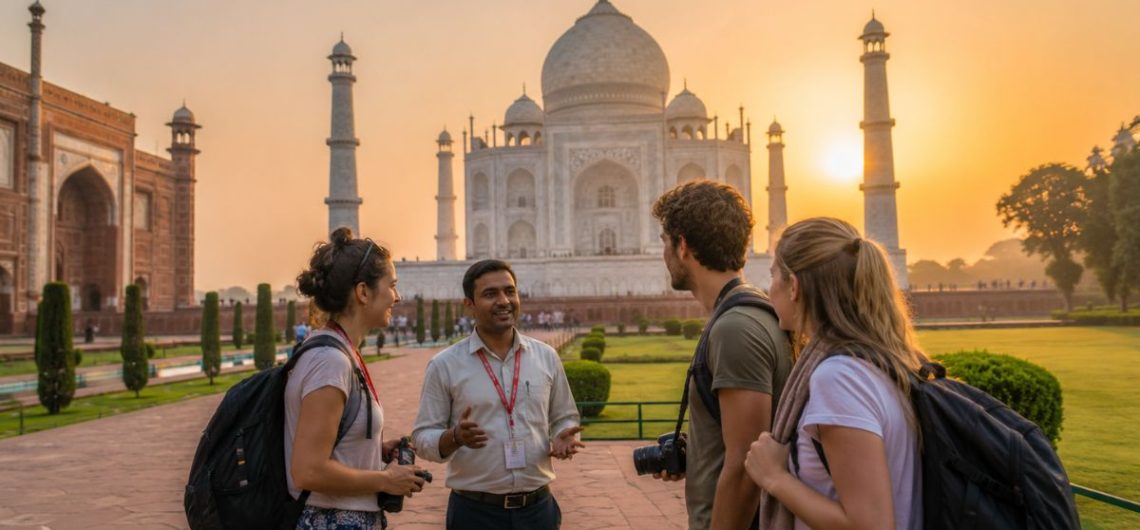
Agra, Uttar Pradesh — Home to the iconic Taj Mahal. Scams near the monument are common (see the table above), but the site itself is safe. Book Taj Mahal Tour Packages from Delhi through a verified operator to eliminate the most common pain points.
Rishikesh, Uttarakhand — India’s yoga and adventure hub in the Himalayan foothills. Extremely popular with international travelers, genuinely safe, and home to a warm, globally connected community. Excellent for solo travelers.
Goa — India’s most cosmopolitan beach destination. Strong tourist infrastructure, a relaxed pace, and a culture accustomed to international visitors make it ideal for first-timers and backpackers. Exercise standard beach-town awareness around your belongings.
Kerala — Consistently rated among India’s safest states for tourism. The peaceful backwaters, outstanding food, and progressive local culture create an experience that feels welcoming from the moment you arrive.
For first-time visitors who want structure and peace of mind, exploring a curated tour package that bundles transport, accommodation, and guided support is an excellent option — especially for the first week of a longer trip.
Essential Safety Checklist Before Your Trip
Documents & Admin
Purchase comprehensive travel insurance covering medical emergencies and evacuation
Register with your country’s embassy in India
Make photocopies of passport, visa, and insurance documents (store separately from originals)
Save all Indian emergency numbers in your phone
Bookings & Logistics
Book first night’s accommodation in advance in every new city
Download and set up Ola and Uber before departure
Book train tickets via IRCTC in advance for popular routes
Inform your bank of travel dates to prevent card blocks
Health & Safety Gear
Pack first aid kit (ORS, anti-diarrheal, antiseptic, insect repellent, sunscreen)
Get recommended vaccinations 4–6 weeks before departure
Carry a money belt or hidden travel pouch
Bring a portable door wedge or alarm (solo travelers, budget accommodation)
Pack a portable power bank
Tech & Connectivity
Download offline Google Maps for all destinations
Install a VPN app for use on public Wi-Fi
Download Google Translate with Hindi offline pack
Share travel itinerary with a trusted contact at home
Cultural Preparation
Research customs for your specific destinations
Pack a lightweight scarf for temple visits and modest dressing
Check weather conditions for travel dates
Frequently Asked Questions
1. Is India safe for tourists in 2026–2027?
Yes. India remains one of the world’s most visited tourist destinations [Insert Latest Tourism Ranking Statistic Here]. The vast majority of international visitors travel without serious incident. Standard travel awareness, verified bookings, and basic cultural respect go a long way.
2. Is India safe for first-time tourists?
Absolutely, with preparation. Stick to well-traveled routes, use verified transportation, book accommodation through reputable platforms, and stay alert in crowded areas. Millions of first-time visitors travel India each year and have excellent experiences.
3. What are the most common scams in India targeting tourists?
The most prevalent scams are fake tour guides near monuments, taxi meter fraud, gem investment schemes, fake ticket offices, and the “your hotel is closed” cab diversion. Knowing these in advance removes almost all of the risk.
4. Is India safe for solo female travelers?
Yes, with specific precautions. Dress modestly in conservative areas, use women-only train compartments and metro carriages, choose reputable accommodation, prefer app-based cabs at night over unmarked autos, and trust your instincts. South India and Rajasthan’s tourist towns are generally considered most comfortable for women traveling solo.
5. Is India safe at night?
Major tourist areas and city centers are generally active and reasonably safe at night. However, traveling alone in unfamiliar areas, using unmarked transport, or walking through unlit streets late at night — in any Indian city — carries elevated risk. Use Ola or Uber after dark and stick to areas with foot traffic.
6. Is Uber safe in India?
Yes. Both Uber and Ola are considered safe, reliable transport options in India. They provide driver details, live route tracking, and trip history. Always verify the driver’s name and car registration before entering the vehicle.
7. Can tourists drink tap water in India?
No. Tap water is not safe to drink anywhere in India, including major cities. Always drink sealed bottled water from reputable brands, or use a UV purifier like a SteriPen. This applies to brushing teeth as well in some areas — use bottled water if uncertain.
8. What should travelers avoid in India?
Avoid drinking tap water; accepting unsolicited food, drinks, or gifts from strangers; engaging with touts at tourist sites; traveling in unmarked taxis; displaying expensive valuables in crowded public areas; and using public Wi-Fi without a VPN for sensitive tasks.
9. What should I wear in India?
Dress modestly in most parts of India — covering shoulders and knees is advised, especially at religious sites, in rural areas, and in conservative towns. In beach destinations like Goa, Western casual clothing is standard. Carry a lightweight scarf as a flexible cover-up.
10. Is India safe for digital nomads?
Yes. India is a growing digital nomad destination, particularly in Bangalore, Pune, Goa, and Mumbai. These cities have strong co-working infrastructure, reliable internet, affordable cost of living, and established expat communities. Standard digital hygiene (VPN, secured devices, careful use of public Wi-Fi) applies.
11. What are the emergency numbers tourists should know in India?
12. Which cities are safest for tourists in India?
Jaipur, Udaipur, Rishikesh, Goa, and Kerala’s cities (Kochi, Thiruvananthapuram, Munnar) are consistently cited as among India’s safest and most tourist-friendly destinations. South India broadly is considered more comfortable for solo and female travelers than densely populated parts of North India.
13. How can I stay healthy while traveling in India?
Drink only sealed bottled water, eat freshly cooked food from busy stalls, carry hand sanitizer, pack oral rehydration salts, avoid raw salads from street vendors, and get vaccinations (Hepatitis A, Typhoid) at least 4–6 weeks before departure. Carry a basic first aid kit with anti-diarrheal medication.
14. Do I need travel insurance for India?
Yes — it is non-negotiable. Medical emergencies, hospitalizations, trip cancellations, and emergency evacuations can be extremely expensive without coverage. Ensure your policy covers the activities you plan (trekking, adventure sports, motorcycle travel).
15. How can I avoid scams in India as a tourist?
Awareness is your primary defence. Know the most common scam types before you arrive (see the table in this guide). Use app-based transport. Book tickets only through official channels. Do not follow strangers who approach you at tourist sites. Trust your instincts — if something feels off, it usually is. Polite but firm refusal ends most scam attempts immediately.
Conclusion: How to Stay Safe While Traveling in India
India is not a destination you simply visit — it is one you experience, fully and unforgettably. Its organized chaos and unexpected serenity, its ancient wisdom and rapid modernity, its extraordinary generosity and the occasional opportunistic scammer — all of it is woven into the fabric of the journey.
Understanding how to stay safe while traveling in India does not mean traveling fearfully. It means arriving informed, making smart choices consistently, and giving yourself the freedom to actually enjoy one of the world’s most remarkable countries.
The travelers who have the best experiences in India are rarely the bravest — they are the most prepared. They did their research, respected the culture, used smart transport, trusted their instincts, and embraced every moment of the extraordinary.
Use this guide as your foundation. When you are ready to plan your trip, browse India Tour Packages from Delhi to find the right route and experience for your travel style.
Stay curious. Stay aware. Stay kind. India will give you back far more than you bring to it.
This guide really highlights how much preparation goes into traveling safely in India. I especially appreciated the emphasis on understanding local customs—it can make a huge difference in avoiding tricky situations. Pairing that with practical habits like using app-based transport and drinking sealed water makes first-time trips much smoother.


Comments