
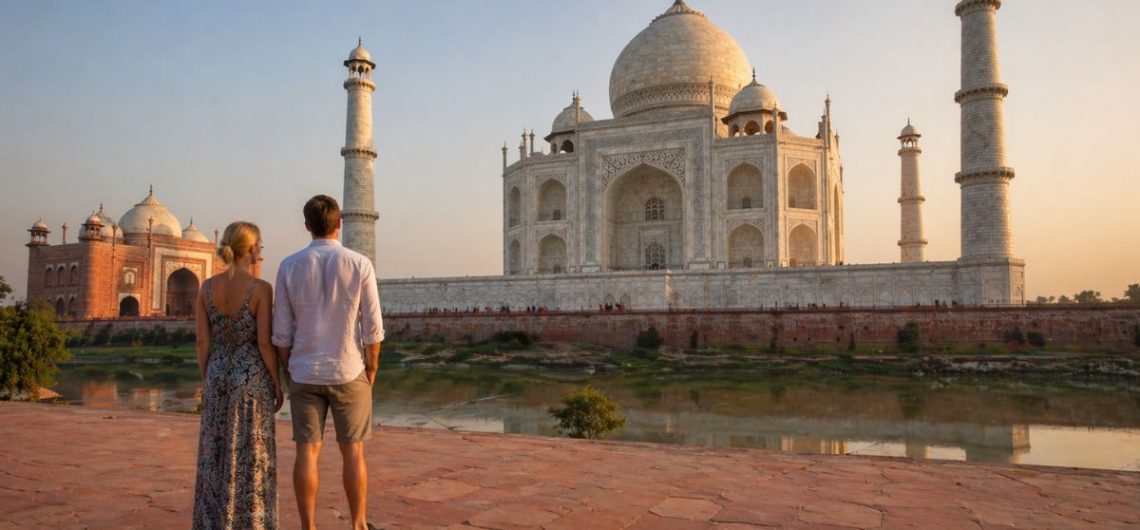
Most tourists arrive at the Taj Mahal unprepared. They’re turned away at the gate. Or they miss the best photo spots. Or they waste an hour in security lines they didn’t know existed.
You don’t have to be one of them.
This guide covers everything — what to wear, what to carry, what’s banned, and the insider tips that only experienced travellers (and expert guides) know. Read this once. Visit stress-free.
Taj Mahal Rules (Quick Answer)
The essential rules in under 60 words:
- Wear modest, comfortable clothing that covers shoulders and knees
- Remove shoes before entering the main mausoleum (free shoe covers provided)
- Photography is allowed in most areas — tripods and drones are banned
- No food, tobacco, alcohol, or selfie sticks inside the complex
- Bags go through airport-style security screening
- Sunrise is the best time to visit — less crowd, magical light
Taj Mahal Dress Code: What to Wear (and What Not To)
There’s no strict religious dress code at the Taj Mahal. But this is a UNESCO World Heritage Site and a sacred mausoleum. Dressing respectfully matters — and practically, it makes your visit more comfortable too.
For Women
| ✅ Do Wear | ❌ Avoid |
|---|---|
| Long skirts or trousers | Shorts or mini skirts |
| Tops covering shoulders | Sleeveless tops or crop tops |
| Light cotton fabrics | Heavy or synthetic fabrics |
| Comfortable walking shoes | Heels or platform shoes |
| Scarves or shawls (handy for covering up) | Revealing beachwear-style clothing |
Pro tip: A light cotton dupatta or scarf is your best travel companion. It doubles as sun protection, a modesty cover, and a statement accessory for photos.
For Men
| ✅ Do Wear | ❌ Avoid |
|---|---|
| Trousers or chinos | Shorts (frowned upon) |
| Light collared shirts | Sleeveless vests |
| Breathable cotton clothes | Dark heavy fabrics in summer |
Seasonal Dress Tips
- October–March (Winter): Mornings can be cold. Layer up. A light jacket is useful at sunrise.
- April–June (Summer): Temperatures hit 40°C+. Wear breathable cotton. Carry a water bottle.
- July–September (Monsoon): Light rain is likely. A thin waterproof layer helps. Avoid white clothing — it shows dust and humidity.
Taj Mahal Footwear Rules: Where Shoes Go On and Off
This is the rule most tourists are surprised by.
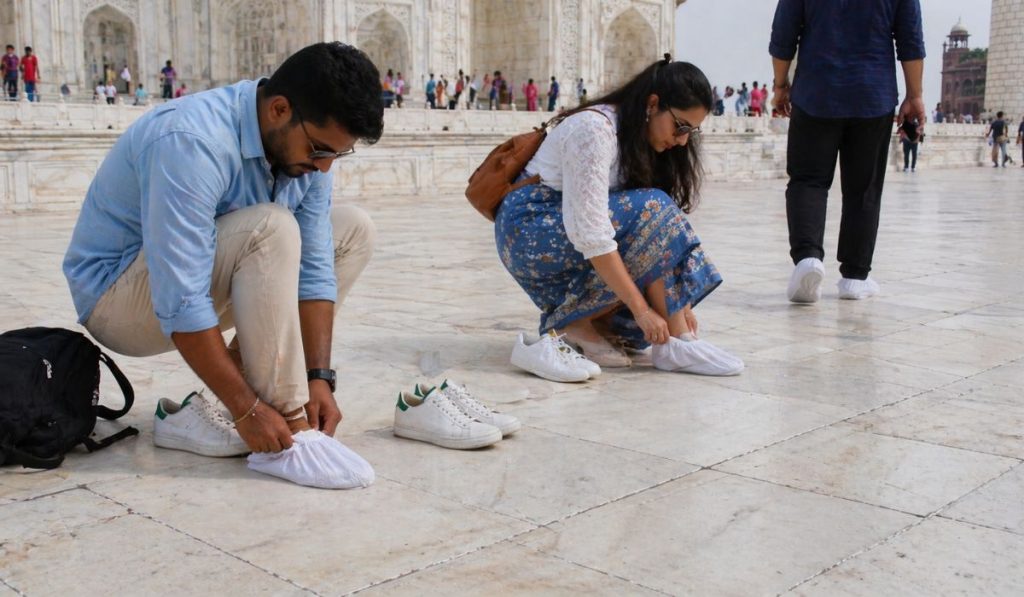
You must remove your shoes before stepping onto the white marble platform of the main mausoleum — the central structure where the tombs of Shah Jahan and Mumtaz Mahal rest.
Where Shoes Are Allowed
- The main entrance gate (Darwaza-i Rauza)
- The red sandstone pathways and gardens
- The mosque and mehman khana on either side
Where Shoes Must Come Off
- The white marble plinth (platform) surrounding the Taj Mahal
- Inside the main mausoleum building
What About Shoe Covers?
Free shoe covers are provided at the entrance to the marble platform. You can wear them over your shoes if you prefer not to remove them. Most visitors find it easier to just remove their shoes and carry them.
Practical Footwear Hacks
- Wear slip-on shoes or sandals — they’re much easier to remove
- Avoid socks with complicated lacing (you’ll be taking shoes off multiple times)
- The marble can get extremely hot in summer — shoe covers or socks are strongly recommended from April to June
- Carry a small bag to hold your shoes comfortably while you walk the platform
Taj Mahal Security Rules: What to Expect at the Gates
Think airport security — but in the middle of Agra.
Every visitor goes through a full bag and body check before entering. There are separate queues for men and women, and female security personnel handle the women’s screening area.
Most tourists don’t know this: separate entry gates exist for foreign tourists and Indian nationals. Use the correct gate to save significant time.
What’s Allowed Inside
| ✅ Allowed | ❌ Banned |
|---|---|
| Camera (no tripod) | Tripods and monopods |
| Mobile phone | Drones and UAVs |
| Water bottle (small, transparent) | Food of any kind |
| Medicines (carry prescription) | Tobacco, cigarettes, e-cigarettes |
| Small bag or purse | Alcohol |
| Notebook and pen | Selfie sticks |
| Baby pram/stroller | Power banks over 10,000 mAh |
| Hearing aids | Knives or sharp objects |
Avoid this common mistake: Visitors often bring packed lunches or snacks. These are confiscated at the gate. Eat before you arrive, or use the designated picnic area outside the complex.
Taj Mahal Photography Rules: Where to Shoot and What’s Off-Limits
The Taj Mahal is arguably the most photographed monument in the world. And for good reason.
But there are rules — and some of them catch visitors off guard.
What’s Allowed
- Personal cameras (DSLR, mirrorless, mobile phone)
- Photography in the gardens, pathways, and around the mausoleum
- Photography of the exterior of the main building
What’s Banned
- Photography inside the mausoleum (especially around the cenotaphs)
- Tripods and monopods anywhere in the complex
- Drones — strictly prohibited
- Selfie sticks (banned from entry)
- Flash photography near the tombs
Best Photography Spots
1. The Central Reflecting Pool The classic symmetrical shot. Arrive early and you’ll have it almost to yourself.
2. The Princess Diana Bench The famous isolated white bench outside the main complex. Get there before 8 AM.
3. The South Gate View An angle most tourists miss — a stunning wide shot of the full complex.
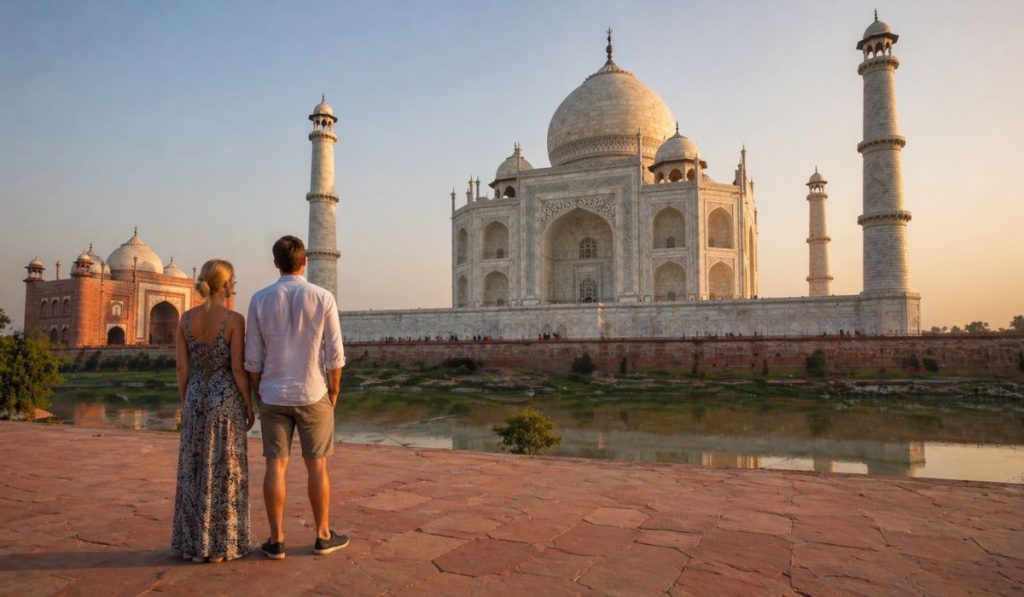
4. Mehtab Bagh (Moonlight Garden) Located across the Yamuna River, this gives you the best rear view of the Taj Mahal at sunset. It’s one of Agra’s most underrated spots.
Best Time for Photos
Sunrise wins — every time.
The golden hour light hits the white marble and creates a warm, dreamlike glow that no afternoon shot can replicate. Crowds are minimal. The air is clear. This is why our Taj Mahal Sunrise Tour remains our most-booked experience.
General Visitor Rules at the Taj Mahal
Keep these in mind throughout your visit:
- Be respectful — this is an active memorial site, not just a tourist attraction
- No loud music or disruptive behaviour inside the complex
- Do not touch or lean on the walls of the mausoleum
- Littering is strictly prohibited — bins are placed throughout the complex
- Entry is not allowed after sunset
- Visitors must exit one hour before closing time
- Children under 15 years enter free of charge
- Foreign tourist tickets include access to the main mausoleum — verify this at booking
Pro Insider Tips (Read This Before You Go)
These are the tips most tourists only discover after their visit.
1. Arrive Before Dawn
Gates open at sunrise. The first 90 minutes are the least crowded, most photogenic, and most peaceful. If you’re staying in Agra, plan to be at the gate 15 minutes before it opens.
2. Book Tickets Online
Queues at the ticket counter can add 30–60 minutes to your morning. Book on the Archaeological Survey of India website the day before.
3. Combine With Agra Fort
Agra Fort (a UNESCO World Heritage Site just 2.5 km away) is where Shah Jahan spent his final years — imprisoned, looking across at the Taj Mahal. The combination of both sites in one day is deeply moving and historically rich. Our Same Day Agra Tour covers both in a single comfortable day trip.
4. Don’t Skip Mehtab Bagh
Most tourists go straight home after the Taj. But Mehtab Bagh, the moonlight garden across the Yamuna, gives you a rear-angle view across the river that’s completely different — and virtually crowd-free at sunset.
5. Hire a Local Expert Guide
Most tourists don’t know that the interior inscriptions are Quranic verses, or that the four minarets tilt slightly outward by design (to fall away from the tomb if they ever collapse). An expert guide doesn’t just tell you what you’re looking at — they make it unforgettable.
6. Plan Your Route to Agra
Agra is 200 km from Delhi. The fastest option is the Gatimaan Express train (1h 40 min) or a private car via the Yamuna Expressway. If you’re tight on time, a Same Day Agra Tour from Delhi by car gives you door-to-door comfort with none of the logistics stress.
7. Consider the Golden Triangle
If you have 5–7 days, don’t limit yourself to Agra. The Golden Triangle Tour — Delhi, Agra, and Jaipur — is the most iconic India itinerary for first-time visitors and covers three UNESCO sites in one seamless journey. Explore our Golden Triangle Tour packages.
Frequently Asked Questions
Q: Is there a strict dress code to enter the Taj Mahal?
There is no mandatory dress code, but modest clothing is expected. Cover your shoulders and knees. You will not be denied entry for clothing, but respectful attire is appreciated at this sacred site.
Q: Can I bring my camera into the Taj Mahal?
Yes. Cameras and mobile phones are permitted throughout the complex. Tripods, drones, and selfie sticks are strictly banned. Photography inside the mausoleum is not allowed.
Q: Do I need to remove my shoes at the Taj Mahal?
Yes — when stepping onto the white marble platform surrounding the main mausoleum. Free shoe covers are provided if you’d prefer not to remove your footwear.
Q: What items are banned inside the Taj Mahal?
Food, tobacco, alcohol, tripods, drones, selfie sticks, and large power banks are all banned. All bags go through security screening at the gate.
Q: What is the best time to visit the Taj Mahal?
Sunrise — without question. The light is soft, the crowds are thin, and the white marble glows. October through March is the most comfortable season to visit.
Q: Can I visit the Taj Mahal on a Friday?
No. The Taj Mahal is closed every Friday to the public. Plan your trip accordingly.
Q: How long do I need at the Taj Mahal
? Allow 2.5 to 3 hours to explore the complex comfortably, including the gardens, the main platform, and the interior of the mausoleum. Budget more time if you plan to visit Mehtab Bagh.
Ready to Visit the Taj Mahal Without the Stress?
Knowing the rules is step one. Having an expert by your side is step two.
Most tourists spend their first hour confused — wrong gate, long queues, missed photo spots, no context. Our guided tours handle every detail so you arrive informed, relaxed, and ready for the experience of a lifetime.
✔ Skip the planning stress ✔ Avoid rookie mistakes ✔ Get the best photos ✔ Understand what you’re actually seeing
👉 Book Your Taj Mahal Tour Now — Fully guided. Hassle-free. Unforgettable.

Comments